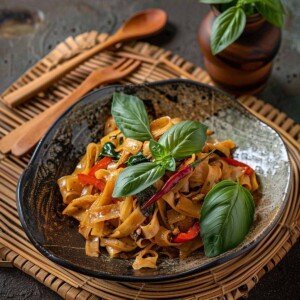
Pad Kee Mao (Drunken Noodles)
I was six years old in the market in Korat, following a smell I could not name. My parents stayed back just far enough that I thought I was on my own. At the end of the smell was a cart, a wok, flames coming up around the edges. Holy basil hitting screaming hot metal. I did not know it was called Pad Kee Mao. I just knew I had found something. This is that dish. The easy Thai drunken noodles recipe I have been making ever since.
Equipment
- Wok or large carbon steel skillet high heat is everything in this dish. The wide surface area of a wok allows the noodles to char and blister at the edges rather than steam
- Wok spatula or flat-edged wooden spoon
- Large mixing bowl
- Small mixing bowl
- Sharp knife and cutting board
- Tongs
Ingredients
- 8 ounces flat rice noodles wide
- 2 tablespoons vegetable oil
- 3 cloves garlic minced
- 1-2 Thai bird chilies finely chopped (adjust to taste)
- 1/2 pound meat of your choice Beef, chicken, pork, shrimp, or tofu, sliced or prepared as preferred
- 1 medium bell pepper sliced
- 1 medium onion sliced
- 2 tablespoons oyster sauce
- 1 tablespoon soy sauce
- 1 tablespoon fish sauce
- 1 teaspoon sugar
- 1/2 teaspoon white pepper
- 1/2 cup cherry tomatoes halved (optional)
- 1/2 cup Thai holy basil
Instructions
- Prepare the noodles:Soak the rice noodles in room temperature water for about 30 minutes until they are soft but not fully cooked. Drain and set aside.
- Cook the meat:Heat 1 tablespoon of oil in a large skillet or wok over medium-high heat. Add the garlic and chilies, and stir-fry for about 30 seconds until fragrant.Add the meat ( beef, chicken, pork, shrimp, or tofu) to the pan. Stir-fry until the meat is just cooked through and nicely browned.
- Stir-fry the vegetables:In the same skillet, add another tablespoon of oil if needed. Add the sliced bell pepper and onion, stir-frying until they start to soften, about 2-3 minutes.
- Combine ingredients:Add the drained noodles along with the oyster sauce, soy sauce, fish sauce, sugar, and white pepper. Toss everything together and stir-fry for an additional 3-5 minutes until the noodles are tender and everything is well mixed.
- Final touches:Turn off the heat first, then add the basil, and cherry tomatoes (if using).
- Serve:Serve hot with a wedge of lime on the side, if desired.
Notes
Prepare everything before the wok goes on. Slice the beef, mix the sauce, separate the noodles, pick the basil from the stems. All of it, ready and in reach, before the heat comes on. This dish moves in under five minutes once the wok is hot. There is no time to find the fish sauce once you have started.
The wok must be screaming hot before anything goes in. Hotter than you think. Hot enough to smoke. Hot enough that the oil shimmers and moves like water when you add it. A wok that is not hot enough steams the beef instead of searing it and the dish never recovers. The heat is not a detail. It is the whole method.
Do not overcrowd the wok. Cook in batches if you are making more than two portions. Too much in the wok at once drops the temperature and you lose the sear. Everything goes soft and pale. Pad Kee Mao needs space and it needs heat. Give it both.
Holy basil goes in last, off the heat, and the dish goes to the table immediately. The basil wilts in the residual heat in seconds, that is correct. What you are after is the perfume, not the cook. The moment it hits the wok the smell arrives. That is the smell I followed through the market in Korat when I was six years old. It has not changed.
Nutrition
Serving: 1.5cupsCalories: 350kcalCarbohydrates: 45gProtein: 20gFat: 10gSaturated Fat: 2gPolyunsaturated Fat: 3gCholesterol: 50mgSodium: 900mgFiber: 2gSugar: 3g
Tried this recipe?Let us know how it was!