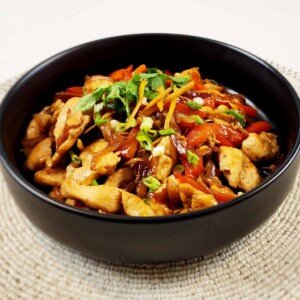
Thai Ginger Chicken (Gai Pad Khing)
This was my mother's dish. She made it in our kitchen in Maryland and the smell of ginger and garlic and chicken found every room in the house. I was not sure about ginger when I was young. By the time I was a teenager I understood what she had always known: this dish is built around one flavor, and that flavor is the point. She was right. She usually was. This is her dish, made the way she made it.
Ingredients
- 1 lb chicken breast thinly sliced
- 2 tbsp vegetable oil
- 3 cloves garlic minced
- 2 tbsp fresh ginger julienned
- 1 onion thinly sliced
- 1 bell pepper any color, thinly sliced
- 1 cup mushrooms (optional)
- 2 tbsp soy sauce
- 1 tbsp oyster sauce
- 1 tsp white pepper
- 1 tsp sugar
- Steamed jasmine rice for serving
- Fresh cilantro leaves for garnish
Instructions
Prepare Ingredients:
- Slice the chicken breast into thin strips . Mince the garlic, julienne the fresh ginger into thin matchstick-sized pieces, slice the onion and bell pepper thinly .
Sauté Aromatics:
- Heat vegetable oil in a large skillet or wok over medium high heat until shimmering. Add the garlic and ginger, stirring constantly for about 30 seconds or until they become fragrant.
Cook Chicken:
- Add the sliced chicken breast to the skillet, spreading it out evenly. Sear for 30 seconds, Stir-fry the chicken strips for 5-7 minutes, stirring frequently to ensure all sides are cooked and no longer pink. Adjust the heat as needed to prevent burning.
Add Vegetables:
- Add the sliced onion and bell pepper into the skillet with the cooked chicken. Continue stir-frying for 3-4 minutes or until the vegetables reach a tender-crisp texture.
Seasoning:
- Pour the soy sauce, oyster sauce, and sugar over the stir-fried mixture. Stir well to combine, coating all ingredients thoroughly with the savory-sweet sauce. Allow the dish to simmer for 2-3 minutes.
Serve:
- Transfer the Thai Ginger Chicken (Gai Pad Khing) to a serving platter or individual plates. Serve the dish hot over steamed jasmine rice, garnish with fresh cilantro leaves.
Video
Notes
The ginger must be julienned, not minced, not grated, not sliced into rounds. Julienned ginger softens at the edges during the stir-fry while keeping a texture that you can find in every bite. Minced ginger dissolves into the sauce and loses the textural quality that makes Thai ginger chicken what it is. Take the time to cut it into thin matchsticks. It is the work this dish requires and it is not much work.
Use more ginger than seems right. This is the instruction most home cooks read and then ignore. They use a polite amount of ginger, enough to be present, not enough to be the dish. Gai Pad Khing is named for the ginger. The ginger should be findable in every bite. Two generous thumbs of fresh ginger for four servings is the starting point.
The sauce is pre-mixed before the wok gets hot. Once the chicken and ginger are in the wok, the dish moves fast and there is no time to measure and pour individual components. A pre-mixed sauce goes in as one motion, hits the hot wok evenly, and reduces and clings the way it should. Mix it first. Pour it all at once.
The dish is done the moment the sauce has reduced and coated everything. Take it off the heat. Put it over rice. Eat it while it is hot.
Nutrition
Serving: 1cupCalories: 280kcalCarbohydrates: 12gProtein: 30gFat: 12gSaturated Fat: 2gPolyunsaturated Fat: 8gCholesterol: 80mgSodium: 700mgFiber: 2gSugar: 3g
Tried this recipe?Let us know how it was!