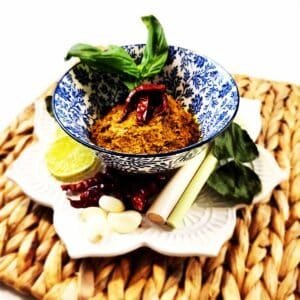
Gaeng Garee Paste พริกแกงกะหรี่ Thai Yellow Curry Paste
One person worked the mortar. My mother, or one of her sisters, an auntie whose hands knew exactly how hard to press. The sound came through the whole house before the smell did. Everyone nearby understood what it meant. This is that paste. Made fresh, built in stages, the way it was always made. The jar on the shelf was never what they reached for.
Equipment
- Large granite mortar and pestle (preferred) or food processor
- Small oven or dry skillet
- Airtight glass jar or freezer bags for storage
Ingredients
- 2 tablespoons coriander seeds or powder
- 1 tablespoon cumin seeds or powder
- 1 teaspoon whole black peppercorns
- 2 tablespoons turmeric powder
- 2 teaspoons curry powder
- 10-12 dried Thai chilies soaked and chopped
- 1 small shallot chopped
- 5 cloves garlic chopped
- 1 stalk lemongrass chopped
- 1- inch piece galangal chopped
- Zest of 1 lime
- 1 teaspoon shrimp paste
- 1 tablespoon fish sauce
- 1 tablespoon vegetable oil
Instructions
- Toasting the Spices for Maximum Flavor:To begin, toast the coriander seeds, cumin seeds, and black peppercorns in a dry skillet over medium heat. Stir constantly until they become fragrant, about 2-3 minutes. Once toasted, grind the herbs into a fine powder using a spice grinder or mortar and pestle. Set aside.
- Prepare the Chilies and Aromatics:Next, soak the dried Thai chilies in warm water for 10 minutes until they soften. Drain and chop them finely. Combine the chopped chilies with shallots, garlic, lemongrass, galangal, and lime zest in a food processor. Blend until you get a coarse mixture.
- Add the ground spices, turmeric powder, curry powder, shrimp paste, fish sauce, and vegetable oil to the mortar and pestle or food processor. Pound or blend everything until you achieve a smooth and consistent paste. This process might take a few minutes, and you may need to scrape down the sides of the processor occasionally.
- Store and Use:Transfer the Yellow curry paste to an airtight container and store it in the refrigerator for up to one week or freeze for up to three months.
Video
Notes
The order in which ingredients go into the mortar is not flexible. Hard fibrous ingredients lemongrass, galangal go first and are worked until fully broken down before anything softer is added. This is the step most home cooks skip because it is the slow step. It takes five to eight minutes of real pounding before the lemongrass is genuinely ready for the next ingredient. If you add the shallots before the lemongrass is broken down, you will have visible threads of fiber through the finished paste that no amount of further pounding will correct. Do the slow step. It is the whole point of using a mortar.
Fresh turmeric root, when you can find it, changes the paste in a way that matters. The color is more vivid a deeper, more saturated gold and the flavor is brighter and more complex than dried turmeric powder. Asian grocery stores carry it fresh. It looks like a small, orange-fleshed cousin of ginger. Wear gloves. The stain is permanent on skin and surfaces and anything else it decides to claim.
The paste will keep in the refrigerator for two weeks in an airtight container. It will keep in the freezer for three months. Frozen in tablespoon portions, it becomes the thing you reach for on a weeknight when you want curry and do not have the time to begin from the mortar. My mother would have found that practical. She would not have found it the same. Both things are true.
A food processor and a mortar and pestle both produce excellent yellow curry paste. The mortar gives you a coarser, more textured result with a slightly more complex flavor from the bruising action. The food processor gives you a smoother paste and takes less time and effort. Add one to two tablespoons of water to help the machine move the ingredients. Pre-chop everything as finely as possible before it goes in. Either method will fill the kitchen with that smell. That is what matters.
Nutrition
Serving: 12 tbsCalories: 28kcalCarbohydrates: 3gProtein: 0.5gFat: 1.5gSodium: 180mgFiber: 0.5gSugar: 1g
Tried this recipe?Let us know how it was!