What Is Thai Yellow Curry Paste?
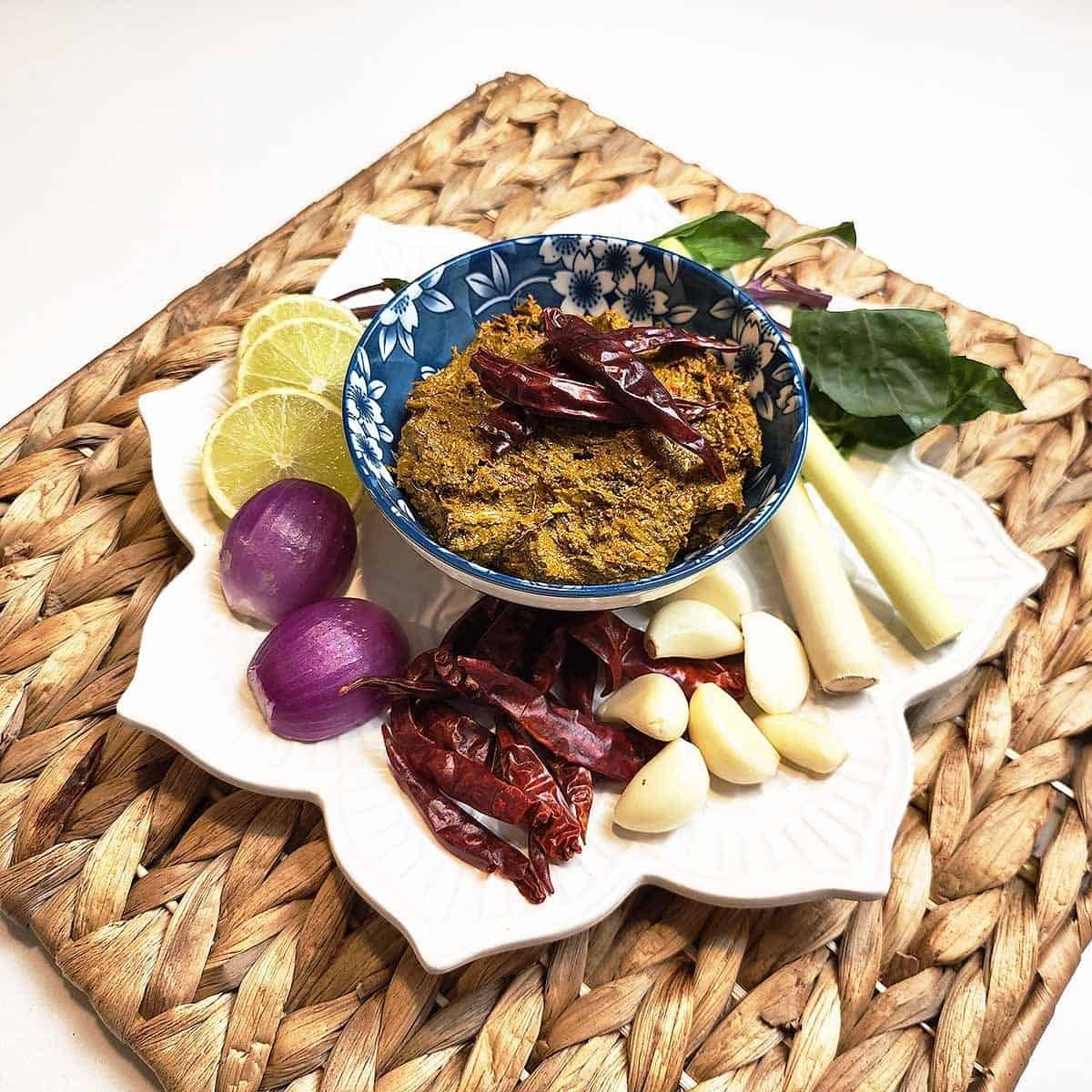
Thai yellow curry paste is a fresh-ground blend of turmeric, dried chilies, lemongrass, galangal, shallots, garlic, and warm spices, cumin, coriander, and curry powder among them. It is the foundation of Thai yellow curry, made from scratch in a mortar and pestle. The sound of it being made is how you know curry is coming.
Note From Susie

Sawasdee Kha, and Hello.
You heard it before you saw it.
One person at the mortar, my mother, or one of her sisters, an auntie whose hands knew exactly how hard to press and how long to work. The sound came through the whole house. Loud. Rhythmic. Completely certain of itself. Nobody had to say what was happening. The mortar said it.
This was not a weekend only thing, not a ceremony. Whenever they wanted curry, someone went to the mortar. Sometimes on a weekend when there was more time. Sometimes in the middle of the week when there was not. It did not matter. You made the paste fresh because that was how it was made. The jar on the shelf was not an option anyone considered.
One person did the work. Everyone else was nearby. That is how I remember it, the sound filling the kitchen and the rest of us understanding, without being told, that something good was coming.
I still hear it when I make this. My mother’s mortar. My own hands. The same sound.

What’s In This Page
“My mother never measured anything. This is the truest thing I know about how she cooked.”
— Her Hands His EyesWhat Is Thai Yellow Curry Paste?
Thai yellow curry paste, พริกแกงเหลือง, prik gaeng leuang, is the aromatic foundation from which Thai yellow curry is built. It is not the same as Indian curry paste, and it is not a shortcut. It is a fresh-ground blend of ingredients that together create something the sum of them cannot produce separately: turmeric for its color and its earthiness, dried chilies for heat, lemongrass and galangal for the sharp, citrus-ginger quality that marks Thai cooking, shallots and garlic for body, and warm spices, cumin, coriander seed, curry powder that connect this paste to the Indian and Malay culinary influences that shaped southern Thai cooking over centuries.
What separates Thai yellow curry paste from green or red is not only the turmeric. It is the warm spice profile, the cumin and coriander and the presence of curry powder that gives yellow curry its particular character: deeper and warmer than green, less sharp than red, with a richness that carries well in coconut milk. According to the Oxford Companion to Food, Thai curry pastes reflect centuries of trade influence along the Malay Peninsula, with yellow curry showing the clearest connection to South Asian spice traditions.
The mortar is loud when you make it right. That sound is not incidental.
What You’ll Need

Turmeric is what makes Thai yellow curry paste yellow. Fresh turmeric root, if you can find it, gives a brighter, more complex flavor than dried turmeric powder though dried turmeric works and is what most home cooks have. One thumb of fresh root, or one teaspoon of dried powder. The color will be vivid either way. Wear gloves when you handle fresh turmeric. It stains everything it touches.
Dried red chilies are soaked in warm water for 10 minutes before they go into the mortar. This softens them enough to grind. The number of chilies determines the heat, three to four for moderate, six to eight for genuine heat. Remove the seeds if you want less fire. Leave them in if you want the full thing.
Lemongrass, the lower white portion only, the tough green tops are too fibrous to grind properly and will leave threads through the paste. Slice the white stalk thin before it goes into the mortar. Galangal sliced the same way. Galangal is not interchangeable with ginger, it is woodier, more resinous, with a pine-like sharpness that ginger does not have. If you genuinely cannot find galangal, ginger is a substitute but know that the paste will taste different.
Shallots and garlic roughly chopped. Shrimp paste a small amount, one teaspoon adds fermented depth that pushes the whole paste toward something more complete. If you are making a vegetarian version, leave it out.
The dried spices, cumin seed, coriander seed, curry powder, are toasted briefly in a dry pan before grinding. Thirty seconds over medium heat, just until fragrant. Toasting opens them. Untoasted spices in a curry paste taste flat in a way that is hard to identify but impossible to miss.
A mortar and pestle and a food processor both work well for this paste. The mortar bruises the ingredients and releases their oils in a way that produces a coarser, more textured paste. The food processor produces a smoother result. Both make excellent curry. Use whichever you have and whichever suits the time you have available.
Visual Walk Through
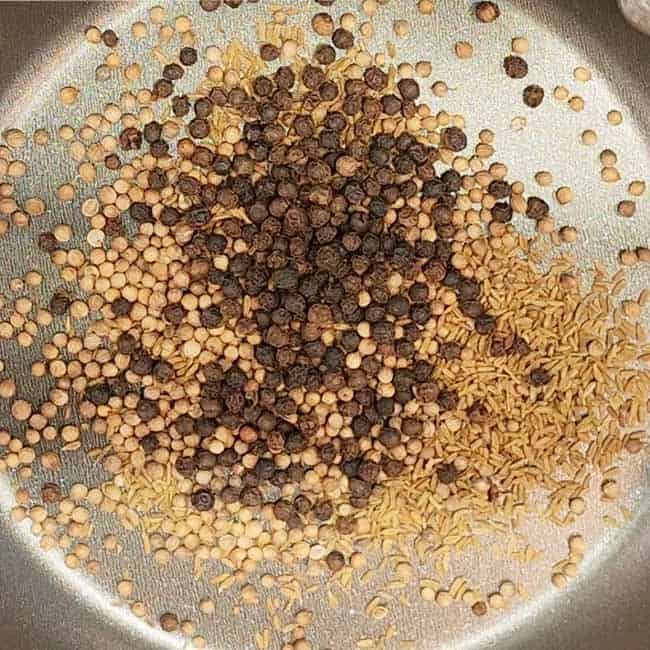
Step 1. Toast the spices first.
Toast the coriander seeds, cumin seeds, and black peppercorns in a dry skillet over medium heat. Stir constantly until they become fragrant, about two to three minutes. This step enhances the flavors of the spices and makes the curry paste more aromatic. Once toasted, grind into a fine powder using a spice grinder or mortar and pestle. Set aside.
Step 2. Prepare the chilies and aromatics.
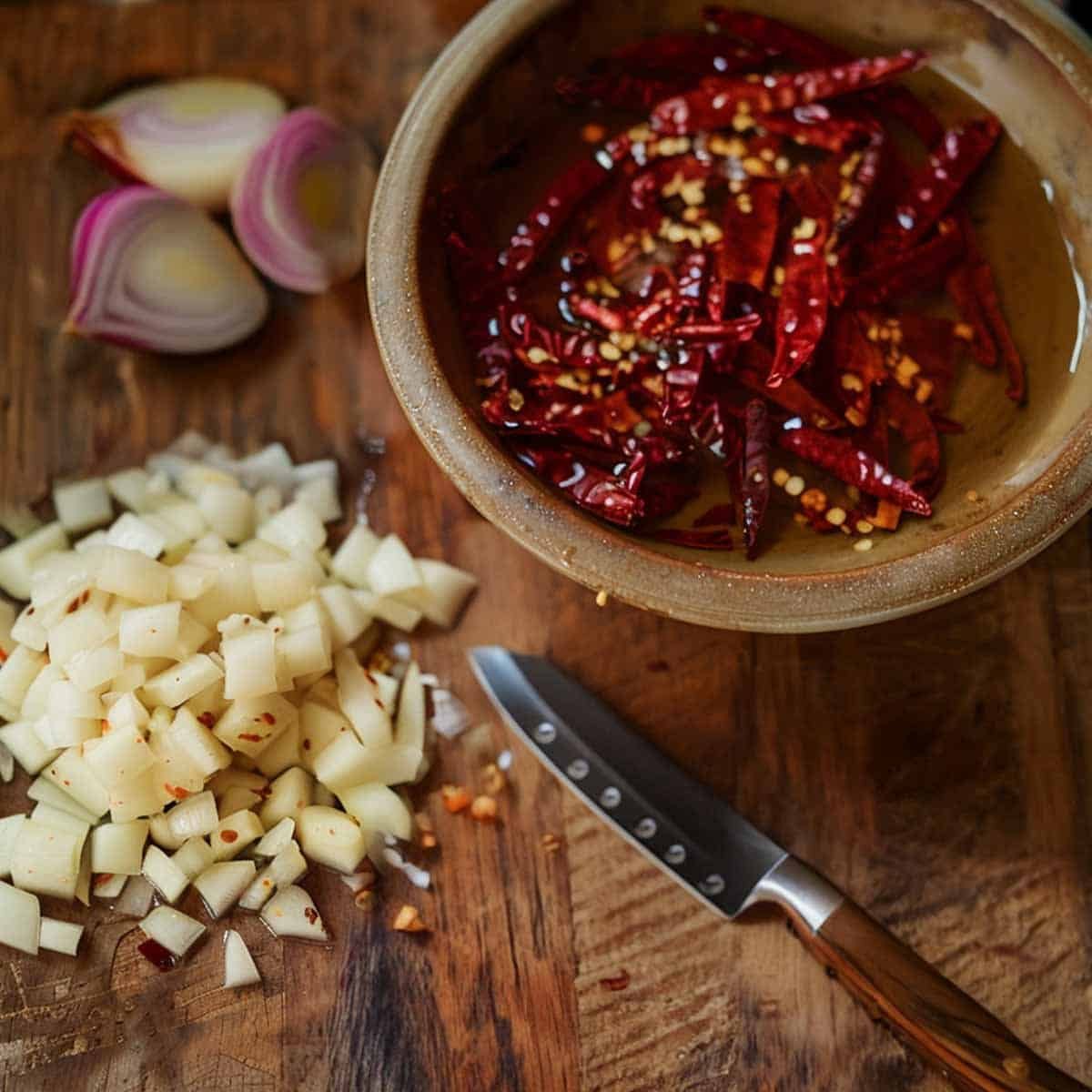
Soak the dried Thai chilies in warm water for ten minutes until they soften. Drain and chop them finely. Combine the chopped chilies with shallots, garlic, lemongrass, galangal, and lime zest in a food processor. Blend until you get a coarse mixture. This step ensures the flavors are well-incorporated, providing a robust base for the curry paste.
Step 3. Add shallots, garlic and soaked drained chilies.
Add the shallots and garlic, working them into the paste already in the mortar, or add them to the food processor with the chili mixture. Then add the soaked, drained, and roughly chopped dried chilies. Work or blend each ingredient in fully before adding the next. The paste will deepen in color as the chilies go in, the red of the chili mixing with the yellow of the turmeric into a deep golden orange. Then add the ground toasted spices, curry powder, turmeric, shrimp paste, and fish sauce. In the mortar, work until the paste is smooth and fragrant. In the food processor, blend until smooth, scraping down the sides as needed. Both methods produce a paste that is deeply golden, fragrant, and ready to use.
★ Step 3. Add the ground spices and blend to a smooth paste. This is What Makes the Difference.
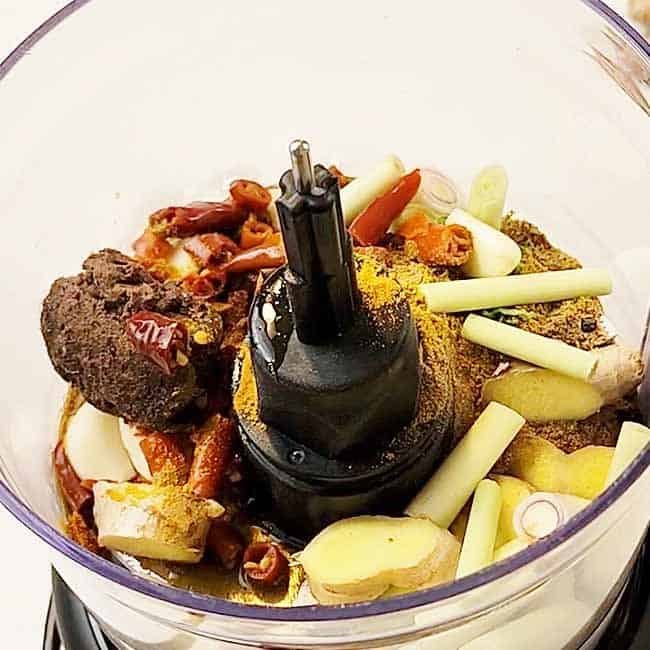
Add the ground spices, turmeric powder, curry powder, shrimp paste, fish sauce, and vegetable oil to the food processor. Blend everything until you achieve a smooth and consistent paste. This may take a few minutes. Scrape down the sides of the processor occasionally to ensure everything is fully incorporated. The finished paste should be deeply golden-yellow from the turmeric, fragrant, and smooth throughout.
Step 4. Store and use.
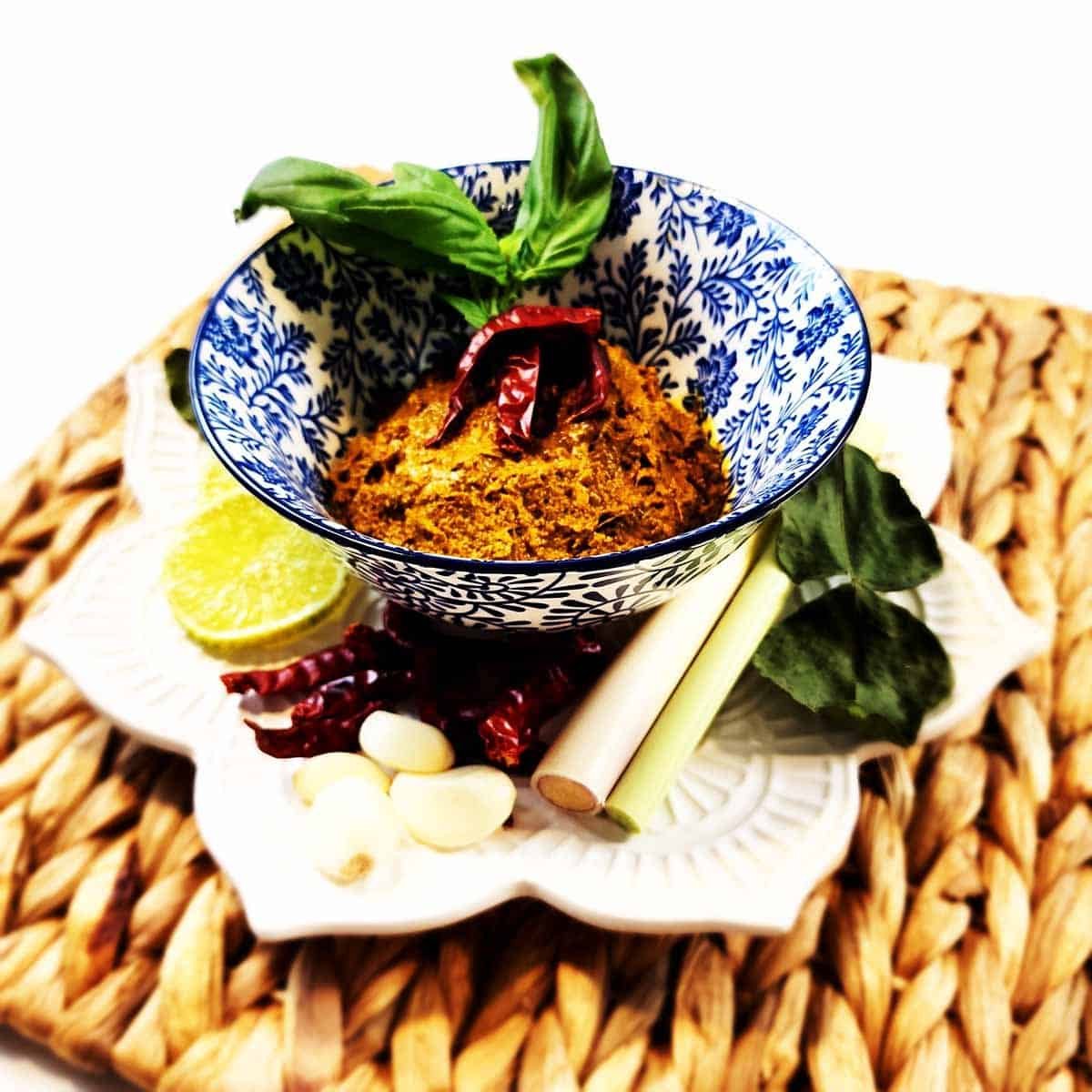
Transfer the yellow curry paste to an airtight container and store in the refrigerator for up to one week or freeze for up to three months. This paste is the perfect base for Thai yellow curry, soups, and marinades. The smell when you open the container days later is the same smell that came through the house when the mortar was going. That does not diminish.
Gaeng Garee Paste พริกแกงกะหรี่ Thai Yellow Curry Paste
Equipment
- Large granite mortar and pestle (preferred) or food processor
- Small oven or dry skillet
- Airtight glass jar or freezer bags for storage
Ingredients
- 2 tablespoons coriander seeds or powder
- 1 tablespoon cumin seeds or powder
- 1 teaspoon whole black peppercorns
- 2 tablespoons turmeric powder
- 2 teaspoons curry powder
- 10-12 dried Thai chilies soaked and chopped
- 1 small shallot chopped
- 5 cloves garlic chopped
- 1 stalk lemongrass chopped
- 1- inch piece galangal chopped
- Zest of 1 lime
- 1 teaspoon shrimp paste
- 1 tablespoon fish sauce
- 1 tablespoon vegetable oil
Instructions
- Toasting the Spices for Maximum Flavor:To begin, toast the coriander seeds, cumin seeds, and black peppercorns in a dry skillet over medium heat. Stir constantly until they become fragrant, about 2-3 minutes. This step enhances the flavors of the spices, making your curry paste more aromatic. Once toasted, grind the herbs into a fine powder using a spice grinder or mortar and pestle. Set aside.
- Prepare the Chilies and Aromatics:Next, soak the dried Thai chilies in warm water for 10 minutes until they soften. Drain and chop them finely. Combine the chopped chilies with shallots, garlic, lemongrass, galangal, and lime zest in a food processor. Blend until you get a coarse mixture. This step ensures the flavors are well-incorporated, providing a robust base for your curry paste.
- Add the ground spices, turmeric powder, curry powder, shrimp paste, fish sauce, and vegetable oil to the morter and pestle or food processor. Pound or blend everything until you achieve a smooth and consistent paste. This process might take a few minutes, and you may need to scrape down the sides of the processor occasionally. This step combines all the ingredients, resulting in a rich and flavorful curry paste ready for use.
- Store and Use:Transfer the Yellow curry paste to an airtight container and store it in the refrigerator for up to one week or freeze for up to three months. This paste is the perfect base for a variety of Thai dishes, from curries to soups, adding an authentic touch to your meals.
Video
Notes
- The order in which ingredients go into the mortar is not flexible. Hard fibrous ingredients lemongrass, galangal go first and are worked until fully broken down before anything softer is added. This is the step most home cooks skip because it is the slow step. It takes five to eight minutes of real pounding before the lemongrass is genuinely ready for the next ingredient. If you add the shallots before the lemongrass is broken down, you will have visible threads of fiber through the finished paste that no amount of further pounding will correct. Do the slow step. It is the whole point of using a mortar. Fresh turmeric root, when you can find it, changes the paste in a way that matters. The color is more vivid a deeper, more saturated gold and the flavor is brighter and more complex than dried turmeric powder. Asian grocery stores carry it fresh. It looks like a small, orange-fleshed cousin of ginger. Wear gloves. The stain is permanent on skin and surfaces and anything else it decides to claim. The paste will keep in the refrigerator for two weeks in an airtight container. It will keep in the freezer for three months. Frozen in tablespoon portions, it becomes the thing you reach for on a weeknight when you want curry and do not have the time to begin from the mortar. My mother would have found that practical. She would not have found it the same. Both things are true. A food processor and a mortar and pestle both produce excellent yellow curry paste. The mortar gives you a coarser, more textured result with a slightly more complex flavor from the bruising action. The food processor gives you a smoother paste and takes less time and effort. Add one to two tablespoons of water to help the machine move the ingredients. Pre-chop everything as finely as possible before it goes in. Either method will fill the kitchen with that smell. That is what matters.
Nutrition
Let’s Get This Right
Why does my Thai yellow curry paste taste flat?
The spices were not toasted, or the lemongrass was not fully broken down before the other ingredients were added. Toasting the cumin and coriander seed before grinding is not optional, untoasted spices in a curry paste produce a raw, dusty flavor that does not cook out. And lemongrass that has not been properly pounded in the mortar will not release its oils fully, which means the paste will taste thin regardless of how much of it you use.
Can I make Thai yellow curry paste in a food processor?
You can. Add a small amount of water, one to two tablespoons to help the machine move the ingredients. The result will be smoother and slightly less complex than a mortar-made paste, because the processor cuts rather than bruises. It will still make a good curry. Pre-chop all ingredients as finely as possible before they go into the processor and accept that the texture will be different.
What is the difference between Thai yellow curry paste and Thai red or green curry paste?
Yellow curry paste is distinguished by turmeric and warm spices, cumin, coriander, curry powder, that connect it to South Asian culinary influence. Red curry paste uses more dried red chilies and does not include the same warm spice profile. Green curry paste is built on fresh green chilies, fresh herbs, and is the sharpest and most herb-forward of the three. Yellow is the warmest and most complex in its spice depth.
Can I substitute ginger for galangal in Thai yellow curry paste?
You can, but the paste will taste different. Galangal has a woody, resinous, pine-like sharpness that ginger does not replicate. Ginger is warmer and more immediately spicy. The curry will still be good, but it will not taste the same as a paste made with galangal. If you can find galangal at an Asian grocery store, it is worth the extra step.
How much Thai yellow curry paste do I use per serving?
Two to three tablespoons of fresh paste per serving of curry is a general starting point. Fresh homemade paste is more concentrated and more aromatic than store bought paste, so start with two tablespoons and taste before adding more. The paste goes into the pan first, fried briefly in oil or in the thick top layer of coconut milk, before the remaining liquid is added.
Flavor Profile
The sound comes first, always. The mortar loud and rhythmic, carrying through the house before anything else has registered.
Then the smell arrives in layers. The lemongrass first, sharp, citrus-bright, clean. Then the turmeric underneath it, earthy and slightly bitter in the raw state, before heat transforms it. Then the dried chilies, releasing something deeper and more resinous as the mortar breaks them open. By the time the spices go in, the toasted cumin and coriander, warm and nutty from the pan, the kitchen smells like something that has been building toward this moment.
The finished paste is complex in a way that none of its individual ingredients fully prepares you for. The lemongrass sharpness is there but rounded by the turmeric. The chili heat is present but sitting behind the warmth of the spices. The shrimp paste adds a fermented depth that holds the whole thing together without announcing itself. In the mortar, it looks vivid,deep gold, flecked with red, dense and fragrant.
In the pan, when it hits the oil or the coconut milk, something changes again. The raw edges cook off. What remains is the paste fully realized: warm, aromatic, complex, the foundation of something that will fill whatever room it is made in.
Susie’s Kitchen Notes
The mortar my family used was granite heavy, deep, stable. It did not move on the counter when you worked it, which matters when you are pounding hard ingredients for eight minutes straight. A lightweight mortar will slide and tip and frustrate you. If you are going to make Thai yellow curry paste regularly, a heavy granite or stone mortar is worth the investment. The ceramic ones are for grinding small amounts of spices. They are not built for this work.
The dried chilies should be soaked until they are fully softened, not just pliable, fully soft. 10minutes in warm water is usually enough. Drain them and squeeze out the excess water before they go into the mortar. Chilies that still carry water will make the paste loose and difficult to work. You want the softness without the extra liquid.
My mother and her sisters made more paste than they needed for a single curry. The extra went into a small jar, covered, into the refrigerator. A paste made with care keeps for two weeks and improves slightly over the first day as the flavors settle into each other. Making a double batch is practical, the mortar work is the same whether you are making paste for one curry or three.
The curry powder that goes into Thai yellow curry paste is not an Indian curry powder, though Indian curry powder will work. A Thai or Southeast Asian curry powder blend, available at Asian grocery stores, will be slightly different in its spice ratios and will produce a more authentic result. If you are using an Indian curry powder, use it sparingly, the flavor profile is stronger and will push the paste in a different direction.
Pairing Suggestions
Thai yellow curry paste is the beginning, not the destination. What it becomes depends on what you build around it. The most direct path is Thai Yellow Curry with chicken or vegetables, the paste fried briefly in coconut milk until fragrant, then the remaining ingredients added and simmered until everything has become one thing. For the rice alongside, the jasmine rice method matters as much as the curry above it, plain steamed jasmine rice is traditional, though sticky rice works for those who prefer it. A bowl of Tom Kha Gai on the same table brings coconut in a different direction, lighter, more aromatic, and the two together create a complete meal without competition. The paste also works as a marinade base for Thai BBQ Chicken rubbed onto chicken before grilling, it produces something deeply flavored and golden from the turmeric, charred at the edges in a way that the oven cannot replicate.
FAQ
What is Thai yellow curry paste made of?
Thai yellow curry paste is made from turmeric, dried red chilies, lemongrass, galangal, shallots, garlic, shrimp paste, fish sauce, and warm dried spices, cumin seed, coriander seed, and curry powder. These ingredients are ground together in a mortar and pestle until they form a smooth, fragrant paste. The turmeric gives the paste its distinctive golden color. The warm spice profile, cumin, coriander, curry powder, is what distinguishes it from red or green Thai curry paste.
How do you make Thai yellow curry paste from scratch?
Soak dried chilies in warm water for fifteen minutes. Toast cumin and coriander seeds in a dry pan until fragrant, then grind. In a mortar, pound the lemongrass and galangal first until fully broken down, this takes five to eight minutes. Add turmeric, then shallots and garlic, then the soaked drained chilies, working each ingredient in fully before adding the next. Add the ground toasted spices, curry powder, and shrimp paste last. Work until the paste is smooth, uniform in color, and fragrant.
What is the difference between Thai yellow curry paste and store-bought paste?
Fresh homemade Thai yellow curry paste is more aromatic, more complex, and more concentrated than store-bought paste. Store-bought paste uses stabilizers and preservatives that affect the flavor, and the fresh ingredients, lemongrass, galangal, fresh turmeric, lose much of their character in the jarring process. Homemade paste uses two to three tablespoons per serving. Store-bought typically requires more to achieve similar depth. The difference in the finished curry is significant.
How long does homemade Thai yellow curry paste keep?
Homemade Thai yellow curry paste keeps in an airtight container in the refrigerator for up to two weeks. It freezes well for up to three months. Press it into ice cube trays, freeze, then transfer the cubes to a freezer bag. Each cube is roughly one tablespoon, enough for one serving of curry. The paste may deepen slightly in color in the refrigerator but remains fully usable.
Is Thai yellow curry paste spicy?
Thai yellow curry paste is milder than red or green curry paste, but it is not without heat. The dried chilies contribute a moderate, building warmth rather than an immediate sharp heat. The number of chilies you use determines the final spice level, three to four dried chilies for moderate heat, six to eight for something genuinely hot. Remove the seeds before soaking for less heat. Leave them in for the full effect.
Can I make Thai yellow curry paste without shrimp paste?
Yes. Omit the shrimp paste for a vegetarian version. The paste will be slightly less complex in its fermented depth but will still produce a flavorful curry. Some vegetarian cooks substitute a small amount of white miso paste, half a teaspoon, which adds a similar fermented quality without the seafood. The curry made from a shrimp-paste-free version is different but not lesser.
Do I need a mortar and pestle to make Thai yellow curry paste?
A mortar and pestle produces the best result. It bruises the ingredients and releases their oils in a way that a food processor cannot replicate. A food processor will give you a workable paste: pre-chop all ingredients finely, add one to two tablespoons of water to help the machine move, and process until as smooth as possible. The texture will be finer and the flavor slightly less complex, but the finished curry will still be good. If you make Thai curry paste regularly, a heavy granite mortar is worth owning.