
He did not photograph the important things. He photographed Tuesday afternoon. A woman at a market stall. A child in a school doorway. A family at a table before anyone knew it was the last time. He understood something that took me twenty-four years and a cardboard box to learn. What looks ordinary while it is happening is almost never ordinary at all. You only know what something was worth after it is gone. You have to be paying attention. You have to already have your hand on the shutter. I have shared a few of his photographs here. Thailand, Saigon, Japan, Italy, a life seen through one man’s lens. But the ones that stopped me completely, the ones I could not stop holding up to the light, those I have kept. They are waiting in the pages of Her Hands His Eyes, and in His Eyes, a coffee table book that lets them breathe the way he always intended. Some things deserve more room than a screen can give them. If you want to be the first to know when they are ready, and to receive the first photograph from inside the box, never published anywhere, subscribe to From The Box.
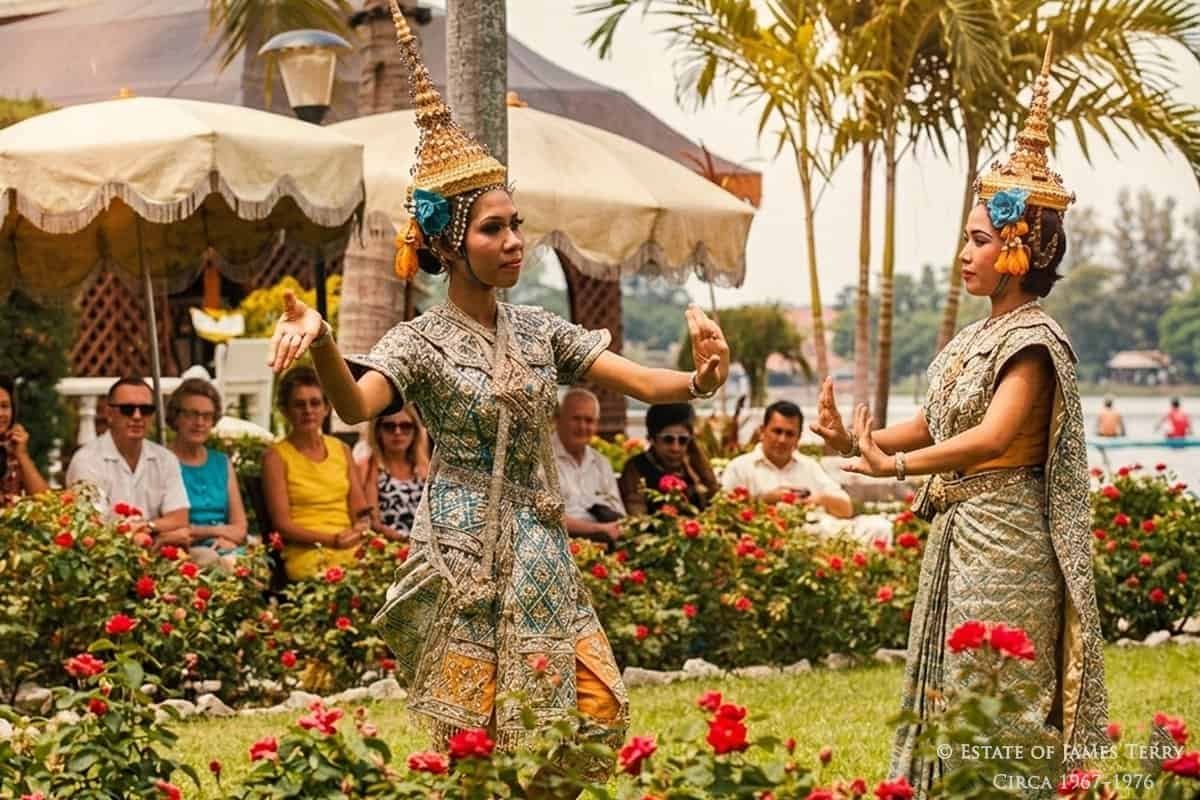
He took us to the Mandarin the way he took us everywhere. Like it was nothing. Like two dancers in full classical costume performing in a rose garden in the middle of Bangkok was just what Tuesday looked like. The gold headdresses. The red flowers. My mother watching from somewhere behind the lens. I did not know then how rare any of it was. I just knew it was beautiful. I still do.
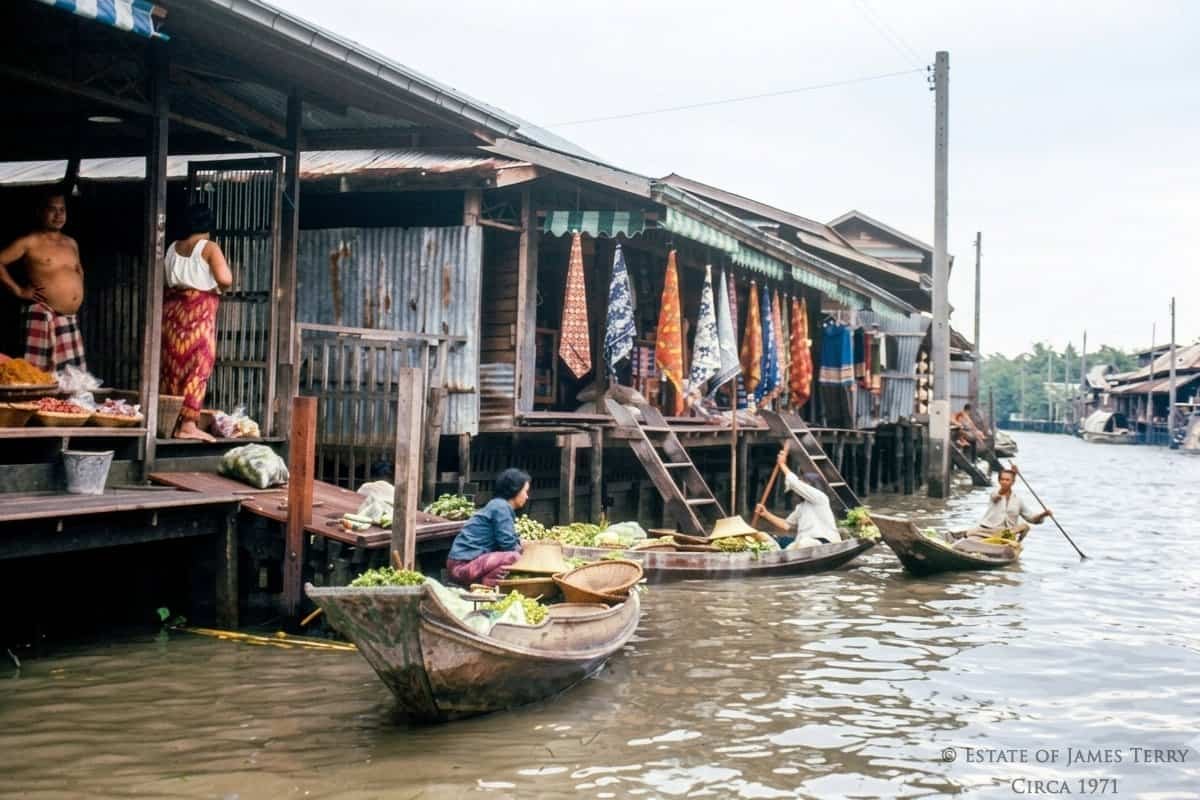
When I first saw this photograph it stopped me. Not because of the market or the boats or the fruit. Because I remembered. I was six years old. He stepped in without hesitation and reached back and lifted me in beside him. The boat shifted under us, the water brown and alive. He did not grip the edge. I did. I did not know then what he was teaching me. I know now.

Phimai. Older than Angkor Wat, sitting in the middle of a small town in Nakhon Ratchasima like it has always been there and always will be. I used to think he was just taking pictures. Now I think he was preserving it. For me. A country I was about to leave and did not know it yet. Thailand through the eyes of a man who understood, even then, that one day I would need to find my way back.
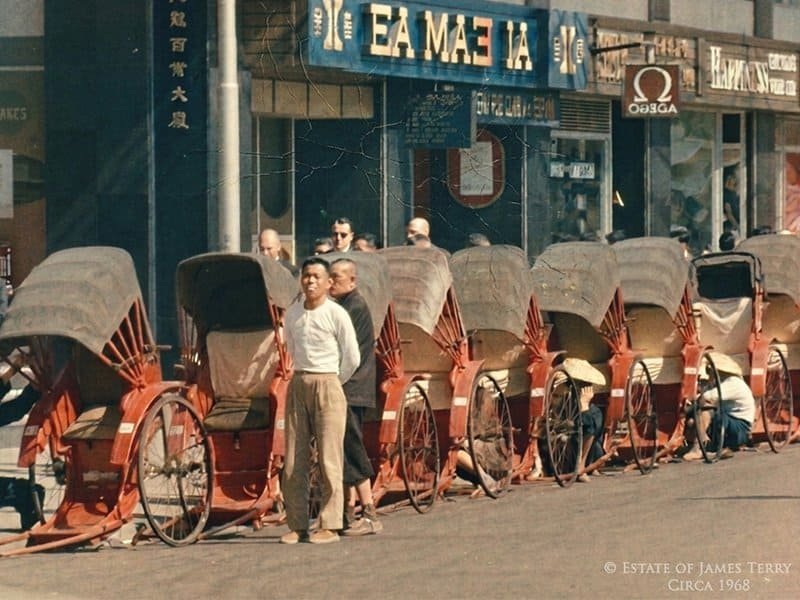
Before Korat. Before the switching center and the uniform and the life he was building for us in Thailand. He gave himself a moment first. Japan. He found this row of rickshaws on a city street and did what he always did, he stopped, he looked, he waited for the moment when ordinary commerce looked like something worth keeping. Nobody posed. Nobody knew. That was always how he worked best.
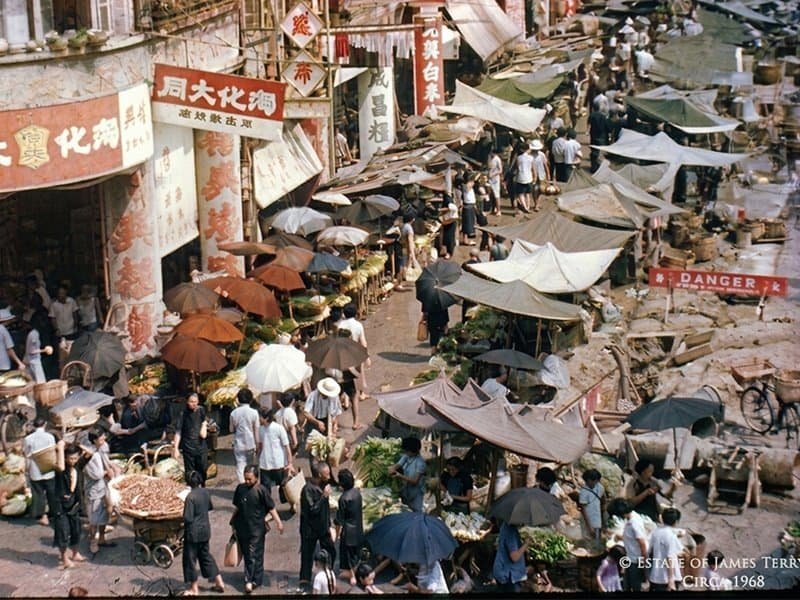
He found his way to a market the way my mother always found her way to a market. By instinct. By the particular pull of a place where people are buying and selling and living their lives in public without apology. He went up high to get this shot , the whole street below him, the umbrellas, the vendors, the crowd moving through it the way a river moves. He wanted all of it. He always wanted all of it.
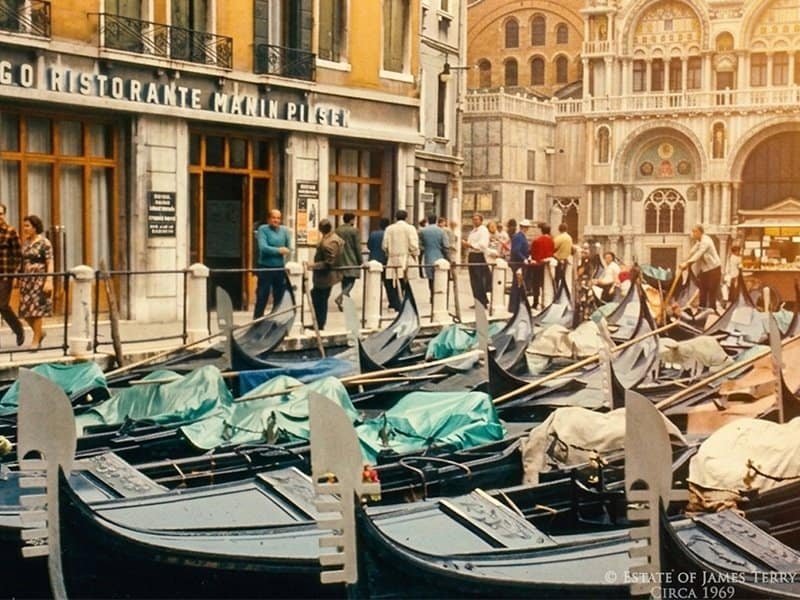
And then Italy. Because of course he went to Italy. The gondolas moored in a row, St. Mark’s Basilica rising behind them the way it has for a thousand years, the gold mosaics catching the light, the tourists moving past without quite believing where they are. He believed it. He always believed wherever he was. That was the thing about him. He never took for granted the extraordinary luck of being somewhere beautiful and having his camera in his hand.
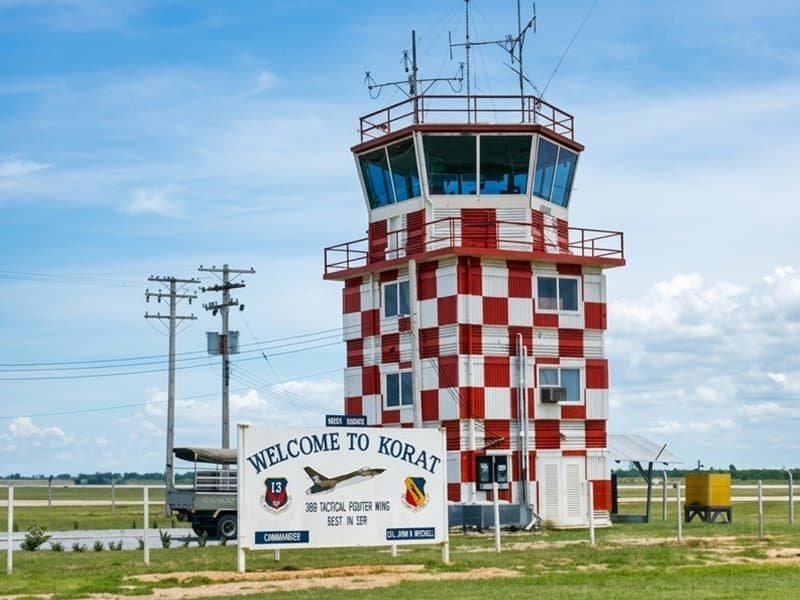
This is where he landed after the uniform came off. Korat Royal Thai Air Force Base. Home of the 388th Tactical Fighter Wing, one of the most active air bases in Southeast Asia during the Vietnam War. He had served his country and they asked him to stay, not as a soldier this time, but as the civilian technician who understood the systems well enough to keep them running. He said yes. That was always his way.
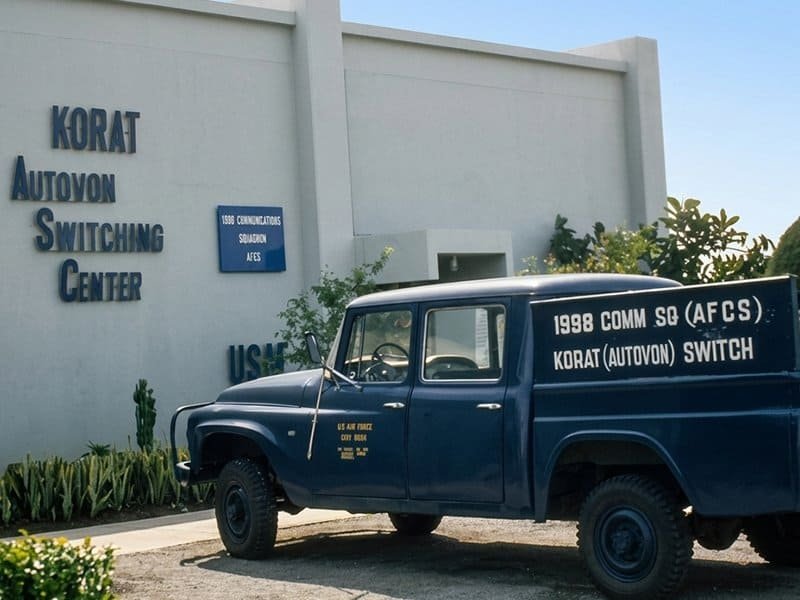
The 1998th Communications Squadron. AUTOVON, the Automatic Voice Network , was the military’s own telephone system, built to connect every American base in the world and keep working even if the world stopped. This was the Korat switching center. The place where a Flash Override call from a general in Washington could reach a commander in Southeast Asia in seconds, cutting through every other call on the line. My father kept that system running. While my mother was putting me on a scooter and riding me through Korat, he was in this building making sure the voices got through.
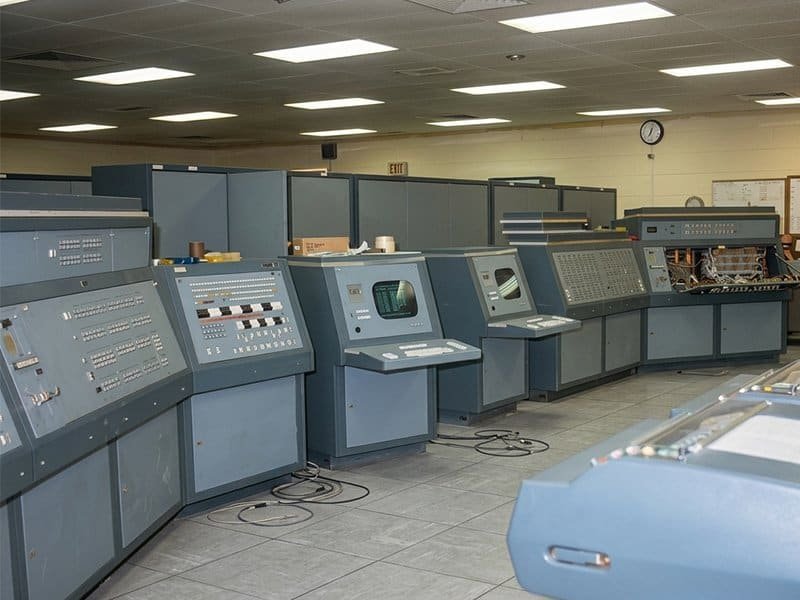
This is what he maintained. Banks of switching equipment that routed over a million military calls a day across Southeast Asia at the height of the war. The system had one rule above everything else, there was no waiting. If something broke you fixed it now. He understood these machines the way my mother understood a kitchen. Completely. By feel. By the particular knowledge of someone who had given years of their life to understanding exactly what to do when something needed fixing.