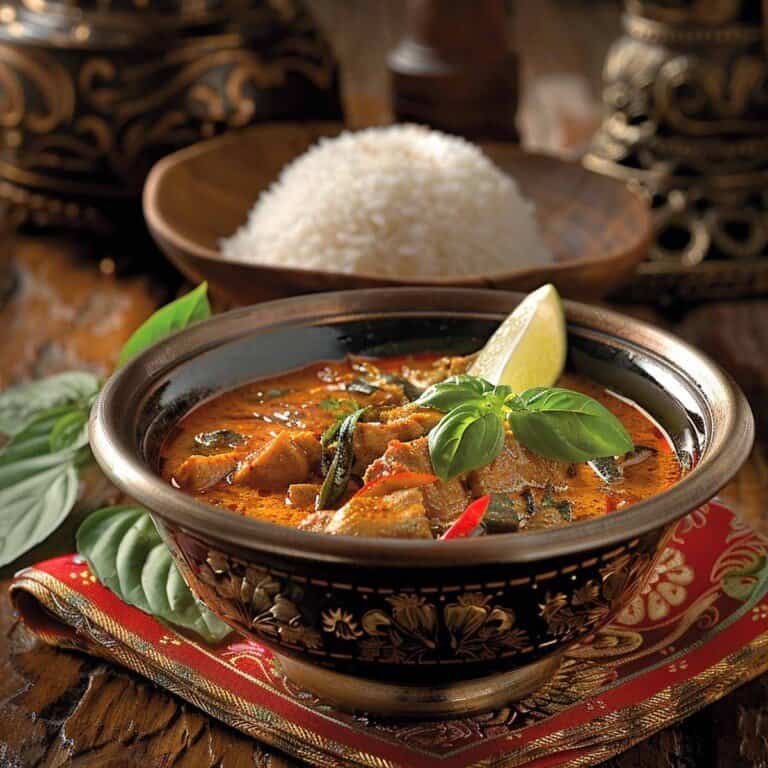
What Is Thai Peanut Sauce?
This Thai peanut sauce recipe, Nam Jim Satay, is a rich coconut-based dipping sauce made with peanut butter, red curry paste, palm sugar, and tamarind. It is thicker than you expect. Darker. It pulls every flavor forward at once. Ready in under fifteen minutes.
Note From Susie

Sawasdee Kha, and Hello.
My mother made this on Sundays. Not for guests. For us. She kept the peanuts in a glass jar by the stove and when I heard her opening it, I knew.
She never measured. The curry paste went in by eye. She would tilt her head to the left when the color looked right. I do not know what she was listening for. Something she knew that had no name.
We ate the satay in the yard. The sauce went dark in the sun. My father would get the last of it, dragged out with his finger when he thought no one was watching.
I moved to Florida in 1997. I brought the jar. I still open it the same way she did, lid turned slow, like it holds something that might escape.
This is the sauce from that jar. It has not changed.

What’s In This Page
“This is the Thai peanut sauce recipe I grew up with.”
— Her Hands His EyesWHAT IS NAM JIM SATAY?
นำ้จิ้มสะเต๊ะ. That is what it is called. Nam Jim Satay. The dipping sauce of the satay vendor. The thing that makes the skewer worth waiting for.
This is not the pale, watery peanut sauce you find at the mall. Thai peanut sauce, the real kind, is built on coconut milk, thickened with peanut butter, and deepened with red curry paste and fresh lime juice. The color is terracotta. The texture coats a spoon. It is savory first, then sweet, then something warm moves in behind it and stays.
In Thailand, this sauce belongs to the street. The cart. The smoke. The vendor who has been standing in the same spot since before you were born. It is one of the oldest flavor combinations in Central Thai cooking, peanut and coconut together, the way the region has always cooked. According to the Oxford Companion to Food, satay and its accompaniments trace back to Malay-influenced trade routes through Southern Thailand, the peanut arriving through centuries of trade and becoming completely Thai in the process.
The sauce does not taste like Thailand. It tastes like wherever you first ate it standing up.
WHAT YOU’LL NEED
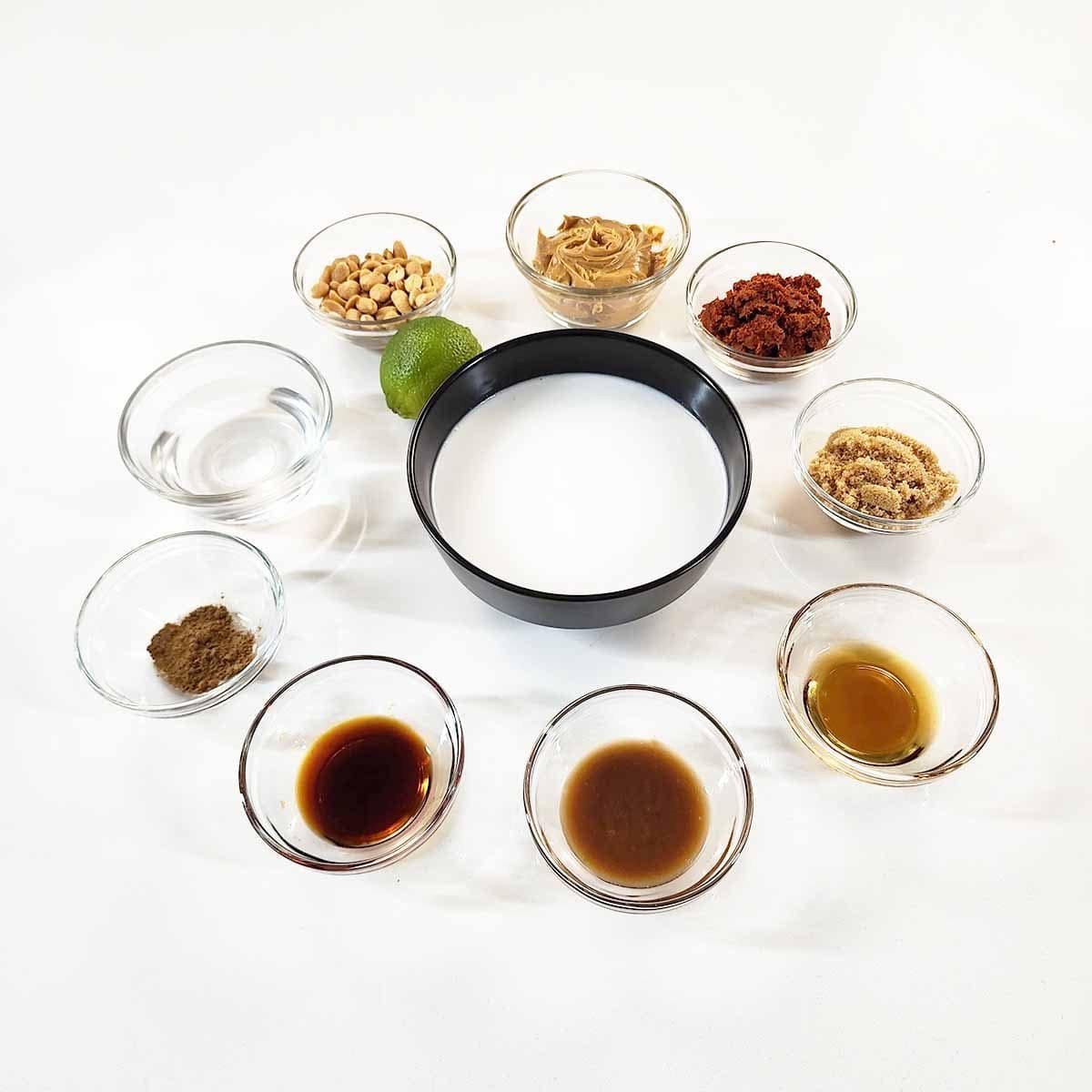
Coconut milk is the base. Use the full-fat kind in the can, the one that separates when you open it. That layer of cream on top is what you cook the curry paste in first. It fries rather than steams. That is not a small difference.
Red curry paste comes next. Store-bought works. Maesri or Aroy-D are reliable. You need about two tablespoons, enough to make the oil go red when it blooms in the coconut cream. This is where the heat and the aroma both live.
Roasted peanuts, ground, or natural unsweetened peanut butter. Ground peanuts give you texture and a slightly bitter edge, some pieces still visible in the finished sauce. Peanut butter gives you something smoother and richer. Both work. Grind the peanuts yourself in a food processor, thirty seconds, no more, if you go that route. If you use peanut butter, use the unsweetened natural kind and start with a little less than the recipe calls for. Taste before you add palm sugar.
Palm sugar is the sweetener. If you cannot find it, light brown sugar works, but use a little less. Palm sugar has a caramel depth that white sugar cannot offer. It rounds out the tamarind.
Fish sauce for salt. Soy sauce for additional depth. Ground cumin for warmth. A splash of water if the sauce tightens too much as it cools. Crushed peanuts and chopped cilantro for garnish at serving.
VISUAL WALK THROUGH

Step 1. Bloom the curry paste in coconut cream. Then add the remaining ingredients.
Open the can of coconut milk without shaking it. Spoon the thick cream from the top into your saucepan. Medium heat. Let it warm until it begins to bubble at the edges, about two minutes. Add the red curry paste. Stir. Watch it turn the cream orange, then deep red. The smell changes immediately. That is the fat releasing the aromatics. That is the moment the sauce begins.
Once the paste is blooming and fragrant, add the remaining coconut milk, natural peanut butter, brown sugar, fish sauce, soy sauce, and ground cumin. Whisk together until smooth and fully combined. The color will lighten slightly as the milk joins the paste. Place over medium heat and bring to a gentle simmer, stirring frequently to prevent sticking.
★ Step 2. Simmer and develop. Watch the consistency. This is What Makes the Difference.
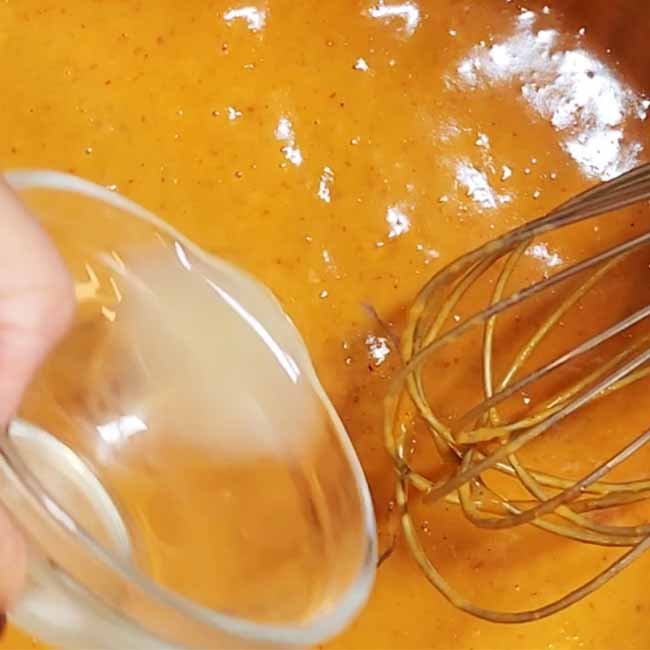
As the sauce warms and the ingredients meld together, assess the consistency. The sauce will thicken as it simmers. If it seems too thick, gradually add up to a quarter cup of water, stirring well after each addition until you achieve the right silky texture. Stir continuously and keep the heat at a gentle simmer, not a boil. Boiling breaks coconut milk. A simmer holds it together. Simmer for five to ten minutes until the sauce is fragrant and slightly thickened.

Step 3. Add lime juice off the heat and adjust seasoning.
Remove from heat. Stir in the fresh lime juice immediately. Taste and adjust: more tamarind for sour, more palm sugar for sweet, more fish sauce for salt. The sauce should be savory, sweet, and sour all at once, no single flavor louder than the others. The lime goes in off the heat so the brightness stays present rather than cooking off.
Step 4. Rest and serve.
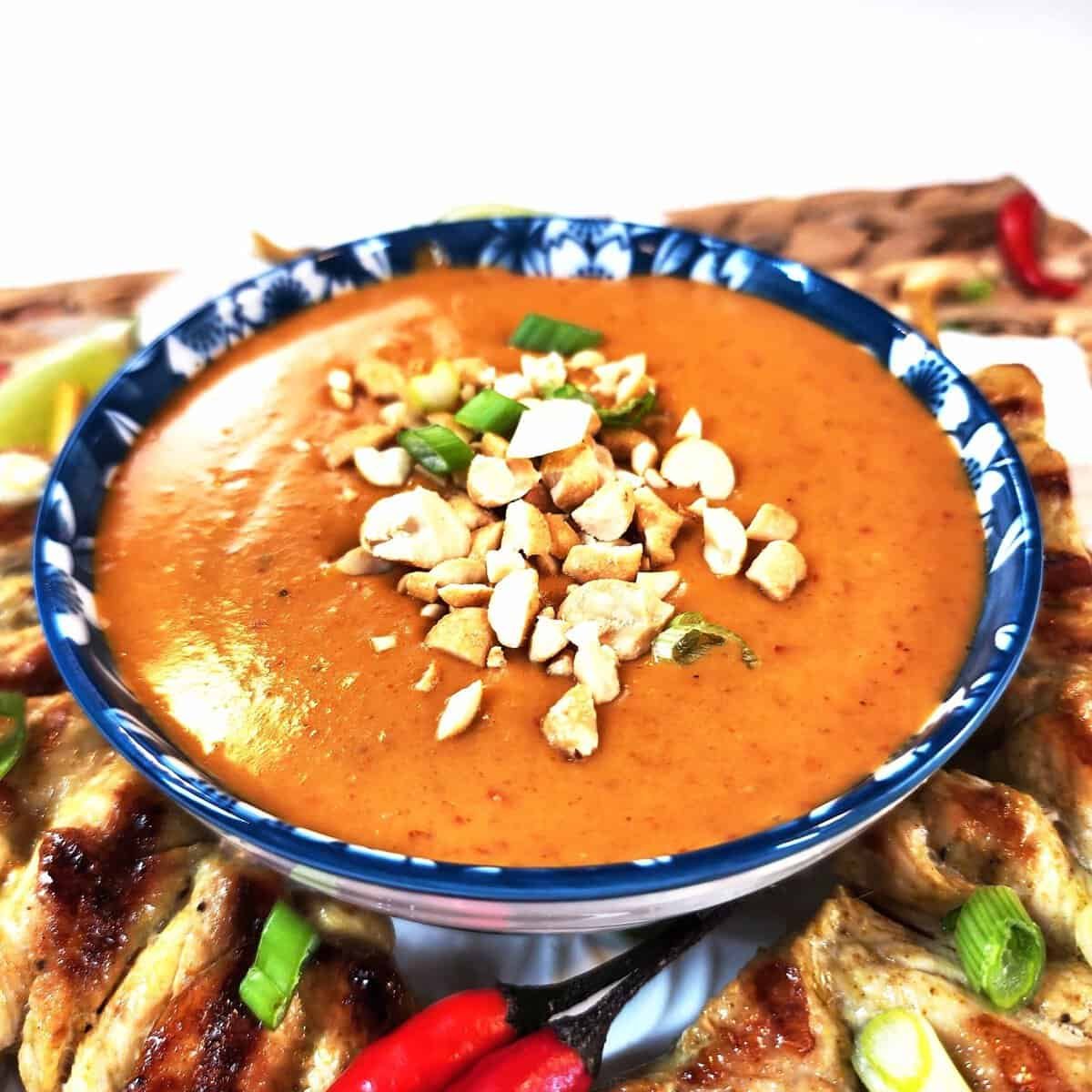
Let the sauce sit for five minutes off the heat before serving. It continues to thicken as it cools. Serve warm, not hot. It should pour slowly from the spoon. If it has gone too thick, add a tablespoon of warm water and stir. Transfer to a serving bowl, sprinkle crushed peanuts and freshly chopped cilantro on top, and serve alongside satay or anything else worth dipping.

Authentic Thai Peanut Sauce Recipe
Ingredients
- 1 cup coconut milk
- 1/2 cup ground roasted peanuts or natural unsweetened peanut butter
- 2 tablespoons red curry paste
- 2 tablespoons brown sugar
- 2 tablespoons fish sauce
- 1 teaspoon soy sauce
- 1/2 teaspoon ground cumin
- 1/4 cup water adjust as needed for desired consistency
- 2 tablespoons lime juice freshly squeezed
- 1/4 cup crushed peanuts for garnish
- Chopped cilantro for garnish
Instructions
- Combine the Base Ingredients: Open the can of coconut milk without shaking it. Spoon the thick cream from the top into your saucepan. Medium heat. Let it warm until it begins to bubble at the edges, about two minutes. Add the red curry paste. Stir. Watch it turn the cream orange, then deep red. The smell changes immediately. That is the fat releasing the aromatics. That is the moment the sauce begins.Once the paste is blooming and fragrant, add the remaining coconut milk, natural peanut butter, brown sugar, fish sauce, soy sauce, and ground cumin. Whisk together until smooth and fully combined. The color will lighten slightly as the milk joins the paste. Place over medium heat and bring to a gentle simmer, stirring frequently to prevent sticking.
- Simmer to Develop Flavors: As the sauce warms and the ingredients meld together, assess the consistency. The sauce will thicken as it simmers. If it seems too thick, gradually add up to a quarter cup of water, stirring well after each addition until you achieve the right silky texture. Stir continuously and keep the heat at a gentle simmer, not a boil. Boiling breaks coconut milk. A simmer holds it together. Simmer for five to ten minutes.
- Perfect the Consistency: Remove from heat. Stir in the fresh lime juice immediately. Taste and adjust: more lime for sour, more palm sugar for sweet, more fish sauce for salt. The sauce should be savory, sweet, and sour all at once, no single flavor louder than the others. The lime goes in off the heat so the brightness stays present rather than cooking off.
- Serve:Let the sauce sit for five minutes off the heat before serving. It continues to thicken as it cools. Serve warm, not hot. It should pour slowly from the spoon. If it has gone too thick, add a tablespoon of warm water and stir. Transfer to a serving bowl, sprinkle crushed peanuts and serve alongside satay or anything else worth dipping.
Video

Notes
Nutrition
LET’S GET THIS RIGHT
Why does my Thai peanut sauce taste too sweet?
The palm sugar is running ahead of everything else. Add tamarind paste by the half teaspoon and taste each time. The sour note is what pulls the sweetness back into the sauce. If tamarind is not available, fresh lime juice works, add it off the heat so the brightness stays.
Why is my sauce grainy or broken?
The heat was too high. Coconut milk breaks when it boils hard. Bring the sauce to a simmer and keep it there. If it has already broken, take it off the heat, add two tablespoons of fresh coconut milk, and stir slowly in one direction. It usually comes back.
Can I use peanut butter instead of ground peanuts?
Yes. Natural unsweetened peanut butter works well and produces a smoother, richer sauce. Ground roasted peanuts give you more texture and a slightly bitter edge. Both are correct. If you use peanut butter, start with a little less than the recipe calls for and taste before adding palm sugar, peanut butter varies in sweetness by brand.
Why does my sauce taste flat even though I followed the recipe?
It needs salt. Not more fish sauce necessarily, taste first. Sometimes the peanuts need a little more time in the heat to open up. Give the sauce another two minutes on low, stirring constantly. Then taste again. If it is still flat, add fish sauce in half teaspoon increments.
How do I keep the sauce from turning stiff in the refrigerator?
It will stiffen. That is normal. Reheat it gently in a small saucepan over low heat with one to two tablespoons of warm water. Stir continuously. It will loosen within two minutes. Do not microwave it at high heat, it separates.
FLAVOR PROFILE
The first thing is the aroma. Before the sauce touches your tongue, the roasted peanut and coconut come forward and the red curry paste follows close behind, warm spice, not fire.
Then the taste. Savory first. The fish sauce and the curry paste together, underneath the richness of the coconut. Then the sweetness arrives, palm sugar, slow and low, not sharp.
The texture is where this sauce is different from anything you buy in a jar. It is thick but not heavy. It coats the meat and stays there. When you bite through a piece of chicken satay, the sauce does not slide away. It holds.
The heat is present but not loud. The curry paste does its job quietly. It warms the back of your mouth and then it is gone.
You do not finish eating and think about the sauce. You think about whatever you were doing the first time you had it. That is what it does.
SUSIE’S KITCHEN NOTES
Always fry the curry paste in the coconut cream before anything else goes in. This is not optional. The fat in the cream carries the volatile aromatics in the paste, the lemongrass, the galangal, the kaffir lime, and releases them into the sauce. If you add the paste to already-thinned coconut milk, those aromatics never fully open. The sauce will taste flat and raw. Thirty seconds of patience at the beginning changes everything.
Grind the peanuts yourself. I use a small food processor and pulse for about twenty to thirty seconds. I want pieces, some the size of a grain of rice, some a little larger. That variation is what gives the finished sauce its texture. Pre-ground peanuts from a bag are usually too fine and too uniform. They make the sauce dense rather than rich.
Let the sauce rest off the heat before you judge it. It will taste different at 180 degrees than it does at 130. The tamarind rounds out as it cools. The sweetness settles. I have pulled a sauce off the stove convinced it needed more fish sauce, left it for five minutes, and found it was exactly right. Patience is a technique.
If you are serving this to guests, make it the day before. I am not being dramatic. The sauce on day two is markedly better than the sauce on day one. The peanuts have given everything they have to the coconut milk overnight. The tamarind has softened into the fat. Reheat it gently and do not rush it.
PAIRING SUGGESTIONS
This Thai peanut sauce recipe was built for chicken satay, but it does not belong to it. Spoon it alongside a platter of fresh spring rolls. The contrast between the cool rice paper and the warm, thick sauce is exactly right. It works with grilled pork, with roasted sweet potato, with blanched green beans. Thin it slightly with lime juice and toss it through rice noodles for something that is almost a different dish entirely. For the full satay experience, serve it with a cucumber relish, the bright acid cuts through the richness and resets your palate between bites. You will find my cucumber ajad relish here. If you are building a Thai spread, this sauce alongside my Thai Green Curry and a plate of jasmine rice is the kind of meal that ends with everyone quiet in the best way.
FAQ
What is the best Thai peanut sauce recipe for satay?
The best Thai peanut sauce recipe for satay is made with coconut milk, red curry paste, natural peanut butter, palm sugar, fresh lime juice, and fish sauce. It is cooked on the stovetop, not blended cold, and simmered until the flavors come together into one thing. That cooking step is what separates a real Nam Jim Satay from a jar of peanut sauce with coconut added at the end.
Is Thai peanut sauce the same as satay sauce?
In Thailand, yes. Nam Jim Satay is the peanut-based dipping sauce that accompanies grilled meat skewers. Outside Thailand, satay sauce sometimes refers to other things depending on the country. What you want is the version with coconut milk and red curry paste. That is the Thai one.
Can I make Thai peanut sauce ahead of time?
Yes. Make it the day before. The sauce improves overnight as the peanut butter gives its oil to the coconut milk and the flavors settle into each other. Store it in the refrigerator in a sealed jar. Reheat gently on the stovetop with a tablespoon or two of warm water, stirring until it comes back together.
How do I thin Thai peanut sauce that has gotten too thick?
Add warm water by the tablespoon, stirring continuously over low heat. Do not use cold water, it can cause the coconut milk to seize. One to two tablespoons is usually enough to bring it back to the right consistency. If you are thinning it to use as a noodle dressing, fresh lime juice works well and adds a bright note.
How do I adjust the sourness in a Thai peanut sauce recipe?
Fresh lime juice is the source of sourness in this recipe. Start with two tablespoons added off the heat, taste, and add more if needed. The lime should be clearly present but not dominant. If the sauce tastes too sour, a small amount of additional palm sugar brings it back into balance.
How long does homemade Thai peanut sauce keep in the refrigerator?
Up to five days in a sealed container. The flavor deepens each day. On day one it is good. On day two it is better. By day three, the peanuts and coconut milk have become one thing. Reheat gently each time and stir well before serving.
Does Thai peanut sauce contain fish sauce?
The traditional Thai version does. Fish sauce provides the salt and a layer of umami that table salt cannot replicate. If you need to make this sauce without fish sauce for vegetarian or vegan guests, substitute with soy sauce or tamari. Use a little less, taste as you go, and add a small squeeze of lime at the end to compensate for the depth you are missing.