
What Are Thai Fish Cakes?
Thai fish cakes, Tod Mun Pla (ทอดมันปลา), are fresh fish pounded with red curry paste, kaffir lime leaves, fish sauce, and egg, formed into flat round patties and fried until golden and springy. The fish must be fresh. The cucumber relish alongside is not optional. My mother mixed everything by hand. It filled the house with a smell I was not ready for as a child and came to love as an adult.
Note From Susie

Sawasdee Kha, and Hello.
This was my mother’s dish and my father’s dish before it was mine, and I am so glad it finally became mine too.
As a small child, the smell of the fish being prepared was a bit overwhelming. The spices I did not mind at all, the red curry paste and the kaffir lime were already familiar. But the fish itself took time. A small child’s palate needs time with some things, and that is perfectly fine.
My mother did not make this often, but when she did, you knew what was for dinner. The smell came through the house before the cakes were anywhere near the pan. She mixed everything by hand until she could feel it was right, formed each cake, and fried them golden. The cucumber salad went alongside, always. Fresh and cool and slightly sweet and sour against the warm, spiced cake.
She made it in Thailand and in Maryland. The fish had to be fresh. That was the instruction she always held to. Fresh fish makes the cake.
It took years for me to appreciate these fully. The fish that was too much for a small child became the whole point as an adult. Especially with the cucumber salad. That combination was what finally made it click, the warm and the cool, the spiced and the fresh. Everything my mother already knew.

What’s In This Page
“The fish that was too much for a small child became the whole point as an adult.”
— Her Hands His EyesWhat Are Thai Fish Cakes?
Thai fish cakes, ทอดมันปลา, Tod Mun Pla, are one of the most iconic Thai street foods and one of the most distinctive in texture and flavor. Fresh white fish, either pounded in a mortar or processed until a smooth paste forms, is combined with red curry paste, finely shredded kaffir lime leaves, fish sauce, egg, and sliced green beans, then formed into flat round patties and fried in hot oil until the exterior is golden and slightly crisp and the interior is springy and dense. The springiness is the signature texture of a properly made Thai fish cake, and it comes from working the fish paste until the proteins break down and become elastic.
What makes Thai fish cakes distinct from Western fish cakes or crab cakes is the red curry paste and the kaffir lime leaves in the mixture. The curry paste provides depth and a building warmth. The kaffir lime leaves, sliced into the thinnest possible shreds, distribute through every bite as flecks of fragrance rather than identifiable pieces. The fish sauce is the salt. The egg binds. The result is something that is simultaneously familiar in its fried, hand-held form and completely specific in its flavor profile.
Tod Mun Pla is served with a cucumber relish, Ajad, made from cucumber, shallots, roasted peanuts, and a sweet vinegar dressing. This is not an optional garnish. The cool, slightly sweet, slightly sour relish is the direct counterpart to the warm, spiced fish cake, and eating them together is what makes the dish complete. According to the Oxford Companion to Food, fish paste preparations are found throughout Southeast Asian cooking, with the Thai version distinguished by its curry paste seasoning and its characteristic springy texture.
The fish had to be fresh. My mother always held to that.
What You’ll Need
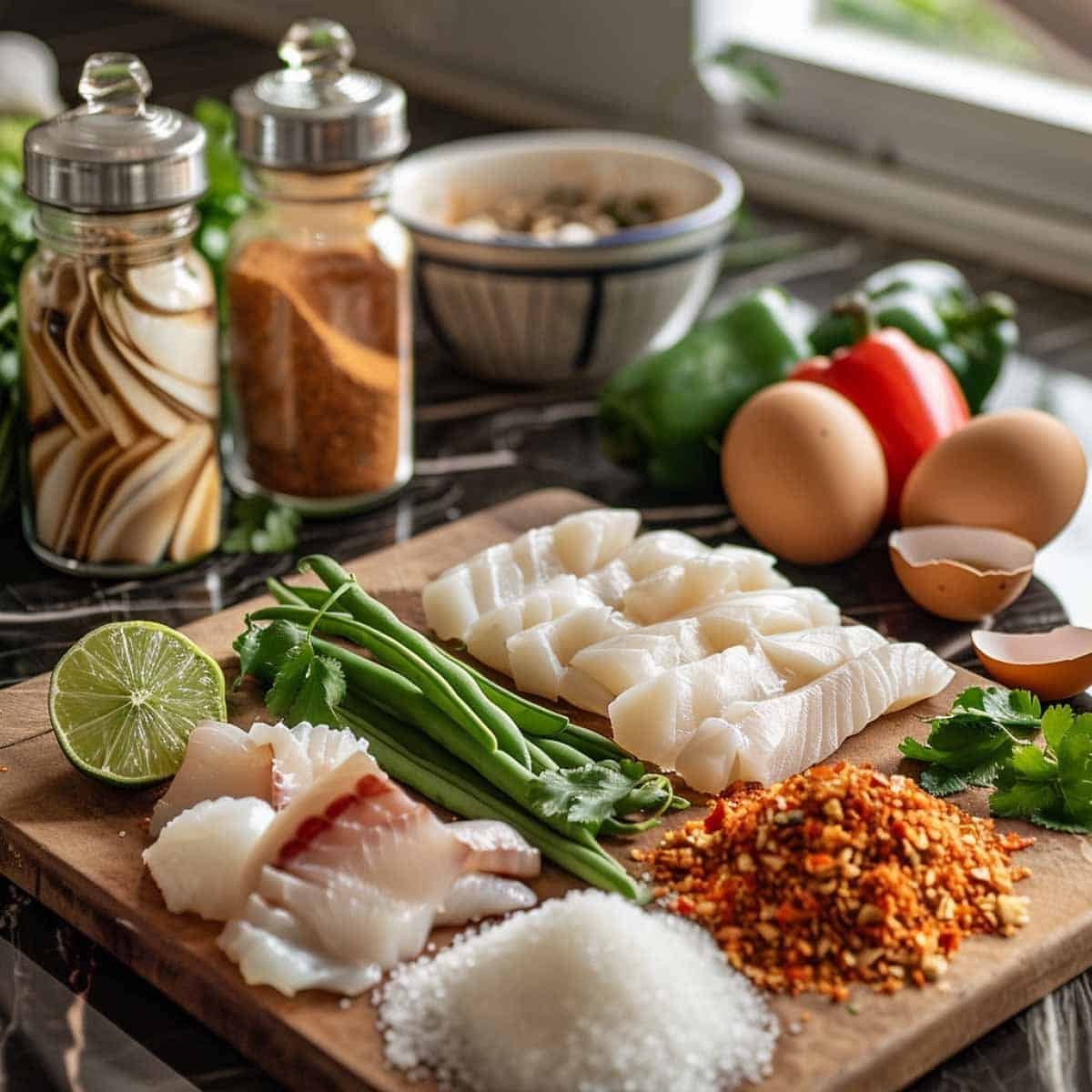
Fresh white fish is the foundation and the most important ingredient in Thai fish cakes. The freshness is not a preference, it is a requirement. Fresh fish produces a paste that is sweet, slightly briny, and clean, that holds together properly and fries into a springy, golden cake. Fish that is not fresh produces something that smells and tastes wrong before it ever reaches the pan. Use whatever fresh white fish is available and of good quality. Tilapia works well. Cod works well. Mackerel is traditional in Thailand and produces the most flavourful result. One pound makes approximately eight to ten cakes.
The fish is processed into a paste in a food processor, pulsing until smooth and slightly sticky, or pounded in a mortar for the most traditional result. The mortar produces a slightly coarser, more textured paste. The food processor produces a smoother paste and is more practical for most home cooks. Either is correct.
Red curry paste, two tablespoons. This is the seasoning base, providing the lemongrass, galangal, and dried chili flavor that makes these fish cakes Thai. Store-bought paste works. Homemade produces a more complex result.
Kaffir lime leaves, four to six, finely shredded. The central stem removed, the leaves folded and cut into the thinnest possible strips. They distribute through the fish paste and are present in every bite as fragrance rather than texture. Do not leave them in large pieces.
Fish sauce, one tablespoon. One egg. Cornstarch, one tablespoon, to help the cakes hold their shape and contribute to the crisp exterior. Green beans, a small handful, sliced thin into rounds.
For the cucumber relish: cucumber, shallots, fresh red chili, roasted peanuts, rice vinegar, sugar, and salt. This is made separately and served alongside.
Neutral oil for frying.
VISUAL WALK THROUGH
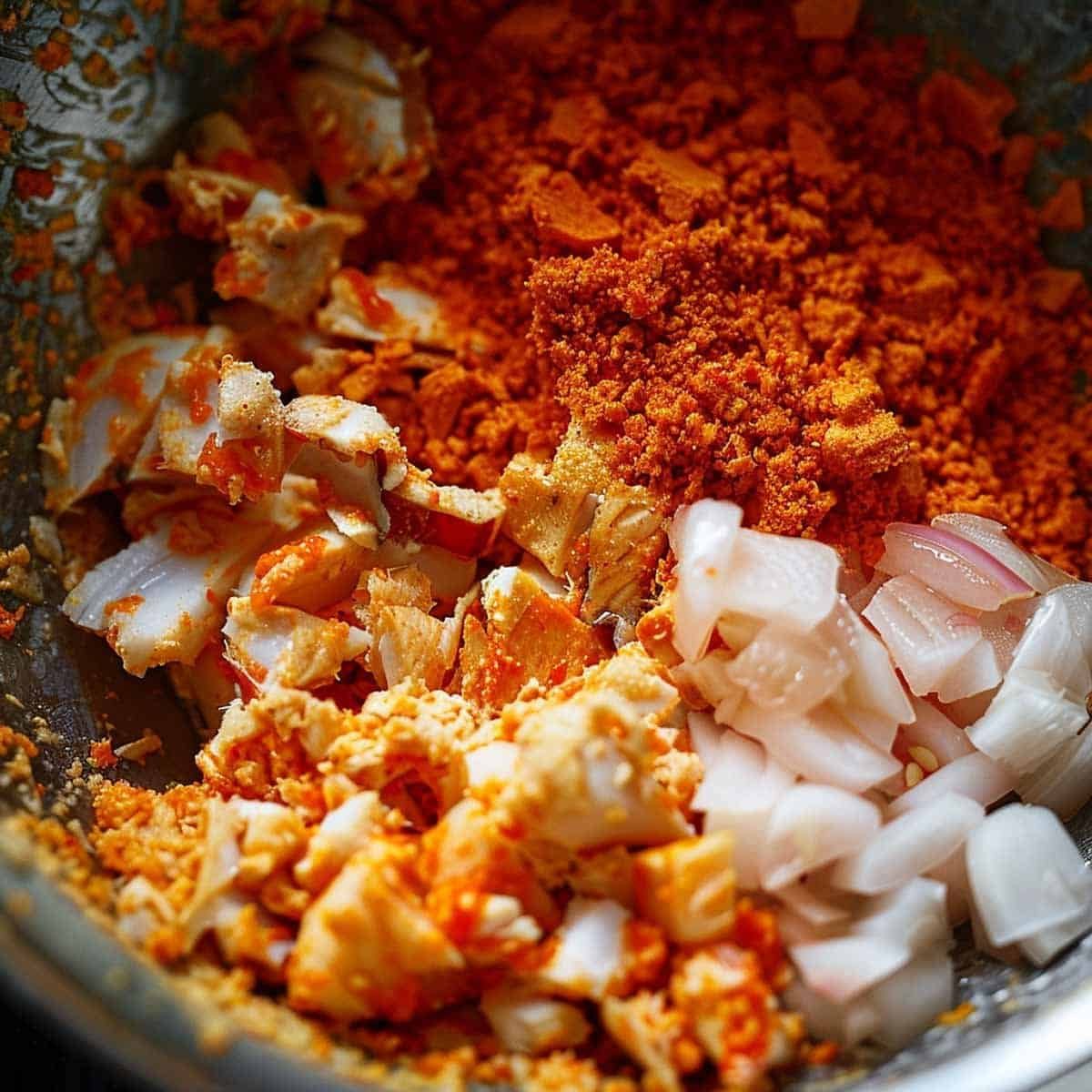
Step 1. Process the fish into a smooth, slightly sticky paste.
Cut the fresh fish into rough pieces and pulse in a food processor until a smooth, slightly sticky paste forms. Do not over-process into a completely liquid purée. The paste should hold together when pressed between the fingers and feel slightly tacky. Transfer to a bowl. Add the red curry paste, finely shredded kaffir lime leaves, fish sauce, egg, and cornstarch. Mix everything together thoroughly until completely unified. My mother did this by hand, working the mixture until it felt right. Use your hands if you are comfortable. A spatula or wooden spoon works for those who prefer not to. Then fold in the sliced green beans.
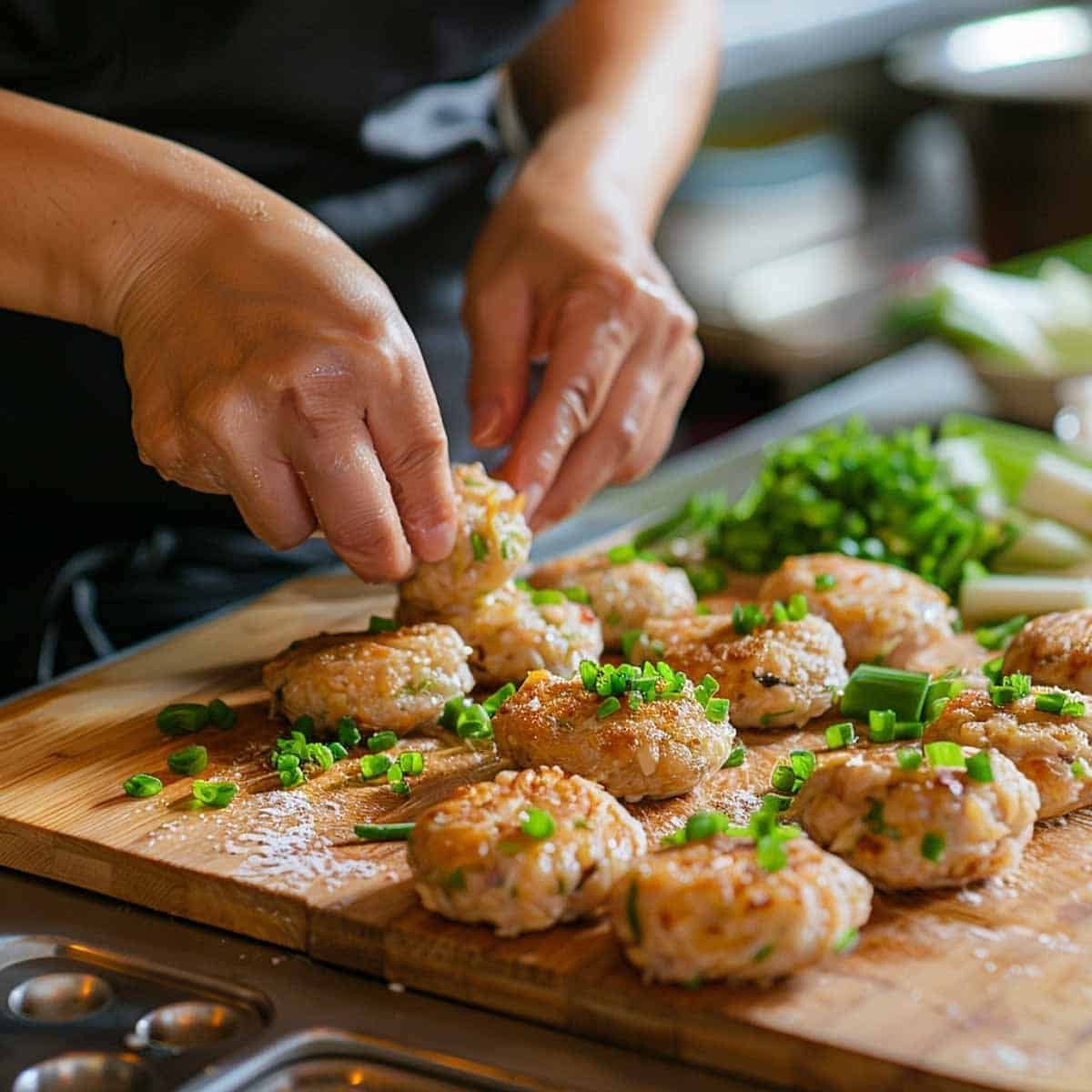
Step 2. Form the cakes with wet hands. Refrigerate before frying.
Wet your hands thoroughly with cold water before forming each cake. The mixture is sticky and wet hands prevent it from adhering. Take about two tablespoons of mixture and form a flat, round patty about half an inch thick. Consistent thickness ensures even cooking. Place each formed cake on a lightly oiled plate. Refrigerate for fifteen to twenty minutes. The cold firms the mixture so the cakes hold their shape when they hit the oil rather than spreading flat.
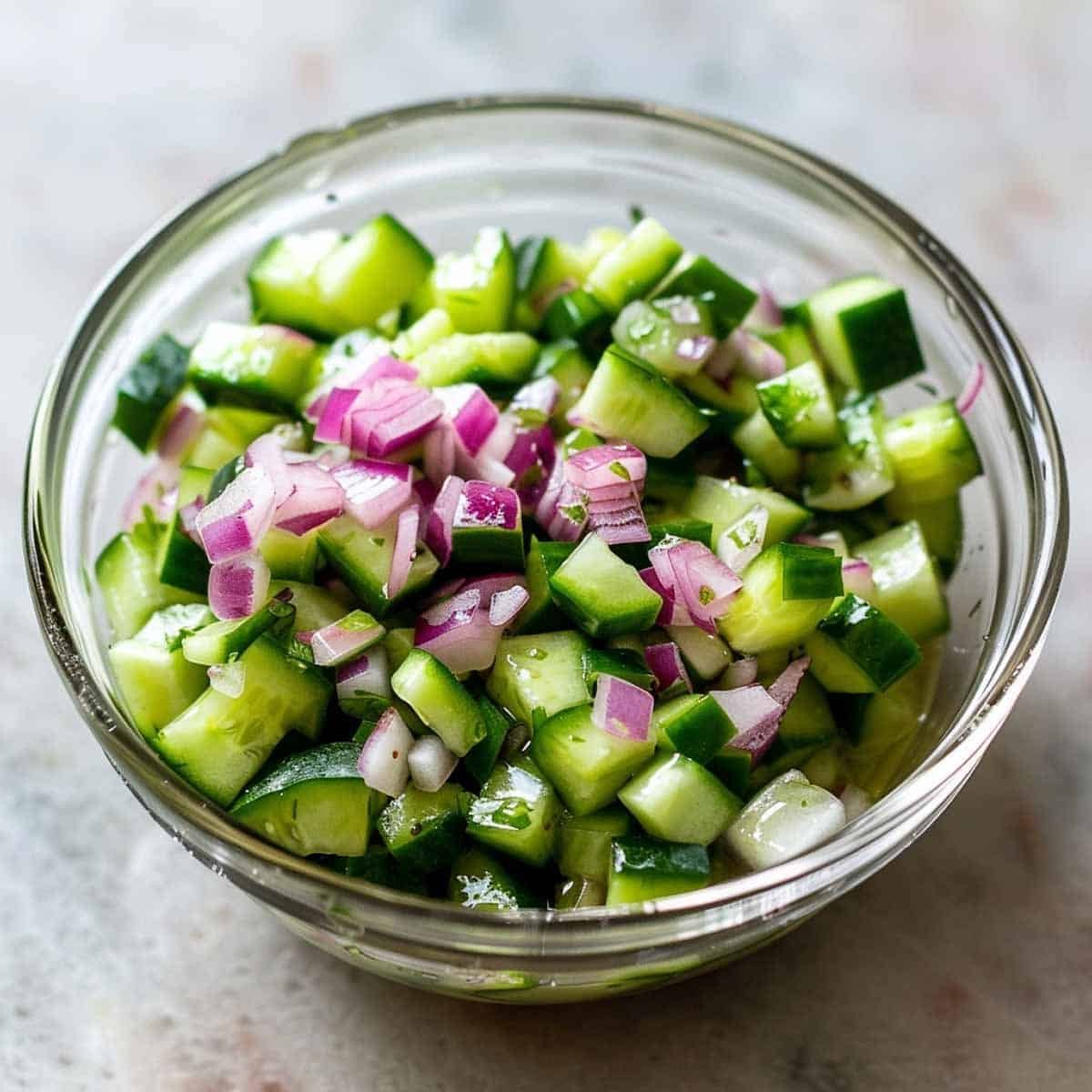
Step 3. Make the cucumber relish while the cakes chill.
Thinly slice cucumber and shallots. Combine rice vinegar, sugar, and a pinch of salt in a small bowl and stir until the sugar dissolves. Add the cucumber, shallots, sliced fresh red chili, and roughly chopped roasted peanuts. Toss and let sit for ten minutes while the fish cakes chill. The relish needs a little time for the vinegar to do its work on the vegetables. This is the combination that made Thai fish cakes finally make sense to me. Cool, slightly sweet, slightly sour alongside warm, spiced, and golden.
★ Step 4. Fry at the right temperature without crowding. This is What Makes the Difference.
Heat neutral oil to 350°F in a wide pan. The oil should be deep enough to reach halfway up the sides of the cakes. Add the chilled cakes in small batches, never crowding the pan. Three to four minutes per side until deeply golden on both sides. The cakes should release cleanly from the pan when the bottom is properly set. If they resist when you try to turn them, wait thirty more seconds. Do not force the turn. When the edge is visibly golden and the cake lifts without resistance, it is ready to turn.
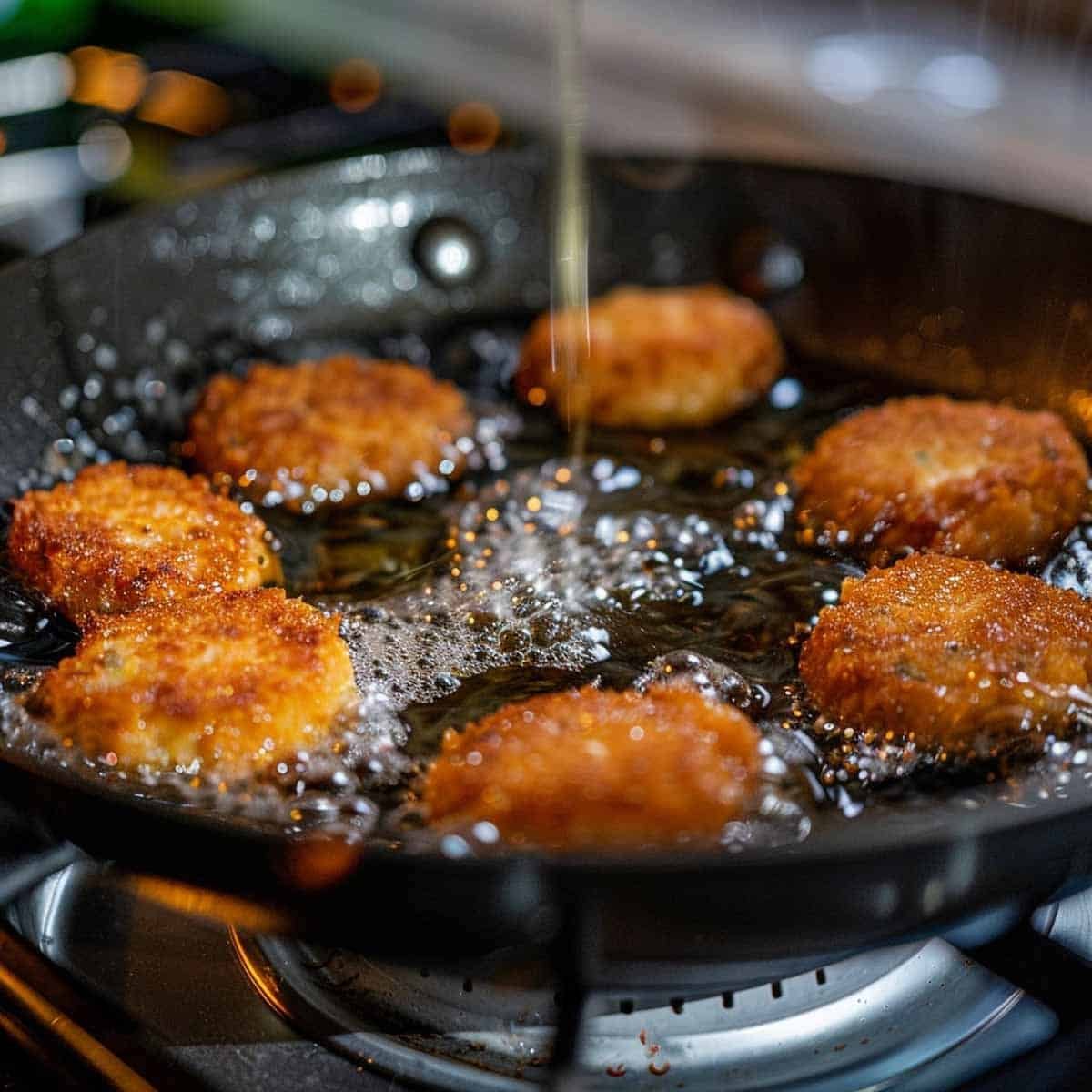
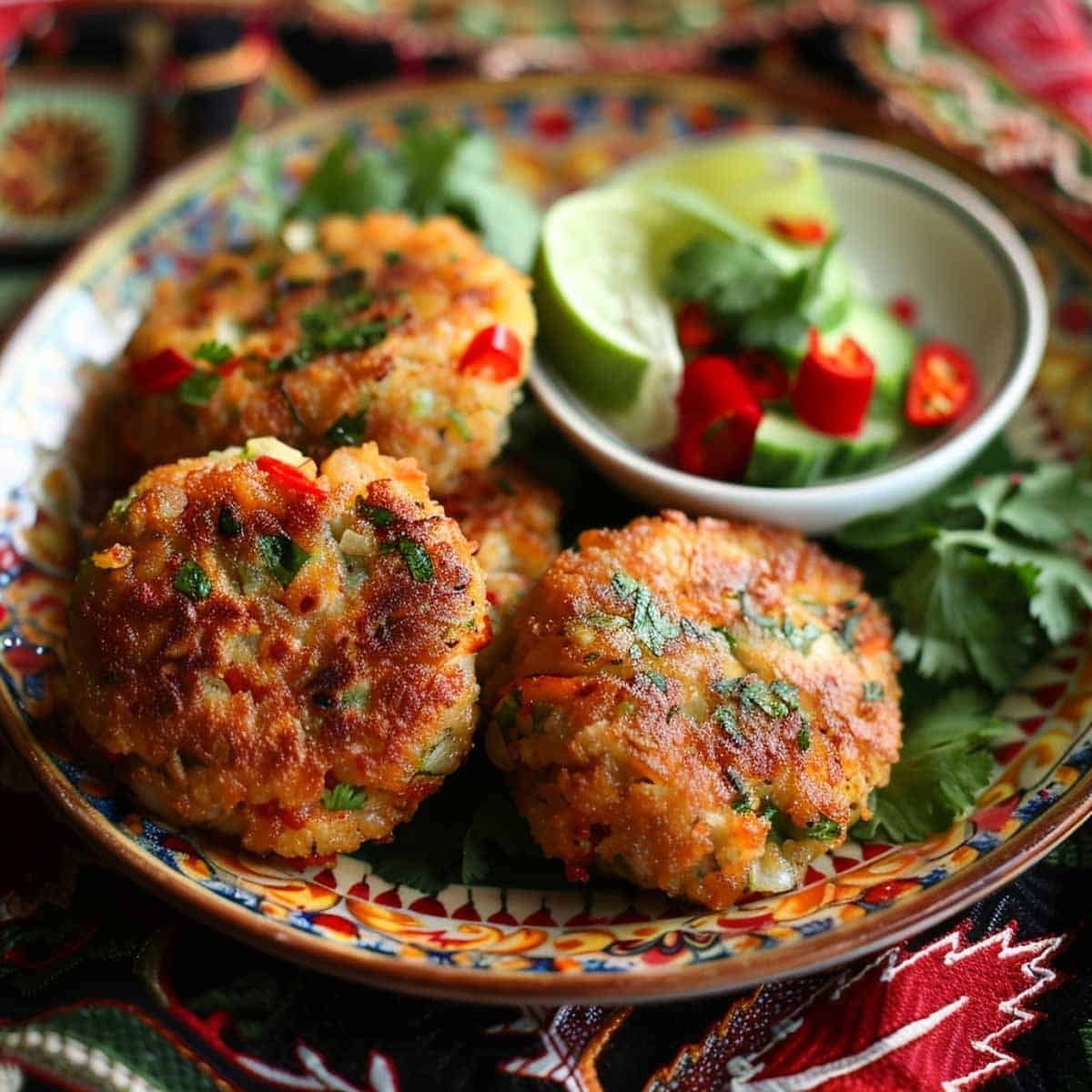
Step 5. Drain briefly and serve immediately with the cucumber relish.
The cakes come off the pan onto paper towels for thirty seconds, then immediately to the plate. They are at their best the moment they are done, the exterior crisp and the interior springy and warm. The cucumber relish alongside, cool and fresh. Eat them together. That is the dish. That is what it has always been.

Tod Mun Pla ทอดมันปลา Thai Fish Cakes
Equipment
- Food processor
- wok or deep heavy skillet
- thermometer
- paper towels
- small saucepan for the relish
Ingredients
- 1 pound white fish fillets such as cod tilapia, or catfish, roughly chopped
- 2 tablespoons red curry paste
- 1 egg
- 1 tablespoon fish sauce
- 1 teaspoon sugar
- 6 kaffir lime leaves very finely sliced (stems removed)
- 0.3 cup long beans or green beans thinly sliced into rounds
- 2 cups vegetable oil for deep frying
- 1 medium cucumber quartered lengthwise and thinly sliced
- 3 shallots thinly sliced
- 3 fresh red chilies thinly sliced
- 3 tablespoons white vinegar
- 2 tablespoons sugar for the relish
- 0.5 teaspoon salt for the relish
- 3 tablespoons water
- 2 tablespoons roasted peanuts roughly crushed, for the relish
- 4 fresh cilantro sprigs to garnish
Instructions
- Make the cucumber relish first: Make the relish first so it has time to develop flavor. In a small saucepan combine vinegar, sugar, salt, and water. Heat gently over low heat, stirring until the sugar dissolves completely. Remove from heat and cool to room temperature. Once cool, pour over the sliced cucumber, shallots, and fresh chilies. Scatter crushed peanuts over the top. Set aside at room temperature while you make the fish cakes.
- Make the fish paste: Place the roughly chopped fish in a food processor and pulse until a smooth, slightly sticky paste forms. Add red curry paste, egg, fish sauce, and sugar. Process again until everything is fully combined and the paste is smooth, cohesive, and slightly elastic. It should hold together when you press a little between your fingers. Transfer to a bowl.
- Add the aromatics: Fold the finely sliced kaffir lime leaves and long bean rounds into the fish paste by hand. Mix gently but thoroughly until evenly distributed. If the paste feels very soft and hard to handle, cover and refrigerate for 15 minutes to firm it up.
- Shape the fish cakes: Wet your hands with cold water. Take a generous tablespoon of paste and shape it into a round patty about 2 inches wide and half an inch thick. Press firmly and evenly so the patty is compact and uniform. Repeat with the remaining paste. You should get about 12 patties.
- Fry the fish cakes: Heat oil in a wok or deep skillet to 350°F. Fry the fish cakes in batches of 4 to 5, never crowding the pan. Fry for about 3 minutes per side until deep golden and cooked through. Remove with a slotted spoon and drain on paper towels.
- Serve: Arrange the fish cakes on a serving plate and garnish with fresh cilantro. Serve immediately alongside the cucumber relish. In Thailand these are eaten hot, straight off the oil, standing at the stall. That is still the best way.
Notes
Nutrition
LET’S GET THIS RIGHT
Why are my Thai fish cakes falling apart in the oil?
The mixture was not worked enough to become cohesive, the cakes were not refrigerated before frying, or the oil was not at temperature. The fish paste needs to be sticky and unified before anything else is added. Refrigerating for fifteen to twenty minutes firms the mixture so the cakes hold their shape. Oil that is not at 350°F allows the cakes to absorb oil before the exterior sets, weakening the structure. Address all three and the cakes will hold.
Why are my Thai fish cakes not springy inside?
The fish was over-processed into a liquid purée rather than a cohesive paste, or the cakes were overcooked. The springy texture comes from partially broken-down fish proteins. Over-processing destroys that structure. Overcooking at too high a temperature also produces a rubbery, tough result rather than a springy one. Process until the paste holds together but still has some texture. Fry at 350°F for three to four minutes per side.
What fish is best for Thai fish cakes?
Fresh white fish is correct. Tilapia, cod, and mackerel all work well. Mackerel is traditional in Thailand and produces the most flavourful result, though its stronger flavor is the one that takes the most getting used to. Tilapia is the mildest option and the most approachable for those new to the dish. Whatever fish is used, freshness is the most important quality. Fresh fish of any variety produces better Thai fish cakes than old fish of the ideal variety.
Can I make Thai fish cakes ahead of time?
The formed, uncooked cakes keep refrigerated for up to one day. This actually improves their structure. Fry them fresh just before serving. Cooked Thai fish cakes can be reheated in a 350°F oven for five minutes on a wire rack. They are best eaten immediately after frying but will hold for up to thirty minutes in the oven without significant loss of quality. The cucumber relish can be made up to two hours ahead and kept refrigerated.
What is the cucumber relish served with Thai fish cakes?
The cucumber relish is called Ajad. It is made from thinly sliced cucumber and shallots in a dressing of rice vinegar, sugar, and salt, with sliced fresh red chili and roughly chopped roasted peanuts. It is sweet, sour, slightly spicy, and cool, the direct counterpart to the warm, spiced fish cake. It takes ten minutes to make and it is the component that makes the dish complete. My mother always put it alongside. It is not a suggestion.
FLAVOR PROFILE
The smell of the fish being prepared filled the house before anything reached the pan. As a small child I found it overwhelming. As an adult I recognize it as the smell of something that is going to be good.
The cakes come out of the oil golden and slightly darker at the edges where the heat was most direct. The exterior is firm. The interior, when you press one, gives slightly and springs back. That springiness is the sign that everything went correctly with the fish paste.
The first bite is savory and warm. The red curry paste is present and building. The kaffir lime is there as fragrance in every bite, the finely shredded leaves distributed through the cake. The fish is the foundation, its sweetness present beneath the curry paste and the fish sauce. The green bean pieces provide a slight crunch at intervals through the soft cake.
Then the cucumber relish. Cool and slightly sweet and sour, the vinegar cutting through the richness of the fried cake, the peanuts adding a different texture, the fresh chili adding a brightness that the spiced cake does not have. Together they are the dish. The warm and the cool, the spiced and the fresh, the fried and the crisp.
It took years to understand this. My parents understood it from the beginning.
SUSIE’S KITCHEN NOTES
My mother mixed the fish cake mixture by hand. She would work the fish paste and the curry paste and the kaffir lime and the egg together with her hands until she could feel that it was unified, that the mixture had become one thing rather than several things combined. Mixing by hand gives you a different sense of the mixture’s texture than a spoon or spatula does. You can feel when the fish paste is properly worked, when it has become sticky and cohesive and ready to be formed. If you are comfortable working with raw fish, use your hands. The mixture will tell you when it is ready.
The green beans sliced into the mixture should be as thin as you can manage, two to three millimeters in cross-section. They are in the cake for texture and color, a slight crunch at intervals. Large pieces make the cake harder to form and harder to eat cleanly. A sharp knife and patience is the right tool. A mandoline at its thinnest setting also works.
The oil temperature matters more for fish cakes than for almost any other fried food on this site because fish cakes are more fragile than chicken wings or pork skewers. Oil that is too cool allows the cakes to absorb oil and soften before the exterior sets. Oil that is too hot chars the exterior before the interior cooks through. 350°F is the target. A thermometer is the right tool. If you do not have one, test with a small piece of the mixture. It should sizzle immediately and begin to turn golden within thirty seconds.
The freshest fish available is always the correct choice for Thai fish cakes. My mother knew this and held to it regardless of what else in the recipe might vary. Fresh fish, properly worked into a paste, mixed with good red curry paste and finely shredded kaffir lime leaves, forms the kind of cake that made my parents stop whatever they were doing when the smell came through the house. That smell, for a small child, was too much. For an adult, it is exactly right.
PAIRING SUGGESTIONS
Thai fish cakes belong as a starter before a larger meal or as a shared dish alongside rice and soup. As a starter they pair naturally before the Thai shrimp green curry both of them built on red curry paste and kaffir lime, the fish cake a smaller expression of the same flavors that the curry develops more fully. For a spread where the fish cakes are part of a larger table, the Moo Ping brings its grilled pork alongside, and together they make a table of starters and snacks that a market stall would recognize. The Nam Prik Pao alongside the cucumber relish gives those who want more heat an alternative dipping option, the smoky roasted chili pastes against the cool sweet relish covering both directions. And for the drink that always belongs with warm, fried, spiced food, the Thai iced tea is cold and sweet and always the right answer. My mother and father loved this dish. It took me years to join them. I am glad I did.
FAQ
What are Thai fish cakes (Tod Mun Pla)?
Thai fish cakes, Tod Mun Pla (ทอดมันปลา), are fresh white fish pounded or processed into a paste, mixed with red curry paste, finely shredded kaffir lime leaves, fish sauce, egg, and sliced green beans, formed into flat round patties and fried until golden and springy. They are served with a cucumber relish called Ajad made from cucumber, shallots, peanuts, and a sweet vinegar dressing. The springy texture and the kaffir lime fragrance in every bite are what make them distinctly Thai.
How do you make Thai fish cakes step by step?
Process fresh white fish in a food processor until a smooth sticky paste forms. Add red curry paste, finely shredded kaffir lime leaves, fish sauce, egg, and cornstarch and mix until completely unified. Fold in thinly sliced green beans. Form into flat round patties with wet hands and refrigerate for 15-20 minutes. Fry in oil at 350°F for three to four minutes per side until deeply golden. Drain briefly and serve immediately with cucumber relish alongside.
What is the difference between Thai fish cakes and Thai shrimp cakes?
Thai fish cakes use fresh white fish as the base, producing a denser, more strongly flavored cake with a robust savory quality. Thai shrimp cakes use pounded or processed shrimp, producing a sweeter, more delicate cake. Both use red curry paste and kaffir lime leaves in the mixture and are served with cucumber relish and sweet chili sauce. The fish version is bolder and more assertive. The shrimp version is lighter and more immediately approachable. Both are correct preparations in Thai cooking.
Why do Thai fish cakes have a springy texture?
The springy texture comes from processing the fish until the proteins partially break down and become elastic, similar to the way surimi and fish balls develop their bounce. The fish paste should be processed until it is smooth and sticky but not over-processed into a liquid. The egg and cornstarch also contribute to the structure. Properly made Thai fish cakes have a firm, springy interior that gives when pressed and returns to shape. Overcooked cakes become rubbery. Under-processed paste produces a crumbly result.
What is Ajad, the cucumber relish served with Thai fish cakes?
Ajad is a Thai cucumber relish made from thinly sliced cucumber and shallots dressed in rice vinegar sweetened with sugar and seasoned with a pinch of salt, with sliced fresh red chilies and roughly chopped roasted peanuts added. It is cool, slightly sweet, slightly sour, and gently spiced. It is served alongside Thai fish cakes, Thai shrimp cakes, and satay. It is not a garnish. It is the direct counterpart to the warm, spiced fish cake and eating them together is how the dish is correctly eaten.
Can I bake Thai fish cakes instead of frying?
You can bake Thai fish cakes on a wire rack over a baking sheet at 425°F for twenty to twenty-five minutes, flipping once at the halfway point. Brush with a small amount of oil before baking. The result will be less golden and less crisp than the fried version and the exterior will not develop the same crust. Frying is the correct method and produces the texture the dish is known for. Baking produces something serviceable but different. If you must bake them, the flavor will still be correct.
How fresh does the fish need to be for Thai fish cakes?
Very fresh. The freshness of the fish is the most important quality in Thai fish cakes because the fish is the foundation of the paste and its flavor comes through completely in the finished cake. Fish that is not fresh will smell and taste wrong before it is ever fried, and no amount of red curry paste or kaffir lime can correct it. Buy the fish the day you plan to make the cakes. It should smell clean and faint, of the sea rather than strongly of fish. My mother held to this instruction always.