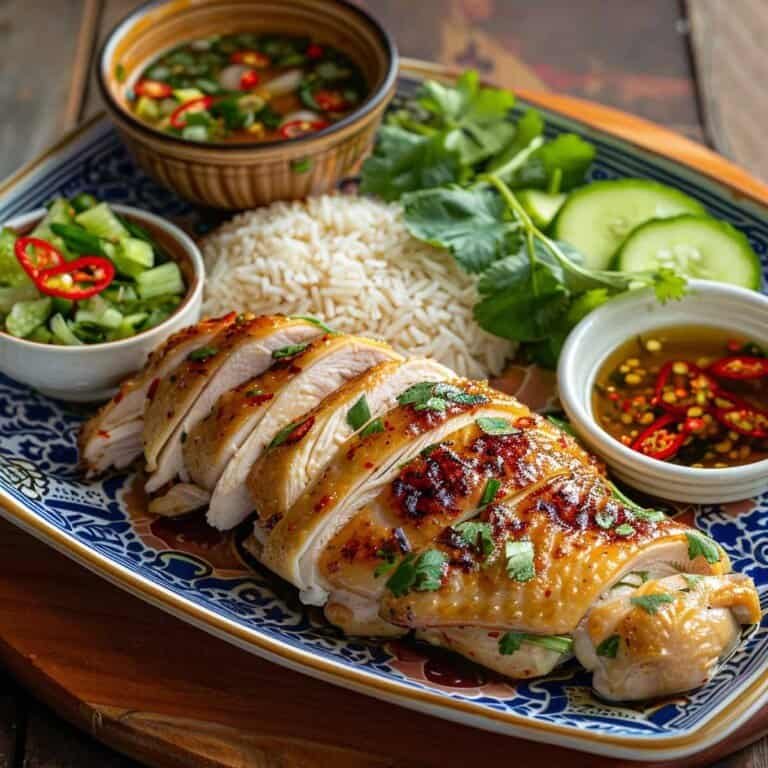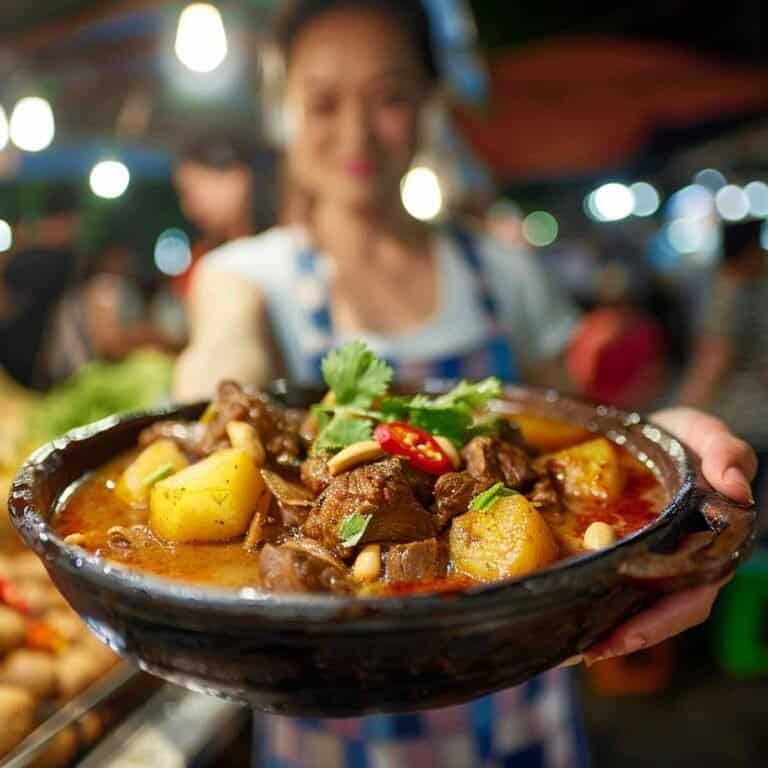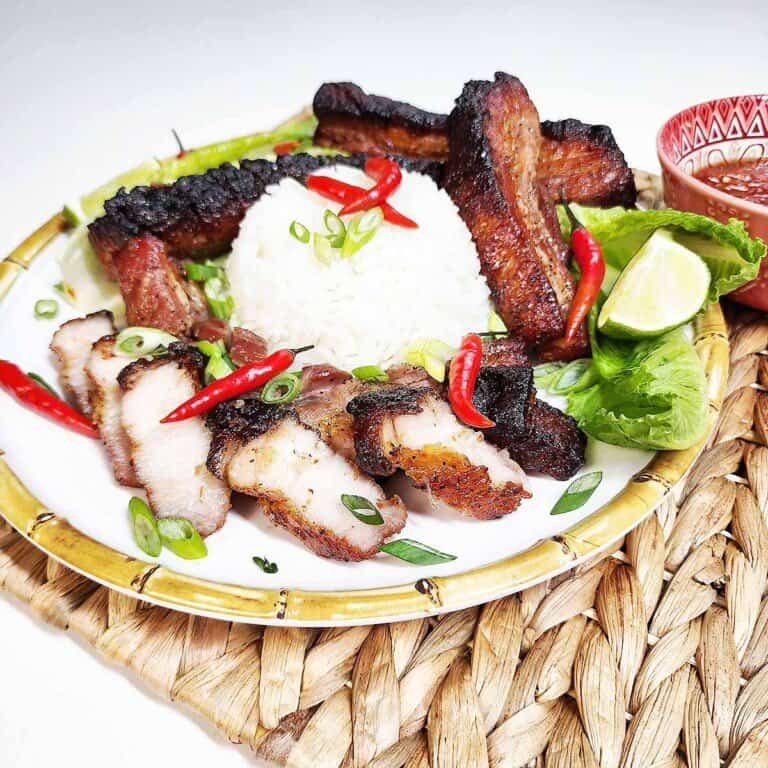
What Is Thai Chicken Satay?
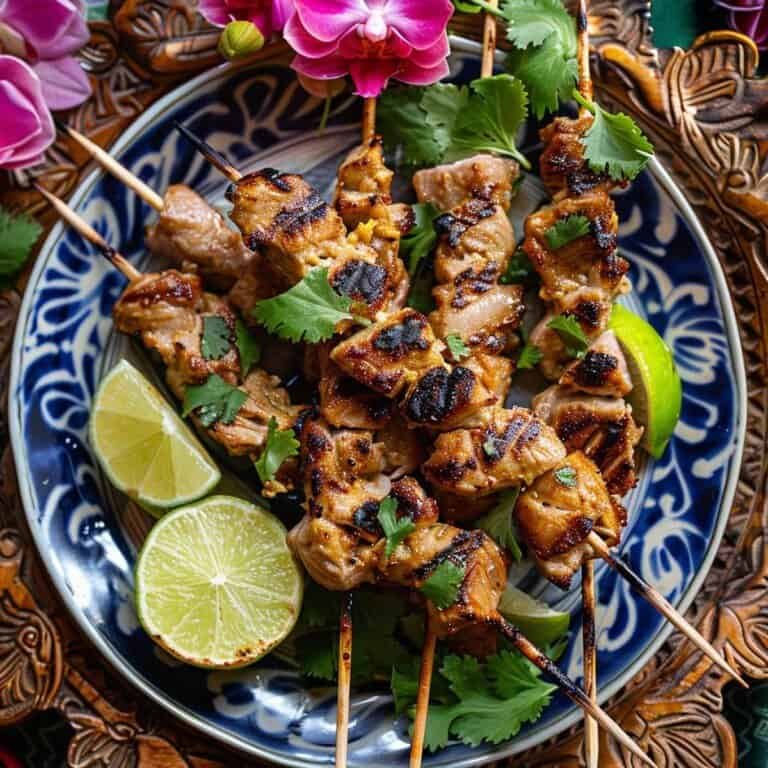
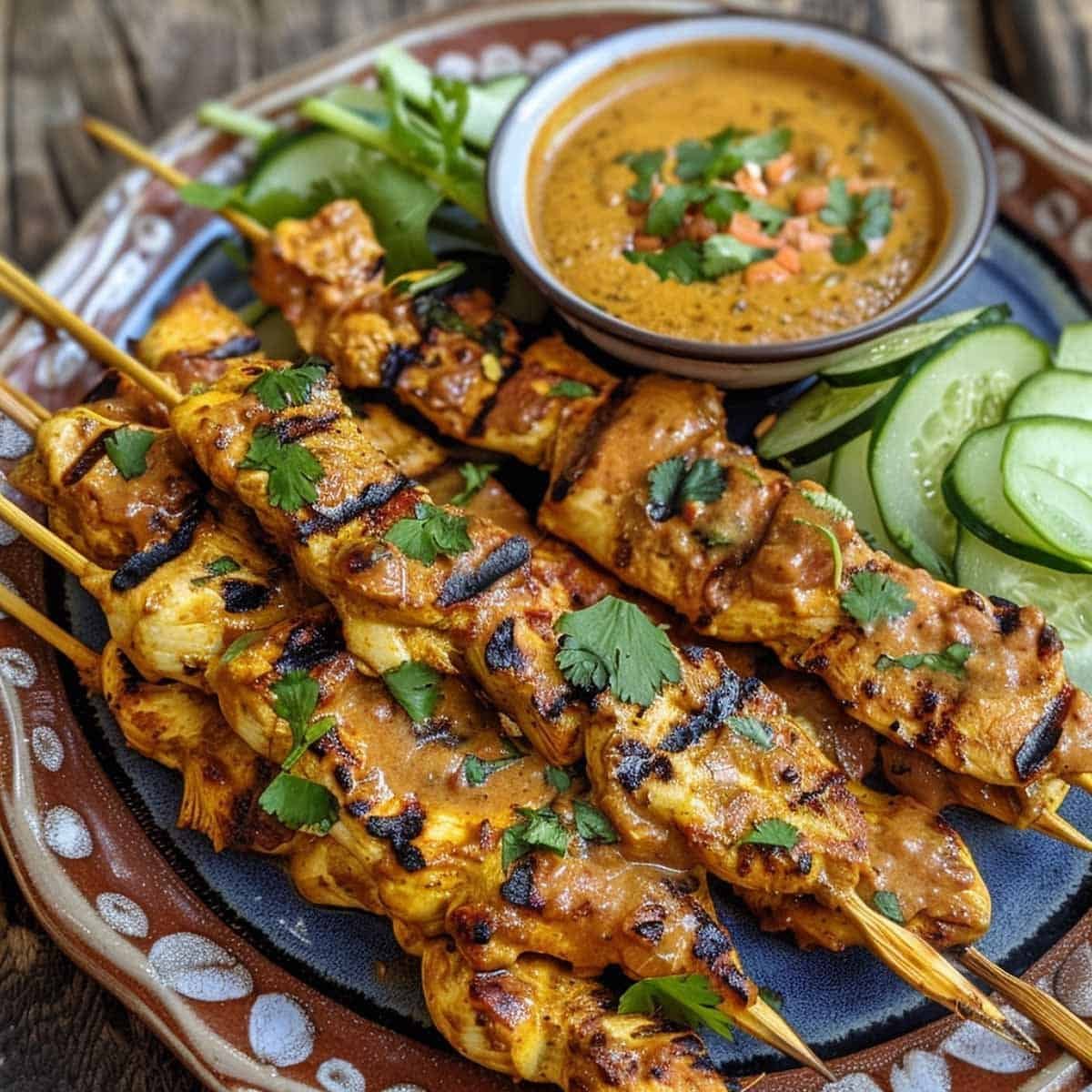
Thai chicken satay, Satay Gai (สะเต๊ะไก่), is chicken marinated in coconut milk, turmeric, lemongrass, and warm spices, threaded onto skewers and grilled until golden and caramelized. It is served with a sweet and savory peanut sauce and a cool cucumber relish alongside. The marinade is the smell you never forget. The peanut sauce is what makes it complete.
Note From Susie

Sawasdee Kha, and Hello.
This was a staple in our house and I grew up enjoying it from the very beginning, no growing into it required.
My mother and her sisters made Thai chicken satay at home in Thailand and in Maryland. The marinade, the grill, the smell of the chicken with the spices rising up from the coals. That smell is one I have never forgotten and do not expect to. It is the smell of something that is going to be good, and it always was.
We also found it at the market, always. Street vendors everywhere with the smoke rising and the skewers turning and the smell carrying across the whole market before you ever reached the stall. There was never a wrong time to have it. Morning or afternoon or evening, as a snack or part of dinner, with sticky rice alongside. It simply was always right.
The peanut sauce was sweet and savory and went perfectly with the chicken. That combination, the grilled spiced chicken and the peanut sauce, is one of the most natural pairings in Thai cooking. You taste it and you understand immediately why it has always been made this way. My mother knew this. The street vendors knew this. It is one of those things that is simply correct.
I still make this when I want the market. The marinade the night before, the grill hot in the morning or the evening, the smoke rising. The peanut sauce ready. The sticky rice waiting. Some things in life are simply right, and this is one of them.

What’s In This Page
“Some things in life are simply right, and this is one of them.”
— Her Hands His EyesWHAT IS THAI CHICKEN SATAY?
Thai chicken satay, สะเต๊ะไก่, Satay Gai, is one of the most recognized Thai dishes in the world and one of the most universally loved. Thin strips of chicken thigh are marinated in a mixture of coconut milk, turmeric, lemongrass, galangal, coriander, cumin, and fish sauce, threaded onto bamboo skewers, and grilled over charcoal or medium-high heat until golden, caramelized, and slightly charred at the edges. The marinade gives the chicken its distinctive yellow color and its warm, layered spice flavor. It is served with two accompaniments that are both essential: a peanut sauce that is sweet, savory, and slightly spiced, and a cucumber relish that is cool, slightly sweet, and sour.
Thai satay has roots in the Indonesian and Malay satay traditions that traveled through Southeast Asia with traders over centuries, but the Thai version has developed its own character. The turmeric and coconut milk in the marinade are specifically Thai, producing a chicken that is yellow-golden, slightly sweet from the coconut milk, and warm from the spices in a way that is different from any other grilled chicken preparation. The peanut sauce, made from ground roasted peanuts in a coconut milk and red curry base, is richer and more complex than a simple peanut dip, carrying the same warm spice profile as the chicken marinade.
Satay is found at every Thai street market, grilled to order over small charcoal grills, the smoke rising and the smell carrying across the market. Vendors turn the skewers steadily, basting with the remaining marinade, producing chicken that is caramelized on the outside and juicy within. According to the Oxford Companion to Food, satay preparations are among the most widely eaten street foods in all of Southeast Asia, with Thailand, Indonesia, Malaysia, and Singapore each producing distinct versions.
The smell of the marinade. The smoke from the grill. The peanut sauce sweet and savory alongside. A smell you never forget.
WHAT YOU’LL NEED
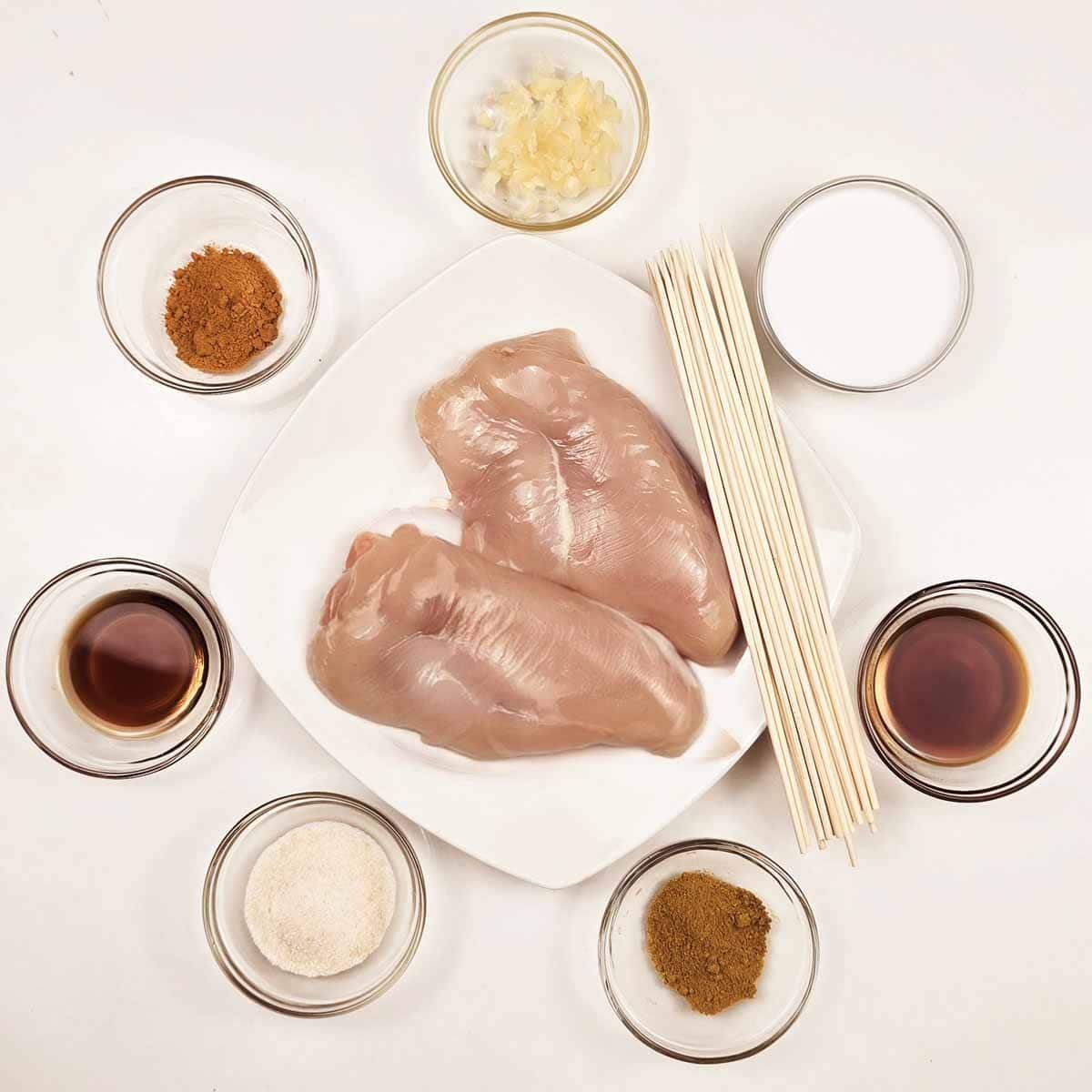
Chicken thighs, one pound, sliced into thin strips. Thigh meat stays moist and tender through the high heat of grilling in a way that breast meat does not. The strips should be thin enough to cook through quickly without drying out.
For the marinade: coconut milk, a quarter cup. Curry powder, two tablespoons. Fish sauce, two tablespoons. Brown sugar, two tablespoons. Turmeric powder, one tablespoon. Ground coriander, one teaspoon. Cumin powder, one teaspoon. Garlic, two cloves, minced. Lemongrass, one tablespoon, finely chopped. Vegetable oil, one tablespoon. All combined in a large bowl with the chicken strips, tossed to coat completely. Minimum two hours in the refrigerator. Overnight produces the best result.
Bamboo skewers, soaked in water for thirty minutes before threading and grilling.
For the peanut sauce: unsweetened coconut milk, one cup. Creamy peanut butter, half a cup. Soy sauce, two tablespoons. Brown sugar, two tablespoons. Red curry paste, one tablespoon. Lime juice, one tablespoon. Fish sauce, one teaspoon. All combined in a small saucepan over medium heat, stirred continuously until smooth and slightly thickened.
For the cucumber relish: sliced cucumber, red onion, rice vinegar, sugar, salt, and chopped cilantro combined in a bowl, left to sit at least ten minutes before serving.
VISUAL WALK THROUGH
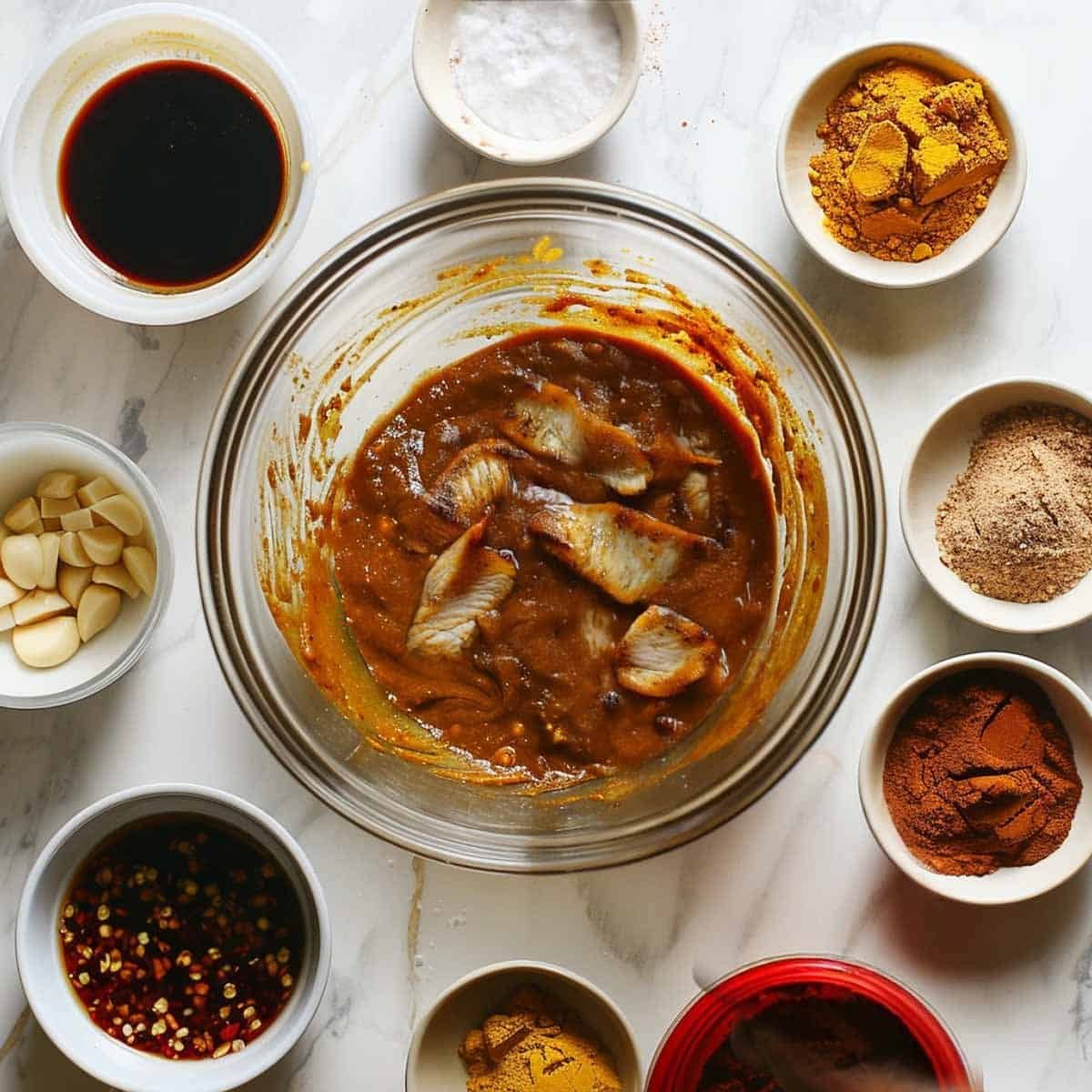
Step 1. Marinate the chicken overnight if possible.
In a large bowl, combine coconut milk, curry powder, fish sauce, brown sugar, turmeric, ground coriander, cumin, garlic, lemongrass, and vegetable oil. Mix well to create a smooth marinade. Add the chicken strips, ensuring they are well coated. Cover and refrigerate for at least two hours, or overnight for maximum flavor. The coconut milk tenderizes the chicken and the spices penetrate all the way through with more time. If you can plan ahead, plan ahead.
Step 2. Soak the skewers. Thread the chicken flat.
Remove the marinated chicken from the refrigerator. Thread the chicken strips onto the soaked bamboo skewers, weaving the skewer through the meat so the chicken lies flat. Flat chicken makes even contact with the heat and caramelizes uniformly. Preheat your grill or grill pan over medium-high heat. Brush the grill with oil to prevent sticking.
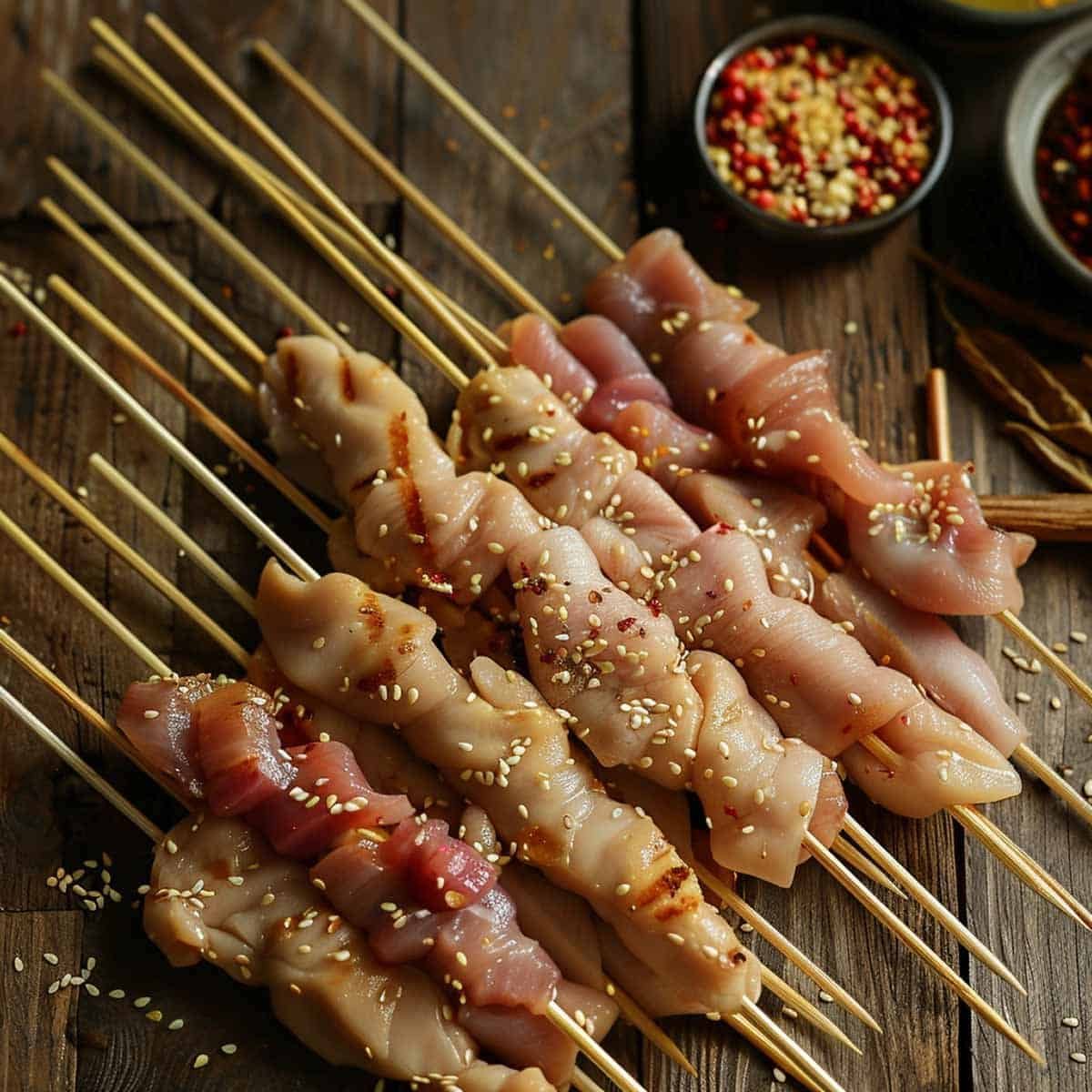
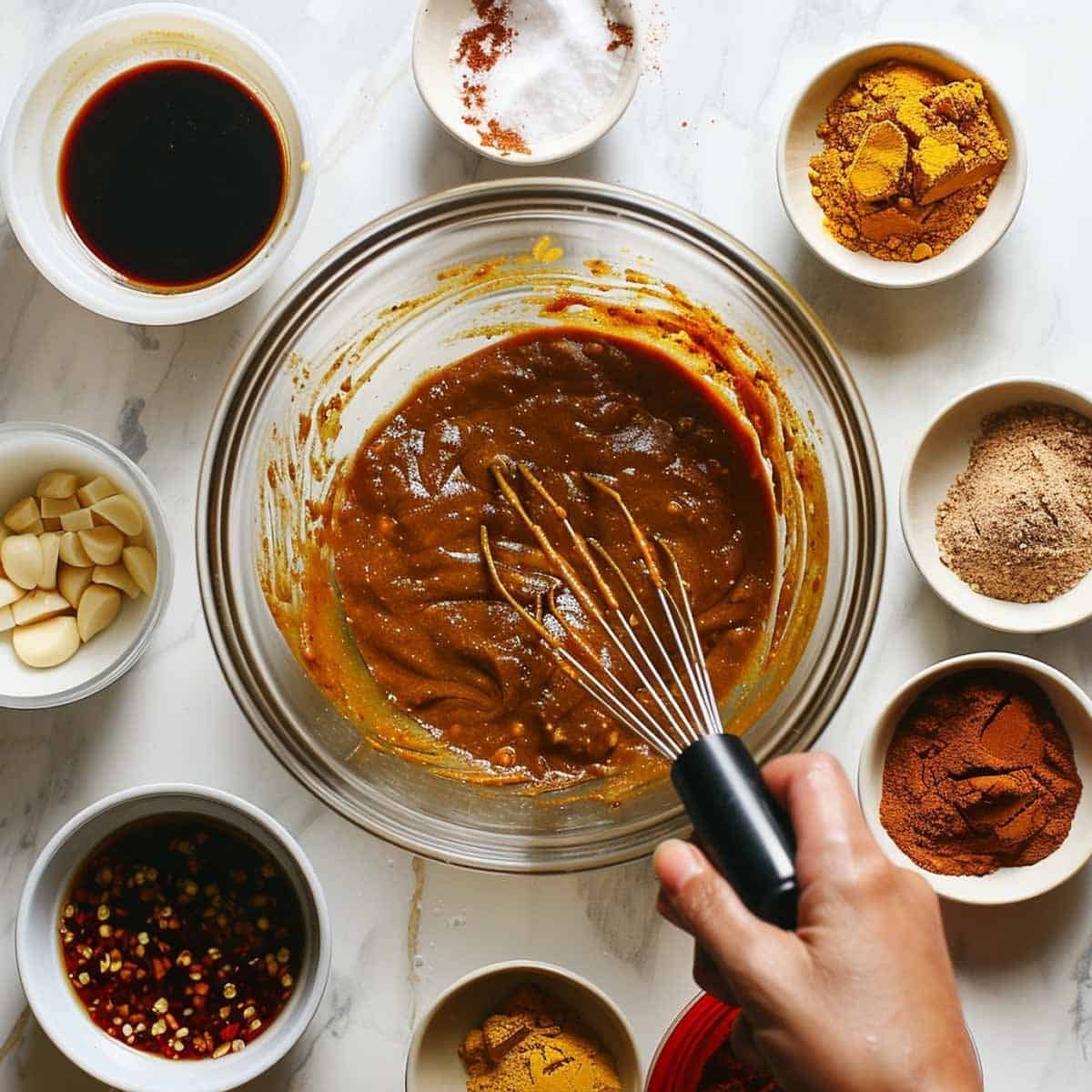
Step 3. Make the peanut sauce while the chicken comes to room temperature.
In a small saucepan, combine coconut milk, peanut butter, soy sauce, brown sugar, red curry paste, lime juice, and fish sauce. Cook over medium heat, stirring continuously until the sauce is smooth and slightly thickened. Adjust the seasoning to taste. Set aside to serve at room temperature alongside the grilled chicken.
★ Step 4. Grill over medium-high heat, turning often and basting. This is What Makes the Difference.
Place the skewers on the grill and cook for three to four minutes on each side until the chicken is cooked through and has a nice char. Turn occasionally to ensure even cooking. Baste with any remaining marinade after each turn. The coconut milk and sugar in the marinade caramelize fast. Frequent turning and basting is what produces the golden, layered exterior that makes the satay look and taste the way it should. While the chicken is grilling, the peanut sauce can be finishing on the side.
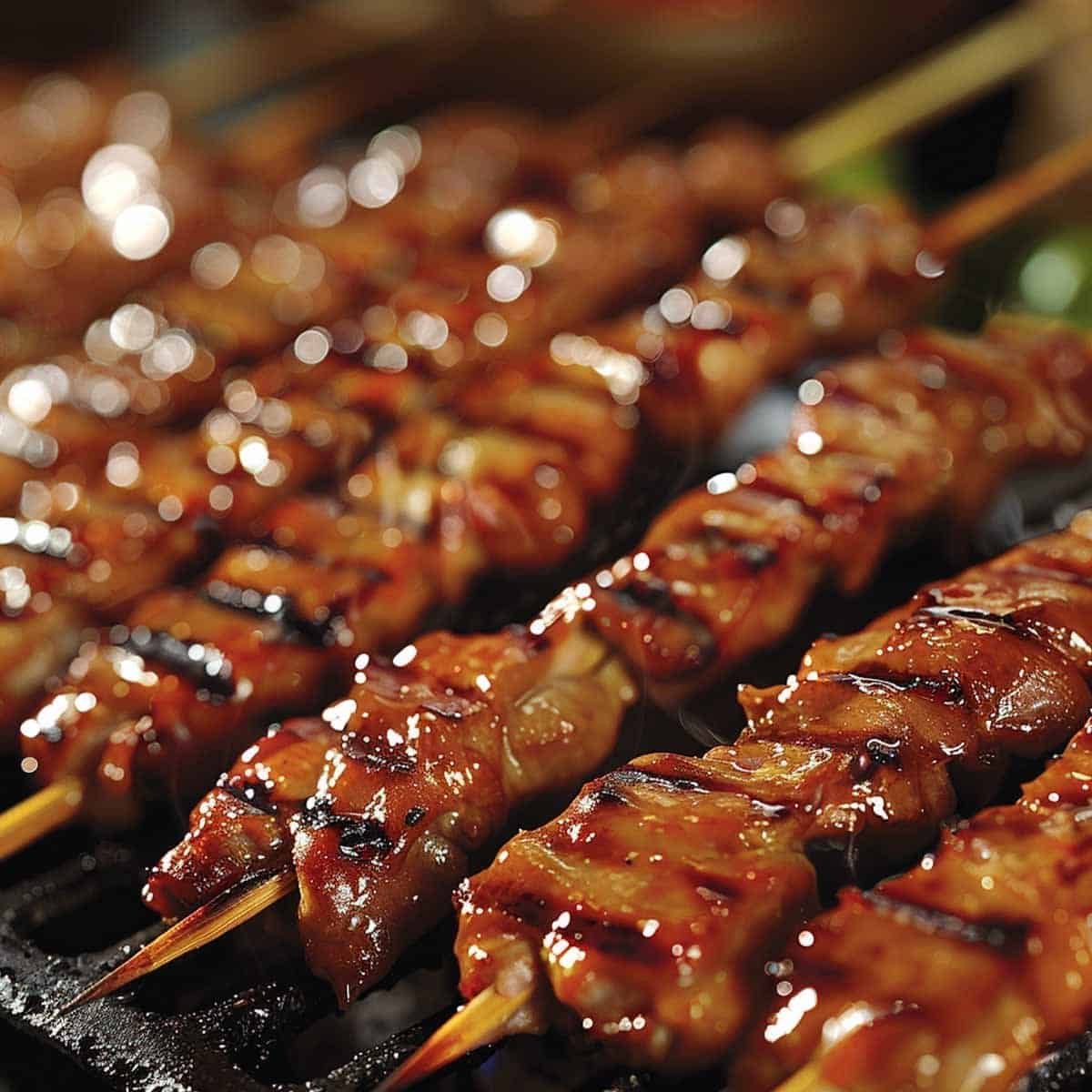
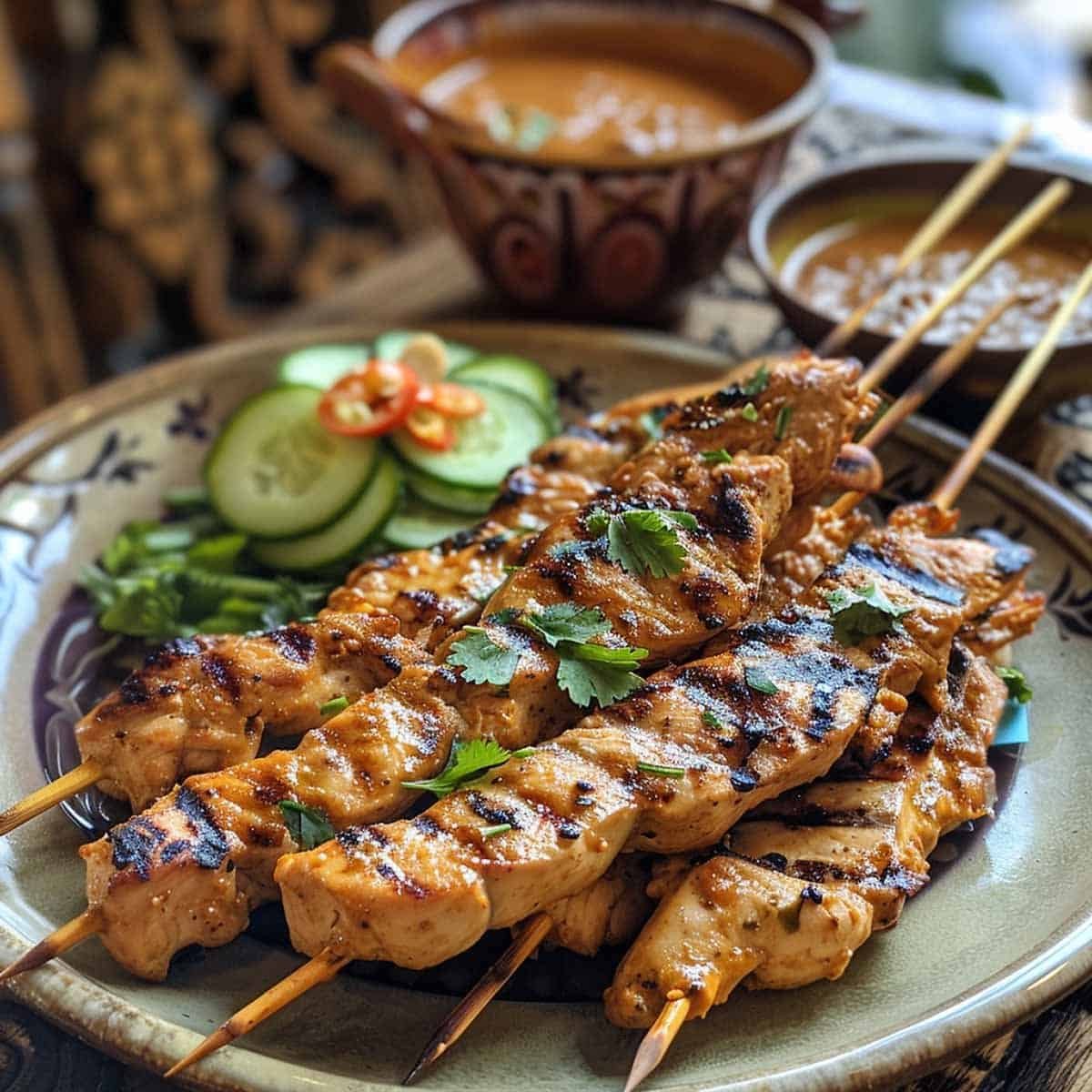
Step 5. Serve with peanut sauce, cucumber relish, and sticky rice.
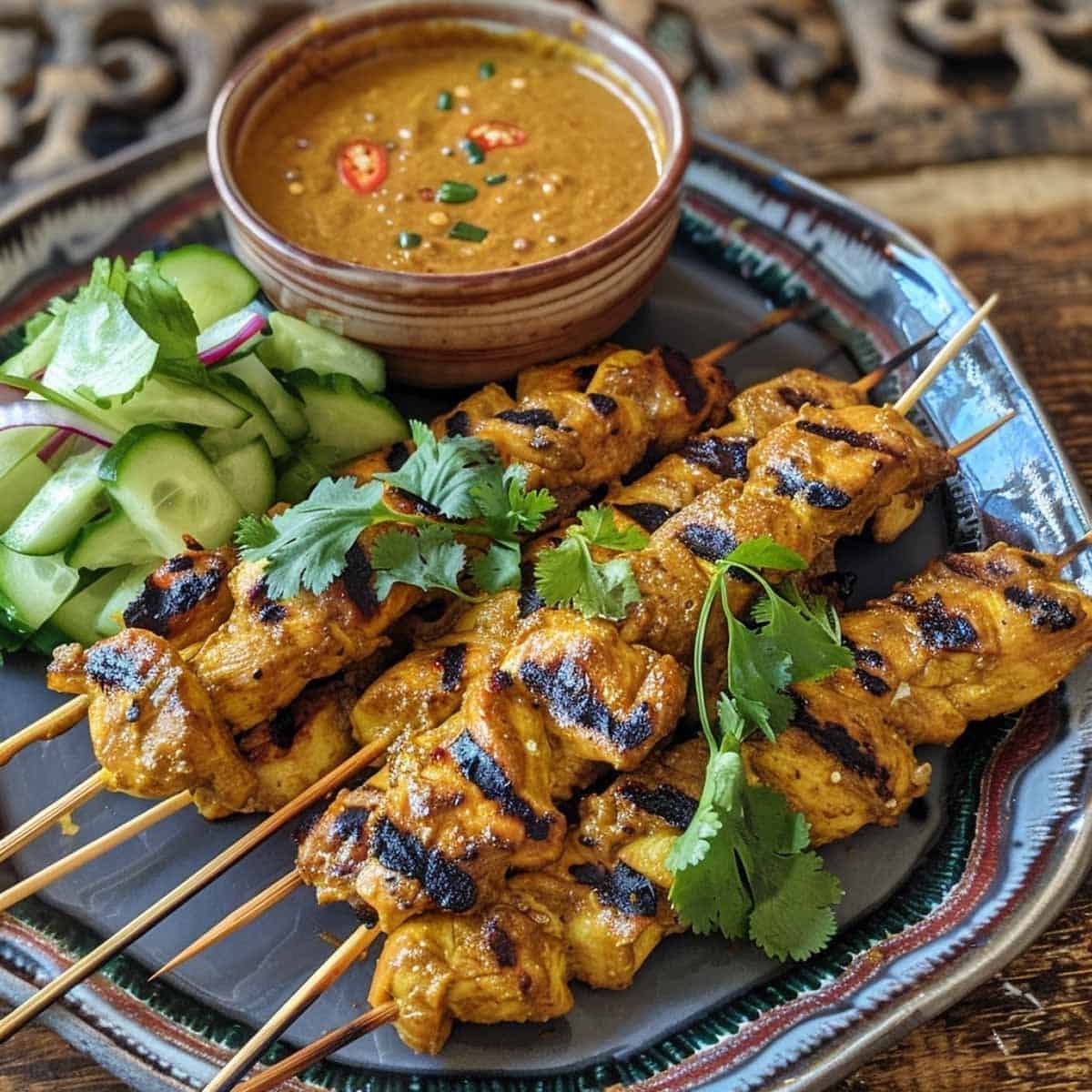
Arrange the grilled chicken satay on a platter and serve with the peanut sauce on the side. Garnish with fresh cilantro and lime wedges. Serve the cucumber relish alongside. The chicken pulled from the skewer, dipped in the peanut sauce, eaten with sticky rice and a bite of the cool cucumber relish. That is the whole experience. That is what the market vendors serve and what my mother made. There is a reason it has not changed.
Thai Chicken Satay (Satay Gai)
Ingredients
- 1 lb chicken thighs sliced into thin strips
- 1/4 cup coconut milk
- 2 tbsp curry powder
- 2 tbsp fish sauce
- 2 tbsp brown sugar
- 1 tbsp turmeric powder
- 1 tsp ground coriander
- 1 tsp cumin powder
- 2 cloves garlic minced
- 1 tbsp lemongrass finely chopped
- 1 tbsp vegetable oil
- Bamboo skewers soaked in water for 30 minutes
Peanut Sauce:
- 1 cup unsweetened coconut milk
- 1/2 cup creamy peanut butter
- 2 tbsp soy sauce
- 2 tbsp brown sugar
- 1 tbsp red curry paste
- 1 tbsp lime juice
- 1 tsp fish sauce
Instructions
- Prepare the Marinade: In a large bowl, combine coconut milk, curry powder, fish sauce, brown sugar, turmeric, ground coriander, cumin, garlic, lemongrass, and vegetable oil. Mix well to create a smooth marinade. Add the chicken strips, ensuring they are well-coated. Cover and refrigerate for at least 2 hours or overnight for maximum flavor.
- Skewer the Chicken:Remove the marinated chicken from the refrigerator. Thread the chicken strips onto the soaked bamboo skewers. Preheat your grill or grill pan over medium-high heat. Brush the grill with oil to prevent sticking.
- Grill the Satay:Place the skewers on the grill and cook for 3-4 minutes on each side until the chicken is cooked through and has a nice char. Turn occasionally to ensure even cooking. While the chicken is grilling, prepare the peanut sauce.
- Prepare the Peanut Sauce: In a small saucepan, combine coconut milk, peanut butter, soy sauce, brown sugar, red curry paste, lime juice, and fish sauce. Cook over medium heat, stirring continuously until the sauce is smooth and slightly thickened. Adjust the seasoning to taste.
- Serve the Satay:Arrange the grilled chicken satay on a platter and serve with the peanut sauce on the side. Garnish with fresh cilantro and lime wedges for an extra burst of flavor
For the Cucumber Salad:
- Combine Ingredients:In a bowl, mix together the sliced cucumber, red onion, rice vinegar, sugar, and salt. Let it sit for at least 10 minutes to marinate. Stir in the chopped cilantro just before serving.
Notes
Nutrition
LET’S GET THIS RIGHT
Why is my Thai chicken satay dry instead of juicy?
The chicken was overcooked, or breast meat was used instead of thigh. Thigh meat has enough fat to stay moist through the grilling time. Breast meat tightens quickly at high heat and dries out before it has time to caramelize properly. Use thighs, cut them thin, and pull the skewers off the grill while the chicken is still slightly yielding when pressed. It will continue to cook from the residual heat of the skewer.
Why is my satay not caramelizing properly?
The grill is not hot enough, or the chicken is not being turned frequently enough. Caramelization requires both the sugar from the marinade and sufficient heat to trigger it on contact. A cool grill produces chicken that dries out before it caramelizes. Medium-high heat, turning every two minutes, basting with the remaining marinade after each turn.
Can I cook Thai chicken satay in the oven or on a stovetop grill pan?
Yes. An oven broiler on its highest setting with the skewers on a wire rack four inches from the heat, turned once at the halfway point, produces a good result. A stovetop grill pan on high heat also works and produces grill marks. Neither replicates the charcoal smoke of the outdoor grill version, but both produce correctly caramelized, properly cooked satay. The peanut sauce and cucumber relish make it complete regardless.
How do I make the peanut sauce the right consistency?
The peanut sauce should be pourable but not watery, thick enough to coat the back of a spoon but thin enough to drizzle easily. If it is too thick, add coconut milk or warm water a tablespoon at a time and stir over medium heat. If it is too thin, continue cooking over medium heat, stirring, until it thickens slightly. Taste and adjust sweetness, saltiness, and lime brightness before it goes to the table.
What is the correct way to eat Thai chicken satay?
Pull the chicken from the skewer, dip into the peanut sauce, and eat with sticky rice and a bite of the cucumber relish between pieces. The three elements, chicken, peanut sauce, and cucumber relish, are meant to be eaten together. The cool relish clears the richness of the peanut sauce. The sticky rice absorbs the sauce and the juices from the chicken.
FLAVOR PROFILE
The smell arrives before anything else. The marinade hitting the hot grill, the turmeric and coconut milk and lemongrass and galangal releasing into the smoke, carrying across the yard or the kitchen or the market to wherever you are standing. It is a specific smell. A warm smell. The kind that makes people stop what they are doing.
The chicken comes off the grill golden and slightly caramelized, the edges where it was thinnest darkened to a gentle char. The turmeric gives it a warm yellow color. The coconut milk has basted it from within the marinade and the surface glistens slightly.
The first bite is savory and warm, the spices present in every part of the meat, the coconut milk having carried them all the way through during the overnight marinate. Then the peanut sauce, sweet and savory and slightly spiced, coating the chicken in something rich and complementary. Then the cucumber relish, cool and slightly sour, cutting through the richness and resetting the palate for the next piece.
The sticky rice absorbs everything. The whole table smells of the marinade and the grill. There was never a wrong time to have this. My mother knew that. The street vendors knew that. It is still true.
SUSIE’S KITCHEN NOTES
The turmeric in the marinade will stain everything it touches. Bowls, cutting boards, hands, clothing, counter surfaces. Wear gloves when mixing the marinade. Use bowls and cutting boards you do not mind staining. The staining is the sign that the turmeric is present and doing its job, coloring the chicken the warm yellow that is the visual signature of Thai satay. Accept the staining as the cost of the color.
Lemongrass for the marinade should be minced very finely, almost to a paste. Pieces of lemongrass that have not been minced finely enough will be present as fibrous threads in the finished chicken rather than as integrated flavor. The lower three to four inches of the stalk, the pale and tender portion, is what is used. Peel away the tough outer layers until the soft inner stalk is exposed. Then mince. The finer the mince, the more completely the lemongrass flavor integrates into the marinade.
My mother and her sisters made satay over a small charcoal grill similar to the one used for Moo Ping. The same coals, the same steady turning, the same smoke finding everyone in the vicinity before the chicken was done. If you are making both satay and Moo Ping for the same meal, the same charcoal grill handles both and the two dishes together make a spread that any Thai market would recognize.
The peanut sauce improves slightly after sitting for ten minutes, as the flavors settle together. Make it before the chicken goes on the grill and let it sit at room temperature while the satay cooks. Do not refrigerate it before serving. Cold peanut sauce thickens and loses its pourable quality. Room temperature is correct.
PAIRING SUGGESTIONS
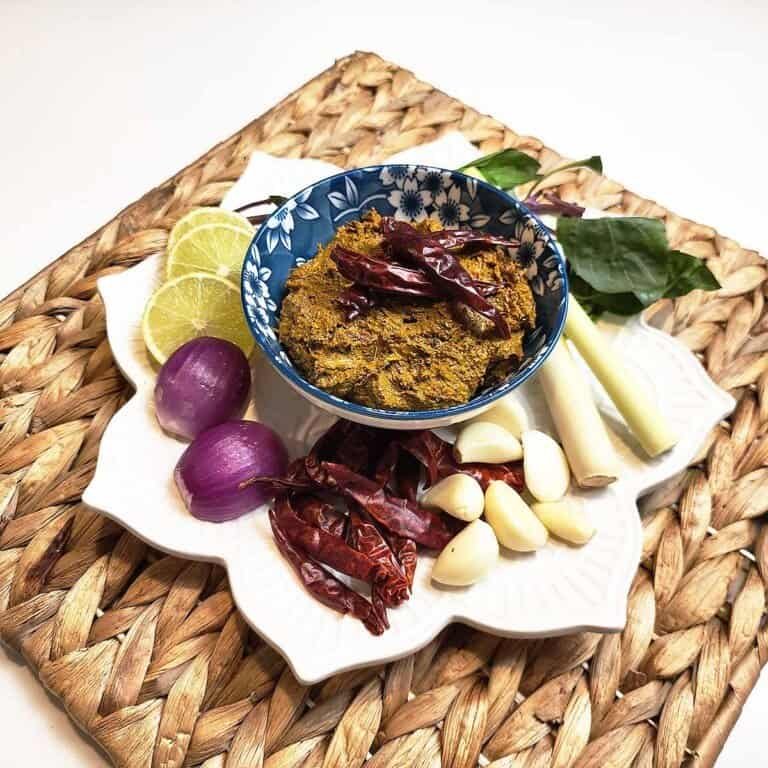
Thai chicken satay is made for a spread, for a table where everyone reaches in and the food keeps coming. The Moo Ping belongs at the same table, both of them grilled, both of them marinated, both of them built on the same charcoal grill and eating wonderfully alongside each other. The Thai fish sauce chicken wings are the third grilled dish that completes the spread, all three of them made for the same kind of outdoor table and the same kind of gathering. For the relish and dipping options, the cucumber relish from the satay plate and the Nam Prik Pao together give the table two directions of dipping, cool and sweet or smoky and spiced. And for the drink that closes a meal of grilled, spiced, smoky food, the Thai iced tea is cold and sweet and always correct. My mother made satay at home and we found it at every market. There was never a wrong time to have it. There still isn’t.
FAQ
What is Thai chicken satay (Satay Gai)?
Thai chicken satay, Satay Gai (สะเต๊ะไก่), is chicken marinated in coconut milk, turmeric, lemongrass, galangal, coriander, cumin, and fish sauce, threaded onto bamboo skewers and grilled until golden and caramelized. It is served with a sweet and savory peanut sauce and a cucumber relish called Ajad. It is one of the most popular Thai street foods, found at markets across Thailand, and one of the most recognized Thai dishes worldwide.
How do you make Thai chicken satay step by step?
Combine coconut milk, turmeric, finely minced lemongrass, galangal, coriander, cumin, fish sauce, sugar, and salt. Add thinly sliced chicken thigh strips and marinate for at least two hours, preferably overnight. Soak bamboo skewers for 30 minutes. Thread chicken flat onto skewers. Make the peanut sauce by warming peanut butter, coconut milk, red curry paste, fish sauce, sugar, and lime juice over low heat until smooth. Grill skewers over medium-high heat for four to six minutes, turning every two minutes and basting with remaining marinade. Serve with peanut sauce, cucumber relish, and sticky rice.
What makes Thai chicken satay different from other satay?
Thai chicken satay is distinguished by its marinade, which includes coconut milk and turmeric alongside lemongrass and galangal, giving the chicken a warm yellow color and a flavor profile that is specifically Thai. The peanut sauce served alongside is made from ground peanuts in a coconut milk and red curry base, richer and more complex than simpler peanut dips. Indonesian and Malaysian satay use different marinades and different accompaniments. The Thai version is warmer in spice and more coconut-forward.
How long should I marinate chicken for Thai satay?
A minimum of two hours produces good Thai chicken satay. Overnight marinating produces the best result, with the coconut milk tenderizing the chicken and the spices penetrating all the way through rather than staying at the surface. The difference between a two-hour marinade and an overnight marinade is noticeable in every bite. If you can plan ahead, marinate the chicken the night before and the hardest part of the recipe is done before the day begins.
What is the peanut sauce served with Thai chicken satay made of?
The peanut sauce for Thai chicken satay is made from smooth peanut butter, coconut milk, red curry paste, fish sauce, sugar, and lime juice, warmed together over low heat until smooth and glossy. It is sweet, savory, slightly spiced from the red curry paste, and bright from the lime. It should be pourable but thick enough to coat the chicken. It is served at room temperature alongside the grilled skewers and is not optional. It is what makes the dish complete.
Can I make Thai chicken satay without a grill?
Yes. An oven broiler on its highest setting, with skewers on a wire rack four inches from the heat, produces good caramelization. Turn once at the halfway point and baste with the remaining marinade. A stovetop grill pan on high heat also works and produces grill marks. Neither replicates the charcoal smoke of the outdoor version, but both produce correctly cooked, properly caramelized satay. The peanut sauce and cucumber relish make it complete regardless of the cooking method.
What do you serve with Thai chicken satay?
Thai chicken satay is always served with peanut sauce for dipping, a cucumber relish called Ajad, and sticky rice alongside. The three accompaniments are not optional. The peanut sauce is the primary dipping sauce. The cucumber relish provides the cool, sour counterpoint. The sticky rice is pressed into small balls and eaten alongside the chicken and sauce. Together they make the complete dish that has been served at Thai street markets for generations.