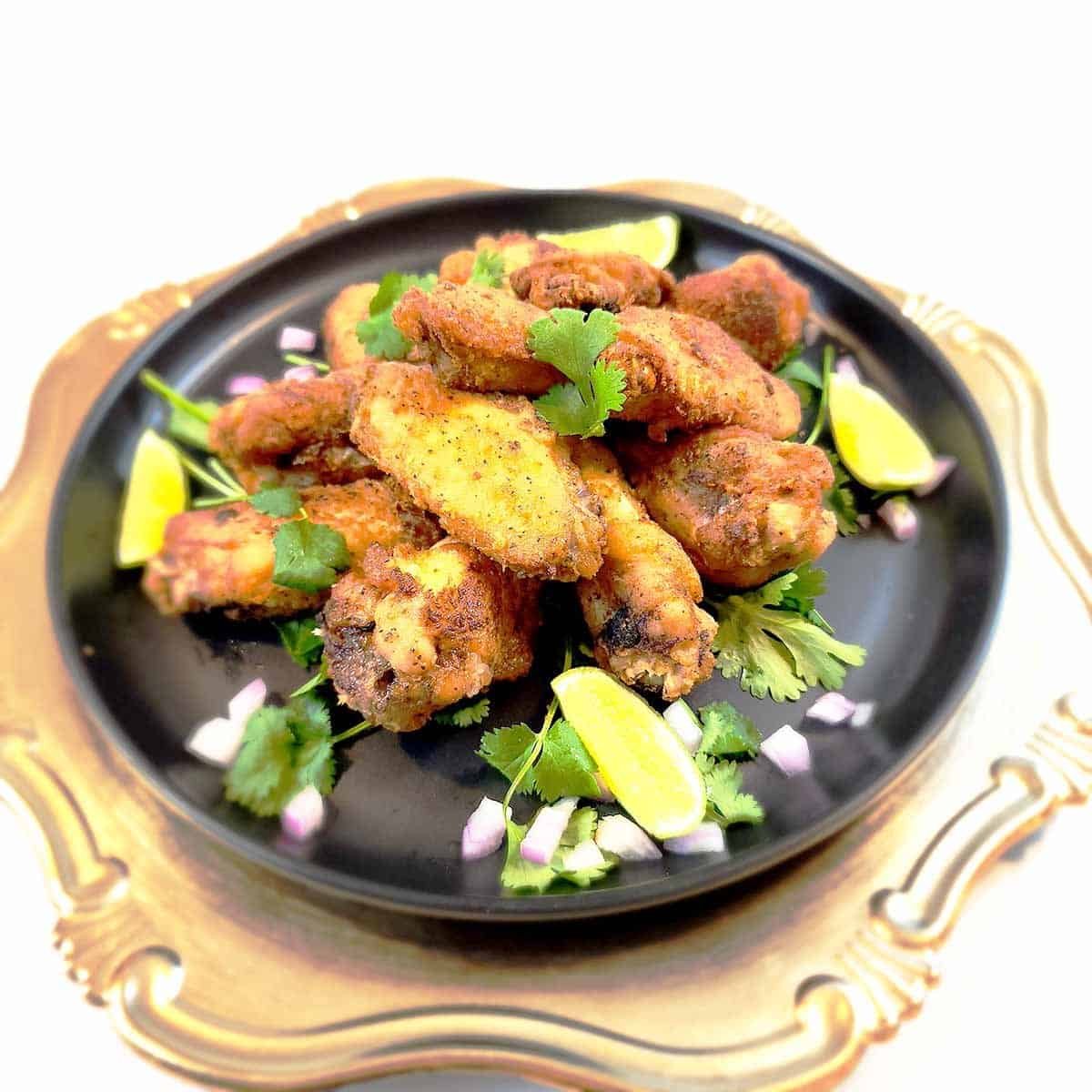
What Are Thai Fish Sauce Chicken Wings?
Thai fish sauce chicken wings, Peek Gai Tod (ปีกไก่ทอด), are chicken wings marinated in fish sauce, garlic, and white pepper, then fried until deeply golden and crisp. The marinade is the whole flavor. The frying is what makes the skin what it is. They are eaten hot, together, sitting on a mat on the floor.
Note From Susie

Sawasdee Kha, and Hello.
The smell told you before anyone said a word.
My mother and her sisters made these at our house, sometimes inside, sometimes outside, the oil hot and the wings going in and the smell of the fish sauce and seasoning coming through the air. That smell. You knew what was for dinner before you were told. You knew what was for lunch before you were asked. The fish sauce and the garlic and the white pepper doing their work in the marinade, and then the oil doing what very hot oil does to a marinated wing making the skin something golden and crisp and completely itself.
There was no special occasion for this. No celebration, no particular day. Whenever we wanted them. That was enough of a reason.
When they were ready, we would put a mat on the floor, and everyone would sit and eat together. That is the image I come back to, the mat, the wings still hot, everyone sitting down together around the same thing. No table required. No ceremony. Just the food and the people and the floor and the afternoon.
I still make these. The smell still tells me what is coming.

What’s In This Page
“The smell still tells me what is coming.”
— Her Hands His EyesWhat Are Thai Fish Sauce Chicken Wings?
Thai fish sauce chicken wings, ปีกไก่ทอด, Peek Gai Tod, are one of the most satisfying dishes in Thai home cooking and one of the simplest to explain: chicken wings marinated in fish sauce, garlic, and white pepper, then fried in hot oil until the skin is deeply golden and completely crisp. The marinade does not contain sugar or soy sauce or any other sweetener, it is fish sauce, garlic, and white pepper, and those three things together produce a savory depth and a faint brininess that the frying locks into the skin permanently.
What makes Thai fish sauce chicken wings distinct from other fried wings is the marinade’s simplicity and its intensity. Fish sauce is both the salt and the flavor, it penetrates the meat during marinating and caramelizes slightly in the hot oil, producing a skin that is salty and savory and faintly crisp in a way that breadcrumb coatings and dry rubs do not achieve. The white pepper provides warmth without sharpness. The garlic goes into the marinade crushed and rough, pressing its flavor into the meat without becoming identifiable as a separate component.
Peek Gai Tod is a dish found at street markets, in Thai homes, and at Thai restaurants worldwide, though the home version, marinated properly, fried at the right temperature, is what it is meant to be. According to the Oxford Companion to Food, fish sauce has been used as a primary seasoning in Thai cooking for centuries, its salt and fermented depth underpinning dishes across every region of the country.
The smell of fish sauce and garlic in hot oil. You know what is coming.
What You’ll Need
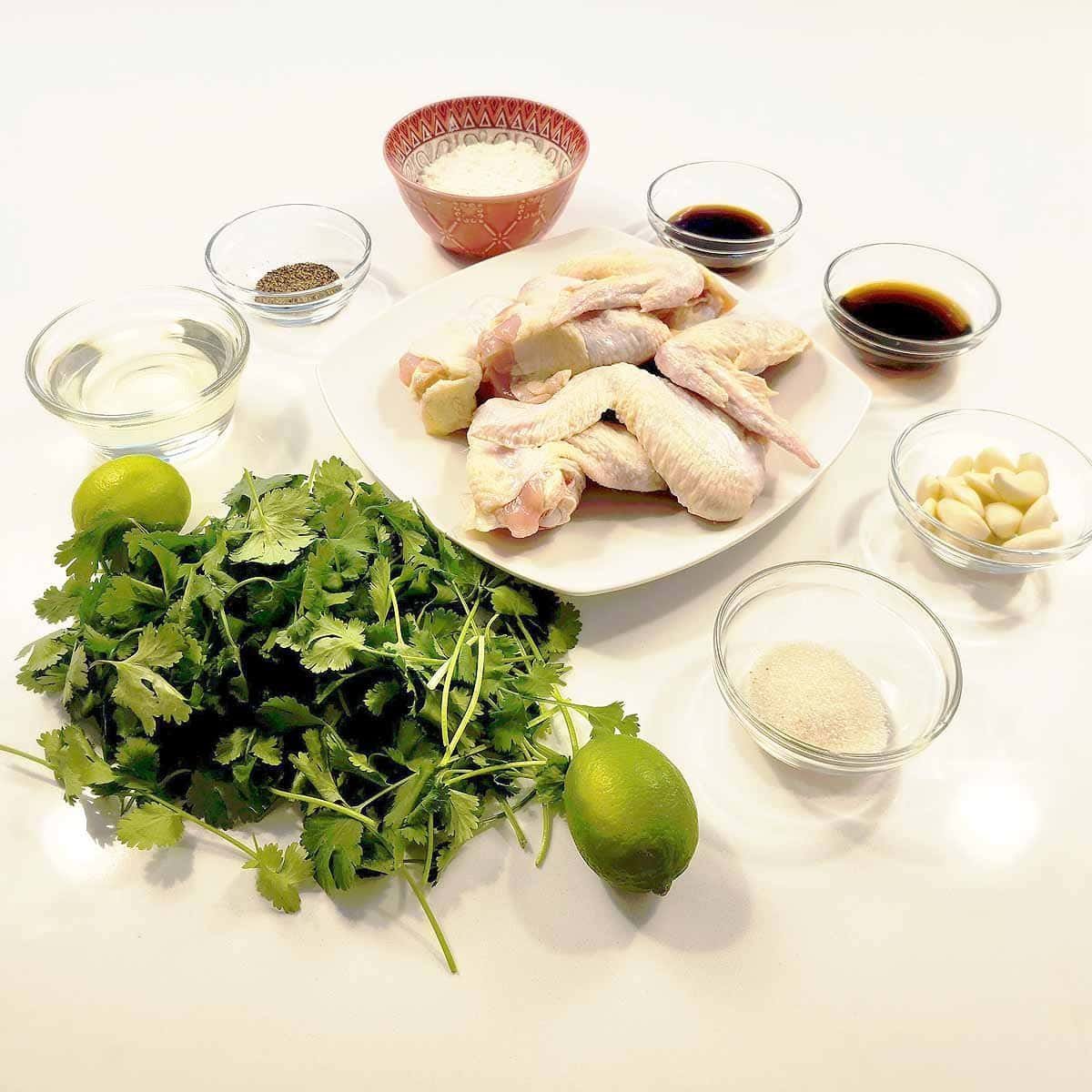
Chicken wings, three pounds, tips removed and split into flats and drumettes. Skin-on. The skin is what this dish is about.
For the marinade: garlic, six cloves, minced. Fish sauce, three tablespoons. Soy sauce, one tablespoon. Oyster sauce, one tablespoon. Sugar, one teaspoon. White pepper, one teaspoon. Ground turmeric, half a teaspoon. Mix well, add wings and toss thoroughly until every surface is coated. Cover and refrigerate at least two hours and up to overnight.
For the flour coating: all-purpose flour, half a cup. Rice flour, a third of a cup. Salt, half a teaspoon. Combined in a shallow bowl for dredging.
Vegetable oil, three cups, for deep frying.
For garnish and serving: six shallots, thinly sliced and fried until crispy. Half a cup Thai sweet chili sauce. One lime, cut into wedges. Four fresh cilantro sprigs.
VISUAL WALK THROUGH
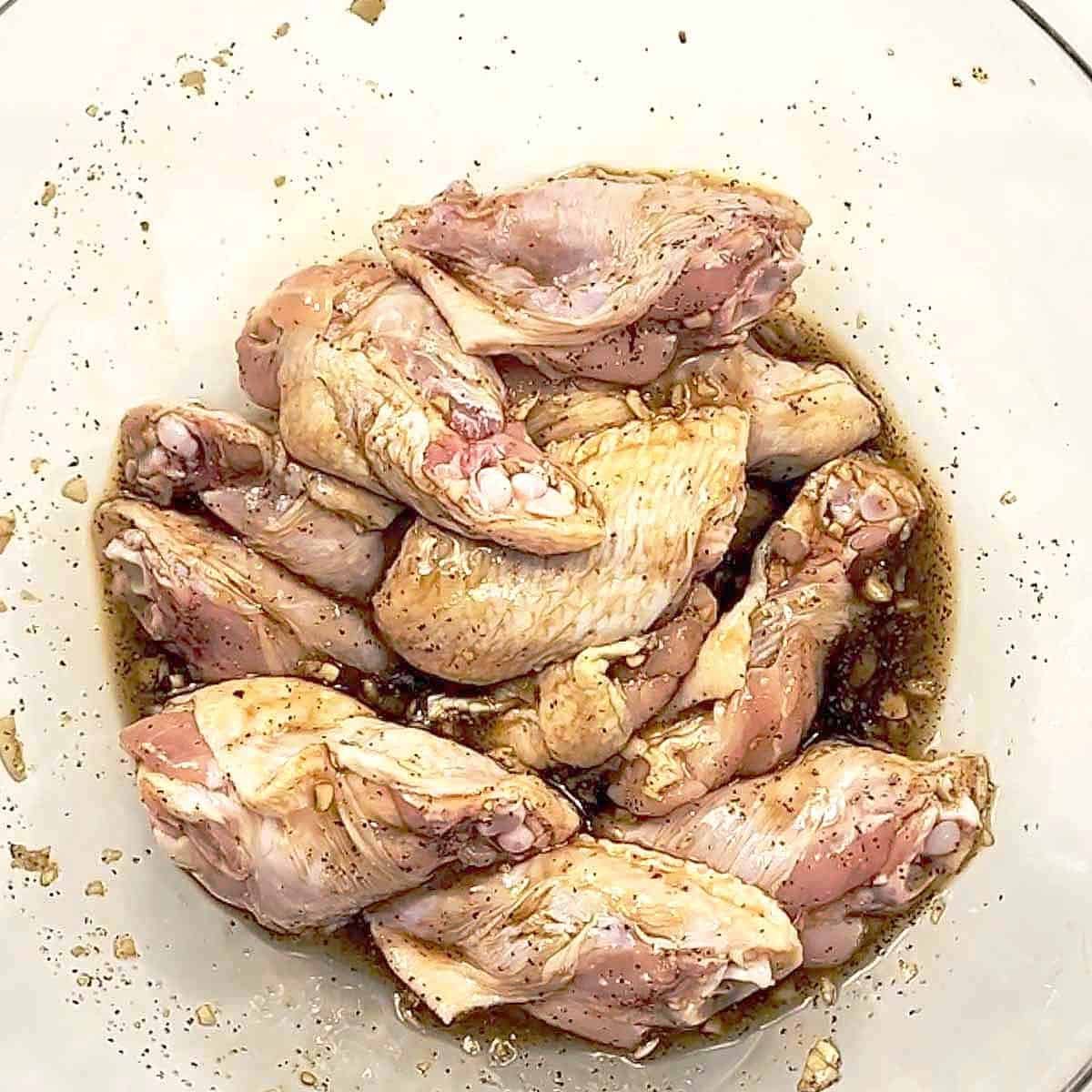
Step 1. Marinate the wings for at least two hours.
In a large bowl combine minced garlic, fish sauce, soy sauce, oyster sauce, sugar, white pepper, and ground turmeric. Mix well. Add the wing pieces and toss thoroughly until every surface is coated. Cover and refrigerate for at least two hours and up to overnight. When ready to cook, take the wings out twenty minutes before frying to take the chill off the meat.
Step 2. Fry the crispy shallots and coat the wings.
While the wings are coming to room temperature, fry the shallots. Heat about half an inch of oil in a small pan over medium-low heat. Add the thinly sliced shallots and fry slowly, stirring often, until deep golden and crispy, about eight to ten minutes. Remove and spread on paper towels.
In a shallow bowl combine all-purpose flour, rice flour, and salt. Remove each wing from the marinade, let excess drip off, and dredge thoroughly in the flour mixture, pressing firmly to adhere on all sides. Place on a wire rack and rest for ten minutes before frying.

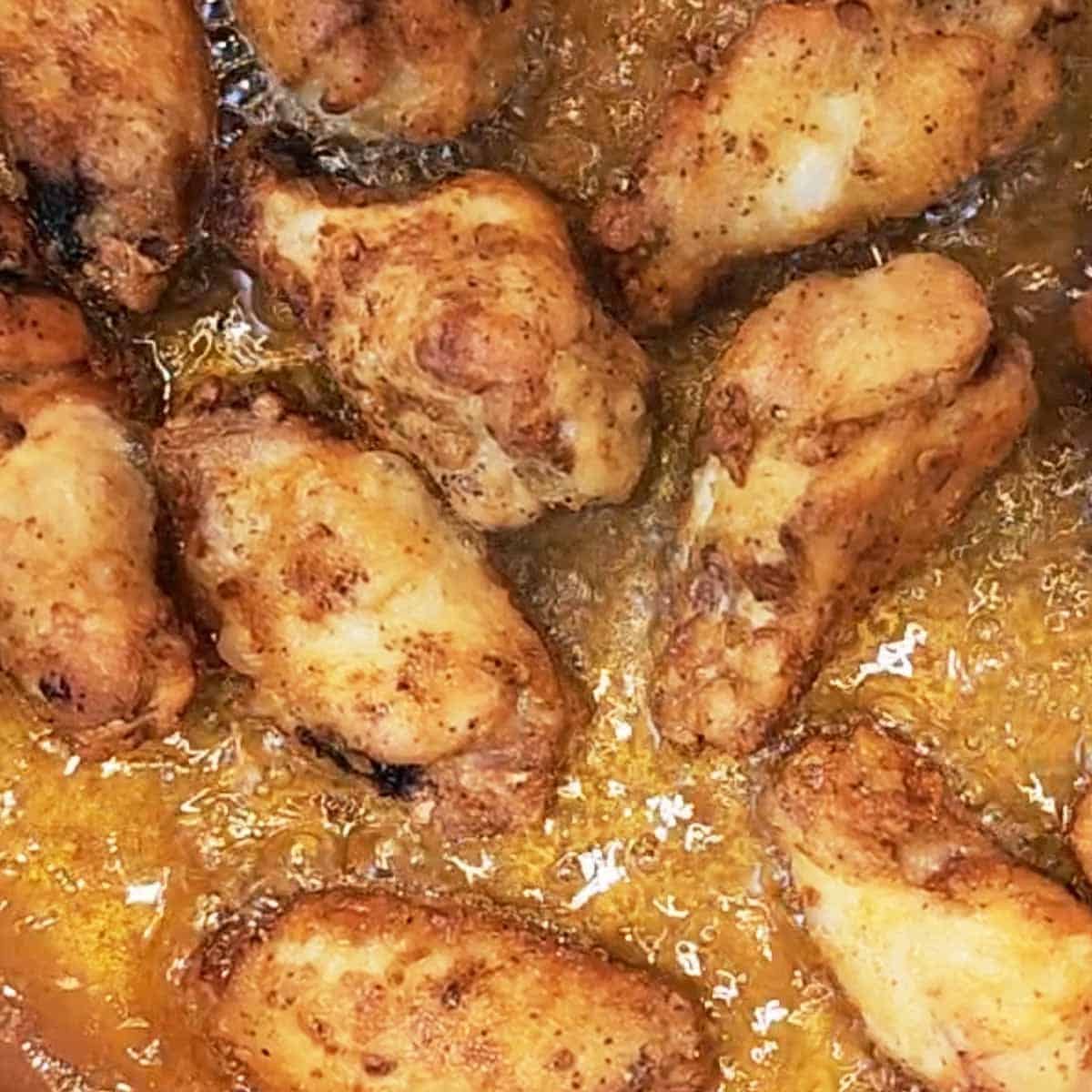
★ Step 3. Double fry for maximum crunch. This is What Makes the Difference.
Heat oil in a wok or deep pot to 325 degrees Fahrenheit. Fry the wings in batches of six to eight, never crowding the pot. Fry for eight to ten minutes, turning occasionally, until deeply golden and cooked through. Drain on a wire rack. Let the wings rest on the rack for five minutes. Raise the oil temperature to 375 degrees Fahrenheit. Return the wings to the hot oil in batches and fry for two minutes until the crust is deeply golden and shatteringly crisp. Drain on the rack again.
Step 4. Pile high and serve immediately.
Pile the wings onto a large serving plate and scatter the crispy fried shallots generously over the top. Garnish with fresh cilantro sprigs and lime wedges. Serve with Thai sweet chili sauce alongside.
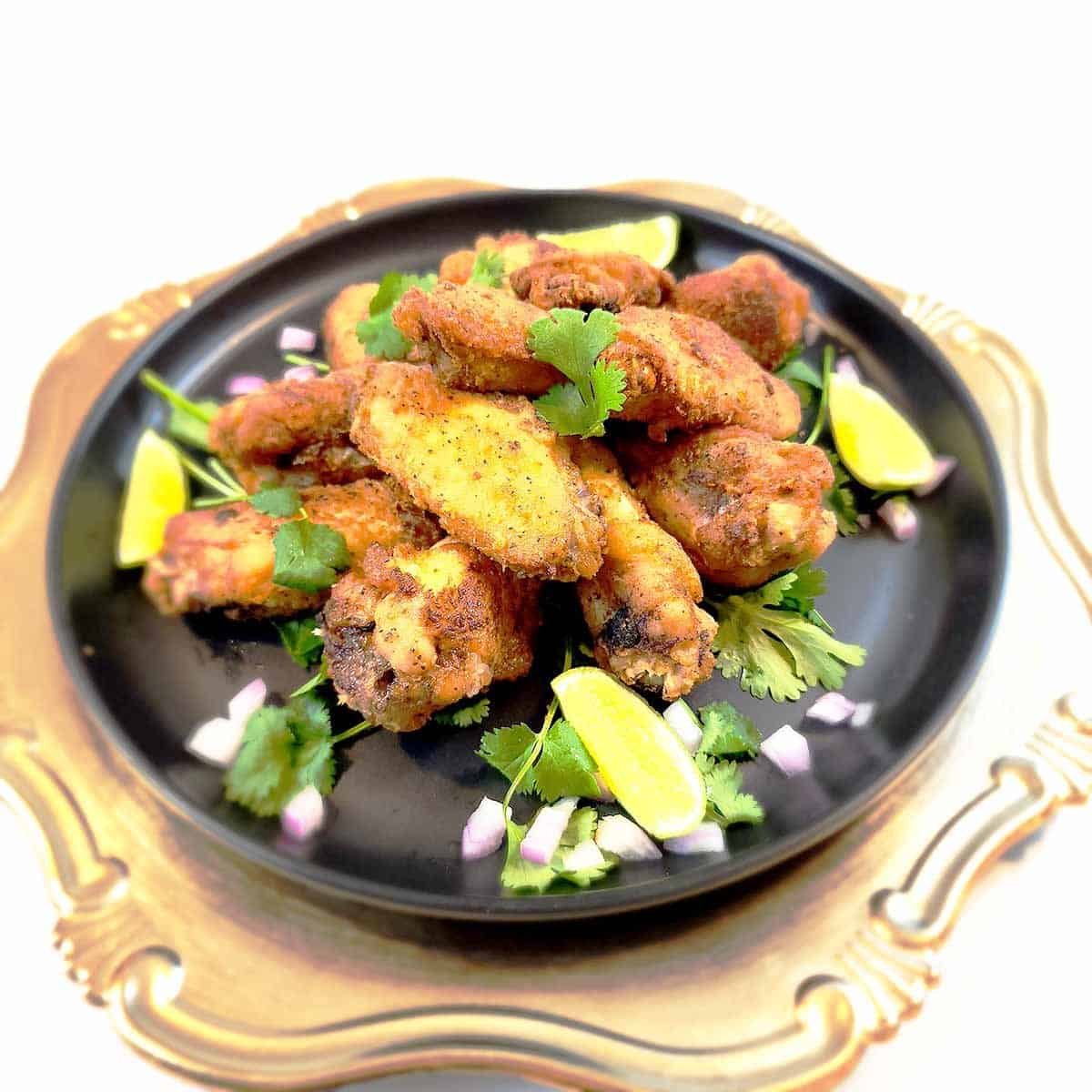

Peek Gai Tod Nam Pla ปีกไก่ทอด Thai Fish Sauce Chicken Wings
Equipment
- Large bowl or zip-lock bag for marinating
- Wok or deep heavy pot
- thermometer
- Wire rack
- Tongs
- small pan for frying shallots
Ingredients
- 3 pounds chicken wings tips removed, split into flats and drumettes
- 6 garlic cloves crushed
- 3 tablespoons fish sauce
- 1 tablespoon soy sauce
- 1 tablespoon oyster sauce
- 1 teaspoon sugar
- 1 teaspoon white pepper
- 0.5 teaspoon ground turmeric
- 0.5 cup all-purpose flour
- 0.3 cup rice flour
- 0.5 teaspoon salt
- 3 cups vegetable oil for deep frying
- 6 shallots thinly sliced and fried until crispy, to garnish
- 0.5 cup Thai sweet chili sauce to serve
- 1 lime cut into wedges, to serve
- 4 fresh cilantro sprigs to garnish
Instructions
- Marinate the wings: In a large bowl combine minced garlic, fish sauce, soy sauce, oyster sauce, sugar, white pepper, and ground turmeric. Mix well. Add the wing pieces and toss thoroughly until every surface is coated. Cover and refrigerate for at least 2 hours and up to overnight. When ready to cook, take the wings out 20 minutes before frying to take the chill off the meat.
- Fry the crispy shallots first: While the wings are coming to room temperature, fry the shallots. Heat about half an inch of oil in a small pan over medium-low heat. Add the thinly sliced shallots and fry slowly, stirring often, until deep golden and crispy. This takes patience, about 8 to 10 minutes over gentle heat. Remove with a slotted spoon and spread on paper towels. They will crisp up further as they cool. Set aside.
- Coat the wings: In a shallow bowl combine all-purpose flour, rice flour, and salt. Remove each wing from the marinade and let excess drip off. Dredge thoroughly in the flour mixture, pressing firmly to adhere on all sides. Place on a wire rack and rest for 10 minutes before frying.
- First fry: Heat oil in a wok or deep pot to 325°F. Fry the wings in batches of 6 to 8, never crowding the pot. Fry for 8 to 10 minutes, turning occasionally, until deeply golden and cooked through. Drain on a wire rack.
- Second fry for maximum crunch: Let the wings rest on the rack for 5 minutes. Raise the oil temperature to 375°F. Return the wings to the hot oil in batches and fry for 2 minutes until the crust is deeply golden and shatteringly crisp. Drain on the rack again.
- Pile high and serve: Pile the wings onto a large serving plate and scatter the crispy fried shallots generously over the top. Garnish with fresh cilantro sprigs and lime wedges.
Video
Notes
Nutrition
LET’S GET THIS RIGHT
Why are my Thai fish sauce chicken wings not crispy?
The oil was not hot enough, the wings were too wet going into the oil, or the pot was too crowded. All three produce the same result: wings that steam rather than fry. Check the oil temperature with a thermometer, 325 degrees for the first fry, 375 for the second. Pat the wings dry before frying. Cook in small batches and let the oil return to temperature between each one.
Why do my wings taste too salty?
The fish sauce was not balanced with enough marinating time. Overnight marinating produces a more evenly distributed, less sharp saltiness than a short marinade. A squeeze of fresh lime at the table also corrects a wing that has arrived slightly too salty.
Can I bake Thai fish sauce chicken wings instead of frying?
You can. For the best baked result, pat the marinated wings completely dry, place on a wire rack over a baking sheet, and bake at 425 degrees Fahrenheit for thirty-five to forty minutes, flipping once at halfway. The skin will be crisp but not as deeply golden or as crackling as the fried version. Frying is what makes Peek Gai Tod what it is. The mat on the floor deserves the fried version.
Can I use soy sauce instead of fish sauce?
You can, but the dish will taste different. Soy sauce produces a darker, less complex saltiness without the fermented depth that fish sauce carries. The resulting wing will be good, but it will not be Peek Gai Tod. Fish sauce is the ingredient this dish is named for and built around.
How long should I marinate Thai fish sauce chicken wings?
Two hours is the minimum. Overnight in the refrigerator is the best result. If you are making these for a meal, put the wings in the marinade the night before and they are ready to fry the next day with no additional preparation. The longer marinade produces a deeper, more settled flavor.
FLAVOR PROFILE
The smell arrives first, fish sauce and garlic and white pepper in hot oil, coming through the air before the wings are anywhere near done. It is a specific smell. You know exactly what it is. You know what is coming.
The skin is what you notice when you pick one up, golden and taut and crackling slightly under pressure, the surface of it dry rather than greasy, the color of caramel at the edges where the oil was hottest. That color is the sign that everything went correctly.
The first bite is savory, immediately, completely savory, the fish sauce having done its work through the meat and then caramelized in the frying into something deeper and more complex than raw fish sauce ever is. The white pepper warmth is there underneath, building slowly. The garlic has become part of the skin rather than a separate flavor, present in the depth of the thing rather than on top of it.
The meat inside is tender from the marinade time. The skin outside is crisp from the oil temperature. The two together, in the same bite, are the whole point of this dish.
We sat on a mat on the floor and ate them hot. That is still the right way.
SUSIE’S KITCHEN NOTES
My mother and her sisters fried these outside sometimes, a burner set up in the yard, the oil in a large wok, the smell going out into the open air rather than filling the house. Frying outside is practical for a large batch: the oil smell is significant and the spattering, even with dry wings, is real. If you are making a full batch,three or four pounds of wings,consider whether your kitchen ventilation can handle it or whether the outdoor option makes more sense. The wings do not care where they are fried. The people in the house might.
The garlic in the marinade should be crushed, not minced. Crushed garlic releases its essential oils into the fish sauce without breaking down into small pieces that will burn in the oil during frying. Burned garlic turns bitter and the bitterness goes into the skin. Crushed garlic that has done its work in the marinade and is then removed before frying, or left on the wing in large enough pieces that it does not burn, produces the right result. If you see the garlic pieces darkening too fast in the oil, the temperature is too high.
A wire rack over a baking sheet is better than paper towels for resting the wings after frying. Paper towels trap steam underneath the wing and the bottom of the skin softens slightly where it contacts the paper. A wire rack allows air to circulate under the wing as well as above it, keeping the skin crisp on all sides. If you have a wire rack, use it. If you do not, paper towels work, just do not stack the wings on top of each other.
The white pepper is not a background note in this dish, it is present and building and specific. If you taste the marinade before the wings go in, the white pepper should be clearly there. If it is not, add more. White pepper freshly ground from whole peppercorns is significantly more fragrant and present than white pepper that has been sitting in a container for six months. If your white pepper smells faint, use more of it.
PAIRING SUGGESTIONS
Thai fish sauce chicken wings belong at the center of a shared meal, the kind eaten sitting together, everything in reach, nothing requiring a knife. They pair naturally with steamed jasmine rice, the clean grains absorbing the fish sauce and oil that clings to your fingers between bites. For a fuller table, the chicken larb brings its lime and herb brightness against the deep savory richness of the wings, the two together covering a range of flavor that neither one alone provides. The Thai omelet is the simpler companion, fast and egg-based, requiring nothing more than the wings to make a complete meal. For dipping, Nam Prik Pao is the right sauce alongside, its smoky, sweet heat against the savory crispness of the wing skin. And for the drink that belongs with hot fried food at a Thai table, Thai iced tea is always the answer, sweet and cold against something hot and salty. My mother and her sisters made these and put them on the mat. Everyone sat down. That is what these wings are for.
FAQ
What are Thai fish sauce chicken wings (Peek Gai Tod)?
Thai fish sauce chicken wings, Peek Gai Tod (ปีกไก่ทอด), are chicken wings marinated in fish sauce, garlic, soy sauce, oyster sauce, sugar, white pepper, and turmeric, then dredged in a flour and rice flour coating and deep-fried twice until the skin is shatteringly crisp and deeply golden. They are garnished with crispy fried shallots and cilantro and served with Thai sweet chili sauce and lime. The marinade is the entire flavor base. The double fry is what produces the crust.
How do you make Thai fish sauce chicken wings step by step?
Combine minced garlic, fish sauce, soy sauce, oyster sauce, sugar, white pepper, and turmeric in a large bowl. Add chicken wings and toss to coat completely. Refrigerate at least two hours or overnight. Remove wings twenty minutes before frying. Fry thinly sliced shallots in oil until crispy and set aside. Dredge wings in flour and rice flour mixture. First fry at 325 degrees Fahrenheit for eight to ten minutes until golden and cooked through. Rest five minutes on a wire rack. Second fry at 375 degrees for two minutes until shatteringly crisp. Pile high, scatter crispy shallots over top, garnish with cilantro and lime wedges, and serve immediately with Thai sweet chili sauce.
How long should I marinate Thai fish sauce chicken wings?
A minimum of two hours is needed for the fish sauce to begin penetrating the meat. Overnight marinating in the refrigerator produces the best result. The flavor distributes evenly through the meat and the skin rather than sitting on the surface. If you are planning ahead, marinate the wings the night before and they are ready to fry the next day with no additional preparation. The longer marinade produces a deeper, more settled flavor.
Why are my Thai fish sauce chicken wings not crispy?
Three common causes: the oil was not hot enough, the wings were too wet going into the oil, or too many wings were added at once. Use a thermometer to verify 325 degrees for the first fry and 375 for the second. Pat the wings dry with paper towels before dredging. Cook in small batches of six to eight and let the oil return to temperature between batches. The double fry method also significantly improves crispness.
What do you serve with Thai fish sauce chicken wings?
Steamed jasmine rice is the traditional accompaniment. Thai sweet chili sauce for dipping is included in the recipe. Nam Prik Pao, Thai roasted chili paste, is an excellent alternative dipping sauce. Fresh Thai chilies and a wedge of lime alongside. Thai iced tea as the drink, its sweetness and cold temperature against the hot, salty wings. And the company of people sitting together, which is what these wings are really for.
Can I bake Thai fish sauce chicken wings instead of frying?
Yes. Place marinated, thoroughly dried wings on a wire rack over a baking sheet and bake at 425 degrees Fahrenheit for thirty-five to forty minutes, flipping once at the halfway point. The skin will be crisp but not as deeply golden or as crackling as the fried version. For the best baked result, do not skip the wire rack. It allows air to circulate under the wing and keeps the bottom skin from steaming soft.
Is white pepper necessary in Thai fish sauce chicken wings?
White pepper is the correct seasoning for this dish and produces a different result than black pepper, earthier, more building in its warmth, less sharp. It is present in the finished wing rather than sitting on top of it. Black pepper can be substituted but the flavor profile shifts. Freshly ground white pepper from whole peppercorns is significantly more fragrant than pre-ground. Use more of it if the pre-ground version is all you have.