What Is Pad See Ew?
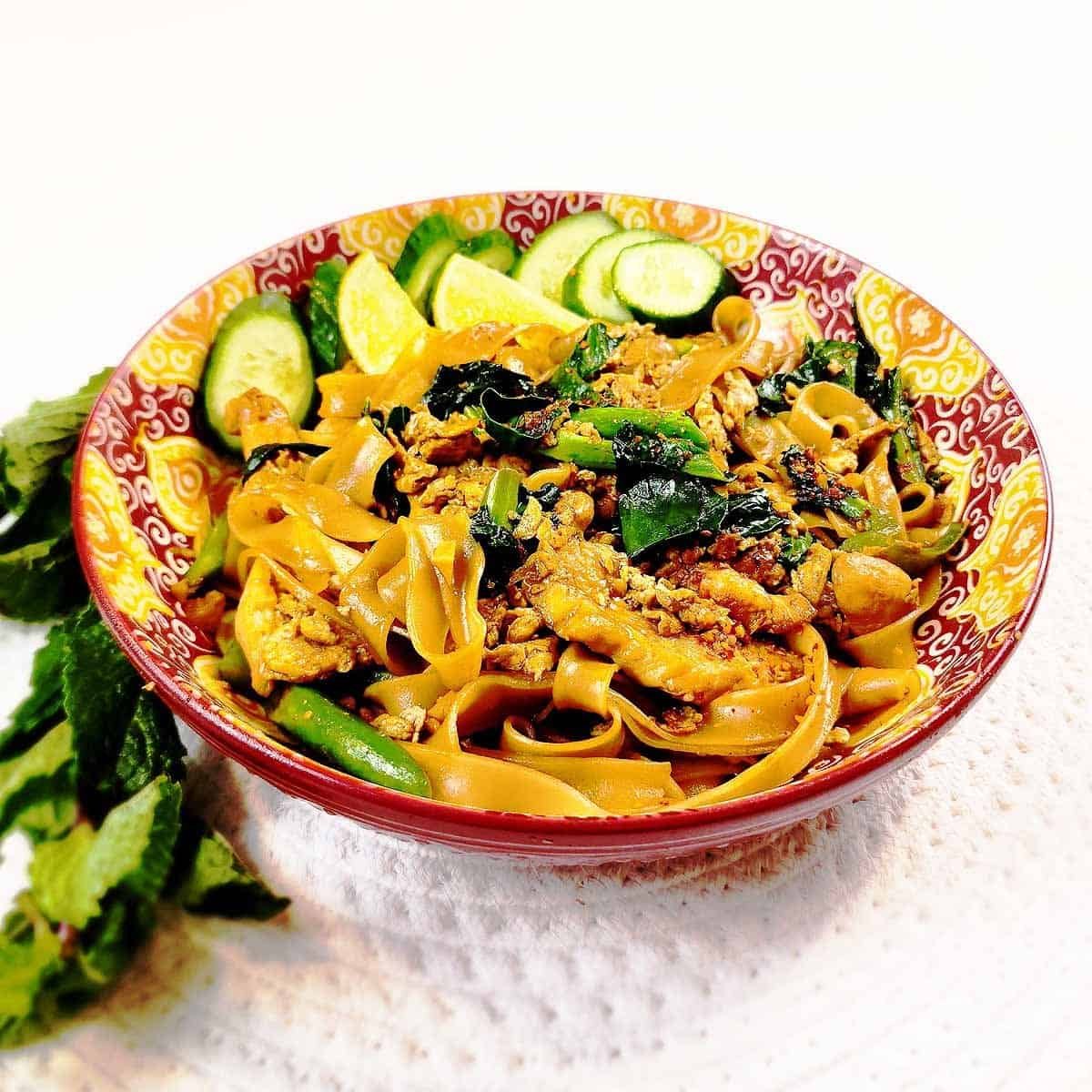
Pad See Ew (ผัดซีอิ๊ว) is a popular Thai stir-fried noodle dish made with wide rice noodles, Chinese broccoli, egg, and a rich soy sauce. Authentic Pad See Ew gets its signature flavor from a very hot wok, where the noodles caramelize and develop smoky charred edges known as wok hei.
Note From Susie

Sawasdee Kha, and Hello.
The wok heating up, that is where it starts. The sound of it getting hot, and then everything hitting it at once: the noodles, the sauce, the egg, the sizzle filling the kitchen before the smell even had time to arrive.
My mother made this. Her sisters made this. At home and at the street vendors, the same dish in both places, the wok always the center of it, the sweet smell of the sauce doing what that particular combination of dark soy and oyster sauce does when it meets very high heat. Something slightly smoky. Something that does not happen at lower temperatures.
At home, when it was just us, we ate at the table. When there were more people, family, guests, whoever had come, we would sit on the floor. The meal expanded to fit whoever was there. The noodles were always enough. There were always enough noodles.
What I remember most is the sound. Everything hitting the wok at once and the sizzle that filled the room. You heard it before you smelled it. You smelled it before you saw it. And then it was on the plate and the noodles were dark and glossy and slightly charred at the edges where the wok had been hottest.
That is still exactly what I am making when I make this.
What’s In This Page
“Make this for the people you want to sit down with.”
— Her Hands His EyesWHAT IS PAD SEE EW?
Pad See Ew, ผัดซีอิ๊ว, is one of the most beloved noodle dishes in Thai street food cooking. Wide rice noodles, sen yai, the broad flat kind, are stir-fried in a very hot wok with dark soy sauce, oyster sauce, and fish sauce, tossed with egg, Chinese broccoli, and a protein of your choice. The sauce is sweet and dark and slightly savory. The noodles char at the edges where the wok was hottest. The egg breaks apart through the noodles and coats them from within. The Chinese broccoli softens at the stems while keeping a slight bite at the leaves.
The name Pad See Ew translates as stir-fried soy sauce. It is a dish built on wok hei, the breath of the wok, the smoky, slightly charred quality that a very hot wok produces and that lower temperatures cannot replicate. This is the detail that separates an authentic Pad See Ew recipe from an approximation: the wok must be genuinely hot, the noodles must make direct contact with the hottest surface, and the sauce must caramelize rather than simply coat.
Pad See Ew is considered one of Thailand’s most popular street food dishes, found at noodle stalls across the country and at Thai restaurants worldwide. According to the Oxford Companion to Food, wide rice noodles came to Thailand through Chinese culinary influence and became central to Thai street food cooking over generations, particularly in Bangkok, where noodle stalls line every market.
You heard it before you smelled it. You smelled it before you saw it.
What You’ll Need

Wide rice noodles, eight ounces, fresh or dried. If using dried rice noodles, soak them in warm water for about eight to ten minutes until soft but still firm to the bite, then drain and set aside. If using fresh noodles, separate them gently and set aside. Either way, the noodles must be separated before they go into the wok.
Vegetable oil, two tablespoons. Garlic, three cloves, minced.
Protein, eight ounces, chicken, beef, or tofu, thinly sliced, optional. Cook until just done before the eggs go in.
Eggs, two large, lightly beaten. They go into the cleared space in the wok, scrambled until set but still moist, then folded together with the noodles.
Chinese broccoli, gai lan, two cups, chopped into bite-sized pieces. Added after the eggs are combined with the noodles.
The sauce is three things mixed together before the wok gets hot: dark soy sauce, two tablespoons. Light soy sauce, one tablespoon. Oyster sauce, one tablespoon. Sugar, one teaspoon. Ground white pepper to taste. Mix them in a bowl. Have them ready.
Optional garnishes: fresh lime wedges, ground chili pepper or chili flakes, additional sugar and soy sauce at the table for personal seasoning.
VISUAL WALK THROUGH
Step 1. Prepare the noodles.
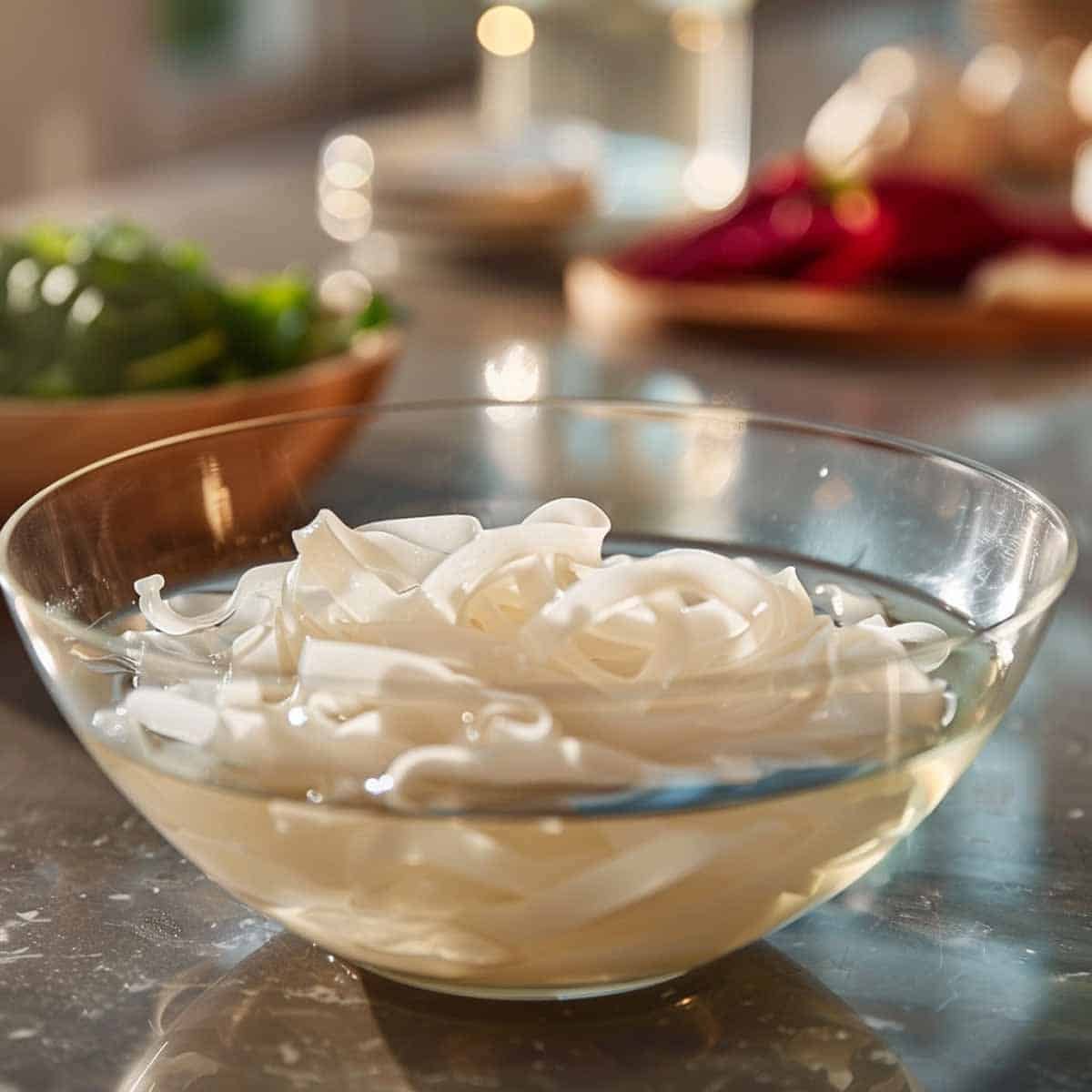
If using dried rice noodles, soak them in warm water for about eight to ten minutes until they are soft but still firm to the bite. Drain and set aside. If using fresh noodles, separate them gently and set aside. Have everything else prepped and within reach before the wok gets hot.
Step 2. Stir-fry the garlic and protein.
Heat the vegetable oil in a large skillet or wok over high heat. Add the minced garlic and stir-fry for about thirty seconds until fragrant. Add your choice of protein if using and stir-fry until just cooked through, about two to three minutes.

★ Step 3. Cook the eggs and combine with noodles and broccoli. This is What Makes the Difference.
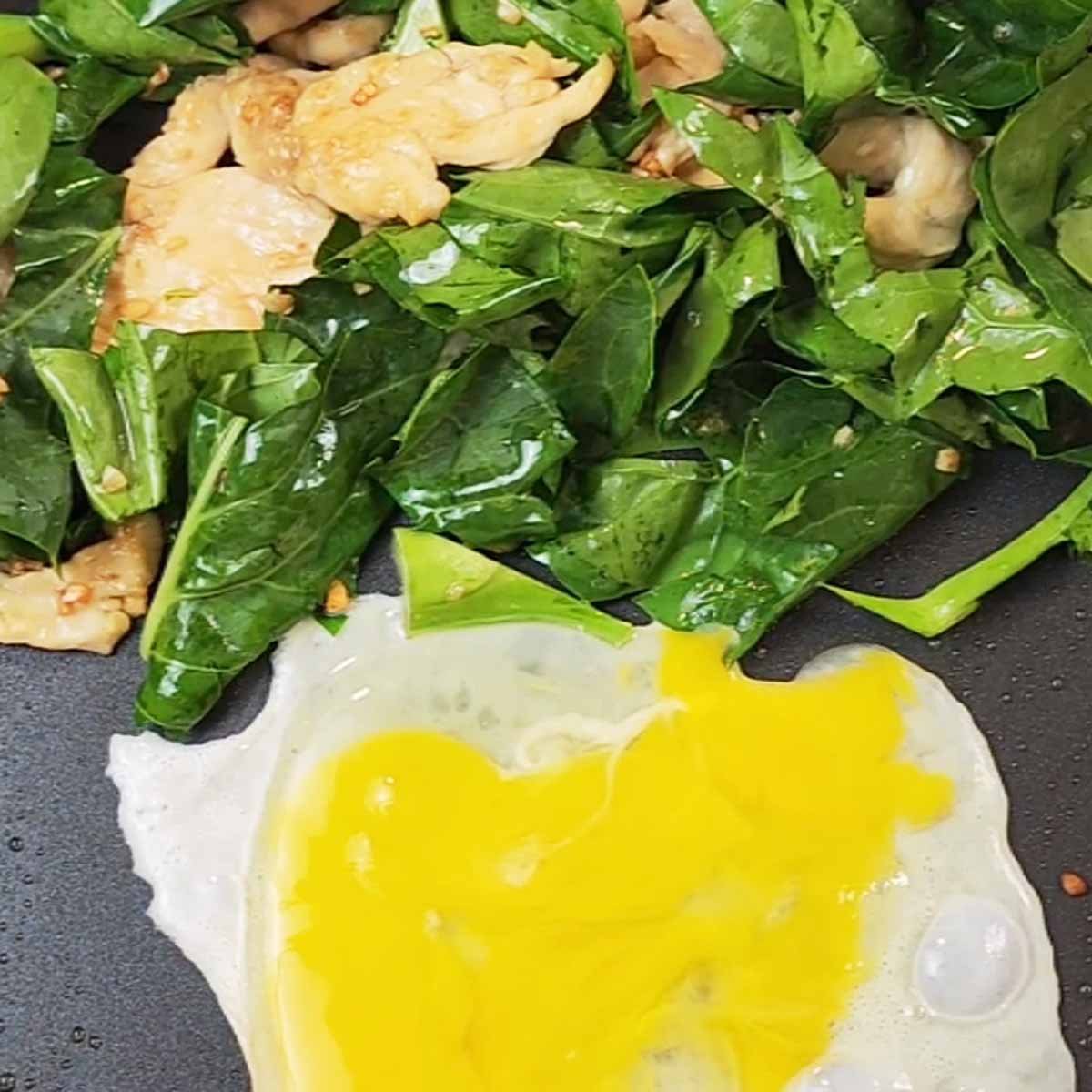
Push the ingredients to the side of the skillet or wok. Pour the beaten eggs into the center and scramble until set but still moist. Add the Chinese broccoli and stir-fry for another minute until the greens start to wilt. Toss in the noodles, spreading them out to cover the surface of the pan for even cooking. The noodles spread flat and left in contact with the hottest surface is where the slight char develops. Do not stir too soon. Let them sit thirty to forty-five seconds before the first toss.
Step 4. Season and finish.
Pour the dark soy sauce, light soy sauce, oyster sauce, and sugar over the noodles. Stir well to combine and evenly distribute the sauces. Stir-fry for another three to five minutes until the noodles are tender and well coated in sauce. Season with white pepper to taste.


Step 5. Serve immediately.
Transfer to serving plates. Garnish with lime wedges and a sprinkle of chili pepper.

Pad See Ew (Thai Stir-Fried Noodles)
Ingredients
- 8 ounces wide rice noodles fresh or dried
- 2 tablespoons vegetable oil
- 3 cloves garlic minced
- 8 ounces chicken beef, or tofu, thinly sliced (optional)
- 2 large eggs lightly beaten
- 2 cups Chinese broccoli Gai Lan, chopped into bite-sized pieces
- 2 tablespoons dark soy sauce
- 1 tablespoon light soy sauce
- 1 tablespoon oyster sauce
- 1 teaspoon sugar
- Ground white pepper to taste
Optional garnishes:
- Fresh lime wedges
- Ground chili pepper or chili flakes
- Additional sugar and soy sauce at the table for personal seasoning
Instructions
- Prepare Noodles:If using dried rice noodles, soak them in warm water for about 8-10 minutes or until they are soft but still firm to the bite. Drain and set aside. If using fresh noodles, separate them gently and set aside.
- Fry the garlic and protein:Heat the vegetable oil in a large skillet or wok over high heat. Add the minced garlic and stir-fry for about 30 seconds or until fragrant.
- Add your choice of protein: (chicken, beef, or tofu) if using, and stir-fry until just cooked through, about 2-3 minutes.
- Cook Eggs:Push the ingredients to the side of the skillet/wok. Pour the beaten eggs into the center and scramble until set but still moist.
- Combine Ingredients:Add the Chinese broccoli and stir-fry for another minute until the greens start to wilt. Toss in the pre-soaked or fresh noodles, spreading them out to cover the surface of the pan for even cooking.
- Season:Pour the dark soy sauce, light soy sauce, oyster sauce, and sugar over the noodles. Stir well to combine and evenly distribute the sauces. Stir-fry for another 3-5 minutes until the noodles are tender and well coated in sauce. Season with white pepper to taste.
- Serve:Serve hot with garnishes like lime wedges and a sprinkle of chili pepper or chili flakes for extra heat.
Video
Notes
Nutrition
LET’S GET THIS RIGHT
Why are my Pad See Ew noodles clumping together?
The fresh noodles were not separated before going into the wok, or the wok was not hot enough. Fresh wide rice noodles come folded and stuck together and must be pulled apart by hand before cooking. Noodles that go in clumped will stay clumped regardless of how long they are stirred. If the noodles are already separated and still clumping, the wok heat is too low.
Why does my Pad See Ew not have the smoky charred flavor?
The wok was not hot enough, or the noodles were stirred too soon. Heat the wok on high for two full minutes before anything goes in, cook in smaller batches, and leave the noodles undisturbed for thirty to forty-five seconds after they go in before stirring. Every second of stillness is building the char.
What is the difference between Pad See Ew and Pad Thai?
Pad See Ew uses wide flat rice noodles and a dark soy and oyster sauce base, producing a darker, richer, more savory-sweet result. Pad Thai uses thin rice noodles and a tamarind-based sauce, producing a lighter, tangier, more complex flavor. Pad See Ew is simpler and more direct. Pad Thai has more components. Both are Thai noodle dishes but they are very different in character.
Can I use regular soy sauce instead of dark soy sauce for Pad See Ew?
Not as a direct substitute. Dark soy sauce is thicker, darker, and slightly sweeter than regular soy sauce. It is what gives Pad See Ew its characteristic dark glossy color and its particular depth of flavor. Regular soy sauce alone will produce a paler, thinner result. If dark soy sauce is not available, a combination of regular soy sauce and a small amount of molasses approximates the color and sweetness.
What protein works best in Pad See Ew?
Chicken thigh and beef sliced thin are both traditional and correct. Chicken thigh stays tender at high wok heat. Breast meat tightens quickly. Shrimp works and cooks even faster. Tofu, pressed and cubed, is the vegetarian option. The protein is secondary to the noodles and the sauce. Whatever you use, slice it thin and do not overcook it.
FLAVOR PROFILE
The sound comes first. Everything hitting the wok at once, the noodles, the sauce, the immediate sizzle that fills the room before the smell has time to arrive. That sound is specific to this dish at this heat. You know what it is.
Then the smell: sweet and dark and slightly smoky, the dark soy sauce and oyster sauce caramelizing at the edges of the noodles where the wok is hottest. That sweetness in the smell is what my mother’s kitchen smelled like when she made this. It is what the street vendor’s stall smelled like. The same smell in both places.
On the plate the noodles are dark and glossy. The sauce coating every surface, the edges slightly charred where the wok had them longest. The egg is broken through in pieces, slightly crisp where it met the hot wok directly, tender everywhere else. The Chinese broccoli is dark green and just wilted at the leaves, firm at the stems.
The first bite is savory and slightly sweet. The dark soy and oyster sauce doing their work together, neither one louder than the other. Then the smokiness underneath, faint but present, the mark of the wok temperature on the noodle. Then the egg, rich and coating. Then the broccoli, its slight bitterness cutting through the richness of the sauce.
It is a complete dish. Everything in the bowl doing something.
SUSIE’S KITCHEN NOTES
Fresh wide rice noodles from an Asian grocery store will sometimes be refrigerated and firm when you buy them. Cold noodles are harder to separate and will tear rather than pull apart cleanly. Let them come to room temperature for twenty to thirty minutes before separating them. They will be pliable and will pull apart without tearing. Room temperature noodles, separated before the wok gets hot, are what the dish wants.
The dark soy sauce brand matters slightly. Pearl River Bridge and Healthy Boy are both reliable brands, dark, thick, and properly sweet. Some dark soy sauces marketed as dark are simply regular soy sauce with added color and do not have the correct viscosity or sweetness. If the sauce pours like water rather than coating the spoon slightly, it is not the right dark soy sauce.
My mother and her sisters made Pad See Ew in large batches when there were guests. The practical approach for a large group is to cook the dish in two or three separate batches rather than one enormous one. A wok that is overcrowded cannot reach the temperature it needs. Two batches made correctly are significantly better than one batch made wrong. Keep the finished first batch in a low oven while the second is cooking.
The meal expanded to fit whoever was there. That is still how I think about this dish. Make enough. The table, or the floor, always has room.
PAIRING SUGGESTIONS
Pad See Ew is a complete meal on its own, the noodles, the protein, the egg, the broccoli all in one wok. What it wants alongside it is contrast rather than addition. The Tom Yum Goong is the right soup beside it, sour and clear against the dark, rich noodles, the broth cutting through the heaviness of the sauce the way a good soup alongside a noodle dish always should. For a fuller table where Pad See Ew is one of several dishes, the chicken larb brings lime and herb brightness against the dark savory noodles, the two of them covering the full range of Thai flavor without competing. The Thai fish sauce chicken wings alongside at the same table, fried and crisp alongside the soft dark noodles, both of them dishes that need high heat and a hot pan to be what they are. And for the drink that closes a meal of dark, savory noodles and fried wings, the Thai iced tea is cold and sweet and always the right answer. My mother made this at home. The table was full. The noodles were always enough.
FAQ
What is Pad See Ew?
Pad See Ew, ผัดซีอิ๊ว, is a Thai stir-fry of wide flat rice noodles in a dark, slightly sweet sauce of dark soy sauce, light soy sauce, and oyster sauce, cooked with lightly beaten eggs, Chinese broccoli, and chicken, beef, or tofu in a very hot wok. It is one of Thailand’s most popular street food dishes. The noodles char slightly at the edges from the wok heat, producing the smoky quality that makes authentic Pad See Ew distinct from any approximation of it.
How do you make Pad See Ew step by step?
Soak dried rice noodles in warm water eight to ten minutes until soft but firm, then drain, or separate fresh noodles gently. Heat vegetable oil in a large wok or skillet over high heat. Add minced garlic and stir-fry thirty seconds. Add sliced protein and cook two to three minutes until just done. Push ingredients to the side, pour beaten eggs in the center and scramble until set but still moist. Add Chinese broccoli and stir-fry one minute. Add noodles spread over the surface and cook. Pour dark soy sauce, light soy sauce, oyster sauce, and sugar over and stir-fry three to five minutes until noodles are tender and well coated. Season with white pepper. Transfer immediately to plates and serve with lime wedges and chili flakes.
What noodles are used in Pad See Ew?
Wide rice noodles, fresh or dried, are used in Pad See Ew. If using dried rice noodles, soak them in warm water for eight to ten minutes until soft but still firm to the bite, then drain completely before using. If using fresh noodles, separate them gently before adding to the wok. Both work well. Either way, the noodles must be separated before going into the wok or they will clump and stay clumped.
What is wok hei and how do I get it at home?
Wok hei, the breath of the wok, is the smoky, slightly charred quality that a very hot commercial wok produces when food makes direct contact with its surface. Home burners cannot reach commercial temperatures. To get as close as possible: heat the wok on the highest setting for two full minutes before adding oil, cook in smaller batches so the wok is not overwhelmed, and leave the noodles undisturbed for thirty to forty-five seconds after adding them before stirring. Every second of stillness builds what char is available.
What is the difference between Pad See Ew and Pad Thai?
Pad See Ew uses wide flat rice noodles and a dark soy and oyster sauce base, darker, richer, and more savory-sweet. Pad Thai uses thin rice noodles and a tamarind-based sauce, lighter, tangier, and with more components including dried shrimp, bean sprouts, and peanuts. Pad See Ew is simpler and more direct in its flavor. Pad Thai is more complex. Both are Thai noodle dishes but very different in character, flavor, and texture.
Can I make Pad See Ew without a wok?
You can use a large, heavy skillet. Cast iron produces the best results of any non-wok option. The wider the pan, the more surface area the noodles have to make contact with the heat. Preheat the skillet on high for two full minutes before adding oil. Cook in smaller batches. The char will be less pronounced than a wok would produce but the flavor will still be correct if the heat is high and the noodles are given time to sit before stirring.
Is Pad See Ew gluten-free?
The wide rice noodles are gluten-free. However, both dark soy sauce and oyster sauce typically contain wheat and are not gluten-free. Tamari can replace the dark soy sauce for a gluten-free version. Gluten-free oyster sauce is available at some specialty stores. Fish sauce is naturally gluten-free. With these substitutions, Pad See Ew can be made gluten-free without significantly changing the flavor.