What Is Thai Shrimp Green Curry?
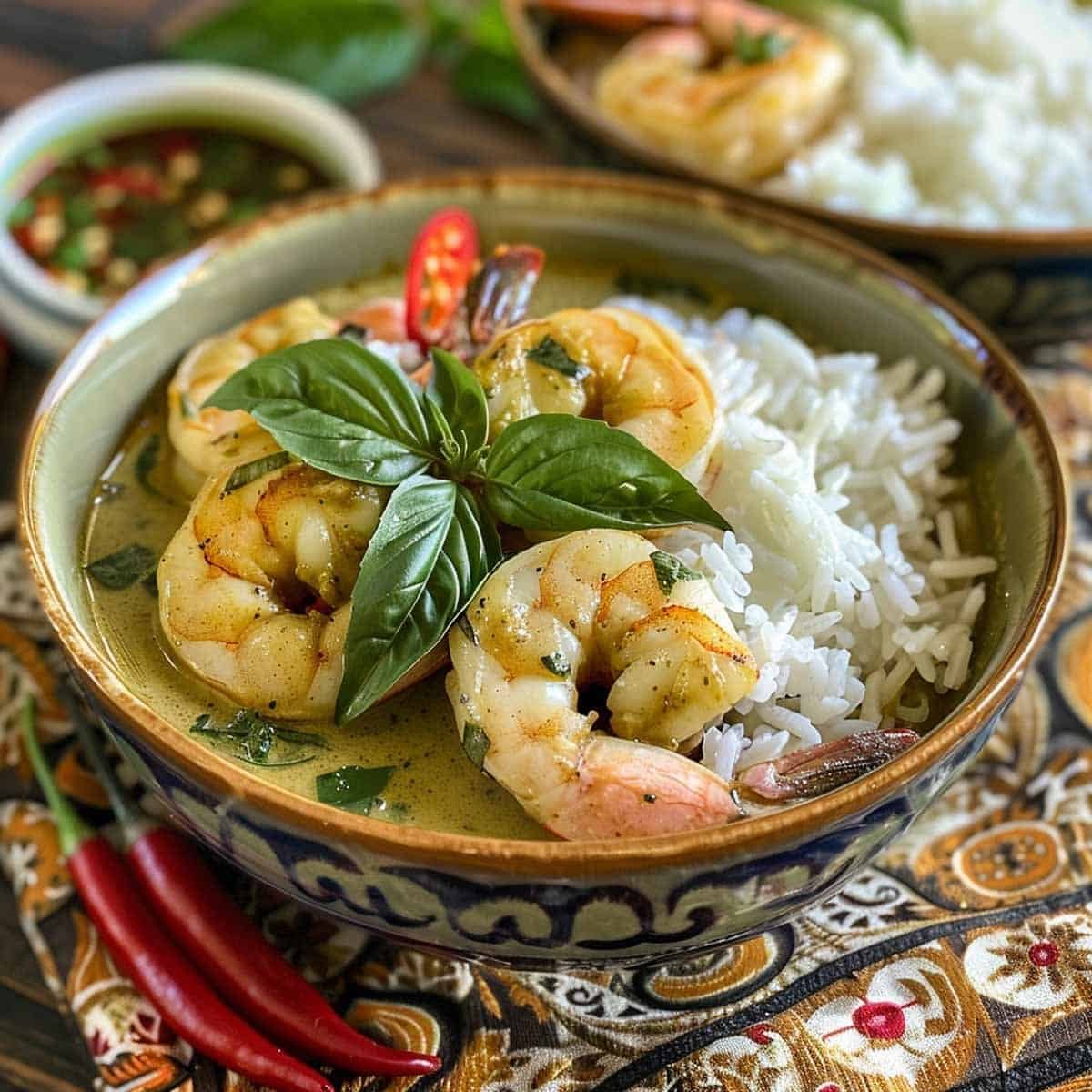
Thai shrimp green curry, Gaeng Keow Wan Goong (แกงเขียวหวานกุ้ง), is plump shrimp simmered in a fragrant coconut milk curry built on green curry paste, kaffir lime leaves, Thai basil, and fish sauce. It is the brightest, most herb-forward of the Thai curries. The shrimp go in last. The basil goes in off the heat. The smell of it fills every room.
Note From Susie

Sawasdee Kha, and Hello.
This was my mother’s dish and my father’s dish before it became mine.
When I was young I did not understand green curry the way I came to understand it later. At the market in Thailand the street vendors would have all different types of curry set out, red, yellow, green, each one a different color and a different smell, and I was still learning what each one was, what it meant, which one was mine. Green curry was my parents’. I watched them eat it and did not yet know why they loved it.
In Maryland it appeared at lunch and at dinner, whenever my mother wanted to make it. I do not have a single specific memory that stands above the others. What I have is the smell, the curry filling the house, the coconut milk and the green paste doing their work on the stove, the smell moving through the rooms the way it always did in every kitchen she cooked in.
That smell was not accidental. My mother kept Thai food alive in our house in Maryland. Not because anyone told her to. Because it was who she was and where she came from and what she knew how to do. The green curry smell in a Maryland house was Thailand in that house. It still is, when I make it.
I grew into loving this dish. That is the honest thing to say. It became mine over time, the way some things do.

What’s In This Page
“I grew into loving this dish.”
— Her Hands His EyesWHAT IS THAI SHRIMP GREEN CURRY?
Thai shrimp green curry, แกงเขียวหวานกุ้ง, Gaeng Keow Wan Goong, is one of the most recognized dishes in Thai cuisine and the brightest, most herb-forward of the three main Thai curries. Where red curry is warm and deep and yellow curry is spiced and complex, green curry is sharp and fresh. Its color and its character come from fresh green chilies, lemongrass, galangal, kaffir lime leaves, and fresh Thai basil, all ground together in the paste that becomes the foundation of the dish.
Shrimp is one of the most natural proteins for green curry. The shrimp cook in minutes in the hot coconut curry broth, absorbing the paste’s fragrance without losing their sweetness. They go in last, just before the basil, and the heat goes off the moment they are done. Two minutes. No more. The sweetness of the shrimp against the sharpness of the green curry paste is what makes this combination work.
The name Gaeng Keow Wan means green sweet curry. Keow meaning green, wan meaning sweet. The sweetness comes not from added sugar but from the coconut milk and the fresh green chilies, which are hotter but also sweeter than dried red chilies.
According to the Oxford Companion to Food, green curry paste is considered one of the most aromatic of Thai curry pastes, defined by its fresh ingredients in a way that red and yellow pastes built on dried chilies are not.
The smell of it fills every room. In Thailand. In Maryland. Wherever she made it.
WHAT YOU’LL NEED
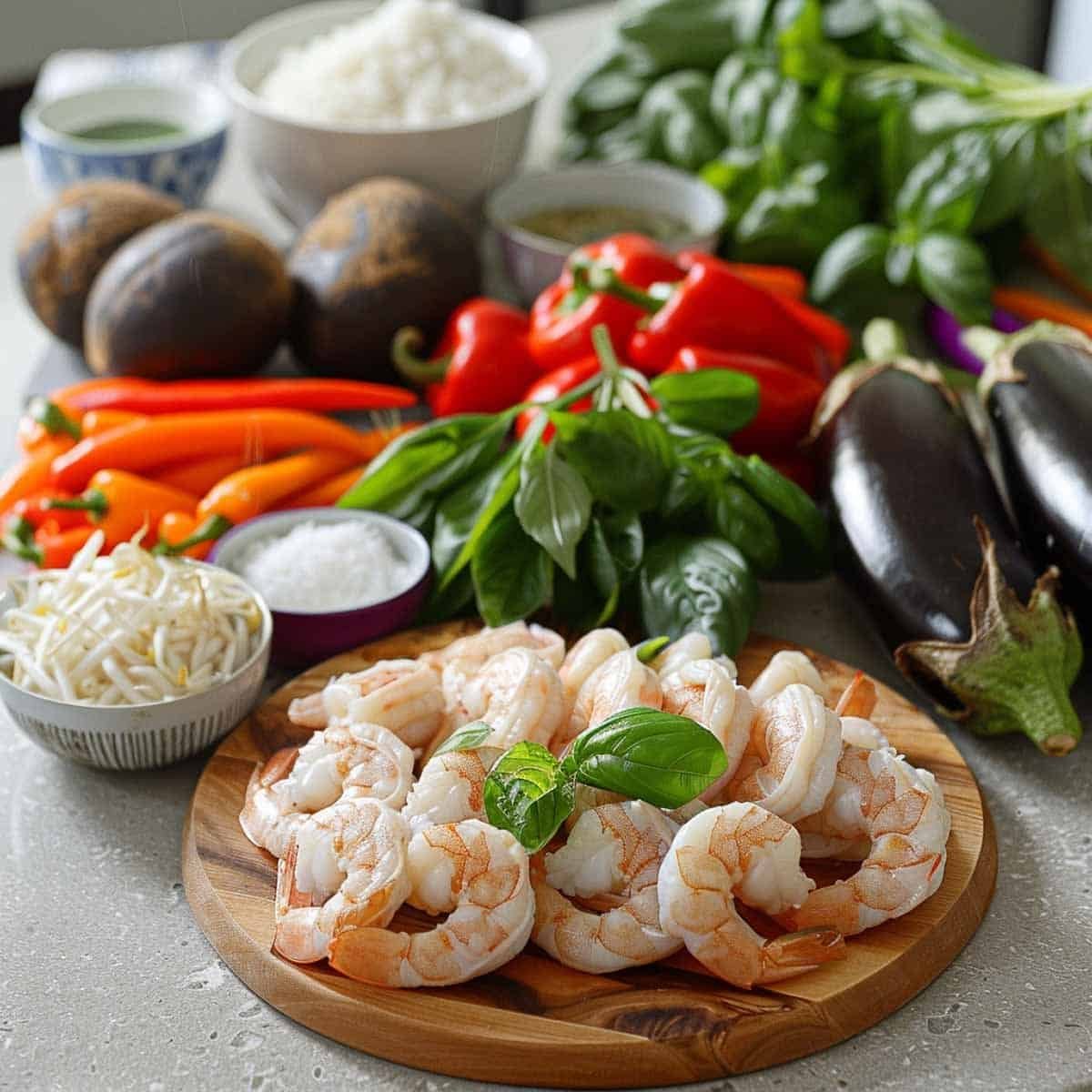
Shrimp, one pound, peeled and deveined. The shrimp go into the curry last and cook for three to four minutes until pink and opaque. Do not overcook.
Green curry paste, two tablespoons. Mae Ploy and Maesri are reliable store-bought brands. Taste after the paste has been fried before adding more.
Coconut milk, one can, fourteen ounces. Full fat. Do not shake the can. The thick cream off the top fries the paste. The thinner milk underneath builds the broth.
Chicken broth, one cup. Fish sauce, two tablespoons. Brown sugar, one tablespoon, for balance.
Bamboo shoots, one cup, drained. Bell peppers, one cup, sliced. Eggplant, one cup, cubed. The vegetables cook in the simmering curry broth until tender but still vibrant.
Thai basil leaves, half a cup. Added at the very end, stirred in off the heat to wilt from the residual warmth without cooking off their fragrance.
Vegetable oil, two tablespoons. Garlic, three cloves, minced. Ginger, one tablespoon, minced. One lime, juiced. One red chili, sliced, optional. Steamed jasmine rice for serving.
VISUAL WALK THROUGH
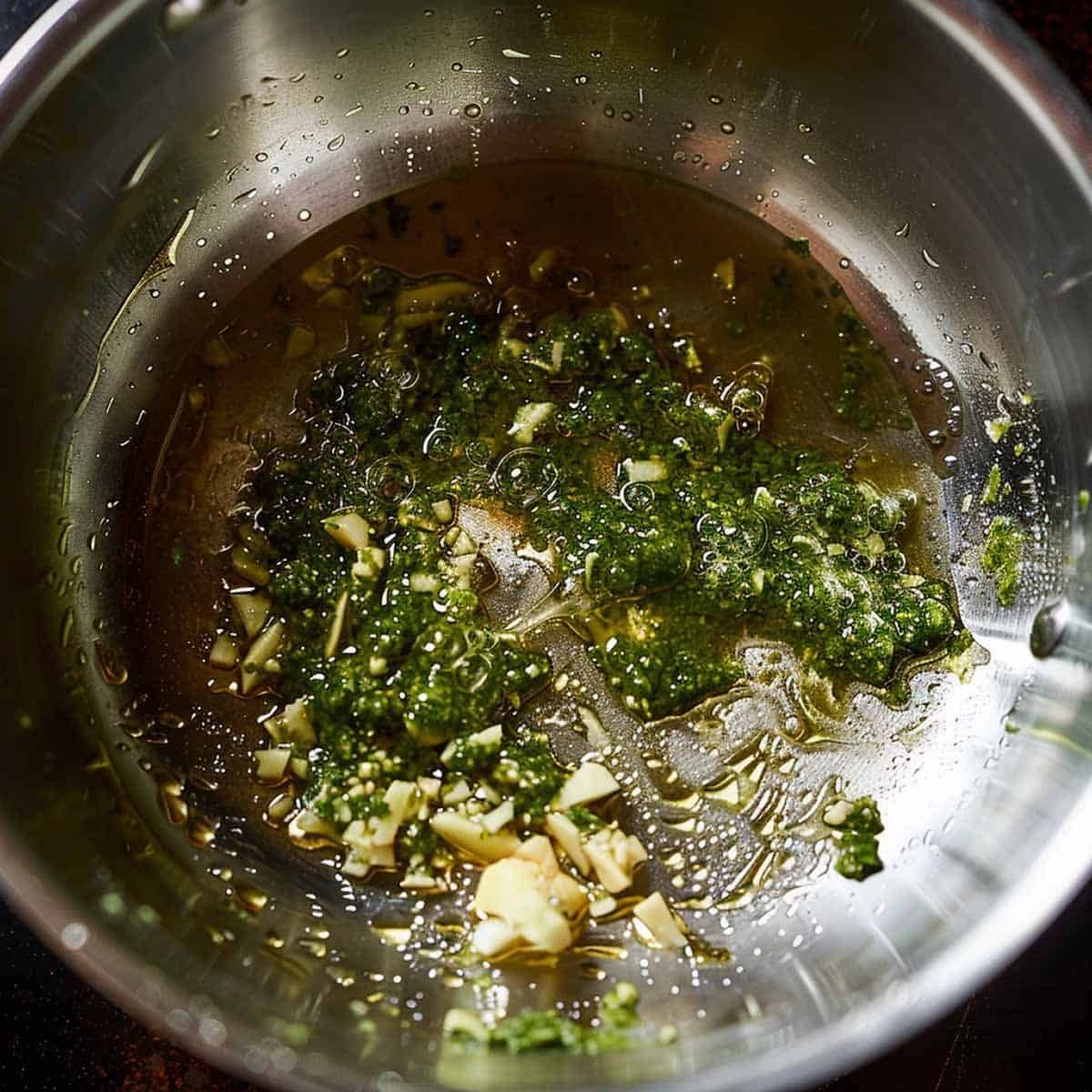
Step 1. Sauté the aromatics and fry the curry paste.
In a large pan, heat the vegetable oil over medium heat. Add the minced garlic, ginger, and green curry paste. Sauté for two to three minutes until the mixture is fragrant and the curry paste has dissolved into the oil. The smell at this stage is immediate and specific, sharper and greener than red or yellow curry paste at the same stage.
Step 2. Add liquids and vegetables.
Pour in the coconut milk and chicken broth, stirring well to combine. Add the fish sauce and brown sugar, then bring the mixture to a simmer. Add the bell peppers, eggplant, and bamboo shoots, and let the vegetables cook for five to seven minutes until tender but still vibrant. Stir occasionally.
(Do not shake the coconut milk can. The thick cream off the top fries the paste and gives the curry its body).
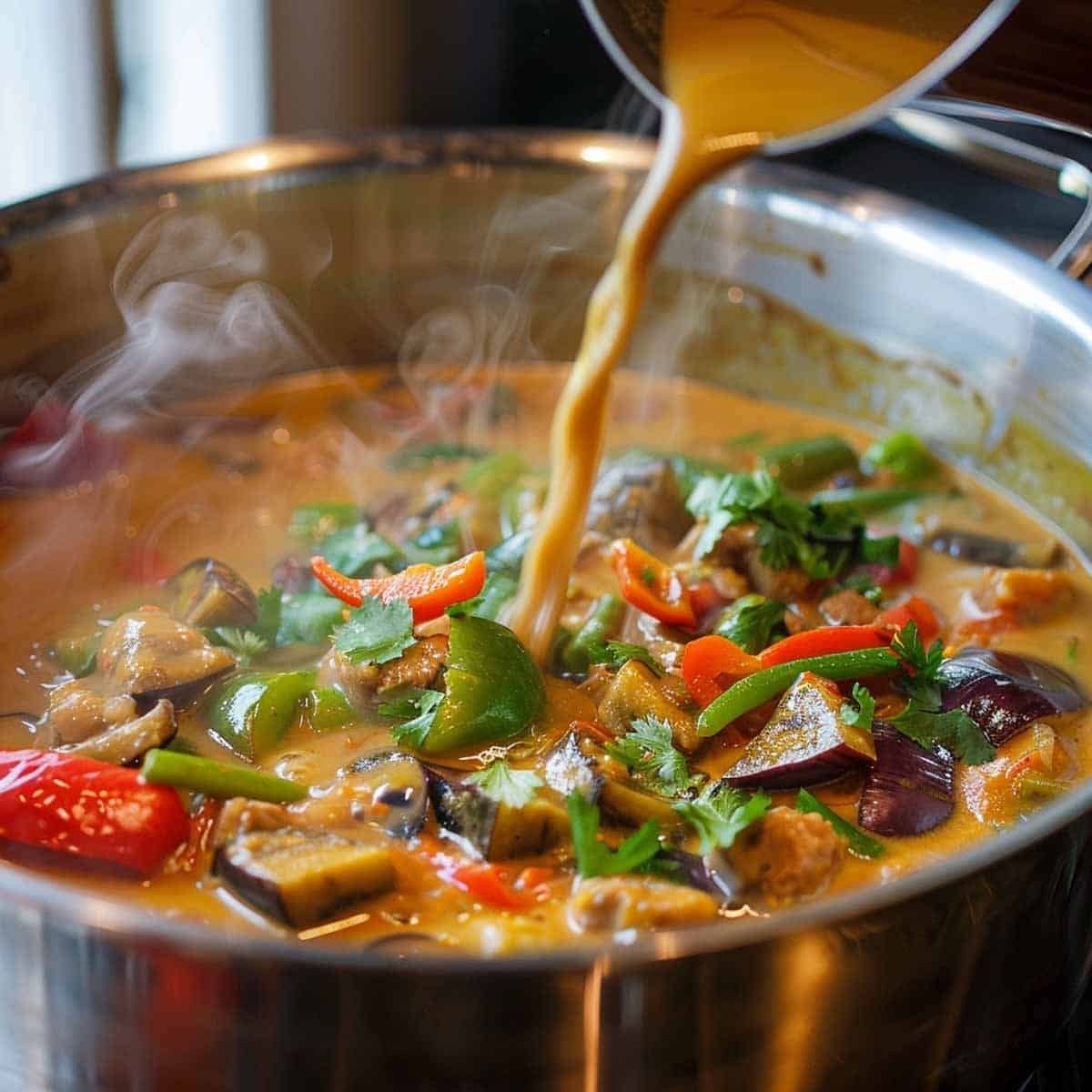
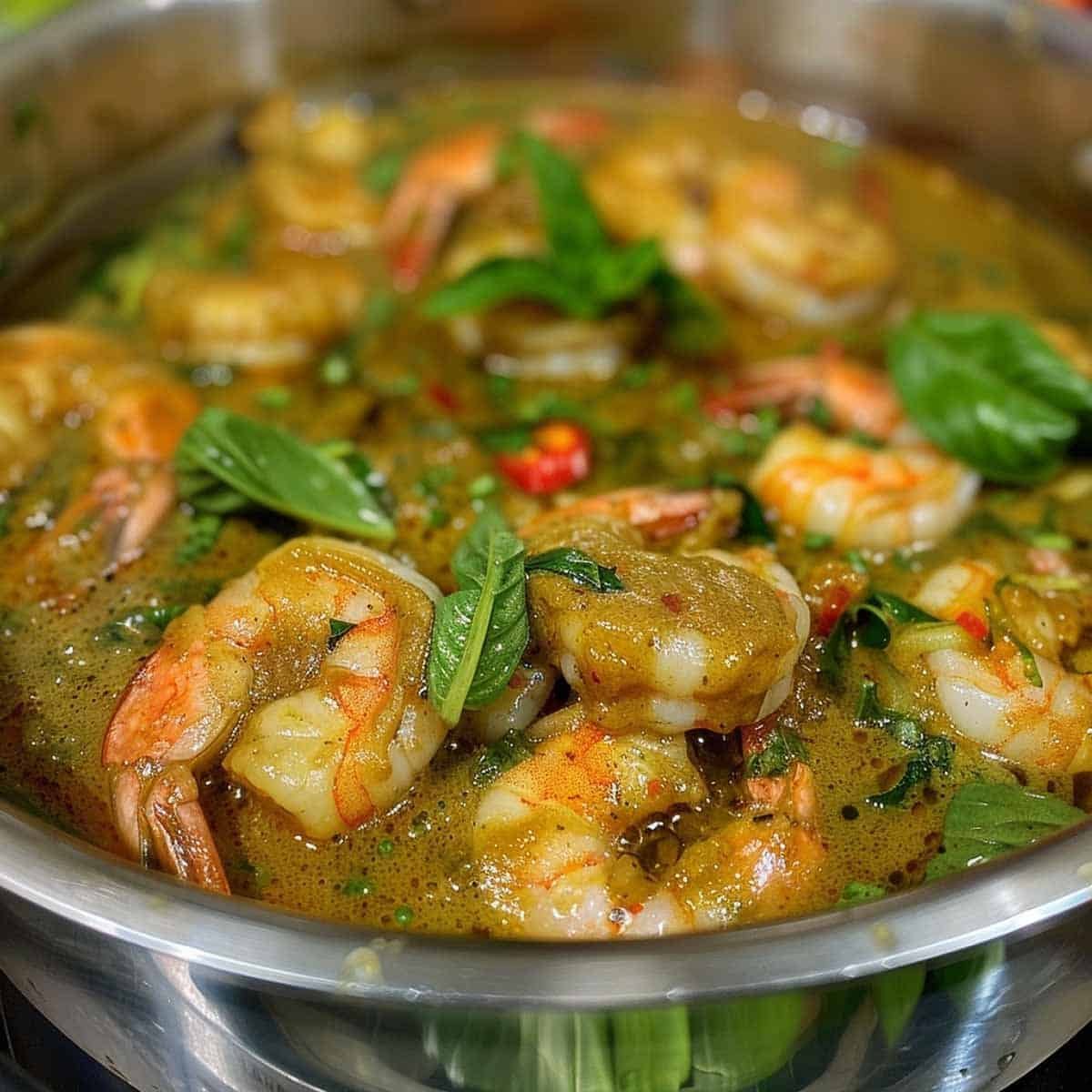
★ Step 3. Add the shrimp and cook just until pink. This is What Makes the Difference.
Add the shrimp to the pan and cook for three to four minutes until they turn pink and opaque. Watch them. The moment the pink is complete and the shrimp have curled, the next step happens immediately.
Remove from heat, then stir in lime juice and Thai basil.
Step 4. Serve.
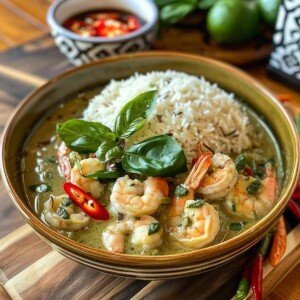
Serve the Thai shrimp green curry hot, garnished with fresh Thai basil leaves and sliced red chili for an extra kick. Pair with steamed jasmine rice to soak up the bright, fragrant sauce.
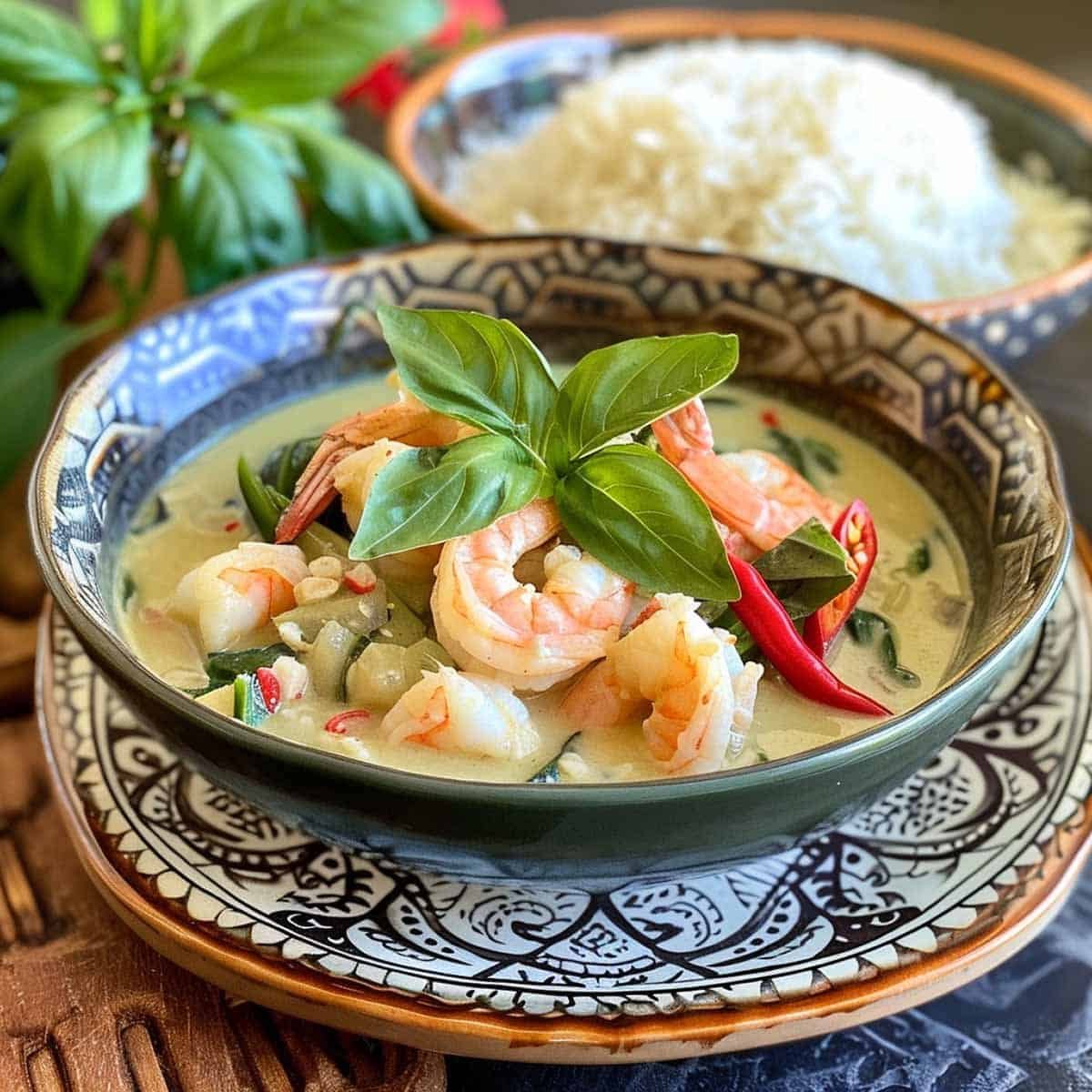
Thai Shrimp Green Curry (Gaeng Keow Wan Goong)
Ingredients
- 1 lb shrimp peeled and deveined
- 2 tbsp green curry paste
- 1 can 14 oz coconut milk
- 1 cup chicken broth
- 2 tbsp fish sauce
- 1 tbsp brown sugar
- 1 cup bamboo shoots drained
- 1 cup bell peppers sliced
- 1 cup eggplant cubed
- 1/2 cup Thai basil leaves
- 2 tbsp vegetable oil
- 1 lime juiced
- 1 tbsp ginger minced
- 3 cloves garlic minced
- 1 red chili sliced (optional)
- Steamed jasmine rice for serving
Instructions
- Preparing the Ingredients: Peel and devein the shrimp, slice the bell peppers, and cube the eggplant. Mince the garlic and ginger and cut the red chili.
- Sautéing Aromatics: In a large pan, heat the vegetable oil over medium heat. Add the minced garlic, ginger, and green curry paste. Sauté for 2-3 minutes until the mixture is fragrant and the curry paste has dissolved into the oil.
- Add liquids and vegetables:Pour in the coconut milk and chicken broth, stirring well to combine. Add the fish sauce and brown sugar, then bring the mixture to a simmer. Add the bell peppers, eggplant, and bamboo shoots, and let the vegetables cook for 5-7 minutes until they are tender but still vibrant.(Do not shake the coconut milk can. The thick cream off the top fries the paste and gives the curry its body).
- Cooking the Shrimp: Add the shrimp to the pan and cook for 3-4 minutes until they turn pink and opaque. Remove from heat, then stir in lime juice and Thai basil. Taste the broth before serving and adjust fish sauce or lime as needed.
- Serve the curry: Serve hot over jasmine rice. Garnish with fresh Thai basil and sliced red chili.
Notes
Nutrition
LET’S GET THIS RIGHT
Why are my shrimp rubbery in Thai shrimp green curry?
They cooked too long. Three to four minutes in gently simmering curry is the maximum, and they continue to cook after the heat goes off. Pull the pot off the flame the moment the shrimp are just pink through. They will finish in the residual heat of the broth. Rubbery shrimp cannot be corrected. The only solution is to not overcook them in the first place.
Why is my Thai green curry not green?
The curry paste was not enough, or the paste was old and had lost its color. Fresh green curry paste produces a vivid green broth. A paste that has been open for a long time will have darkened and produce a browner result. Use enough paste, two tablespoons per can of coconut milk, and make sure it is fresh. Adding extra Thai basil at the end also helps maintain the green color.
Can I use chicken instead of shrimp in this green curry?
Yes. Chicken thigh, cut into bite-sized pieces, is the most common protein in Thai green curry. Add it after the coconut milk is added and simmer for five to seven minutes until cooked through. The timing is different from shrimp but the method is the same.
How spicy is Thai shrimp green curry?
Green curry is generally considered the spiciest of the three main Thai curries. The heat level depends on the brand and amount of paste used. Start with two tablespoons and taste after sautéing. Add more paste for more heat, more coconut milk for less. The coconut milk moderates the sharpness significantly.
What vegetables go in Thai shrimp green curry?
Bell peppers, eggplant, and bamboo shoots are in this recipe, added with the coconut milk and cooked five to seven minutes until tender but still vibrant. Thai eggplant, small and round, is traditional at Asian grocery stores. Baby corn and zucchini also work well. The shrimp always go in last, regardless of what vegetables are in the curry.
FLAVOR PROFILE
The smell arrives before the bowl does. Green and sharp and warm, the lemongrass and galangal and fresh chili doing their work in the oil before any liquid has softened them. It is a greener smell than red or yellow curry, more immediately herb-forward, the kaffir lime present from the moment the paste hits the fat.
The broth is bright, a creamy, vivid green that is specific to this curry and to the freshness of its paste. The shrimp are just pink, curled and plump in the green broth. The Thai basil is dark on top, fragrant, wilted but not cooked.
The first taste is the coconut milk, rich and full, the base that carries everything else. Then the green curry paste comes through, lemongrass first, then the galangal, then the chili heat beginning to build from behind. Then the shrimp, sweet and tender, the minutes they spent in the broth having been exactly right. The kaffir lime in the background, floral and slightly citrus. The basil at the end of each bite, its slight anise note present and then gone.
It is the brightest of the Thai curries. It is also the most complex. My mother loved it. My father loved it. I grew into it. That is the right order for some things.
SUSIE’S KITCHEN NOTES
Green curry paste from a jar varies more between brands than red or yellow paste does. Mae Ploy produces a paste that is reliably bright and present. Maesri is slightly milder and more widely available. If you are using a brand for the first time, fry a small amount in the oil and taste before committing to the full amount. Some brands are significantly hotter than others and the heat level is not always indicated clearly on the packaging.
Homemade green curry paste is the best version of this dish. Fresh lemongrass, fresh galangal, fresh green chilies, fresh kaffir lime zest, shallots, garlic, and shrimp paste pounded together in a mortar produces a paste that is brighter, more fragrant, and more complex than any jar. It is also more work. The store-bought version is correct for a weeknight. The homemade version is correct for the version you want to remember.
My mother made this in Maryland because she wanted Thailand in the house. She did not talk about it that way. She simply made the curry and the house smelled the way it was supposed to smell. That is the thing about food and place and memory: the smell does the explaining that words do not always reach.
The lime juice stirred in at the end brightens the whole curry, sharpening the coconut milk’s sweetness and lifting the green chili’s freshness. Add it off the heat along with the basil. A squeeze of fresh lime at the table for each bowl is also correct and welcome.
PAIRING SUGGESTIONS
Thai shrimp green curry belongs over steamed jasmine rice, the clean grains absorbing the bright green broth, the shrimp and rice together making the complete meal. At a fuller table, Thai shrimp green curry pairs naturally with Tom Yum Goong two dishes built on shrimp and fresh aromatics, one a clear sour soup and one a rich coconut curry, covering opposite ends of the Thai flavor range without competing. For a second curry on the same table, the Thai beef red curry provides the contrast of warmth and depth against the green curry’s brightness and sharpness, red and green, slow and fast, two different things the same kitchen can hold. The Thai iced tea is the drink alongside, its sweetness and cold against the heat of the green chili, the same pairing that appeared at every market stall where the curry was served. My mother made this because it was hers and my father’s and because the house needed to smell like home. That is still the reason to make it.
FAQ
What is Thai shrimp green curry (Gaeng Keow Wan Goong)?
Thai shrimp green curry, Gaeng Keow Wan Goong (แกงเขียวหวานกุ้ง), is shrimp simmered in a bright, fragrant coconut curry made from green curry paste, coconut milk, chicken broth, fish sauce, and Thai basil, with bell peppers, eggplant, and bamboo shoots. It is the most herb-forward and aromatic of the main Thai curries. The shrimp go in last and cook three to four minutes only. The basil and lime juice go in off the heat at the very end.
How do you make Thai shrimp green curry step by step?
Heat vegetable oil in a large pan over medium heat. Add minced garlic, ginger, and green curry paste and sauté two to three minutes until fragrant. Pour in coconut milk and chicken broth, stir to combine. Add fish sauce and brown sugar and bring to a simmer. Add bell peppers, eggplant, and bamboo shoots and cook five to seven minutes until tender. Add shrimp and cook three to four minutes until pink and opaque. Stir in lime juice and Thai basil leaves, allowing the basil to wilt slightly. Adjust seasoning to taste. Serve hot over steamed jasmine rice garnished with fresh Thai basil and sliced red chili.
What is the difference between Thai green curry and Thai red curry?
Thai green curry is built on fresh green chilies and fresh herbs, giving it a bright, sharp, herb-forward flavor and vivid green color. Thai red curry is built on dried red chilies, producing a deeper, warmer, more complex flavor with less freshness. Green curry is generally considered spicier and more immediately aromatic. Red curry is richer and more suited to long-simmering proteins like beef. Both use coconut milk as the base.
How long do shrimp cook in Thai green curry?
Three to four minutes in gently simmering curry is all shrimp need. They continue to cook from the residual heat of the broth after the flame goes off. The moment the shrimp turn pink and curl, the cooking is essentially done. Shrimp cooked longer than four minutes become rubbery and lose their sweetness. This is the single most important timing instruction in the recipe.
Can I make Thai shrimp green curry with chicken instead?
Yes. Chicken thigh is the most common protein in Thai green curry. Cut into bite-sized pieces and add it after the coconut milk, simmering for five to seven minutes until cooked through. The timing is different from shrimp but the method is the same. Thigh meat stays tender in the coconut curry. Breast meat will tighten if cooked too long.
Is Thai shrimp green curry spicy?
Thai green curry is generally the spiciest of the three main Thai curries. The fresh green chilies in the paste are hotter than dried red chilies. The heat level depends on the brand and amount of paste and the amount of coconut milk. Two tablespoons of paste in one can of full-fat coconut milk and one cup of chicken broth produces a moderate heat that builds gradually. For less heat, use less paste and more coconut milk. For more, add extra paste after sautéing and tasting.
What vegetables go in Thai shrimp green curry?
Bell peppers, cubed eggplant, and bamboo shoots are in this recipe, added after the liquids and cooked five to seven minutes until tender but still vibrant. Baby corn and zucchini also work well. Add longer-cooking vegetables early and shorter-cooking ones in the final minutes. The shrimp always go in last. Thai basil goes in off the heat at the very end and is not optional.