What Are Thai Shrimp Cakes?
Thai shrimp cakes, Tod Mun Goong (ทอดมันกุ้ง), are seasoned shrimp paste patties mixed with red curry paste, kaffir lime leaves, and fish sauce, then fried until golden and springy. They are served with sweet chili sauce and fresh cucumber. My mother made them over a small charcoal grill, a hand fan keeping the coals alive, the smoke carrying the smell of the spices before they were done.
NOTE FROM SUSIE

Sawasdee Kha, and Hello.
My mother would set up the small charcoal grill outside. That is where it starts, outside, the charcoal getting hot, and then she would take the small hand fan and keep the coals going, fanning steadily until the heat was right. The smoke would drift away from the grill and carry the smell of the shrimp cakes with it, the spices and the shrimp mixing with the charcoal smoke, finding you wherever you were in the yard before the cakes were anywhere near done.
To a small child this was a very interesting smell. I did not know yet what it was, the red curry paste and the kaffir lime leaves and the shrimp all mixed together and then put over charcoal, but the combination of it was specific and new and I noticed it completely. My mother and father loved these. A quick snack, sometimes. Dinner, other times. No occasion required.
I can picture her with that fan. The small grill, the coals, the smoke going up and away. Her hands steady and certain the way they always were. The shrimp cakes getting cooked to perfection while she kept the heat exactly where it needed to be.
Some details stay sharper than others. That one has never left.

What’s In This Page
“Some details stay sharper than others. That one has never left.”
— Her Hands His EyesWhat Are Thai Shrimp Cakes?
Thai shrimp cakes, ทอดมันกุ้ง, Tod Mun Goong, are a seasoned shrimp paste mixture shaped into patties and fried until golden, springy, and fragrant. They are closely related to Thai fish cakes, Tod Mun Pla, which use fish paste as the base, but the shrimp version has a sweeter, more delicate flavor that the fish version does not. The mixture is built on minced or pounded shrimp combined with red curry paste, fish sauce, kaffir lime leaves finely shredded, and egg to bind.
What gives Thai shrimp cakes their distinctive springy texture is the process of working the shrimp paste. Pounding or processing the shrimp until the proteins break down enough to become elastic, then forming the patties and cooking them quickly at high heat. The exterior becomes golden and slightly crisp. The interior stays springy and dense, with the red curry paste and kaffir lime present in every bite.
They are served as a snack, a starter, or part of a larger meal, always with sweet chili dipping sauce and fresh cucumber slices alongside. According to the Oxford Companion to Food, fried shrimp and fish paste preparations are found throughout Southeast Asian cooking, with the Thai versions distinguished by the addition of red curry paste and kaffir lime leaf.
My mother made these over a small charcoal grill. The smoke carried the smell before the cakes were done.
What You’ll Need
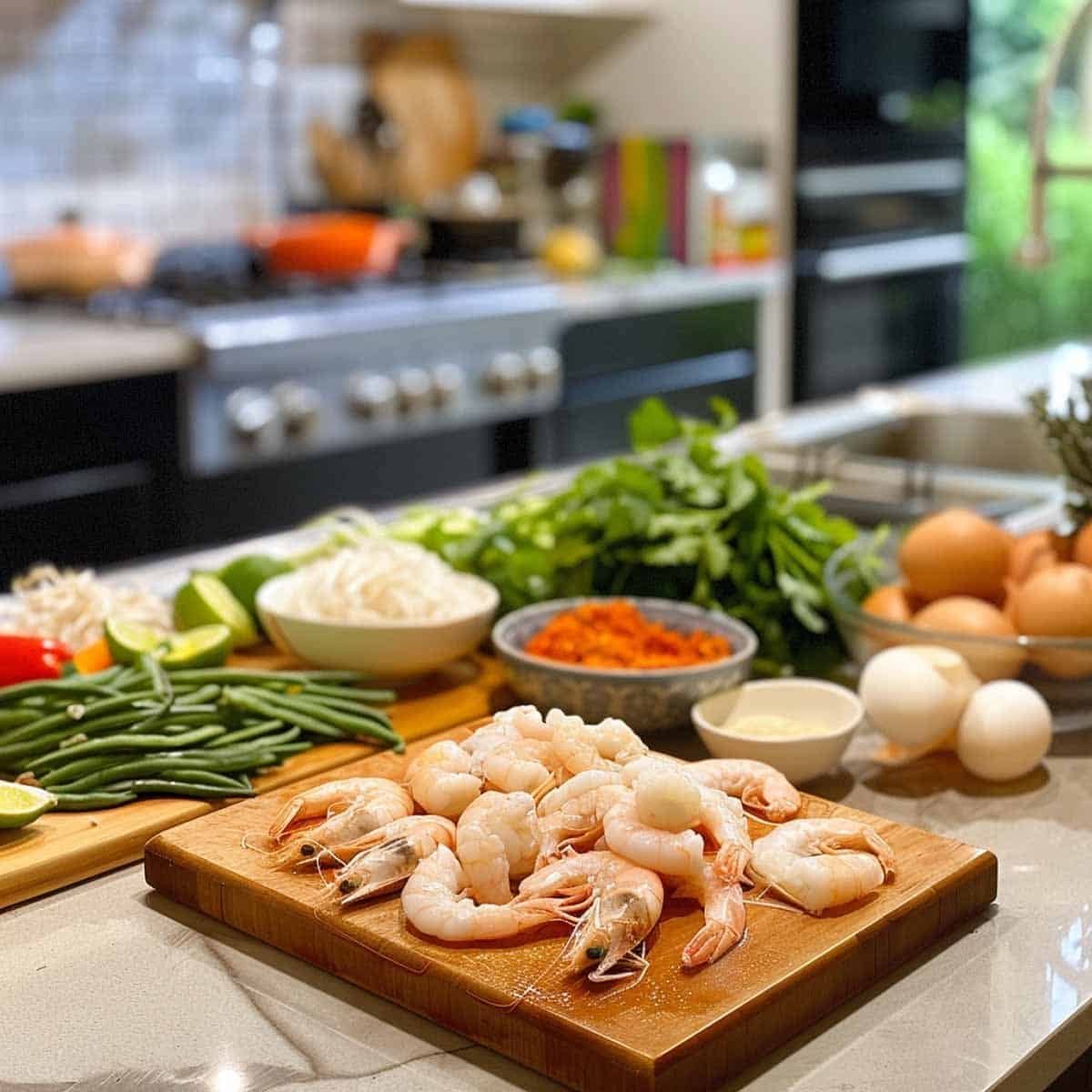
Fresh shrimp, one pound, peeled and deveined. The freshest you can find. The quality of the shrimp is the whole flavor of these cakes. One pound makes approximately eight to ten cakes, enough for four people as a starter.
Red curry paste, two tablespoons. It is the seasoning and the color and part of the distinctive flavor. Store-bought red curry paste works well here.
Kaffir lime leaves, two, very finely shredded. The central stem removed, the leaf folded and sliced into the thinnest possible strips. They distribute through the shrimp mixture and are present in every bite as tiny flecks of fragrance. Do not leave them in large pieces. Fine shreds only.
Fish sauce, one tablespoon. One egg, to bind. Breadcrumbs, half a cup, for coating each cake before frying.
Green beans, a quarter cup, finely chopped. They add color and a slight crunch.
Fresh cilantro, a quarter cup, chopped. Thai basil leaves, a quarter cup, chopped. Both folded into the mixture.
Vegetable oil for frying. Sweet chili sauce for serving. Lime wedges and fresh cilantro for garnish.
VISUAL WALK THROUGH
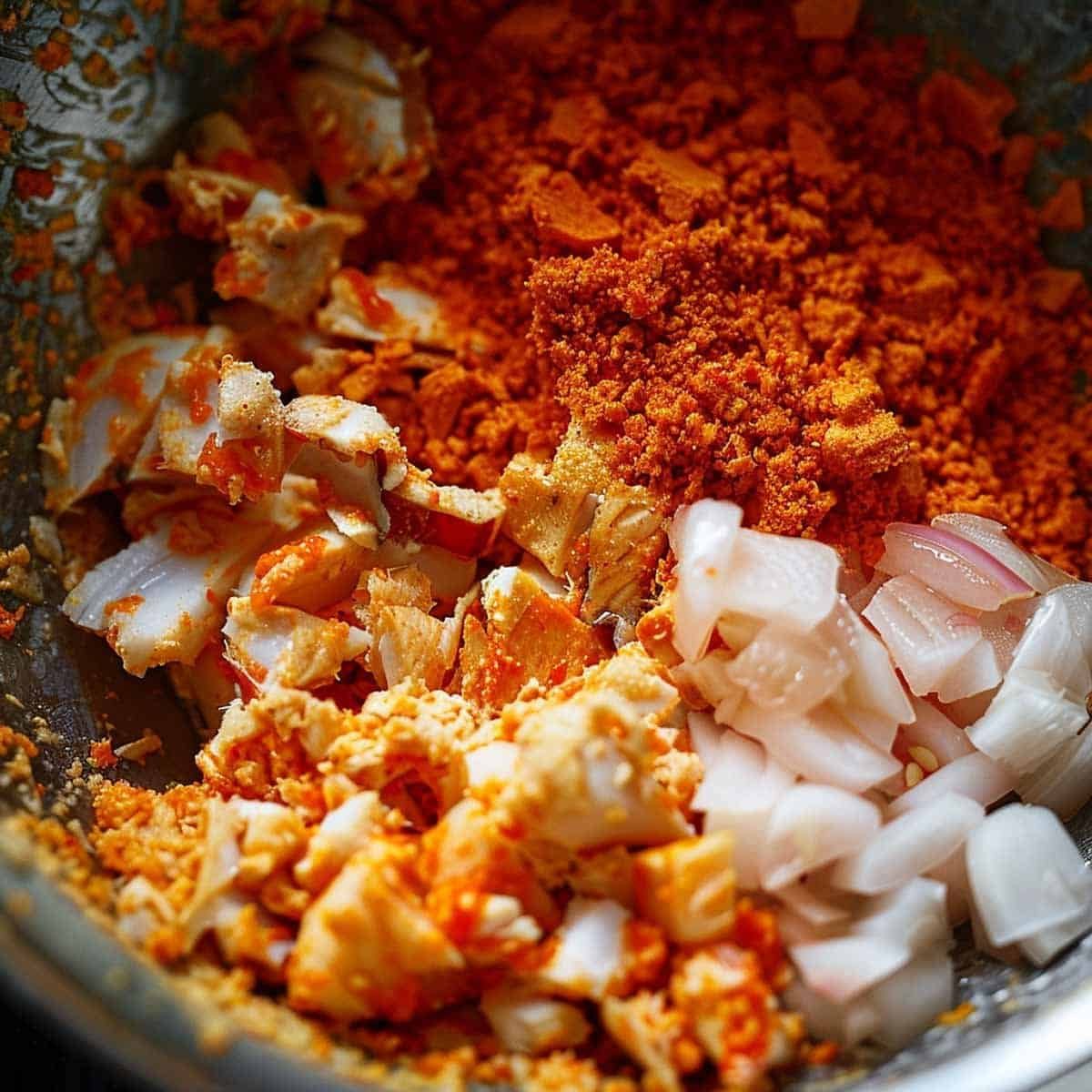
Step 1. Prepare the shrimp mixture.
Pulse the shrimp in a food processor until coarsely chopped. Add red curry paste, egg, and fish sauce. Pulse until well combined and slightly sticky. Transfer to a mixing bowl.
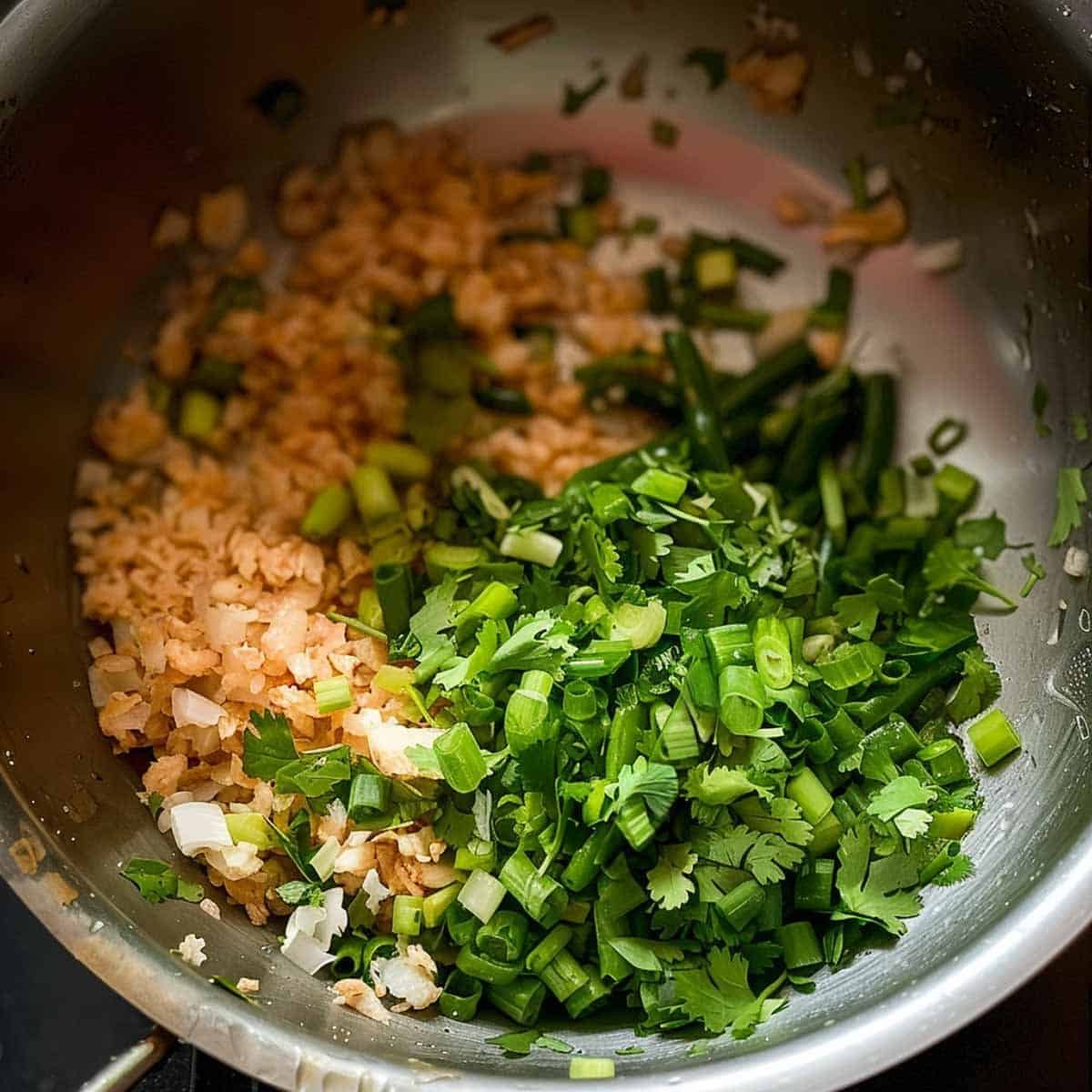
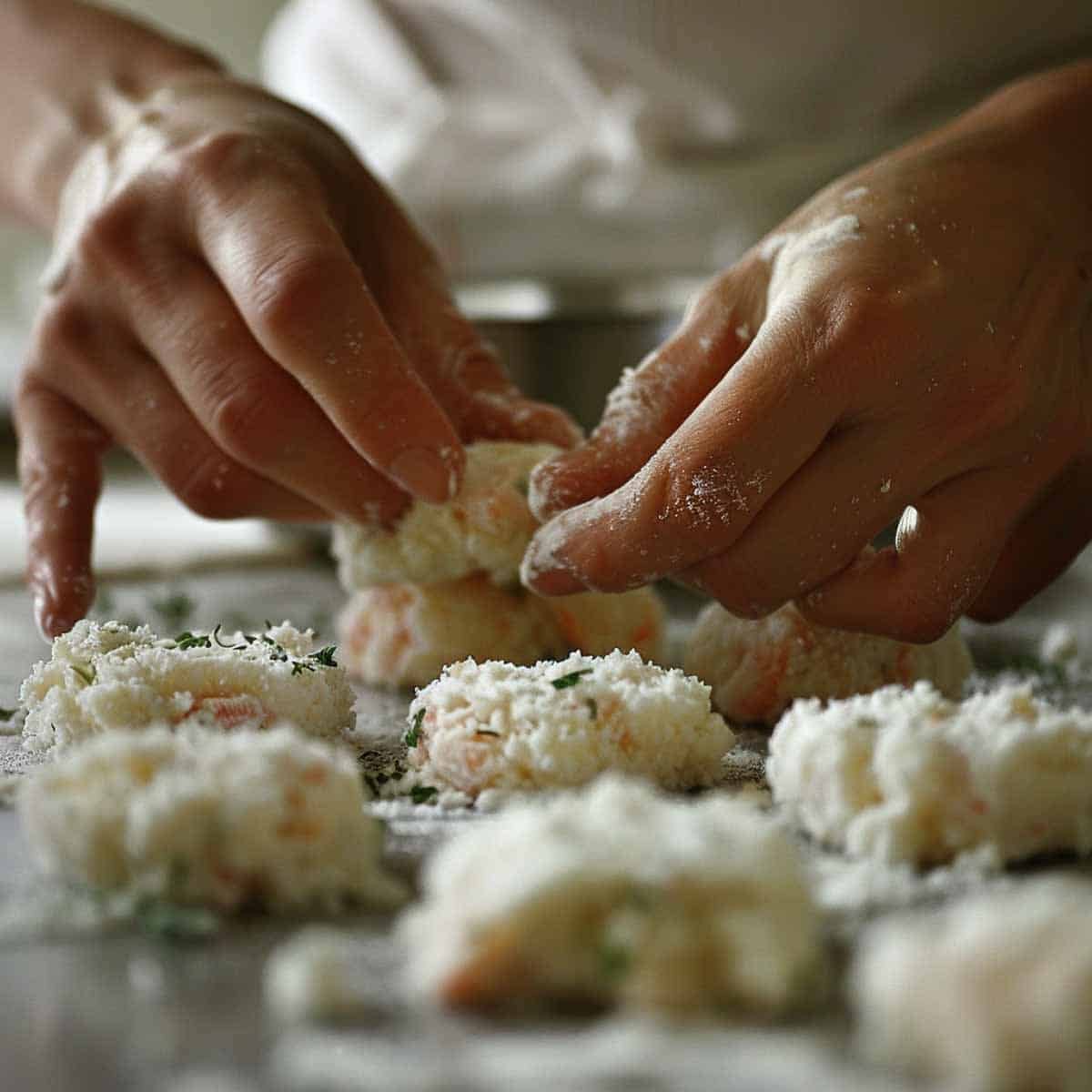
Step 2. Mix in herbs and vegetables. Shape the cakes.
Transfer the shrimp mixture to a mixing bowl. Add chopped green beans, cilantro, Thai basil, and shredded kaffir lime leaves. Mix thoroughly. Scoop about two tablespoons of the mixture and shape into small patties about half an inch thick. Place them on a plate. Refrigerate for fifteen to twenty minutes before cooking.
Step 3. Coat with breadcrumbs.
Spread breadcrumbs on a plate. Coat each shrimp cake with breadcrumbs, pressing gently to adhere. Place them back on the plate. The breadcrumb coating gives the exterior its golden crust and helps the cakes hold their shape in the oil.
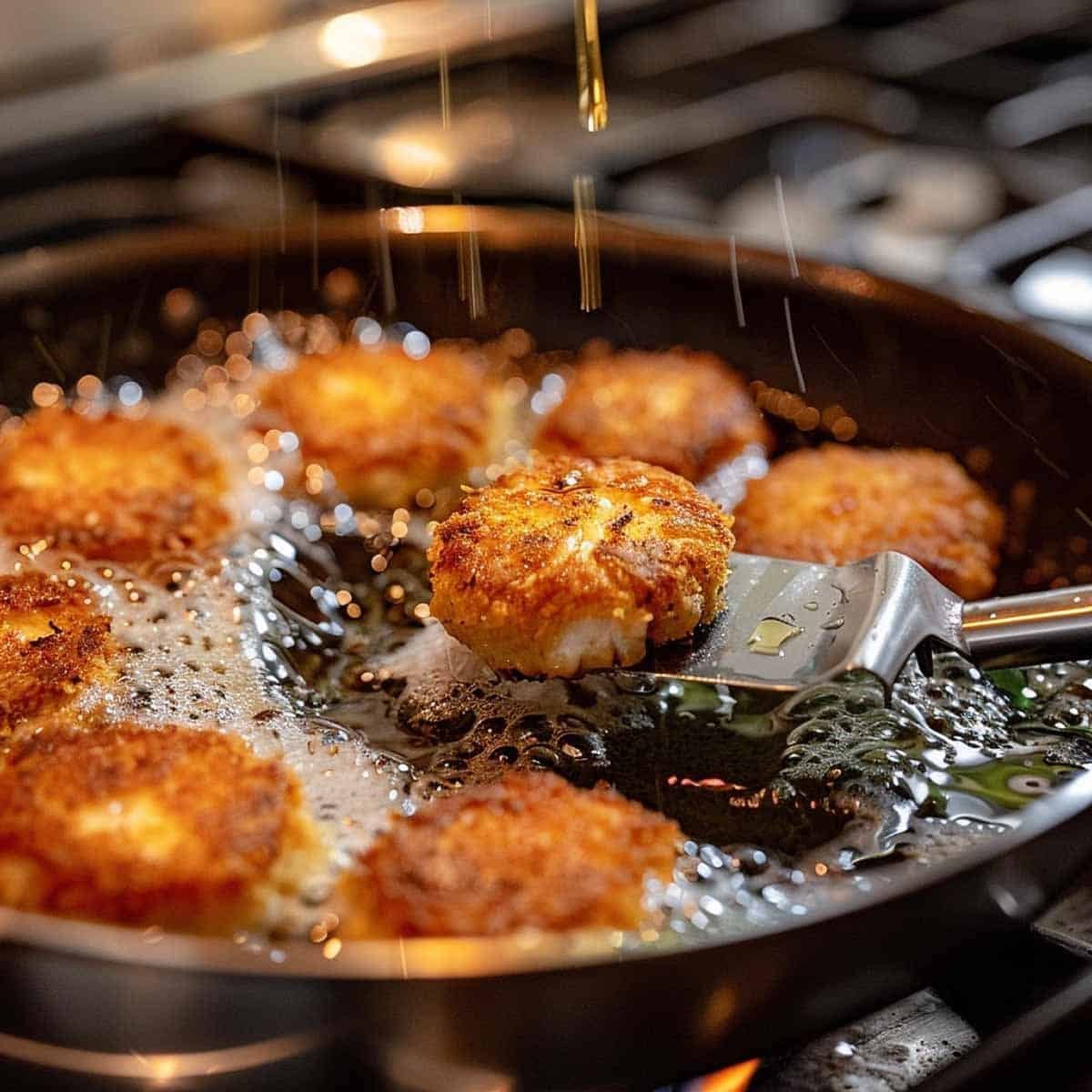
★ Step 4. Fry the shrimp cakes until golden brown. This is What Makes the Difference.
Heat vegetable oil in a frying pan over medium heat. Fry the shrimp cakes in batches for about three to four minutes per side until golden brown and cooked through. Do not turn the cakes before they are ready. Drain on paper towels.

Step 5. Serve with sweet chili sauce and garnish.
Present the Thai shrimp cakes on a serving platter. Garnish with fresh cilantro and lime wedges. Serve hot with sweet chili sauce for dipping and cucumber slices.

Thai Shrimp Cakes (Tod Mun Goong)
Ingredients
- 1 lb fresh shrimp peeled and deveined
- 2 tbsp red curry paste
- 1 tbsp fish sauce
- 1 egg
- 1/4 cup green beans finely chopped
- 1/4 cup fresh cilantro chopped
- 1/4 cup Thai basil leaves chopped
- 2 kaffir lime leaves finely shredded
- 1/2 cup breadcrumbs
- Vegetable oil for frying
- Sweet chili sauce for serving
- Lime wedges and fresh cilantro for garnish
- Cucumbers
Instructions
- Prepare Shrimp Mixture:Pulse the shrimp in a food processor until coarsely chopped. Add red curry paste, egg, and fish sauce. Pulse until well combined and slightly sticky.1 lb fresh shrimp, 2 tbsp red curry paste, 1 egg, 1 tbsp fish sauce
- Mix in Herbs and Vegetables: Transfer the shrimp mixture to a mixing bowl. Add chopped green beans, cilantro, Thai basil, and shredded kaffir lime leaves. Mix thoroughly.1/4 cup green beans, 1/4 cup fresh cilantro, 2 kaffir lime leaves, 1/4 cup Thai basil leaves
- Shape the Cakes with Ease: Scoop about 2 tablespoons of the mixture and shape into small patties about 1/2 inch thick. Place them on a plate.
- Coat with Breadcrumbs: Spread breadcrumbs on a plate. Coat each shrimp cake with breadcrumbs, pressing gently to adhere. Place them back on the plate.Refrigerate the formed cakes before cooking.1/2 cup breadcrumbs
- Fry the Shrimp Cakes: Heat vegetable oil in a frying pan over medium heat. Fry the shrimp cakes in batches for about 3-4 minutes per side until golden brown and cooked. Drain on paper towels.Vegetable oil for frying
- Serve: Present the Thai Shrimp Cakes on a serving platter. Garnish with fresh cilantro and lime wedges. Serve sweet chili sauce for dipping and cucumber slices.Lime wedges and fresh cilantro for garnish, Sweet chili sauce for serving
Notes
Nutrition
LET’S GET THIS RIGHT
Why are my Thai shrimp cakes falling apart in the oil?
The mixture was not worked enough, the cakes were not refrigerated before cooking, or the oil was not hot enough. The shrimp paste needs to be processed until it becomes sticky and cohesive. Refrigerating the formed cakes for fifteen to twenty minutes firms the mixture. Oil that is not at temperature allows the cakes to absorb oil rather than frying. Address all three and the cakes will hold.
Why are my Thai shrimp cakes tough instead of springy?
The shrimp were over-processed into a completely smooth purée, or the cakes were overcooked. The springy texture comes from partially broken-down shrimp proteins. The paste should be sticky and cohesive but still have some texture. A completely smooth purée produces a denser, tougher result. Three to four minutes per side at medium heat is correct.
Can I grill Thai shrimp cakes instead of frying?
Yes, and grilling is the more traditional method in many Thai home kitchens. A medium-high heat grill with an oiled grate produces a slightly charred exterior and a smokiness that pan-frying cannot replicate. Three to four minutes per side on the grill. Brush the cakes lightly with oil before placing them on the grate to prevent sticking. The charcoal version is the best result.
Can I make Thai shrimp cakes ahead of time?
You can form the cakes ahead and refrigerate them uncooked for up to one day. Cook them just before serving. Cooked shrimp cakes can be reheated in a 350 degree oven for five minutes on a wire rack. They are best eaten immediately after cooking but will hold for up to thirty minutes in the oven without significant loss of quality.
What dipping sauce goes with Thai shrimp cakes?
Thai sweet chili sauce is the traditional and correct accompaniment, available bottled at Asian grocery stores and most supermarkets. Fresh cucumber slices alongside are not optional. Their coolness and crunch complete the eating experience in a way the sauce alone does not.
FLAVOR PROFILE
The smoke arrives first, if you are making these over charcoal, the smoke carrying the smell of the spices and the shrimp before the cakes are anywhere near done. That is the smell my mother’s small grill produced. The hand fan keeping the coals going. The smoke drifting away and finding you across the yard.
On the plate the cakes are golden at the edges and slightly darker where the heat was concentrated. The exterior is firm, a slight resistance when you pick one up, then springy underneath. That springiness is the shrimp protein doing what it does when it has been properly worked and properly cooked.
The first bite is savory and slightly sweet. The shrimp’s natural sweetness present beneath the red curry paste and kaffir lime. The lime is there as fragrance more than flavor, in every bite, faint and floral, coming from the finely shredded leaves dispersed through the cake. The red curry paste provides warmth and depth without being identifiable as a separate component. The breadcrumb crust gives way cleanly.
Then the sweet chili sauce, and the cucumber, cool and clean and cutting through everything that came before it. That contrast is not incidental. It is the whole point of serving them together.
My mother’s version had the charcoal smoke underneath all of it. That is the version I am still making when I make these.
SUSIE’S KITCHEN NOTES
The small charcoal grill my mother used was the right tool for this dish. The proximity of the charcoal to the cakes means the smoke flavors them directly as they cook, not just as background. A standard gas grill works. A charcoal grill is better. The hand fan keeping the coals going is the part that cannot be replicated, but the principle is the same: steady, consistent heat that does not drop between cakes.
Wet hands every time you form a cake. The shrimp mixture is sticky and will adhere to dry hands, pulling the shaped cake apart as you try to remove it. Cold water on the hands before each cake keeps the mixture from sticking and allows you to shape cleanly. A small bowl of cold water next to the forming surface is the right setup.
The green beans should be finely chopped, as the recipe calls for. They are in the cake for texture and color, not as a primary flavor, and large pieces will make the cake harder to form and harder to eat cleanly. A sharp knife and patience is all that is needed.
If you are making a large batch for guests, keep the finished cakes on a wire rack in a low oven while the remaining batches cook. Do not stack them and do not cover them. Stacking and covering traps steam and softens the exterior. A single layer on a wire rack keeps them at temperature and keeps the crust intact for up to thirty minutes.
PAIRING SUGGESTIONS
Thai shrimp cakes work as a starter before a larger meal or as the main event alongside rice and a simple soup. As a starter, they belong before the Thai shrimp green curry, the shrimp in two forms, first as a cake and then as a curry, the kaffir lime leaf and red curry paste of the cake finding the coconut and basil of the curry in a way that feels like a complete progression. For a fuller table where the shrimp cakes are part of a spread, the chicken larb brings its lime and herb brightness alongside, and the Thai fish sauce chicken wings add the fried element that completes a meal built around sharing and reaching. The Nam Prik Pao is an alternative dipping sauce alongside the sweet chili, smoky and complex against the sweet and savory cake. And for the drink alongside hot fried food, the Thai iced tea is cold and sweet and always the right answer. My mother made these outside over the small grill. The smoke drifted. The smell found us. That is still the right way to make them.
FAQ
What are Thai shrimp cakes (Tod Mun Goong)?
Thai shrimp cakes, Tod Mun Goong (ทอดมันกุ้ง), are seasoned shrimp paste patties mixed with red curry paste, finely shredded kaffir lime leaves, fish sauce, egg, and fresh herbs, coated in breadcrumbs and fried until golden and springy. They are served with Thai sweet chili sauce and fresh cucumber slices. They are eaten as a snack, starter, or part of a larger Thai meal. The distinctive springy texture comes from the processed shrimp mixture properly worked before forming.
How do you make Thai shrimp cakes step by step?
Pulse fresh peeled shrimp in a food processor until coarsely chopped. Add red curry paste, egg, and fish sauce and pulse until well combined and slightly sticky. Transfer to a bowl and mix in chopped green beans, cilantro, Thai basil, and finely shredded kaffir lime leaves. Shape into patties about half an inch thick using wet hands. Coat each patty in breadcrumbs. Refrigerate fifteen to twenty minutes. Fry in vegetable oil over medium heat for three to four minutes per side until golden brown and cooked through. Drain on paper towels and serve immediately with sweet chili sauce, lime wedges, and fresh cucumber.
What is the difference between Thai shrimp cakes and Thai fish cakes?
Thai shrimp cakes use minced or pounded shrimp as the base, producing a sweeter, more delicate flavor. Thai fish cakes, Tod Mun Pla, use a firm white fish paste, producing a denser, more strongly flavored cake. Both use red curry paste and kaffir lime leaves in the mixture and are served with sweet chili sauce and cucumber. The shrimp version is lighter and sweeter. The fish version is bolder and more robust.
Why do Thai shrimp cakes have a springy texture?
The springy texture comes from processing the shrimp until the proteins partially break down and become elastic. The shrimp should be pulsed in a food processor until sticky and cohesive but not completely smooth. Completely smooth purée produces a denser, less springy result. The egg in the mixture also contributes to the structure and springiness of the finished cake.
Can I grill Thai shrimp cakes instead of frying?
Yes. Grilling is the traditional home method in many Thai kitchens and produces a slightly charred exterior with a smokiness that pan-frying cannot replicate. Use a medium-high heat grill with a well-oiled grate. Brush the formed, chilled cakes lightly with oil before placing on the grill. Three to four minutes per side. The charcoal grill version, the one made with a small grill and a hand fan keeping the coals going, is the best version of this dish.
How do you keep Thai shrimp cakes from falling apart?
Three things keep Thai shrimp cakes from falling apart: working the shrimp paste until it is properly sticky and cohesive, coating in breadcrumbs, and refrigerating the formed cakes for fifteen to twenty minutes before cooking so the mixture firms. Do not turn the cakes until the bottom edge is visibly golden and the cake releases cleanly from the pan. If it resists, wait.
What sauce is served with Thai shrimp cakes?
Thai sweet chili sauce is the traditional accompaniment for Thai shrimp cakes, available bottled at Asian grocery stores and most supermarkets. It is sweet, slightly vinegary, and gently spiced, complementing the savory cake. Fresh cucumber slices alongside are not optional. Their coolness and crunch are part of how the dish is correctly eaten. Nam Prik Pao, Thai roasted chili paste, is an alternative dipping sauce for those who want more complexity and heat.