What Is Moo Ping?
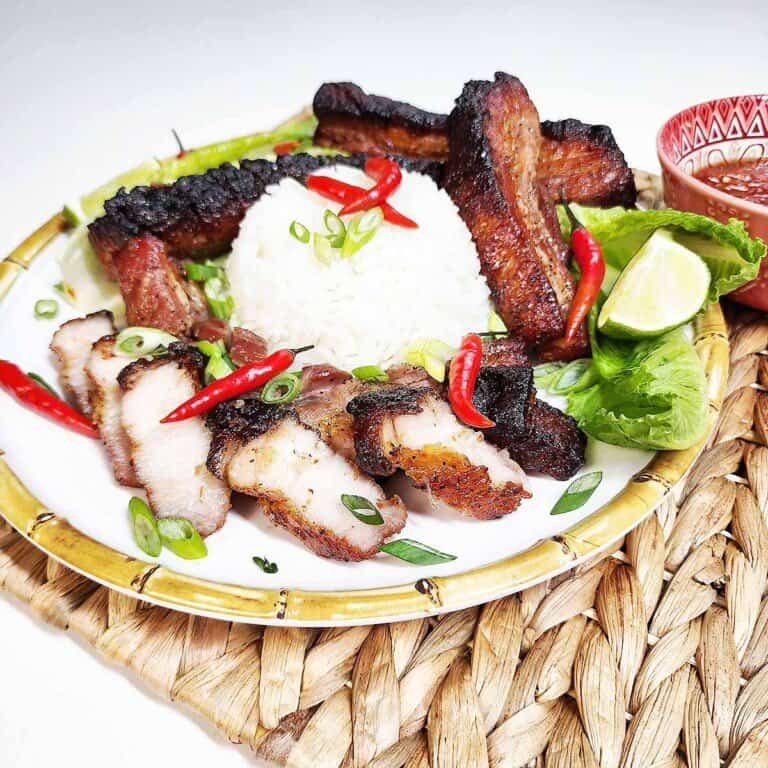
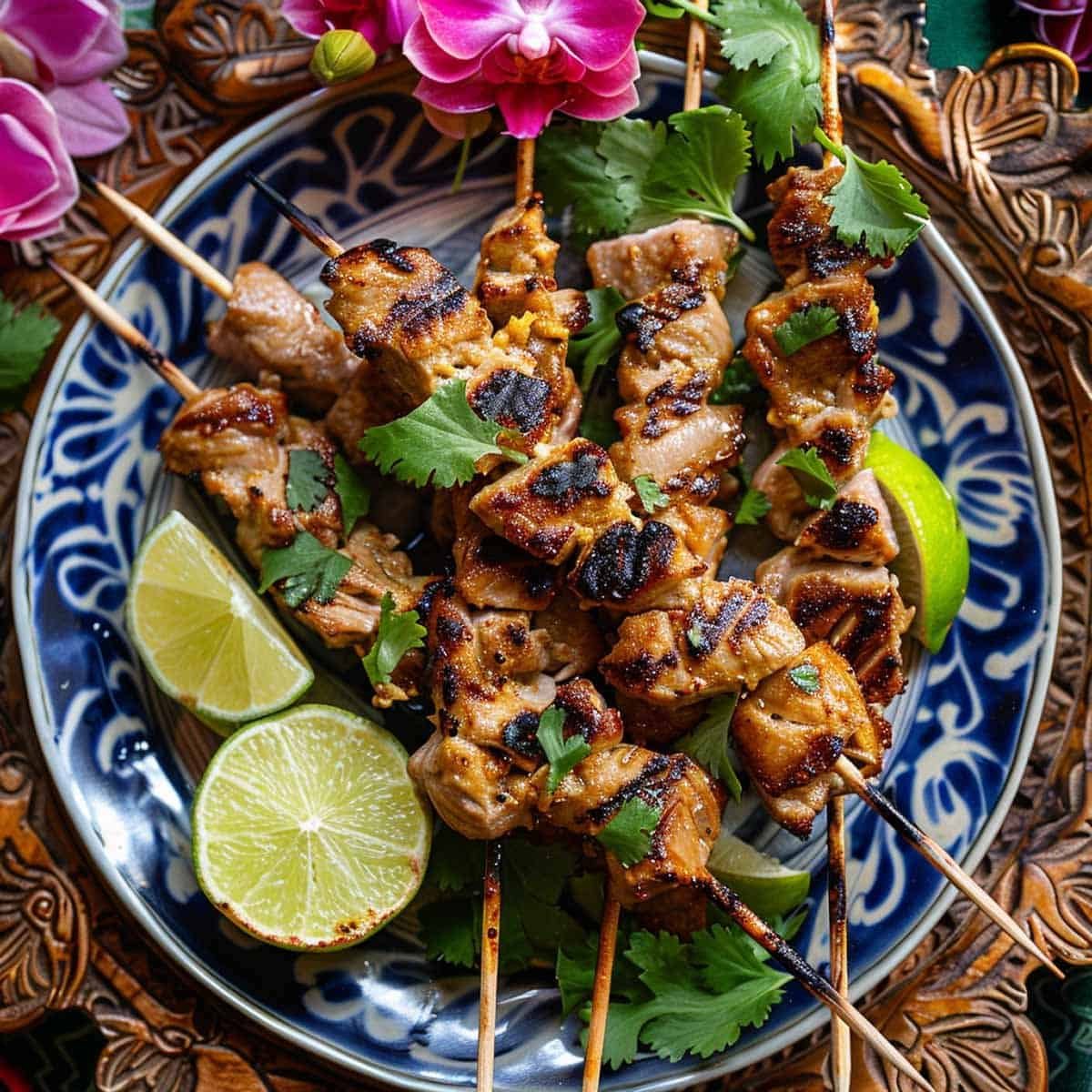
Moo Ping (หมูปิ้ง) is a traditional Thai grilled pork skewer recipe made with pork marinated in coconut milk, fish sauce, oyster sauce, garlic, coriander root, and white pepper, then grilled over charcoal until golden, caramelized, and slightly charred at the edges. These Thai grilled pork skewers are one of the most popular Thai street foods and are traditionally served with sticky rice. The smoke rising from the grill is how you know you are close.
This authentic Moo Ping recipe shows you how to make Thai grilled pork skewers just like the ones sold at Thai street markets, using pork shoulder, coconut milk, fish sauce, and charcoal grilling for maximum flavor.
Note From Susie

Sawasdee Kha, and Hello.
Come closer, the smoke will find you before anything else does.
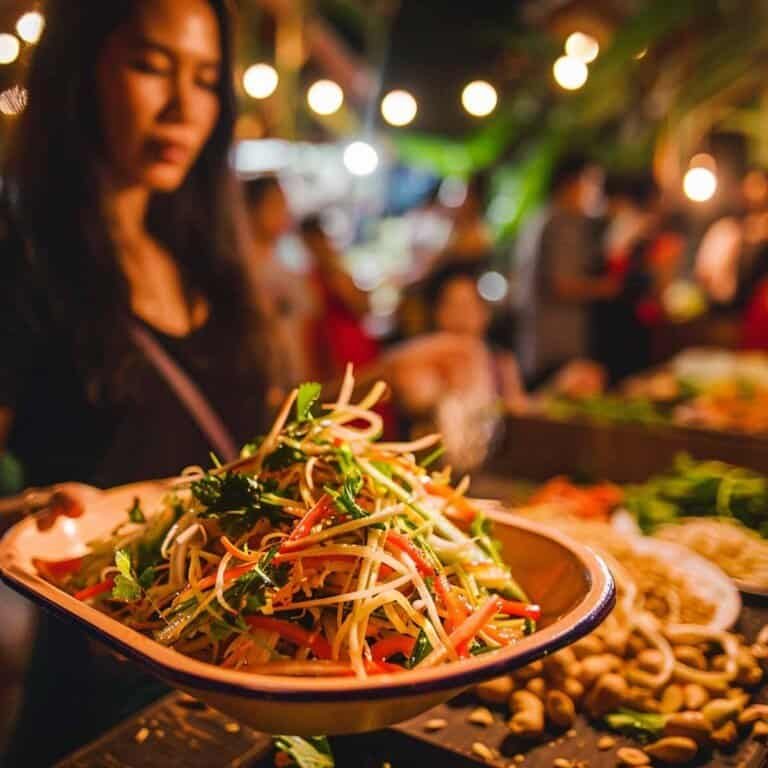
That is exactly what happened at the market. The Moo Ping vendors were everywhere, skewers laid over glowing coals, the pork glistening from the marinade, the smoke rising and carrying the smell of grilled pork and garlic and something sweet from the coconut milk across the whole market. You did not have to look for the stall. You just followed the smoke and there it was.
My mother and her sisters made this at home too, and I loved it from the very beginning, no growing into it required, no convincing needed. The smoky aroma, the caramelized surface, the slight char at the edges where the heat had been most direct. Everyone loved it. Everyone stopped when they smelled it. That is still true today.
We had it as a snack with sticky rice, the pork pulled from the skewer, the rice pressed into small balls in the fingers, the two of them together making something complete and satisfying and entirely right. Sometimes it was part of dinner. There was never a wrong time for Moo Ping and there still isn’t.
Make this. Take it outside if you can. Get the charcoal going and let the smoke do what it has always done, gather the people you love and bring them to the table. That is what this dish is for.

What’s In This Page
“There was never a wrong time for Moo Ping and there still isn’t.”
— Her Hands His EyesWhat Is Moo Ping?
Moo Ping, หมูปิ้ง, is Thai grilled pork on skewers, one of the most popular street foods in Thailand and one of the most immediately recognizable. Thin slices of pork, typically shoulder with enough fat to stay moist and caramelize properly, are marinated in a mixture of coconut milk, fish sauce, oyster sauce, garlic, cilantro roots, white pepper, and sugar, then threaded onto bamboo skewers and grilled over charcoal until golden, slightly caramelized, and charred at the edges where the heat is highest.
What makes Moo Ping distinct from other grilled pork preparations is the coconut milk in the marinade. The fat in the coconut milk bastes the pork as it cooks, producing a surface that caramelizes and glistens in a way that a water-based or oil-based marinade cannot replicate. The cilantro roots provide a depth that is specific to this dish. The garlic and white pepper do the seasoning. The fish sauce and oyster sauce do the salt.
Moo Ping is a breakfast and snack food in Thailand, sold by vendors from early morning, grilled to order or kept warm over low coals, handed over with a small bag of sticky rice for eating alongside. At the market, the smoke from the charcoal grill is the signal that a vendor is nearby. According to the Oxford Companion to Food, grilled meat on skewers is one of the most ancient and widespread cooking preparations in Southeast Asia, with the Thai version distinguished by its coconut milk marinade and its coriander root seasoning.
The smoke rising. The skewers turning. Everyone stopping.
What You’ll Need
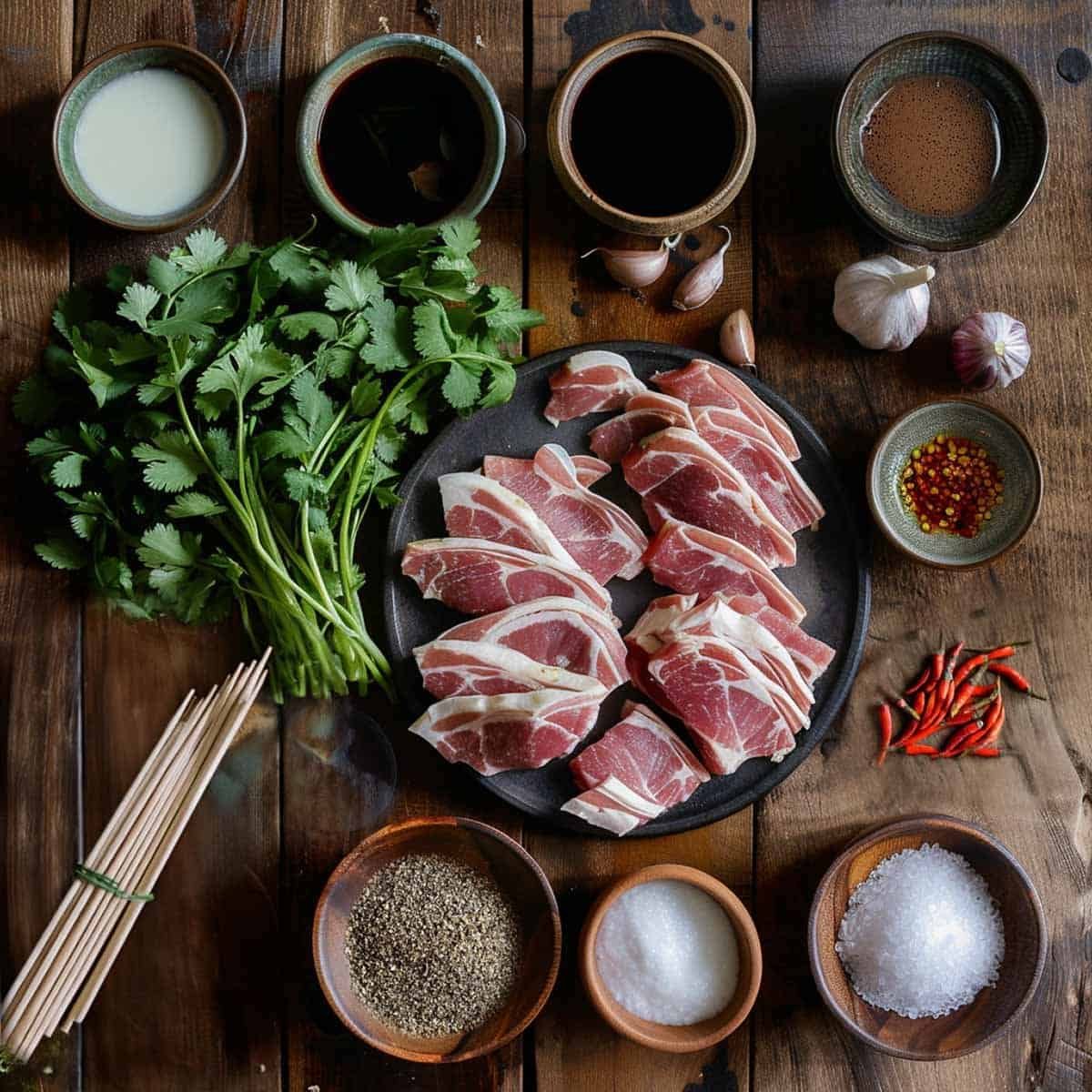
Pork shoulder, one pound, thinly sliced. Shoulder has enough intramuscular fat to stay moist through the high heat of grilling. The fat renders over the coals and creates the caramelization that makes Moo Ping look and taste the way it should. Lean pork will dry out before it caramelizes.
Garlic, four cloves, minced. Cilantro roots, two tablespoons, chopped. Cilantro root is available at Asian grocery stores attached to bunches of fresh cilantro. It has a more intense, earthier flavor than the leaves or seeds. If genuinely unavailable, use the lower stems of fresh cilantro in double the amount.
Oyster sauce, two tablespoons. Soy sauce, two tablespoons. Fish sauce, one tablespoon. Sugar, one tablespoon. White pepper, half a teaspoon. Coconut milk, a quarter cup, full fat. This is the structural ingredient that coats the pork and allows the marinade to caramelize on the surface during grilling.
Bamboo skewers, soaked in water for thirty minutes before using so they do not burn over the coals.
VISUAL WALK THROUGH
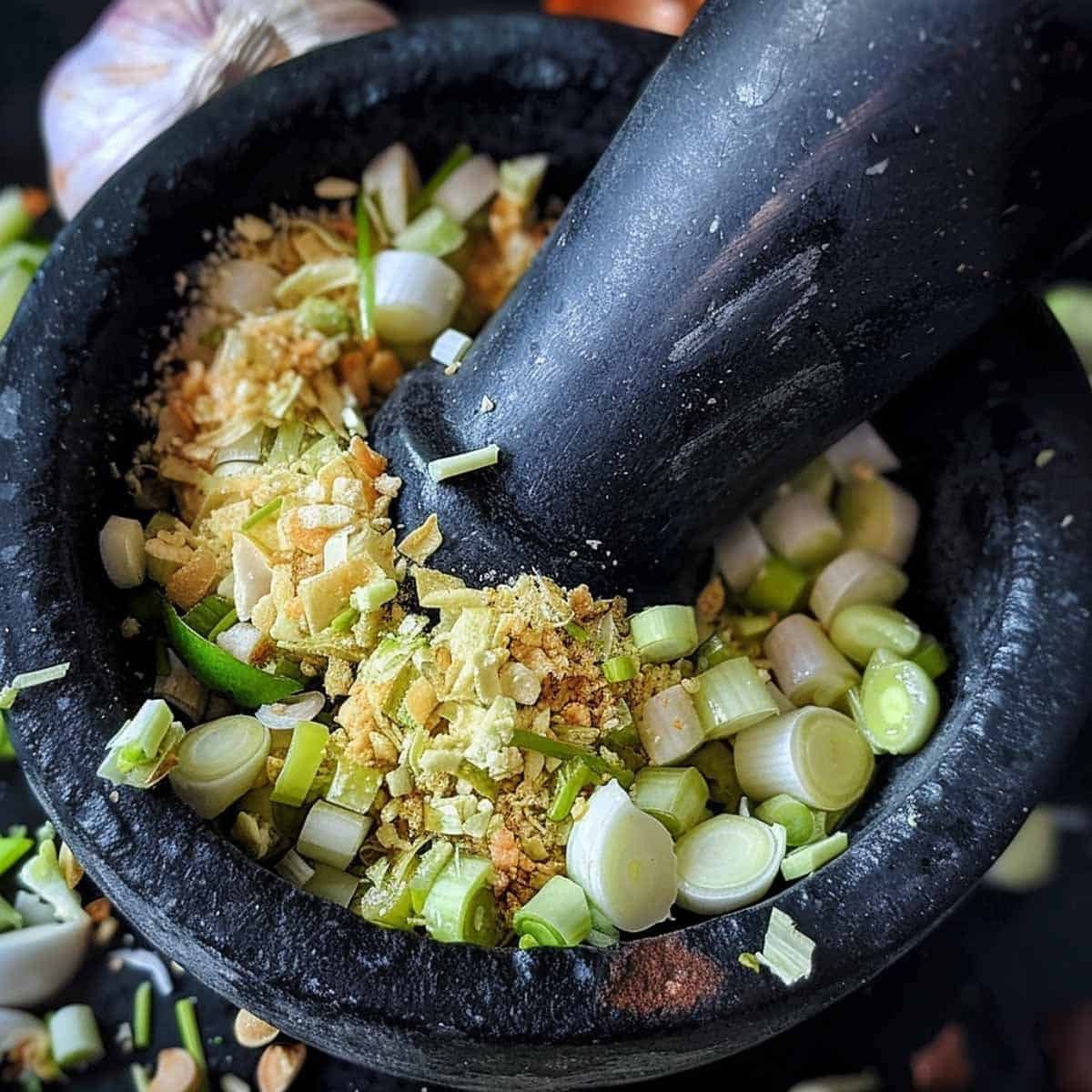
Step 1. Prepare the marinade.
Combine minced garlic, chopped cilantro roots, oyster sauce, soy sauce, fish sauce, sugar, white pepper, and coconut milk in a large mixing bowl. Whisk until well blended. Taste it before the pork goes in. The marinade should be savory, slightly sweet, and fragrant.
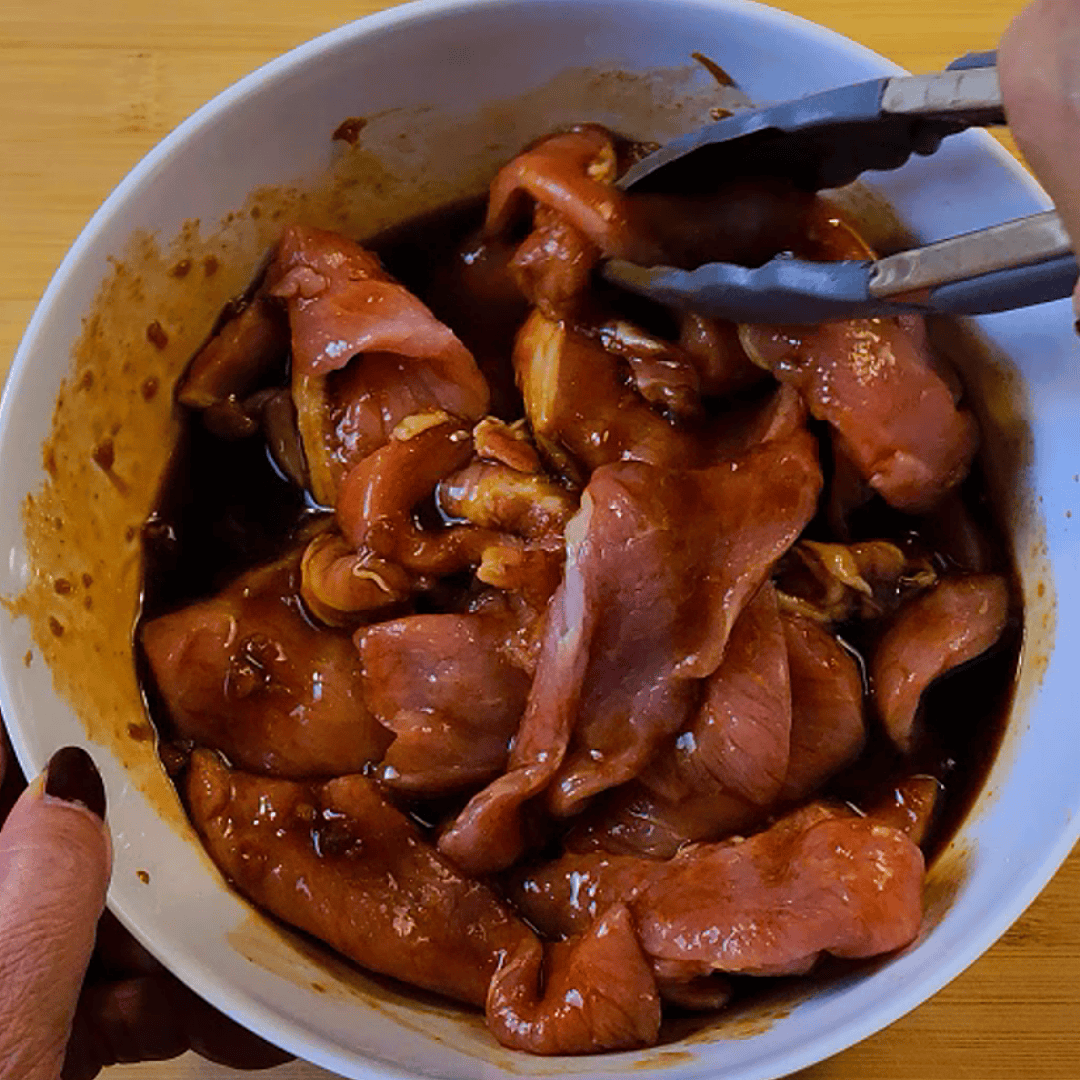
Step 2. Marinate the pork overnight if possible.
Add the thinly sliced pork to the marinade, ensuring each piece is thoroughly coated. Cover the bowl with plastic wrap and refrigerate for at least two hours or overnight for maximum flavor infusion. Marinating allows the pork to absorb all the rich flavors, making it tender and flavorful. Overnight is better. The pork will be more deeply flavored, the surface more ready to caramelize from the first moment it touches the heat.
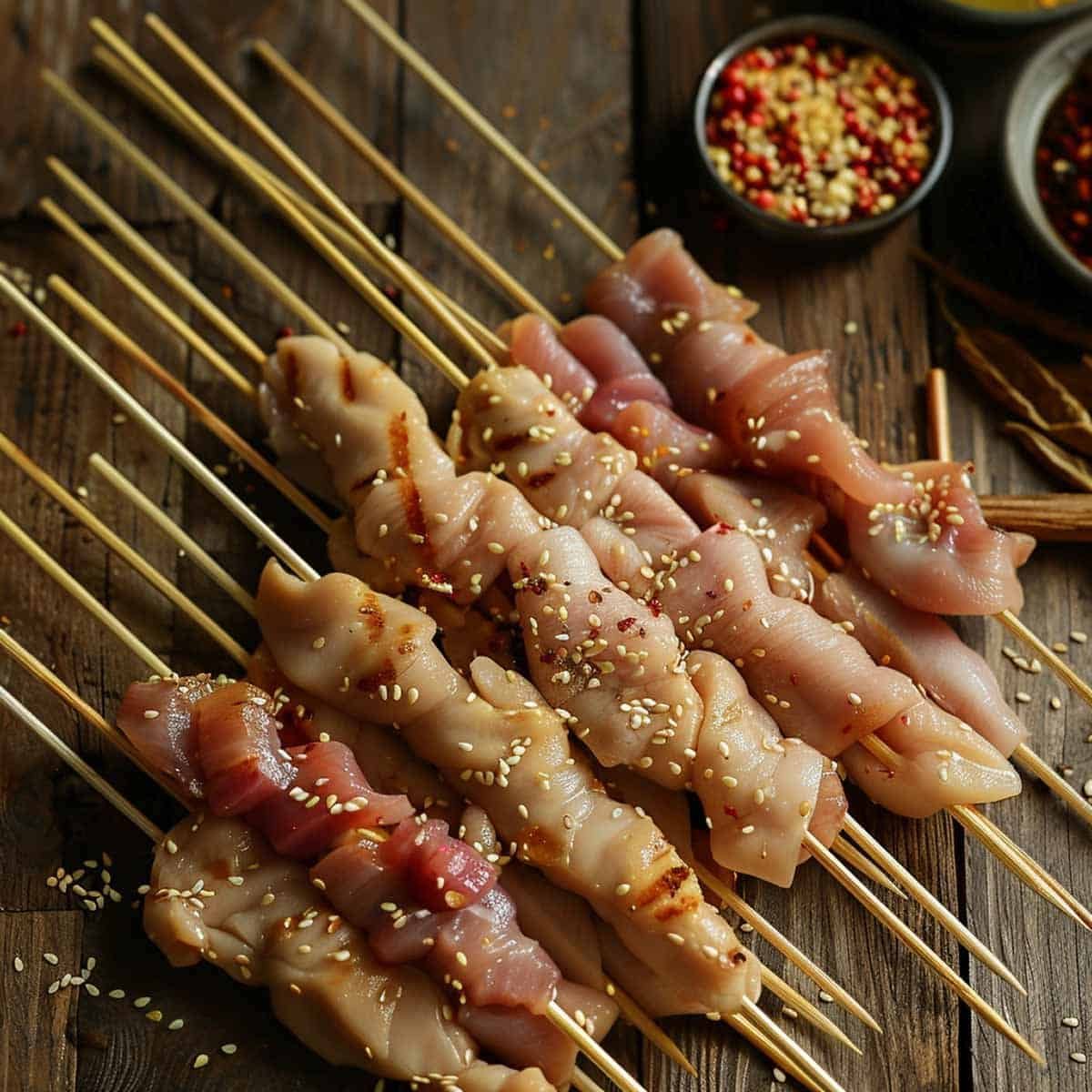
★ Step 3. Skewer the pork so it lies flat. This is What Makes the Difference.
Thread the marinated pork slices onto the soaked skewers, ensuring the pieces are evenly spaced. Weave the skewer through each piece twice so the meat lies flat against the grill surface rather than curling up as it cooks. Flat pork on the grill makes even contact with the heat and caramelizes uniformly. Pork that curls cooks unevenly. Preheat your grill to medium-high heat.
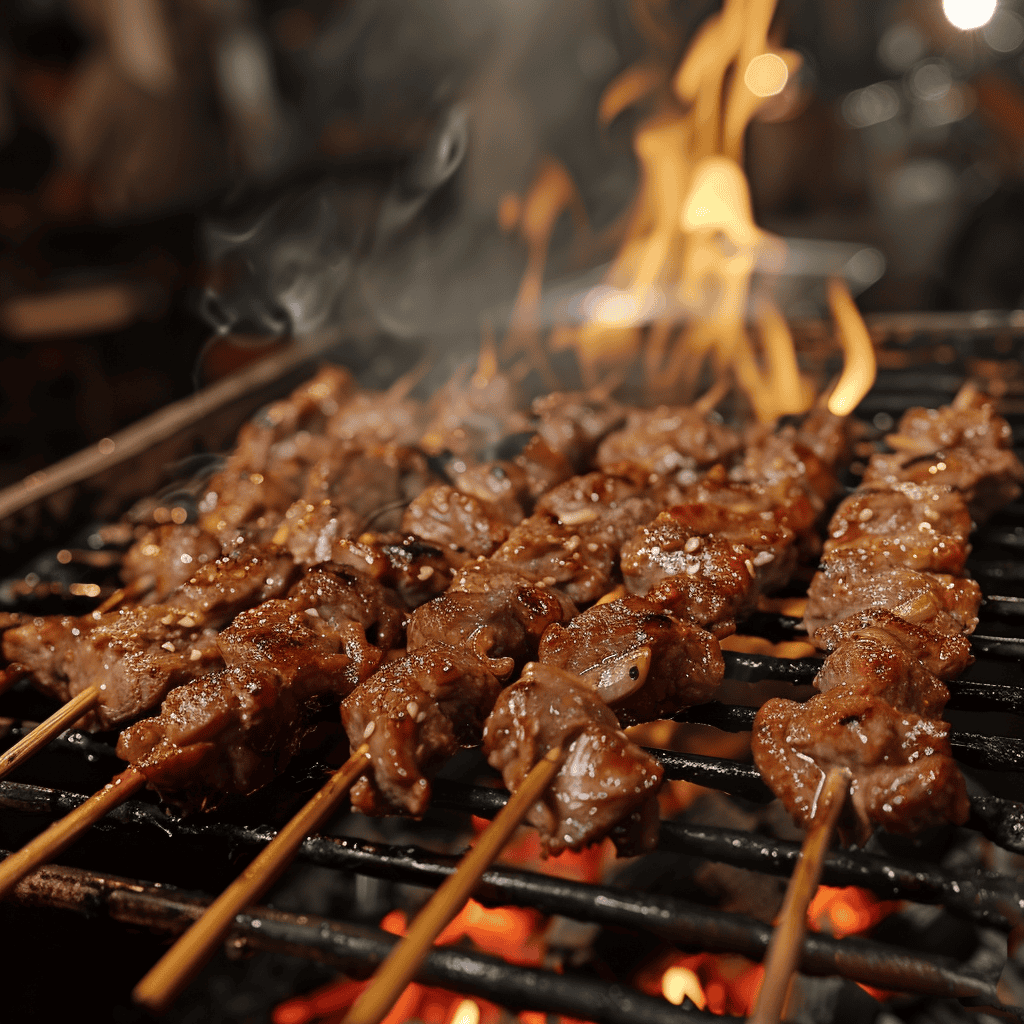
Step 4. Grill to perfection.
Place the skewers on the preheated grill. Cook for two to three minutes per side, occasionally basting with leftover marinade until the pork is cooked through and has a nice char. Turn the skewers every two minutes. The coconut milk and sugar in the marinade caramelize fast and can burn rather than caramelize if left too long on one side. Basting with the remaining marinade after each turn adds another layer of caramelization.
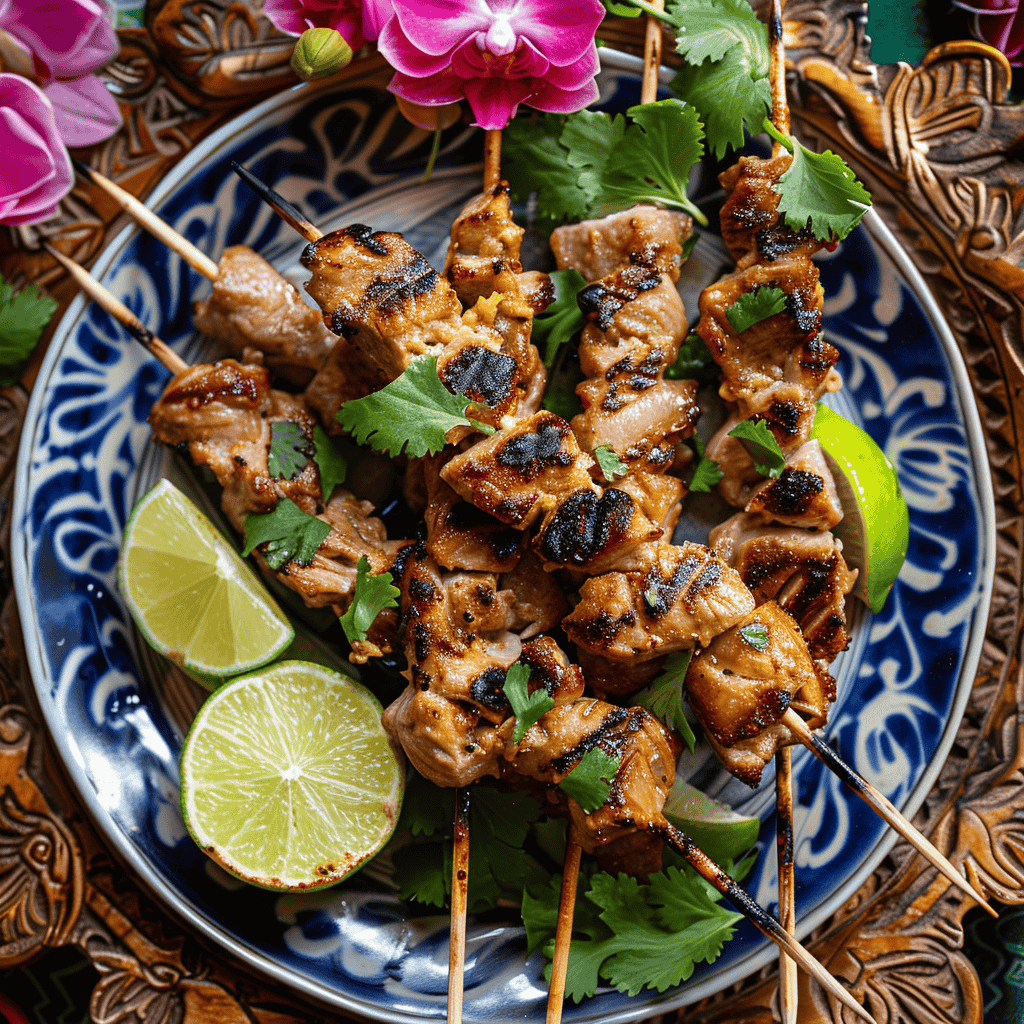
Step 5. Serve with sticky rice.
Let the skewers rest for two minutes off the grill before serving. The juices redistribute and the pork stays moist. Serve with sticky rice and sweet chili sauce alongside for dipping. The pork pulled from the skewer, the rice pressed into small balls in the fingers, the two of them together making something complete and entirely right.
Moo Ping (Thai Grilled Pork Skewers): The Grill Does the Gathering
Ingredients
- 1 lb pork shoulder thinly sliced
- 4 cloves garlic minced
- 2 tablespoons cilantro roots chopped
- 2 tablespoons oyster sauce
- 2 tablespoons soy sauce
- 1 tablespoon fish sauce
- 1 tablespoon sugar
- 1/2 teaspoon white pepper
- 1/4 cup coconut milk
- Skewers soaked in water for 30 minutes
Instructions
- Prepare the Marinade. Combine minced garlic, chopped cilantro roots, oyster sauce, soy sauce, fish sauce, sugar, white pepper, and coconut milk in a large mixing bowl. Whisk until well blended.
- Marinate the Pork. Add the thinly sliced pork to the marinade, ensuring each piece is thoroughly coated. Cover the bowl with plastic wrap and refrigerate for at least 2 hours or overnight for maximum flavor infusion.
- Skewer the Pork. Thread the marinated pork slices onto the soaked skewers, ensuring the pieces are evenly spaced. Weave the skewer through each piece twice so the meat lies flat against the grill surface. This step ensures the pork cooks evenly and makes for easy handling on the grill.
- Grill to Perfection. Place the skewers on the preheated grill. Cook for 2-3 minutes per side, occasionally basting with leftover marinade until the pork is cooked and has a nice char.
- Serve.Rest the skewers for two minutes off the grill. Serve with sticky rice and sweet chili sauce alongside.
Notes
Nutrition
LET’S GET THIS RIGHT
Why is my Moo Ping not caramelizing properly?
The heat is too low, or the pork was not marinated long enough for the sugar to work into the surface. Caramelization requires both sugar and sufficient heat on contact. If the pork goes onto a cool grill it will dry out before it caramelizes. Get the grill properly hot before the skewers go on, and ensure the pork has had at least two hours in the marinade.
Why is my Moo Ping dry inside?
The pork was cooked too long, or the cut used was too lean. Moo Ping should be cooked through but still moist. The fat in pork shoulder keeps it from drying out over the grill. Lean pork will dry before the surface has time to properly caramelize. Use shoulder, turn frequently, and pull the skewers off the moment the pork is just cooked through.
Can I make Moo Ping without a charcoal grill?
Yes. A gas grill produces a good result, the caramelization will be similar even without the charcoal smoke. A grill pan on a stovetop produces the caramelization without the smoke, functional and still delicious. An oven broiler on its highest setting can also work. The charcoal version is the best version. Any grill is better than no grill.
What is coriander root and can I substitute it?
Coriander root is the root of the fresh cilantro plant, pale and slightly woody, with a more intense and earthier flavor than the leaves or seeds. It is available at Asian grocery stores attached to bunches of fresh cilantro. If unavailable, use the lower stems of fresh cilantro in double the quantity as the closest substitute. The cilantro roots are worth finding.
How long should I marinate Moo Ping pork?
Overnight produces the best result. The coconut milk, fish sauce, and sugar need time to penetrate the meat. Two hours is the minimum for a same-day preparation. Do not marinate for more than twenty-four hours, as the fish sauce will begin to break down the meat proteins beyond what is desirable for texture.
FLAVOR PROFILE
The smoke arrives first. Charcoal and pork fat and the slight sweetness of the coconut milk caramelizing over the coals, a specific smell that carries across a market and stops you wherever you are standing.
The skewers come off the grill golden and glistening. The surface caramelized and slightly charred at the edges where the heat was highest, the coconut milk and sugar having done their work. The pork is pulled from the skewer still slightly warm from the grill, the juices held in by the rest.
The first bite is sweet and savory together. The caramelized surface giving way to the tender pork underneath, the coconut milk having basted it through the cooking so nothing is dry. The garlic and white pepper are present in the meat rather than on the surface. The cilantro roots are there underneath everything, earthy and specific and the flavor that makes Moo Ping taste exactly like Moo Ping rather than any other grilled pork.
The sticky rice alongside absorbs the juices from the pork and the slight sweetness of the caramelized surface. The sweet chili dipping sauce is there for those who want it.
At the market, the smoke found you before the stall did. It still does, when you make this at home. That is how you know you are doing it right.
SUSIE’S KITCHEN NOTES
The bamboo skewers need thirty minutes in water before the pork goes on the grill. Dry bamboo skewers over charcoal will catch fire and burn through before the pork is done. Thirty minutes of soaking is insurance. Keep the soaked skewers in a cup of water next to the grill until they are needed. This is a small preparation that prevents a significant problem.
Basting the skewers with the remaining marinade as they grill adds another layer of caramelization and keeps the surface from drying between turns. Use a pastry brush or a folded piece of paper towel held in tongs. Baste after each turn, every two minutes. The remaining marinade will have been in contact with raw pork, so make sure the basting happens while the pork is actively on the grill and reaching safe temperatures, not after it has come off.
My mother and her sisters made Moo Ping over a charcoal grill set up outside. The smoke went into the open air and the smell found everyone in the vicinity before the pork was done. That is the experience this dish is trying to recreate. Set it up outside if you can. Let the smoke do what the smoke does.
The soy sauce in this recipe does the work that the coconut milk marinade version carries through fish sauce alone. Both are present here. The soy sauce adds a slightly different savory note alongside the fish sauce and oyster sauce, and together the three produce a marinade with more depth than any one of them alone.
PAIRING SUGGESTIONS
Moo Ping is always eaten with sticky rice, that is not a suggestion, it is the tradition that every market vendor in Thailand follows and the one that makes the most sense for how the dish is eaten. The pork is pulled from the skewer and eaten alongside the sticky rice pressed into small balls in the fingers, the rice absorbing the juices and the slight sweetness of the caramelized surface. For a fuller table where the Moo Ping is one of several dishes, the stir fried morning glory brings its bright green garlicky vegetable alongside the smoky caramelized pork, the two of them together covering the full range of a Thai outdoor meal. The Thai fish sauce chicken wings belong at the same spread, both of them grilled or fried, both of them built on marinades, both of them the kind of food that makes people come to the table. For the soup alongside, the Tom Yum Goong brings its sour, clear broth against the richness of the grilled pork. And for the drink that closes a meal eaten outside over a charcoal grill, the Thai iced tea is cold and sweet and always the right answer. The smoke found everyone. That was always the point.
FAQ
What is Moo Ping?
Moo Ping, หมูปิ้ง, is Thai grilled pork on skewers, one of Thailand’s most popular street foods. Thin slices of pork shoulder are marinated in coconut milk, fish sauce, oyster sauce, soy sauce, garlic, cilantro roots, white pepper, and sugar, then grilled over charcoal until golden, caramelized, and slightly charred at the edges. It is eaten with sticky rice and sweet chili sauce. The coconut milk in the marinade is what gives Moo Ping its distinctive caramelized, glistening surface.
How do you make Moo Ping step by step?
Combine minced garlic, chopped cilantro roots, oyster sauce, soy sauce, fish sauce, sugar, white pepper, and coconut milk in a large mixing bowl and whisk well. Add thinly sliced pork shoulder and toss to coat every piece. Cover and refrigerate for at least two hours, overnight for best results. Soak bamboo skewers in water for thirty minutes. Thread pork flat onto skewers weaving through twice. Grill over medium-high heat for two to three minutes per side, basting with remaining marinade after each turn, until golden and caramelized. Rest two minutes. Serve with sticky rice and sweet chili sauce.
What cut of pork is best for Moo Ping?
Pork shoulder is the correct cut for Moo Ping. It has enough intramuscular fat to stay moist through grilling and caramelize well on the surface. The fat renders over the coals and adds flavor and moisture. Sliced thin, roughly a quarter inch, against the grain. Lean pork cuts such as loin or tenderloin will dry out before they caramelize and are not suitable for Moo Ping.
Why is coconut milk used in Moo Ping marinade?
The fat in full-fat coconut milk coats the pork and bastes it continuously as it grills, producing a surface that caramelizes and glistens in a way that water-based or oil-based marinades cannot replicate. The coconut milk also tenderizes the pork slightly during marinating and contributes a subtle sweetness that complements the fish sauce and oyster sauce. It is the ingredient that makes Moo Ping look and taste distinctly different from other grilled pork preparations.
Can I make Moo Ping without a charcoal grill?
Yes. A gas grill produces similar caramelization without the charcoal smoke. A grill pan on a stovetop produces the caramelized surface without any smoke. An oven broiler on its highest setting, with skewers on a wire rack, also works. Turn once at the halfway point and baste with remaining marinade. The charcoal version is the most authentic and best result. Any grill is better than none. The caramelization from the coconut milk marinade will be present regardless of the heat source.
What do you eat with Moo Ping?
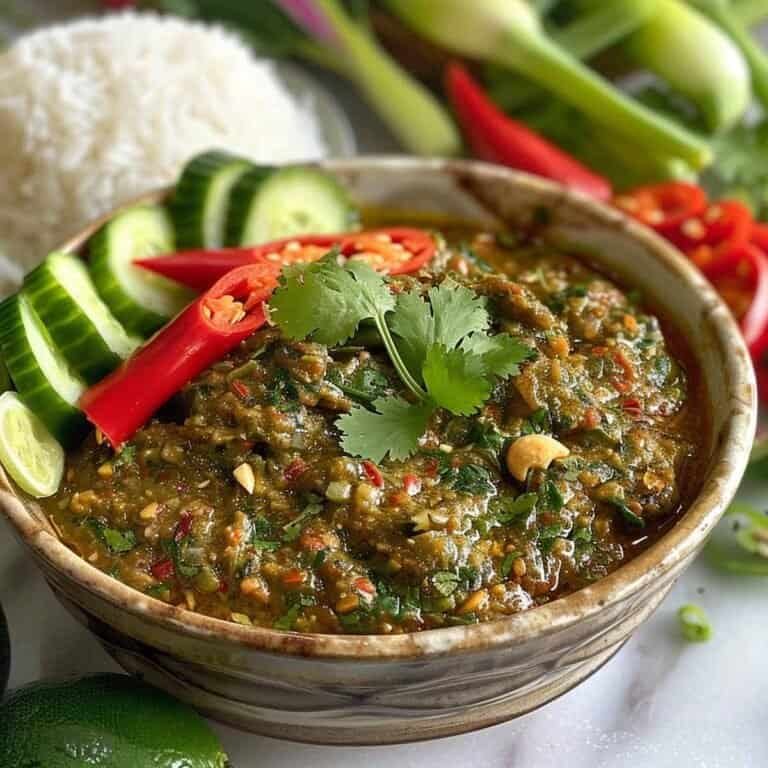
Sticky rice is the traditional and correct accompaniment for Moo Ping. The pork is pulled from the skewer and eaten alongside sticky rice pressed into small balls in the fingers. Sweet chili sauce for dipping. At Thai street markets, Moo Ping and a small bag of sticky rice is the complete meal. At home it works as a snack, a starter, or as part of a larger Thai spread alongside Nam Phrik Num dipping sauce, vegetables, soup, or other grilled dishes.
How long should I marinate Moo Ping?
Overnight marinating produces the best Moo Ping. The coconut milk, fish sauce, and sugar penetrate the meat fully and the surface is primed to caramelize from the first contact with the grill. Two hours is the minimum for a same-day preparation and produces a good result. Do not marinate for more than twenty-four hours as the fish sauce will begin to break down the meat proteins past what is desirable for texture.