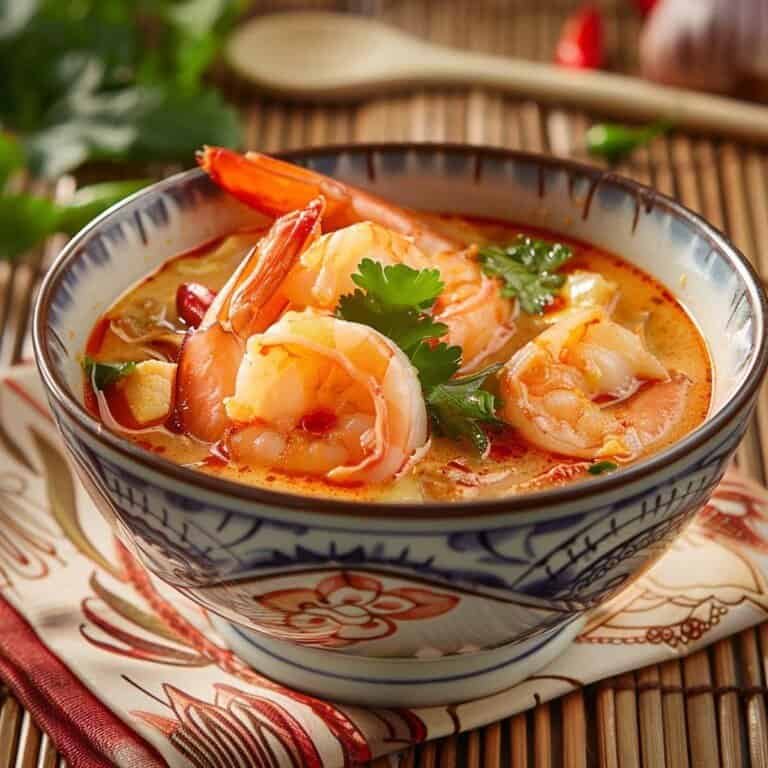
What Is Thai Pork Rib Soup?
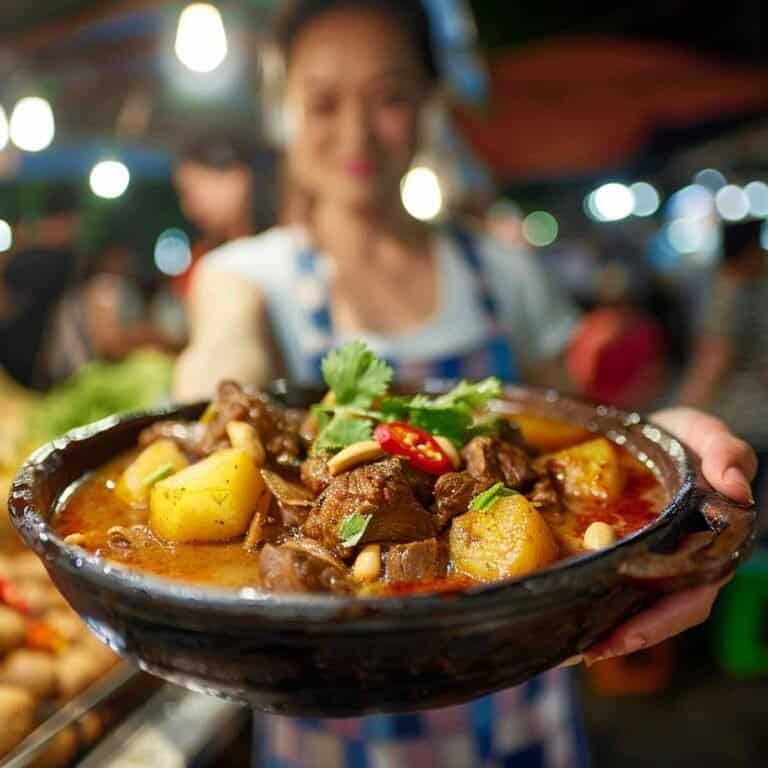
Thai pork rib soup, Tom Saap, is a hot and sour Isan broth built on pork ribs, lemongrass, galangal, kaffir lime leaves, and dried chilies. It is sharper than Tom Yum, smokier than Tom Kha. The ribs cook low and slow until the meat gives. The broth is what you came for.
NOTE FROM SUSIE

Sawasdee Kha, and Hello.
There was a pot on the stove every time I walked into my mother’s kitchen. Not always the same pot. But always something on the heat, always something building.
Tom Saap was the cold weather pot. Which in Korat meant the two months when the mornings had a chill and you wanted something that pushed back. She would put the ribs in early, before school, before anything, and leave them to do what ribs do when you give them time and heat and good water.
By afternoon the broth was something else entirely. Not just pork. Not just lemongrass. Something that had been cooking long enough to become its own thing.
She would taste it once. Adjust the lime. That was all.
I have never been able to explain why Tom Saap feels different from every other soup. It is the same basic ingredients as Tom Yum but it goes somewhere deeper. Slower. The ribs change the broth in a way that a prawn or a piece of chicken never could. The collagen. The bone. The fat that renders and enriches.
Make it on a Saturday. Let it take its time.

What’s In This Page
“The ribs change the broth in a way nothing else could.”
— Her Hands His EyesWHAT IS TOM SAAP?
Tom Saap is a Thai pork rib soup from the Isan region of northeastern Thailand, one of the most deeply flavored and most patient soups in the Thai kitchen. Where Tom Yum Goong is bright and immediate, built for the sharpness of shrimp and a quick simmer, Tom Saap is slow. It is a soup that rewards the hours you give it. The pork ribs simmer in a fragrant broth of lemongrass, galangal, kaffir lime leaves, shallots, garlic, and fresh chilies, and over time the collagen and the bone and the fat from the ribs change the broth into something that no shorter cooking time and no lighter protein could produce.
The name Tom Saap means boiled and sour in Isan dialect, and both words earn their place. The soup is indeed sour, the lime juice present and clear and essential. And it is indeed boiled, in the sense that it is a long, slow, heat-with-time preparation rather than a fast stir or a quick poach. The sourness and the richness of the pork broth in the same bowl is what makes this soup what it is.
Tom Saap is an Isan dish, deeply connected to the cuisine of northeastern Thailand and its Lao culinary heritage. It is eaten at home and at the market, in large bowls with rice alongside, the broth sipped between bites of the tender rib meat that has spent hours in the pot. According to the Oxford Companion to Food, pork rib soups seasoned with lemongrass and lime are among the oldest preparations in the Isan and Lao culinary traditions, reflecting the resourceful, whole-animal cooking of the region.
My mother put the ribs in before breakfast. By afternoon it was something else entirely.
WHAT YOU’LL NEED
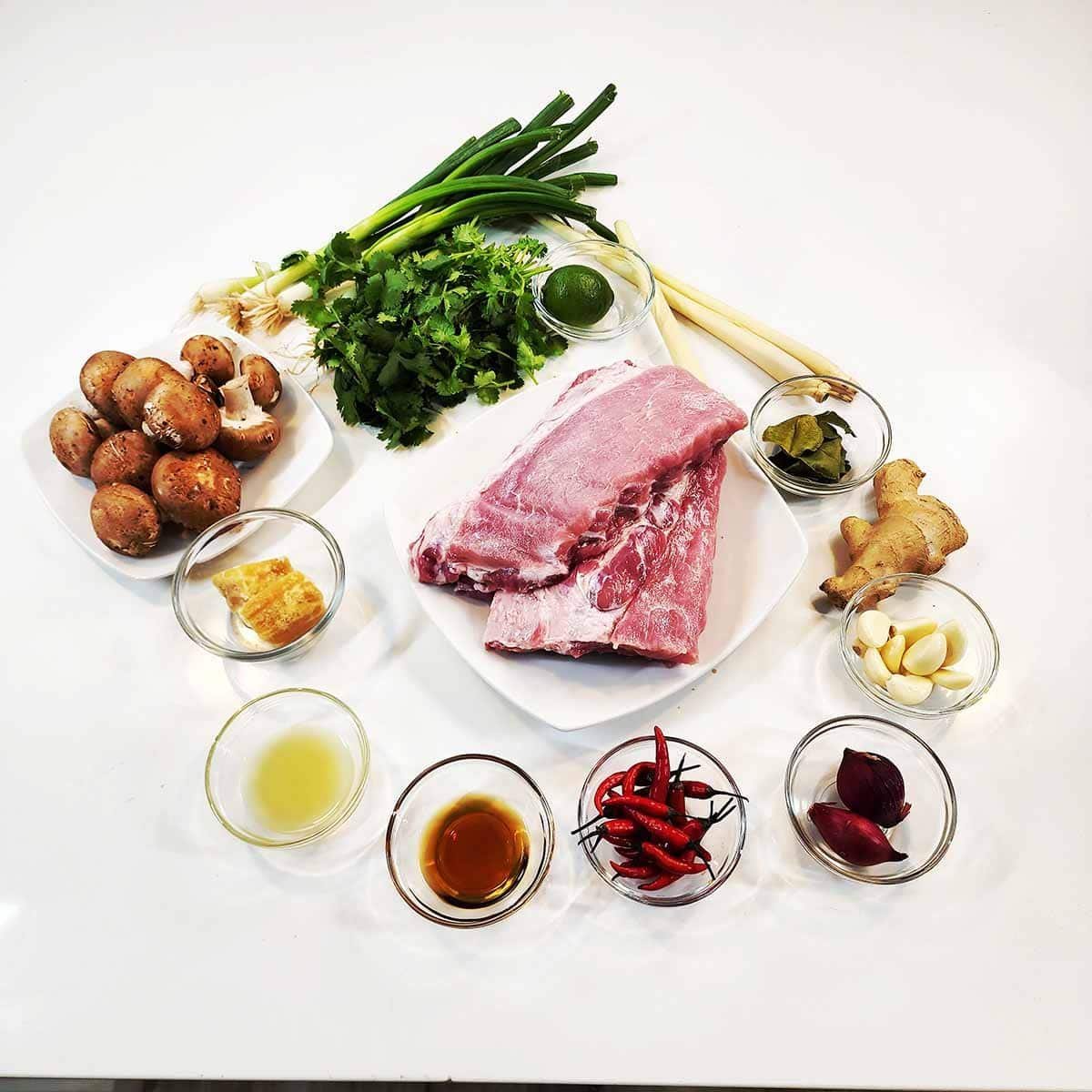
Pork ribs, two pounds, cut into bite-sized pieces. The bones, the collagen, and the fat render slowly into the broth over the long simmer and produce a depth and richness that no other cut provides. Baby back ribs or spare ribs both work.
Lemongrass, one stalk, cut into two-inch pieces and bruised. Galangal, a one-inch piece, sliced. Kaffir lime leaves, four, torn. These three are the aromatic backbone and they go in from the beginning.
Garlic, five cloves, crushed. Shallots, two, sliced. Thai bird eye chilies, three to four, crushed. Fish sauce, two tablespoons. Lime juice, one tablespoon, added at the very end. Sugar, one teaspoon. Water, eight cups.
Mushrooms, one cup, sliced, optional. Added in the final ten minutes.
For serving: fresh cilantro chopped, green onions chopped, fresh lime wedges.
VISUAL WALK THROUGH
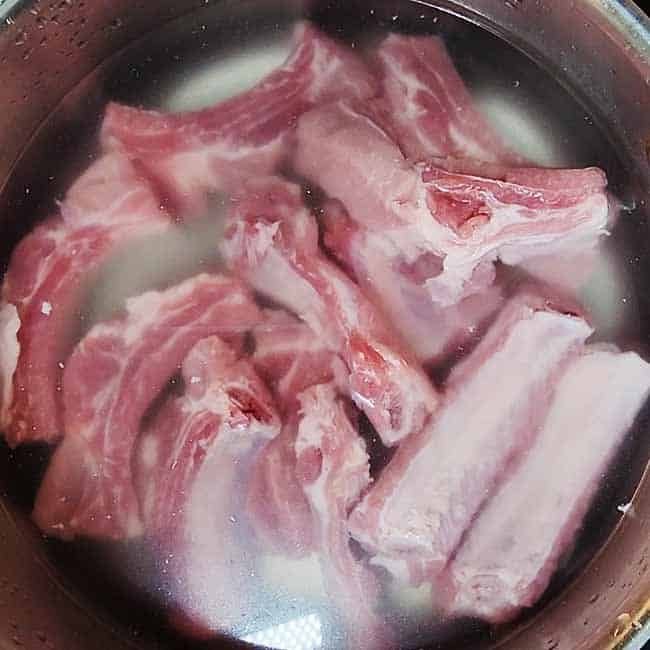
Step 1. Prepare your ingredients and parboil the ribs.
Cut the pork ribs into bite-sized pieces and set aside. Bruise the lemongrass by lightly smashing it with the back of a knife to release its flavors. Tear the kaffir lime leaves. Slice the galangal, crush the garlic, and slice the shallots.
Place the pork ribs in a pot and cover with cold water. Bring to a boil and cook for five minutes. Drain completely, rinse the ribs under cold water, and discard the parboiling liquid.
Step 2. Simmer with aromatics.
Return the cleaned ribs to the pot and add the bruised lemongrass, torn kaffir lime leaves, sliced galangal, crushed garlic, and sliced shallots. Pour in the eight cups of water and bring to a gentle boil. Reduce the heat to low and let the soup simmer for about one and a half to two hours.

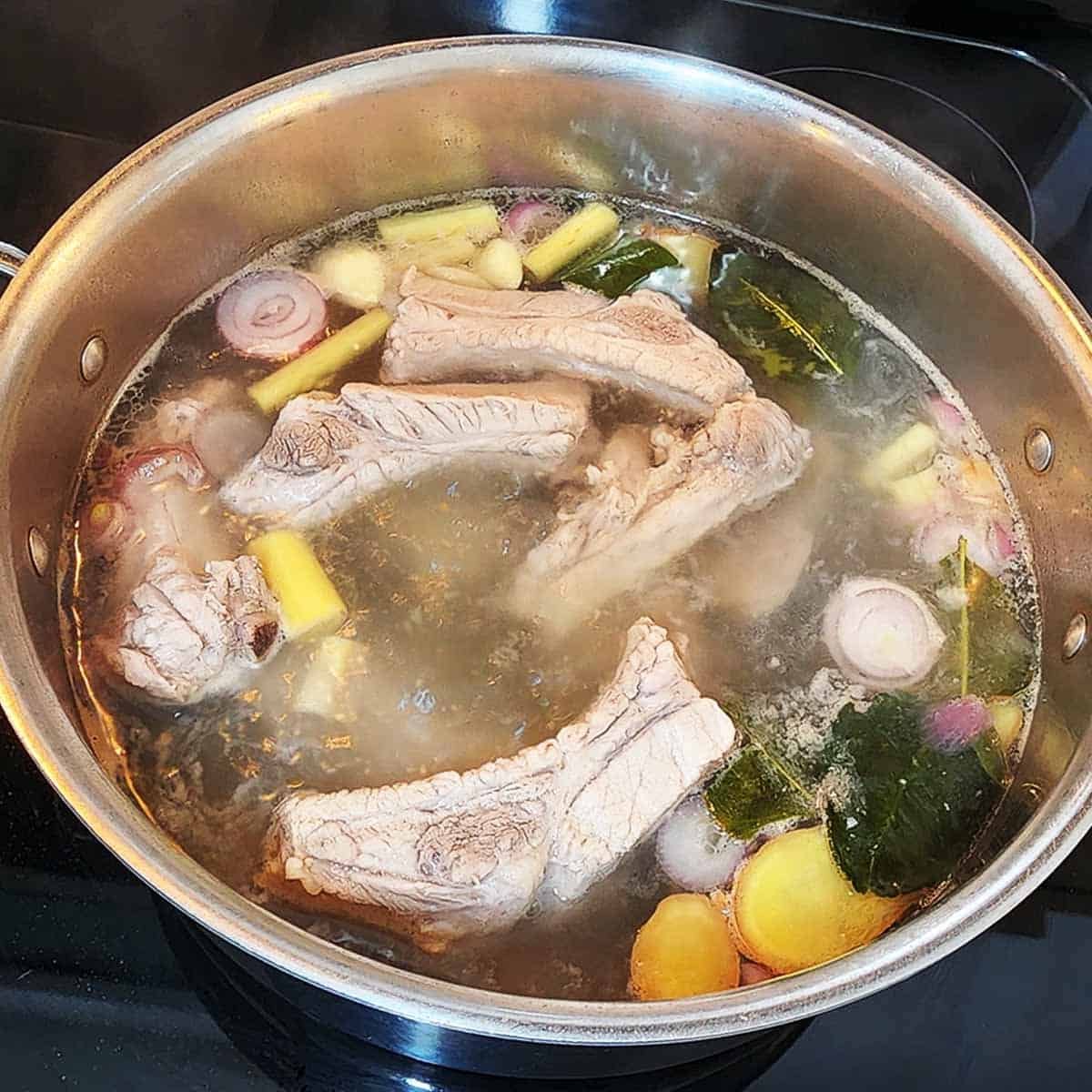
★ Step 3. Season with fish sauce and lime juice last. This is What Makes the Difference.
After simmering, add the sliced mushrooms and Thai bird’s eye chili to the pot and cook for ten minutes. Season the soup with fish sauce, lime juice, and sugar. Stir well to combine, and taste to adjust the seasoning as needed. The lime juice goes in at the end.
Step 4. Garnish and serve.
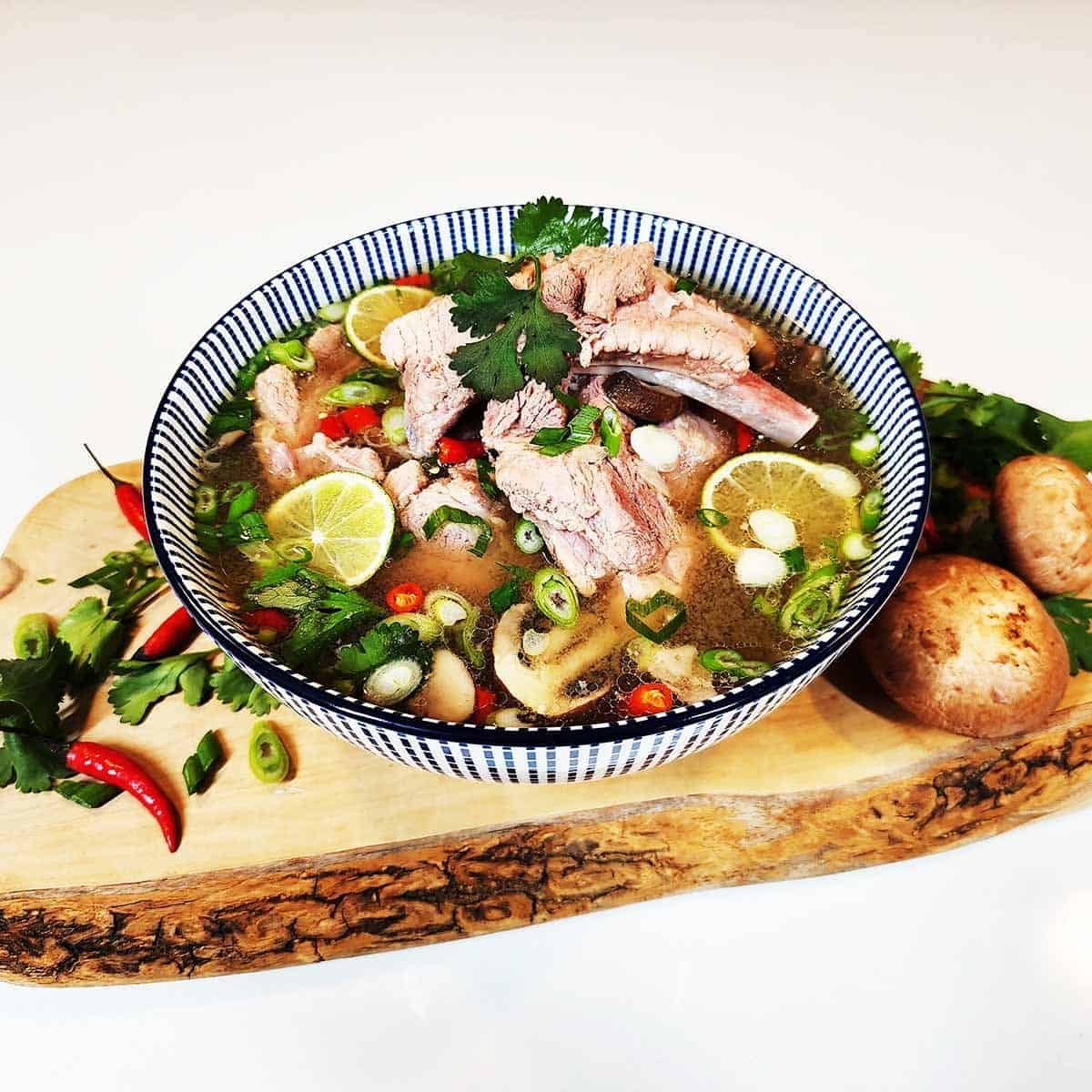
Ladle the soup into bowls and garnish with fresh cilantro, green onions, and Thai bird’s eye chilies. Serve with fresh lime wedges on the side and steamed jasmine rice alongside.
Tom Saap — Thai Pork Rib Soup Recipe
Ingredients
- 2 lbs pork ribs cut into bite-sized pieces
- 8 cups water
- 1 stalk lemongrass cut into 2-inch pieces and bruised
- 4 kaffir lime leaves
- 1 inch piece galangal sliced
- 5 cloves garlic crushed
- 2 shallots sliced
- 3-4 Thai bird's eye chilies crushed
- 2 tbsp fish sauce
- 1 tbsp lime juice
- 1 tsp sugar
- 1 cup mushrooms sliced (optional)
- Fresh cilantro chopped (for garnish)
- Green onions chopped (for garnish)
- Fresh lime wedges for serving
Instructions
- Prepare your ingredients:Cut the pork ribs into bite-sized pieces and set aside. Bruise the lemongrass by lightly smashing it with the back of a knife to release its flavors. Tear the kaffir lime leaves. Slice the galangal, crush the garlic, and slice the shallots.
- Boil the Pork RibsPlace the pork ribs in a pot and cover with cold water. Bring to a boil and cook for five minutes. You will see foam and impurities rising to the surface. Drain completely, rinse the ribs under cold water, and discard the parboiling liquid.
- Simmer with AromaticsReturn the cleaned ribs to the pot and add the bruised lemongrass, torn kaffir lime leaves, sliced galangal, crushed garlic, and sliced shallots. Pour in the water and bring to a gentle boil. Reduce the heat to low and let the soup simmer for about 1.5 to 2 hours.
- Add Mushrooms and SeasonAfter simmering: Add the sliced mushrooms and Thai bird's eye chili to the pot and cook for 10 minutes. Season the soup with fish sauce, lime juice, and sugar. Stir well to combine, and taste to adjust the seasoning as needed.
- Garnish and ServeLadle the soup into bowls and garnish with fresh cilantro, green onions and Thai bird's eye chilies. Serve with fresh lime wedges on the side.
Video
Notes
Nutrition
LET’S GET THIS RIGHT
Why is my Tom Saap broth thin and flat?
The ribs did not simmer long enough, or the heat was too high. A rolling boil produces a cloudy, flat broth. A gentle, patient simmer over low heat produces the clear, deeply flavored broth that Tom Saap requires. One and a half to two hours at the lowest heat your stove will produce. There is no shortcut for the time this soup needs.
Why is my pork rib soup cloudy?
The foam was not skimmed in the first ten minutes after the initial boil, or the heat was too high throughout the cooking. Skim the foam as it rises in the first ten to fifteen minutes. Then reduce to the lowest possible simmer. A gentle simmer produces a clear golden broth. A boil produces a cloudy one.
Can I make Tom Saap in a pressure cooker?
Yes. A pressure cooker reduces the cooking time significantly, producing tender ribs and a flavorful broth in thirty to forty minutes. The broth will be slightly different from the long-simmered version, less developed and less complex, but still very good. If using a pressure cooker, add the lime juice after cooking, not before. The aromatics can go in from the beginning.
How sour should Tom Saap be?
Tom Saap should be clearly and pleasingly sour, the lime present from the first sip. It should not be aggressively sour in a way that overwhelms the richness of the pork broth. Squeeze the lime generously, taste, and add more if the sourness does not arrive clearly. The balance between the richness of the pork broth and the brightness of the lime is what makes this soup what it is.
What mushrooms work best in Tom Saap?
Straw mushrooms are the most traditional and absorb the pork broth beautifully. Oyster mushrooms are an excellent alternative, their texture softer and their flavor slightly more delicate. Shiitake mushrooms work well and add a deeper savory note. Whatever mushroom you use, add it in the final fifteen minutes so it is tender but not overcooked. The mushrooms are optional but worth including when available.
FLAVOR PROFILE
The smell builds over hours. That is the first thing. Lemongrass and galangal and kaffir lime in a slowly deepening pork broth, the smell moving through the house from morning to afternoon the way my mother’s kitchen always smelled when Tom Saap was on the stove. It is a specific smell. Warm and herbal and rich, getting deeper as the morning passes.
The broth in the bowl is clear and golden, the ribs tender and falling toward the bone, the aromatics visible in the liquid. The cilantro and spring onion are on top, the lime wedge alongside.
The first sip is rich and savory, the pork broth full-bodied from the hours of rendering collagen and fat, the lemongrass and galangal present as a warm, herbal foundation rather than sharp individual notes. Then the lime arrives, bright and clear, cutting through the richness and sharpening everything. Then the chili heat, building slowly from behind. Then the kaffir lime, floral and faint, at the finish of each sip.
The rib meat is tender and pulls from the bone easily, its flavor completely saturated with the broth it spent hours in. The mushrooms, if included, are soft and fully flavored.
It is deeper than Tom Yum. Slower. The ribs did that. The time did that. My mother knew both of these things before she put the pot on.
SUSIE’S KITCHEN NOTES
The ribs should be cut into manageable pieces before they go into the pot. Individual ribs or two-rib sections allow more bone surface to be in contact with the broth, producing more collagen extraction and a richer, fuller liquid than a full rack simmered whole. A good butcher will cut them for you if you ask. It is a small preparation that makes a meaningful difference to the finished broth.
The lemongrass must be bruised before going into the pot. Press it flat with the back of a heavy knife or bend it until it cracks. This releases the oils inside the stalk. Lemongrass that goes into the broth without bruising contributes far less flavor than lemongrass that has been properly prepared. Thirty seconds of work for a noticeably more fragrant broth.
My mother cooked this in Korat during the cold months. Two months of the year when the mornings had a chill and the afternoons called for something that had been building since before anyone was awake. She put the ribs on before school. By the time I came home the broth had been working for hours and the house smelled like what it was going to become. That smell, lemongrass and pork and time, is what I think of when I make this. It has never changed. It never will.
This is the soup that asks you to be patient. Give it the morning. Give it the afternoon if you can. The broth will tell you when it is ready. It will smell different. It will taste different. It will have become something else. That is what this soup does when you let it.
PAIRING SUGGESTIONS
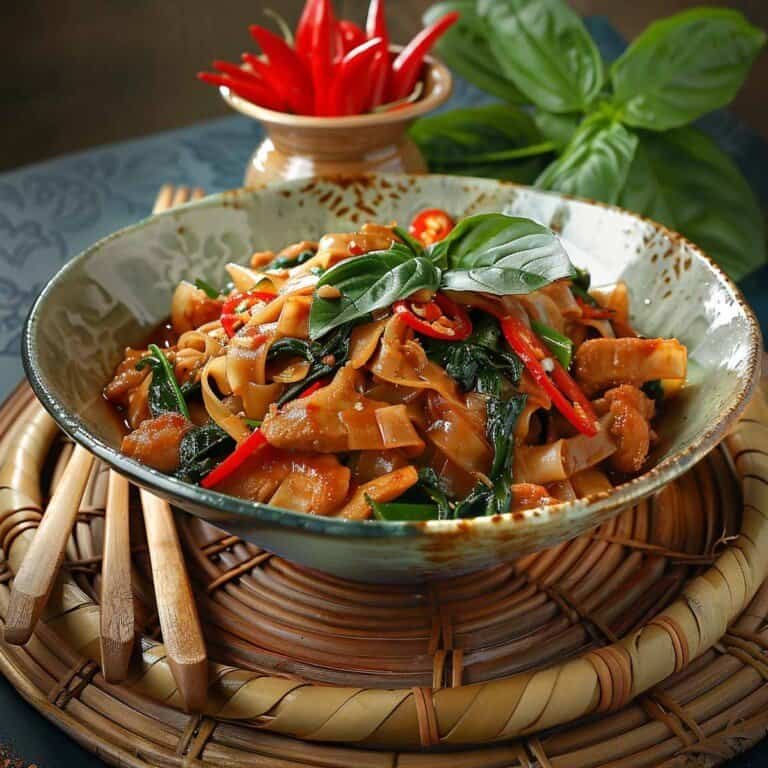
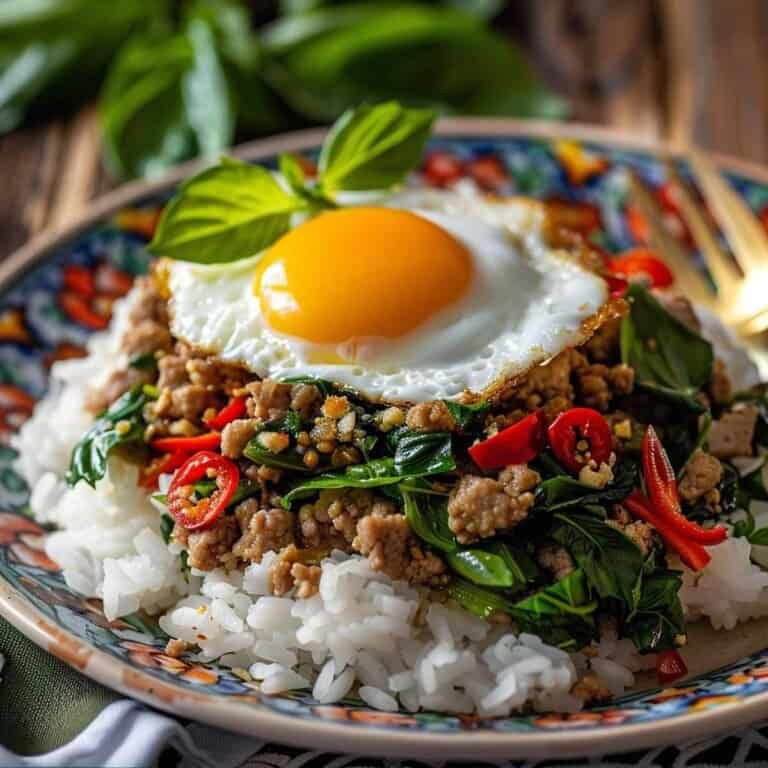
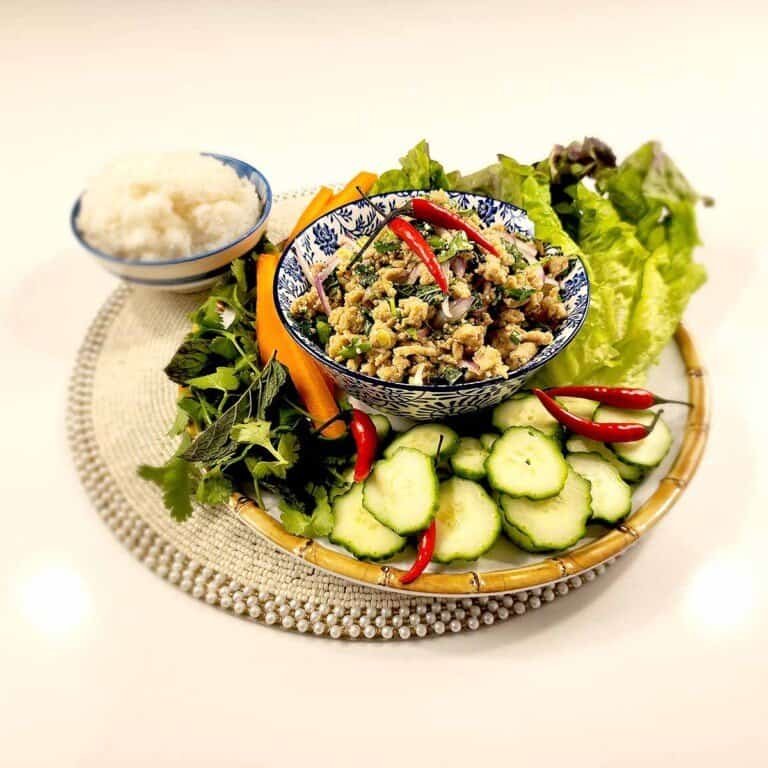
Tom Saap is a complete meal with steamed jasmine rice alongside, the broth sipped and the rib meat eaten with the rice in the bowl. The dishes that belong at the same table are the ones that provide contrast and freshness alongside the rich, long-simmered pork broth. The stir fried morning glory is the green vegetable dish that completes the meal, its garlicky brightness the direct contrast to the deep, slow richness of the rib soup. The Larb is the herb-forward, lime-bright salad that belongs alongside Tom Saap at any Isan-style table, both of them foundational Isan dishes, both of them at their best when eaten together. For those who want to explore the Tom Yum family that Tom Saap belongs to, the Tom Yum Goong shows what the same aromatic broth tradition produces at speed with shrimp rather than over hours with ribs. And for the drink alongside a warm, deeply savory, slow-cooked soup, the Thai iced tea is cold and sweet and always correct. My mother put the ribs on before breakfast. Make it on a Saturday. Let the house fill with the smell of it all morning. That is what this soup is for.
FAQ
What is Tom Saap (Thai pork rib soup)?
Tom Saap is a Thai pork rib soup from the Isan region of northeastern Thailand. Pork ribs are simmered low and slow in a fragrant broth of lemongrass, galangal, kaffir lime leaves, shallots, garlic, fish sauce, lime juice, and fresh chilies for one and a half to two hours until the broth is deeply flavored and the rib meat is tender and pulling from the bone. It is sour, savory, and rich from the collagen and fat the ribs give to the broth over the long simmer. Served with cilantro, spring onions, and lime wedges alongside.
How do you make Tom Saap pork rib soup step by step?
Parboil pork ribs in cold water for five minutes, drain and rinse. Return rinsed ribs to a clean pot with fresh cold water. Add bruised lemongrass, galangal, torn kaffir lime leaves, shallots, garlic, and fresh chilies. Bring to a boil and skim any remaining foam. Reduce to the lowest possible simmer. Cook for one and a half to two hours until the broth is deeply flavored and the rib meat is tender. Season with fish sauce and sugar. Add mushrooms in the final fifteen minutes if using. Just before serving, squeeze fresh lime juice generously into the broth. Ladle into bowls with cilantro, spring onions, and lime wedges alongside.
What is the difference between Tom Saap and Tom Yum?
Tom Saap and Tom Yum share the same aromatic broth base of lemongrass, galangal, kaffir lime leaves, fish sauce, and lime juice, but they are completely different soups. Tom Yum is a quick soup built for immediate flavor, most commonly with shrimp, bright and sharp and done in minutes. Tom Saap is slow, built on pork ribs simmered for one and a half to two hours, the collagen and fat from the bones transforming the broth into something richer and deeper than any quick preparation can produce. Tom Saap goes somewhere deeper. It requires more time and rewards every minute of it.
Why does Tom Saap need to simmer for so long?
The long simmer is what makes Tom Saap what it is. Over one and a half to two hours, the collagen in the pork rib bones breaks down into gelatin, enriching and thickening the broth. The fat renders and distributes through the liquid. The rib meat becomes completely tender and fully flavored from hours in the seasoned broth. None of this can be achieved in a shorter time. The patience is not optional. It is what this soup is built on.
Why does lime juice go in at the end of Tom Saap?
Lime juice loses its brightness when cooked for a long time and becomes flat and slightly bitter. Added at the very end of cooking, just before the bowl goes to the table, the lime arrives fresh and present and does what lime is supposed to do in a Thai soup. This is why Tom Saap is seasoned with fish sauce and sugar during cooking but the lime juice is reserved for the finish. My mother tasted it once and adjusted the lime. That is still the correct approach.
Can I make Tom Saap in a pressure cooker?
Yes. A pressure cooker reduces the cooking time to thirty to forty minutes while still producing tender ribs and a flavorful broth. The broth will be slightly less developed than the long-simmered version but still very good. Add the lime juice after pressure cooking, not before. The aromatics can go in from the beginning. The slow version is better. The pressure cooker version is correct when time is short.
What do you serve with Tom Saap pork rib soup?
Tom Saap is served with steamed jasmine rice alongside, the broth sipped and the rib meat eaten with the rice. Fresh cilantro, sliced spring onions, and lime wedges go at the table for each person to add as they like. Mushrooms can be added to the soup in the final fifteen minutes. At an Isan-style table, larb alongside Tom Saap is one of the most traditional and satisfying combinations in the cuisine.