What Is Pad Thai?
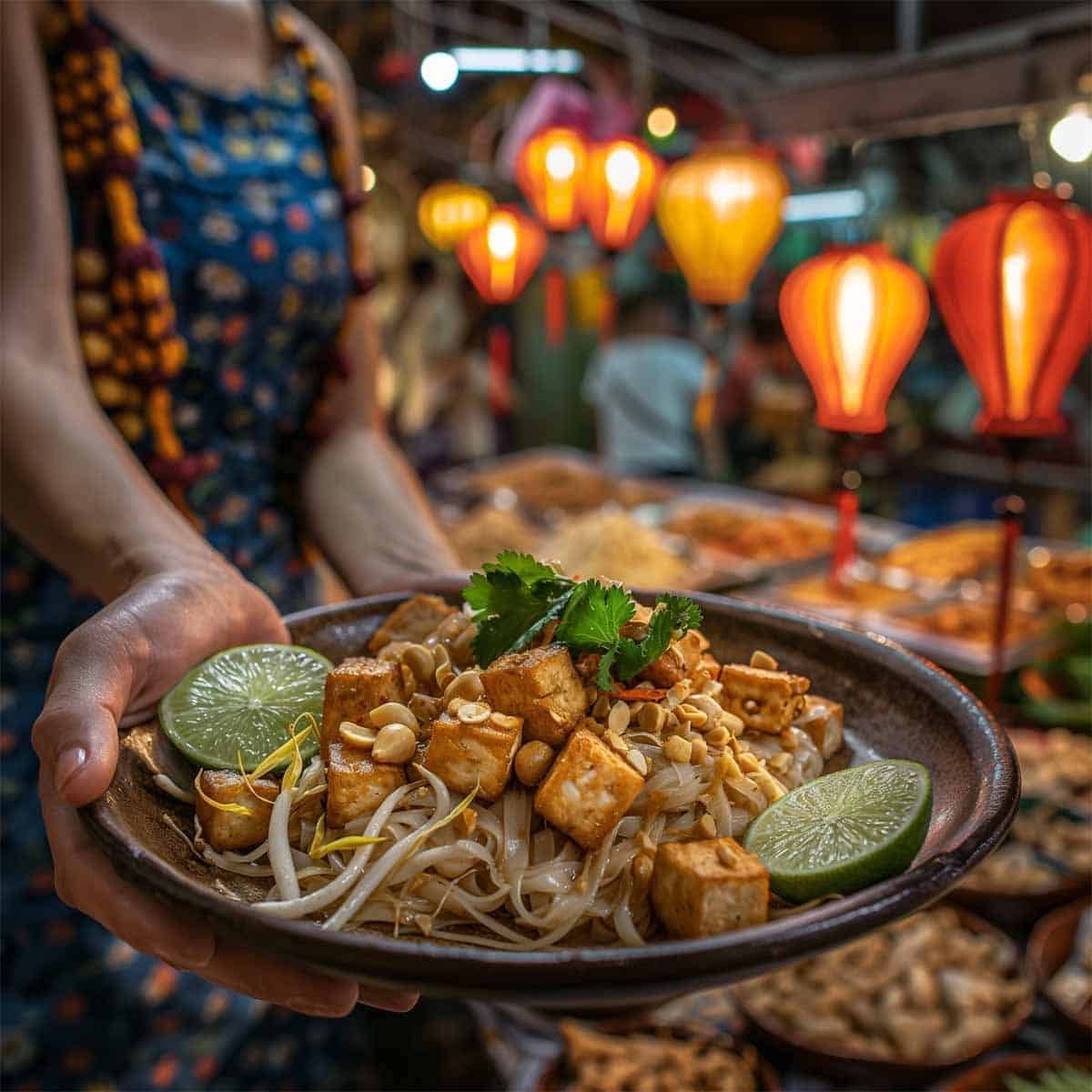
Pad Thai is stir-fried rice noodles in a tamarind-based sauce with shrimp, tofu, egg, bean sprouts, green onion, and crushed roasted peanuts, finished with a squeeze of fresh lime. The sauce is built on tamarind paste, fish sauce, and palm sugar. The wok must be very hot. It is one of the most recognized Thai dishes in the world and one of the best.
Note From Susie

Sawasdee Kha, and Hello.
This is a dish I grew to enjoy, and now I love it completely.
Like so many noodle dishes in my life, I started simple. At a young age the noodles and the egg and the sauce were what made sense to me. Then gradually everything on the plate became the point. My mother and her sisters made Pad Thai at home, and I grew up eating it the way children grow into food that is always around, not all at once but over time, until one day you realize that you want all of it.
The tofu I always liked. It was one of the things that made immediate sense, soft and absorbing the sauce completely. The shrimp took longer, as shrimp often did for me as a child. But I came to love it and now the shrimp is one of the reasons I make this version specifically.
My mother made this in Thailand and she made it in Maryland. The smell of everything combined in the wok, the tamarind and the fish sauce and the egg hitting the hot pan, the noodles absorbing the sauce, the whole kitchen smelling of something warm and complex and completely itself. That smell is what I still think of when I make Pad Thai. Both of her kitchens. The same smell in both of them.
Simple at first. Everything on the plate, eventually. That is still how I would describe it.

What’s In This Page
“Simple at first. Everything on the plate, eventually.”
— Her Hands His EyesWhat Is Pad Thai?
Pad Thai is one of the most recognized dishes in the world and one of the most misunderstood outside of Thailand. The name means stir-fried Thai, and the dish is exactly that: thin rice noodles stir-fried in a very hot wok with a sauce built on tamarind paste, fish sauce, and palm sugar, tossed with egg, protein, bean sprouts, and green onion, finished with crushed roasted peanuts and a squeeze of fresh lime. When it is made correctly, the noodles have a slight char at the edges, the egg is broken through them rather than sitting on top, and the sauce is tangy and sweet and savory in equal measure.
What makes Pad Thai taste the way it does is the tamarind. Not ketchup, not Worcestershire sauce, not any of the substitutes that appear in Western adaptations. Tamarind paste, made from the tamarind fruit, provides a sour, slightly fruity acidity that is specific to this dish and irreplaceable in it. The palm sugar balances the tamarind’s sourness with a rounded sweetness. The fish sauce provides the salt and the savory depth. Together these three create the sauce that makes Pad Thai what it is.
This version uses shrimp and tofu together, which is one of the most common combinations in Thailand. The tofu is pressed and cubed, fried until golden before the noodles go in. The shrimp are added near the end and cook quickly in the hot wok. Both absorb the tamarind sauce and produce a Pad Thai that is satisfying and complete without being heavy.
According to the Oxford Companion to Food, Pad Thai became Thailand’s national noodle dish in the mid-twentieth century through a government promotion of rice noodle consumption, and has since become one of the most globally recognized dishes of any Asian cuisine.
The wok must be very hot. The sauce must be made before the wok gets hot. The noodles must be soaked but not cooked. Everything moves fast.
WHAT YOU’LL NEED

Thin rice noodles, sen lek, soaked in room temperature water for thirty minutes until pliable but not fully soft. Not boiling water, room temperature. Noodles that have been soaked in boiling water will be too soft before they ever reach the wok and will break apart during stir-frying. Room temperature water, thirty minutes, drain completely. They will finish cooking in the wok.
Tamarind paste, three tablespoons, made from a block of tamarind soaked in warm water and pushed through a strainer, or from a jar of concentrate. This is the most important flavor in Pad Thai. Do not substitute with lime juice or vinegar, they are not the same and the dish will not taste correct with them. Tamarind paste is available at Asian grocery stores. It is worth finding.
Fish sauce, two tablespoons. Palm sugar, two tablespoons, or brown sugar as a substitute. These three, tamarind, fish sauce, and sugar, are combined in a small bowl before the wok gets hot. The sauce is ready before anything else begins. This dish moves fast and a pre-mixed sauce is not a convenience, it is a requirement.
Firm tofu, half a block, pressed and cut into small cubes. Pressing is important: tofu that still contains water will splatter in the hot oil and will not develop a golden crust. Wrap the tofu in a clean cloth or paper towels and press under a heavy pan for fifteen minutes before cutting. Then fry in hot oil until golden on most sides and set aside.
Shrimp, medium, peeled and deveined. They go into the wok near the end of the cooking, after the noodles are mostly done, and cook in two minutes. The shrimp I came to love as I got older. They are one of the reasons I make this version now.
Eggs, two, cracked directly into the wok. Dried shrimp, a tablespoon, for depth. Bean sprouts, a generous handful. Green onion, three stalks, cut into one-inch pieces.
For serving: crushed roasted peanuts, fresh lime wedge, dried chili flakes, fish sauce, and sugar at the table for individual seasoning. These are not optional. Each person seasons their own plate.
VISUAL WALK THROUGH
Step 1. Make the sauce and soak the noodles before anything else.
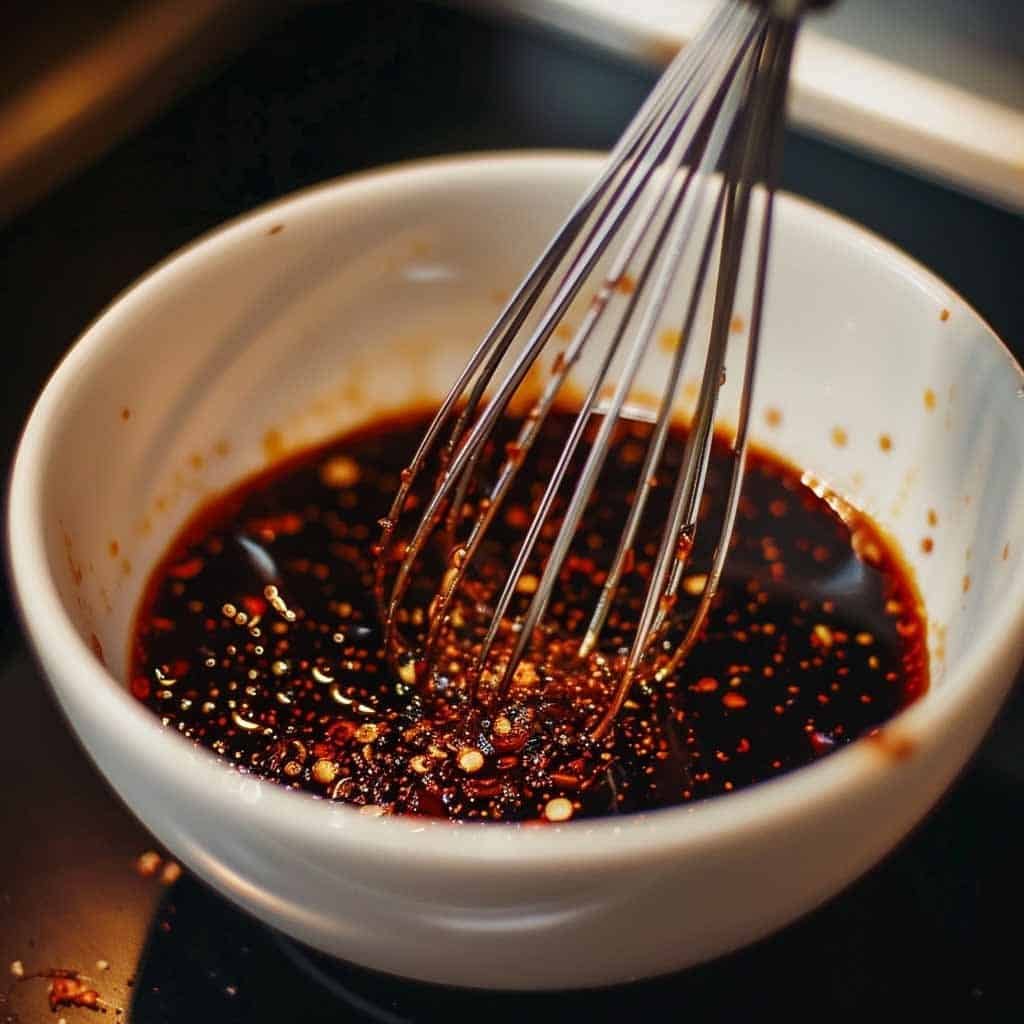
Combine the tamarind paste, fish sauce, and palm sugar in a small bowl and stir until the sugar dissolves. Set aside. Place the dry rice noodles in a bowl of room temperature water and let them soak for thirty minutes. This preparation happens before the wok is ever turned on, and it is what makes everything else possible. A pre-mixed sauce and properly soaked noodles mean the wok time is controlled rather than frantic.
Step 2. Fry the tofu until golden. Remove and set aside.
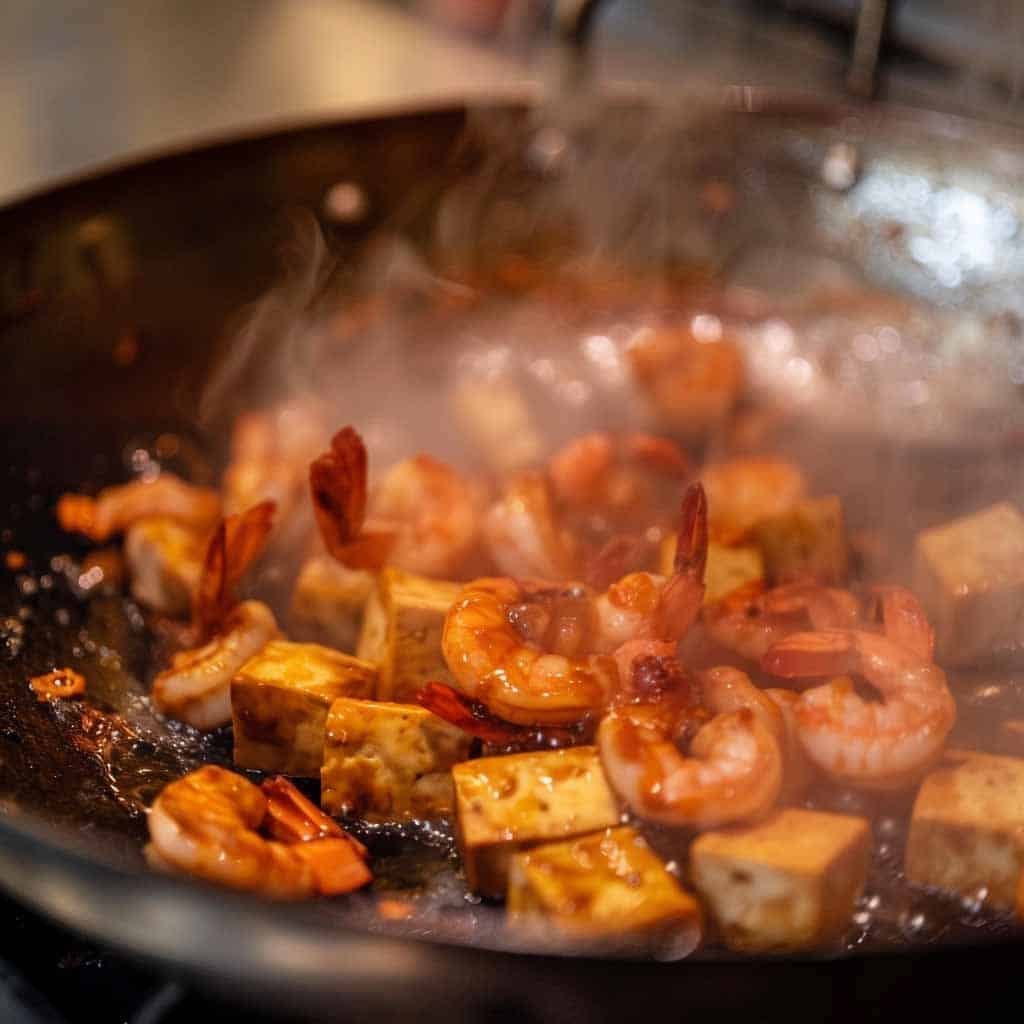
Heat oil in the wok over high heat. Add the pressed, cubed tofu and fry without stirring for one to two minutes until golden on the bottom. Then turn and fry the other sides. Remove and set aside. The golden crust on the tofu is what absorbs the Pad Thai sauce properly and stays intact through the rest of the cooking. Tofu added raw to the noodles without frying first will be soft and will not hold its shape. Add shrimp to the same pan and cook until it turns pink, remove and set aside.
★ Step 3. Add the egg before the noodles, not after. This is What Makes the Difference.
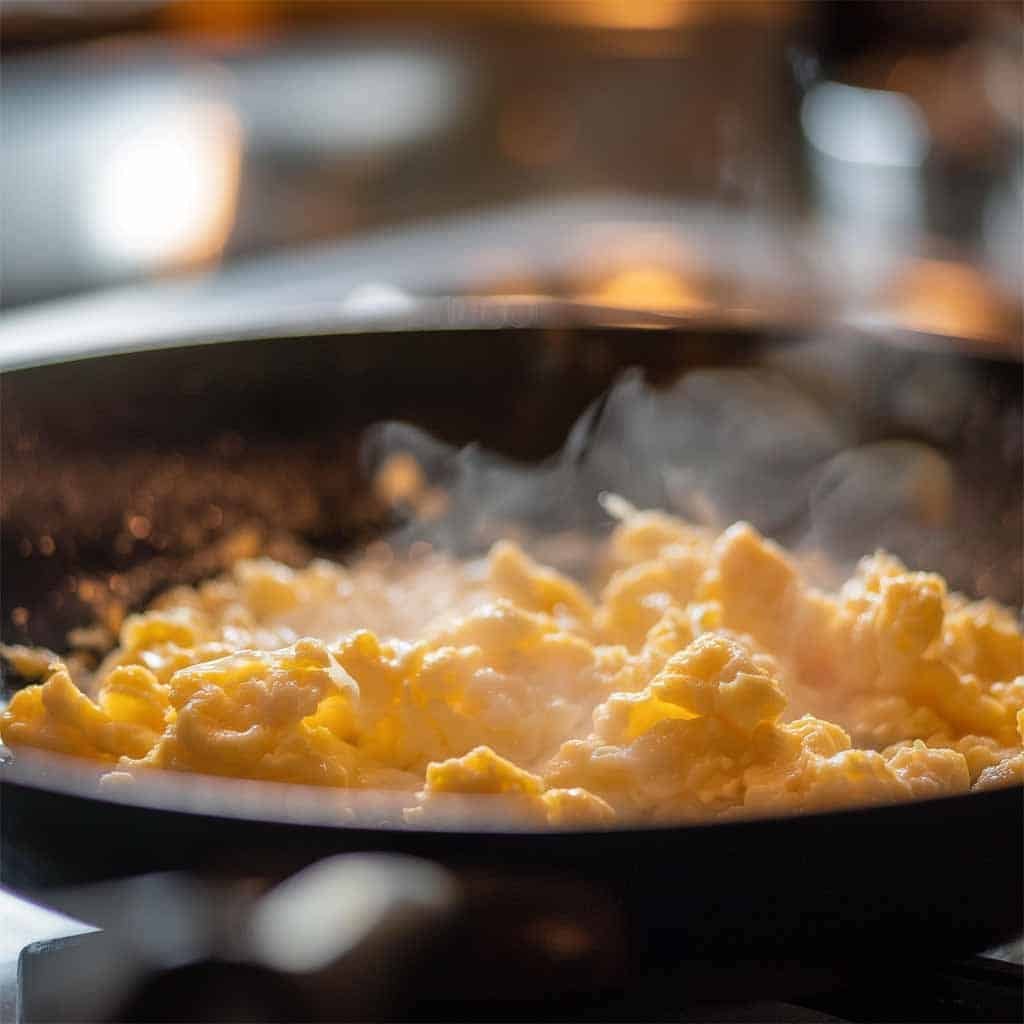
Push any remaining oil to the side of the wok. Crack the eggs into the center. Scramble quickly, large loose curds. The moment the egg is about sixty percent set, add the drained noodles directly on top. Break everything apart together, the egg coating the noodles as it finishes cooking. This is what gives Pad Thai its richness and its cohesion. Egg added after the noodles sits on top. Egg added before the noodles and broken apart with them goes through the dish.
Step 4. Add the sauce and toss until the noodles absorb it completely.
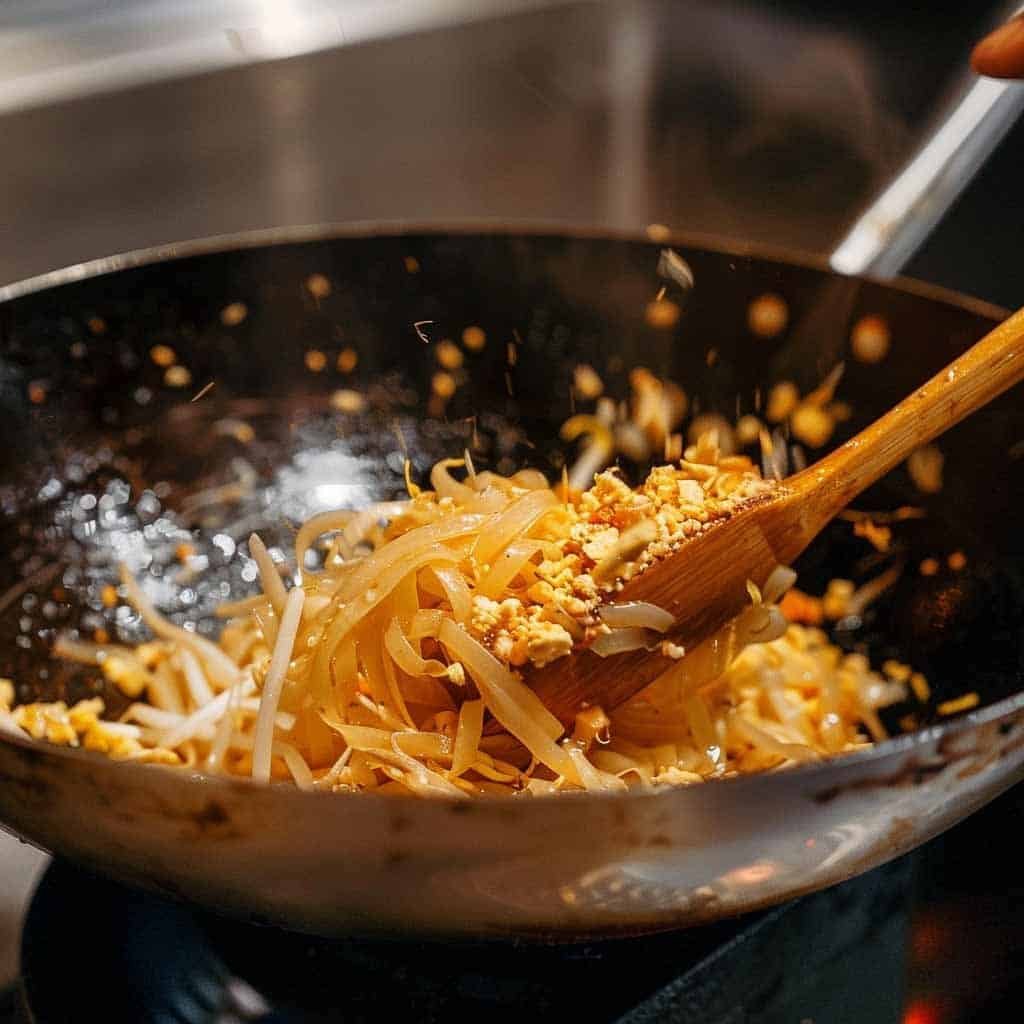
Pour the pre-mixed sauce over the noodles and egg. Toss constantly over high heat. The noodles will absorb the tamarind sauce within thirty to forty-five seconds, the color shifting from pale to a warm golden amber. If the noodles seem dry and are not absorbing the sauce, add a small splash of water, one or two tablespoons, and toss again. The noodles should be just cooked through, slightly chewy, and completely coated in the sauce.
Step 5. Add the protein, bean sprouts, and green onion. Plate immediately.
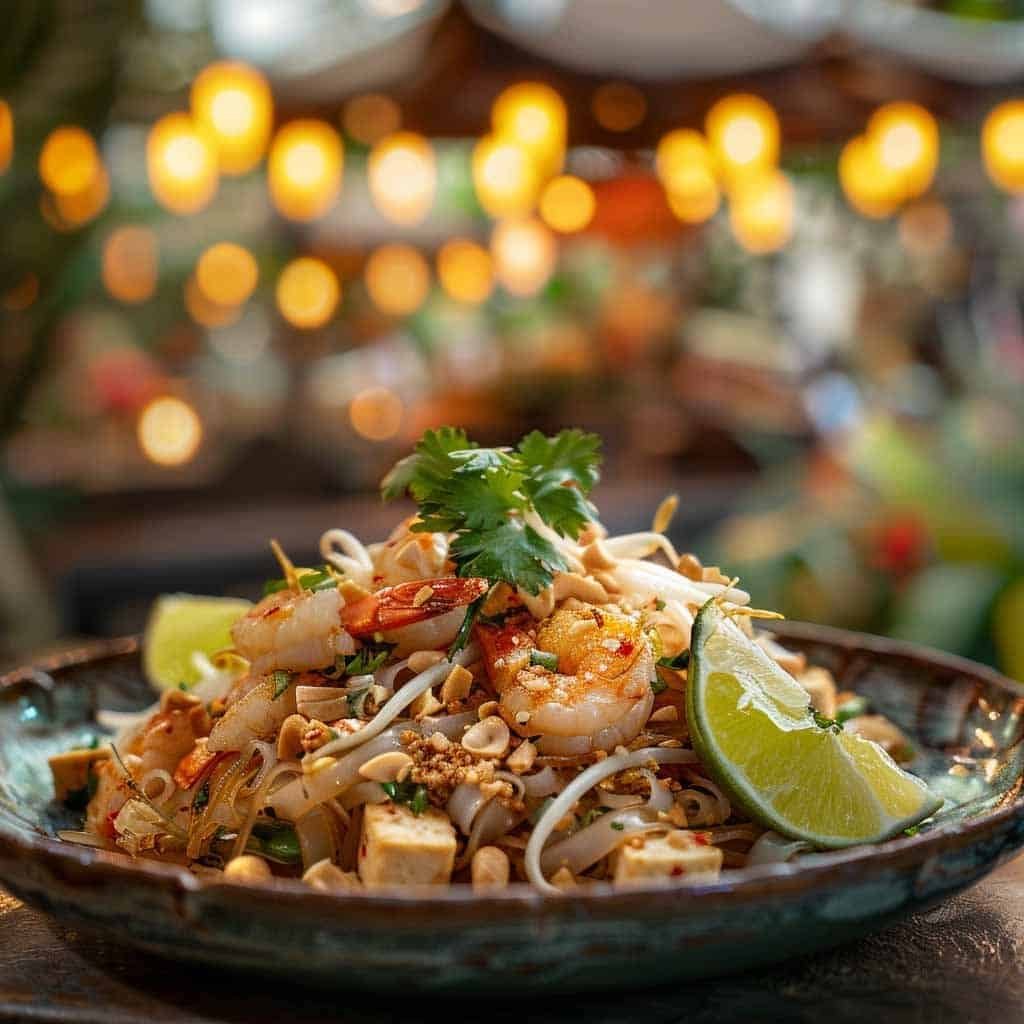
Add the shrimp and the fried tofu back to the wok. Toss for one to two minutes until the shrimp are just pink and curled. Then the bean sprouts and green onion, tossed once to combine. Plate immediately. Crushed peanuts over the top. A lime wedge alongside. Dried chili flakes if desired. Fish sauce, sugar, chili vinegar, and extra dried chili at the table for individual seasoning. The noodles do not wait. Plate the moment everything is combined and serve immediately.
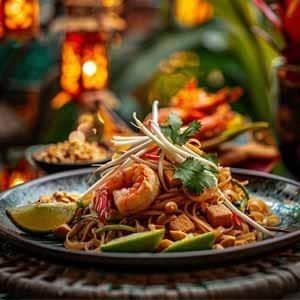
Pad Thai (Shrimp and Tofu)
Ingredients
- 7 oz flat rice noodles
- 3.5 oz medium shrimp peeled and deveined
- 1.75 oz firm tofu cut into small cubes
- 2 large eggs
- 1 cup bean sprouts
- 1/2 cup roasted peanuts crushed
- 3 green onions chopped
- 2 tablespoons vegetable oil
- 3 cloves garlic minced
For the sauce:
- 2 tbs fish sauce
- 3 tbs tamarind paste
- 2 tbs palm sugar
Garnish:
- Lime wedges
- Fresh cilantro
- Extra bean sprouts
- Extra crushed peanuts
Instructions
- Prepare the Noodles:Soak the rice noodles in room temperature water for thirty minutes until they are just tender but still firm to the bite. Drain and set aside.
- Make the Sauce: In a small bowl, whisk together the fish sauce, tamarind paste, and sugar. Set aside.
- Cook the Protein: Heat 1 tablespoon of vegetable oil in a large skillet or wok over medium-high heat. Add tofu, fry until golden brown. cook shrimp just till they turn pink, remove from pan and set aside.
- Scramble the Eggs:In the same pan, add a little more oil if needed, and crack eggs into the center, scramble to sixty percent set, scramble lightly and then push to the side of the pan.
- Combine Ingredients:Add the drained noodles to the pan. Pour the prepared sauce over the noodles and toss everything together. Cook for about 2 minutes, allowing the noodles to absorb the flavors.
- Mix in Vegetables and Nuts:Add the cooked shrimp, tofu, bean sprouts, chopped green onions, and half of the crushed peanuts. Toss everything together and cook for an additional minute.
- Serve: Serve hot, garnished with lime wedges, fresh cilantro, extra bean sprouts, and a sprinkle of crushed peanuts on top.
Notes
Nutrition
LET’S GET THIS RIGHT
Why does my Pad Thai taste bland and not like Thai restaurant Pad Thai?
The tamarind paste was omitted or substituted, or not enough sauce was used. The tamarind is the irreplaceable flavor of Pad Thai and nothing else produces the same sour, slightly fruity, complex taste. Also ensure the wok is genuinely hot, as a cool wok produces noodles that steam rather than fry, losing the slight char and caramelization that give Pad Thai its depth.
Why are my Pad Thai noodles clumping together?
The noodles were over-soaked, or the sauce was not added quickly enough after the noodles went into the wok. Noodles soaked in hot water, or soaked for too long in room temperature water, become too soft and sticky before they reach the wok. Soak in room temperature water for exactly thirty minutes. Once in the wok, add the sauce immediately and toss constantly. A small splash of water helps if the noodles are sticking before the sauce is added.
Can I make Pad Thai without tamarind?
Technically yes, but the dish will not taste like Pad Thai. Tamarind is the ingredient that makes this dish this dish. If tamarind is genuinely unavailable, a combination of lime juice and a small amount of brown sugar is the closest working substitute, but the flavor profile will be different and noticeably less complex. If you are making Pad Thai, find the tamarind. It is available at most Asian grocery stores and online.
Can I make Pad Thai without shrimp?
Yes. The tofu alone makes a completely satisfying Pad Thai. Chicken breast or thigh sliced thin also works in place of or alongside the tofu. The shrimp in this recipe is the protein that I grew to love over time. If shrimp is not your preference or not available, the dish is complete without it. Keep the tofu and proceed exactly as written.
What toppings go on Pad Thai?
Crushed roasted peanuts and a lime wedge are the essential toppings, both non-optional. Beyond those, bean sprouts and green onion are stirred through during cooking. At the table, dried chili flakes, fish sauce, sugar, and chili vinegar are placed in small bowls for each person to season their own plate. This individual seasoning at the table is the correct way to eat Pad Thai, as each person’s preference for sweet, sour, salty, and hot is different.
FLAVOR PROFILE
The smell is the first thing. Everything combined in the wok, the tamarind sauce hitting the hot noodles, the egg scrambling in the oil, the dried shrimp adding their savory depth, the whole kitchen filling with something warm and complex and completely itself. Both of my mother’s kitchens smelled this way when she made this. It is one of the most distinctive smells in Thai cooking and one of the most comforting.
The noodles arrive at the plate golden amber from the tamarind sauce, the egg broken through them, the shrimp pink and curled, the tofu golden at the edges. The bean sprouts are pale and slightly crunchy. The green onion is bright. The peanuts on top are the last texture, crunchy and nutty against the soft noodles.
The first bite is tangy from the tamarind, sweet from the palm sugar, savory from the fish sauce, with the three of them arriving almost simultaneously and then resolving into something that is simultaneously all three and none of them individually. The egg adds richness. The tofu absorbs the sauce completely. The shrimp is sweet and tender. The bean sprout provides crunch. The lime from the wedge, squeezed at the table, sharpens everything.
Then the seasoning. More fish sauce if you want more salt. More sugar if you want more sweetness. Dried chili flakes if you want more heat. Chili vinegar if you want more acidity. The bowl becomes exactly what you want it to be.
I started simple. I love everything on the plate now. That is still exactly how I would describe it.
SUSIE’S KITCHEN NOTES
Tamarind paste from a block is better than tamarind concentrate from a jar, though both work. To make it from a block: break off a piece roughly the size of a golf ball, place it in a small bowl with a quarter cup of warm water, let it soften for five minutes, then press and massage it with your fingers until the pulp is separated from the seeds and fibers. Push through a fine strainer, discarding the solids. The resulting paste is fresh, complex, and noticeably more alive than jarred concentrate. If you make Pad Thai regularly, making tamarind paste from the block is worth the extra five minutes.
Dried shrimp, a tablespoon added with the noodles and sauce, is a traditional ingredient in Pad Thai that many home recipes omit. It adds a concentrated savory depth that amplifies the sauce and the fresh shrimp without being identifiable as a separate flavor in the finished dish. It is available at Asian grocery stores in small bags. It keeps in the refrigerator for months. If you can find it, add it. It is one of the ingredients that makes Pad Thai taste like Pad Thai rather than like stir-fried noodles with a tamarind sauce.
The wok temperature is everything in Pad Thai. A wok that is not hot enough will cause the noodles to steam rather than fry, producing a dish that is soft and uniform in texture rather than having the slight char and caramelization that gives Pad Thai its depth. Heat the wok on high for two full minutes before the oil goes in. Cook in single portions if your wok cannot accommodate a full batch without crowding. Two small batches made correctly produce a better result than one large batch made wrong.
My mother made Pad Thai the same way in both countries. The sauce was the same. The technique was the same. The smell was the same. What was different was the kitchen, the stove, the distance from the market where the tamarind was bought. The dish was not different. Some things travel completely. Pad Thai is one of them.
PAIRING SUGGESTIONS
Pad Thai is a complete meal on its own, the noodles and protein and vegetables all in one wok. What it wants alongside is something light and contrasting. The Tom Yum Goong is the sour, clear soup that belongs alongside Pad Thai, the broth cutting through the richness of the tamarind noodles in a way that makes both dishes more satisfying. The stir-fried morning glory is the green vegetable dish alongside, garlicky and bright where the Pad Thai is golden and rich, the two of them together covering the full range of a Thai home meal. For a fuller table where Pad Thai is one of several noodle or rice dishes, the Thai chicken fried rice shows how the same wok technique produces a completely different result with rice instead of noodles. And for the drink alongside a warm, savory, satisfying plate of Pad Thai, the Thai iced tea is cold and sweet and always the right answer. My mother made this in Thailand and in Maryland. The same smell in both kitchens. The same dish in both countries.
FAQ
What is Pad Thai?
Pad Thai is a Thai stir-fried rice noodle dish made with thin rice noodles tossed in a sauce of tamarind paste, fish sauce, and palm sugar, with egg, bean sprouts, green onion, dried shrimp, and a choice of protein, most commonly shrimp, tofu, or chicken. It is finished with crushed roasted peanuts and a lime wedge and served with condiments for individual seasoning at the table. It is one of the most recognized Thai dishes in the world and Thailand’s most internationally famous noodle preparation.
How do you make Pad Thai step by step?
Soak thin rice noodles in room temperature water for 30 minutes. Mix the sauce from tamarind paste, fish sauce, and palm sugar and set aside. Press and cube firm tofu, fry until golden, and set aside. Heat oil in a very hot wok. Push contents aside, crack in eggs, scramble to 60 percent set, add drained noodles on top and break apart together. Pour sauce over noodles and toss until absorbed. Add shrimp and fried tofu, toss until shrimp are pink. Add bean sprouts and green onion, toss once. Plate with crushed peanuts and lime.
What is the Pad Thai sauce made of?
The Pad Thai sauce is made from tamarind paste, fish sauce, and palm sugar. The tamarind provides the sour, slightly fruity base flavor. The fish sauce provides salt and savory depth. The palm sugar provides balanced sweetness. Three tablespoons of tamarind paste, two tablespoons each of fish sauce and palm sugar per serving is the starting point. This sauce is what gives Pad Thai its distinctive flavor and it cannot be correctly replicated with substitutes.
What noodles are used in Pad Thai?
Pad Thai uses thin flat rice noodles, called sen lek in Thai. They are sold dried at Asian grocery stores and most supermarkets. They should be soaked in room temperature water for thirty minutes until pliable but not fully soft before cooking. Do not soak in boiling water as they will become too soft and break apart in the wok. The noodles finish cooking in the wok with the sauce, absorbing the tamarind and fish sauce as they cook through.
Can I make Pad Thai without tamarind?
Tamarind is the essential and irreplaceable flavor of Pad Thai. Without it the dish will not taste like Pad Thai. If tamarind is genuinely unavailable, a combination of fresh lime juice and a small amount of brown sugar is the closest working substitute, but the result will be noticeably different in character. Tamarind paste is available at Asian grocery stores in block or jar form. For an authentic Pad Thai recipe, finding the tamarind is worth the effort.
Is Pad Thai gluten-free?
The rice noodles and tamarind paste are naturally gluten-free. Fish sauce is also gluten-free. The dish as written contains no wheat. However, cross-contamination is possible when cooking in a shared wok or kitchen, and some brands of fish sauce may contain trace amounts of wheat. For those with celiac disease or serious gluten sensitivity, check individual ingredient labels. As a general guide, Pad Thai is one of the more naturally gluten-free Thai dishes.
What is the difference between Pad Thai and Pad See Ew?
Pad Thai uses thin rice noodles and a tamarind-based sauce producing a tangy, sweet, savory flavor. Pad See Ew uses wide flat rice noodles and a dark soy and oyster sauce base producing a darker, richer, more savory-sweet flavor. Pad Thai has more components including peanuts, dried shrimp, and bean sprouts. Pad See Ew is simpler and more direct. Both are Thai stir-fried noodle dishes but they are completely different in noodle, sauce, flavor, and character. The full Pad See Ew recipe is at /pad-see-ew-recipe/.