What Is Thai Eggplant Stir-Fry?
Thai eggplant stir-fry, Pad Makua Yao (ผัดมะเขือยาว), is sliced eggplant stir-fried in a very hot wok with garlic, fresh chilies, oyster sauce, fish sauce, and fresh Thai basil. It is done in five minutes. The eggplant goes soft and glossy in the sauce. The garlic and basil are the soul of it. My grandmother grew the eggplant herself. It went from the ground to the wok the same day.
Note From Susie

Sawasdee Kha, and Hello.
My grandmother made this on her farm. She grew the eggplant herself, and it went from the ground to the wok the same day. Garlic, basil, oyster sauce, her hands moving the way they always moved in a kitchen, certain and without hesitation.
As a small child the eggplant took some time for me to appreciate. The garlic and the sauce made sense right away. The soft texture came later, the way some things do.
I make this now and the smell brings her back every time. The garlic hitting the hot oil, the basil going in at the end, the whole kitchen filling with something warm and simple and completely good. Make this tonight. I think you will love it.

What’s In This Page
“I make this now and the smell brings her back every time.”
— Her Hands His EyesWHAT IS THAI EGGPLANT STIR-FRY?
Thai eggplant stir-fry, ผัดมะเขือยาว, Pad Makua Yao, is one of the simplest and most satisfying vegetable dishes in Thai cooking. Sliced long purple eggplant is stir-fried in a very hot wok with garlic, fresh Thai chilies, red bell pepper, yellow bell pepper, onion, oyster sauce, fish sauce, soy sauce, and a touch of sugar, finished with fresh Thai basil added off the heat. The whole dish is done in five minutes from the moment the garlic hits the oil. The eggplant goes soft and glossy, absorbing the sauce completely, the basil fragrant and just wilted on top.
What makes Thai eggplant stir-fry distinct from any other eggplant preparation is the combination of the wok heat and the oyster sauce base. The eggplant needs to go into a genuinely hot wok so that it begins to soften and take on a slight char at the edges before the sauce is added, rather than steaming slowly and becoming waterlogged. The oyster sauce provides the body and the savory sweetness. The fish sauce provides the salt. The basil provides the fragrance that lifts the whole dish out of being merely a cooked vegetable and into something with a distinct character.
Thai eggplant stir-fry is found at every Thai home kitchen and at most Thai restaurants, often eaten alongside rice as a vegetable component of a larger meal. The most common eggplant used is the long, slender, pale purple Chinese or Japanese eggplant, which has fewer seeds, thinner skin, and a more delicate flavor than Western globe eggplant. According to the Oxford Companion to Food, eggplant has been cultivated in Southeast Asia for thousands of years and is central to the cuisines of Thailand, India, and China.
From the ground to the wok. My grandmother understood this better than anyone.
WHAT YOU’LL NEED
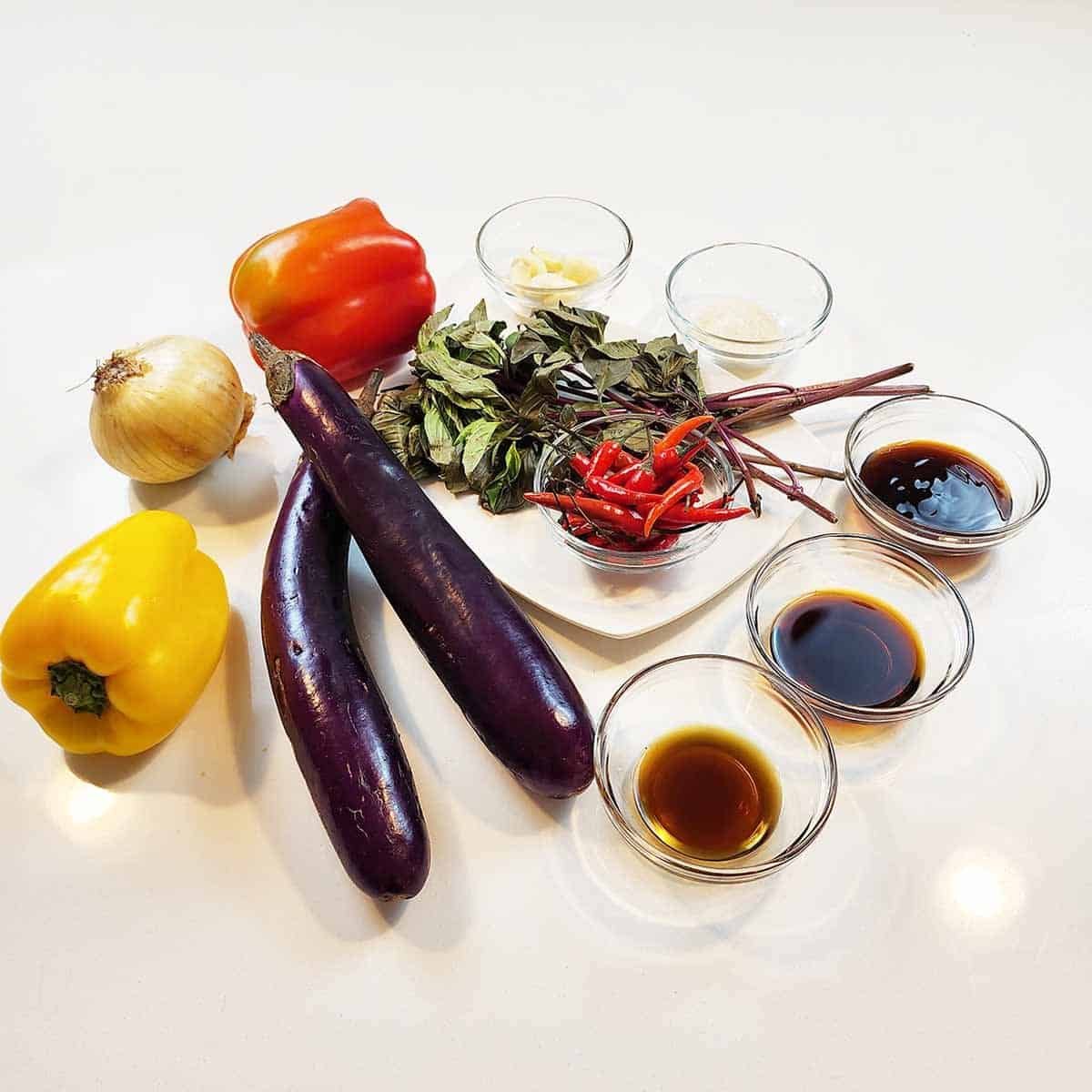
Eggplant, two medium, cut into bite-sized pieces. The long, slender, pale purple Chinese or Japanese eggplant is correct for this dish. Its flesh is more delicate, its skin thinner, and its flavor cleaner than globe eggplant. Cut on the diagonal for more surface area in contact with the hot wok.
Garlic, four cloves, minced. Red chilies, two, thinly sliced, optional. The heat level is yours. Leave them out entirely for a version without heat.
Red bell pepper, one, thinly sliced. Yellow bell pepper, one, thinly sliced. Onion, one, thinly sliced.
The sauce mixed before the wok gets hot: soy sauce, a quarter cup. Oyster sauce, two tablespoons. Fish sauce, one tablespoon. Sugar, one tablespoon. Mix them together in a small bowl and have it within reach.
Thai basil, one cup of leaves, added off the heat at the very end. This is the finishing fragrance of the dish. It wilts in seconds from the residual heat and should not be cooked, only folded in.
Vegetable oil, two tablespoons. A wok or large pan. The highest heat your burner will produce.
VISUAL WALK THROUGH
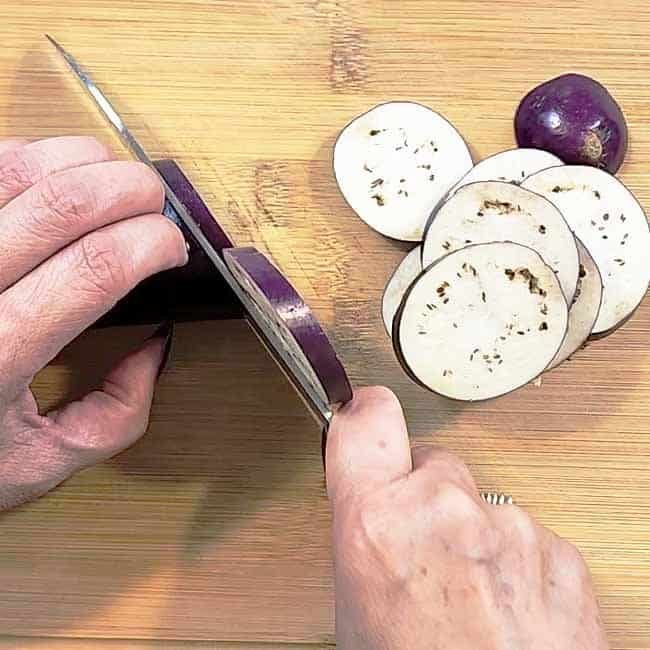
Step 1. Prep ingredients before the wok gets hot.
Cut the medium eggplants into bite-sized pieces, ensuring they are evenly sized for consistent cooking. Thinly slice the red and yellow bell peppers and the onion. Mince the garlic and thinly slice the red chilies if using. Measure out the Thai basil leaves and set aside. Whisk together the soy sauce, oyster sauce, fish sauce, and sugar in a small bowl until the sugar completely dissolves. Have everything ready before the heat goes on. This dish moves fast.
Step 2. Stir-fry garlic and chilies.
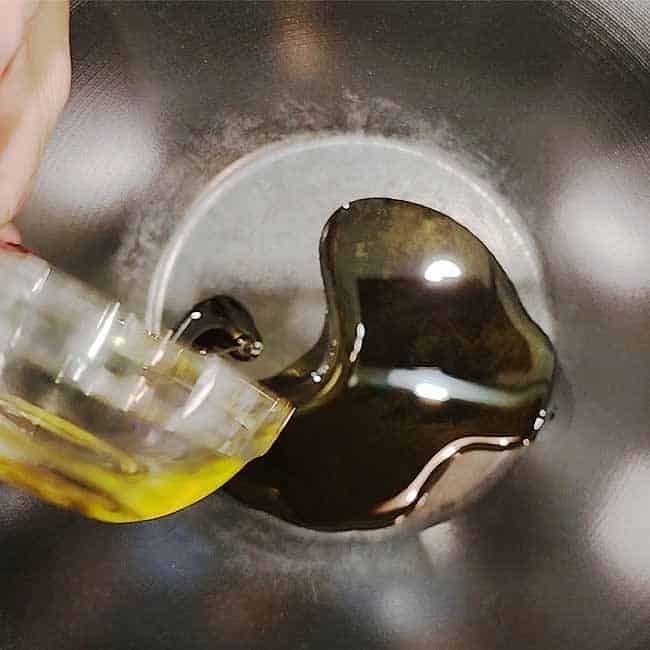
Heat vegetable oil in a large pan or wok over medium-high heat until shimmering. Add the minced garlic and sliced red chilies and stir-fry for about thirty seconds until fragrant, being careful not to burn them. The garlic going golden in the oil is the signal that the eggplant is ready to follow.
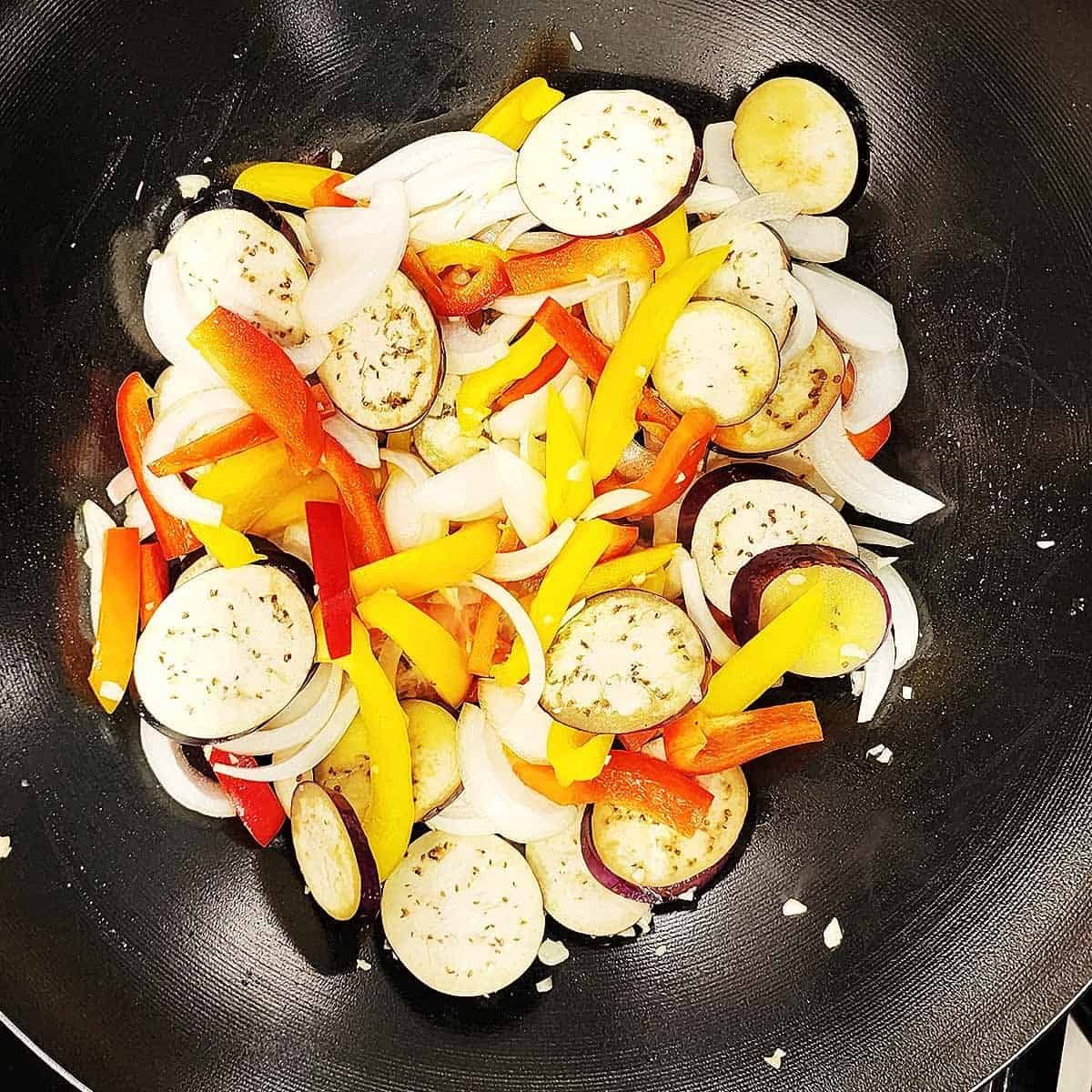
★ Step 3. Add the eggplant and vegetables, stir-fry until tender. This is What Makes the Difference.
Add the prepared eggplant, bell peppers, and onion to the pan. Stir-fry continuously for five to seven minutes or until the vegetables are tender-crisp and slightly caramelized. The eggplant should absorb some of the oil and become tender. Do not let the eggplant sit without stirring for too long or it will scorch unevenly.
Step 4. Add the sauce and combine.
Pour the sauce over the stir-fried vegetables in the pan. Stir well to coat all the vegetables evenly with the sauce. Let it cook for two to three minutes, allowing the sauce to thicken slightly. The eggplant should be completely tender and glossy from the sauce. Press one piece with a spatula. It should yield completely without resistance.
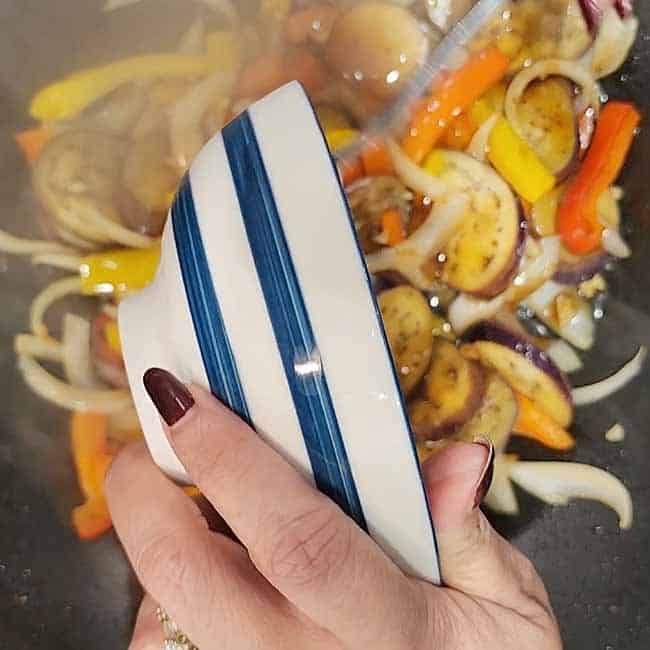
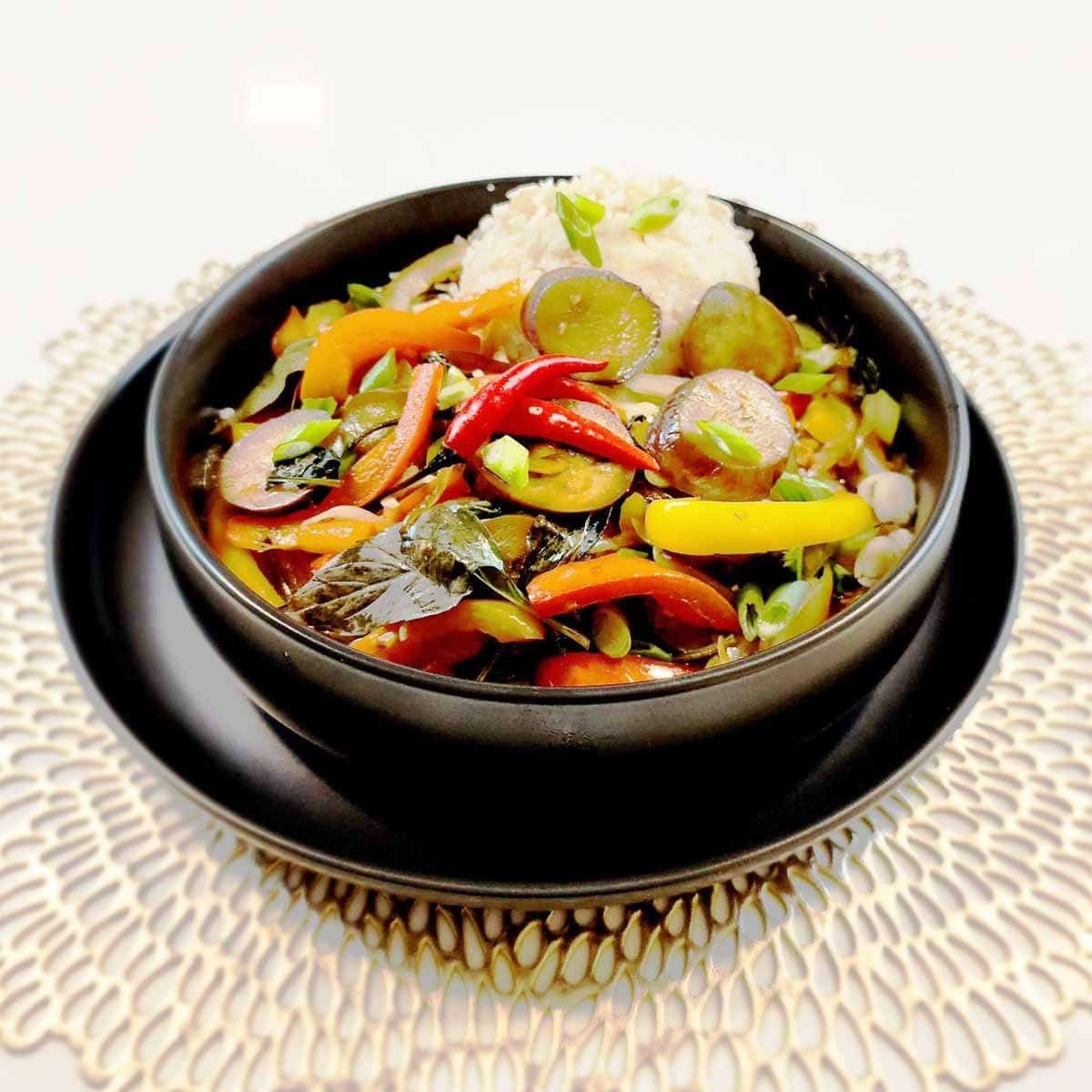
Step 5. Add Thai basil and serve.
Add the Thai basil leaves to the pan and toss everything together until the basil leaves wilt. Transfer the Thai eggplant stir-fry to a serving dish. Serve hot with steamed jasmine rice.

Thai Eggplant Stir-Fry (Pad Makua Yao)
Ingredients
- 2 medium eggplants cut into bite-sized pieces
- 1 red bell pepper thinly sliced
- 1 yellow bell pepper thinly sliced
- 1 onion thinly sliced
- 4 cloves garlic minced
- 2 red chilies thinly sliced (optional, for heat)
- 1/4 cup soy sauce
- 2 tablespoons oyster sauce
- 1 tablespoon fish sauce
- 1 tablespoon sugar
- 1 cup Thai basil leaves
- 2 tablespoons vegetable oil
Instructions
- Prep Ingredients:Cut the medium eggplants into bite-sized pieces, ensuring they are evenly sized for consistent cooking. Thinly slice the red and yellow bell peppers and the onion into thin strips. Mince the garlic and thinly slice the red chilies (if using). Measure out the Thai basil leaves and set aside.Make the sauce, whisk together the soy sauce, oyster sauce, fish sauce, and sugar in a small bowl until the sugar completely dissolves.
- Stir-Fry:Heat vegetable oil in a large pan or wok over medium-high heat until shimmering. Add the minced garlic and sliced red chilies (adjust quantity for desired heat) and stir-fry for about 30 seconds until fragrant, being careful not to burn them.
- Add Vegetables:Add the prepared eggplant, bell peppers, and onion to the pan. Stir-fry continuously for 5-7 minutes or until the vegetables are tender-crisp and slightly caramelized.
- Combine and Finish:Pour the sauce over the stir-fried vegetables in the pan. Stir well to coat all the vegetables evenly. Let it cook for 2-3 minutes.
- Add Thai Basil:Add the Thai basil leaves to the pan and toss everything together.
- Serve:Transfer the Thai Eggplant Stir-Fry to a serving dish. Serve hot with steamed jasmine rice.
Video
Notes
Nutrition
LET’S GET THIS RIGHT
Why is my Thai eggplant stir-fry mushy and waterlogged?
The wok was not hot enough, or the eggplant was stirred immediately after going into the wok rather than being left to sit for thirty seconds. A cool wok causes the eggplant to release its moisture and steam rather than fry, producing a soft, wet result. A hot wok with thirty seconds of undisturbed contact produces eggplant that is tender but still holds its shape and has absorbed the sauce rather than sitting in it.
Why does my eggplant not absorb the sauce?
The eggplant was not cooked long enough, or the sauce was added before the eggplant had softened enough to absorb it. The eggplant needs to be mostly tender before the sauce goes in. If it is still firm and raw when the sauce arrives, the sauce will reduce and caramelize on the surface of the wok rather than being absorbed into the eggplant. Cook the eggplant in the hot wok for two to three minutes before adding the sauce.
What type of eggplant is best for Thai eggplant stir-fry?
Long Chinese or Japanese eggplant, the slender pale purple variety, is the correct choice. It has thinner skin, fewer seeds, and a more delicate flavor than globe eggplant and absorbs the sauce more completely. Thai eggplant, the small round green variety, is also used in Thai cooking but produces a very different dish with more bitterness and a firmer texture. Globe eggplant works as a substitute but should be salted and drained before cooking to reduce its moisture content.
Can I make Thai eggplant stir-fry without oyster sauce?
Oyster sauce is the primary sauce base and provides the body and savory sweetness that makes the dish what it is. Without it the sauce will be thin and the eggplant will taste flat. If you cannot use oyster sauce, hoisin sauce is the closest substitute in terms of body and sweetness, used in the same quantity. Mushroom oyster sauce is a vegetarian alternative available at Asian grocery stores that produces a very similar result.
Can I make this dish vegetarian?
Yes. Use mushroom oyster sauce in place of regular oyster sauce and soy sauce in place of fish sauce. The dish will be fully plant-based and still deeply flavorful. The oyster sauce is the primary component to address as it is made from oysters. Mushroom oyster sauce is widely available at Asian grocery stores and produces the same body and savory quality without the seafood.
FLAVOR PROFILE
The garlic goes into the oil first and the smell arrives immediately. Golden and specific, the signal that this dish is beginning. My grandmother’s farm kitchen smelled this way. Both of my mother’s kitchens smelled this way. It is one of those smells that belongs to a specific dish and arrives before the dish is anywhere near ready.
The eggplant goes in and the sound changes, the sizzle of the vegetable hitting the hot oil, the thirty seconds of stillness, and then the toss. The eggplant begins to soften at the cut edges, the slight char developing where the heat is highest. Then the sauce, and the smell shifts again, the oyster sauce caramelizing slightly at the edges of the wok, the fish sauce present underneath, the basil waiting.
On the plate the eggplant is glossy and completely tender, dark purple deepened further by the sauce, the garlic visible and golden throughout. The Thai basil is dark and fragrant on top, wilted to just the right point.
The first bite is savory and rich, the oyster sauce and fish sauce working together, the eggplant soft and completely saturated with the sauce. The garlic is in every bite. The basil is at the end of each bite, its slight anise note present and then gone. The chili heat, if included, builds slowly from behind.
It is a gentle dish with a clear character. The eggplant from my grandmother’s farm, soft and glossy in the sauce. Some things are simply and completely good.
SUSIE’S KITCHEN NOTES
My grandmother grew long purple eggplant, the same variety that is now sold in Asian grocery stores as Chinese eggplant or Japanese eggplant. This is the correct eggplant for this dish. Its skin is thin enough to eat without bitterness, its flesh is dense enough to hold up in the hot wok without falling apart, and its flavor is clean and slightly sweet in a way that globe eggplant is not. When you buy it, look for eggplant that is firm and glossy with no soft spots or wrinkled skin. Fresh eggplant cooks evenly. Old eggplant absorbs more oil and produces a greasy result.
The diagonal cut is not merely aesthetic. Cutting the eggplant on the diagonal produces longer, wider pieces that have more surface area in contact with the hot wok, which means more caramelization, more sauce absorption, and more of the char that gives the dish its character. Straight crosscut rounds produce smaller pieces with less surface contact. The diagonal is the right cut for this dish.
A small amount of water or stock added when the sauce goes in keeps the sauce from reducing too quickly before the eggplant is cooked through. The eggplant is dense and needs two to three minutes with the sauce to absorb it completely. Without the additional liquid, the sauce can reduce and caramelize on the wok surface before the eggplant is done, leaving the eggplant under-sauced. Two tablespoons of water or stock is enough. It will evaporate completely by the time the eggplant is ready.
My grandmother grew the eggplant from seed. She knew when it was ready before she ever picked it. She cooked it the same way every time, unhurried and certain. I think about her hands when I make this dish. The eggplant, the wok, the garlic going in. From the ground to the table in the same afternoon. That is the version I am always making, wherever the kitchen happens to be.
PAIRING SUGGESTIONS
Thai eggplant stir-fry is the vegetable dish at the Thai table, the green alongside the protein, the simple alongside the complex. It belongs next to jasmine rice and whatever else is being made that evening. For a complete Thai home meal, the Thai chicken fried rice and the Thai eggplant stir-fry together make a full table from very little, both of them fast, both of them built on a hot wok and the right sauce. The Tom Kha Gai is the soup alongside, warm and coconut-fragrant where the eggplant stir-fry is savory and garlicky, the two of them together covering the full range of a Thai family meal. For a spread where the eggplant is one of several vegetable dishes, the stir fried morning glory shares the same wok technique and the same speed, both of them done in minutes, both of them bright and garlicky and completely themselves over rice. And for the drink alongside a warm, savory, satisfying vegetable dish, the Thai iced tea is always the right answer. My grandmother grew the eggplant on her farm. My mother cooked it in two countries. I still make it the same way. Some things are simply worth keeping.
FAQ
What is Thai eggplant stir-fry (Pad Makua Yao)?
Thai eggplant stir-fry, Pad Makua Yao (ผัดมะเขือยาว), is sliced long purple eggplant stir-fried in a very hot wok with garlic, fresh chilies, oyster sauce, fish sauce, soy sauce, and sugar, finished with fresh Thai basil added off the heat. It is done in five minutes. The eggplant goes soft and completely glossy in the sauce. It is one of the most common and satisfying vegetable dishes in Thai home cooking, eaten alongside jasmine rice as part of a larger meal.
How do you make Thai eggplant stir-fry step by step?
Mix the sauce from oyster sauce, fish sauce, soy sauce, and sugar before the wok gets hot. Slice eggplant on the diagonal. Heat a wok over very high heat, add oil, then garlic and chilies. When the garlic is golden, add the eggplant and leave undisturbed for 30 seconds. Toss, then pour the sauce over and toss constantly for two to three minutes until the eggplant is completely tender and glossy. Remove from heat, fold in fresh Thai basil, plate immediately over jasmine rice.
What eggplant is used in Thai cooking?
Several types of eggplant are used in Thai cooking. Long Chinese or Japanese eggplant, the slender pale purple variety, is used in stir-fries like Pad Makua Yao. Small round Thai eggplant, which looks like a green marble, is used in curries. Pea eggplant, tiny clusters of very small round eggplant, is also used in curries and salads. For stir-frying, the long purple variety is correct. It has the right texture, the right skin thickness, and the right flavor for this preparation.
Is Thai eggplant stir-fry spicy?
Thai eggplant stir-fry has a moderate heat from the fresh Thai chilies when they are included. The heat level is entirely adjustable. Omit the chilies entirely for a version without heat, which is completely correct and still deeply flavorful from the garlic, oyster sauce, and basil. Add more chilies for more heat. The chilies go in with the garlic at the beginning and their heat infuses the oil before the eggplant is added.
Can I make Thai eggplant stir-fry vegetarian?
Yes. Use mushroom oyster sauce in place of regular oyster sauce and soy sauce in place of fish sauce. Both substitutes are available at Asian grocery stores. The dish will be fully plant-based and still deeply flavorful. Mushroom oyster sauce produces the same body and savory quality as regular oyster sauce without the seafood. The Thai basil, garlic, and chili flavor profile remains unchanged.
Why does my eggplant absorb so much oil?
Eggplant is naturally porous and absorbs oil readily, particularly when the oil is not hot enough when the eggplant goes in. Oil that is not at temperature soaks into the eggplant before the surface has sealed. Get the wok and oil genuinely hot before the eggplant goes in, and the surface will seal quickly rather than absorbing. Two to three tablespoons of oil is sufficient for one batch of Thai eggplant stir-fry. More than that and the dish will be greasy regardless of the temperature.
What do you serve with Thai eggplant stir-fry?
Thai eggplant stir-fry is served over steamed jasmine rice as part of a larger Thai meal. It works as the vegetable component alongside a protein dish such as Thai chicken fried rice, Thai ginger chicken, or Thai cashew chicken. It also works as a simple meal on its own over rice, particularly when made with tofu added to the wok for additional protein. The dish is fast enough to be made while another dish is being prepared alongside it.