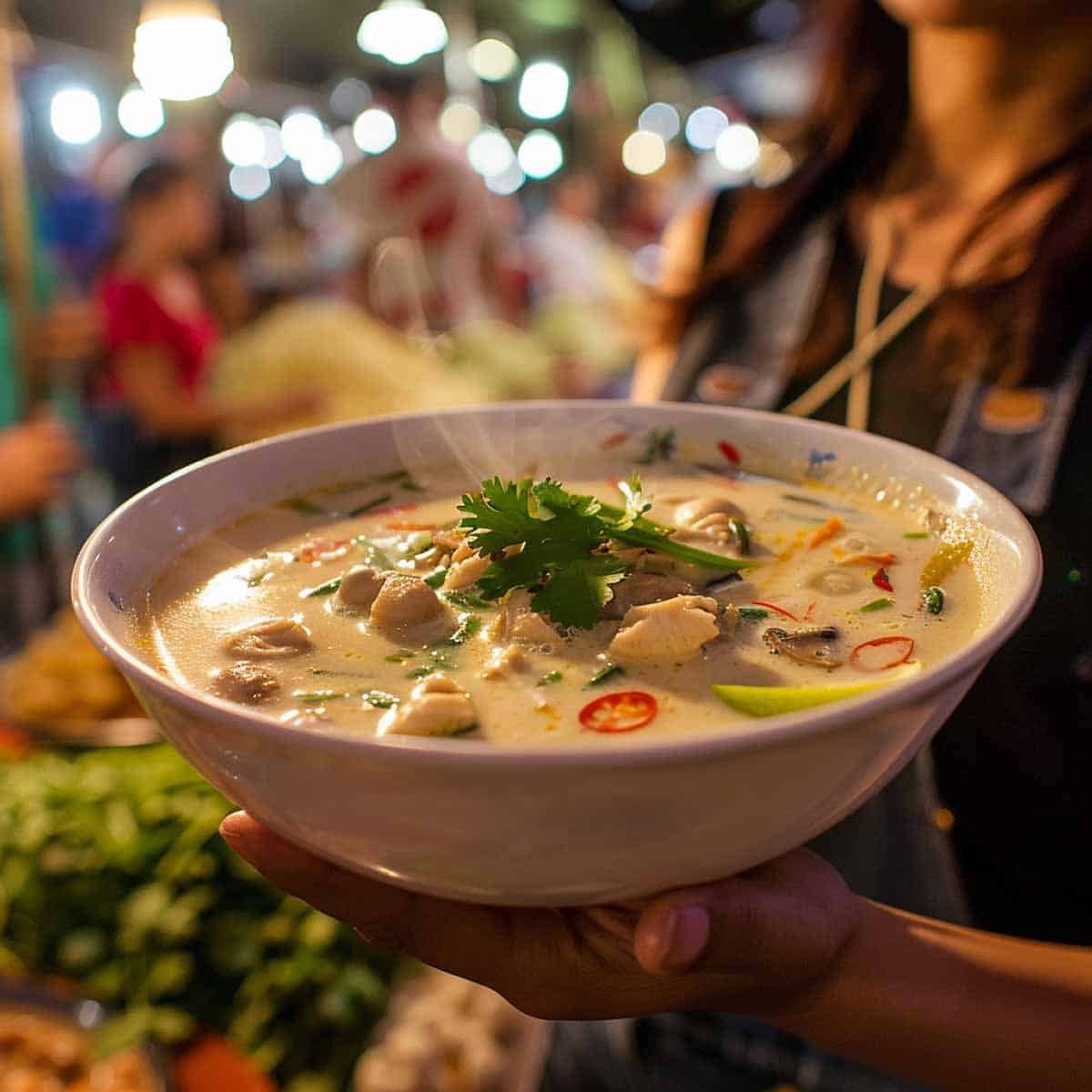
What Is Thai Coconut Chicken Soup?
Thai coconut chicken soup, Tom Kha Gai (ต้มข่าไก่), is a silky, fragrant broth of coconut milk, galangal, lemongrass, and kaffir lime leaves simmered with tender chicken. Sour and rich at the same time. Not a curry. Not a broth. Something entirely its own.
NOTE FROM SUSIE

Sawasdee Kha, and Hello.
My mother made this on cool nights. Not that Korat gets truly cold, but there were nights when the air shifted and she would reach for the coconut milk without being asked.
The galangal went in first. She would bruise it with the flat of her knife the same way every time. Three hard presses. The smell that came off it was nothing like ginger, sharper, almost medicinal, and then underneath that something floral. I have never been able to describe it exactly. I stopped trying.
The lemongrass came next. Bent and bruised at the stalk. Then the kaffir lime leaves, torn down the center so the oils released. By the time the coconut milk went in the kitchen already smelled like the soup. That is how you know the aromatics did their job.
She would taste it once before she brought it to the table. Just once. Then she would set it down and sit and that was that.
I make this now when I miss her most. It does not fix anything. But it helps.

What’s In This Page
“By the time the coconut milk went in, the kitchen already smelled like the soup.”
— Her Hands His EyesWHAT IS THAI COCONUT CHICKEN SOUP?
Tom Kha Gai, ต้มข่าไก่, translates simply as boiled galangal chicken. The name undersells it. This is one of Thailand’s most recognized soups, a coconut milk broth built on three aromatics that do not exist anywhere else in the world together: galangal, lemongrass, and kaffir lime leaves. They are not interchangeable with anything. They are the dish.
Tom Kha Gai originated in northern Thailand and Laos, where galangal, kha in Thai, grows abundantly. It moved south and became a staple across the country, but the northern roots show in the broth’s restraint. It is not loaded with chili paste the way some Thai soups are. The heat is quiet. The sourness comes from fresh lime juice added at the end, and from fish sauce that lifts everything without dominating.
What makes Thai coconut chicken soup different from a curry is the broth itself, thin, not thickened, meant to be sipped as much as eaten. The coconut milk enriches without smothering. According to the Oxford Companion to Food, galangal is one of the defining flavors of Southeast Asian cuisine, and in this soup you understand exactly why. Nothing else produces that particular sharp, floral, almost medicinal note that arrives before you have even taken a sip.
The first sip tells you everything. Rich and sour and faintly floral. All at once.
WHAT YOU’LL NEED
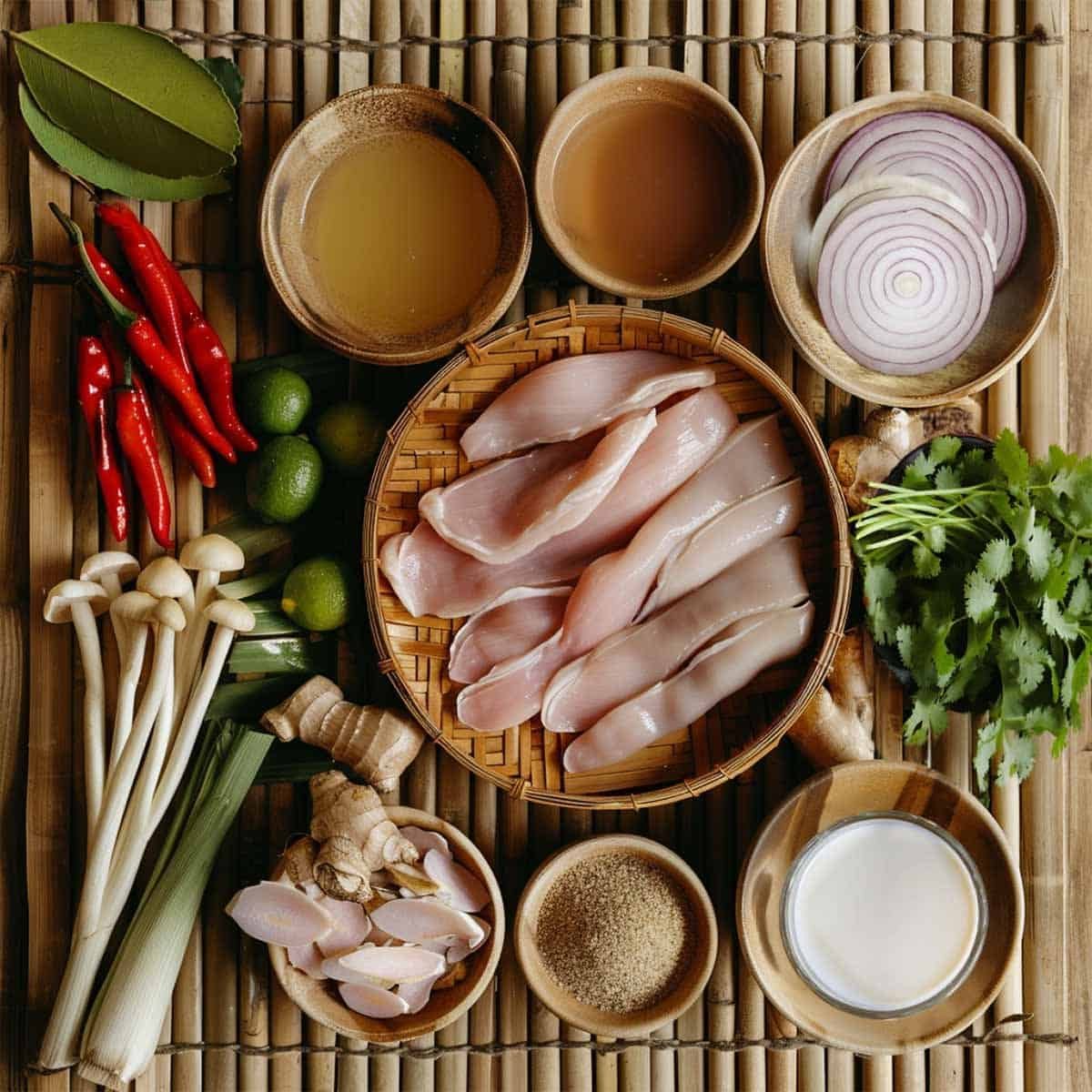
Galangal is the non-negotiable. Not ginger. The two look similar in the store but they are entirely different. Galangal is harder, denser, with a piney, almost medicinal quality that ginger cannot replicate. Three slices, about a quarter inch thick, bruised before they go in. You will not eat the slices. They give everything to the broth.
Lemongrass, one stalk, outer layers peeled away, cut into two-inch pieces and bent or bruised at the stalk so the oils release. Same rule. You are not eating it. You are extracting from it.
Kaffir lime leaves, five whole leaves, torn into pieces with the stem removed. The tearing releases the citrus oils. Do not skip it. Do not substitute regular lime zest. Find kaffir lime leaves fresh or frozen. They keep in the freezer for months.
Coconut milk, two cups, full fat from a can. Not light. The richness is the point. Aroy-D or Chaokoh are reliable Thai brands. Thin, watery coconut milk will give you a thin, watery soup.
Chicken broth, two cups. Chicken breast, one pound, thinly sliced, for the soup’s protein. Mushrooms, one cup sliced, optional alongside the chicken.
Fish sauce, three tablespoons, for salt and depth. Lime juice, two tablespoons, added at the very end. Sugar, one teaspoon, to balance. Thai bird’s eye chilies, three, smashed. Sliced onions, half a cup. Cilantro, chopped, for garnish. Optional: cherry tomatoes and sliced red bell pepper for color.
VISUAL WALK THROUGH
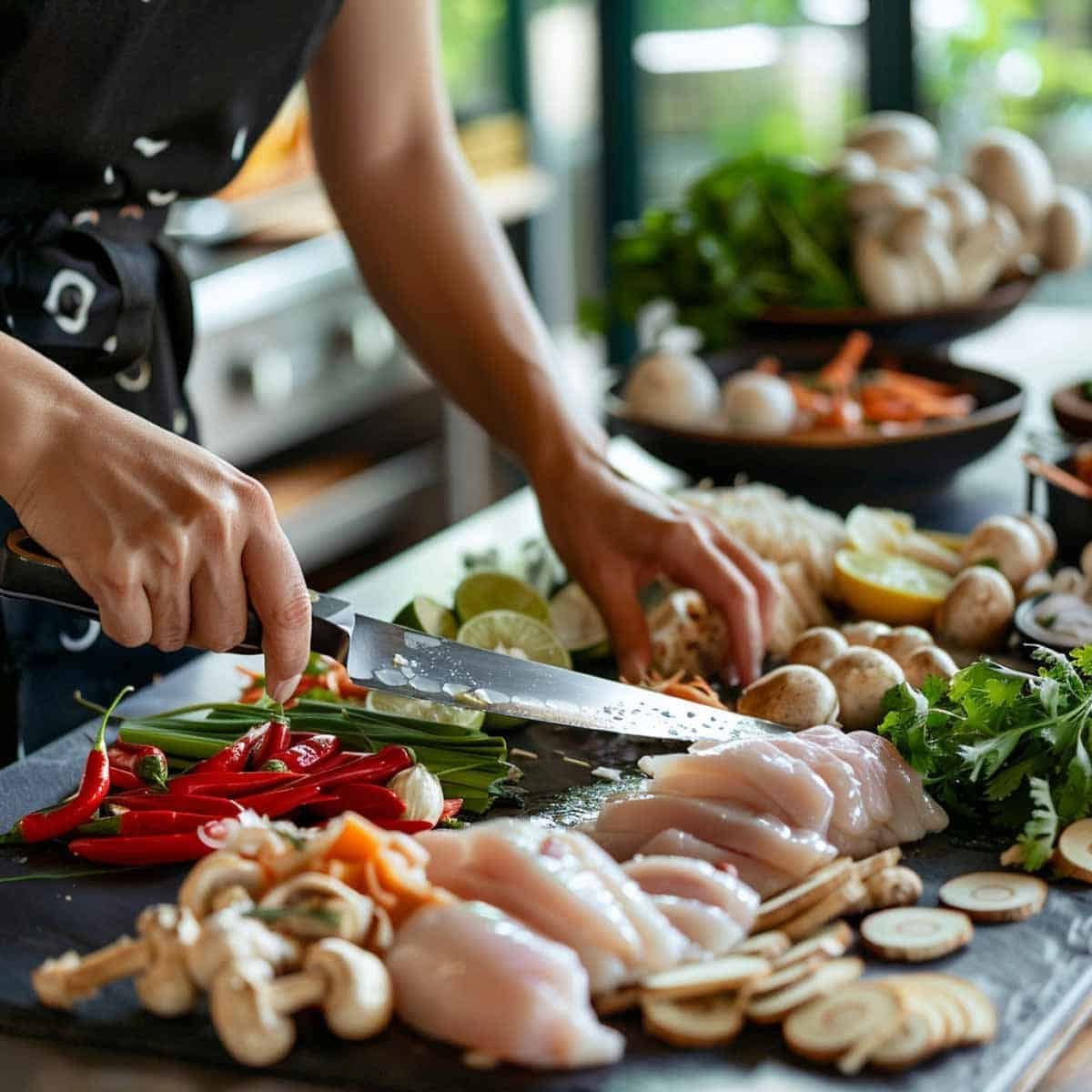
Step 1. Prepare the ingredients.
Rinse the chicken breast and slice it thinly against the grain, about a quarter inch thick. Clean and slice the mushrooms. Slice the galangal thin and bruise each piece with the flat of the knife, three firm presses. Peel the outer layers from the lemongrass, cut into two-inch pieces, and crush each piece with the back of the knife. Tear the kaffir lime leaves into pieces, removing the stem. Smash the Thai chilies with the flat of the knife. Set everything together on the board. The smell at this point will tell you something important is about to happen.
Step 2. Prepare the broth and infuse the aromatics.
In a large pot, pour the chicken broth and add one cup of coconut milk. Place the pot over medium heat and stir gently until the coconut milk is fully incorporated. Bring to a gentle simmer. Add the lemongrass, galangal, torn kaffir lime leaves, and smashed Thai chilies. Stir gently and allow them to simmer together for about five minutes. Do not rush this step. The broth is building its foundation.
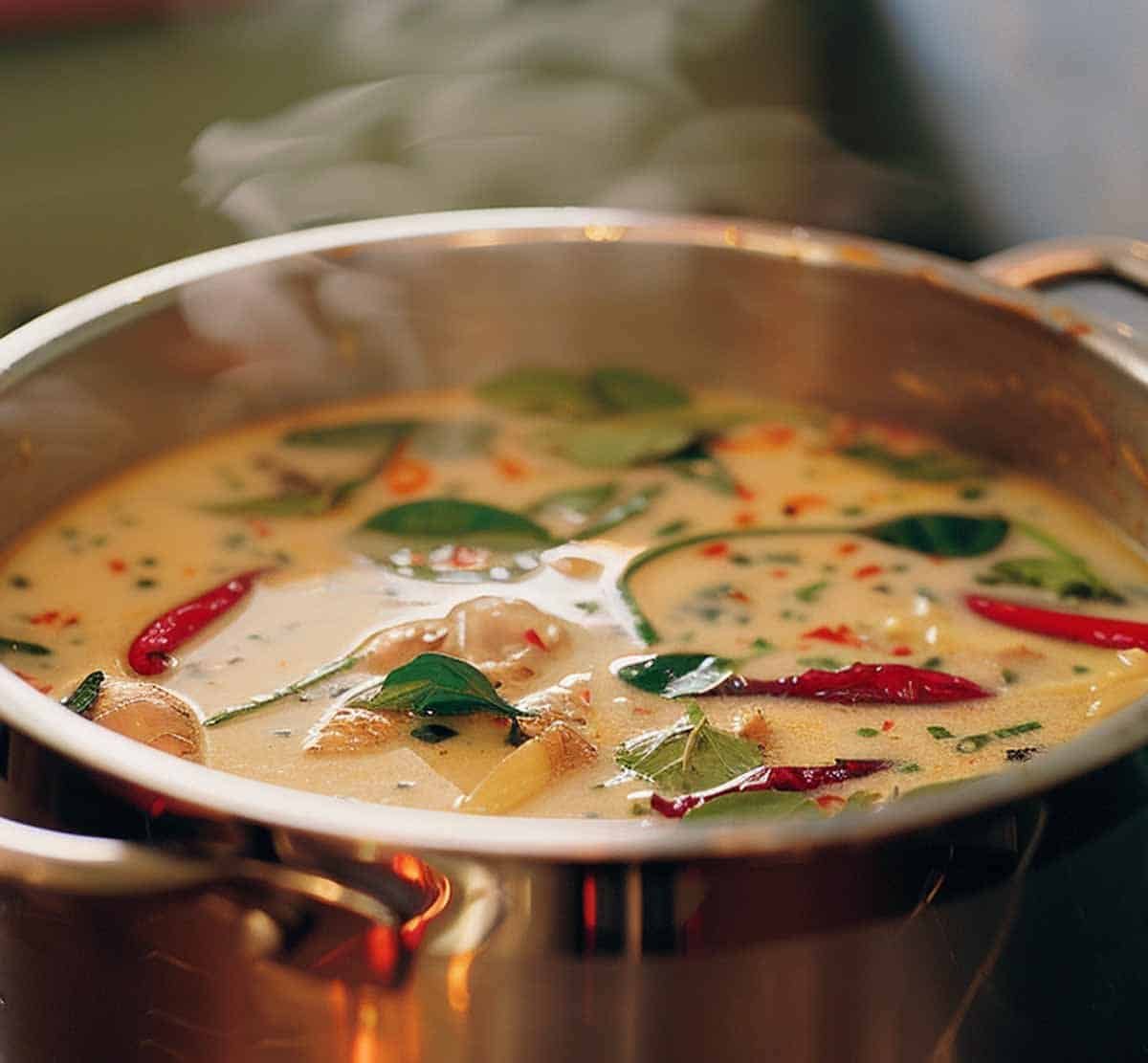
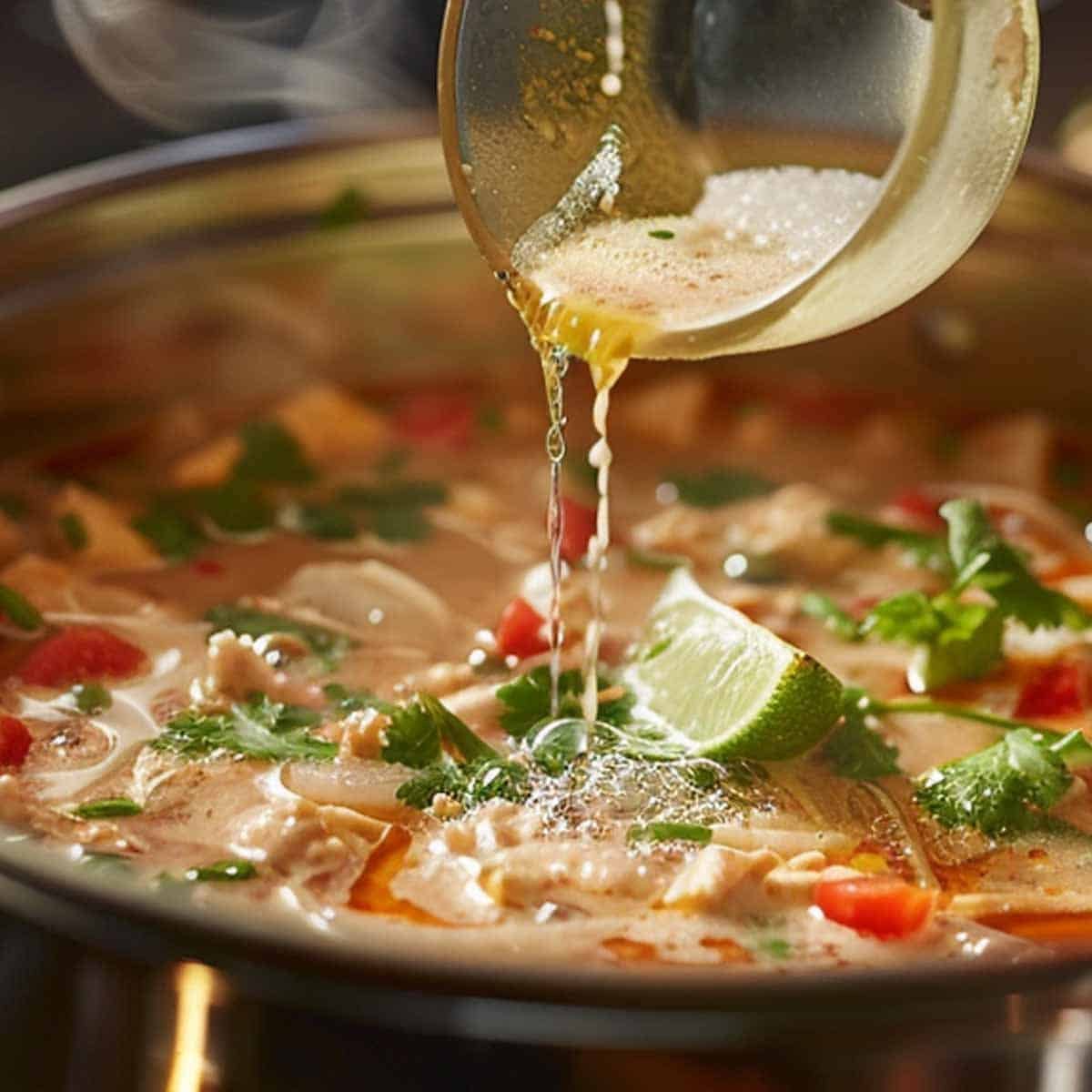
★ Step 3. Add remaining coconut milk, then chicken and vegetables. This is What Makes the Difference.
Pour in the remaining coconut milk, stirring as it goes. Maintain medium-low heat. You are not boiling this soup. You are warming it. A hard boil breaks the coconut milk and the broth turns grainy. Add the sliced chicken, mushrooms, and sliced onions directly to the simmering broth. Stir gently to combine. Continue to simmer uncovered, stirring occasionally, until the chicken is fully cooked and no longer pink inside, about ten to fifteen minutes.
Step 4. Season and finish.
Stir in the fish sauce, starting with one tablespoon and adjusting to taste. Add the sugar. Add cherry tomatoes and red bell pepper if using, and cook for two to three minutes until just tender. Remove from heat. Squeeze the lime juice in last. This is what brightens everything and lifts the richness of the coconut milk. Taste and adjust. Using tongs or a slotted spoon, remove and discard the galangal, lemongrass, kaffir lime leaves, and chilies. Ladle into warm bowls, scatter fresh cilantro generously, and serve immediately.
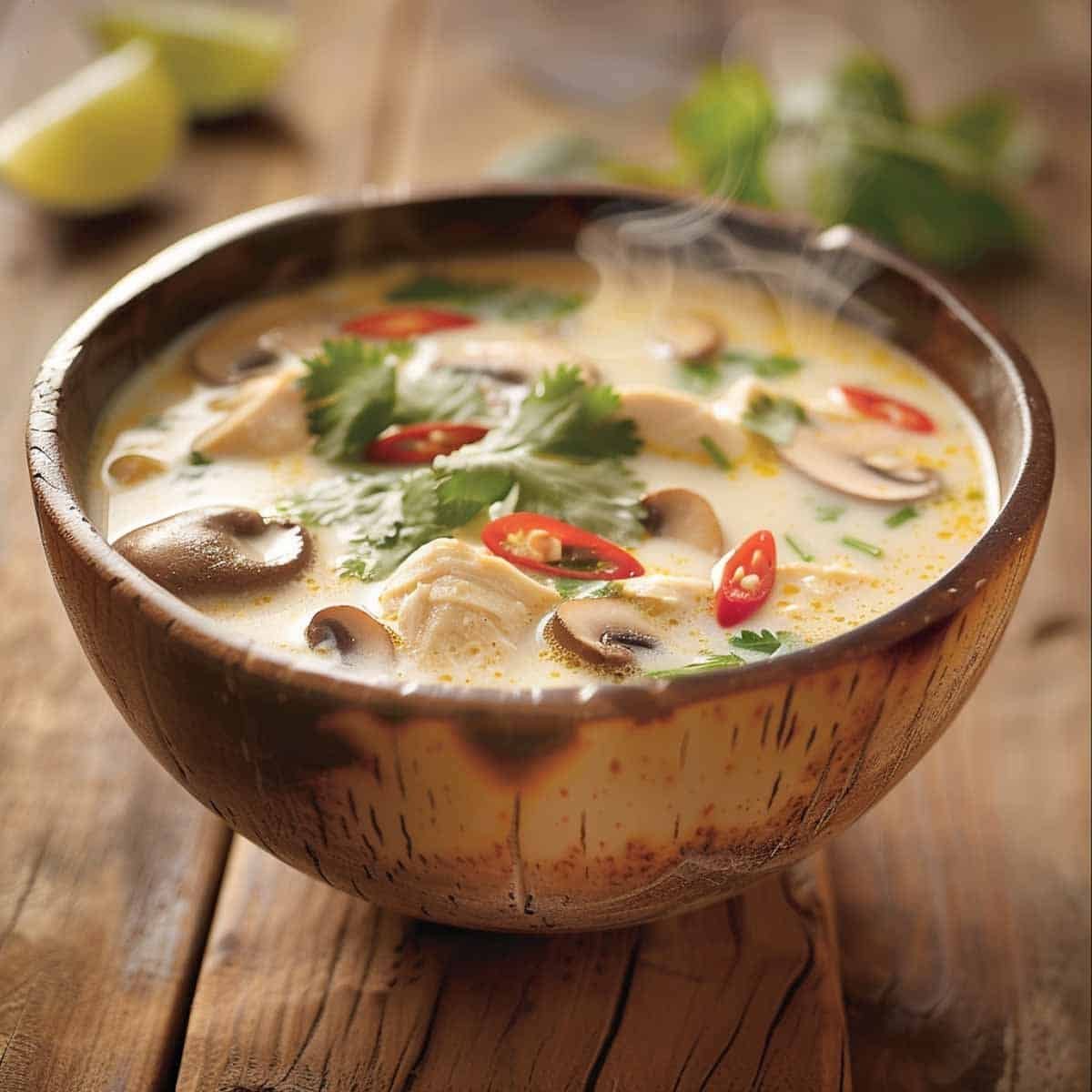
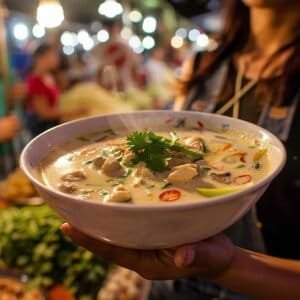
Thai Coconut Chicken Soup (Tom Kha Gai)
Equipment
- Medium heavy pot
- Sharp knife
- Ladle
Ingredients
- 2 cups coconut milk
- 2 cups chicken broth use vegetable broth for a vegetarian version
- 1 pound chicken breast thinly sliced (or use equivalent amount of mushrooms for a vegan version)
- 1 stalk lemongrass cut into 2-inch pieces and smashed
- 3 slices galangal about ¼ inch thick
- 5 kaffir lime leaves torn into pieces (remove stem)
- 3 tablespoons fish sauce substitute soy sauce for a vegetarian version
- 2 tablespoons lime juice
- 1 teaspoon sugar
- 3 Thai chilies
- ½ cup sliced onions
- 1 cup sliced mushrooms optional
- ¼ cup cilantro chopped for garnish
- Optional: cherry tomatoes and/or red bell pepper slices for added color and texture
Instructions
Prepare the Ingredients:
- Chicken and Mushrooms:Place it on a cutting board and slice it against the grain into thin strips about 1/4 inch thick. If using mushrooms, clean them with a damp cloth or by quickly rinsing and patting them dry. Slice them thinly.
- Lemongrass:Cut off the root end of the lemongrass stalks and remove any tough outer layers until you reach the tender, pale yellow part. Crush with the back of your knife. Cut the lemongrass into 2-inch pieces.
- Galangal and Thai Chilies:Peel the galangal and slice it thinly into rounds. Use about 4-5 slices, depending on their size. Thai chilies can vary in heat; if you prefer a milder soup, remove the seeds.
- Prepare the Broth: In a large pot, pour the chicken broth and add 1 cup of coconut milk. Place the pot over medium heat and stir gently until the coconut milk is fully incorporated into the broth. Bring the mixture to a gentle simmer, stirring occasionally to prevent sticking.
- Infuse the Broth: Once the broth is simmering, add the prepared lemongrass pieces, sliced galangal, kaffir lime leaves, and Thai chilies to the pot. Stir gently to distribute the ingredients evenly in the broth. Allow them to simmer together for about 5 minutes.
- Introduce the Chicken and Vegetables: Carefully add the sliced chicken (or mushrooms) and the sliced onion to the simmering broth. Stir gently to combine. Pour in the remaining coconut milk. Adjust the heat slightly to maintain a gentle simmer.
- Cook Until Tender: Continue to simmer the uncovered soup, stirring occasionally, until the chicken is fully cooked and no longer pink inside (about 10-15 minutes for chicken). If using mushrooms, they should be tender and cooked through.
- Balance the Flavors: Add fish sauce and sugar.
- Optional Vegetables: Add cherry tomatoes and thinly sliced red bell pepper to the simmering soup if desired. Cook for 2-3 minutes until the tomatoes soften, and the bell pepper slices are tender-crisp.
- Remove Aromatic Herbs: Remove the pot from the heat once the soup is fully cooked. Using tongs or a slotted spoon, carefully remove and discard the slices of galangal, lemongrass pieces, kaffir lime leaves, and any Thai chilies.
- Garnish and Serve Hot: Ladle the aromatic Tom Kha Gai into bowls. Garnish each serving generously with freshly chopped cilantro leaves. Final touch, add fresh lime juice.
Notes
Nutrition
LET’S GET THIS RIGHT
Why does my Thai coconut chicken soup taste flat?
The lime juice went in too early or did not go in at all. Lime is what lifts the richness of the coconut milk and makes the soup taste alive. Squeeze it in at the very end, after the heat is off, and taste immediately. If it still tastes flat, add more fish sauce one teaspoon at a time. Flat usually means under-seasoned, not under-spiced.
Can I substitute ginger for galangal?
You can, but the soup will be a different dish. Galangal has a piney, floral quality that ginger does not carry. Ginger is warmer and more assertive. The soup will still be good. It will not be Tom Kha Gai. If you are making this for the first time, make the trip to the Asian grocery store and find the real thing.
Why did my coconut milk break and turn grainy?
The heat was too high. Coconut milk splits at a hard boil. Keep it at medium-low the entire time. If it breaks, lower the heat immediately, add a splash of fresh coconut milk, and stir slowly. It will not fully recover but it will come back enough to serve.
Do I eat the galangal and lemongrass?
No. They are too fibrous. They go in to flavor the broth and come out before serving. Most Thai households leave them in the bowl and everyone knows to push them to the side. Remove them before ladling if you prefer.
My soup is too sour. How do I fix it?
Add a small amount of coconut milk or a pinch of sugar and stir gently over low heat. The sweetness will round out the sour without erasing it. Add slowly and taste after each addition.
FLAVOR PROFILE
The first thing is the smell. Before the bowl reaches the table. Lemongrass and galangal coming off the steam, faintly citrus, faintly medicinal, something you cannot name exactly but recognize immediately as Thailand.
The first sip is rich. Coconut milk coats the back of the throat. Then the sour arrives, lime and fish sauce together, bright and clean against all that richness. The galangal is underneath everything, quiet and piney. The kaffir lime leaf is even quieter. You would not know it was there if it was not.
The chicken is tender. The mushrooms have absorbed the broth and give it back with every bite. The chili, if you added it, arrives last. A slow heat that builds and then fades.
Thai coconut chicken soup does not shout. It settles. And then it stays with you for the rest of the evening.
My mother would taste it once before she brought it to the table. Just once. Then she would set it down and sit. There was nothing more to do. The soup had done what it was supposed to do.
SUSIE’S KITCHEN NOTES
Buy your coconut milk in cans, not cartons. Carton coconut milk is diluted and processed for drinking. It does not have the fat content or the body that a soup like this needs. Full-fat canned coconut milk only. Shake the can before you open it. Aroy-D and Chaokoh are the brands I trust.
The order matters. Aromatics in broth first, steep, then coconut milk, then chicken. If you add the coconut milk too early and then bring everything up to temperature together, the galangal and lemongrass do not have enough time to give the broth what they have. Five minutes of steeping in plain broth before the coconut milk arrives makes a real difference.
Kaffir lime leaves freeze beautifully. Buy a bag, use what you need, freeze the rest in a zip-lock. They go straight from freezer to pot, no thawing needed. Same with galangal. These ingredients can be hard to find fresh consistently, but frozen works just as well in a cooked dish like this.
If you want more heat, add the bird’s eye chilies whole and bruised at the beginning with the other aromatics. They will give the broth a steady warmth without making the soup aggressively spicy. For serious heat, slice them. For a hint, leave them whole and remove before serving.
PAIRING SUGGESTIONS
Thai coconut chicken soup is rich enough to be a meal on its own, but it pairs naturally with jasmine rice, the plainness of the rice gives the broth somewhere to go. The Thai cucumber salad alongside cuts through the richness and resets the palate between spoonfuls. If you are building a fuller table, the Thai basil pork brings the heat and the char that Tom Kha Gai does not carry, and the two dishes together cover every register. For a table built around soup, the Khao Tom shows what gentleness looks like in the other direction, both of them quiet and warm but in completely different ways. And for the drink alongside something this fragrant and soothing, the Thai iced tea is cold and sweet and always the right answer. My mother made this on the nights the air shifted. Make it on those nights.
FAQ
What is Thai coconut chicken soup called in Thai?
It is called Tom Kha Gai, ต้มข่าไก่. Tom means boiled. Kha means galangal. Gai means chicken. Three words that tell you exactly what is in the pot. The galangal is the defining ingredient, the one that makes this soup taste like nothing else.
What is the difference between Tom Kha Gai and Tom Yum?
Tom Yum is a clear broth, sharp, sour, spicy, and bright. Tom Kha Gai adds coconut milk, which makes the broth rich and silky and rounds out the sour. Both use lemongrass, galangal, and kaffir lime leaves. The coconut milk is the whole difference. Same bones, completely different character.
Can I make Thai coconut chicken soup ahead of time?
Yes, and it is often better the next day. The galangal and lemongrass deepen overnight in the refrigerator. Reheat it gently over low heat. Do not boil it. Add a fresh squeeze of lime juice just before serving to bring the brightness back.
Can I use ginger instead of galangal in Thai coconut chicken soup?
You can, but the soup will taste different. Galangal has a piney, floral quality that ginger does not carry. Ginger is warmer and more aggressive. The soup will still be good. It will not be Tom Kha Gai. Find galangal fresh or frozen at any Asian grocery store. It is worth the extra step.
Is Thai coconut chicken soup spicy?
It does not have to be. Traditional Tom Kha Gai is mild compared to many Thai soups. The coconut milk softens everything. Bird’s eye chilies are added to taste. Leave them out entirely for no heat. Add two whole bruised chilies for warmth. Slice them for real heat. You control it.
What mushrooms are best for Thai coconut chicken soup?
Straw mushrooms are traditional and worth finding at an Asian grocery store. Oyster mushrooms are a close second, they pull apart easily by hand and absorb the broth well. Button mushrooms work in a pinch. Whatever you use, do not overcook them. They go in with the chicken and come out tender, not soft.
How do I keep coconut milk from splitting in Thai coconut chicken soup?
Keep the heat at medium-low the entire time. Coconut milk splits at a hard boil, the fat separates and the broth turns grainy. A gentle simmer is all this soup ever needs. If you see it starting to bubble aggressively, pull the heat down immediately. Same rule applies when reheating leftovers.