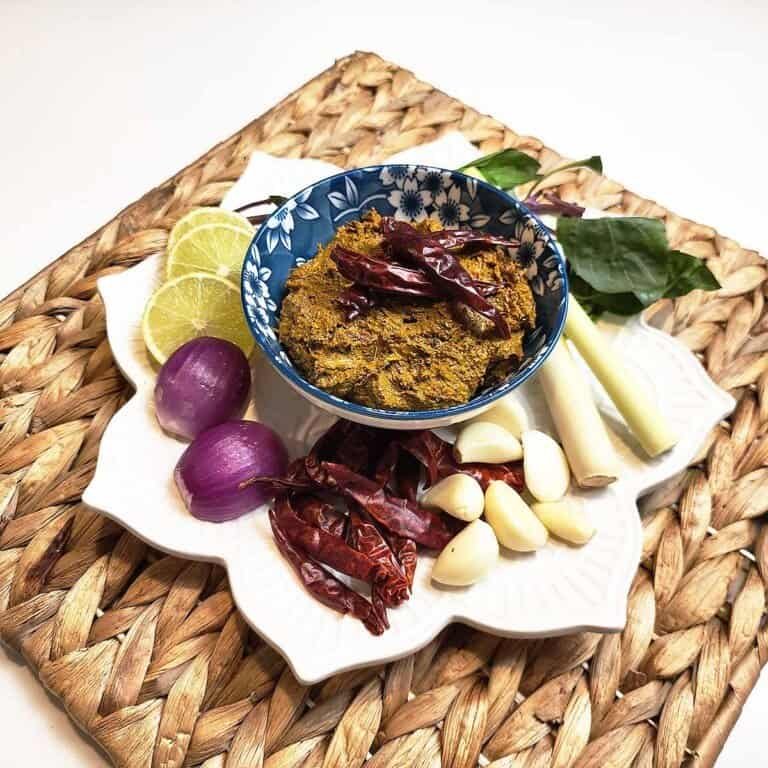
What Is Thai Basil Pork?
This Thai basil pork recipe, Pad Kra Pao Moo, is ground pork stir-fried fast and hot with garlic, chilies, fish sauce, and oyster sauce, finished with holy basil. Ten minutes. One pan. The fried egg on top is not optional. In Thailand, this is the dish everyone knows how to make. And the one everyone orders anyway.
NOTE FROM SUSIE
Sawasdee Kha, and Hello.

There is a restaurant near the night market in Korat. Plastic chairs. Two fluorescent lights. A woman who never wrote anything down.
She made Pad Kra Pao Moo the same way every time. You could hear it from the street, the wok catching the oil, then the garlic, then everything else happening fast. You had maybe forty seconds between the chilies hitting the pan and the basil going in. She never rushed. She never hesitated. Those are not the same thing.
My father ate it late. After work, after everything. He would come in and there would be rice in the cooker and he would make this, just this, standing at the stove in his undershirt. The whole apartment smelled like it for an hour after.
I did not understand then that he was cooking from memory. I do now.
Make it hot. Do not crowd the pan. And use holy basil if you can find it. It is not the same dish without it.

What’s In This Page
“You could hear it from the street.”
— Her Hands His EyesWHAT IS THAI BASIL PORK?
Pad Kra Pao Moo is Thailand’s most ordered dish. Not an exaggeration. Walk into any Thai restaurant, any food stall, any school cafeteria, and pad kra pao is on the menu. Pad means stir-fry. Kra pao is holy basil, the specific herb that gives this dish its name and its character. Moo is pork.
This Thai basil pork recipe is fast food in the original sense, cooked to order, over very high heat, in under ten minutes. It belongs to the category of Thai cooking called ahaan jaan diaw, which means one plate meal. Rice underneath. Everything else on top. The fried egg, kai dao, goes on last, crispy-edged and runny in the center, and it is considered part of the dish, not a garnish.
What makes a Thai basil pork recipe authentically Thai is the holy basil. Not Thai basil. Not Italian basil. Holy basil, kra pao, has serrated leaves, a clove-like fragrance, and a peppery bite that softens when it hits a hot pan. It is not the same as any other basil and there is no substitute that gets you to the same place.
The wok hei, the breath of the wok, is the other thing. High heat. Fast hands. The smell of something slightly scorched in the best possible way. According to the Oxford Companion to Food, stir-fried dishes cooked over intense heat in a wok are among the most technically demanding preparations in East and Southeast Asian cooking, the high heat and speed required producing results that lower-temperature methods cannot replicate.
My father made it late, after work, after everything. The whole apartment smelled like it for an hour after. I did not understand then that he was cooking from memory.
WHAT YOU’LL NEED
Ground pork is the standard for this Thai basil pork recipe and the right choice. Eighty percent lean, twenty percent fat.The fat renders into the pan and becomes part of the sauce. Leaner pork dries out. Do not use extra-lean. You can also use a coarser grind or chop the pork yourself if you want more texture in the final dish.
Holy basil is the ingredient this dish is named for and the one most often substituted incorrectly. Find it at any Asian grocery store, it will be labeled holy basil or kra pao. The leaves are slightly narrower than Thai basil, often with a reddish tinge at the stem. If you genuinely cannot find it, Thai basil is the closest stand-in. Italian basil is not a substitute, the flavor profile is entirely different, and the dish will taste like something else.
Garlic and fresh chilies go in together first. Thai bird’s eye chilies are traditional, small, very hot, and important. Four to six depending on your heat preference. Smash them roughly rather than mincing fine. You want pieces, not paste. The garlic goes in the same way, smashed, not minced. Rough texture means better char.
The sauce is three things: fish sauce, oyster sauce, a small splash of dark soy sauce for color. That is it. No cornstarch. No sugar unless the dish tastes sharp to you, in which case half a teaspoon of palm sugar rounds it. Taste before you add anything extra.
Neutral oil with a high smoke point, vegetable, rice bran, or lard if you have it. Lard is what the street stalls use. It changes the flavor in a way that’s worth knowing about.
The egg is fried separately in very hot oil until the whites blister and the edges go crispy and brown while the yolk stays soft. This is kai dao, literally star egg, for the way the white spreads out. For the same fast-wok logic applied to a different protein, try my Thai Basil Chicken.
VISUAL WALK THROUGH
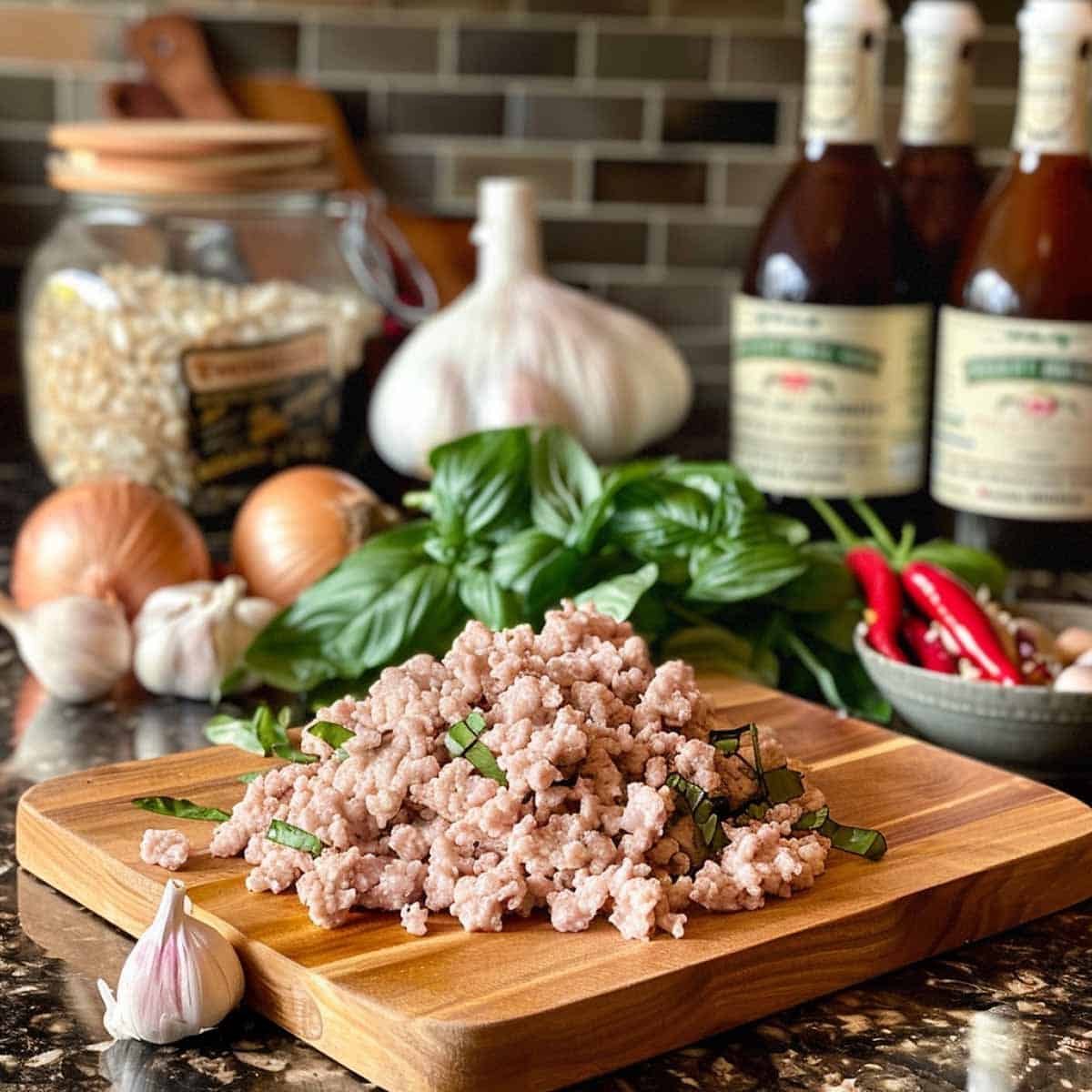
Step 1: Prep Everything Before You Turn on the Heat
This Thai basil pork recipe moves too fast to stop and measure once the wok is hot. Have the pork out, the sauce mixed in a small bowl, the garlic and chilies smashed, the basil leaves picked and ready. Once the oil goes in, you have about sixty seconds before the garlic starts to color. Prep everything first. Nothing else matters until everything is beside the stove.
Step 2: Heat the Wok
Use your largest pan or wok. High heat. Let it get properly hot before the oil goes in, thirty seconds over a high flame. Add a tablespoon of oil and let it run around the pan. The oil should shimmer immediately. If it does not, the pan is not ready. Keep waiting.

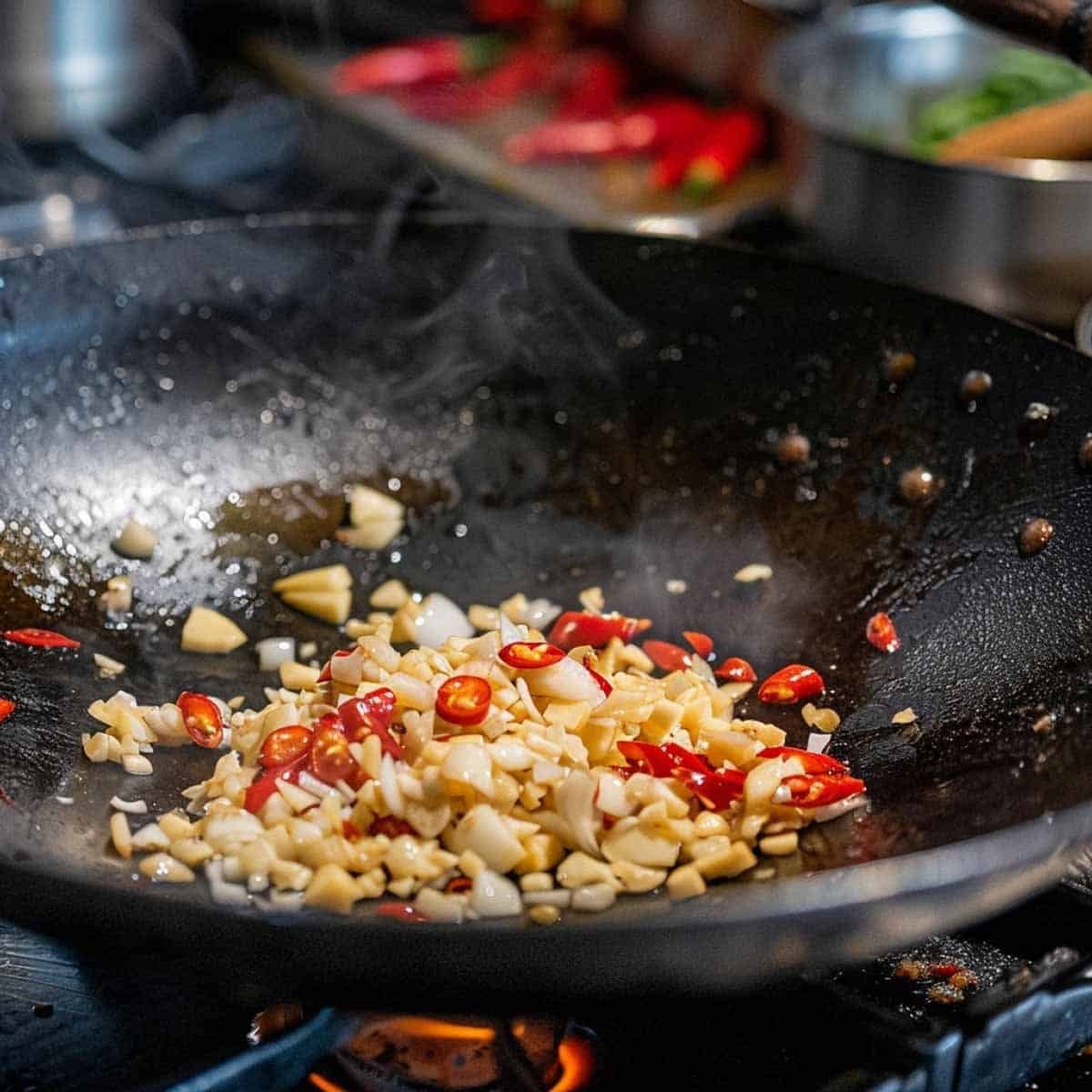
★Step 3: Fry the Garlic and Chilies
This is What Makes the Difference.
Add the smashed garlic and chilies at the same time. Stir immediately. They should sizzle hard on contact. Keep them moving, you want them fragrant and beginning to color, not burnt. Twenty to thirty seconds. This step releases the heat of the chilies and the sweetness of the garlic into the oil. Everything that goes in after carries that. Have the pork right next to the stove, ready to go in immediately.
Step 4. Add the pork and onion. Brown it, do not steam it.
Add the ground pork and sliced onion and press the pork flat against the pan. Let it sit for fifteen seconds before breaking it up. You want some browning, not just steaming. Break it apart and keep it moving. Cook until no pink remains and the edges begin to catch color, about five to seven minutes.
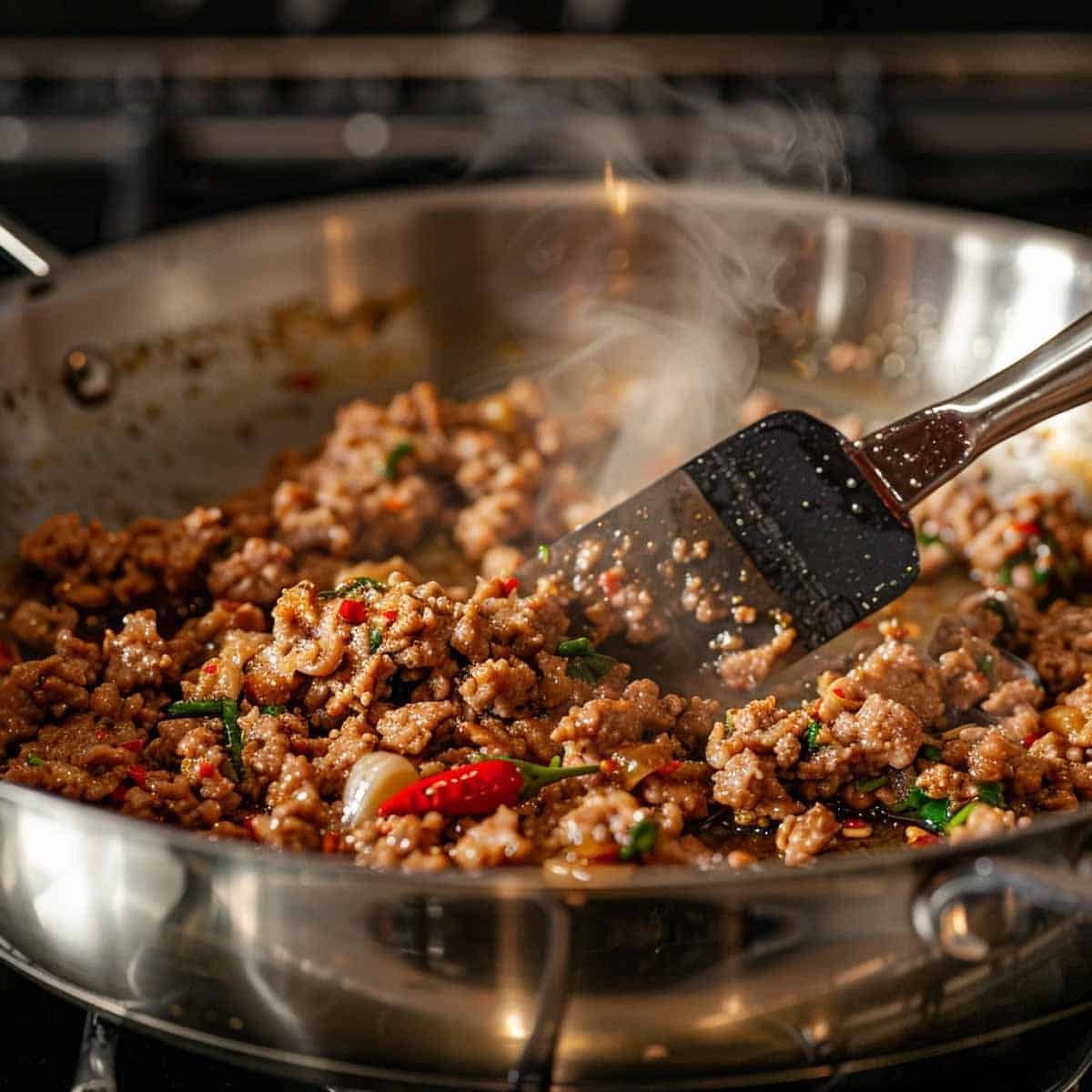
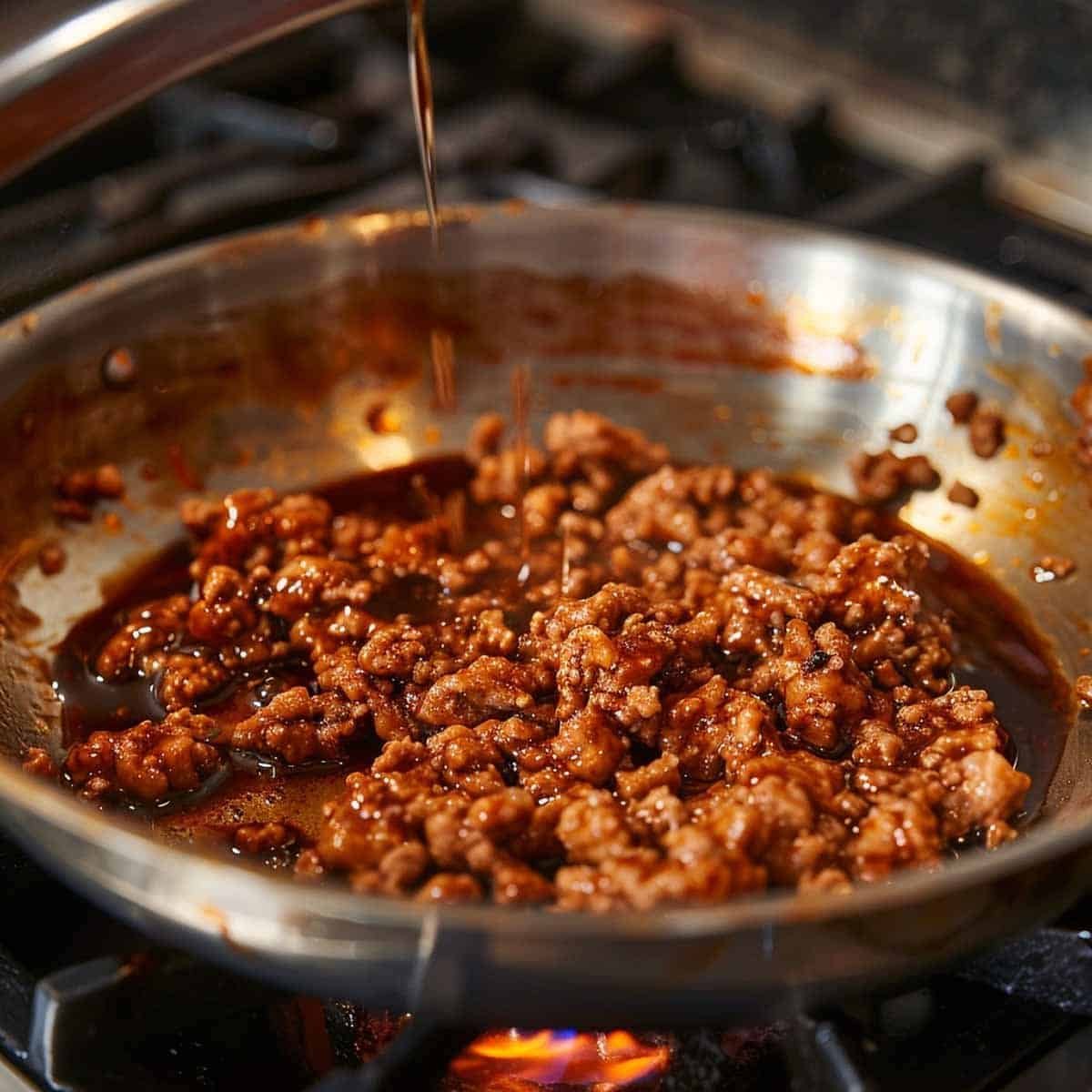
Step 5. Add the sauce. Toss to coat.
Pour the fish sauce, oyster sauce, soy sauce, sugar, and water over the pork. Toss to coat. The sauce will reduce fast, thirty seconds over high heat and it is done. Taste and adjust. Then turn off the heat.
Step 6: Basil Goes in Last
Turn off the heat. Add the holy basil all at once and fold it through the pork. The residual heat wilts it in about twenty seconds. It will turn dark and fragrant. Plate immediately over jasmine rice and slide the fried egg on top.


Thai Basil Pork Stir-Fry (Pad Kra Pao Moo)
Ingredients
- 1 lb ground pork
- 4 cloves garlic smashed, chopped
- 2-3 Thai bird’s eye chilies chopped
- 1 small onion sliced
- 1 cup holy basil leaves (kra pao) Thai basil (substitute)
- 2 tablespoons vegetable oil
- 1 tablespoon oyster sauce
- 1 tablespoon soy sauce
- 1 teaspoon fish sauce
- 1 teaspoon sugar
- 1 tablespoon water
- Steamed jasmine rice for serving
Instructions
- Prepare the IngredientsSmash and chop the garlic. Chop the chilies. Slice the onion. Mix the fish sauce, oyster sauce, soy sauce, sugar, and water together in a small bowl. Pick the basil leaves and set them beside the stove. Have everything ready before the heat goes on. This dish moves too fast to stop and measure.
- Fry the Garlic and Chilies, Then Add the PorkHeat the oil in a wok over high heat until shimmering. Add the smashed garlic and chilies. Stir for twenty to thirty seconds until fragrant and beginning to color. Add the ground pork and sliced onion. Press the pork flat against the pan and let it sit for fifteen seconds before breaking it apart. Cook until no pink remains and the edges begin to catch color, about five to seven minutes.
- Add the Sauce:Pour the sauce over the pork and toss to coat. Cook for thirty seconds over high heat until the sauce reduces and clings. Taste and adjust. Then turn off the heat.Add the Basil:With the heat off, add the holy basil all at once and fold it through the pork. The residual heat wilts it in about twenty seconds. Plate immediately over jasmine rice.
- Serving: Fry the Egg and Serve. In a separate pan, heat enough oil to almost submerge the egg. Crack the egg in when the oil is almost smoking. The white will blister and go crispy at the edges while the yolk stays soft. Thirty to forty seconds. Slide it on top of the rice and pork. The egg is part of the dish.
Video
Notes
- High heat is not negotiable in this Thai basil pork recipe. A medium flame gives you steamed, grey pork sitting in liquid. High heat gives you caramelized, slightly charred pork with a sauce that clings. If your kitchen setup doesn’t allow for a very high flame, cook in smaller batches rather than crowding the pan and lowering the temperature.
- The sauce ratio is fish sauce and oyster sauce in roughly equal parts, with just enough dark soy for color. Don’t skip the dark soy, without it the dish looks pale and a little lost. If you only have regular soy sauce, it will work but the color won’t be the same.
- Holy basil wilts faster than you expect, and it keeps wilting after it leaves the heat. Don’t add it early. Don’t add it while the flame is still on. Off the heat, fold it in, plate within a minute. That’s the window.
- This Thai basil pork recipe is built for one or two servings cooked at a time. If you’re feeding four people, cook two batches back to back rather than doubling in the pan. A doubled batch drops the wok temperature and the whole character of the dish changes. The second batch will be ready before the first one is cold.
Nutrition
LET’S GET THIS RIGHT
Why is my Thai basil pork recipe watery instead of saucy?
The heat was too low, or the pan was too crowded. Water releases from the pork as it cooks, high heat evaporates it fast, low heat lets it pool. Cook in a single batch in a very hot pan. If you see liquid accumulating, turn the heat up and don’t touch the pork for thirty seconds. Let it reduce.
Can I use Thai basil instead of holy basil?
You can, and it will still taste good. But it won’t taste like pad kra pao. Holy basil has a clove-like, peppery quality that Thai basil doesn’t have. Thai basil is sweeter and more anise-forward. The dish will be different, not wrong, just different. If you’re near an Asian grocery store, look for holy basil first.
Why does my garlic burn before the pork is cooked?
Because it went in first and the pork went in too late. Once the garlic and chilies hit the hot oil, you have twenty to thirty seconds before they start to cross from toasted to burnt. Have the pork right next to the stove, ready to go in immediately after you stir the garlic once.
Is the fried egg really necessary in this Thai basil pork recipe?
In Thailand the answer is yes. Pad kra pao without kai dao is considered incomplete, like ordering it plain when you didn’t mean to. The runny yolk breaks over the rice and the pork and becomes part of the sauce. It is not a topping. It is a component.
How do I get the egg edges crispy without overcooking the yolk?
Very hot oil and speed. The oil needs to be almost smoking before the egg goes in. It will spit and blister immediately, that’s correct. Thirty to forty seconds and it’s done. Tilt the pan and spoon hot oil over the white to set it without flipping. The yolk stays soft.
FLAVOR PROFILE
The wok announces this Thai basil pork recipe before the plate arrives. Something hot and a little scorched — garlic, chili oil, the edge of something caramelized. It reaches you first.
Then the pork. Savory and deep, the oyster sauce giving it a low sweetness, the fish sauce underneath it all is holding everything together without showing itself. The dark soy is in there too, not tasted exactly, but felt. A darkness in the background.
The chilies build slowly. Not a single hit of heat but a steady climb that starts mid-bite and arrives fully about ten seconds after you’ve swallowed. Bird’s eye chilies work that way. They’re patient.
Holy basil comes in at the very end of each bite. Peppery. Faintly medicinal. A little like clove if clove were also a green thing growing in the sun. It is the note that makes this dish recognizable from fifty feet away and unreproducible with anything else.
The fried egg breaks over everything. The yolk runs into the rice and the pork and makes a third thing out of the two. That’s the whole meal right there.
SUSIE’S KITCHEN NOTES
Smash the garlic and chilies, don’t mince them. A knife or the flat of a cleaver against the cutting board, enough pressure to split them open. Rough, uneven pieces char differently in the pan, some edges go dark, some stay soft, and that variation is where the flavor lives. Uniformly minced garlic gives you uniform results. Uniform is not what this dish wants.
Lard makes it better. I know that’s not what people want to hear but it’s true. The street stalls in Thailand use lard and it gives the dish a richness and a particular kind of savory depth that vegetable oil doesn’t get to. Render a small amount of lard in the pan before you start, or use a tablespoon of lard in place of oil. You’ll notice immediately.
Don’t walk away. This Thai basil pork recipe takes ten minutes and it needs your attention for all ten of them. The garlic burns in thirty seconds. The pork goes from browned to overdone in two minutes. The basil goes from wilted to black in forty-five seconds. Stay at the stove. Nothing else matters until the egg is on the plate.
Clean the wok between batches. If you’re cooking for a group, wipe the wok with a paper towel between each batch and reheat it before the oil goes back in. Leftover char from the first batch will turn bitter in the second. Fresh pan, fresh batch. It takes thirty seconds and it’s worth it.
PAIRING SUGGESTIONS
This Thai basil pork recipe is a one-plate meal, and it doesn’t need much alongside it, jasmine rice underneath, fried egg on top, and that’s the complete dish. If you’re building a table, Thai Cucumber Salad provides the cool acidity that cuts through the heat and richness of the pork, and a light Thai rice soup on the side is how many Thai households round out a meal centered on pad kra pao. Thai Fried Rice uses the same fast-wok logic and makes a natural companion if you’re feeding more than two. Keep it simple. This dish doesn’t want competition, it wants rice and a little room to breathe.
FAQ
What makes a Thai basil pork recipe authentic?
Three things: holy basil, not Thai or Italian basil, very high heat, and a fried egg on top. Holy basil is what the dish is named for, kra pao, and it has a clove-like, peppery quality nothing else replicates. High heat gives you the wok char that defines the flavor. The fried egg with its crispy edges and runny yolk is considered part of the dish in Thailand, not a garnish.
What is the difference between holy basil and Thai basil in this recipe?
Holy basil has serrated leaves, a slightly reddish stem, and a peppery, clove-like fragrance that intensifies when cooked. Thai basil is sweeter and more anise-forward with smooth purple stems. They look similar but taste different. Pad kra pao is named for holy basil specifically, kra pao, and the dish changes character when you substitute. Thai basil is the closest stand-in. Italian basil is not.
Can I use chicken or beef instead of pork in this Thai basil pork recipe?
Yes. Ground chicken is the most common variation, pad kra pao gai, and follows the exact same technique. Ground beef works too, though it is less traditional. The sauce ratios stay the same. Chicken cooks slightly faster than pork so watch the pan. It can go from done to overdone quickly over high heat.
What does pad kra pao moo mean?
Pad means stir-fried. Kra pao is holy basil, the herb this dish is named for and built around. Moo is pork. So pad kra pao moo is stir-fried holy basil with pork. The name tells you exactly what is in it. In Thailand it is often written on menus simply as kra pao moo, the pad understood.
Why is my Thai basil pork recipe not spicy enough?
Add more bird eye chilies and do not remove the seeds. The seeds carry most of the heat. A traditional version in Thailand uses six to ten chilies per serving, significantly more than most recipes outside the country call for. Start with four and add more next time once you know where your heat tolerance sits. Smashing rather than mincing the chilies also releases more heat into the oil.
Can I make this Thai basil pork recipe ahead of time?
The pork can be cooked ahead and reheated, but the basil should be added fresh when you reheat it. Add a handful of fresh holy basil to the hot pork just before serving. The fried egg should always be made to order. It takes forty-five seconds and a cold fried egg is a different thing entirely from a hot one.