What Is Khao Tom?
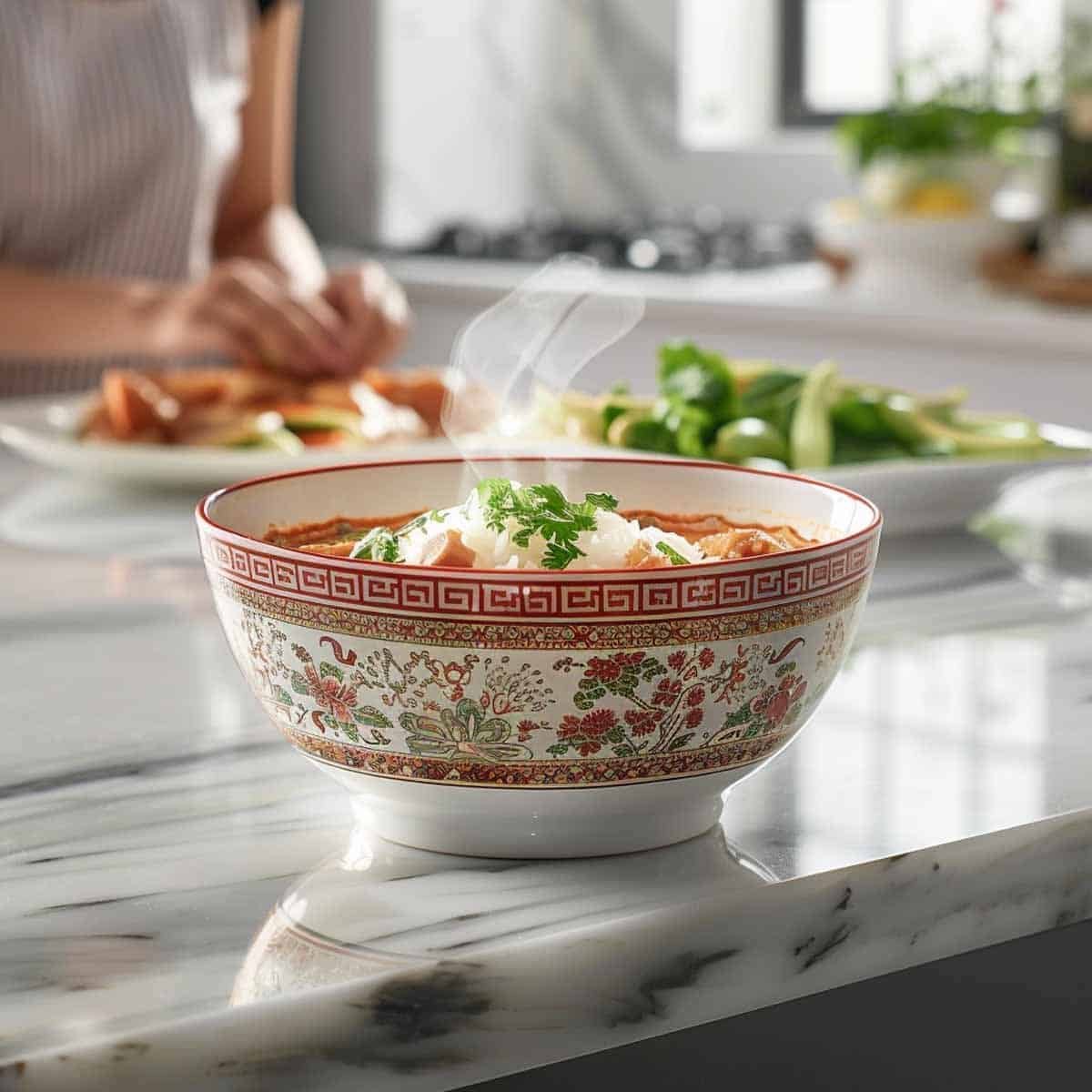
Thai rice soup, Khao Tom (ข้าวต้ม), is uncooked jasmine rice simmered in a fragrant chicken broth seasoned with fish sauce, soy sauce, sugar, white pepper, ginger, garlic, and lemongrass until the rice is completely soft and the broth is deeply flavored. It is finished with green onions, fried garlic, and a lime wedge alongside. Gentle, warm, and completely nourishing. My mother made this. That is the whole story.
NOTE FROM SUSIE

Sawasdee Kha, and Hello.
When I was not well as a child, my mother made Khao Tom. It was the dish that appeared when you needed something gentle and warm and completely nourishing. The rice soft in the broth, the ginger and lemongrass present, the fried garlic on top.
My father loved it too, any time of day, not just when someone was under the weather. It was simply a dish that made everything feel right. My mother would make it and the smell of it would move through the house, the broth simmering with the ginger and the garlic, quiet and warm and completely itself.
At the market the vendors kept large pots of it warm all morning, ladling into bowls to order with the toppings arranged alongside. I found it there many times as a child, that same warmth in a bowl, the same fried garlic smell, the same feeling that everything was going to be fine.
I still make this when I need what this dish gives. Some things have that quality. Khao Tom is one of them.

What’s In This Page
“I still make this when I need what this dish gives.”
— Her Hands His EyesWHAT IS KHAO TOM?
Thai rice soup, ข้าวต้ม, Khao Tom, is one of the most comforting and universally eaten dishes in Thailand. Khao means rice and tom means to boil, and the dish is exactly what the name says: rice simmered in broth until completely soft and porridge-like, seasoned with the aromatics and seasonings that make it unmistakably Thai. It is eaten for breakfast, for late night meals, when someone is unwell, and whenever a bowl of something warm and gentle is what the moment requires.
What makes Khao Tom distinct from plain rice porridge is the broth and the aromatics. Chicken broth seasoned with fish sauce, soy sauce, and a small amount of sugar produces a savory, slightly complex base. Ginger, garlic, and lemongrass simmer in the broth and give it the warm, aromatic quality that makes the soup smell like something deeply nourishing from the first moment it begins to cook. White pepper goes in during cooking and again at the table. The rice is uncooked when it goes into the broth and absorbs the flavor of the stock as it softens, becoming completely saturated with the broth rather than simply floating in it.
The garnishes are what complete Khao Tom: green onions sliced thin, fried garlic scattered over the top, and a lime wedge on the side for brightness. The fried garlic is the detail that most home cooks omit and should not. It adds a concentrated, slightly crispy savory note that floats on the surface of the soup and makes every spoonful better than the one before.
Khao Tom is found at every Thai street market, kept warm in large pots at vendor carts from early morning, ladled into bowls with toppings arranged alongside. According to the Oxford Companion to Food, rice porridge and rice soup preparations are among the oldest and most universally eaten dishes in all of Asia, found across China, Japan, Korea, Thailand, and Vietnam with each country’s version reflecting its own local seasonings.
My mother made this. That is the whole story, and it is enough.
WHAT YOU’LL NEED
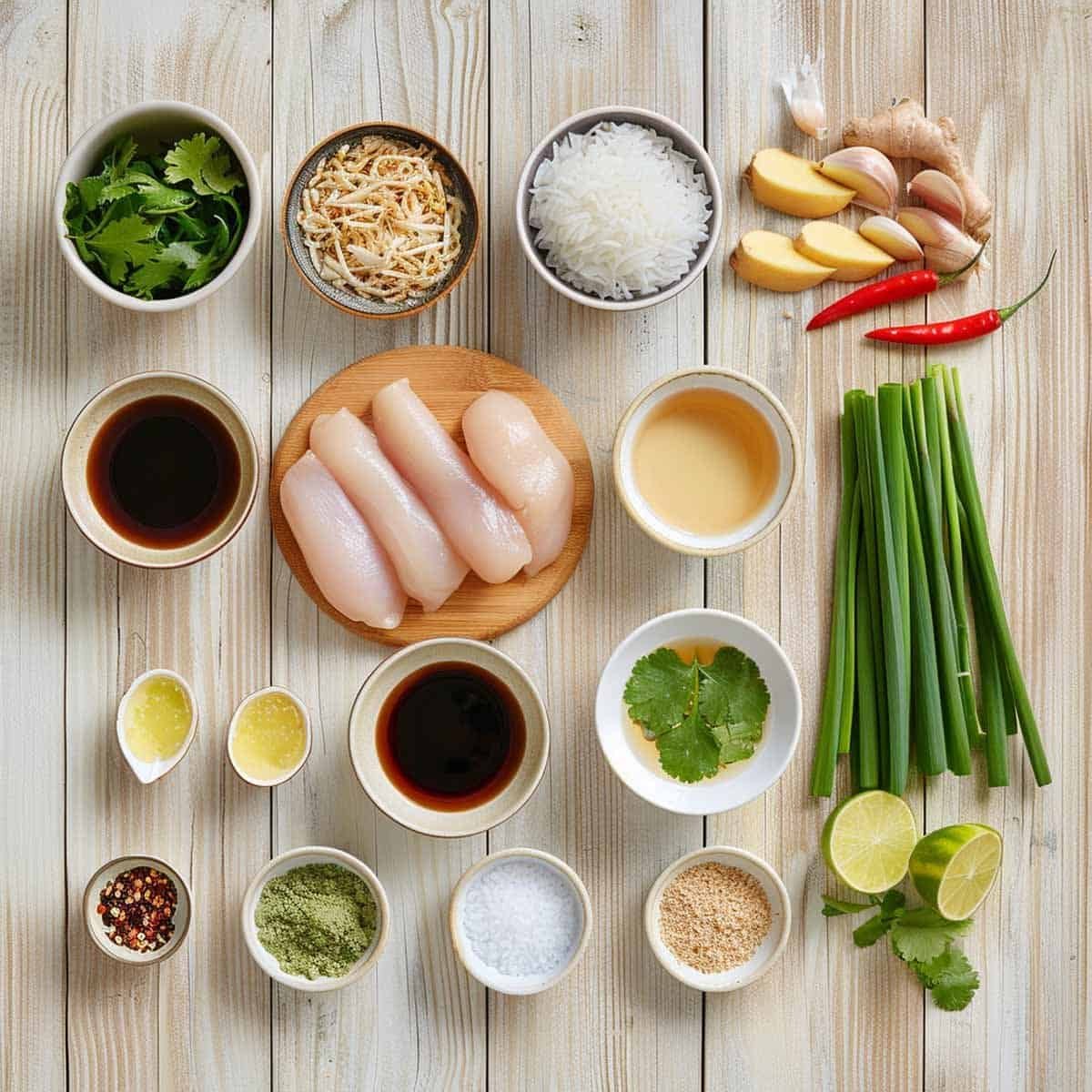
Uncooked jasmine rice goes into the broth raw, not pre-cooked. This is what gives Khao Tom its particular texture and flavor. The uncooked rice absorbs the broth as it simmers, becoming completely soft and saturated with the seasoned stock rather than simply rehydrating in hot water. The result is a soup where the rice and the broth taste of the same thing, completely unified. Adding chicken is totally optional.
Chicken broth, good quality, is the base. The better the broth, the better the Khao Tom. Homemade chicken stock produces the most flavorful result. A good quality store-bought broth works well. The broth is where all the flavor lives.
The seasonings go into the broth before the rice: fish sauce for savory depth, soy sauce for additional salt and color, a small amount of sugar to balance, and white pepper for warmth. These four together produce the seasoning profile that makes Khao Tom taste like Khao Tom rather than plain rice porridge.
Fresh ginger, sliced into coins. Fresh garlic, lightly crushed. Lemongrass, the lower stalk bruised and added whole. These three aromatics simmer in the broth for the full cooking time and are removed before serving. They give the broth its warm, fragrant, deeply nourishing quality.
For garnish: green onions, sliced thin. Fried garlic, made by frying thin-sliced garlic in a small amount of oil until golden and crispy. Lime wedges alongside. White pepper at the table. The fried garlic is not optional. It is the finishing detail that makes this soup.
VISUAL WALK THROUGH
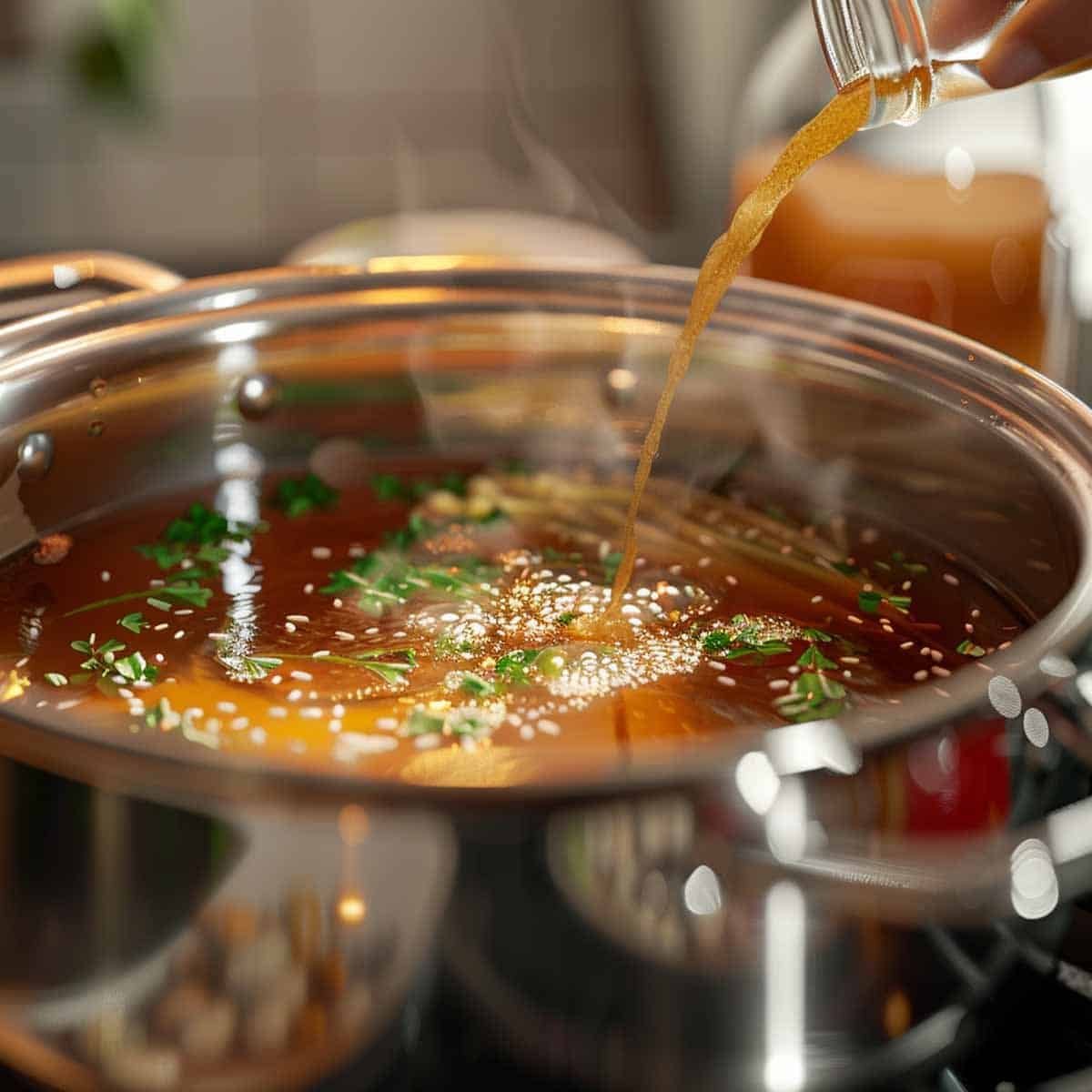
Step 1. Rinse the rice and build the broth.
Rinse jasmine rice in cold water until the water runs clear. Drain well. Bring chicken broth to a boil in a large pot. Add fish sauce, soy sauce, sugar, white pepper, ginger, lemongrass, and garlic. Reduce heat and simmer for ten minutes. This allows the ginger and lemongrass to infuse the broth before the rice goes in.
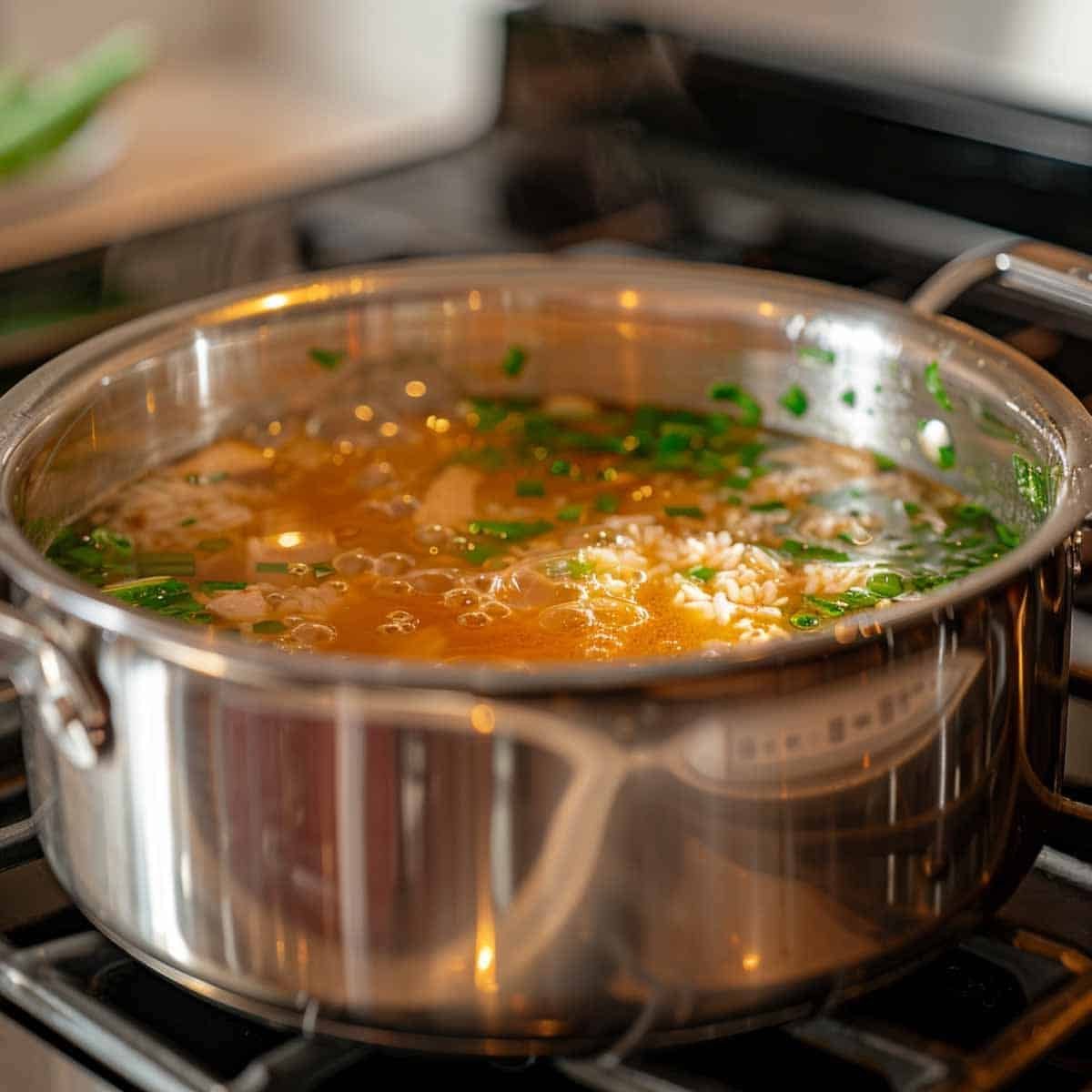
Step 2. Add the rice and simmer.
Stir in jasmine rice. Simmer for twenty-five to thirty minutes until the rice is tender and completely soft, stirring occasionally to prevent sticking.
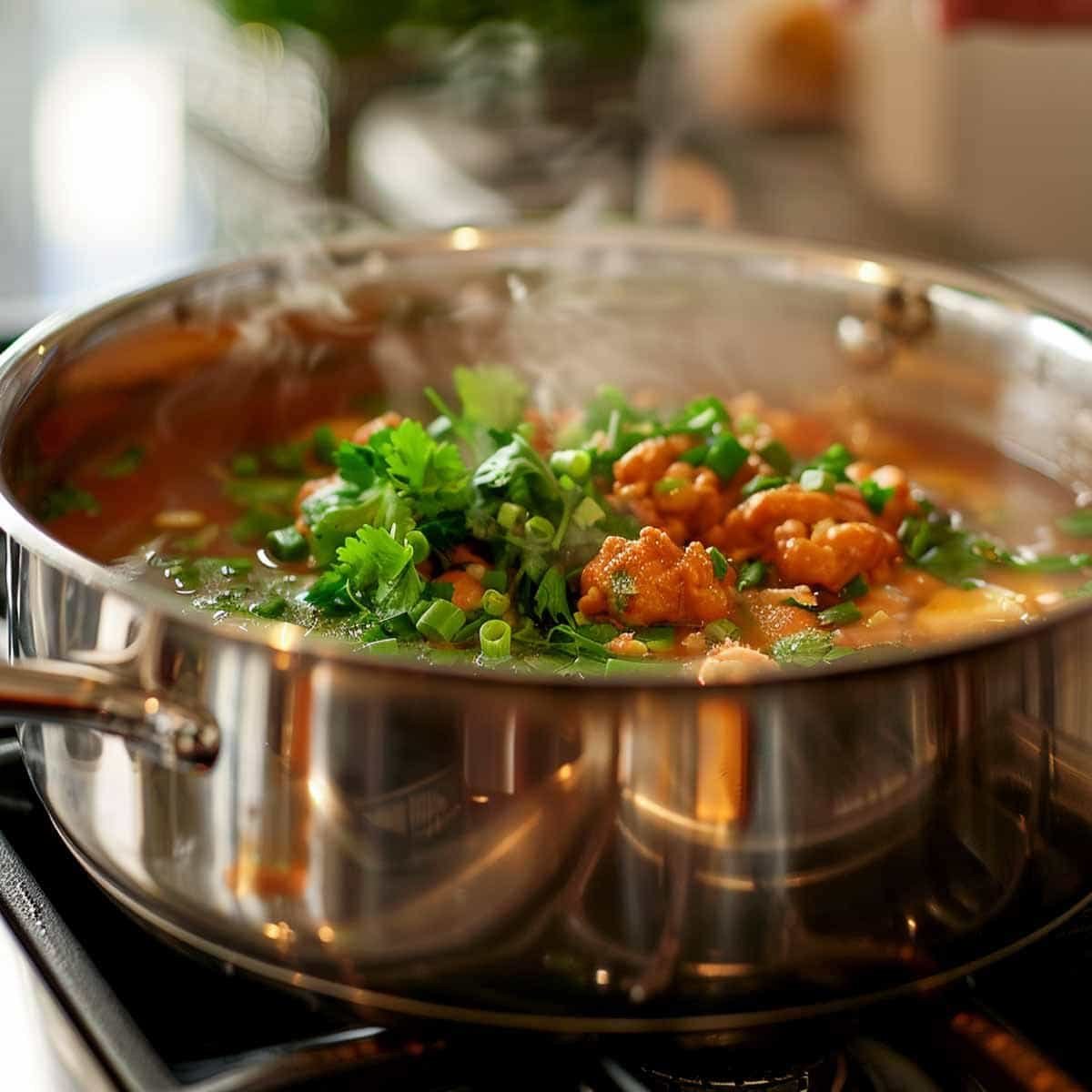
★ Step 3. Remove the aromatics and taste the broth. This is What Makes the Difference.
Remove lemongrass stalks and ginger coins before serving. Taste the broth. Adjust seasoning as needed.
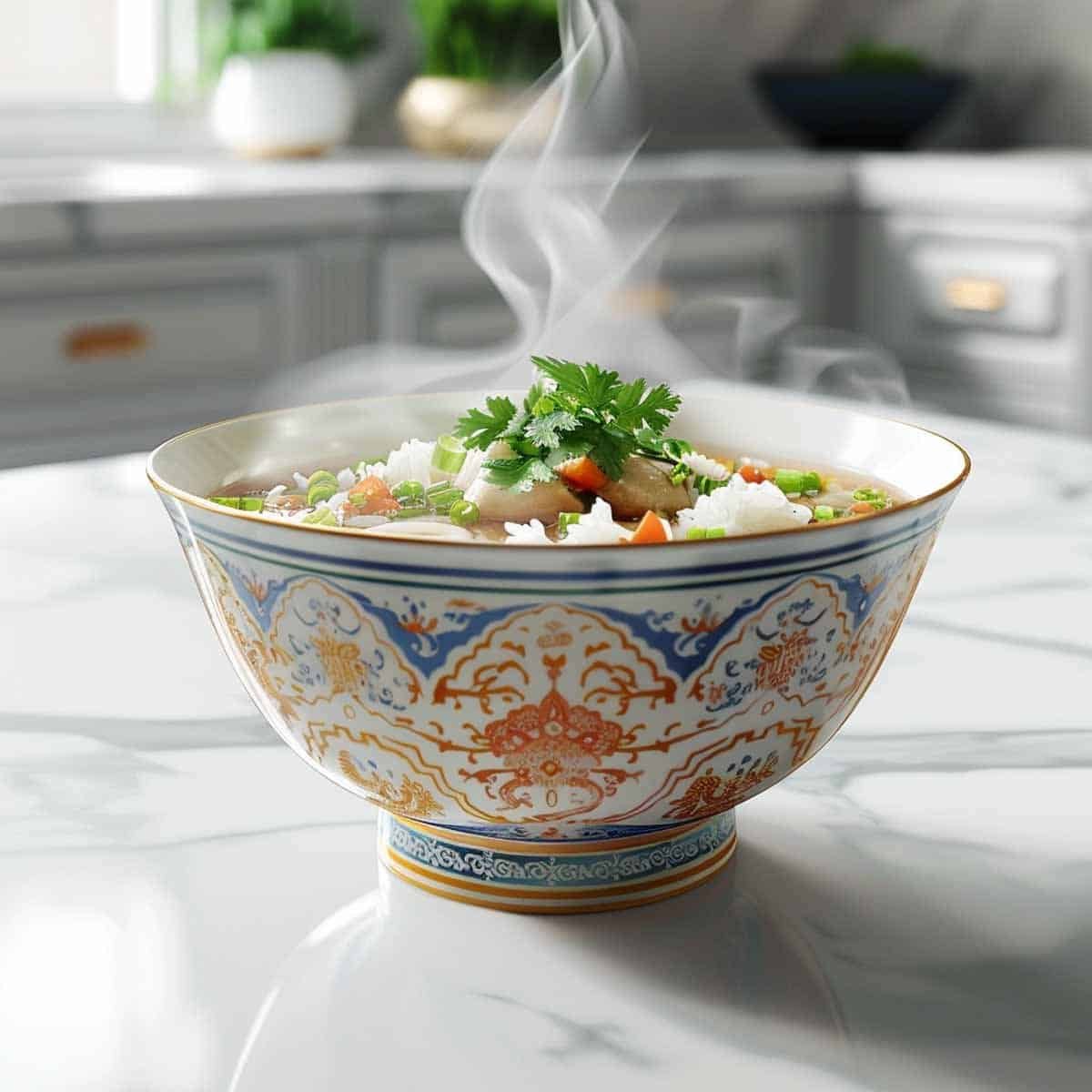
Step 4. Ladle into bowls and garnish generously.
Ladle the soup into bowls. Garnish with cilantro leaves, green onions, and a squeeze of fresh lime juice. Scatter the fried garlic generously over the top. White pepper at the table for those who want more warmth.

Thai Rice Soup( Khao Tom)
Ingredients
- 1 cup jasmine rice uncooked
- 6 cups chicken broth
- 2 tablespoons fish sauce
- 1 tablespoon soy sauce
- 1 teaspoon sugar
- 1/2 teaspoon white pepper
- 2 inches fresh ginger thinly sliced
- 2 garlic cloves minced
- 2 stalks lemongrass
- 2 green onions chopped
- 1/4 cup cilantro chopped
- 1/4 cup fried garlic optional, for garnish
- 1 lime cut into wedges
- 1-2 Thai chilies optional, sliced for garnish
- 2 tablespoons vegetable oil
Instructions
- Prepare the Rice: Rinse jasmine rice in cold water until the water runs clear. Drain well.
- Simmer Broth:Bring chicken broth to a boil in a large pot. Add fish sauce, soy sauce, sugar, and white pepper, ginger, lemongrass, and garlic. Reduce heat and simmer for 10 minutes.
- Add Rice Stir in jasmine rice. Simmer for 25-30 minutes until rice is tender.
- Season and Serve:Remove aromatics and taste the broth. Garnish with cilantro leaves, green onions, and a squeeze of fresh lime juice.
Notes
Nutrition
LET’S GET THIS RIGHT
Why is my Khao Tom bland?
The broth was not seasoned properly, or the aromatics did not have enough time to infuse. Taste the broth before the rice goes in and make sure it is already savory and fragrant. Add more fish sauce for salt, more white pepper for warmth. The aromatics need ten minutes of simmering before the rice joins them.
Why is my Khao Tom too thick?
The rice cooked for too long, or not enough broth was used. Add warm broth or water a ladle at a time and stir until the consistency is right. Khao Tom can range from thin and broth-forward to thick and congee-like depending on preference. Neither is wrong.
Can I add protein to Khao Tom?
Yes. Ground pork, thin-sliced chicken, or a soft-poached egg are all traditional additions. Ground pork is the most common, added to the broth with the rice and breaking apart as it cooks. Thin-sliced chicken is added in the last five minutes. A soft egg is placed in the bowl and the hot soup poured over it.
What is the difference between Khao Tom and jook or congee?
Khao Tom is a Thai rice soup where the rice is cooked until soft but still distinct, swimming in a seasoned, aromatic broth. Jook and congee are cooked for longer until the rice breaks down almost completely into a smooth porridge. Khao Tom has more broth and more visible rice grains. Congee is thicker and smoother. Khao Tom is lighter and more immediately refreshing from the aromatics.
Can I make Khao Tom ahead of time?
Yes. The soup keeps refrigerated for up to three days. The rice will continue to absorb the broth overnight and the soup will be significantly thicker the next day. Reheat over low heat and add warm broth or water to bring it back to the right consistency. Make the fried garlic fresh when reheating as it will have softened overnight.
FLAVOR PROFILE
The smell arrives before the bowl does. Ginger and lemongrass in simmering chicken broth, quiet and warm and specific. It is the smell of my mother’s kitchen when she made this. It is the smell of the vendor carts at the market in the morning. It is the smell that means everything is going to be fine.
The soup in the bowl is pale golden, the rice visible and soft, the green onions bright on top, the fried garlic golden and slightly crispy. The broth is clear around the rice.
The first spoonful is warm and savory, the broth seasoned through from the fish sauce and soy sauce, the ginger and lemongrass present as a warmth in the background rather than an identifiable flavor. The rice is completely soft and fully flavored from cooking in the broth. The fried garlic arrives crunchy and concentrated, its flavor deeper and more complex from the oil than raw garlic would ever be. The green onion is fresh and mild. The white pepper adds warmth at the finish. The lime, squeezed at the table, sharpens everything gently.
It is a gentle dish. That is the whole point. Gentle and warm and completely nourishing. My mother knew this. The market vendors knew this. Some bowls are for comfort. This is one of them.
SUSIE’S KITCHEN NOTES
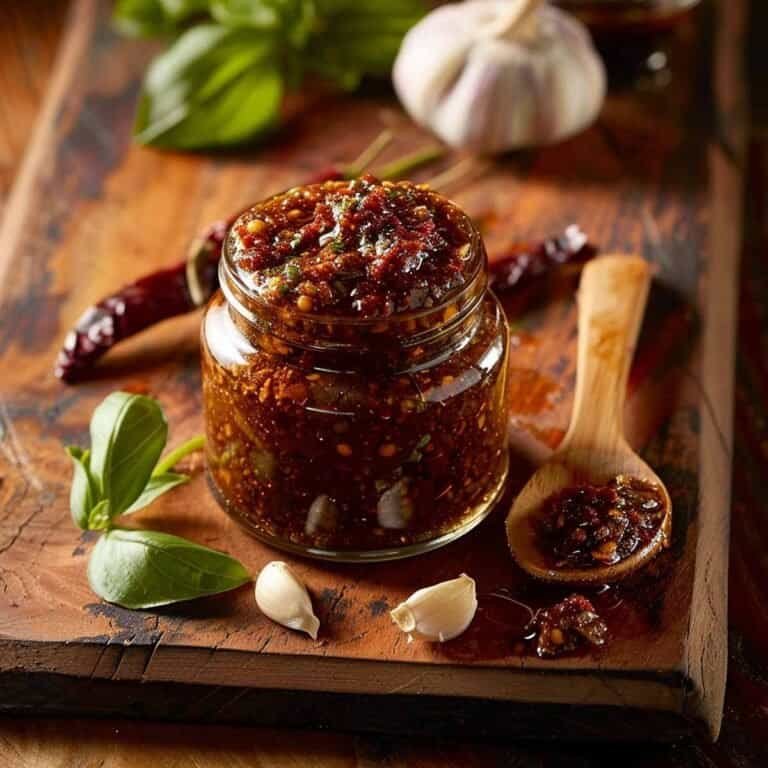
The fried garlic can be made in a small batch ahead of time and kept in a small jar with its frying oil for up to three days. Having it ready means that a bowl of Khao Tom can be made on short notice without the extra step, and the oil that the garlic was fried in is itself a wonderful finishing drizzle over the top of the soup. A small jar of fried garlic and its oil in the refrigerator is one of the most useful things a Thai kitchen can keep ready.
The lemongrass should be bruised before going into the broth. Bend the stalk firmly until it cracks, or press it flat with the back of a knife. This releases the oils inside the stalk and allows them to infuse into the broth. Lemongrass that goes into the broth without bruising will contribute far less flavor to the soup than lemongrass that has been properly prepared. One extra step, thirty seconds of work, and the broth is noticeably more fragrant.
My mother made Khao Tom at home and we found it at the market from vendors who kept their pots warm all morning. The version at home and the version at the market tasted the same to me because the ingredients were the same and the care was the same. A good broth, good aromatics, uncooked rice, and fried garlic on top. It does not need anything more than that.
This is a dish that has been with me since childhood in Thailand and it has never left. When someone in my house is not feeling well, this is what I make. When the morning needs something warm before anything else, this is what I make. Some recipes are for occasions. This one is for any time the bowl is needed.
PAIRING SUGGESTIONS
Khao Tom is often a complete meal in itself, particularly in its simpler forms, and it does not need much alongside it to be fully satisfying. For a fuller Thai breakfast or a more complete meal, the Thai omelet is the natural companion, fast and egg-based, its richness alongside the gentle rice soup making a complete and deeply satisfying combination. For those who want something pickled and sharp alongside the mild, warm soup, a small dish of sliced fresh chilies in fish sauce and lime at the table provides the sharpness that some find essential with Khao Tom. The Khao Man Gai shares the same gentle, broth-centered, comfort food spirit as Khao Tom, both of them dishes where the liquid is the whole point, both of them at their best when someone needs something warm and completely right. For the drink alongside a warm, comforting rice soup, the Thai iced tea provides the cold sweetness that completes the warm bowl in a way that makes both better. My mother made this when it was needed. Make it when it is needed. It will always be the right bowl.
FREQUENTLY ASKED QUESTIONS
What is Thai rice soup called in Thai?
Thai rice soup is called Khao Tom (ข้าวต้ม). Khao means rice. Tom means boiled. That is exactly what it is, rice boiled in broth until it opens up and becomes something warm and whole.
What is the difference between Thai rice soup and congee?
Congee, called jok in Thailand, cooks longer and breaks the rice down almost completely into a smooth, thick porridge. Thai rice soup keeps the grains more intact. The broth stays thinner. The texture is lighter. They are related but not the same dish.
Can I make Thai rice soup ahead of time?
Yes. Make the soup fully and store it covered in the refrigerator. By morning it will be very thick as the rice keeps absorbing liquid. Reheat over medium-low with a splash of broth or hot water, stir until it loosens, and taste for seasoning before serving. Make the fried garlic fresh when reheating.
What do you put on top of Thai rice soup?
Crispy fried garlic in oil, sliced green onions, fresh cilantro, white pepper, and a lime wedge are the most common garnishes. Thai chilies sliced alongside for those who want heat. A soft-boiled egg placed in the bowl before the hot soup is poured over. Fish sauce at the table for those who want more salt. The fried garlic is the one that matters most.
Is Thai rice soup the same as jok?
No. Jok is Thailand’s version of congee where the rice cooks until it completely dissolves into a thick, creamy porridge. Thai rice soup keeps the grains visible and the broth thinner. Both are breakfast foods. Both are comfort. Different textures, different moods.
How long does it take to make Thai rice soup?
About thirty-five to forty minutes from start to bowl. The broth comes up to a simmer in five minutes. The rice needs twenty-five to thirty minutes on low to open fully. Toppings take another few minutes. It is not a fast soup. It is a patient one.