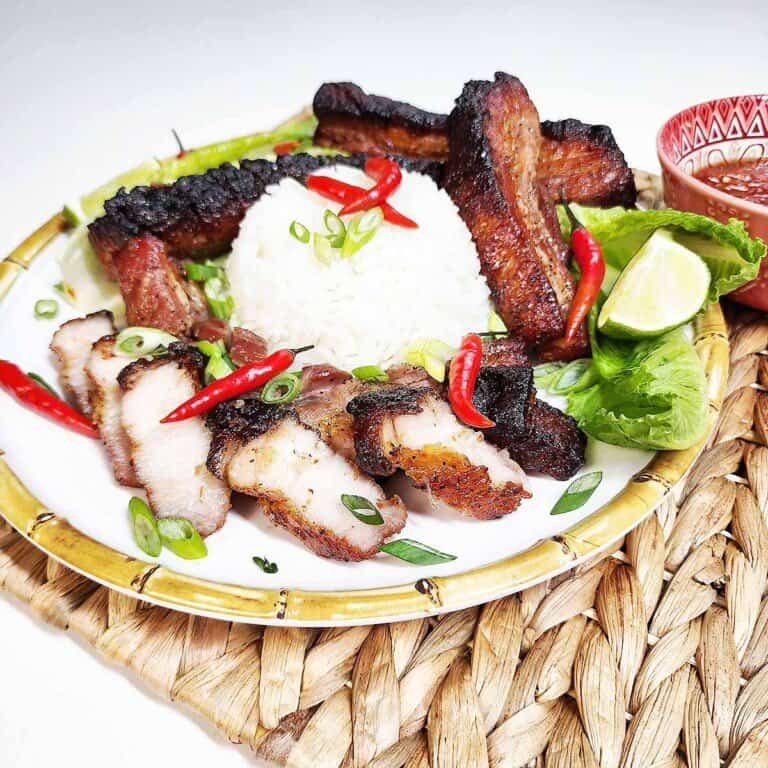
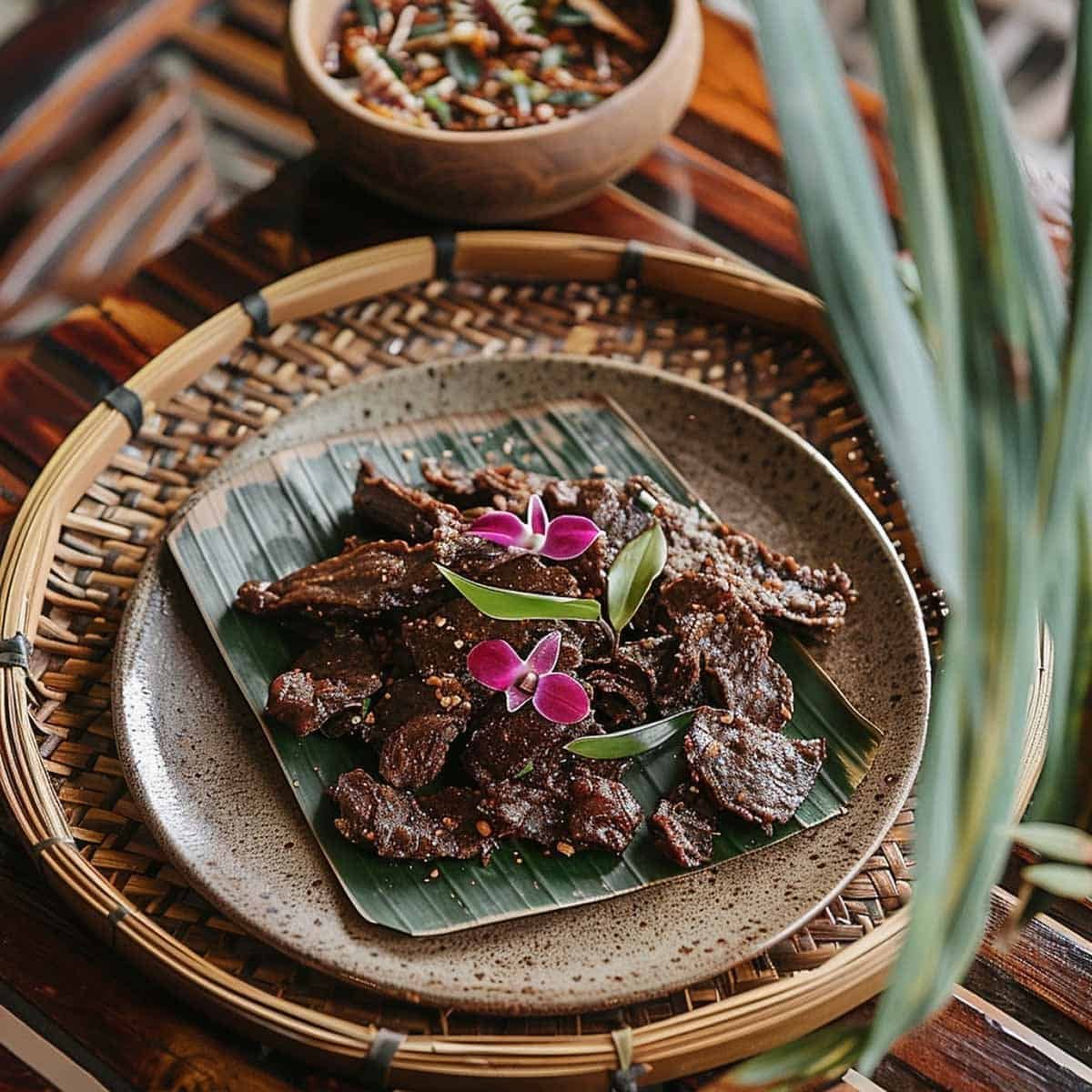
What Is Neua Sawan?
Thai beef jerky, Neua Sawan (เนื้อสวรรค์), starts with thin slices of beef marinated in fish sauce, soy sauce, and palm sugar, then dried low and slow until the meat concentrates into something chewy, sweet, and deeply savory. It finishes with a brief fry in hot oil that caramelizes the outside and changes everything. Neua Sawan means heavenly beef. The name is accurate.
Note From Susie

Sawasdee Kha, and Hello.
I was six years old in my grandmother’s kitchen at the farm in Kamphaeng Phet. She was making Neua Sawan and she gave me things to do. Small tasks. A six year old’s tasks. I did not understand what I was learning. I just did what she asked and watched her hands and thought this was simply what mornings looked like.
She was making it for the journey. We would be going back to Korat soon and this was what you brought. The beef had to be ready before we left. Everything had to be made before you could go anywhere.
It was not until I was deep in thought, writing the book, that I typed the words Thai food and stopped.
All of it arrived at once. The tasks she gave me. The way she worked without measuring anything. The smell of the beef as it dried in the air of that kitchen. She was not just making food for the journey. She was building something in me, a foundation I would carry to Florida and cook from for the rest of my life without ever once thinking of it as Thai food.
That is what it was at the farm. Not Thai food. Just food. Just how we ate. Just Tuesday.
America gave it a name. And with that name came something I was not prepared for, a subtle grief I did not know I was carrying until those two words appeared on the screen and would not leave.
This is the recipe she handed me in pieces that morning. I have been putting it together ever since.

What’s In This Page
“Not Thai food.
Just food.
Just how we ate.”
What Is Neua Sawan?
Thai beef jerky, เนื้อสวรรค์, Neua Sawan, pronounced nua sah-wan, translates literally as heavenly beef, and the name was earned. Thinly sliced beef is marinated in fish sauce, soy sauce, palm sugar, and aromatics, then dried low and slow until the meat concentrates into something chewy and deeply savory, and finished with a brief fry in hot oil that caramelizes the outside and locks the flavor in.
This Thai beef jerky recipe has roots in rural Thai preservation. Before refrigeration, drying meat in the sun was how you kept protein through a long journey or a long week. According to food historian David Thompson in Thai Food, dried and preserved meats have been central to Thai rural cooking for centuries, carried by farmers and travelers who needed food that could go the distance. In Kamphaeng Phet, it went on the train to Korat. It was not a recipe. It was just what you made before you left.
What makes Neua Sawan distinct from Neua Daet Diao, the simpler sun-dried version, is the marinade and the final fry. Neua Daet Diao is dried beef. Neua Sawan is dried beef that has been marinated overnight and fried briefly before serving, the outside caramelizing in the hot oil and the flavor concentrating in a way that drying alone cannot produce. The fry is what makes it heavenly. The name is not an accident.
According to the Oxford Companion to Food, dried and preserved meats are among the oldest food preparations in human history, found in every culture that needed to move protein across distance and time.
The smell when it comes out of the oil is the smell of that kitchen. It has never changed.
What You’ll Need
Beef, two pounds, sirloin or flank steak, lean and firm. Put it in the freezer for twenty to thirty minutes before slicing. A partially frozen piece of beef slices cleanly and evenly in a way that room temperature beef does not. Slice against the grain, no thicker than a quarter inch. Against the grain gives you pieces that pull apart cleanly and hold the marinade all the way through.
Soy sauce, three tablespoons. Fish sauce, two tablespoons. The soy sauce brings depth and color. The fish sauce brings the salt and the umami that is distinctly Thai.
Brown sugar, two tablespoons, for the sweetness that balances both and helps the outside caramelize during the fry. Tamarind paste, one tablespoon, for a faint sourness that keeps the marinade from being flat.
Garlic, four cloves, minced. White pepper, one teaspoon, not black. White pepper is sharper and more direct and it is what makes this taste like Thailand. Ground coriander, one teaspoon, for the earthiness underneath everything. Chili flakes, one teaspoon, optional, for heat.
Neutral oil for the final fry.
Visual Walk Through
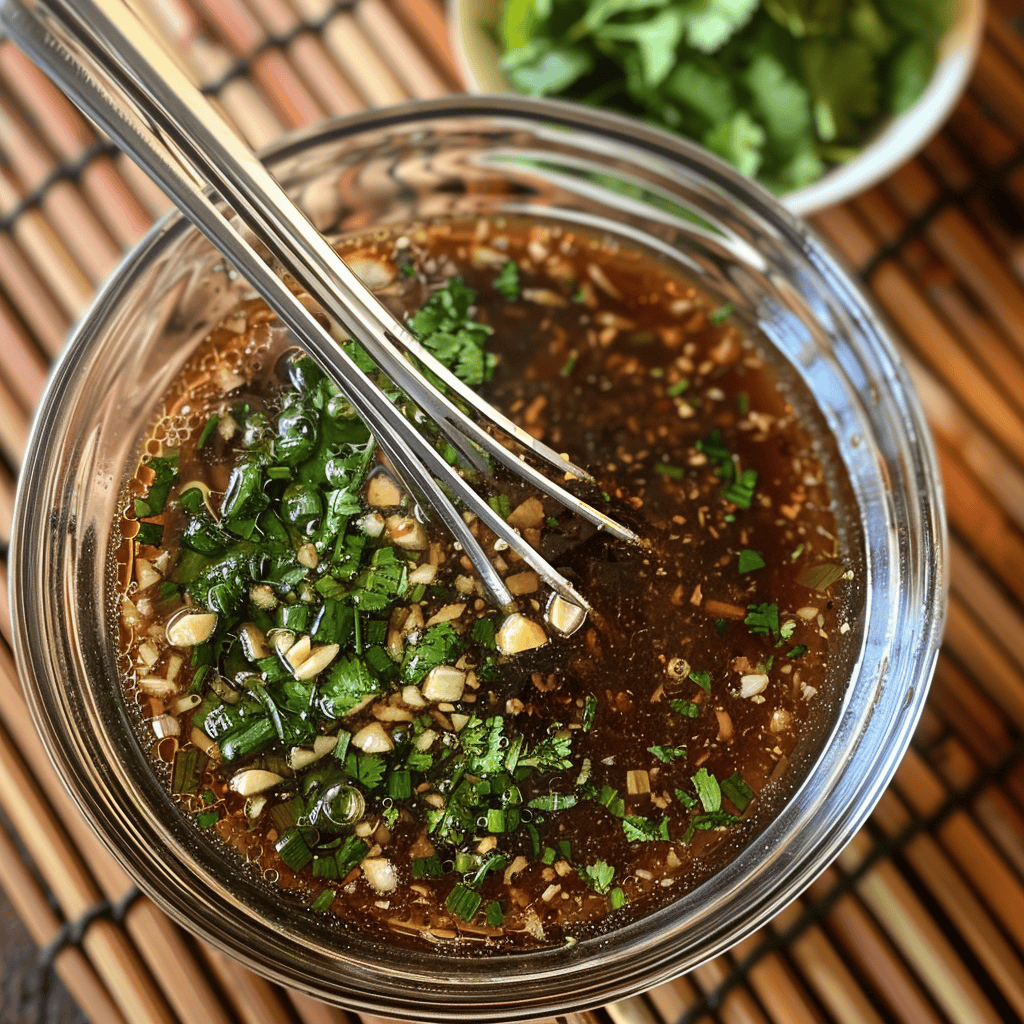
Step 1. Prepare the marinade.
In a bowl, combine the soy sauce, fish sauce, brown sugar, tamarind paste, minced garlic, white pepper, ground coriander, and chili flakes if using. Stir the ingredients thoroughly until the brown sugar completely dissolves.
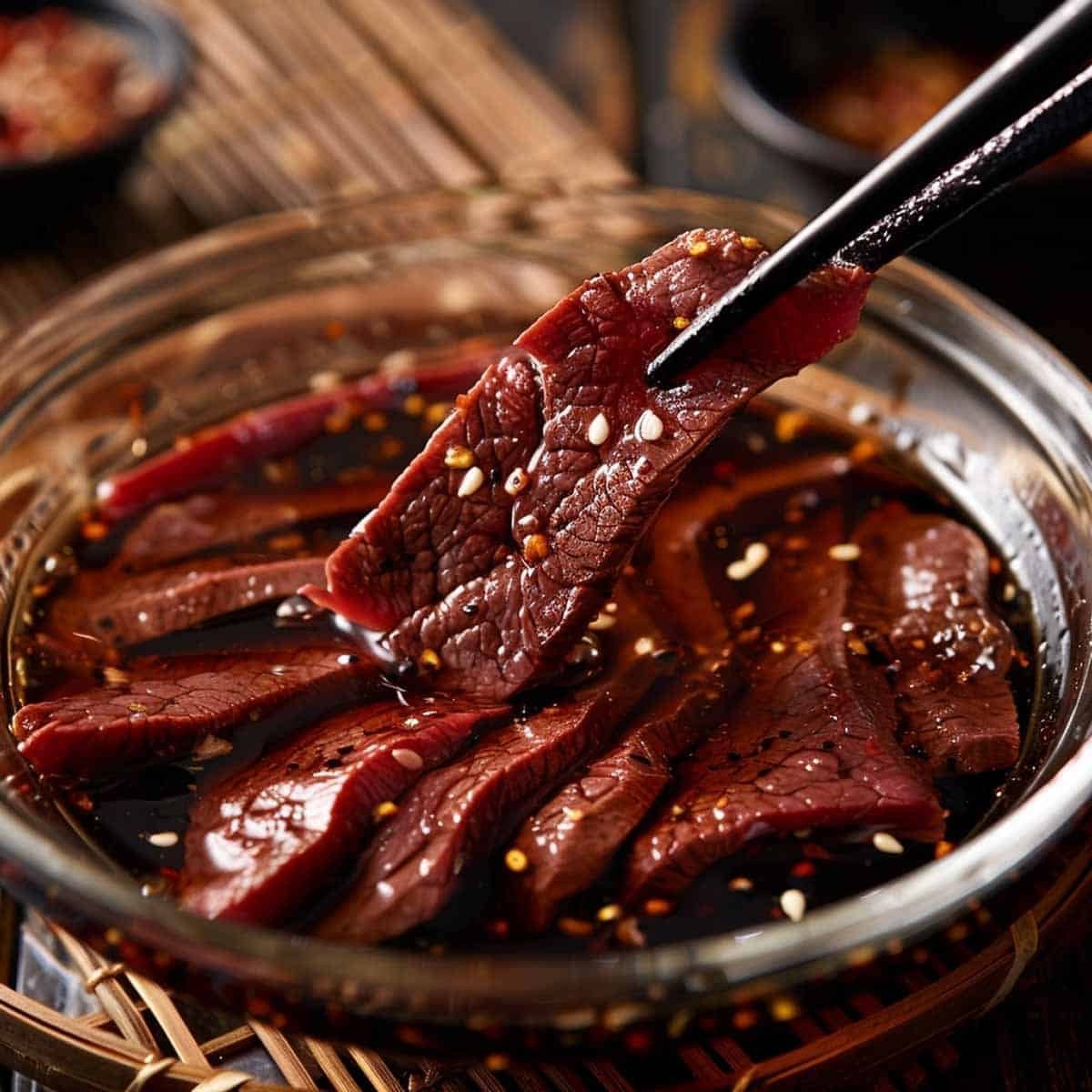
Step 2. Marinate the beef overnight.
Place the beef slices in a large bowl or a resealable plastic bag with the marinade. Make sure to evenly coat each piece of beef with the marinade. Once coated, seal the bowl or bag and refrigerate for at least four hours. Overnight produces a more intense and deeply flavored result.
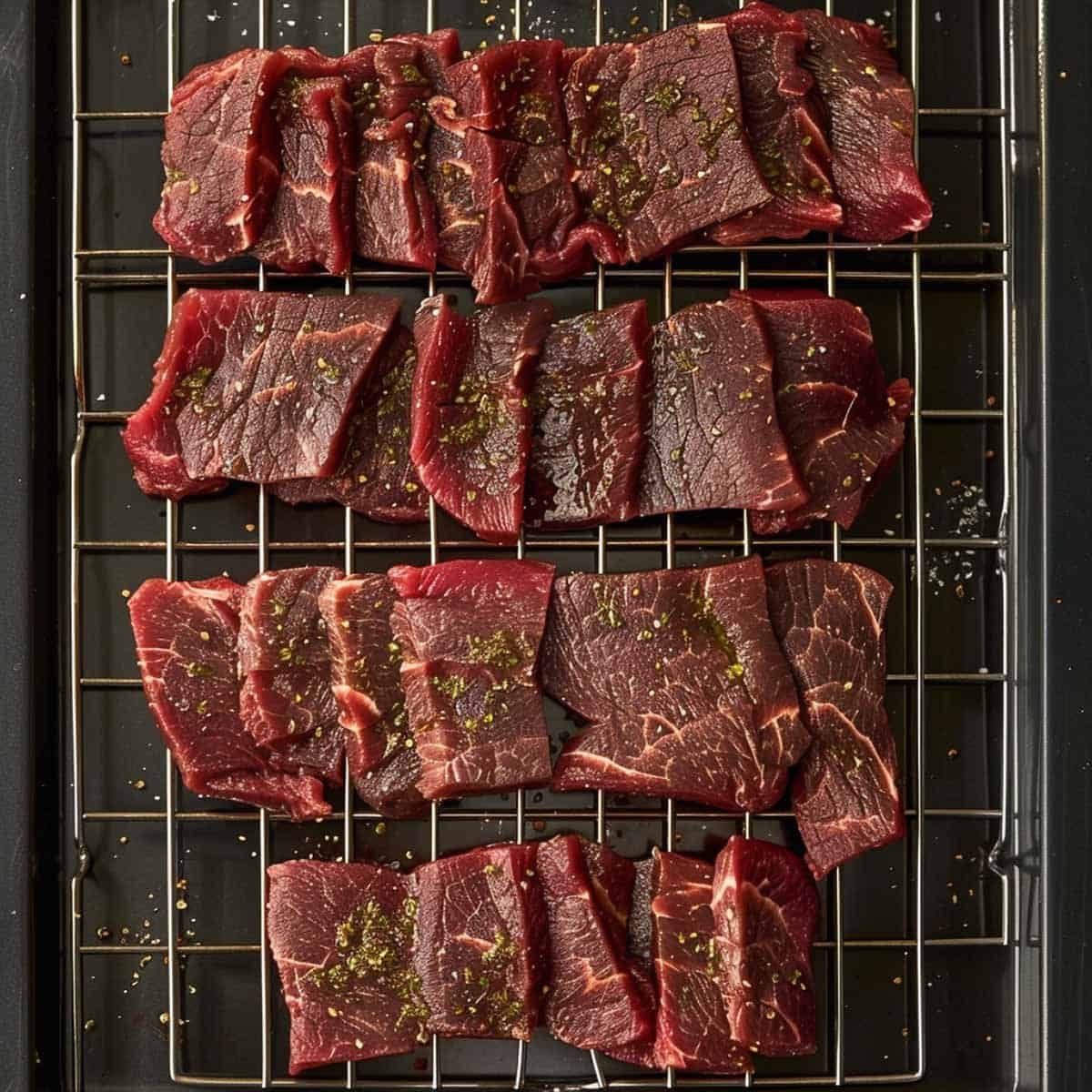
★ Step 3. Dry the beef low and slow with the oven door ajar. This is What Makes the Difference.
Preheat the oven to 175 degrees Fahrenheit. Take the meat out of the marinade and place it on a wire rack over a baking sheet, ensuring the pieces do not overlap. Prop the oven door slightly ajar with a wooden spoon. This lets the moisture out. Without the gap the oven traps steam and the beef never dries properly. Dry for three to four hours, turning the pieces over halfway through.
Step 4: Fry and Serve
Heat neutral oil in a wok or deep pan to 350 degrees Fahrenheit and fry the dried strips in small batches, sixty seconds each. Remove and drain on paper towels. Serve alongside sticky rice.
Thai Beef Jerky Recipe (Neua Sawan)
Ingredients
- 2 lbs. beef preferably a lean cut like sirloin or flank, thinly sliced
- 3 tablespoons soy sauce
- 2 tablespoons fish sauce
- 2 tablespoons brown sugar
- 1 tablespoon tamarind paste
- 4 cloves garlic minced
- 1 teaspoon white pepper
- 1 teaspoon ground coriander
- 1 teaspoon Optional: chili flakes for heat
Instructions
- Prepare the marinade:In a bowl, combine the soy sauce, fish sauce, brown sugar, tamarind paste, minced garlic, white pepper, ground coriander, and chili flakes (if using). Stir the ingredients thoroughly until the brown sugar completely dissolves.
- Marinate the Beef:Place the beef slices in a large bowl or a resealable plastic bag with the marinade. Make sure to evenly coat each piece of beef with the marinade. Once coated, seal the bowl or bag and refrigerate the beef for at least 4 hours.
- Dry the Beef: Preheat your oven to 175°F (80°C) or set up a drying rack in a sunny outdoor location. Take the meat out of the marinade and place it on a baking sheet lined with parchment paper, ensuring the pieces do not overlap.Prop the oven door slightly ajar with a wooden spoon. This lets the moisture out.
- Serve:If you want to serve this the authentic Thai way, heat neutral oil in a wok or deep pan to 350°F and fry the dried strips in small batches, sixty seconds each. Serve alongside with sticky rice.
Notes
Nutrition
Let’s Get This Right
Why is my Thai beef jerky recipe turning out tough and stringy?
The beef was sliced with the grain instead of against it. This is the most common mistake and it cannot be fixed after the fact. Slice against the grain, perpendicular to the muscle fibers, and the finished strips will pull apart cleanly. Slice with the grain and you get chew that works against you rather than with you.
Why does my Thai beef jerky taste only on the surface and bland in the middle?
The marinade did not have enough time. Four hours is the minimum and overnight is what the recipe needs to work properly. The flavor has to travel from the surface all the way to the center of each strip. A short marinade seasons the outside only. Give it the time it needs.
Why is my beef soft instead of properly dried?
The oven door was closed during drying. A sealed oven traps the moisture that needs to escape, the beef steams instead of dries and the texture never develops correctly. Prop the door open slightly with a wooden spoon for the full drying time. Three to four hours at 170F with the door ajar.
Can I skip the final fry in this Thai beef jerky recipe?
You can, but the dish is different without it. The fry is what caramelizes the outside, concentrates the flavor, and gives Neua Sawan its particular texture and depth. Dried beef without the fry is just dried beef. Sixty seconds in hot oil is what makes it heavenly. If you cannot deep fry, a very hot dry pan for thirty to forty seconds per side gets you partway there, not the same, but closer.
What cut of beef works best for a Thai beef jerky recipe?
Sirloin or flank steak, lean, firm cuts that slice cleanly and dry evenly. Avoid cuts with a lot of fat running through them. Fat does not dry the way lean muscle does and it makes the jerky greasy rather than chewy. The leaner the cut the better the result.
Flavor Profile
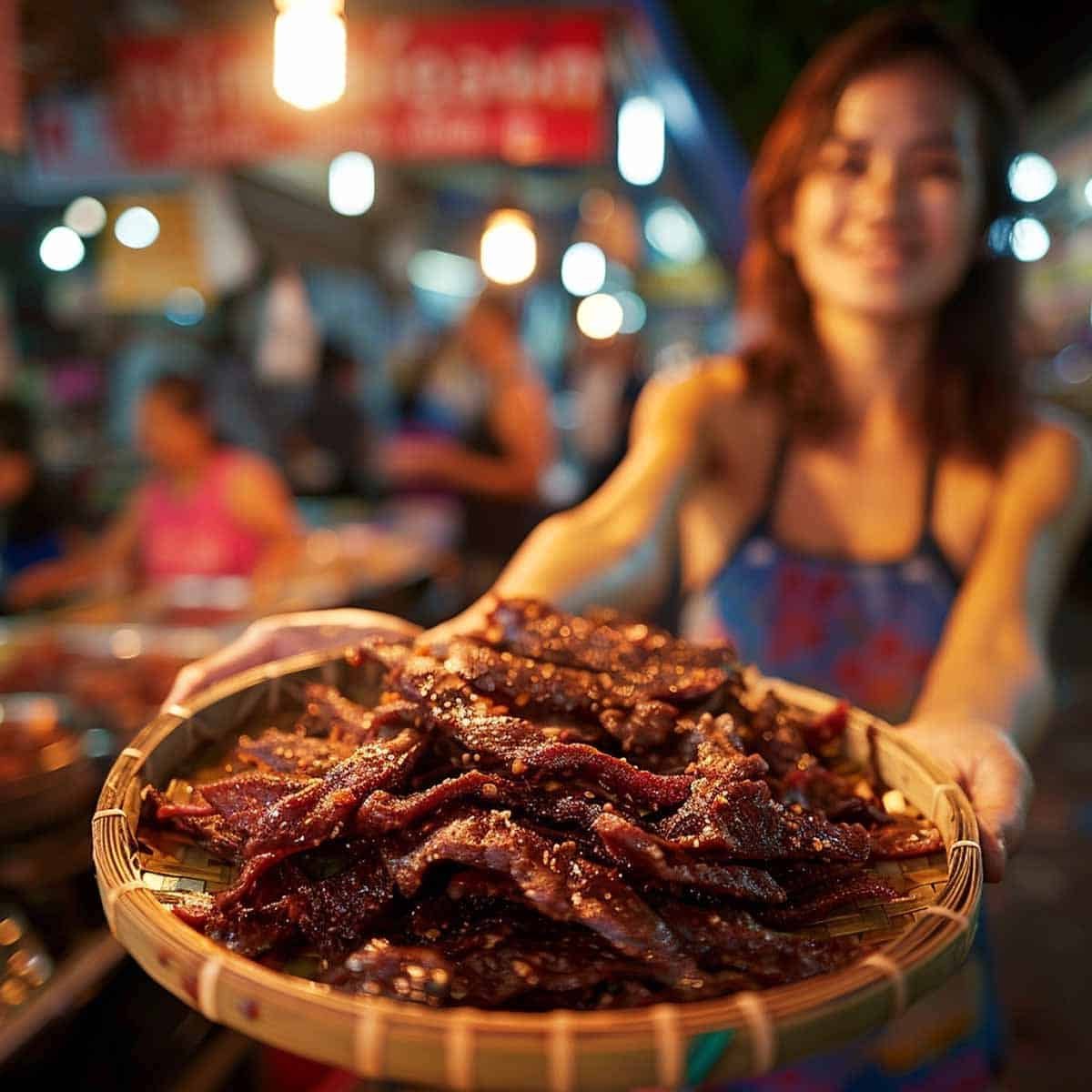
The smell arrives before anything else. Sweet and dark and slightly fermented, the way a kitchen smells when something good has been drying for hours. Then the oil and the sizzle and everything sharpens. The finished strip is mahogany colored, slightly glossy from the fry, firm between your fingers with just enough give.
The first bite is sweet upfront, the palm sugar and the caramelization. Then the fish sauce comes through underneath, salty and deep. Then the white pepper arrives at the back, sharp and direct. And finally the tamarind, faint and sour, a note that keeps the whole thing from being too much of anything.
The chew is the point. Not tough. Not soft. The specific resistance of meat that has been dried slowly and fried quickly. Nothing else feels exactly like it. You eat one piece and reach for another before you have finished chewing. That is Neua Sawan. That is the whole experience.
The smell of it drying in the air of my grandmother’s kitchen in Kamphaeng Phet is a smell I have never stopped looking for. Sometimes, when the batch is right and the oven is doing what it is supposed to do, I find it. For a moment the kitchen in Florida and the kitchen at the farm are the same kitchen.
Susie’s Kitchen Notes
White pepper is not interchangeable with black pepper here. White pepper has a sharper, more direct heat, it hits differently on the palate and it is distinctly Thai. Black pepper is rounder and slower. The dish made with black pepper is a different dish. Find white pepper at any Asian grocery store. It keeps a long time and you will use it in more recipes than this one.
The freezer step before slicing is not optional if you want even strips. Twenty to thirty minutes turns a soft piece of beef into something you can actually control with a knife. Thin, even slices are what make the marinade work evenly and the drying time consistent across the whole batch. If the strips vary in thickness you will have some pieces overdone and some underdone at the same time.
Watch the oil temperature during the fry. Too low and the beef absorbs oil instead of shedding it, you get greasy rather than caramelized. Too high and the outside burns before the inside has a chance to warm through. 350F is the target. Fry in small batches so the oil temperature does not drop. Thirty seconds, maybe sixty. Pull them when the color deepens. Drain immediately on paper towels.
Neua Sawan keeps well. Room temperature in an airtight container for up to two weeks, the drying process is what makes that possible. My grandmother made it before the journey and it was still good at the end of it. Make a full batch. It will not go to waste.
PAIRING SUGGESTIONS
Neua Sawan belongs beside sticky rice, that is how Kun Yai ( my grandmother) packed it, the two things together, and the pairing has not needed improving in all the years since. The rice is neutral and soft against something chewy and deeply savory. Green Papaya Salad (Som Tum) alongside brings the acid and the crunch that cut through the richness of the fry. For a full table, Thai Spring Rolls (Por Pia Tod) at the start give something light before the beef arrives. And if you want a dipping sauce, Nam Jim Jaew, a roasted chili and tamarind dipping sauce, is the traditional partner. My grandmother never served it with anything elaborate. The beef and the rice were enough. They always have been.
FAQ
What cut of beef is best for a Thai beef jerky recipe?
Sirloin or flank steak, lean and firm cuts that slice cleanly and dry evenly. Avoid cuts with a lot of fat running through them. Fat does not dry the way lean muscle does and makes the finished jerky greasy rather than chewy. The leaner the cut the better the result.
How long do I marinate the beef for a Thai beef jerky recipe?
Four hours at a minimum. Overnight is strongly preferred. The marinade needs time to travel from the surface to the center of each strip. A short marinade gives you seasoned beef on the outside and bland meat in the middle. Give it the time it needs and the flavor will be there all the way through.
Do I have to deep fry Neua Sawan after drying?
The fry is what makes it Neua Sawan. Sixty seconds in hot oil caramelizes the outside, concentrates the flavor, and gives the beef its particular texture and depth. Without the fry it is just dried beef. If deep frying is not possible, a very hot dry pan for thirty to forty seconds per side gets you partway there, not the same result, but closer than skipping it entirely.
How do I dry the beef for a Thai beef jerky recipe without a dehydrator?
A low oven at 170F with the door propped slightly open with a wooden spoon. The open door lets moisture escape. Without it the oven traps steam and the beef never dries properly. Three to four hours on a wire rack over a baking sheet, turning halfway through. The strips are done when they are firm, dry to the touch, and a deep mahogany color.
How long does Thai beef jerky keep?
Room temperature in an airtight container for up to two weeks. The drying process is what makes this possible, the moisture has been removed and the beef is stable at room temperature. Refrigerate for up to a month. The drying was originally designed to make the beef last through a long journey. It still does.
What does Neua Sawan mean?
Heavenly beef. Neua means beef in Thai. Sawan means heaven. The name came from somewhere and whoever gave it was not wrong. The combination of sweet, salty, savory, and the caramelized fry at the end produces something that earned its name.
What is the difference between Neua Sawan and Neua Daet Diao?
Neua Daet Diao is sun-dried beef, dried in one day of strong sun, traditionally without the overnight marinade and finished fry of Neua Sawan. Neua Sawan is the more refined version, marinated overnight, dried low and slow, then fried briefly before serving. Both are Thai dried beef. Neua Sawan is the one that earned the name heavenly.