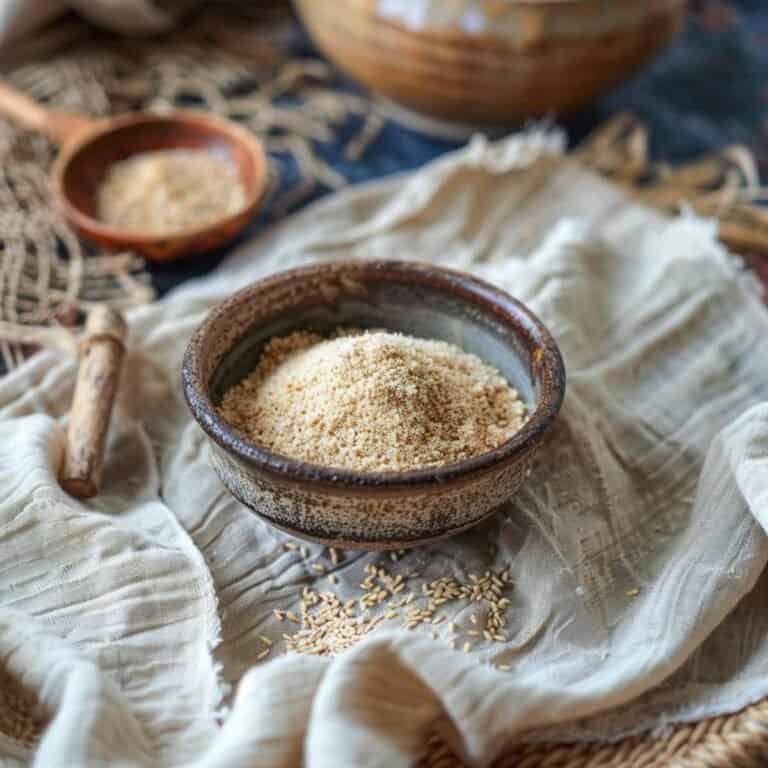
What Is Sticky Rice?
A sticky rice recipe starts with one thing: the right rice. Glutinous rice, khao niew in Thai, is soaked overnight, then steamed until each grain is tender, faintly sweet, and clingy enough to hold its shape in your hand. It is not a side dish. In northern and northeastern Thailand, it is the meal everything else moves around.
Note From Susie

Sawasdee Kha, and Hello.
My grandmother rode the train from Kamphaeng Phet to Korat to collect me. Eight hours, sometimes ten. She made that journey more times than I can count, and she never came empty-handed.
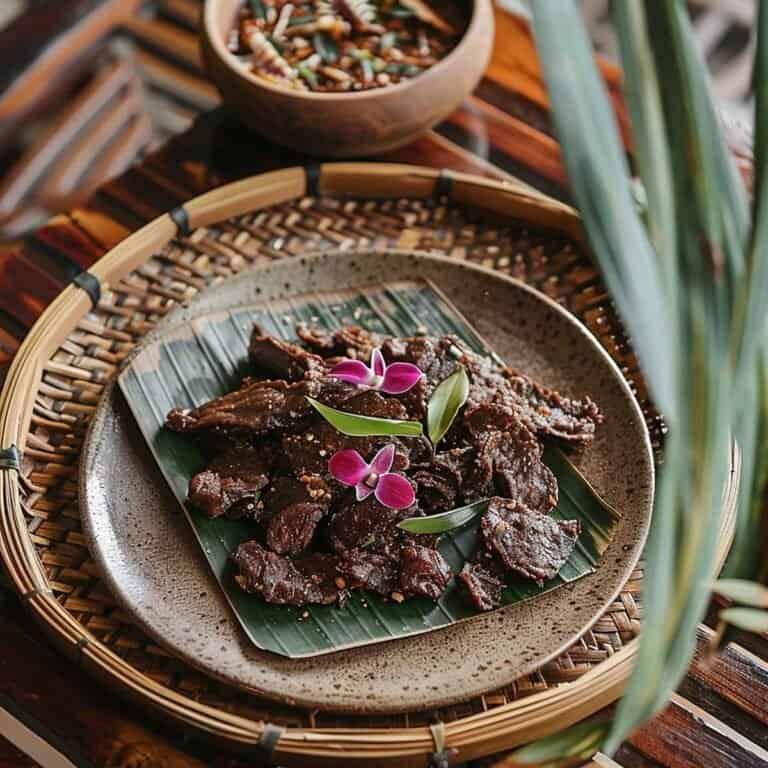
She always brought dried beef and sticky rice for the ride home. The rice was wrapped in banana leaf, still holding the warmth of the morning she had packed it. The dried beef was dense and chewy, sweet and salty at once, the kind of food you do not rush because rushing it would mean the journey was almost over. She would tear off a piece of the rice and hand it to me. No words needed. I would sit beside her chewing slowly, watching the rice fields and banana trees pass outside the window.
I did not know then that there was a number on those train rides. That one of them would be the last without either of us knowing it.
I do not know which ride it was. I only know that the sticky rice tasted the same every time, like the trip, like her hands, like somewhere I already was before I arrived.

What’s In This Page
“She tore off a piece and handed it to me. No words needed.”
— Her Hands His EyesWhat Is Sticky Rice?
Sticky rice, ข้าวเหนียว, Khao Niew, pronounced cow nyao, is the daily staple grain of northern and northeastern Thailand, including the Isan region and the provinces of Kamphaeng Phet and Korat where I grew up. A sticky rice recipe begins with glutinous rice, a short-grain variety that contains almost no amylose starch, which is why the cooked grains bond together instead of separating the way jasmine rice does. According to the Oxford Companion to Food, glutinous rice has been cultivated across mainland Southeast Asia for thousands of years. In Thailand it is not treated as a side dish. You roll it in your fingers, press it into a small ball, and use it to scoop up whatever is beside it. It is the plate and the utensil at the same time.
The steam rises before the lid comes off. That is when you know it is close.
What You’ll Need
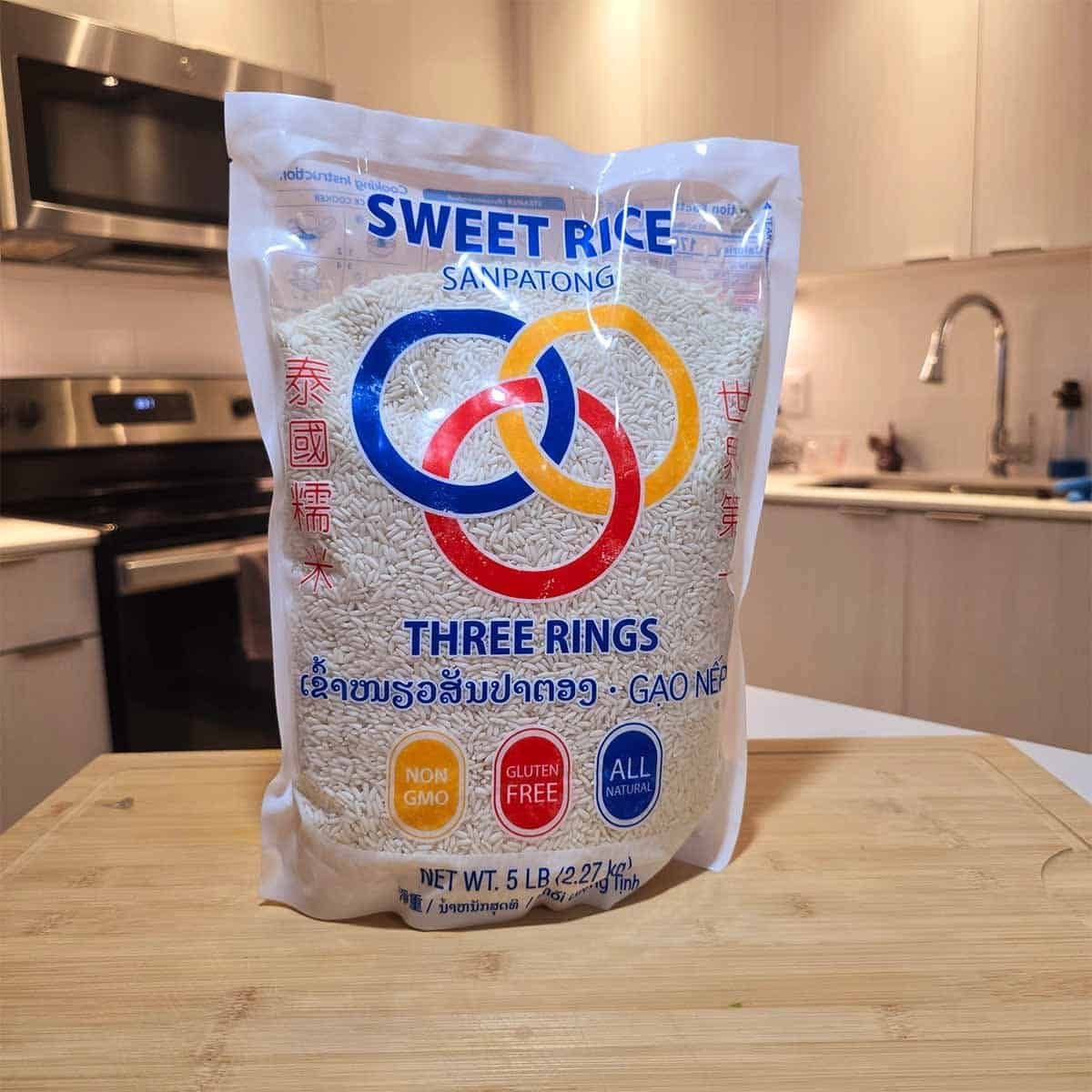
Thai sticky rice, two cups, also known as glutinous rice or sweet rice. Not jasmine. Not sushi rice. The starch structure is completely different and there is no substitute. Look for Thai brands like Three Elephants or Rose. Two cups of dry rice feeds four people as a main starch.
Water for soaking, enough to cover the rice by at least three inches. Two and a half cups of water for steaming.
A large bowl for soaking the rice. A colander or fine mesh sieve for draining. A steamer or a rice cooker with a steaming basket. A pot to hold the boiling water beneath.
If your steamer basket has large holes, line it with cheesecloth or a clean thin kitchen towel. This stops the rice from falling through and helps the steam distribute evenly.
That is all. Sticky rice is seasoned by everything beside it, not by anything added to it.
Visual Walk Through
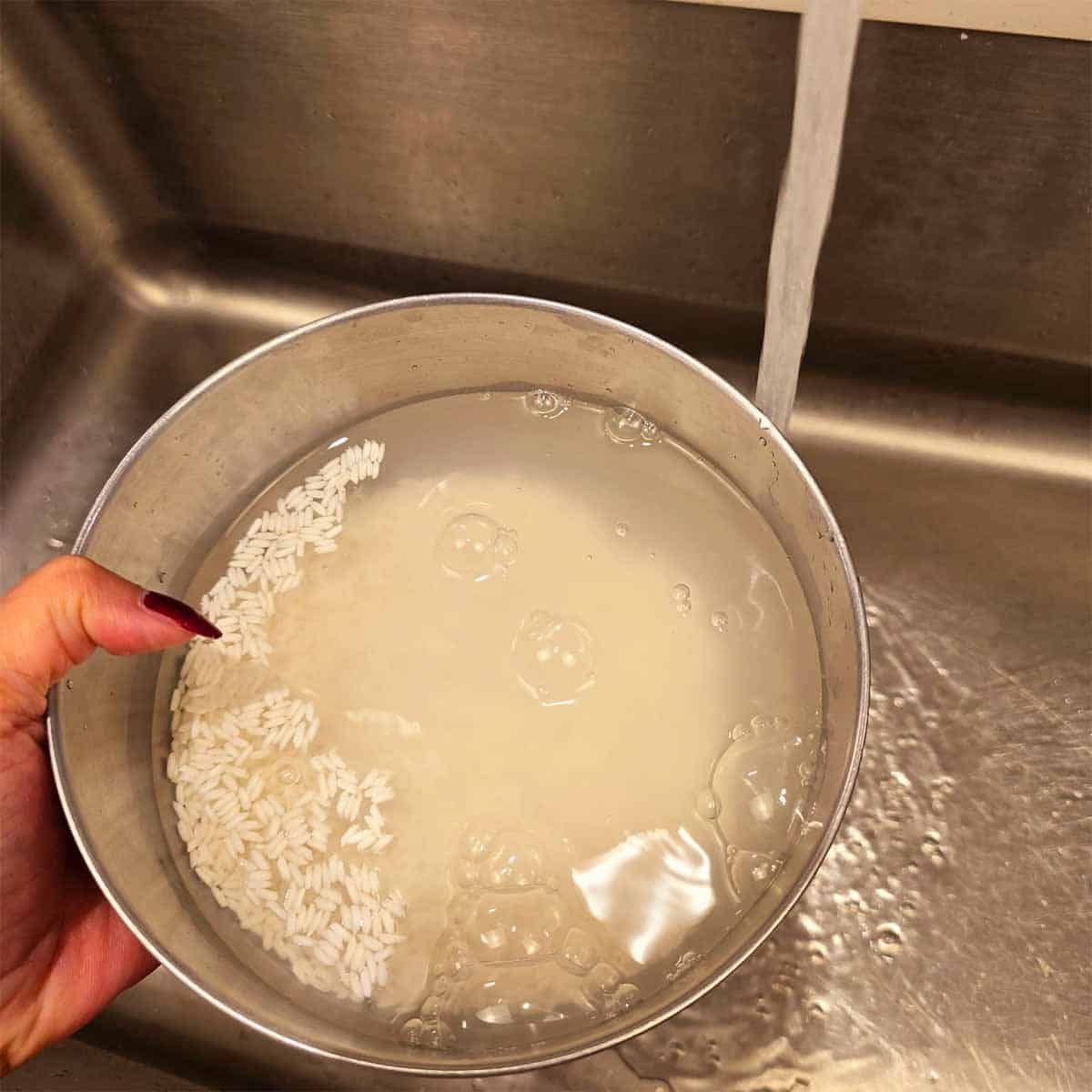
Step 1. Soak the rice overnight.
Rinse the sticky rice under cold water two to three times to remove excess starch until the water runs relatively clear. Soak the rice in a large bowl filled with enough water to cover it by at least three inches. Let it soak for at least four hours, or overnight for best results. A grain held to the light should be completely opaque and white all the way through before steaming begins. Any translucence means more soaking time, not more steaming time.
Step 2. Prepare the steamer.
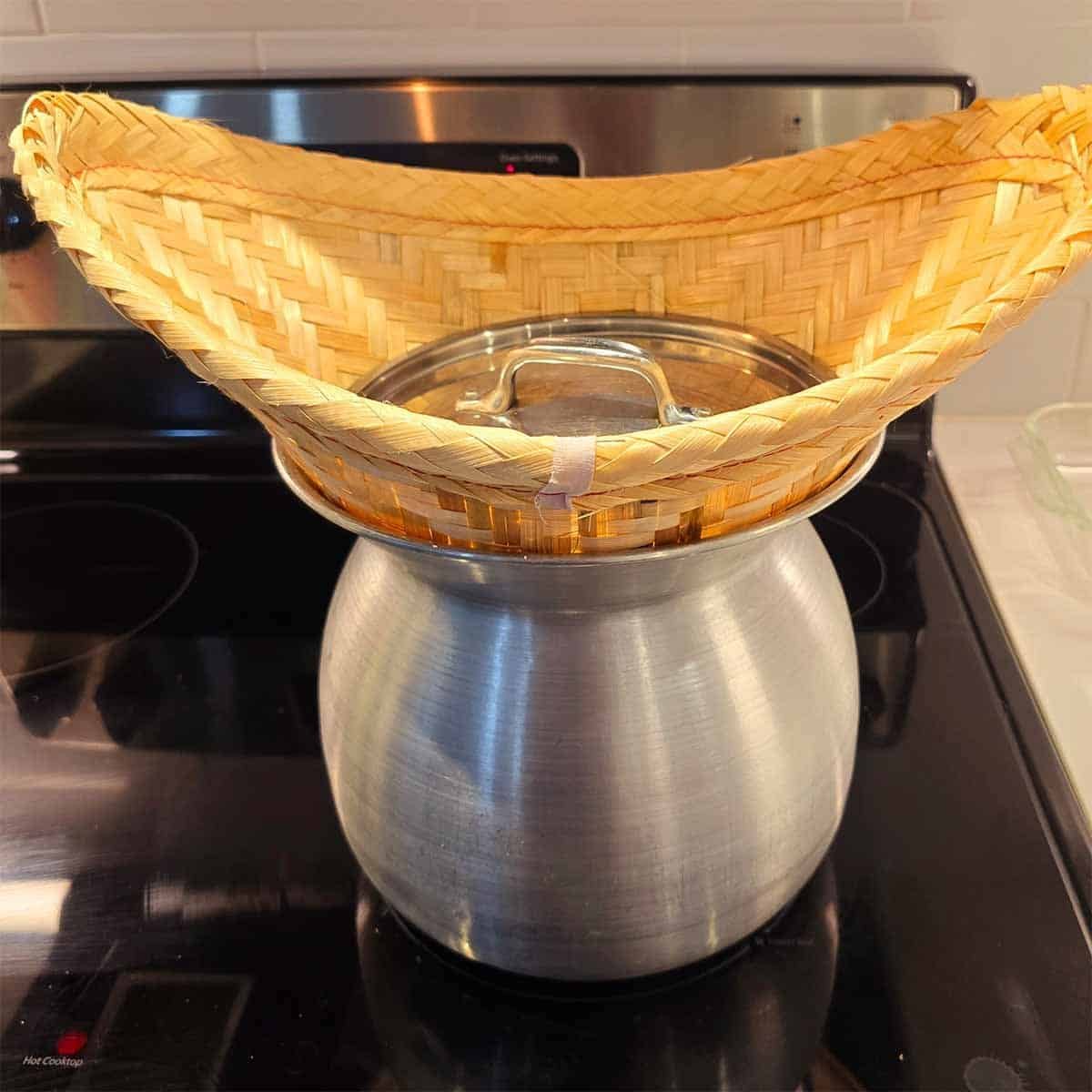
Fill the bottom of a steamer or pot with two and a half cups of water. Bring the water to a boil. If you are using a steamer, line the steamer basket with cheesecloth or a clean thin kitchen towel to prevent the rice from sticking or falling through. The rice must never touch the water below.
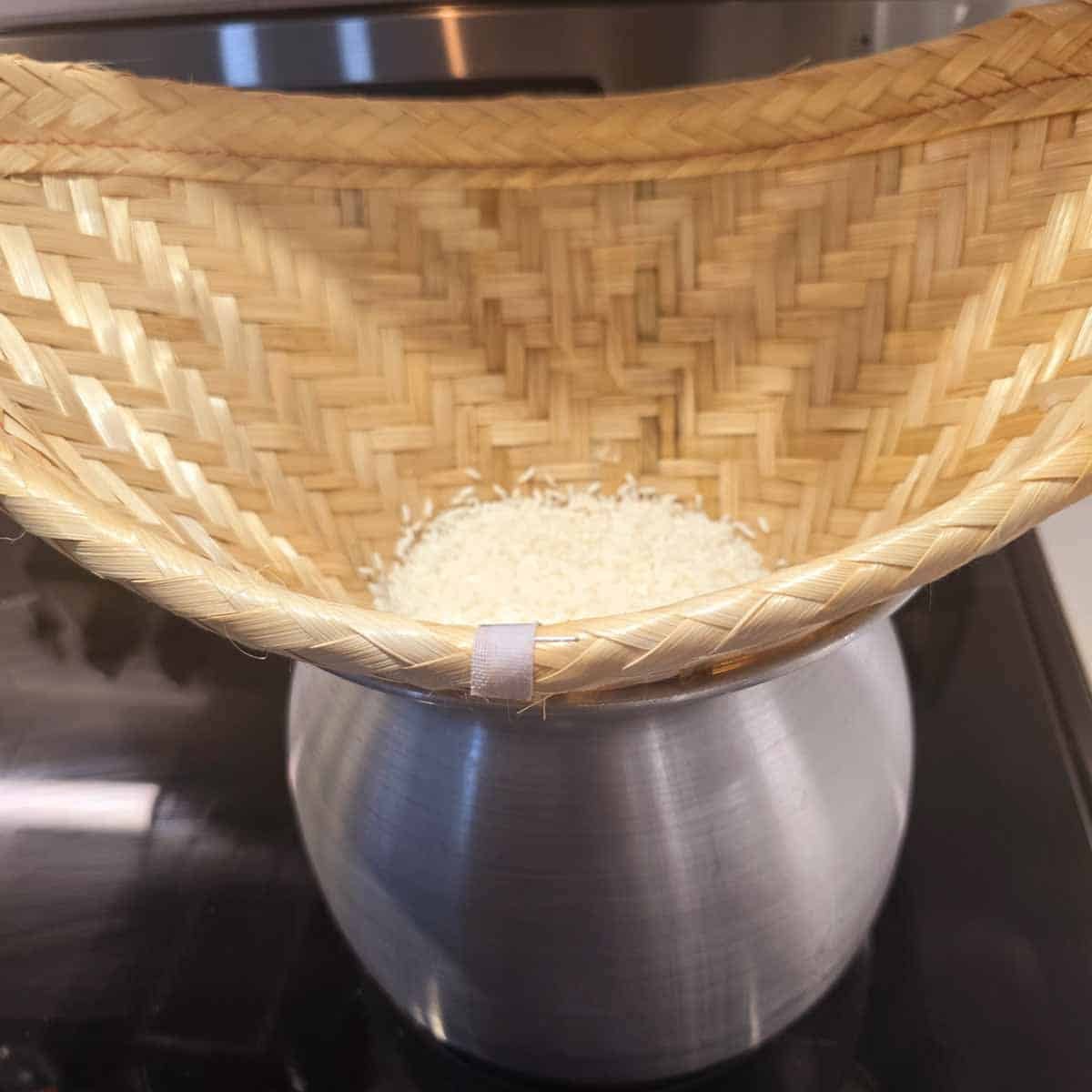
Step 3. Drain the rice.
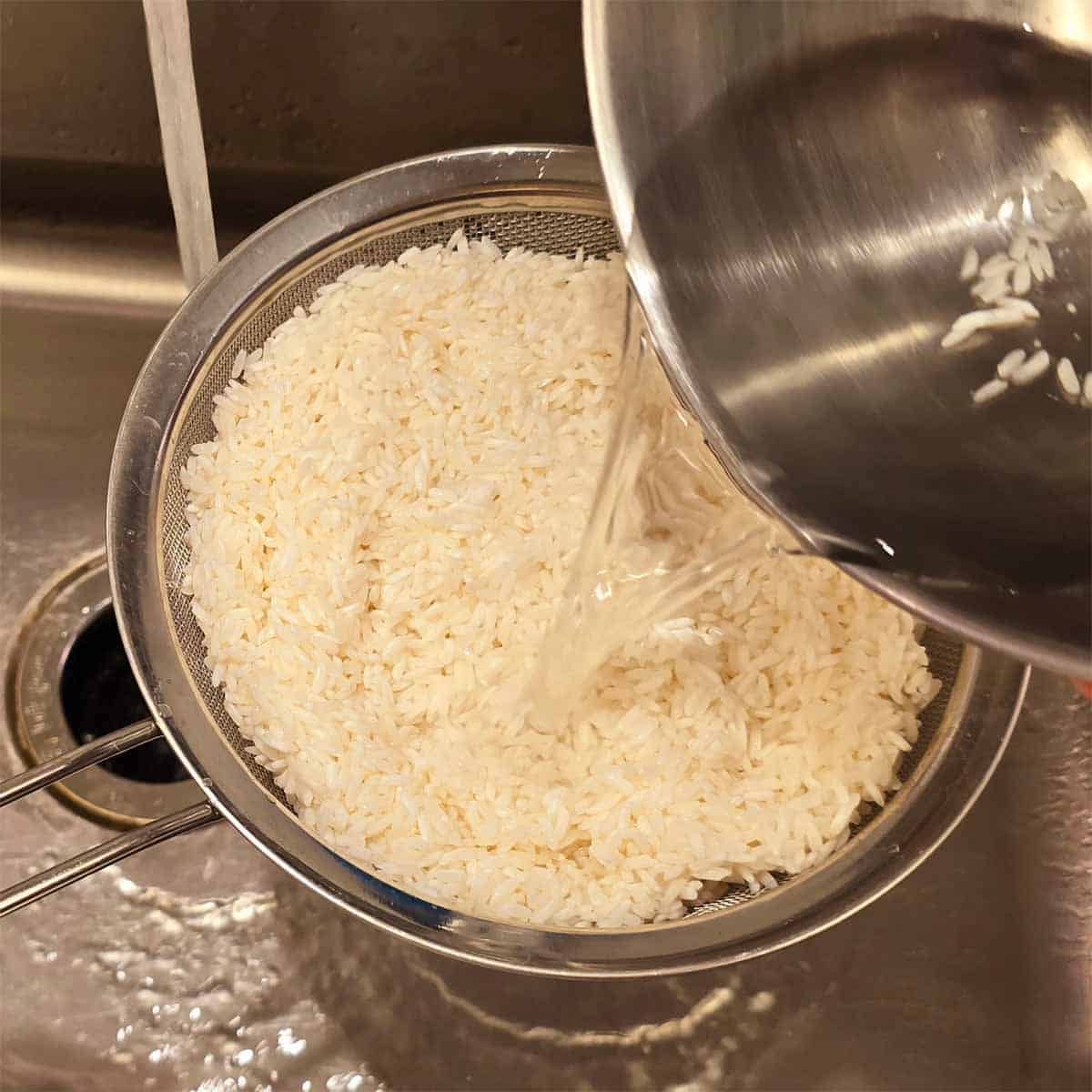
After soaking, drain the rice thoroughly using a colander or a fine mesh sieve. Shake off the excess water. The grains should be swollen and opaque, completely changed from the dry rice you started with.
★ Step 4. Steam the rice and flip halfway through. This is What Makes the Difference.
Transfer the soaked and drained rice into the lined steamer basket. Spread it evenly to allow the steam to cook the rice uniformly. Place the basket over the boiling water, cover, and steam for about fifteen to twenty minutes. Then stir or flip the rice to ensure even cooking. Cover and steam for an additional ten to fifteen minutes, or until the rice is tender and sticky. The grains should be fully translucent and glossy, with no hard center when you bite one.
Step 5. Rest the rice and serve.
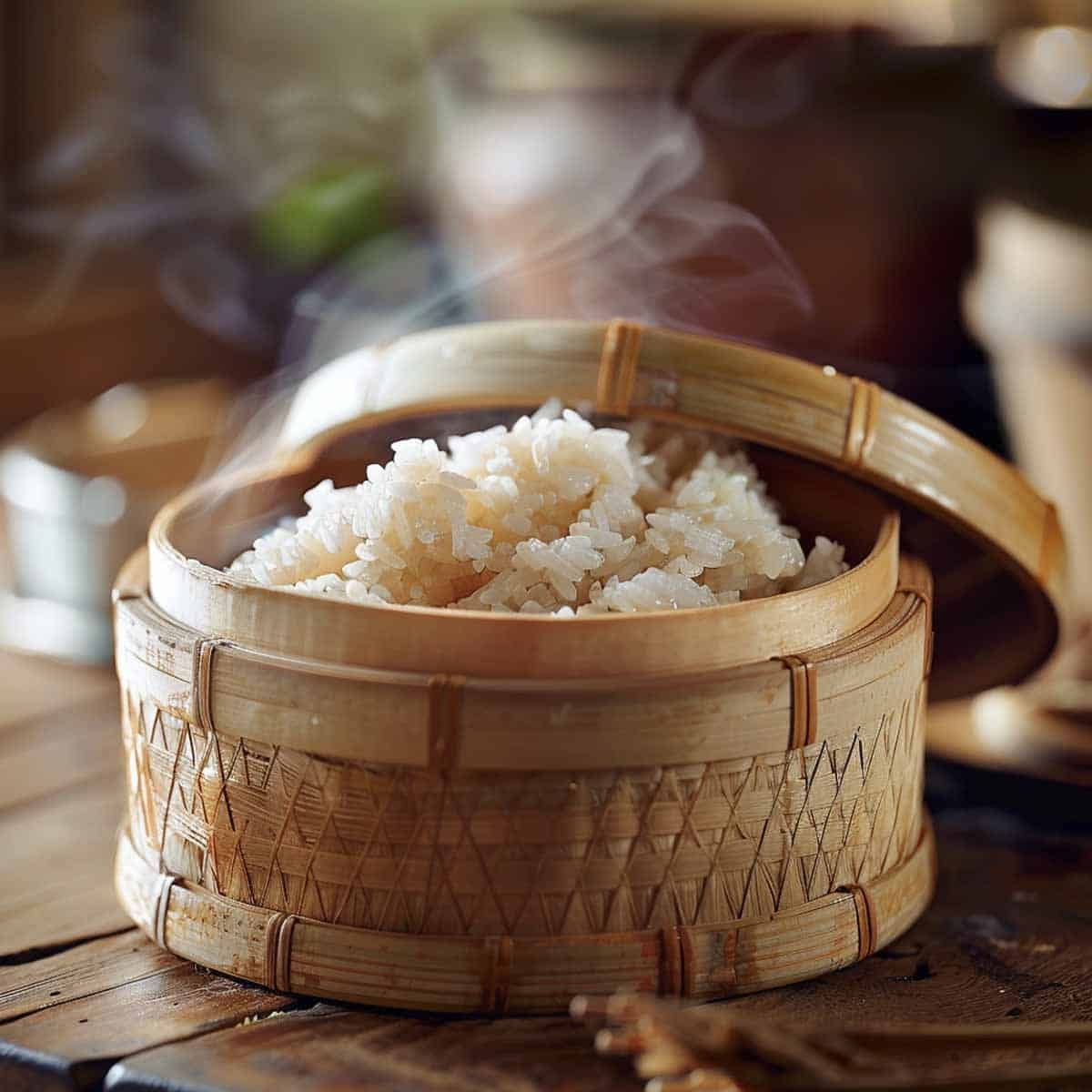
Once the rice is cooked, remove it from the heat and let it sit covered for about ten minutes. This allows the grains to set and become perfectly sticky. Serve it hot. Roll a small piece between your fingers until it holds its shape. Use it to scoop up whatever is beside it, grilled meats, som tum, larb. That is how it was always eaten. That is still how it is eaten now.
Sticky Rice (Khao Niew)
Equipment
- A large bowl for soaking the rice
- A colander or fine mesh sieve
- A steamer or a rice cooker with a steaming basket
- A pot or a rice cooker
Ingredients
- 2 cups Thai sticky rice also known as glutinous rice or sweet rice
- Water for soaking
- 2 1/2 cups water for steaming
Instructions
Soak the Rice:
- Rinse the sticky rice under cold water 2 to 3 times to remove excess starch until the water runs relatively clear.
- Soak the rice in a large bowl filled with enough water to cover it by at least 3 inches. Let it soak for at least 4 hours, or overnight for best results.
Prepare the Steamer:
- Fill the bottom of a steamer or a pot with 2 1/2 cups of water. Bring the water to a boil. If you are using a steamer, line the steamer basket with cheesecloth or a clean, thin kitchen towel to prevent the rice from sticking or falling through.
Drain the Rice:
- After soaking, drain the rice thoroughly using a colander or a fine-mesh sieve.
Steam the Rice:
- Transfer the soaked and drained rice into the lined steamer basket. Spread it evenly to allow the steam to cook the rice uniformly.
- Place the basket over the boiling water, cover, and steam for about 15-20 minutes. Then, stir or flip the rice to ensure even cooking. Cover and steam for an additional 10-15 minutes, or until the rice is tender and sticky.
Rest the Rice:
- Once the rice is cooked, remove it from the heat and let it sit covered for about 10 minutes.
Serve:
- Use it to scoop up whatever is beside it, grilled meats, som tum, larb.
Notes
Nutrition
Let’s Get This Right
Can I use any short-grain rice for a sticky rice recipe?
No. Thai glutinous rice is a specific variety. It contains almost no amylose starch, which is what creates the stickiness. Regular short-grain or sushi rice has a completely different starch structure. Cooked the same way, it will give you a gummy broken mess. The bag must say glutinous rice, sweet rice, or sticky rice. That is the rice.
What happens if I don’t soak the rice long enough?
The center of every grain stays hard. It will not cook out in the steamer, more steam time will not fix an under soaked grain. The outside softens and the inside crunches. Soak it long enough. Four hours at a minimum. Hold a grain to the light before you start steaming. Opaque all the way through. That is when it is ready.
Why is my sticky rice recipe turning out wet and mushy at the bottom?
The water is touching the rice. Either the water level in the pot is too high or the basket is sitting too low. The rice must cook in steam only, suspended above the boiling water with nothing touching it from below. Check your clearance before the rice goes in. Raise the basket if you need to.
Do I need a special bamboo basket for this sticky rice recipe?
The traditional Thai cone basket, called a huad, gives the best result because the bamboo weave lets steam move evenly through the rice. A standard bamboo or metal steamer basket over a pot with a tight lid works well. A fine-mesh sieve over a pot works in a pinch. What does not work is any setup where the rice sits in water rather than above it.
Can I make this sticky rice recipe in a rice cooker?
Some rice cookers have a glutinous rice setting and produce a decent result. The steaming method gives better texture, each grain distinct, slightly chewy on the outside, completely tender through the center. If a rice cooker is all you have, use it. If you have a steamer, use that.
Flavor Profile
There is no hiss when it comes off the steamer. Just a low breath of steam and that smell, faintly sweet, clean, almost grassy. Not the perfume of jasmine rice. Closer to warm hay, or new rain on dry earth, or the inside of the banana leaf my grandmother used to wrap it in for the train. The grains are glossy. They give slightly when you press them and then hold. Chew one and the sweetness arrives slowly,not upfront, not sweet like sugar, but sweet the way grain is sweet when it has been grown in good soil near water. The texture is the whole point of this dish. That specific resistance between your fingers. Soft enough to shape. Firm enough to hold. It pulls slightly when you tear a piece away. Nothing else does exactly what this does. You smell it before the lid comes off. That is when you know.
Susie’s Kitchen Notes
The bamboo cone basket is worth finding. Asian grocery stores carry them, the tall narrow ones made for Thai sticky rice, not the flat round dim sum baskets. The cone shape concentrates the steam up through the rice evenly from below. I found mine at a Vietnamese grocery store in Boca Raton and it has outlasted three different pots. If you make sticky rice more than twice a month, find one. You will not go back.
The rice should be no deeper than two inches in the basket. If you pile it higher the steam cannot penetrate to the center. For a larger batch, steam in two rounds rather than one deep pile. The texture suffers when the layer is too thick. Better to take the extra time than to end up with an uneven batch.
Salt is not added to the cooking water and not added to the rice itself. The seasoning comes from everything beside it, the larb, the grilled chicken, the som tum. The rice stays neutral. That neutrality is its function. It is the thing that holds the meal together without pushing itself forward.
Cold sticky rice is a different dish entirely. Not worse. Different. The texture firms up, the sweetness concentrates, the outside tightens. Day-old khao niew pressed flat and fried in a little oil with an egg is one of the best things in my kitchen. My grandmother never wasted a grain. Neither do I.
Pairing Suggestions
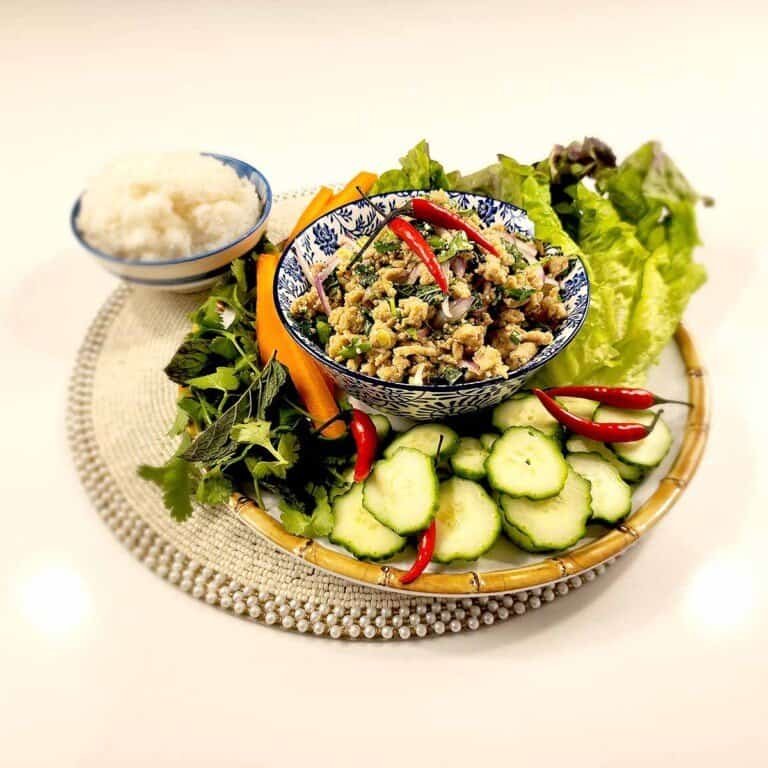
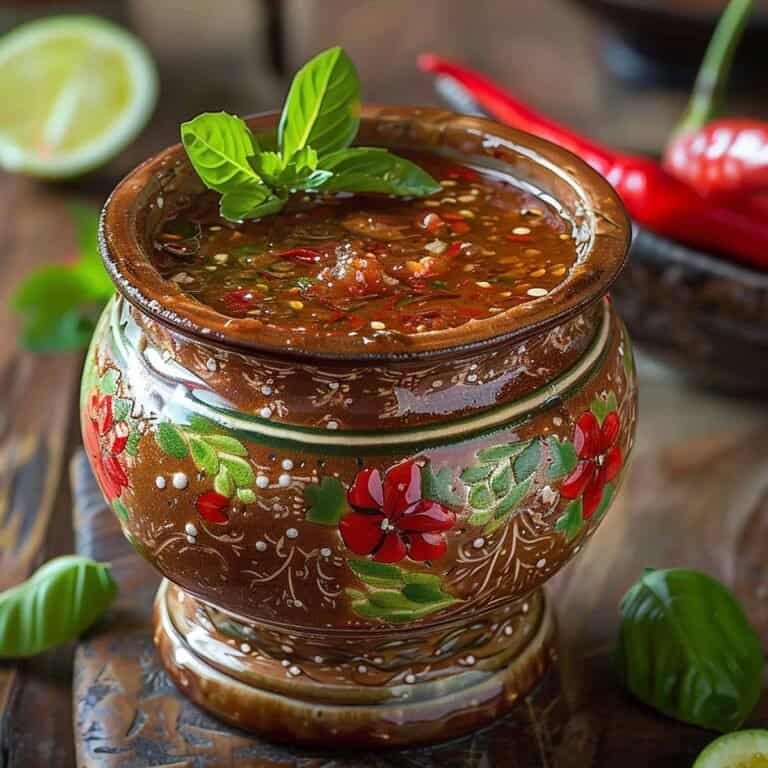
Sticky rice belongs next to almost everything bold and Thai, and the dishes that need it most are the ones that are sour, spicy, and alive. The Som Tum is the classic companion, the cold sour crunch of the green papaya salad and the warm sweet chew of the rice pressed into the sauce at the edge of the bowl is the most natural pairing in Isan cooking. The chicken larb is the other essential Isan companion, lime and herb and toasted rice powder against the plain sweetness of the steamed grain, both of them made for eating together with your hands. The Moo Ping is the grilled pork skewer that sticky rice was made to accompany, the caramelized smoke of the meat against the soft clean rice the pairing every Thai street market has always known. The Nam Phrik Num is the charred green chili dipping sauce that sticky rice goes into directly, rolled into small balls and pressed into the sauce. And if you want to see what this same grain becomes with coconut cream and ripe mango, the mango sticky rice takes it somewhere else entirely. Start with the basket. The rest follows.
FAQ
What rice do I use for a sticky rice recipe?
Thai glutinous rice, labeled sweet rice or sticky rice on the bag. Not jasmine, not sushi rice, not regular short-grain. The starch in glutinous rice is almost entirely amylopectin, which is what makes the cooked grains bond together. The bag matters. Get the right one and the rest follows.
How long do I soak the rice for a sticky rice recipe?
Four hours at a minimum. Overnight is better. The grains need to fully hydrate before they go near heat. Hold one up to the light. It should be completely opaque and white all the way through. Any translucence means more soaking time, not more steaming time.
How long does it take to steam a sticky rice recipe?
About twenty-five to thirty minutes total over actively boiling water. Steam for fifteen to twenty minutes, flip the rice mass, then steam another ten to fifteen minutes. The grains should be fully translucent and glossy, holding together when pressed, with no chalky center when you bite one. Rest covered for ten minutes off the heat before serving.
Can I make a sticky rice recipe without a bamboo steamer?
Yes. A metal steamer basket over boiling water with a tight lid works. A fine-mesh sieve set over a pot works in a pinch. The requirement is that the rice sits above the waterline and cooks only in steam, never in contact with water. That is the one rule that cannot bend.
Why is my sticky rice mushy at the bottom?
The water is touching the rice. Either the water level is too high or the basket sits too low. The rice must cook entirely in steam, suspended above the boiling water with nothing touching it from below. Check your clearance before you start. Raise the basket if you need to.
How do you eat sticky rice the Thai way?
With your right hand. Pull a small piece from the basket, roll it gently between your fingers until it holds its shape, then use it to scoop up the food beside it. It is the spoon and the plate at the same time. You stop thinking about the technique after the first two bites.
How do you store leftover sticky rice?
Room temperature in a covered container for up to one day. A woven basket lets it breathe without drying out. To reheat, wrap a portion in a damp paper towel and microwave for forty-five seconds. The refrigerator firms it too much. Room temperature is right for same-day rice.