What Is Som Tum?
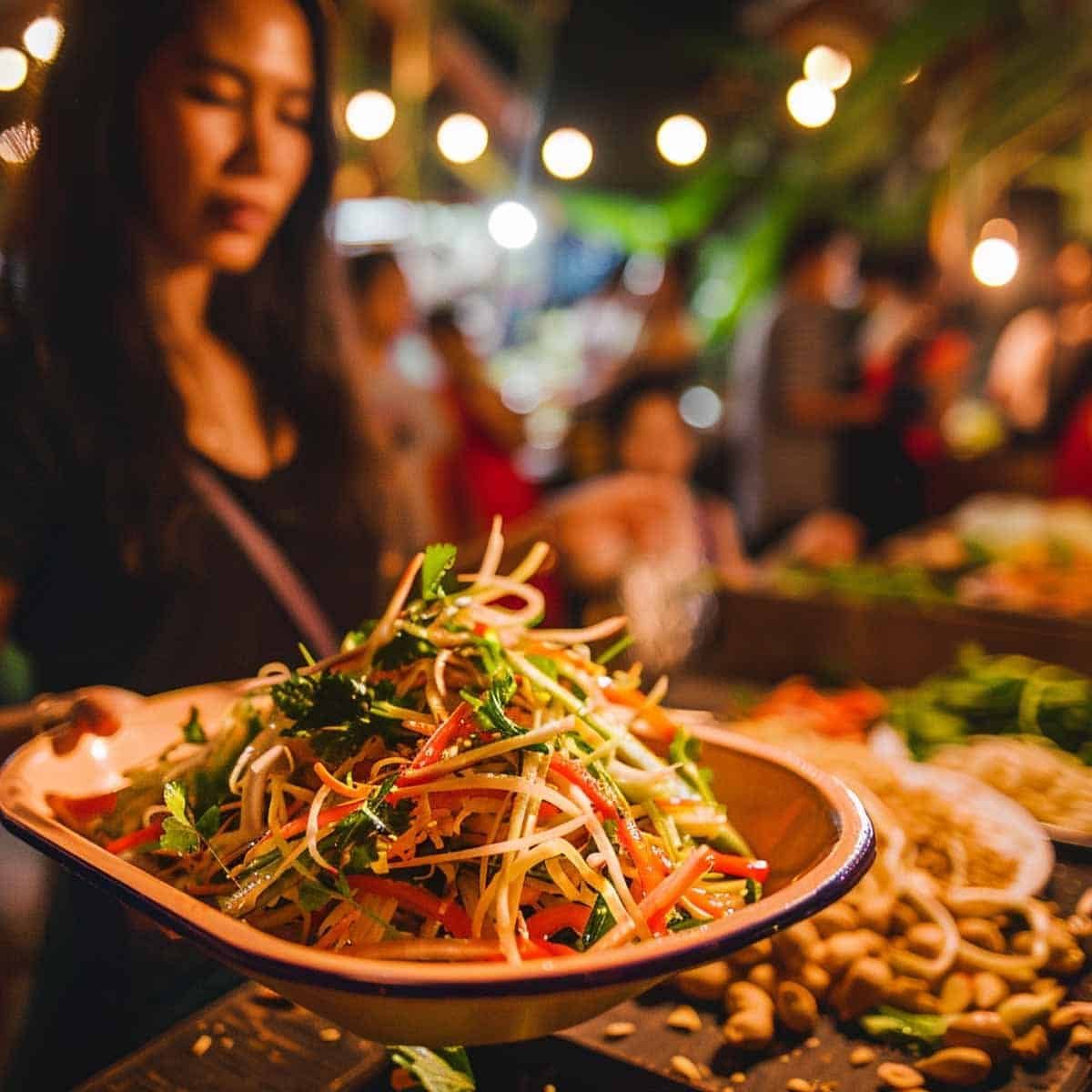
Som tum is a Thai green papaya salad built in a mortar, shredded unripe papaya pounded with bird chilies, garlic, fish sauce, lime, and palm sugar, then tossed with cherry tomatoes, long beans, dried shrimp, and peanuts. Sour, salty, spicy, and slightly sweet all at once. It does not wait. Neither should you.
Note From Susie
Sawasdee Kha, and Hello.
I tried Som Tum as a small child and did not like it. I remember that clearly. The fish sauce, the sour, the heat, none of it made sense to me yet. My mother ate it and I moved on to something else.
I left Thailand at six. I did not go back until I was twelve.

When I did, we went to the family farm in Kamphaeng Phet. My uncle was the village chief, the Phu Yai Ban, and his table meant something. The whole farm felt like that. Solid. Rooted. The kind of place that had been there long before you arrived and would be there long after.
Som Tum came to the table. I do not know who made it. I only know that I took one bite and did not stop.
Six years in America had happened in between. Six years of something being missing without knowing exactly what it was. I took that first bite at my uncle’s table in Kamphaeng Phet and something came back. Not the memory of liking it. Something older than that.
I have not stopped eating it since.

What’s In This Page
“I took one bite.
Something came back.
I have not stopped since.”
What Is Som Tum?
Som tum, ส้มตำ, pronounced sohm dtam, is a Thai green papaya salad built entirely in a mortar. Unripe green papaya is shredded and pounded with bird chilies, garlic, fish sauce, lime juice, and palm sugar until the dressing coats every strand. Cherry tomatoes, long beans, dried shrimp, and peanuts go in last. The name means sour pounded, som for sour, tum for the action of pounding.
Som tum originated in the Isan region of northeastern Thailand and the neighboring countries of Laos and Cambodia, where green papaya grows in abundance and the mortar is the center of the kitchen. According to the Oxford Companion to Food, green papaya salad preparations are found throughout mainland Southeast Asia, with the Thai version distinguished by its fish sauce base and the particular balance of sour, salty, and sweet that defines the dressing. You find it everywhere in Thailand now, from street carts to family tables. At my uncle’s table in Kamphaeng Phet it arrived without announcement. It did not need one.
The mortar hits the papaya and the whole kitchen smells like Thailand.
What You’ll Need
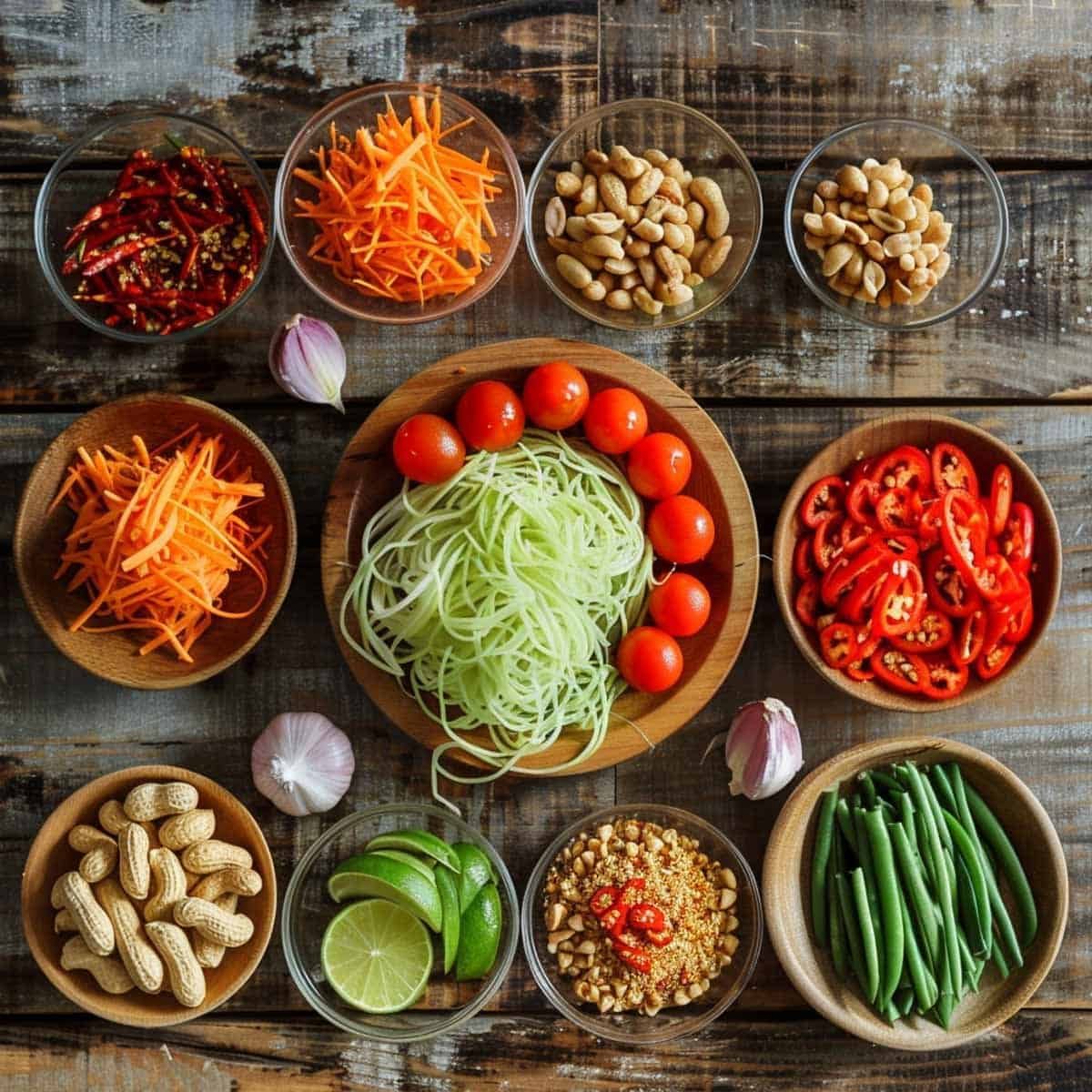
Green papaya, two cups, peeled, seeded, and shredded. Unripe, firm, pale green flesh. Not ripe papaya. Not orange inside. Use a julienne peeler or large grater to shred into thin strips. Rinse in cold water, drain, and squeeze out excess moisture.
Fresh Thai chili peppers, one to three, depending on your spice tolerance, finely sliced. Start with two. You can always add more. You cannot take them out.
Garlic, two cloves, minced.
Cherry tomatoes, one cup, halved. Long beans or green beans, half a cup, cut into one-inch pieces. Shredded carrots, a quarter cup, optional for extra color and crunch.
Dried shrimp, two tablespoons. They bring a deep savory note that fresh shrimp cannot replicate. Available at any Asian grocery store.
Lime juice, a quarter cup. Fish sauce, three tablespoons. Palm sugar, one tablespoon, finely crushed or grated. These three together are the dressing.
Roasted peanuts, a third cup, coarsely crushed, for finishing.
Visual Walk Through
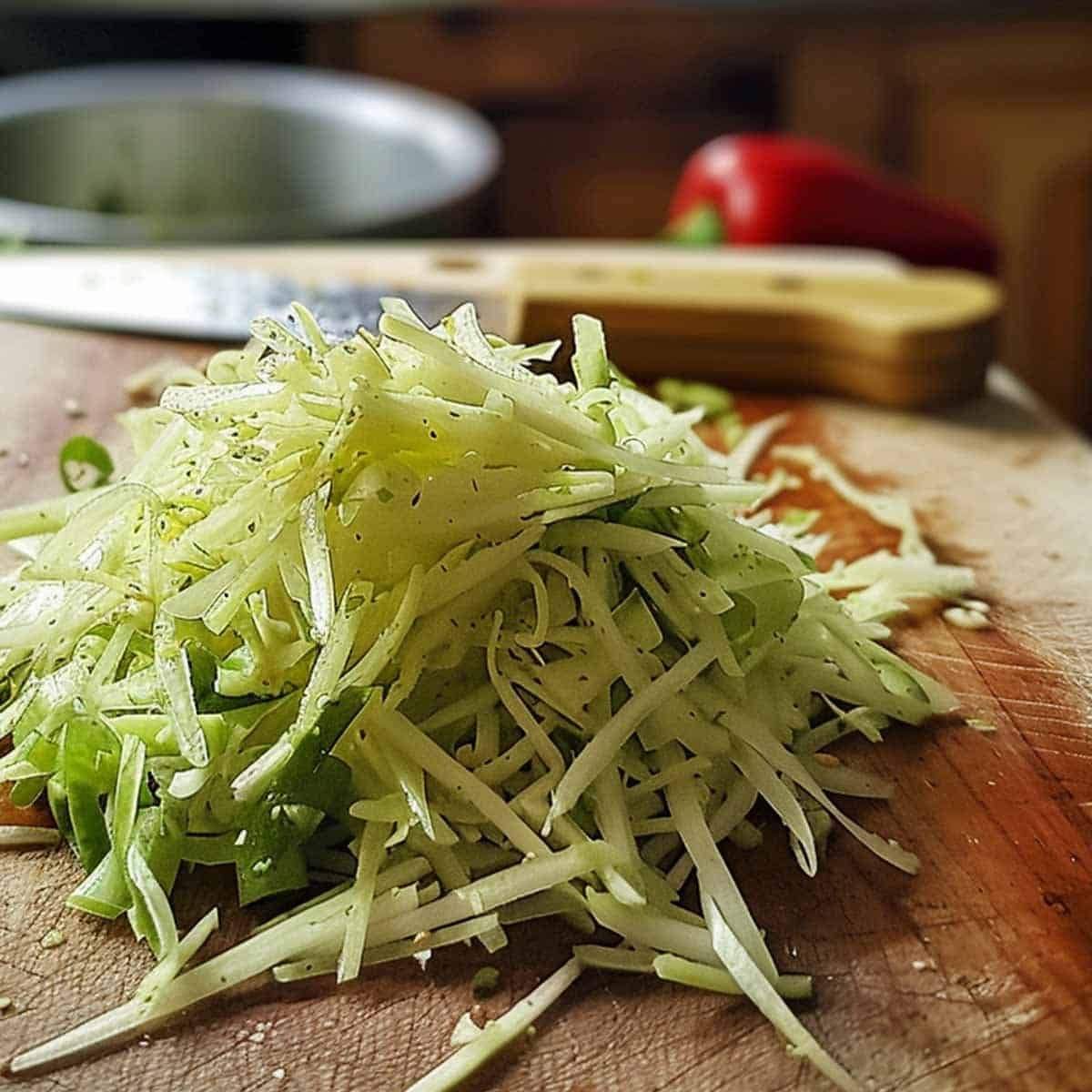
Step 1: Shred the Papaya
Use a julienne peeler or large grater to shred the green papaya and carrots into thin strips. Rinse the shredded papaya in cold water, drain, and squeeze out excess moisture.
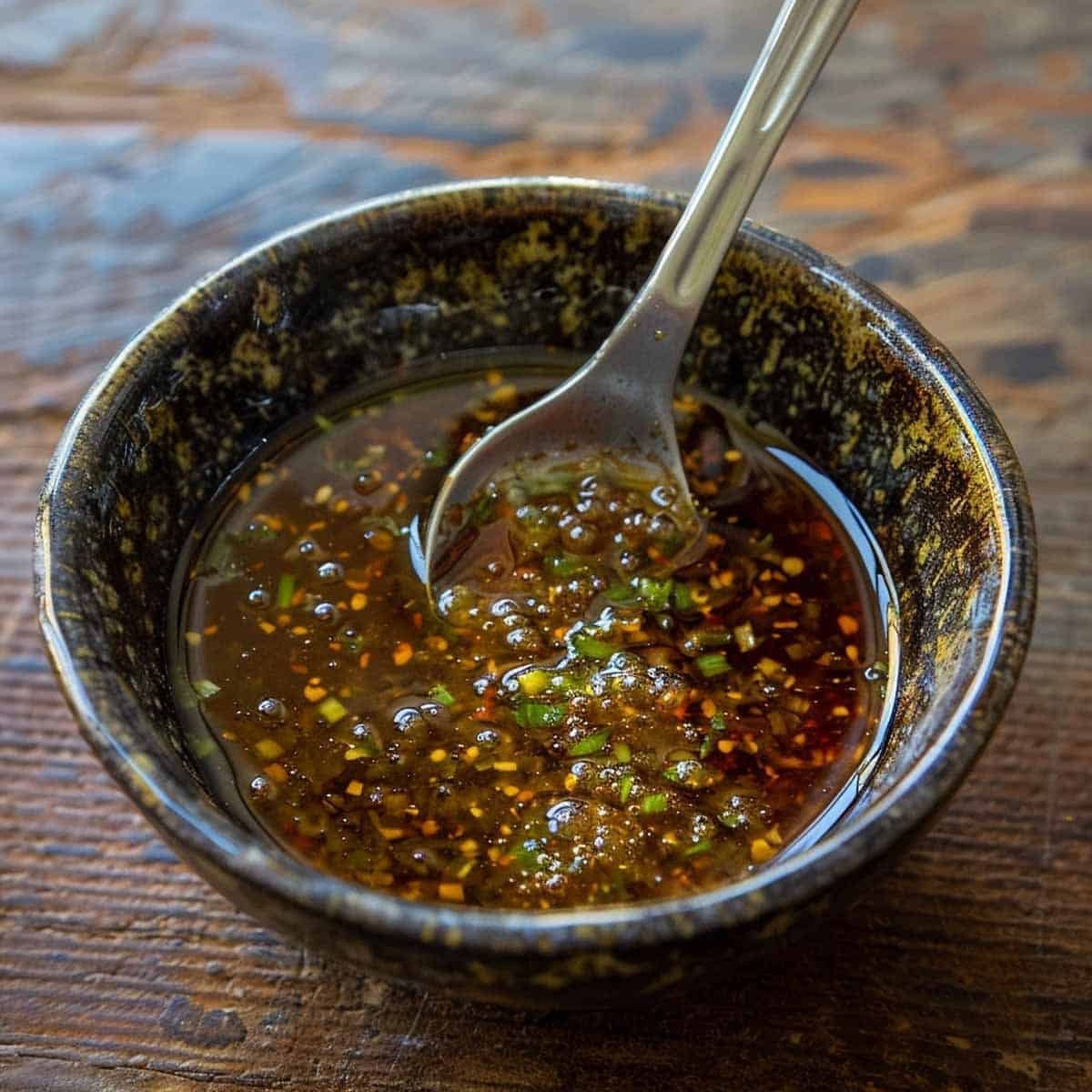
Step 2. Make the dressing.
In a small bowl, combine the lime juice, fish sauce, and palm sugar. Stir until the sugar is completely dissolved. The dressing should taste sour first, salty second, with a faint sweetness at the end. Get this balance right before anything else joins it.
The dressing can be built two ways. The mortar method: add the fish sauce, lime, and palm sugar directly to the mortar after the chilies and garlic are pounded, stir to combine with the paste, and taste before the papaya goes in. The bowl method: combine the three in a small bowl, dissolve the sugar completely, then pour over the papaya and vegetables and toss. Both are correct. Either way, taste the dressing before the papaya joins it. Sour first. Salt second. Faint sweetness at the end. The papaya and tomatoes will dilute it slightly once they go in, so the dressing alone should taste slightly more intense than you want the finished dish to be.
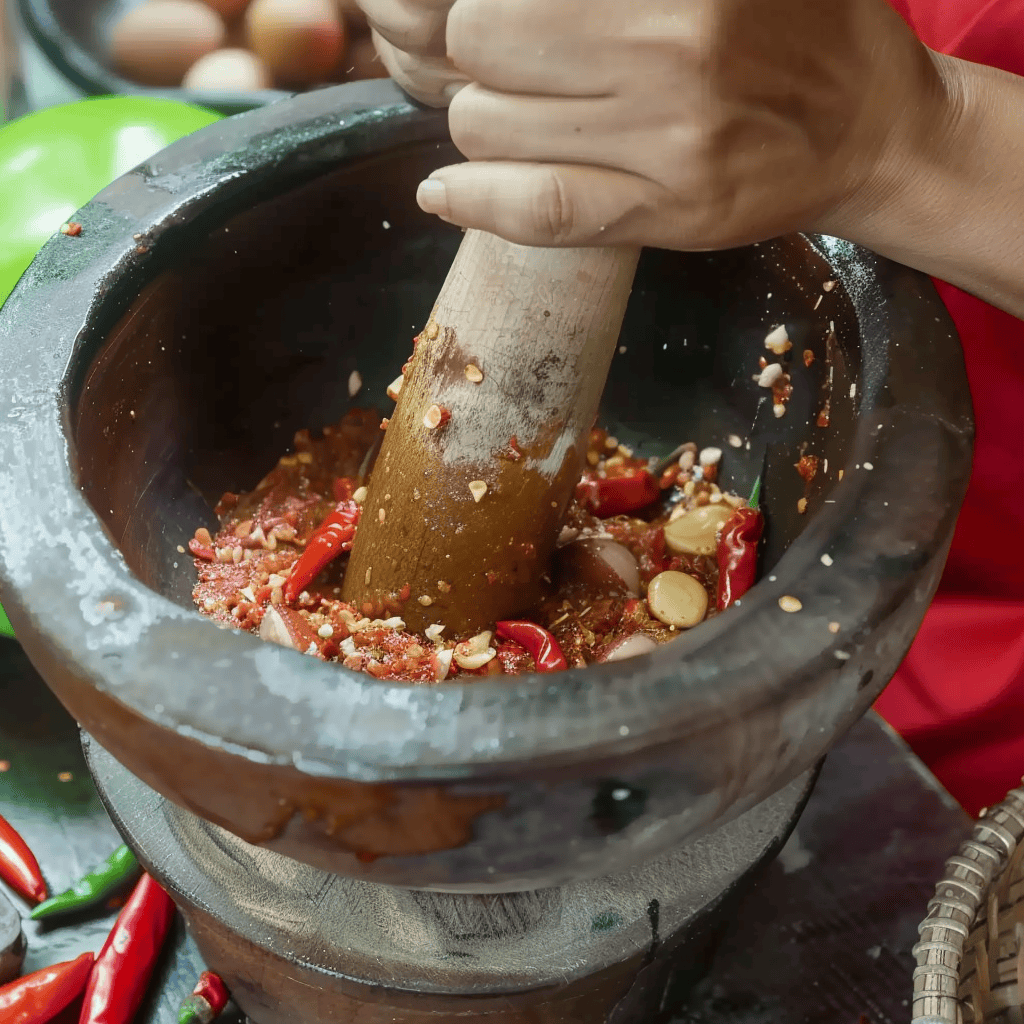
★ Step 3. Pound the chili and garlic. This is What Makes the Difference.
In a mortar and pestle, pound the garlic and Thai chilies to a coarse paste. If you do not have a mortar and pestle, mince them together finely. The number of chilies determines everything. Start with two. Once they are pounded in they cannot come out. Pound until the garlic and chili are fully integrated.
Step 4. Combine the salad.
Add the shredded papaya to the mortar in two batches. Use the pestle and a spoon together, pounding lightly with one hand and tossing with the other. You are bruising the papaya so it absorbs the dressing. Add the shredded carrots and long beans. Add tomatoes. Add the dried shrimp and toss once more.
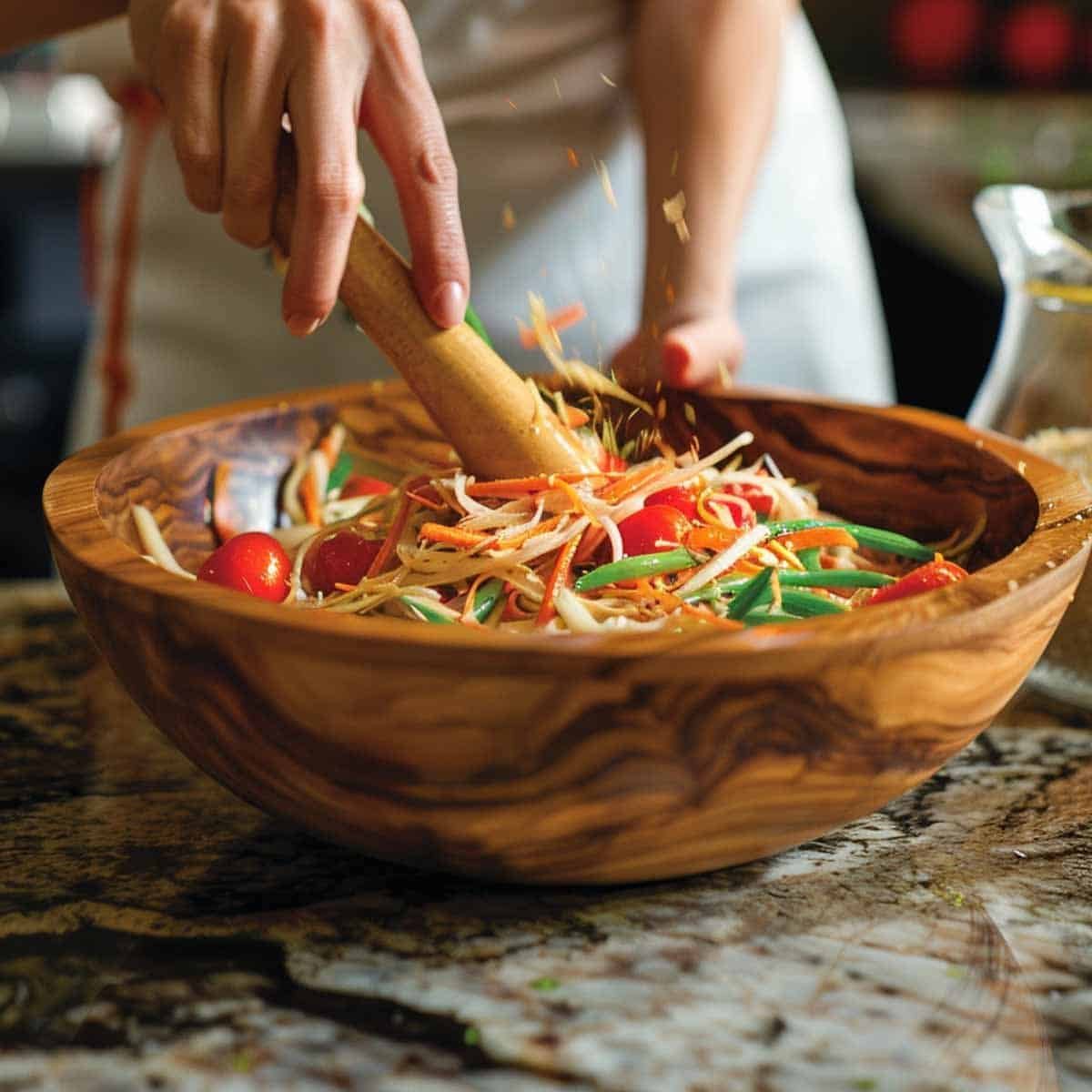
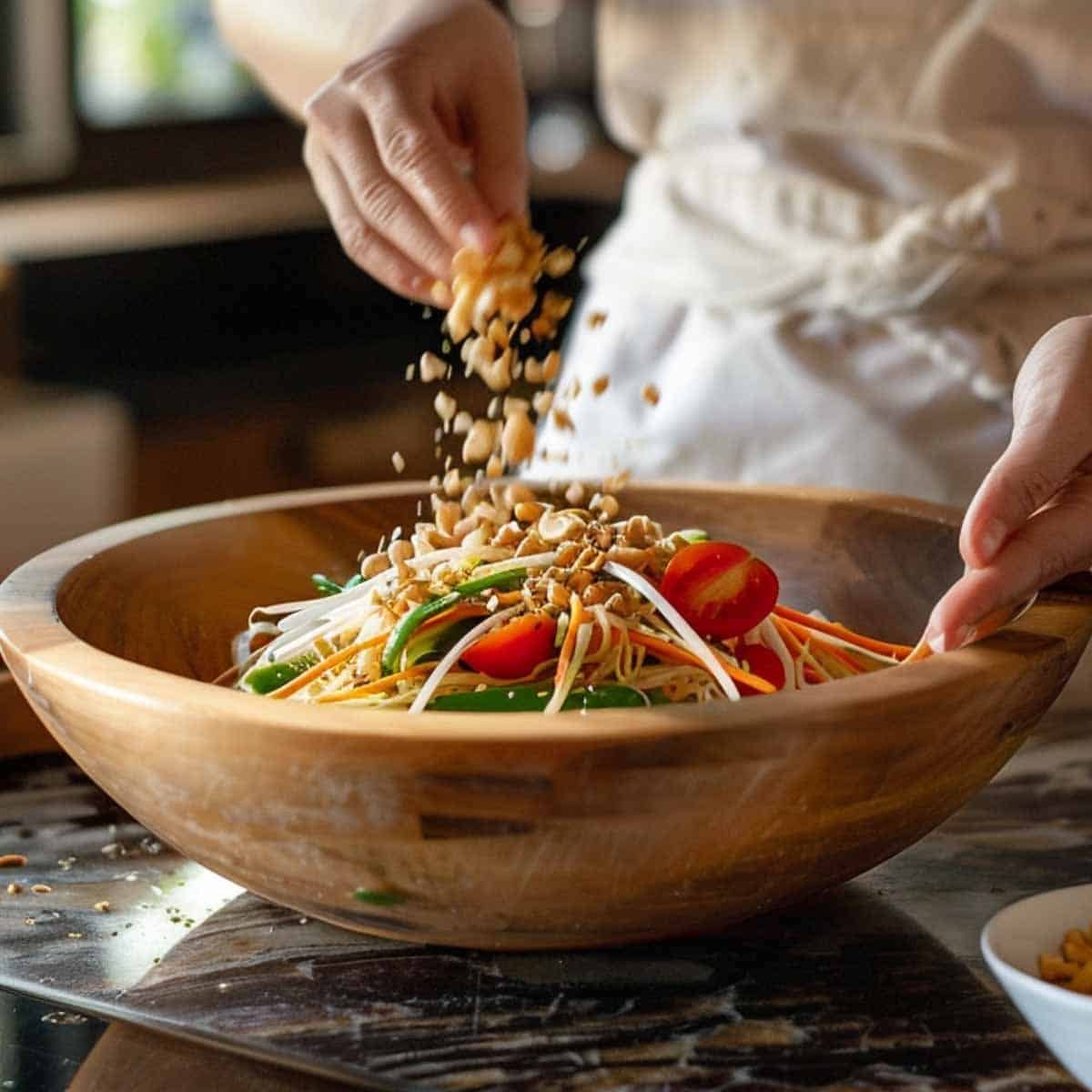
Step 5. Dress and mix the salad.
Pour the dressing over the vegetables. Use a spoon and a pestle or your hands to lightly bruise the vegetables with the dressing to absorb the flavors. Stir in the dried shrimp and half of the roasted peanuts.
Step 6. Finish with peanuts and serve.
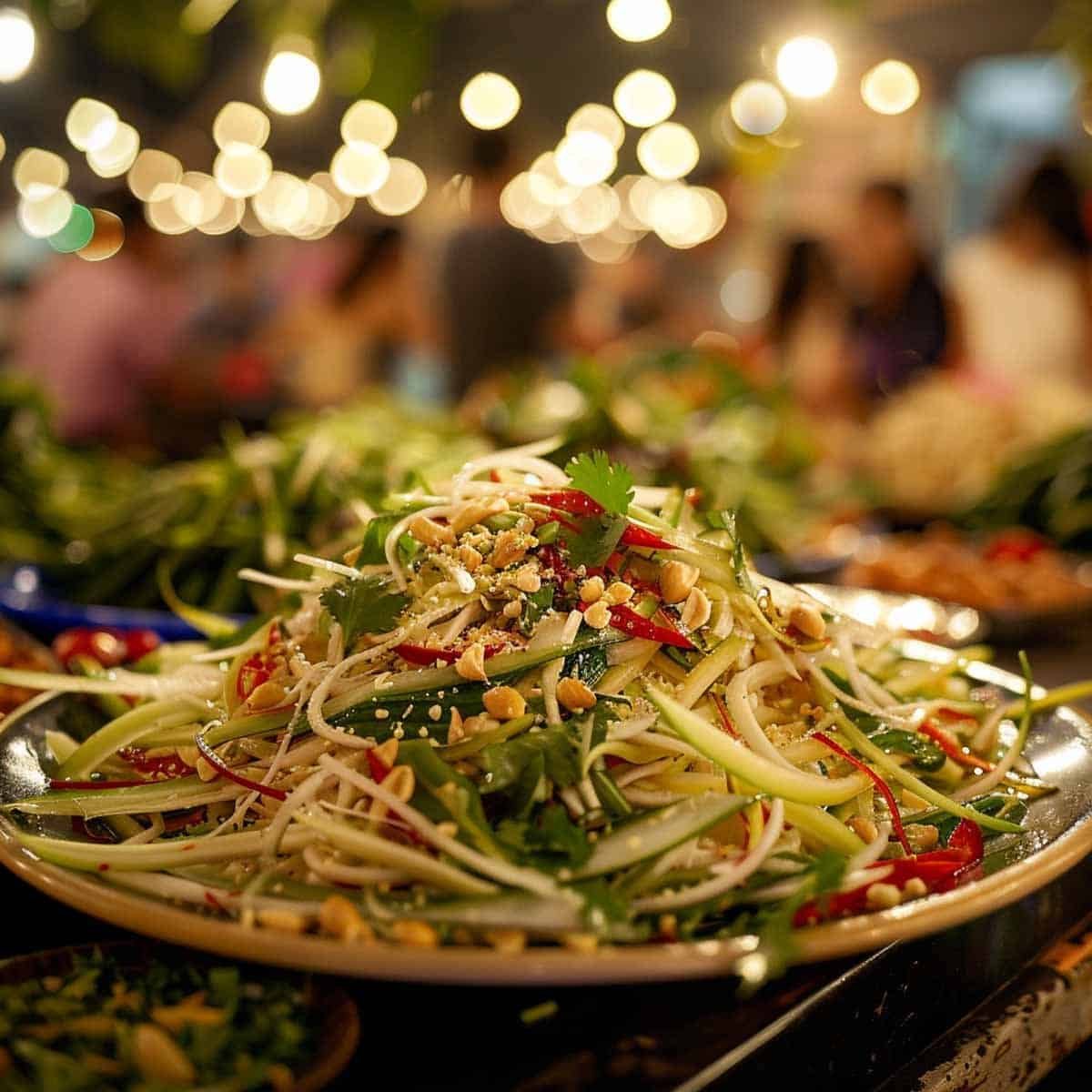
Transfer to a serving dish and sprinkle with the remaining roasted peanuts.
Som Tum Recipe Thai Green Papaya Salad
Ingredients
- 2 cups Green papaya peeled, seeded, and shredded
- 1 cup Cherry tomatoes halved
- 1/4 cup Carrots shredded (optional for extra color and crunch)
- 1/2 cup Long beans cut into 1-inch pieces
- 1/3 cup Roasted peanuts coarsely crushed
- 2 tbsp Dried shrimp
- 2 Garlic cloves
- 1-3 Fresh Thai chili peppers
- 1/4 cup Lime juice
- 3 tbsp Fish sauce
- 1 tbsp Palm sugar or brown sugar
Instructions
Prepare the papaya and vegetables:
- Use a julienne peeler or a large grater to shred the green papaya and carrots into thin strips.
- Rinse the shredded papaya in cold water, drain, and squeeze out excess moisture.
Make the dressing:
- In a small bowl, combine the lime juice, fish sauce, palm sugar. Stir until the sugar is completely dissolved.
Pound the chili and garlic:
- In a mortar and pestle, pound the garlic and Thai chilies to a coarse paste. If you don’t have a mortar and pestle, mince them together finely.
Combine the salad:
- Add the shredded papaya to the mortar in two batches. Use the pestle and a spoon together, pounding lightly with one hand and tossing with the other. Add tomatoes. Add the dried shrimp and toss once more.
Dress and mix the salad:
- Pour the dressing over the vegetables.
- Use a spoon and a pestle or your hands to lightly bruise the vegetables with the dressing to absorb the flavors. Stir in half of the roasted peanuts.
Serve:
- Transfer to a serving dish and sprinkle with the remaining roasted peanuts.
Notes
Nutrition
Let’s Get This Right
Why is my som tum soggy instead of crunchy?
The papaya was ripe, or the dish sat too long before eating. Green papaya must be fully unripe, firm, pale, no orange flesh anywhere inside. Ripe papaya collapses the moment dressing touches it. Also, Som tum must be eaten immediately. The dressing begins softening the papaya within thirty minutes. Make it at the table. Eat it at the table.
Why does my som tum taste flat and one-dimensional?
The dressing balance is off. Som tum lives at the intersection of sour, salty, and faintly sweet, if any one of those is missing or dominant, the dish falls flat. Build the dressing in the mortar before the papaya goes in and taste it on its own. Sour first from the lime, salt and depth from the fish sauce, a faint sweetness at the end from the palm sugar. Get that balance right before anything else joins it.
Can I make som tum without a mortar?
You can bruise the chilies, garlic, and long beans in a zip-lock bag with a rolling pin and toss everything together in a bowl. The result will be good. It will not be the same. The mortar releases the oils from the chili and garlic in a way that cutting or blending does not. The pounding is part of the flavor. If you make som tum more than twice a month, find a mortar. A large granite one. It will outlast everything else in your kitchen.
Why is my som tum too spicy?
Too many chilies went in at once. Bird chilies are small but they are serious. Start with two, build the full dressing, taste, then decide if you need more. Once the chilies are pounded into the paste they cannot come out. Two is a reasonable starting point for most people. Four is where I am comfortable. Go slowly and find your level.
What can I substitute for dried shrimp?
Nothing replaces dried shrimp exactly, they bring a specific savory depth that fresh shrimp, fish sauce, or any other ingredient does not replicate. Most Asian grocery stores carry them. If you genuinely cannot find them, leave them out rather than substitute. The dish will still be good. It will just be missing one layer of what makes it specifically Som tum.
Flavor Profile
The mortar is loud before anything else, the crack of chili against stone, the pestle working garlic into paste, the sound of the dish being built before you can smell it. Then the lime hits the mortar, and the smell arrives all at once, sour and sharp and green, fish sauce underneath it, something alive and immediate. The finished salad is pale green and glossy, cherry tomatoes pressed into the strands, peanuts scattered across the top. The first bite hits sour immediately, bright, clean lime cutting through everything. Then the salt from the fish sauce, deep and savory. Then the heat, building from the back, the bird chilies making themselves known without announcing themselves upfront. The papaya is cold and crunchy, the long beans have texture, the dried shrimp are small pockets of intensity. The peanuts land last, dry and grounding. Nothing about this dish is subtle. Everything about it is balanced. That is the whole trick. My uncle’s table in Kamphaeng Phet. That first bite at twelve years old. That is what this tastes like.
Susie’s Kitchen Notes
The mortar needs to be large enough. A small decorative mortar is not the tool for this dish. You need a mortar with an interior diameter of at least eight inches, large enough to hold the papaya, the tomatoes, the long beans, and still have room to toss. A large granite mortar is the right tool. It is heavy enough to stay still on the counter, and the texture of the stone does the work that a smooth surface cannot. I still use my mother’s mortar and pestle.
The palm sugar matters. Granulated white sugar is not the same, it dissolves differently and the sweetness is sharper and more upfront. Palm sugar dissolves slowly and the sweetness it brings is rounder and sits at the back of the flavor where it belongs in Som tum. Find it at any Asian grocery store, usually sold in small round discs or a jar of soft paste. A small amount goes a long way.
Taste everything before the papaya goes in. The dressing is the dish, the papaya and the other ingredients carry it, but the balance of fish sauce, lime, and palm sugar is where Som tum succeeds or fails. Get it right in the mortar before anything else joins it. The papaya will dilute the dressing slightly as it absorbs, so the dressing alone should taste slightly more intense than you want the finished dish to be. A little brighter, a little saltier. Then add the papaya and taste again.
Keep everything cold. Green papaya, tomatoes, long beans, all cold from the refrigerator before they go into the mortar. Cold papaya stays crisp longer in the dressing. Room temperature papaya begins to soften almost immediately. This is a small thing that makes a real difference in the finished texture.
Pairing Suggestions
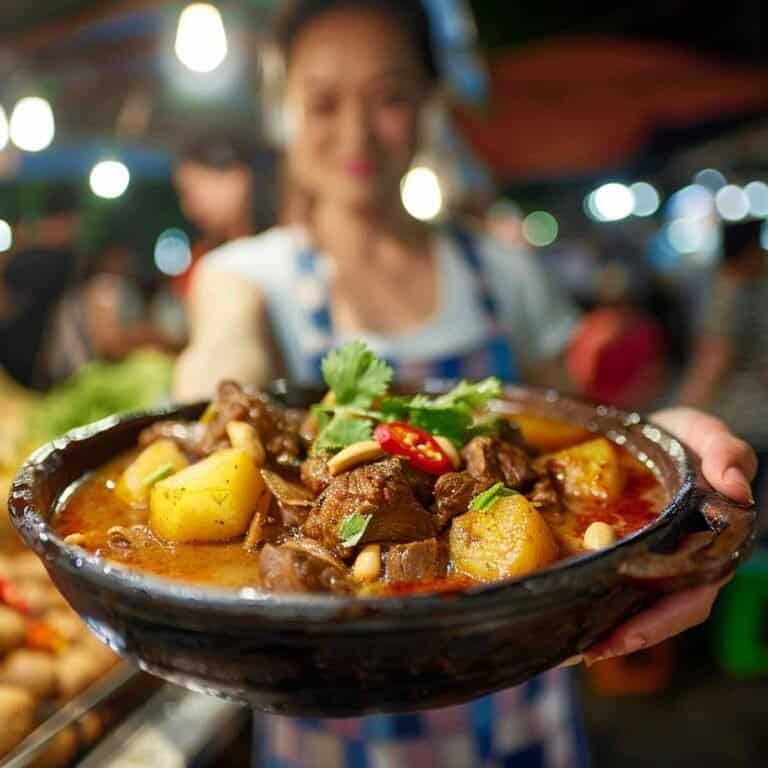
Som tum belongs beside Thai fried spring rolls, that is the Isan pairing that has never needed improving, the smoke and char of the grill against the cold bright sour of the salad. Sticky rice goes with both, pressed into the Som tum at the edge of the bowl the way it is eaten across northeastern Thailand. Thai Beef Jerky (Neua Sawan) alongside gives the table something chewy and deep to balance something sharp and fresh. For a full spread, Massaman Curry brings the richness that Som tum cuts through better than anything else on the table. My uncle’s table in Kamphaeng Phet always had more than one thing on it. That is the right way to eat.
FAQ
What is som tum made of?
Som tum is made from two cups of shredded unripe green papaya pounded in a mortar with one to three bird chilies and two garlic cloves, dressed with a quarter cup lime juice, three tablespoons fish sauce, and one tablespoon palm sugar, then tossed with one cup halved cherry tomatoes, half a cup long beans cut into one-inch pieces, optional shredded carrots, two tablespoons dried shrimp, and a third cup roasted peanuts. The name means sour pounded. Every ingredient has a job. None of them are optional.
Is som tum the same as green papaya salad?
Yes. Som tum is the Thai name for what is often called Thai green papaya salad in English. Som means sour, tum means pounded, the name describes exactly how it is made and what it tastes like. It originated in the Isan region of northeastern Thailand and is now one of the most widely eaten dishes across the country.
How spicy is som tum?
As spicy as you make it. The heat comes entirely from the bird chilies pounded into the dressing. Start with two for a moderate heat that most people can handle. Four is where I am comfortable after forty years of eating it. Add one chili at a time and taste after each addition. Once they are pounded in they cannot come out.
Can I make som tum without a mortar and pestle?
Yes. Bruise the chilies, garlic, and long beans in a zip-lock bag with a rolling pin and toss everything together in a bowl. The result will be good but not the same. The mortar releases oils from the chili and garlic that cutting cannot replicate. If you make som tum regularly, a large granite mortar is worth finding. It will outlast everything else in your kitchen.
What papaya do I use for som tum?
Unripe green papaya, firm, pale, almost white inside with no sweetness at all. Not ripe papaya, not starting to turn orange. The unripe fruit has the crunch and neutral flavor that holds up to the dressing without collapsing. Find it at any Asian grocery store. It will feel hard in your hand. That is correct.
Can I make som tum ahead of time?
No. Som tum must be made immediately before eating. The dressing begins softening the papaya within thirty minutes and the dish loses its crunch and brightness quickly. You can shred the papaya and prepare all the ingredients ahead of time and keep them cold, but the mortar work and the tossing happen at the last minute. Make it. Eat it. Now.
What do you serve with som tum?
Sticky rice is the traditional accompaniment, pressed into the som tum at the edge of the bowl the way it is eaten across northeastern Thailand. Thai beef jerky alongside adds something chewy and deep. Som tum cuts through rich dishes better than anything else on a Thai table, it belongs beside Panang curry, larb, or any coconut milk dish that needs the contrast of something cold and sour and alive.