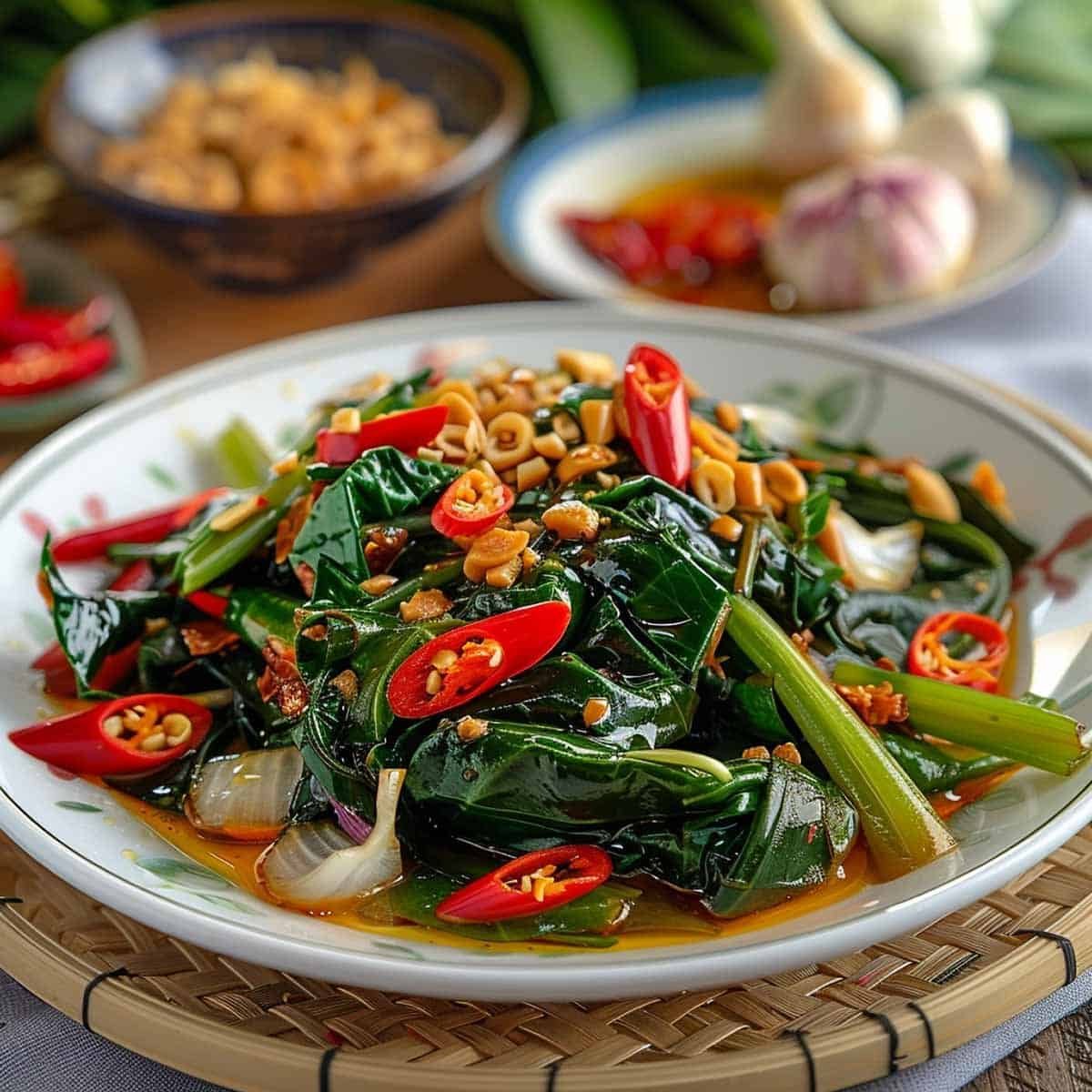
What Is Stir Fried Morning Glory?
Stir fried morning glory, Pad Pak Boong (ผัดผักบุ้ง), is a fast, high-heat stir-fry of water spinach with garlic, fresh chilies, oyster sauce, fish sauce, and fermented soy bean paste. The whole dish is done in three minutes. The vegetable stays bright green. The garlic is loud and the sauce is savory and the wok needs to be very hot. It is simpler than it looks and better than you expect.
Note From Susie

Sawasdee Kha, and Hello.
I did not yet understand what this was, and that is completely fine, because some things take time.
What I knew was the color. Bright green, arriving at our table, still glossy from the wok. I knew there was a lot of garlic, you could see it and you could smell it, and I knew the sauce was there, dark and savory at the edges. I did not mind the sauce at all. My mother made sure not to add any spice because I was young and still learning what food was, still finding my way through a world of flavors that was bigger than I was.
We sat at our table and she put it down and I ate what made sense to me and left the rest for later. That is what young children do with food they are still meeting for the first time.
Then I grew. And somewhere in the growing, this simple vegetable found me properly. I finally understood what my mother had always known, that a hot wok, good garlic, and the right sauce can take something as quiet as a green leaf and make it genuinely wonderful. Nothing complicated. Nothing pretending to be more than it is. Just exactly right.
She made it simply. She made it correctly. I finally caught up, and I am so glad I did. This one is worth knowing.

What’s In This Page
“Nothing complicated. Nothing pretending to be more than it is. Just exactly right.”
— Her Hands His EyesWhat Is Stir Fried Morning Glory?
Stir fried morning glory, ผัดผักบุ้ง, Pad Pak Boong, is one of the most common vegetable dishes in Thai cooking and one of the fastest. Morning glory, pak boong, also called water spinach, is a semi-aquatic leafy green with hollow stems and pointed leaves, grown throughout Southeast Asia and used in Thai cooking as one of the primary green vegetables alongside Chinese broccoli and bok choy. It is a mild, slightly sweet vegetable that takes on the flavor of whatever it is cooked with, which in this dish is garlic, fresh chilies, oyster sauce, fish sauce, and fermented soy bean paste, without losing its own clean, green character.
The stir-fry is done at very high heat and takes three minutes from the moment the garlic hits the oil to the moment the dish leaves the wok. The morning glory wilts fast. The garlic must not burn. The sauce must coat every stem and leaf. The wok must be genuinely hot. The vegetable should sizzle loudly the moment it makes contact with the pan, and the edges of the leaves should char very slightly where the heat is highest. That char is what elevates stir fried morning glory from a simple cooked vegetable into something worth eating on its own terms.
Pad Pak Boong is found at every Thai restaurant and street stall, often prepared by vendors in large woks over extremely high flames. At home the principle is the same even if the theatre is less. According to the Oxford Companion to Food, water spinach is one of the most widely consumed vegetables in Southeast Asia, central to the cuisines of Thailand, Vietnam, the Philippines, and southern China.
Simple vegetable. Very hot wok. Three minutes. Bright green at the end.
What You’ll Need
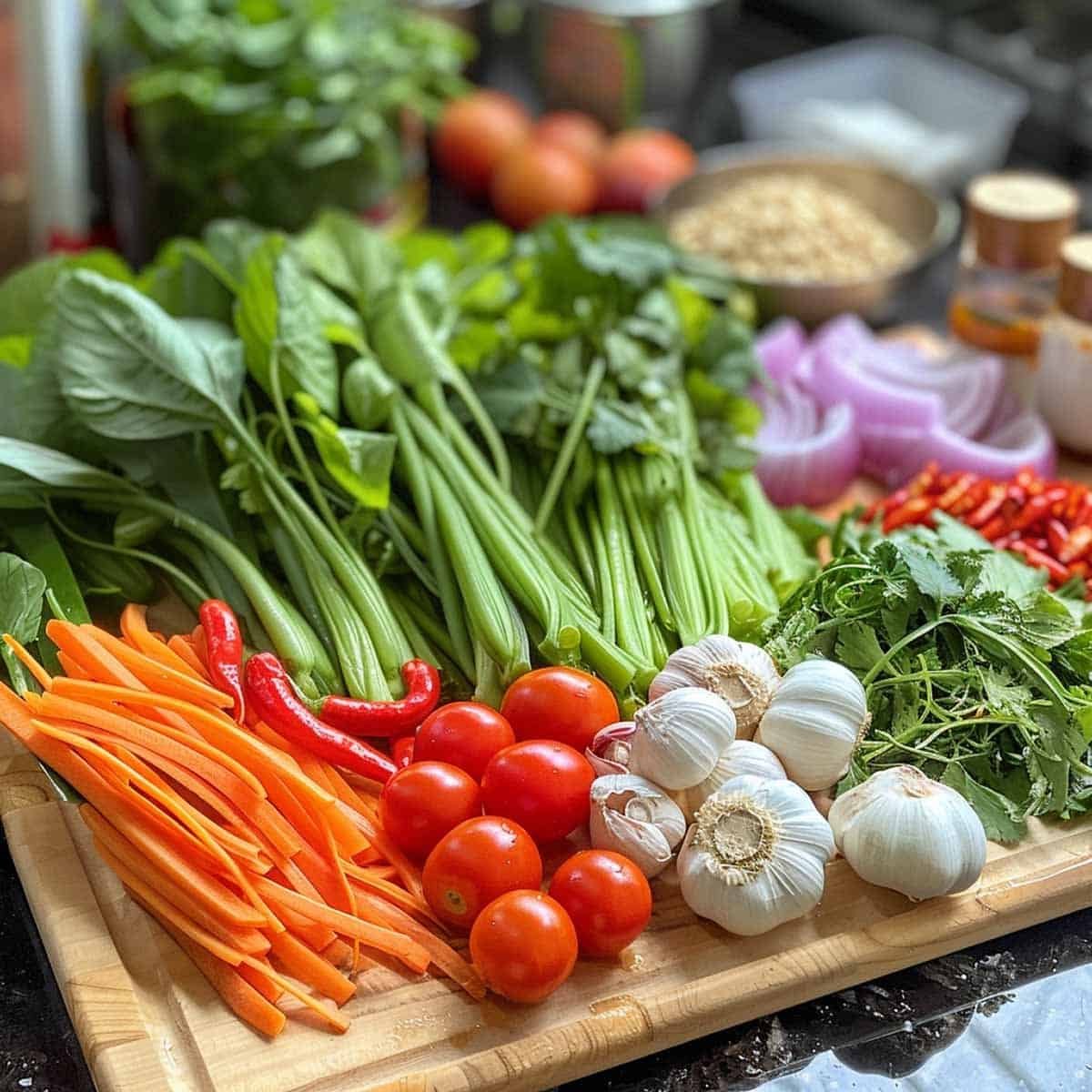
Fresh morning glory, one pound, pak boong or water spinach, washed, tough stems trimmed, cut into three-inch pieces. Separate the stems from the leaves before cooking. The stems go in first, the leaves after. Buy more than you think you need, it wilts down significantly.
Garlic, four cloves, roughly chopped. Not minced fine. Rough chopped pieces that will char slightly at the edges in the very hot oil.
Fresh Thai bird eye chilies, four, roughly chopped. They go in with the garlic. For a version without heat, leave them out entirely. The dish is completely correct without them.
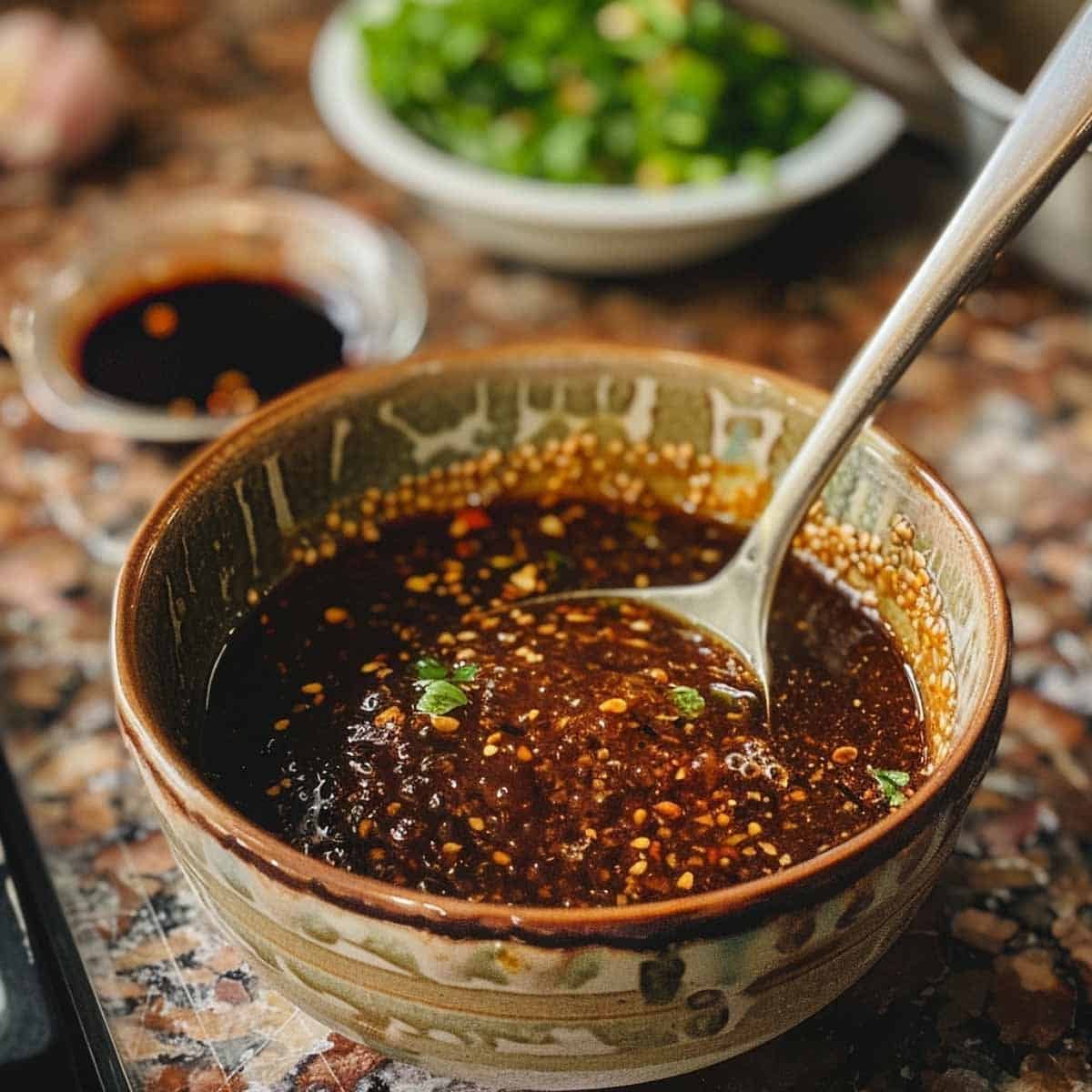
The sauce is mixed before the wok gets hot: tao jiao fermented soybean paste, two tablespoons. Oyster sauce, one tablespoon. Fish sauce, one tablespoon. Soy sauce, one tablespoon. Sugar, one teaspoon. Stir together in a small bowl and have it right next to the stove. This dish moves too fast to measure while cooking.
Vegetable oil, three tablespoons. A wok or large heavy skillet. The highest heat your burner will produce. Two cups steamed jasmine rice for serving.
VISUAL WALK THROUGH
Step 1. Get everything ready before the heat goes on.
Before the wok goes on, mix tao jiao, oyster sauce, fish sauce, soy sauce, and sugar together in a small bowl. Stir well and set it right next to the stove. Have your chopped garlic and chilies in a small pile right beside the wok, and your morning glory washed, trimmed, and within arm’s reach. This dish moves so fast that having everything ready is not optional. Three minutes from start to plate is not enough time to prepare ingredients.
Step 2. Fry the garlic and chilies.
Heat your wok over the highest heat your stove can produce. Add the oil and swirl to coat. When the oil is shimmering and just beginning to smoke, add the garlic and chilies all at once. Stir-fry for about fifteen to twenty seconds only. You want them fragrant and just beginning to color at the edges, not soft and cooked through. This is the most time-sensitive moment in the dish. The garlic must become golden without burning. Watch it constantly. Do not walk away.
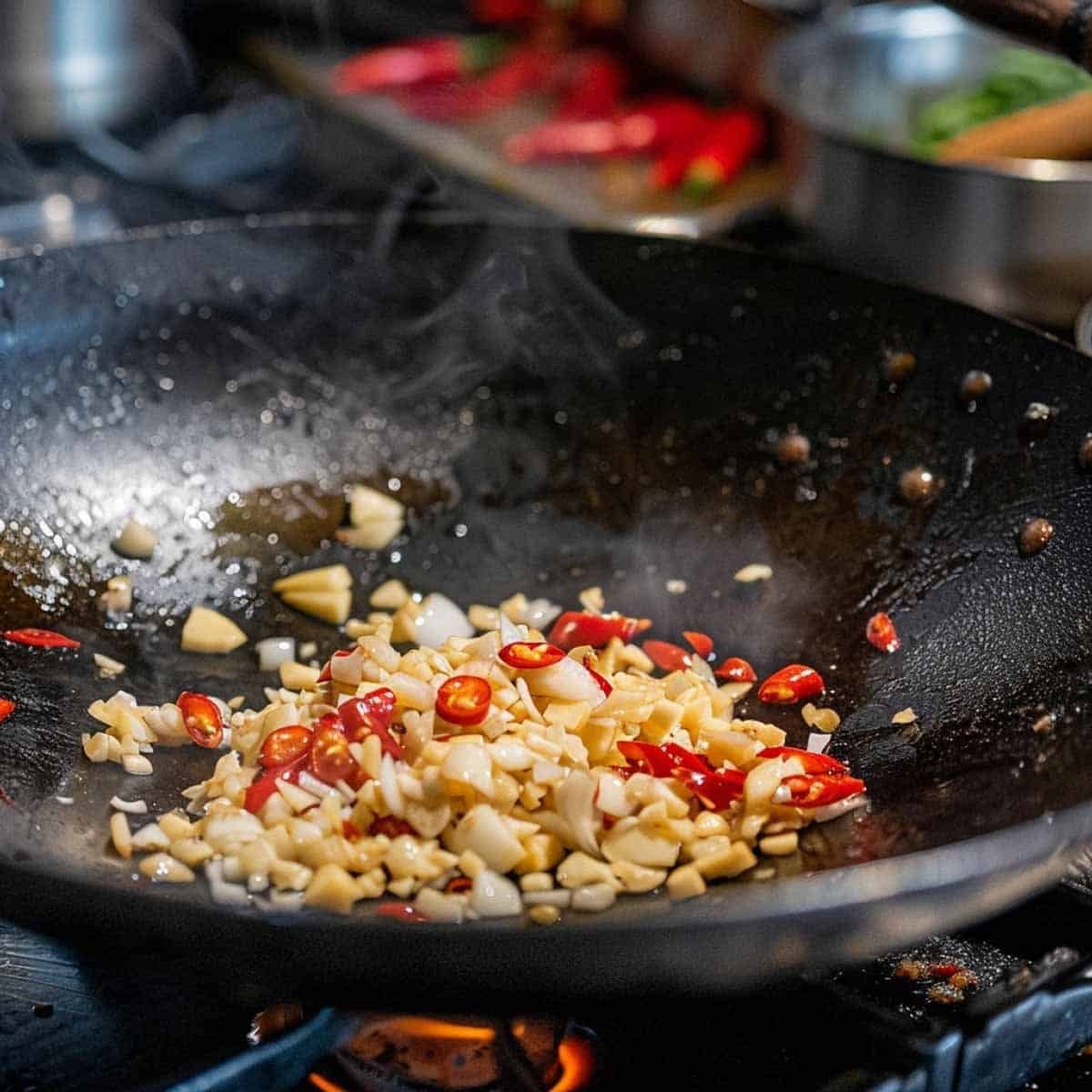
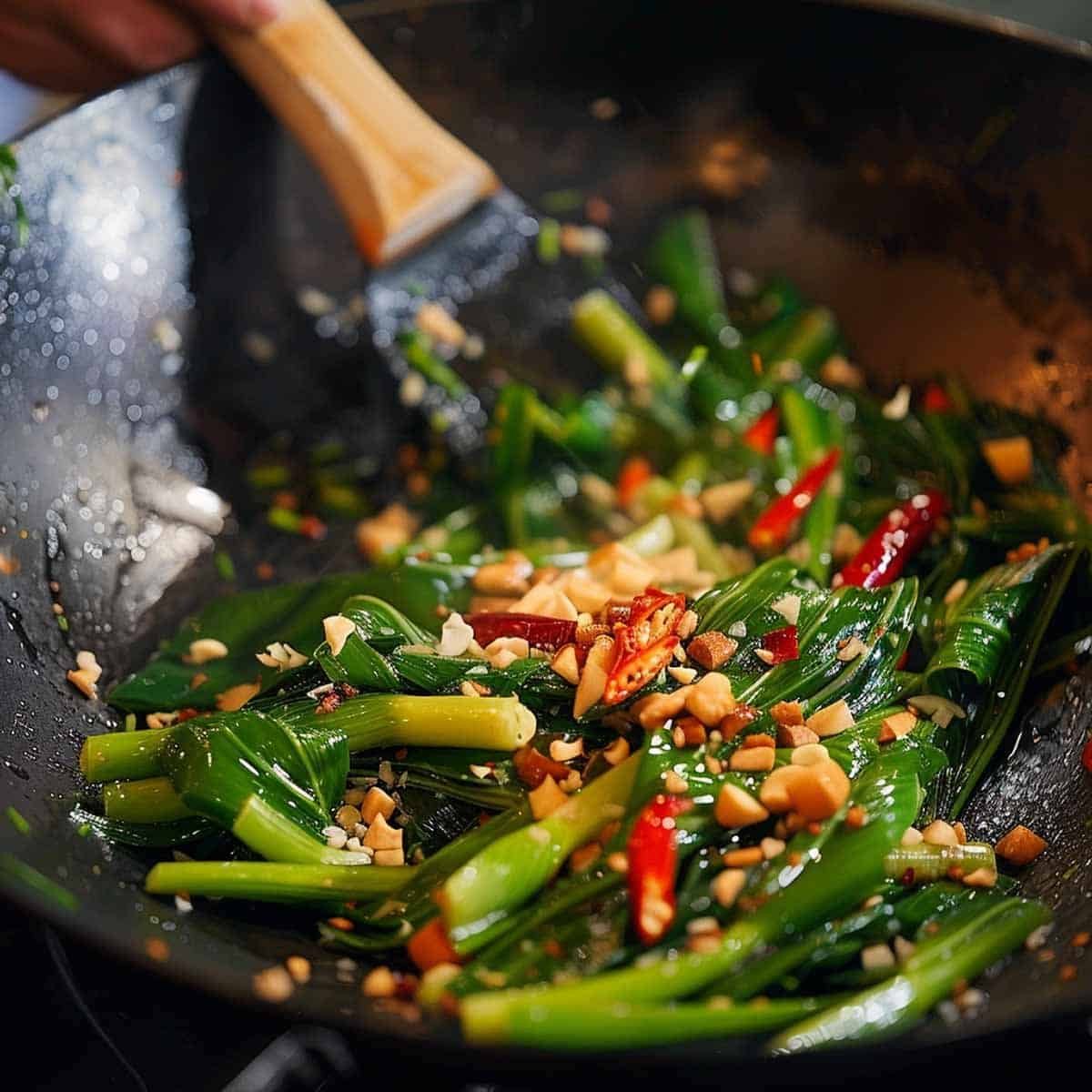
★ Step 3. Add the morning glory and sauce. Toss until just wilted. This is What Makes the Difference.
Add the morning glory stems first and toss immediately. Give them about twenty to thirty seconds over the high heat before adding the leaves. Once the leaves go in, pour the sauce over everything at the same time. Toss constantly and vigorously, making sure every piece of morning glory gets coated in the sauce and exposed to the heat. Keep tossing for about sixty to ninety seconds total. The leaves will wilt quickly and the stems will turn bright green and slightly glossy. The morning glory is ready when it is vibrant green, just wilted, and coated in the savory sauce. The stems should still have a little crunch. Do not walk away from this wok for even a moment.
Step 4. Serve.
Transfer to a serving plate and bring it straight to the table. Serve over steamed jasmine rice. Pad Pak Boong waits for nobody. Every second it sits off the heat it loses a little of its brightness and crunch.
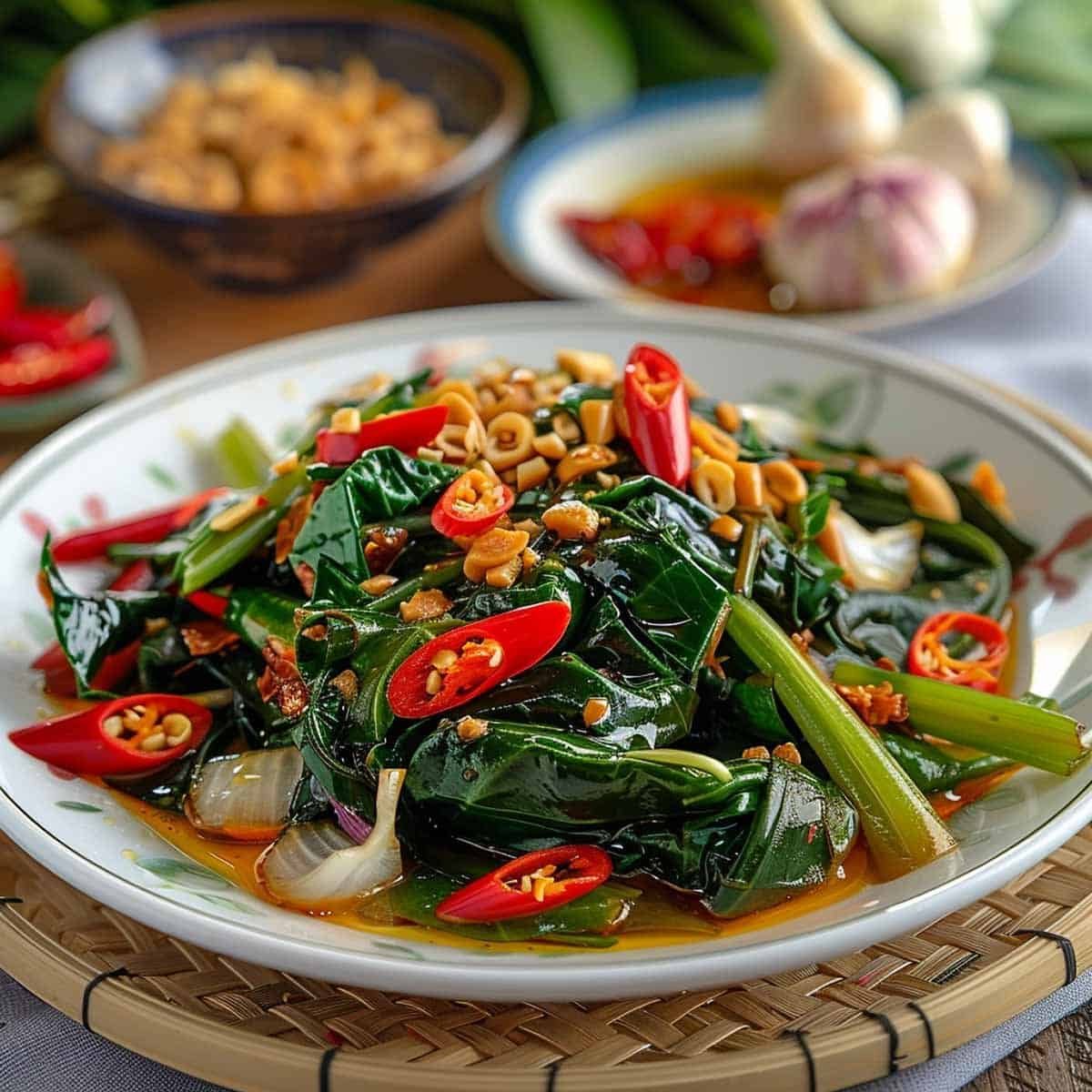
Pad Pak Boong Fai Daeng ผัดผักบุ้งไฟแดง Thai Stir-Fried Morning Glory
Equipment
- Wok or large heavy skillet
- wok spatula
- small bowl for the sauce
Ingredients
- 1 pound large bunch fresh morning glory pak boong / water spinach / ong choy, washed, tough stems trimmed, cut into 3-inch pieces
- 4 garlic cloves roughly chopped
- 4 fresh Thai bird’s eye chilies roughly chopped
- 2 tablespoons tao jiao fermented soybean paste
- 1 tablespoon oyster sauce
- 1 tablespoon fish sauce
- 1 tablespoon soy sauce
- 1 teaspoon sugar
- 3 tablespoons vegetable oil
- 2 cups steamed jasmine rice to serve
Instructions
- Get everything ready before the heat goes on: Before the wok goes on, mix tao jiao, oyster sauce, fish sauce, soy sauce, and sugar together in a small bowl. Stir well and set it right next to the stove. This dish moves so fast that having everything ready is not optional. Also have your chopped garlic and chilies in a small pile right beside the wok, and your morning glory washed, trimmed, and within arm's reach.
- Fry the garlic and chilies: Heat your wok over the highest heat your stove can produce. Add the oil and swirl to coat. When the oil is shimmering and just beginning to smoke, add the garlic and chilies all at once. Stir-fry for about 15 to 20 seconds only. You want them fragrant and just beginning to color at the edges, not soft and cooked through.
- Add the morning glory and sauce: Add the morning glory stems first and toss immediately. Give them about 20 to 30 seconds over the high heat before adding the leaves. Once the leaves go in, pour the sauce over everything at the same time. Toss constantly and vigorously, making sure every piece of morning glory gets coated in the sauce and exposed to the heat.
- Toss until just wilted: Keep tossing for about 60 to 90 seconds total. The leaves will wilt quickly and the stems will turn bright green and slightly glossy. The morning glory is ready when it is vibrant green, just wilted, and coated in the savory sauce. The stems should still have a little crunch. Do not walk away from this wok for even a moment.
- Serve immediately: Transfer immediately to a serving plate and bring it straight to the table. Serve over steamed jasmine rice. Pad Pak Boong waits for nobody. Every second it sits off the heat it loses a little of its brightness and crunch. Make it last, eat it first.
Notes
Nutrition
LET’S GET THIS RIGHT
Why is my stir fried morning glory gray and limp instead of bright green?
The wok was not hot enough, or the vegetable sat in the wok after the heat went off. High heat is what keeps morning glory bright green. It wilts the vegetable fast and sets the color before it can dull. A wok that is not hot enough causes the morning glory to steam rather than stir-fry. Get the wok genuinely hot before anything goes in, and move the vegetable from wok to plate immediately when done.
Why does my stir fried morning glory taste flat despite using the right ingredients?
The fermented soy bean paste was omitted, or the wok was not hot enough to caramelize the sauce. The fermented soy bean paste is the ingredient that provides the depth that separates the restaurant version from a home approximation. Without it, the dish tastes of oyster sauce and fish sauce but lacks the fermented foundation that makes those flavors cohere. Get the tao jiao. It is worth finding.
Can I substitute spinach or other greens for morning glory?
Regular spinach works as a last resort but wilts much faster and has a different texture and flavor. Chinese broccoli is a good alternative for the stems. The flavor profile of the sauce and the technique remain the same regardless of the green used. Morning glory, when you can find it, is worth finding.
Can I make stir fried morning glory without fermented soy bean paste?
You can omit it. The dish will still be good with oyster sauce and fish sauce alone. But it will taste different, less complex, more straightforward. If tao jiao is genuinely unavailable, half a teaspoon of white miso paste mixed into the sauce approximates the fermented quality. The result is not identical but it moves in the right direction.
How do I keep the garlic from burning in stir fried morning glory?
Move fast and have the morning glory stems ready before the garlic goes in. The garlic has fifteen to twenty seconds in the oil before it turns from golden to burned. Having the stems in your hand and ready to add before the garlic hits the oil is the correct setup. If the garlic burns, start over. Burned garlic in this dish is bitter in a way that cannot be corrected.
FLAVOR PROFILE
The garlic hits the oil and the smell is immediate. Loud and golden and specific, filling the kitchen in the seconds before the morning glory goes in. That smell is the signal that the wok is right and the dish is beginning correctly.
Then the morning glory goes in and everything speeds up. The sizzle loud and immediate, the leaves beginning to wilt at the edges where they touch the hottest surface, the stems holding their shape slightly longer. The sauce goes over it all and caramelizes at the edges in the last thirty seconds of high heat. The smell shifts, garlic and oyster sauce and the slightly fermented depth of the tao jiao, all of it concentrated and present.
On the plate the morning glory is bright green. Vivid, holding its color because the heat was right and the timing was right. The garlic is visible throughout, golden and slightly charred at the edges. The sauce is dark and glossy at the points where it reduced against the wok surface. The leaves have a faint char at their edges where they touched the hottest part of the pan.
The first bite is savory, immediately, fully savory, the fermented soy bean paste and oyster sauce and fish sauce working together. The garlic is present in every bite. The morning glory itself is mild and clean underneath the sauce, its slight sweetness there if you are looking for it.
My mother knew this before I did. A simple vegetable, understood completely, needs nothing added and nothing taken away.
SUSIE’S KITCHEN NOTES
Morning glory, pak boong, is available fresh at most Asian grocery stores, sold in large bundles. When buying, look for stems that are firm and not limp when bent. The leaves should be dark green and not yellowing at the edges. Morning glory keeps in the refrigerator for two to three days wrapped loosely in a damp paper towel. It wilts quickly once cut, so prepare it just before cooking.
The stems and leaves cook at different rates and should go into the wok separately, stems first for thirty seconds, leaves immediately after. If they go in together, the leaves will be overcooked by the time the stems are done. Thirty seconds of difference is enough. Keep them in two separate piles before the wok gets hot and add them in sequence.
My mother did not add chilies when she made this for me as a child. The dish without chilies is completely correct. The garlic and the fermented soy bean paste provide enough complexity that the heat is not missed. When the table is ready for chilies, add four fresh Thai bird’s eye chilies roughly chopped with the garlic. They should go in together, not after.
This dish is one of the fastest on this site, three minutes from garlic to plate. It is also one of the most temperature-dependent. A home burner at its highest setting will not produce the wok hei of a commercial Thai kitchen, but it will produce something very close if the wok is given two full minutes to heat before the oil goes in. The temperature cannot be rushed. The cooking can be.
PAIRING SUGGESTIONS
Stir fried morning glory is the green dish that belongs at every Thai table, the vegetable alongside the protein, the bright green against whatever is darker and richer. It pairs with almost everything on this site but belongs most naturally next to the dishes that share its speed and its directness. Thai omelet is the fastest companion, both of them made in minutes, both of them needing a very hot pan, both of them complete over jasmine rice. Pad See Ew brings its dark noodles alongside the bright green vegetable, the contrast between them making both more vivid. For a fuller table where the morning glory is the green element of a larger spread, it belongs next to the Thai ginger chicken or the Thai cashew chicken wok dishes that share the same high heat and the same speed. And for the rice underneath all of it, steamed jasmine rice is always correct. My mother made this simply. She put it on the table. I finally understood what it was. That understanding took time but it arrived, the way it always does with the right things.
FAQ
What is stir fried morning glory (Pad Pak Boong)?
Stir fried morning glory, Pad Pak Boong (ผัดผักบุ้ง), is a Thai stir-fry of water spinach cooked at very high heat with garlic, fresh Thai chilies, tao jiao fermented soybean paste, oyster sauce, fish sauce, soy sauce, and sugar. It is one of the most common vegetable dishes in Thai cooking, done in three minutes in a very hot wok. The morning glory stays bright green. The garlic is prominent. The fermented soy bean paste gives the sauce its depth. It is simple, fast, and better than it sounds.
How do you make stir fried morning glory step by step?
Mix tao jiao, oyster sauce, fish sauce, soy sauce, and sugar in a small bowl before the wok gets hot. Cut morning glory into three-inch lengths, keeping stems and leaves separate. Heat wok over highest heat, add oil, then garlic and chilies. Stir-fry fifteen to twenty seconds until garlic is fragrant and just beginning to color. Add morning glory stems and toss twenty to thirty seconds. Add leaves, then pour sauce over everything at the same time. Toss constantly for sixty to ninety seconds until bright green, just wilted, and coated in sauce. Transfer immediately to a plate and serve over jasmine rice.
What is morning glory (pak boong) and where do I find it?
Morning glory, pak boong, also called water spinach or water morning glory, is a semi-aquatic leafy green with hollow stems and pointed leaves, widely used in Thai and other Southeast Asian cuisines. It is sold fresh at Asian grocery stores in large bundles, sometimes labeled water spinach, pak boong, or ong choy. It has a mild, slightly sweet flavor and wilts very quickly in a hot wok. Buy it fresh and use it within two to three days of purchase.
What is the fermented soy bean paste (tao jiao) in stir fried morning glory?
Tao jiao, fermented soy bean paste, is a condiment made from fermented soy beans, salt, and water. It has a chunky texture and a salty, fermented, slightly complex flavor that adds depth to stir-fries in a way that oyster sauce and fish sauce alone cannot. It is available at Asian grocery stores in jars and keeps refrigerated for months. It is the ingredient that makes stir fried morning glory taste like the restaurant version.
Can I make stir fried morning glory without a wok?
Yes. A large, heavy skillet or cast iron pan works. The key is heat: preheat the pan on its highest setting for two full minutes before adding oil. The wider the pan, the more surface area the morning glory has to make contact with the heat. Do not crowd the pan. The result will be slightly less charred than a wok version but the flavor will be correct if the heat is high enough.
Is stir fried morning glory spicy?
The traditional version includes fresh Thai bird eye chilies and has a moderate heat. The heat level is entirely adjustable. Omit the chilies entirely for a version without heat, which is completely correct and still flavorful from the garlic and fermented soy bean paste. This is the version made for young children or those sensitive to heat. Add chilies back gradually as the table’s preference allows.
What does morning glory taste like?
Morning glory has a mild, slightly sweet, clean flavor, similar to spinach but lighter, with less bitterness and a more delicate texture. The stems are slightly crunchier than the leaves. On its own it is simple and pleasant. In a hot wok with garlic, oyster sauce, fish sauce, and fermented soy bean paste, it becomes something worth eating on its own terms, the mild vegetable carrying the savory sauce without competing with it.