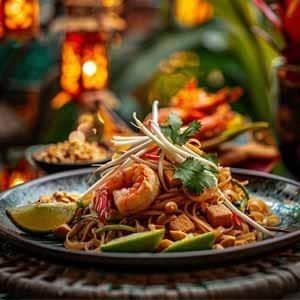
Pad Thai (Shrimp and Tofu)
I started simple with Pad Thai and grew into loving everything on the plate, and I want the same for you. The tofu I always liked. The shrimp took a little longer when I was young, but now it is one of the reasons I make this version. My mother made this in Thailand and in Maryland, and the smell of everything combined in the wok was the same in both places. Tamarind and fish sauce and egg and noodles, one of the most distinctive smells in Thai cooking.Make this tonight. Get the sauce ready before the wok gets hot, soak the noodles, and let the wok do the rest. Put it on the table with the peanuts and lime within reach. You will love everything on your plate.
Ingredients
- 7 oz flat rice noodles
- 3.5 oz medium shrimp peeled and deveined
- 1.75 oz firm tofu cut into small cubes
- 2 large eggs
- 1 cup bean sprouts
- 1/2 cup roasted peanuts crushed
- 3 green onions chopped
- 2 tablespoons vegetable oil
- 3 cloves garlic minced
For the sauce:
- 2 tbs fish sauce
- 3 tbs tamarind paste
- 2 tbs palm sugar
Garnish:
- Lime wedges
- Fresh cilantro
- Extra bean sprouts
- Extra crushed peanuts
Instructions
- Prepare the Noodles:Soak the rice noodles in room temperature water for thirty minutes until they are just tender but still firm to the bite. Drain and set aside.
- Make the Sauce: In a small bowl, whisk together the fish sauce, tamarind paste, and sugar. Set aside.
- Cook the Protein: Heat 1 tablespoon of vegetable oil in a large skillet or wok over medium-high heat. Add tofu, fry until golden brown. cook shrimp just till they turn pink, remove from pan and set aside.
- Scramble the Eggs:In the same pan, add a little more oil if needed, and crack eggs into the center, scramble to sixty percent set, scramble lightly and then push to the side of the pan.
- Combine Ingredients:Add the drained noodles to the pan. Pour the prepared sauce over the noodles and toss everything together. Cook for about 2 minutes, allowing the noodles to absorb the flavors.
- Mix in Vegetables and Nuts:Add the cooked shrimp, tofu, bean sprouts, chopped green onions, and half of the crushed peanuts. Toss everything together and cook for an additional minute.
- Serve: Serve hot, garnished with lime wedges, fresh cilantro, extra bean sprouts, and a sprinkle of crushed peanuts on top.
Notes
Make the sauce before the wok gets hot. Tamarind paste, fish sauce, and palm sugar combined in a small bowl, the sugar dissolved, the sauce ready to pour the moment the noodles need it. Pad Thai moves fast once the heat is on. There is no time to measure and combine three separate ingredients while the egg is scrambling, and the noodles are in the pan. Mix the sauce first. This is the instruction that separates a composed Pad Thai from a frantic one.
Use tamarind paste. This is the instruction that many Pad Thai recipes quietly sidestep by offering ketchup or vinegar as a substitute. They are not substitutes. They produce a different dish with a similar name. Tamarind paste is what gives Pad Thai its characteristic sour, slightly fruity, complex flavor. It is available at Asian grocery stores in blocks or jars. The block form, soaked in warm water and pushed through a strainer, produces a fresher, more complex result. The jar concentrate is more convenient and still correct. Neither is optional.
Press the tofu before frying it. Tofu that has not been pressed holds water that will splatter in the hot oil and prevent a golden crust from forming. Wrap it in a cloth or paper towels, press under a heavy pan for fifteen minutes, then cube and fry. Golden tofu absorbs the Pad Thai sauce and holds its shape through the stir-frying. Unpressed tofu does neither.
The egg goes in before the noodles. Push the pan contents aside, crack the eggs in, scramble to sixty percent set, then the noodles on top, everything broken apart together. This puts the egg through the dish rather than on it, producing a richness and cohesion that is specific to correctly made Pad Thai. The difference between egg through the noodles and egg on top of the noodles is the difference between a complete dish and an assembled one.
Nutrition
Serving: 2gCalories: 450kcalCarbohydrates: 57gProtein: 20gFat: 17gSaturated Fat: 3gCholesterol: 175mgSodium: 1400mgFiber: 4gSugar: 5g
Tried this recipe?Let us know how it was!