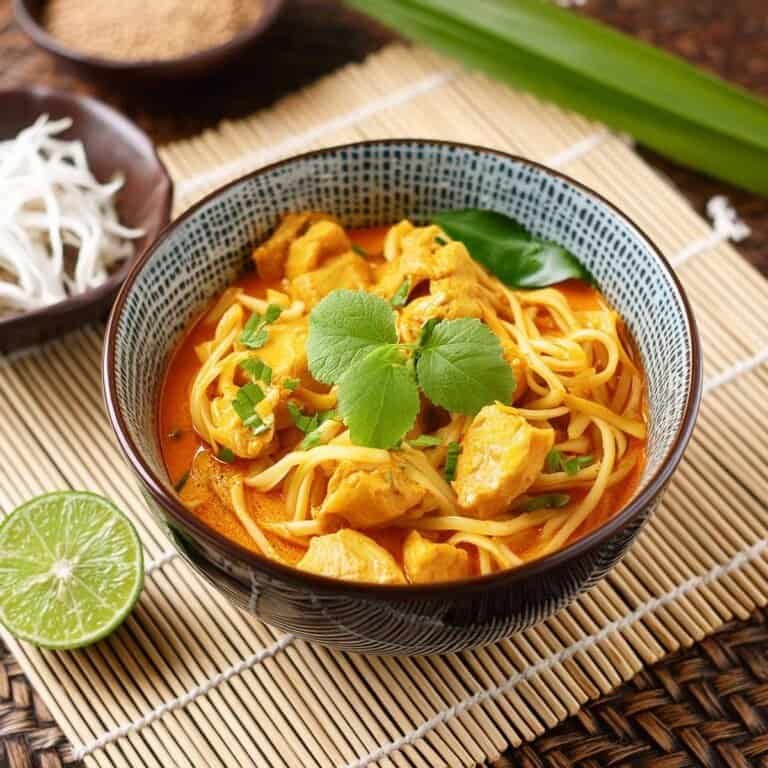
What Is Thai Beef Red Curry?
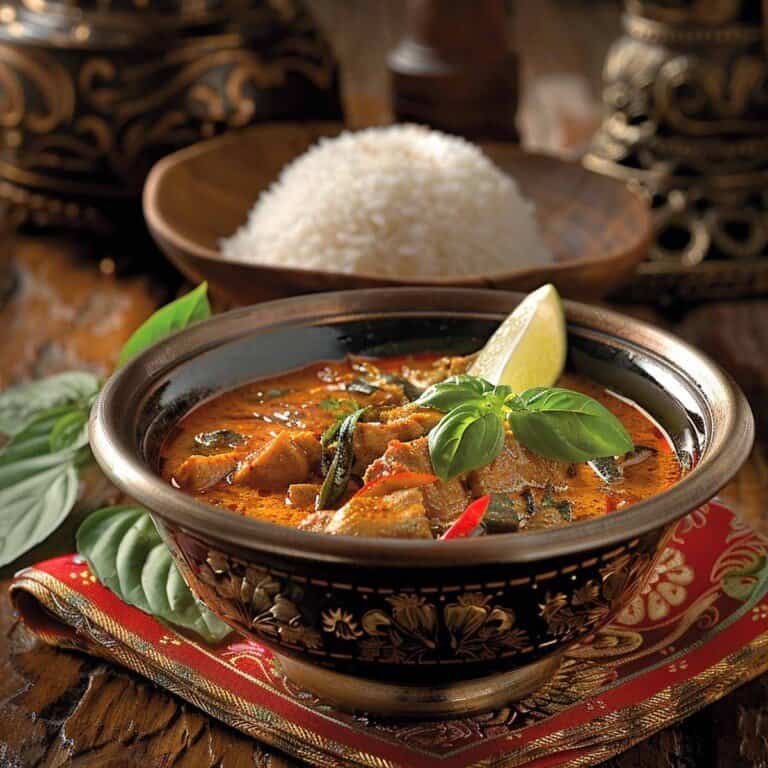
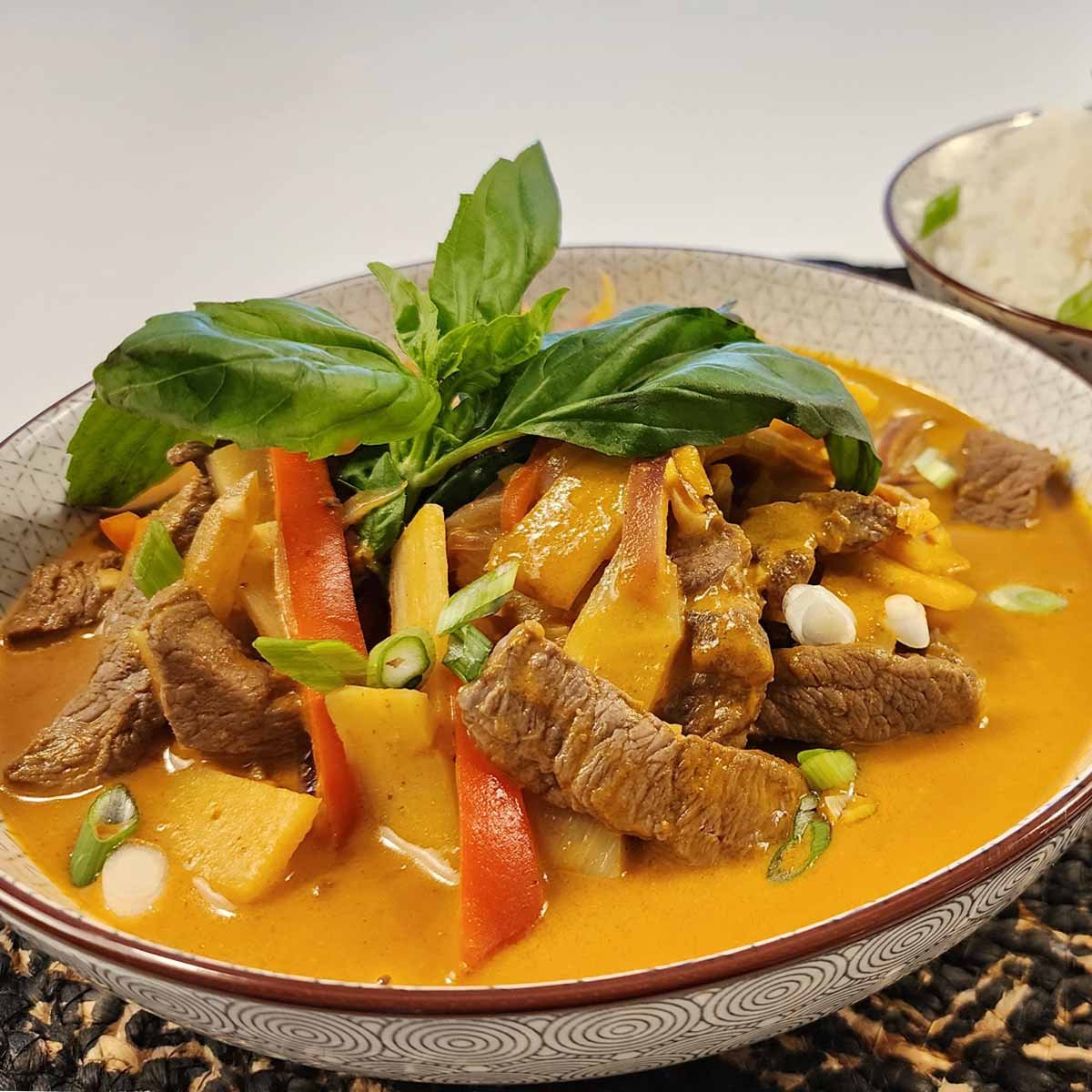
Thai beef red curry, Gaeng Phed Neua (แกงเผ็ดเนื้อ), is tender beef simmered in a rich coconut milk sauce built from red curry paste, fish sauce, and palm sugar, finished with fresh Thai basil and bright vegetables. The color is slightly orange from the coconut milk softening the red paste. The smell of it is the smell of home.
Note From Susie

Sawasdee Kha, and Hello.
I was very young.
Young enough that what I remember is not the recipe but the smell. The curry coming from my mother’s kitchen, from my grandmother’s kitchen, from wherever my aunties had gathered that day. It did not matter which house. The smell was the same. Slightly sweet from the coconut milk. Warm and deep from the red curry paste. Something underneath it all that I could not name then and understand now was the lemongrass and kaffir lime doing their quiet work.
The color was slightly orange, the red paste pulled toward a warmer hue by the coconut milk, the whole pot creamy and bright at the edges where the vegetables sat. I remember picking out some of the vegetables when I was small. I was not yet the person who would eat everything in the bowl. That came later.
My mother made this. Her sisters made this. My grandmother’s kitchen held this smell the way it held all the other smells of that house, completely, without apology, as if the food and the walls had an agreement about what the place was for.
The smell of red curry still means home to me. Not one home. Every home I have known that had people I loved cooking in it.

What’s In This Page
“The Smell Meant Home.”
— Her Hands His EyesWhat Is Thai Beef Red Curry?
Thai beef red curry, แกงเผ็ดเนื้อ, Gaeng Phed Neua, is one of the most deeply satisfying dishes in Thai home cooking. Tender beef is simmered in a rich sauce built from red curry paste fried in the thick cream of coconut milk, then thinned with the remaining coconut milk and seasoned with fish sauce and palm sugar. Fresh Thai basil goes in at the end. Bright vegetables, red and green bell pepper, bamboo shoots, or whatever the kitchen holds, are added in the final minutes to keep their color and their crunch.
The color is what you notice first: not the sharp, saturated red of the curry paste alone, but something slightly softer and warmer. The coconut milk pulls the red toward orange, the palm sugar adds its faint caramel quality, the whole pot becoming a color that is specific to this dish and to the way coconut and chili behave together under heat.
Thai beef red curry is distinct from red curry made with chicken or vegetables. The beef requires a longer simmer to become tender, and that extra time in the coconut milk deepens the sauce in a way that a faster protein cannot. It is a patient dish. The reward for that patience is a sauce that has become something the paste and the coconut milk could not have been separately.
The smell of it is the smell of home. That has not changed.
Oxford Companion to Food
What You’ll Need
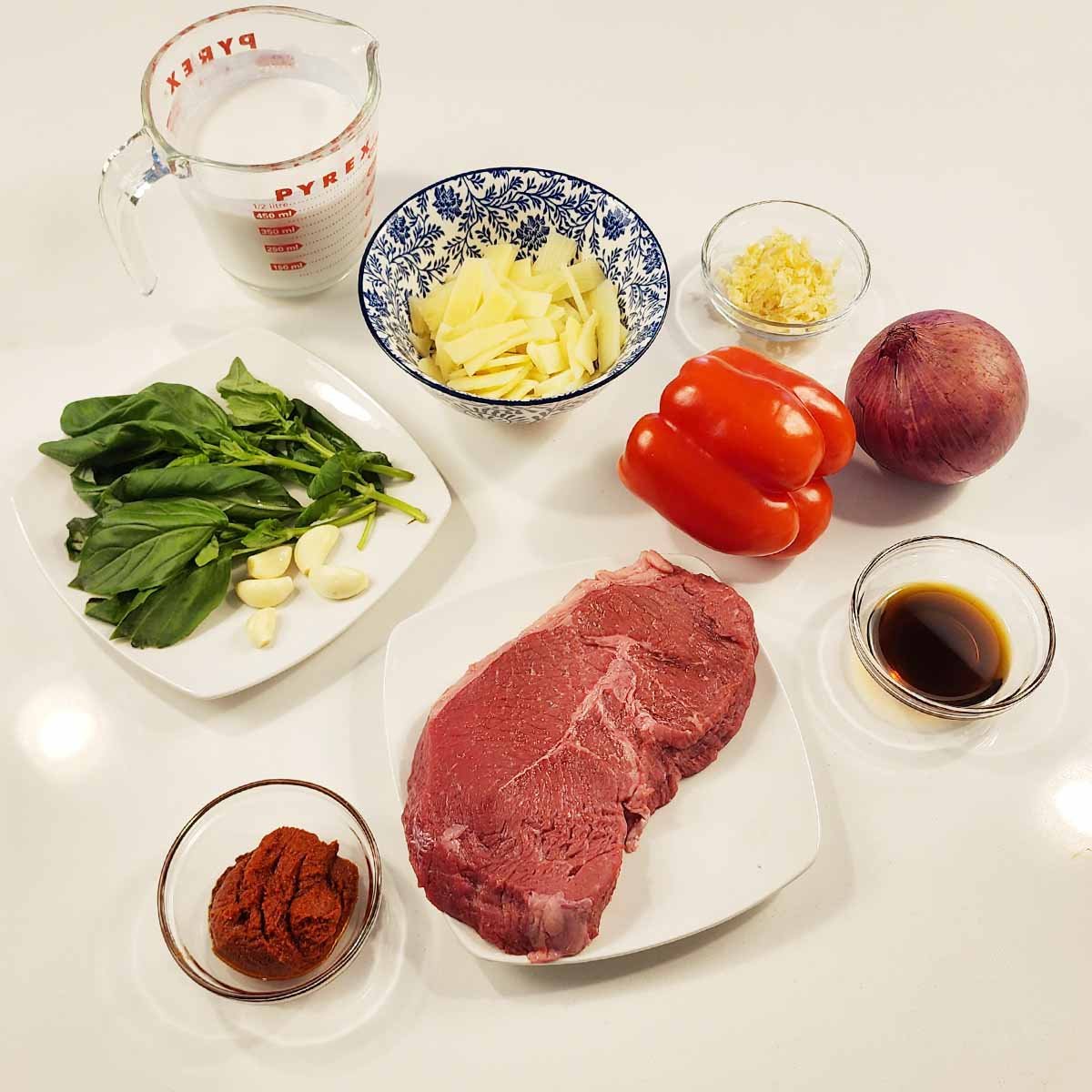
Beef sirloin, one pound, thinly sliced. Sliced thin, it cooks through during the forty-five minute simmer without drying out. Cut it evenly and it will be tender and fully flavored by the time the vegetables go in.
Red curry paste, two to three tablespoons. Store-bought red curry paste works well. Maesri and Mae Ploy are reliable brands. Start with two tablespoons and add more after the paste has been fried if you want more heat and depth.
Coconut milk, two cans, fourteen ounces each, full fat. Do not shake the cans before opening. The thick coconut cream that separates to the top goes in first to fry the curry paste. The thinner milk underneath is added after. This separation is structural to how Thai curry is made.
Red bell pepper, one, sliced. Small onion, optional, sliced. Garlic, three cloves, optional, minced. Bamboo shoots, one cup, sliced.
Fish sauce, two tablespoons, for salt and depth. Palm sugar or brown sugar, one tablespoon, for balance.
Fresh Thai basil leaves for garnish. Fresh cilantro leaves for garnish. Cooked jasmine rice for serving.
VISUAL WALK THROUGH
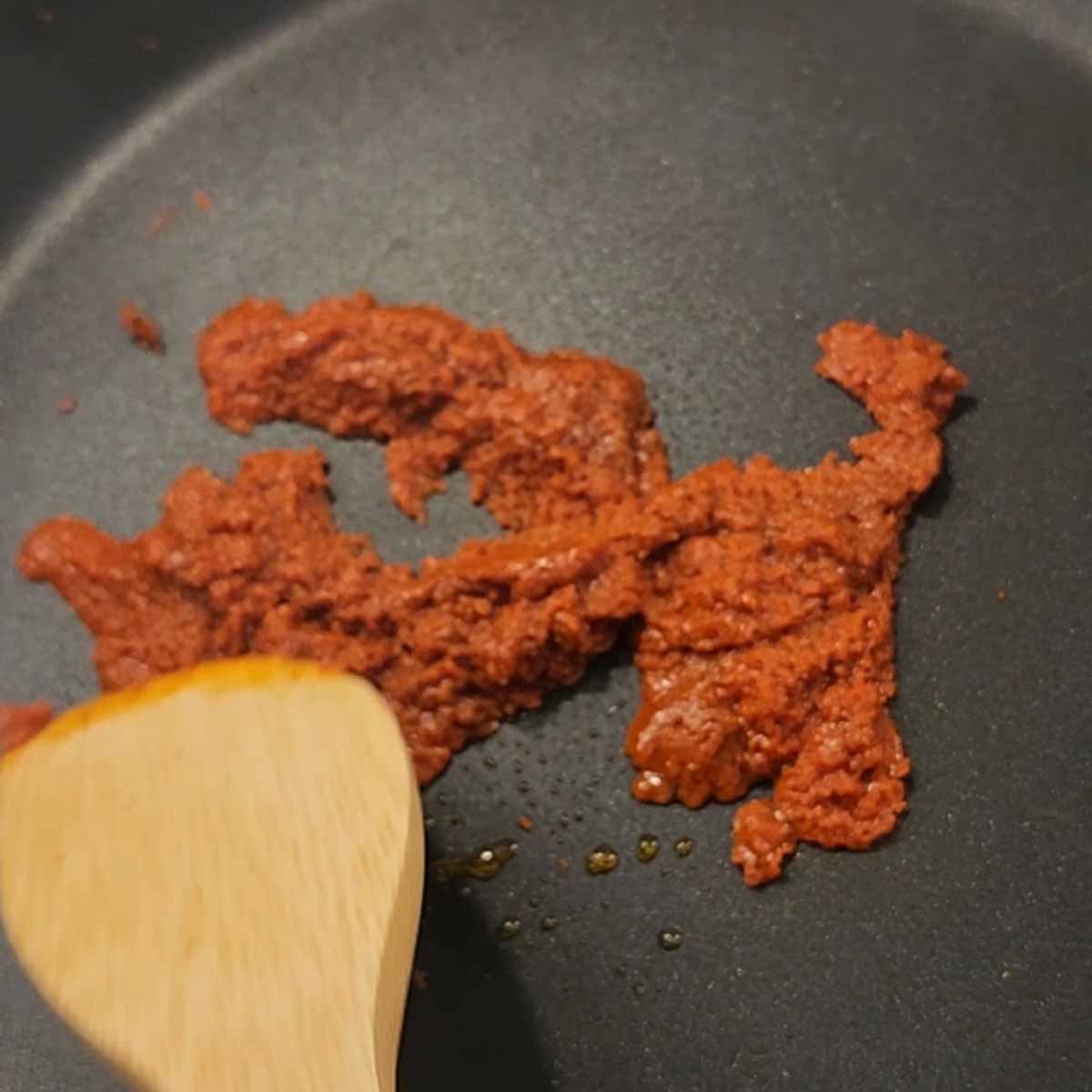
Step 1. Heat the pan and cook the curry paste first.
Heat a large pan or wok over medium heat. Add the red curry paste and stir-fry for about one minute until fragrant. This step allows the spices in the curry paste to bloom, enhancing the flavor of the dish. The paste should darken slightly and the kitchen should fill with its warmth before anything else goes in.
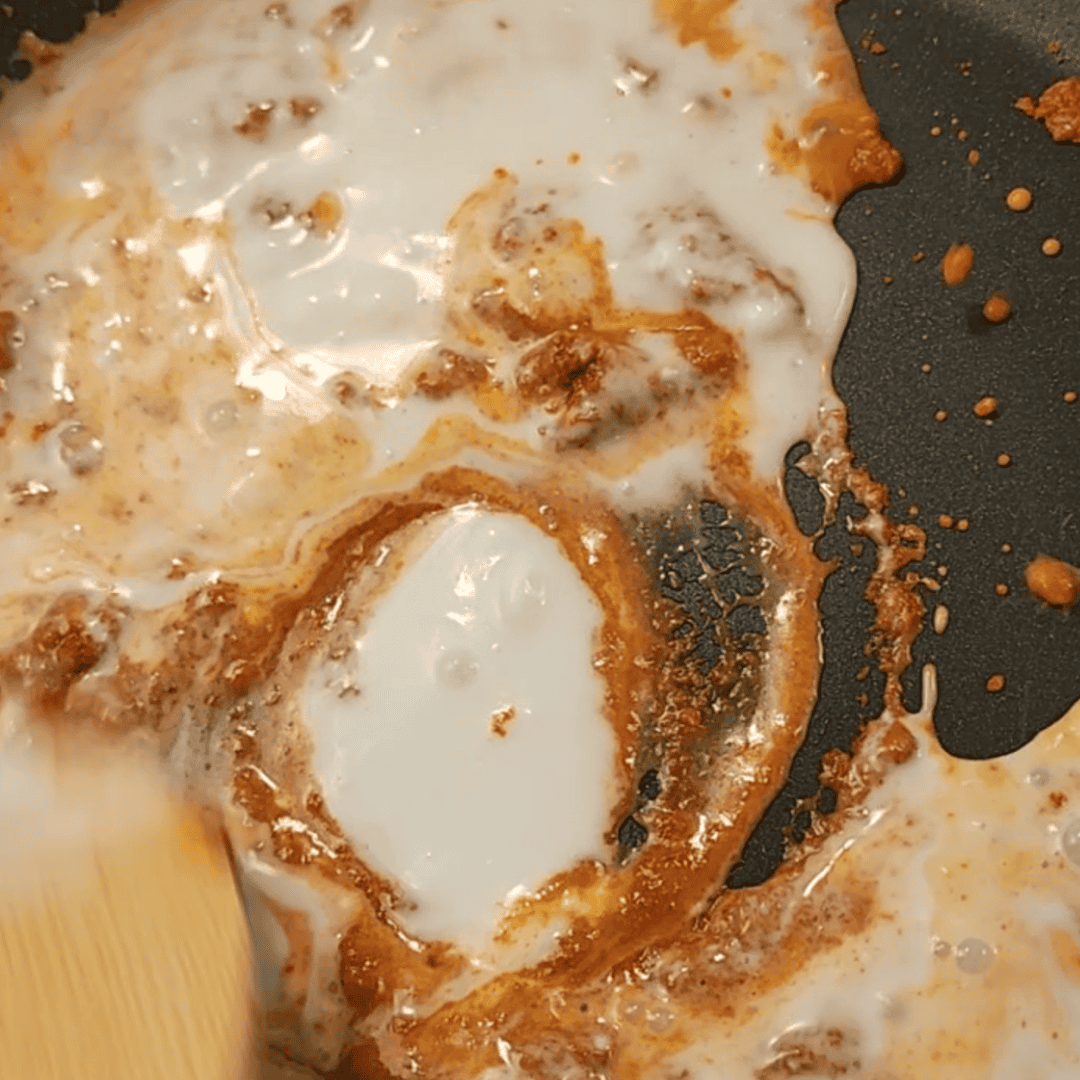
★ Step 2. Add the coconut milk and bring to a gentle simmer. This is What Makes the Difference.
Gradually pour in the coconut milk, stirring constantly to combine with the curry paste until smooth. Bring the mixture to a gentle simmer over medium heat. This creamy base forms the foundation of the curry’s rich flavor. Do not let it boil. A rolling boil breaks the coconut milk and the broth turns grainy. A gentle simmer holds it together.
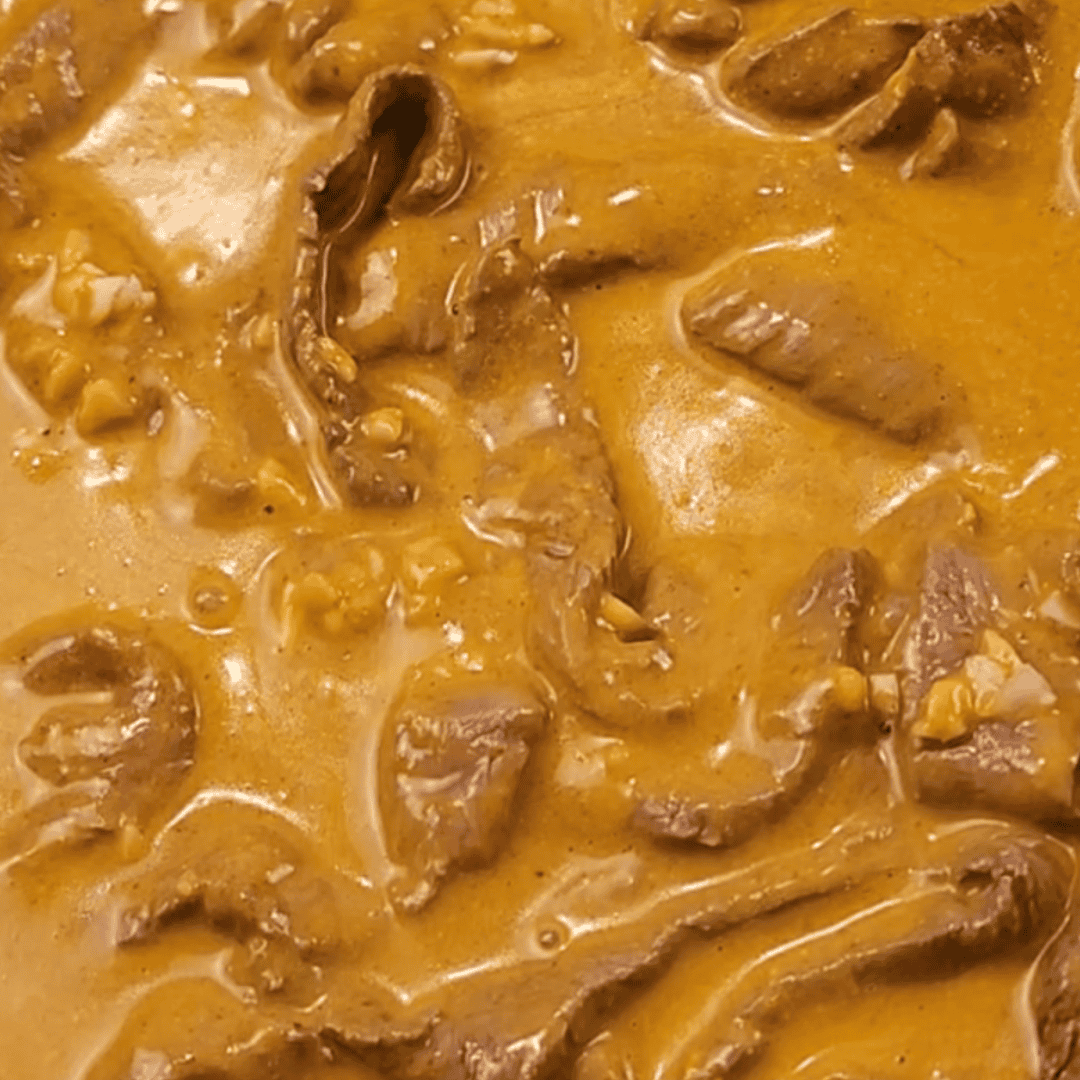
Step 3. Add the beef. Simmer for forty-five minutes.
Add the thinly sliced beef to the simmering coconut curry. Stir to submerge the beef in the sauce. Simmer gently for forty-five minutes, stirring occasionally, until the beef is cooked through and tender. The long simmer gives the sauce time to deepen and the beef time to absorb the curry paste fully.
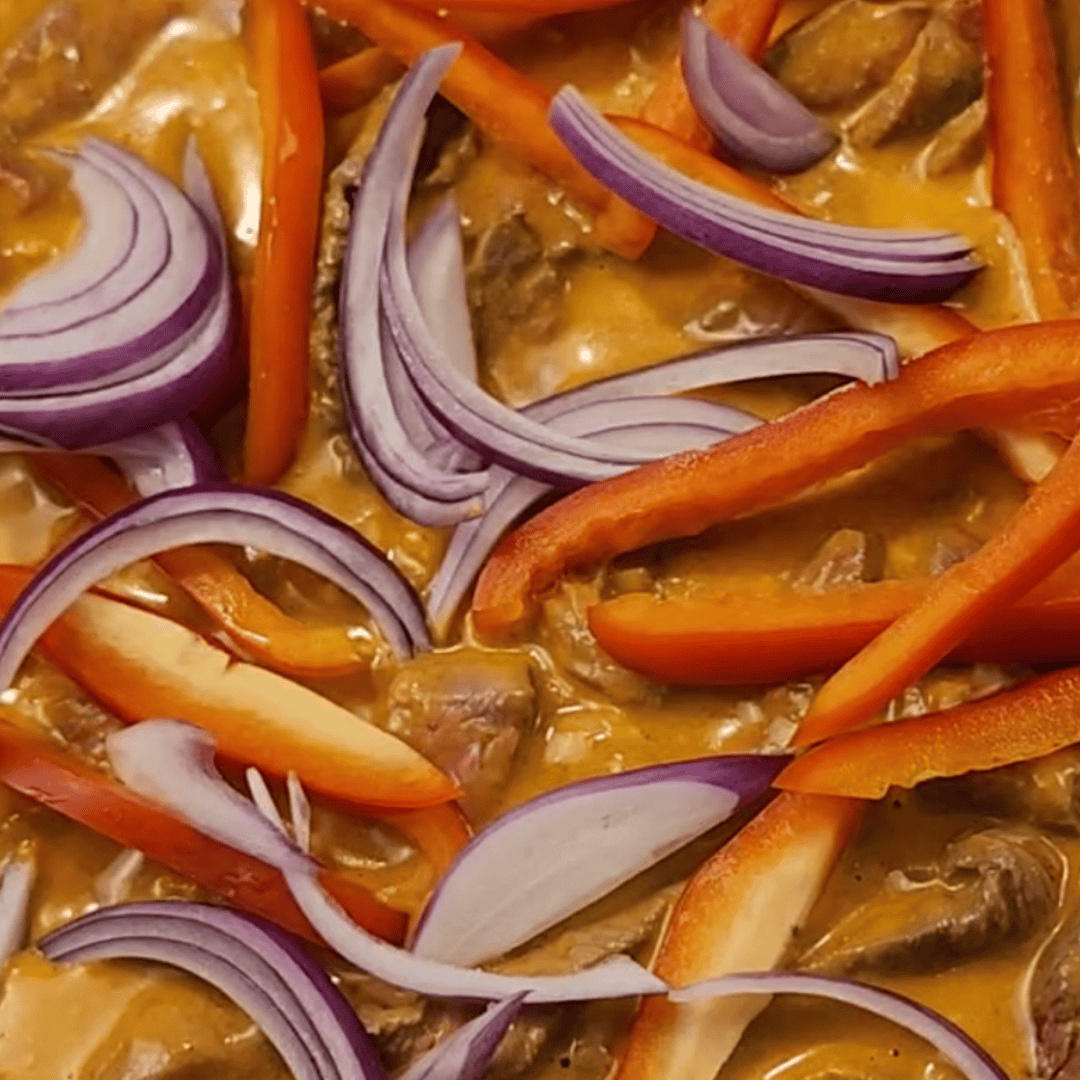
Step 4. Add the vegetables and season.
Add the sliced bell peppers, onion, and bamboo shoots to the pan. Simmer the curry, stirring occasionally, until the vegetables are tender yet still vibrant, about five to ten minutes. Stir in the fish sauce and palm sugar, adjusting the amounts to balance the flavors. Simmer for another five minutes to allow the flavors to meld together.
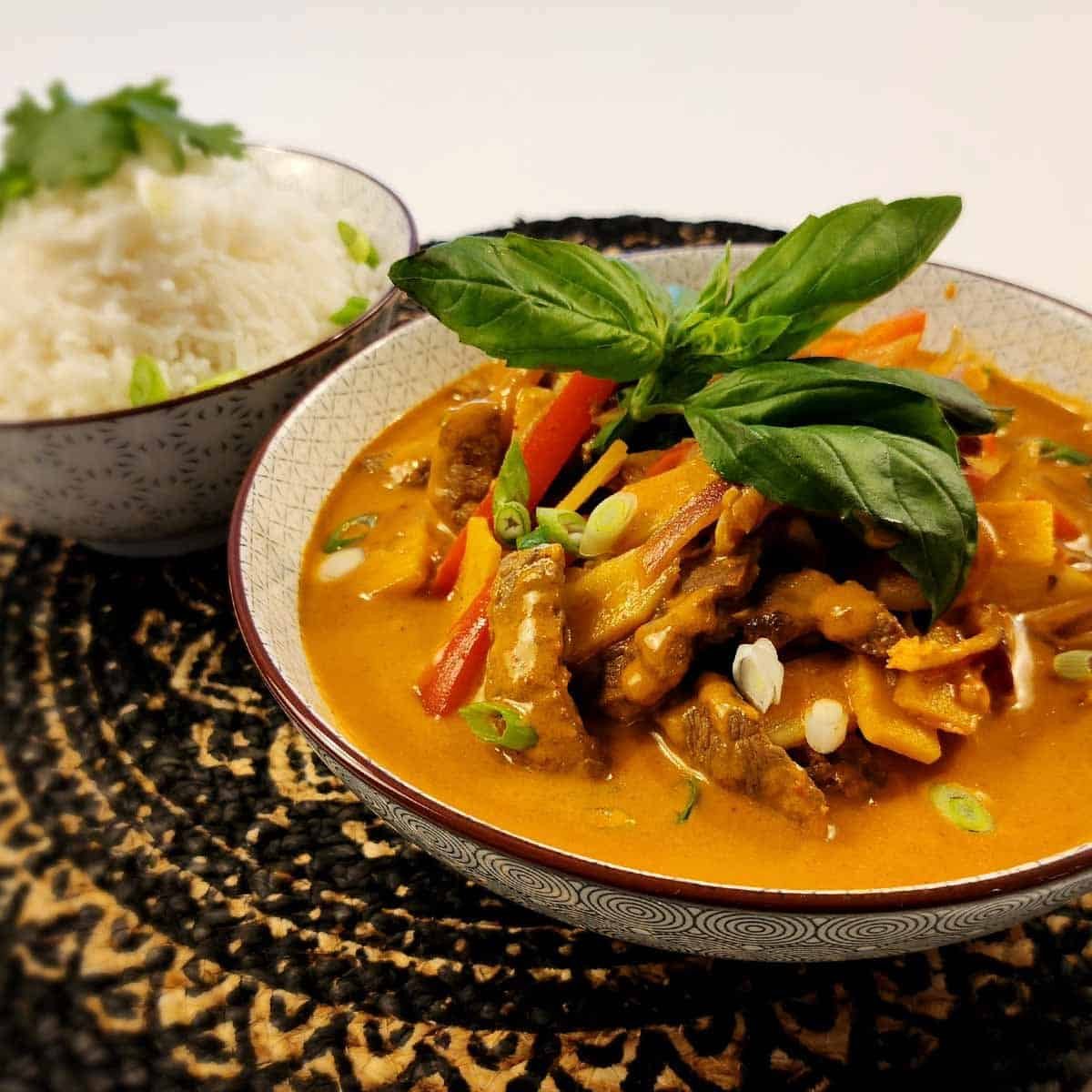
Step 5. Garnish and serve immediately.
Garnish the Thai beef red curry with fresh Thai basil leaves and cilantro for added aroma and freshness. Serve hot over jasmine rice, allowing the creamy curry sauce to soak into the rice. The basil goes on at the very end, off the heat, so its fragrance stays present rather than cooking off.
Thai Beef Red Curry
Ingredients
- 1 lb beef sirloin thinly sliced
- 2-3 tbsp red curry paste
- 2 cans 14 oz coconut milk
- 1 red bell pepper sliced
- 1 small onion (optional) sliced
- 3 cloves garlic (optional) minced
- 1 cup bamboo shoots sliced
- 2 tbsp fish sauce
- 1 tbsp palm sugar or brown sugar
- Fresh Thai basil leaves for garnish
- Fresh cilantro leaves for garnish
- Cooked jasmine rice for serving
Instructions
Heat the Pan and Cook the Curry Paste:
- Heat a large pan or wok over medium heat. Add the red curry paste and stir-fry for one minute until fragrant. Pour in the coconut milk gradually, stirring constantly. Continue cooking over medium heat, stirring, until the oil separates and rises to the surface.
Add Coconut Milk and Bring to a Simmer:
- Gradually pour in the coconut milk, stirring constantly to combine with the curry paste until smooth. Bring the mixture to a gentle simmer over medium heat.Add beef. Simmer for 45 minutes, add the beef to the simmering curry, stir to submerge, simmer gently for forty-five minutes until tender.
Simmer with Vegetables:
- Add the sliced bell peppers ,onions and bamboo shoots to the pan. Simmer the curry, stirring occasionally, until the vegetables are tender yet still vibrant, about 5 – 10 minutes.
Season the Curry:
- Stir in the fish sauce and palm sugar, adjusting the amounts to balance the flavors according to your taste preferences. Simmer the curry for another 5 minutes to allow the flavors to meld together.
Garnish and Serve:
- Garnish the Thai Beef Red Curry with fresh Thai basil leaves and cilantro.
Notes
Nutrition
LET’S GET THIS RIGHT
Why does my Thai beef red curry taste thin and flat?
The coconut milk was shaken before opening, or the curry paste was not fried long enough. Both produce the same result: a sauce that lacks depth. Open the coconut milk can without shaking and spoon the cream off the top to fry the paste in. Fry the paste for three to five minutes until the oil visibly separates before adding any liquid. These two steps together are what gives Thai beef red curry its body and depth.
Why is my beef tough in Thai beef red curry?
The wrong cut was used, or the simmer time was too short. The recipe uses sirloin sliced thin, which cooks through quickly and stays tender when cut evenly and not overcooked. Pull it from the heat the moment the pink is gone. If using a tougher cut like chuck, give it forty-five minutes to an hour of gentle simmering before the vegetables go in.
Can I make Thai beef red curry less spicy?
Use less red curry paste. Start with one tablespoon instead of two and taste after the paste has been fried before adding more. The coconut milk and palm sugar both moderate the heat, so the finished curry will be milder than the raw paste suggests. For very mild heat, one tablespoon of paste in one can of full-fat coconut milk produces a gentle, fragrant curry.
What vegetables go in Thai beef red curry?
Red bell pepper and bamboo shoots are called for in this recipe. Baby corn, Thai eggplant, and zucchini also work well. The vegetables go in during the final minutes of cooking so they retain their color and some texture. The brightness of the vegetables against the creamy orange curry is part of what the dish looks and tastes like.
Can I make Thai beef red curry ahead of time?
Yes, and it improves overnight. The flavors deepen as the curry sits. Make it the day before, cool to room temperature, refrigerate, and reheat gently the next day. Add the Thai basil fresh when serving rather than relying on the basil from the previous day, which will have darkened and lost its fragrance.
FLAVOR PROFILE
The smell arrives before anything else. Curry paste frying in coconut cream, warm and deep and slightly sweet, the red chilies and lemongrass and galangal releasing into the fat before any liquid has softened them. It is a smell that fills the kitchen and moves through the house. My grandmother’s kitchen held it. My mother’s kitchen held it. It is the smell that has always meant the same thing.
The color in the pot is slightly orange, the red of the paste pulled warmer by the coconut milk, the palm sugar adding a faint caramel depth. Bright vegetables at the edges. The beef disappearing into the sauce, soft from the time it was given.
On the plate the first taste is rich. The coconut milk full and present, the curry paste underneath it warm and complex. Then the heat arrives, building slowly rather than sharply. Then the fish sauce, the salt that holds everything together without being identifiable. The Thai basil at the end, dark and fragrant, cutting through the richness for a moment and then settling into it.
It is a patient dish that tastes like patience. The beef tender from the time it was given. The sauce deep from the paste that was properly fried. The vegetables bright from being added at the right moment. Everything in the bowl arrived at the right time.
The smell of red curry still means home to me. Not one home. Every home I have known that had people I loved cooking in it.
SUSIE’S KITCHEN NOTES
My mother and her sisters used cuts with fat and connective tissue, never anything lean. They understood without being told that the fat rendered into the sauce over a long simmer was what made the curry what it was. The sauce of a Thai beef red curry that has been made with the right cut and given the right time is a different thing from one made with lean meat cooked quickly. Thicker. Richer. More itself. The right cut and the right time are the same instruction.
The kaffir lime leaves should be torn rather than left whole. Tearing breaks the cell walls and releases the oils more completely. Remove the central stem before tearing. It is tough and adds nothing. Add the leaves with the coconut milk, not at the beginning with the paste. They steep rather than fry, and their fragrance is better preserved that way.
Palm sugar in this curry is not about sweetness. It is about balance. The fish sauce is salty, the curry paste is sharp and hot, and the palm sugar sits between them and holds the whole thing in the register it should be in. One tablespoon is enough to do this work without making the curry taste sweet. Taste after adding and adjust. If the curry tastes sharp and one-dimensional, it needs more palm sugar. If it tastes flat and sweet, it needs more fish sauce.
The curry reheats beautifully. My mother always made more than was needed for one meal. The second day the sauce was deeper and the whole thing had settled into itself. Make more than you need. The second bowl is better than the first.
PAIRING SUGGESTIONS
Thai beef red curry belongs over jasmine rice, the grains absorbing the slightly orange creamy sauce, the two of them together making the complete meal that the curry was always part of. At a fuller table, the Thai omelet is the simpler companion, eggs and fish sauce alongside the richness of the curry, the contrast between the two making each one more itself. A bowl of Tom Yum Goong on the same table brings its sourness and clarity against the rich, creamy curry, the two soups, one clear and sharp, one creamy and deep, covering the full range of what a Thai family meal holds. For the paste that gives the curry its foundation, the depth and approach of the Thai yellow curry paste offers a parallel understanding of how paste becomes curry and why the frying step is everything. My mother and her sisters made this at every house that mattered. The smell was the same in all of them. That is still what home means.
FAQ
What is Thai beef red curry (Gaeng Phed Neua)?
Thai beef red curry, Gaeng Phed Neua (แกงเผ็ดเนื้อ), is tender beef simmered in a rich coconut milk sauce built from red curry paste, fish sauce, palm sugar, and kaffir lime leaves, finished with Thai basil and bright vegetables. The paste is fried in thick coconut cream before the remaining coconut milk is added, which gives the sauce its depth and slightly orange creamy color. It is a patient dish that rewards a gentle simmer.
How do you make Thai beef red curry step by step?
Heat a large pan or wok over medium heat. Add red curry paste and stir-fry for one minute until fragrant. Add thinly sliced beef and stir to coat evenly in the paste. Gradually pour in coconut milk, stirring constantly until smooth. Bring to a gentle simmer. Add bell peppers and bamboo shoots and simmer until vegetables are tender. Stir in fish sauce and palm sugar and simmer five to ten minutes more. Garnish with fresh Thai basil and cilantro and serve hot over jasmine rice.
What cut of beef is best for Thai beef red curry?
The recipe uses sirloin thinly sliced, which cooks through quickly in the sauce. Cut it evenly and do not overcook. If you prefer a richer, more deeply flavored curry, chuck or brisket cut into one-inch pieces and simmered for forty-five minutes to an hour produces a sauce that has been enriched by the rendered fat, with beef that pulls apart slightly at the edges. Both approaches produce a good result with different textures.
Why is my Thai red curry not the right color?
Thai beef red curry should be a slightly orange, creamy color, not bright red and not pale white. The orange comes from the red curry paste being diluted and warmed by the full-fat coconut milk. If the curry looks too red, more coconut milk is needed. If it looks too pale, the paste was not fried long enough or too little paste was used. Fry the paste until it darkens and becomes fragrant before adding the coconut milk.
What is the difference between Thai red curry and Thai green curry?
Thai red curry is built on a paste of dried red chilies, lemongrass, galangal, shallots, garlic, and shrimp paste, deeper in color, warmer in flavor, with a heat that builds steadily. Thai green curry uses fresh green chilies, fresh herbs, and more lemongrass, producing a brighter, sharper, more herb-forward flavor and a paler green color. Red curry is generally richer and more complex. Green curry is more herbaceous and more immediately sharp. Both use coconut milk as the base.
Can I make Thai beef red curry ahead of time?
Yes. Thai beef red curry improves overnight as the flavors deepen and the beef absorbs the sauce. Make it the day before, cool to room temperature, and refrigerate. Reheat gently the next day and add fresh Thai basil when serving. The basil from the previous day will have darkened and lost its fragrance. If you want the vegetables to retain texture, add them fresh when reheating.
Is Thai beef red curry spicy?
Thai beef red curry has a moderate, building heat from the red curry paste. The coconut milk and palm sugar moderate the sharpness of the paste, producing a heat that arrives gradually rather than immediately. The spice level depends on the amount of paste used and the brand. Start with two tablespoons, taste after frying, and add more if you want more heat. The finished curry is warm rather than fiery for most palates.