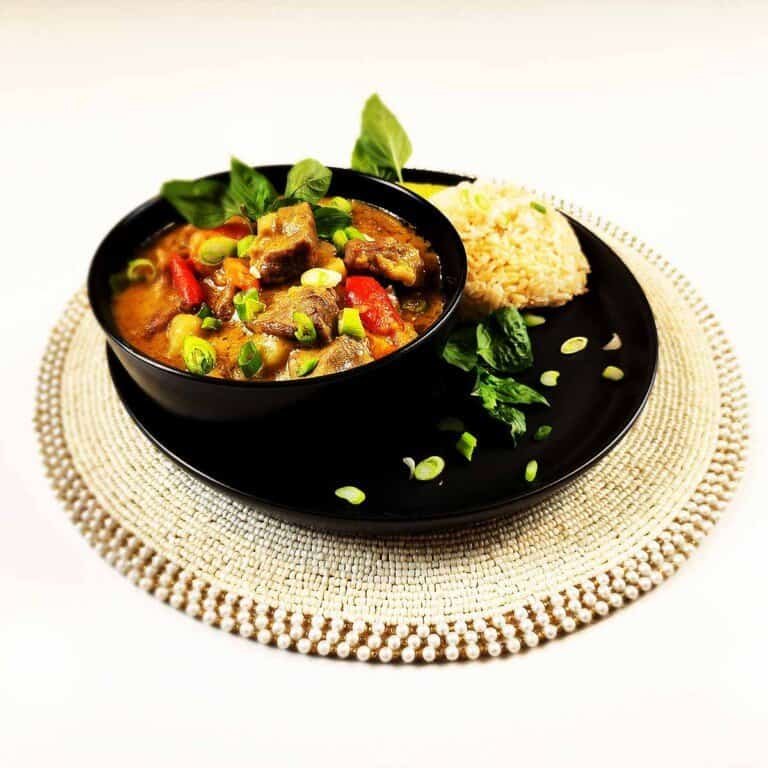
What Are Thai Boat Noodles?
Thai boat noodles, Kuai Tiao Ruea (ก๋วยเตี๋ยวเรือ), are small bowls of rice noodles served in a deeply spiced, dark broth built on beef or pork stock, soy sauce, five spice, cinnamon, star anise, and blood, with sliced meat, bean sprouts, morning glory, and crispy pork rinds on top. The broth is the whole point. The bowls are small. You order many.
Note From Susie

Sawasdee Kha, and Hello.
I grew up eating this soup, and it grew with me.
When I was young, the broth and the noodles were enough. The broth was the thing I was drawn to first, dark and deeply spiced, the color of it deep brown and rich before anything else was added. My mother made it at home and the smell of the broth filled the house in a way that I have never forgotten. The spices in the stock, the five spice and the cinnamon and the star anise, everything simmering together into something layered and complex and completely itself.
At the market the vendors had huge pots of this broth, keeping warm over the coals, ladled into small bowls with noodles to order. That is the traditional way to eat Kuai Tiao Ruea, in small bowls, many of them, each one a little different in the toppings but always the same dark, spiced broth underneath. You sit and you eat and you order another and then another. The soup is small so the experience can be long.
As I grew, I added more to the bowl. The sliced meat. The bean sprouts. The morning glory. The crispy pork rinds on top that absorb some of the broth and stay crisp at the edges. Each addition made the bowl more complete. The broth was always the foundation, always the reason the bowl was worth eating.
My mother knew this when she made it. I know it now when I make it. The broth is everything.

What’s In This Page
“I grew up eating this soup, and it grew with me.”
— Her Hands His EyesWHAT ARE THAI BOAT NOODLES?
Thai boat noodles, ก๋วยเตี๋ยวเรือ, Kuai Tiao Ruea, are one of the most deeply flavored noodle soups in Thai cuisine. The name comes from the way the dish was historically sold in Thailand, from small boats floating along the canals of Bangkok and the central plains, vendors ladling dark spiced broth and noodles into small bowls for the people on the canal banks. The bowls were small because the boats were small and the portions had to move quickly. The tradition of eating Kuai Tiao Ruea in small bowls, many of them, one after another, has persisted long after the boats themselves became rare.
The broth is what makes Thai boat noodles extraordinary. It is a deeply colored, deeply spiced stock built on beef or pork bones simmered for hours with dark soy sauce, five spice powder, cinnamon sticks, star anise, coriander root, and garlic. A small amount of blood is traditional, stirred into the broth to give it additional depth and the slightly thickened quality that distinguishes Kuai Tiao Ruea from other Thai noodle soups. The broth is dark brown, almost black in its deepest versions, and the smell of the spices is immediate and specific the moment the bowl arrives.
Served over rice noodles, the broth is topped with thinly sliced beef or pork, blanched bean sprouts, morning glory, a sprinkle of fresh herbs, and crispy pork rinds that absorb the broth at the edges and stay crisp at the center. According to the Oxford Companion to Food, boat noodle soups reflect the canal-centered culture of central Thailand, where water trade routes were the primary means of commerce and food distribution for centuries.
The broth is everything. The bowl grew with me. The smell has never left.
WHAT YOU’LL NEED
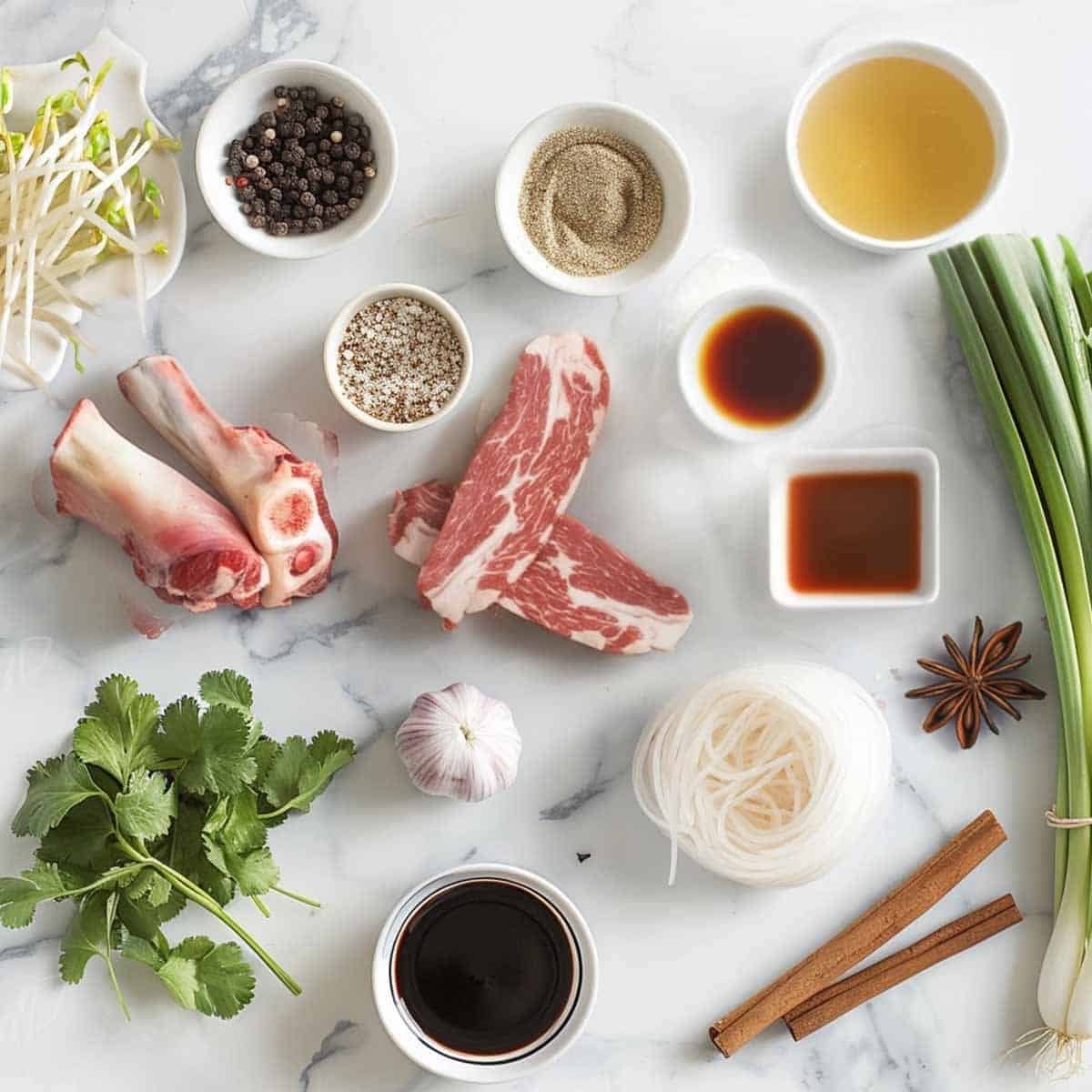
Beef bones or pork bones, two to three pounds, for the stock. The bones are the foundation of the broth and they need time. A minimum of two hours of simmering. Three hours is better. The longer the bones simmer, the deeper and richer the broth becomes. Blanch the bones in boiling water for five minutes before using and discard that water. This removes impurities and produces a cleaner, clearer broth.
Dark soy sauce, three tablespoons, for color and depth. This is what gives the broth its characteristic dark brown color. Light soy sauce is not the same and will not produce the right color.
The spice bundle: five spice powder, one teaspoon. Cinnamon stick, one. Star anise, three whole. Coriander root, two to three roots, washed and bruised. Garlic, four cloves, crushed. These go into the broth together and simmer for the full cooking time. They are what produce the smell that filled my mother’s kitchen and the market vendors’ carts.
Blood, two tablespoons, optional but traditional. Pork blood, available at Asian butchers, is stirred into the finished broth to add depth and a slight thickening. It is the ingredient that makes Kuai Tiao Ruea taste the way it does at the market. If it is not available or not preferred, the broth is still deeply flavorful without it.
Fish sauce, one to two tablespoons, for additional seasoning. Palm sugar, one teaspoon, for balance. White pepper to taste.
Rice noodles, fresh or dried. Sen lek, thin rice noodles, are most commonly used for boat noodles. Fresh noodles go into the bowl without pre-cooking. Dried noodles should be soaked until pliable and briefly blanched before serving.
For toppings: thinly sliced beef or pork, briefly blanched in the hot broth. Bean sprouts blanched for thirty seconds. Morning glory blanched briefly. Crispy pork rinds. Fresh cilantro and green onion. Dried chili flakes and white pepper at the table for each person to adjust.
For the table: fish sauce, sugar, white pepper, and chili vinegar in small bowls for each person to season their own bowl to taste. This is how boat noodles are served. Each bowl is yours to adjust.
VISUAL WALK THROUGH
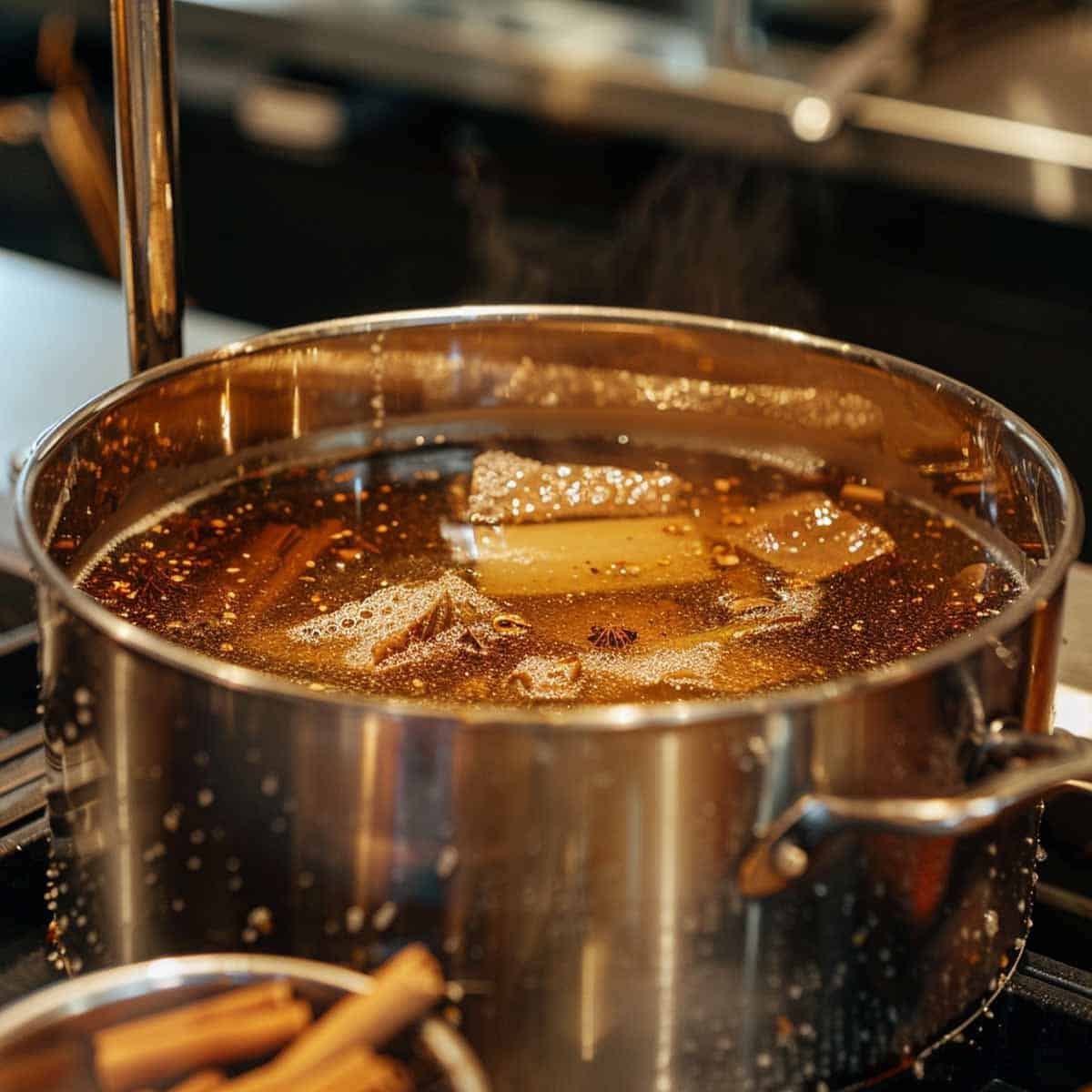
Step 1. Blanch the bones, then build the broth slowly.
Blanch the bones in a pot of boiling water for five minutes. Drain and rinse. Return the cleaned bones to the pot and cover with fresh cold water. Add the dark soy sauce, the spice bundle, coriander root, and crushed garlic. Bring to a boil, then reduce to a gentle simmer. Skim any foam that rises in the first fifteen minutes. Then leave it alone. Two to three hours of gentle simmering is what transforms bones and spices into the dark, deeply flavored broth that makes Thai boat noodles what they are. The smell as the broth develops is exactly the smell of the market vendors’ huge pots. It fills the house before the bowl is ever served.
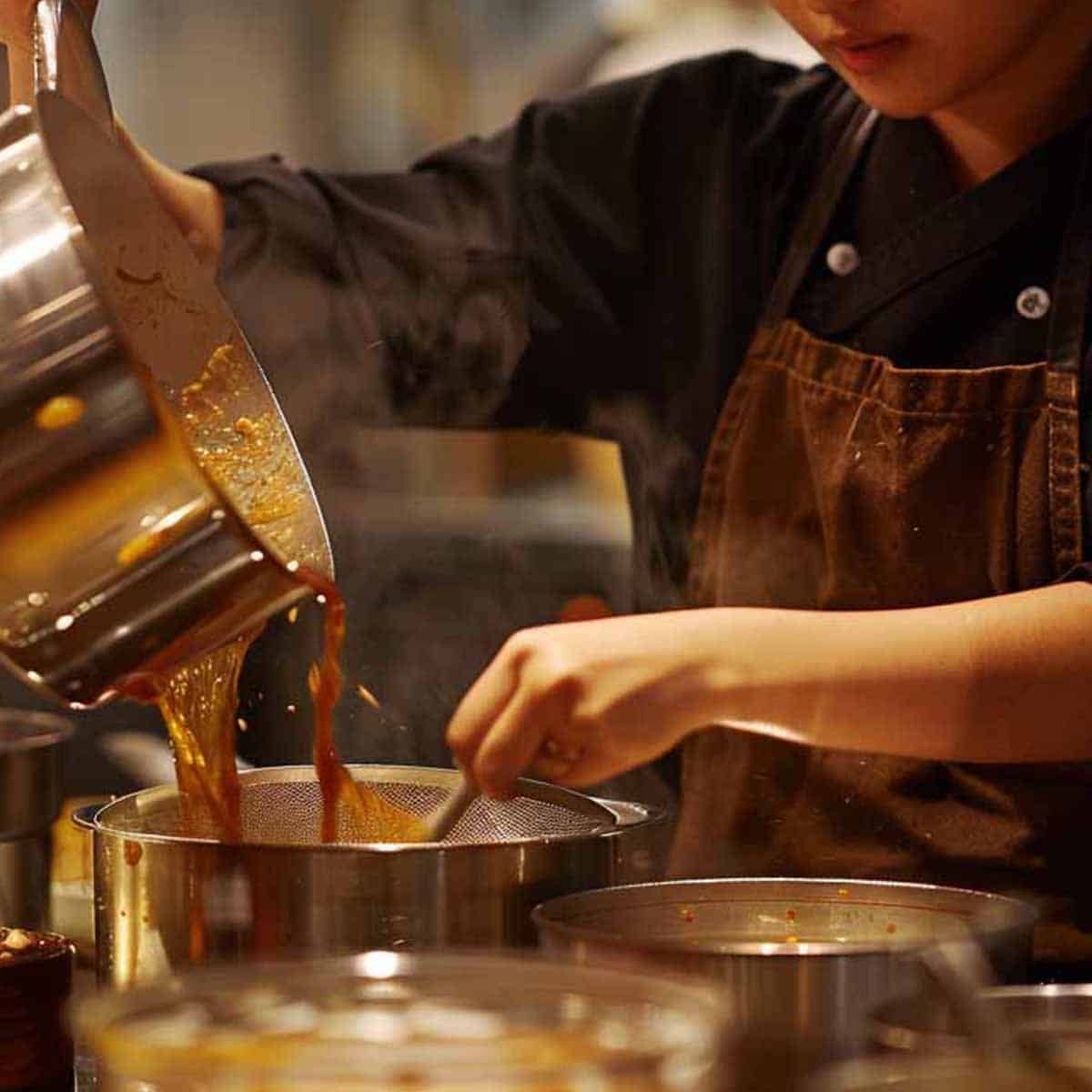
Step 2. Strain the broth and season it.
After two to three hours, strain the broth through a fine mesh strainer and discard the bones and spent spice bundle. The broth should be dark brown and deeply fragrant. Taste it. Season with fish sauce and a small amount of palm sugar. If using blood, stir it in now while the broth is still very hot, the blood dissolving completely into the broth and thickening it very slightly. Taste again. The broth should be savory, slightly sweet, deeply spiced, and complex. Adjust each element to taste. The broth is ready when it tastes like something you want to drink by itself.

★ Step 3. Prepare all toppings separately. This is What Makes the Difference.
Each topping is prepared separately before the bowl is assembled. The sliced beef or pork goes into a ladle of hot broth for thirty seconds to one minute until just cooked through and tender. The bean sprouts and morning glory are blanched briefly in boiling water, thirty seconds each, keeping their freshness and slight crunch. The pork rinds are left dry until the last moment. Everything prepared separately and assembled fresh in each bowl means each component arrives at the table exactly as it should be, none of them overcooked from sitting together.
Step 4. Assemble each bowl to order.
Place the noodles in each bowl. Ladle the hot broth over them generously.( OPTIONAL Pork blood). Add the briefly cooked sliced meat. Top with bean sprouts, morning glory, fresh cilantro, and green onion. Place the crispy pork rinds on top last so they stay as crisp as possible. A sprinkle of white pepper and dried chili flakes. The condiments, fish sauce, sugar, white pepper, and chili vinegar, go on the table for each person. This is the boat noodle way. Each bowl belongs to the person eating it. They season it themselves.
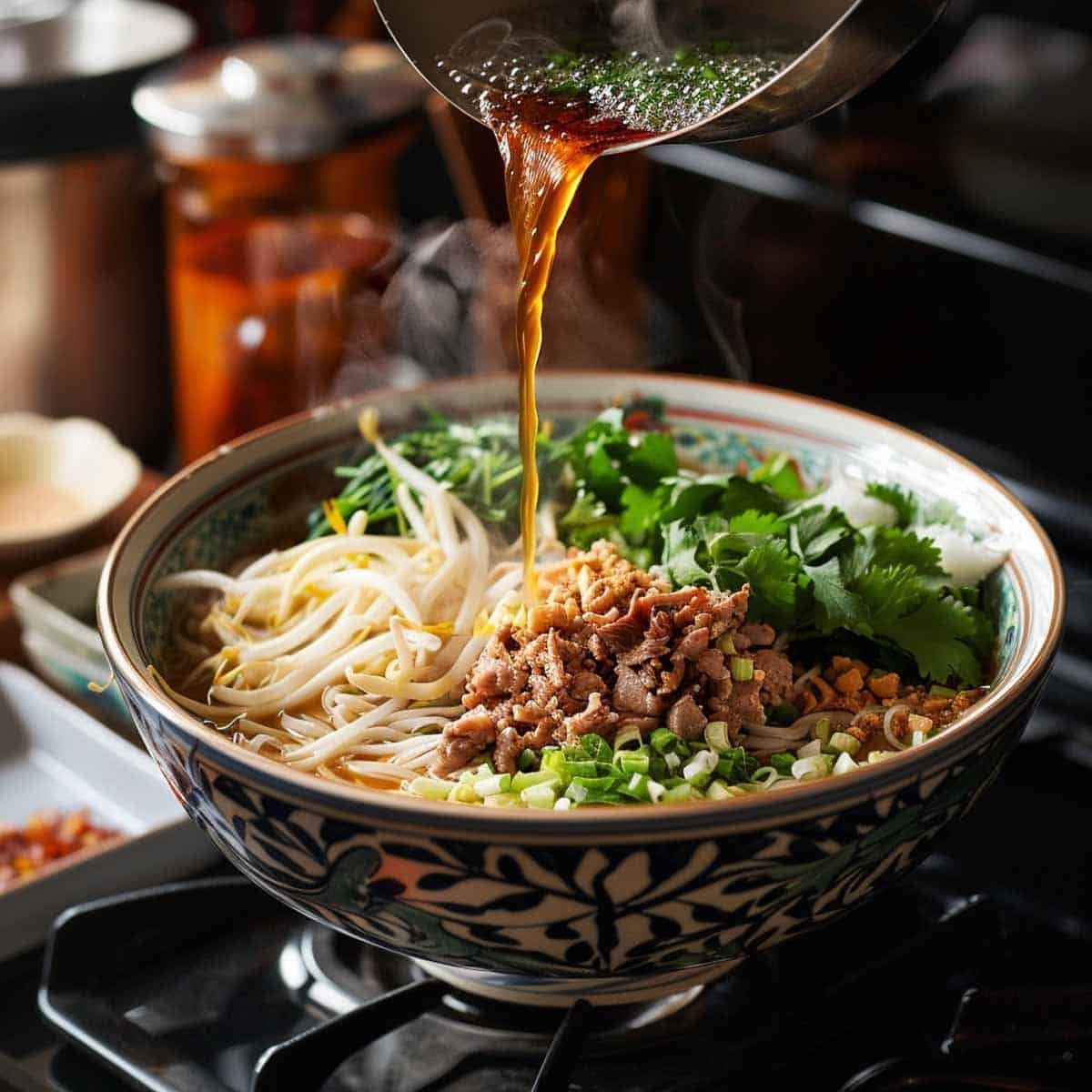
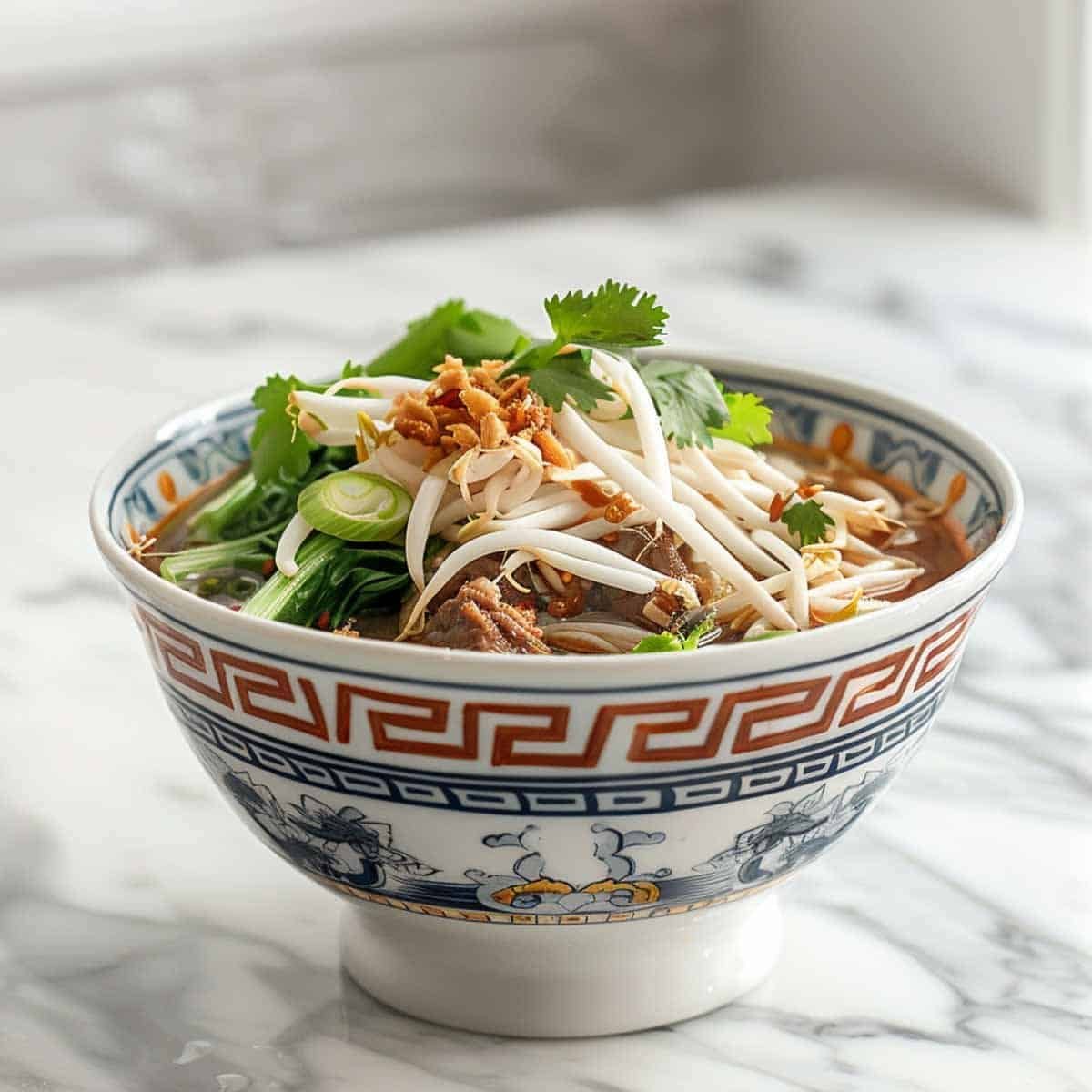
Step 5. Serve in small bowls. Order another when it is finished.
Thai boat noodles are traditionally served in small bowls, roughly half the size of a standard soup bowl. This is not a shortage of generosity. It is the tradition. Small bowls mean the broth stays hot through the whole eating. Small bowls mean you can order different toppings in each one. Small bowls mean the experience lasts longer than the soup. Serve them small. Order another. That is how it has always been done.
Thai Boat Noodles (Kuai Tiao Ruea)
Ingredients
- 3 quarts water
- 2 lb beef or pork bones preferably neck bones
- 2-3 cinnamon stick
- 2-3 pc star anise
- 1 teaspoon coriander seeds
- 6 slices galangal
- 3 cilantro roots or 6 cilantro stems
- 1 medium onion cut into chunks
- 5 cloves garlic crushed
- ½ teaspoon ground white pepper
- 3 Tablespoons soy sauce
- 1 Tablespoon black soy sauce or dark soy sauce
- 1 Tablespoon fish sauce optional
- 2 Tablespoons granulated sugar
- Salt to taste
Marinated Pork:
- 1 lb pork shoulder or beef ( flank or sirloin) thinly sliced
- 1 tablespoon soy sauce
- ½ teaspoon sugar
Noodle Bowl:
- 1 lb dried rice noodles small, 1.5 mm
- ½ lb Asian-style meatballs pork or beef
- 2 cups water spinach, Chinese broccoli, or bok choy (optional) cut into 2-inch pieces
- 2 cups bean sprouts
- 6 cilantro chopped
- 1 stalk green onion chopped
Optional Condiments for Serving:
- Chili vinegar Thai basil, fried garlic & garlic oil, crispy pork rind, roasted chili flakes
Instructions
- Prepare the Broth: 1. Place bones in a large pot with enough water to cover and blanch for about 5 minutes, then drain and rinse bones to clean them. 2. In a large pot, bring water to a boil. Add pork bones, cinnamon sticks, star anise, coriander seeds, galangal, cilantro roots or stems, onion, garlic, white pepper. Reduce heat and simmer for 2 hours.( Be sure to remove scum or impurities that floats to top) Strain broth into a clean pot after final cooking time. Add Asian meatballs, soy sauce, black or dark soy sauce, fish sauce, and sugar, and season with salt if needed.
- Marinate the Pork:Combine thinly sliced pork shoulder or beef with soy sauce and sugar in a bowl, ensuring each slice is coated evenly. Allow the pork to marinate for 30 minutes, allowing the flavors to penetrate and tenderize the meat effectively.
- Cook Noodles and Prepare Ingredients:Soak the dried rice noodles in warm water for approximately 15 minutes or until they are soft and pliable. Meanwhile blanch water spinach or your choice of vegetables, and bean sprouts separately in boiling water until they reach the desired tenderness. Once blanched, drain each ingredient well and set them on top of your blanched noodles.
- Assemble the Noodle Bowl:Divide the cooked rice noodles evenly among serving bowls, ensuring a generous portion in each. Arrange the marinated pork or beef slices, blanched vegetables, chopped cilantro, and green onions on top of the noodles. This assembly creates a visually appealing presentation and ensures each bowl has a balanced combination of flavors and textures.
- Serve:Ladle the fragrant hot broth over each bowl, fully immersing the noodles and ingredients. Serve alongside optional condiments such as chili vinegar, fresh Thai basil leaves, crispy fried garlic, crunchy pork rind, and aromatic roasted chili flakes on the side.
Notes
Nutrition
LET’S GET THIS RIGHT
Why does my Thai boat noodle broth taste thin and flat?
The bones did not simmer long enough, or the spice bundle was too small. The broth needs a minimum of two hours of gentle simmering for the bones to release their collagen and flavor into the water. Less time produces a thin, underdeveloped broth. The dark soy sauce provides the color but not the depth. The depth comes from time and bones. If the broth tastes thin after two hours, continue simmering uncovered for another thirty minutes to concentrate it further.
Why is my broth not dark enough?
Not enough dark soy sauce was used, or regular soy sauce was substituted. Dark soy sauce is what produces the deep brown color of Kuai Tiao Ruea. Regular soy sauce is lighter in both color and flavor. Three tablespoons of dark soy sauce per batch is the starting point. Add more if the color is not deep enough after straining.
Can I make Thai boat noodles without blood?
Yes. The blood adds depth and a slight thickening but the broth is still deeply flavorful without it. Many home versions of Kuai Tiao Ruea omit the blood entirely. If you want the slight thickening without the blood, a small amount of dark soy sauce added to each bowl just before serving produces a similar visual effect without changing the flavor significantly.
What noodles go in Thai boat noodles?
Sen lek, thin rice noodles, are most commonly used. Fresh thin rice noodles go directly into the bowl without pre-cooking. Dried thin rice noodles should be soaked in warm water until pliable and briefly blanched before serving. Some versions use wider rice noodles, sen yai, or egg noodles. The noodle is a vehicle for the broth, and the broth is the point, so use whatever noodle you prefer within reason.
Why are Thai boat noodles served in small bowls?
Small bowls are the tradition of the dish, going back to the boat vendors on the canals of central Thailand where space was limited and bowls had to be served and returned quickly. Small bowls also keep the broth hotter throughout the eating, allow each person to order different toppings in successive bowls, and extend the experience of eating. Serve them in the smallest bowls you have and encourage everyone at the table to have more than one.
FLAVOR PROFILE
The smell arrives first. The broth has been simmering for hours by the time it reaches the bowl, and the smell of it, five spice and cinnamon and star anise in a dark beef or pork stock, has been filling the house for all of those hours. It is a specific smell. Deep and warm and layered. Not like any other Thai soup.
The broth in the bowl is dark brown, almost black at its edges where it meets the white of the noodles and the pale green of the bean sprouts. It is one of the most visually dramatic Thai dishes. The color alone tells you that something complex is in the bowl before the first sip.
The first sip is savory and deeply spiced. The five spice is present, the cinnamon warm and recognizable, the star anise at the edges of every sip. The dark soy sauce provides a depth of salt that is different from fish sauce alone. The blood, if used, adds something slightly ferrous and thickening that makes the broth feel fuller than a clear stock. The meat is tender from its brief cooking in the hot broth. The bean sprouts are fresh and crunchy. The morning glory is just wilted. The pork rinds absorb the broth and stay crisp at their centers.
Then the condiments. Each person adjusts their bowl. More fish sauce for salt. A pinch of sugar for balance. White pepper for warmth. Chili vinegar for brightness. The bowl becomes yours the moment you season it.
I started with just the broth and the noodles. The broth was always enough to begin with.
SUSIE’S KITCHEN NOTES
The spice bundle for the broth can be tied in a square of cheesecloth before it goes into the pot, making it easier to remove after straining. Alternatively, the loose spices are strained out along with the bones through a fine mesh strainer. Either approach works. The spices should simmer in the broth for the full cooking time, not added near the end. The long simmer is what extracts their flavor completely.
Five spice powder varies between brands in its composition and intensity. Some five spice blends are dominated by star anise. Others lean toward cinnamon or cloves. The brand you use will affect the final flavor of the broth. Taste the broth as it simmers and adjust if any single spice is too dominant. Adding a small amount of additional soy sauce or fish sauce can balance a broth that has become too intensely spiced in any one direction.
The market vendors kept their broth going for the entire day, adding new bones and spices as the pot reduced, the broth deepening continuously over hours of continuous simmering. The broth at the end of the market day was more concentrated and more complex than the broth at the beginning. At home you cannot replicate this exactly, but you can approximate it by making the broth the day before and refrigerating it overnight. The next day, reheat and add fresh seasoning. The overnight broth will be more developed than the freshly made version.
My mother made this in a large pot on the stove, and the smell would reach every room in the house within the first hour. That smell is what I think of when I think of this soup. Not the noodles, not the toppings, not even the bowl. The smell of the broth getting dark and deep and ready. Make this in a pot large enough that the smell has room to do what it does. It needs space and time. Give it both.
PAIRING SUGGESTIONS
Thai boat noodles are a complete meal in a bowl. What they want alongside is not more food but the right condiments and the right company. The condiment table matters: fish sauce, sugar, white pepper, and chili vinegar within reach of every person so each bowl can be seasoned individually. For a fuller spread where the boat noodles are one of several dishes, the Thai chicken satay belongs as the starter that comes before the soup, the grilled skewers eaten while the broth finishes warming and the noodles are prepared. The stir fried morning glory is the green vegetable dish alongside, bright and garlicky where the broth is dark and spiced, the contrast between them making both better. For those who want to understand the spice character of the boat noodle broth in a different context, the Massaman curry paste shares the five spice and cinnamon depth of the boat noodle broth in paste form. And for the drink alongside a dark, deeply spiced, warming soup, the Thai iced tea is cold and sweet and always the right answer. The broth is everything. My mother knew this. The market vendors knew this. Now you know it too.
FAQ
What are Thai boat noodles (Kuai Tiao Ruea)?
Thai boat noodles, Kuai Tiao Ruea (ก๋วยเตี๋ยวเรือ), are small bowls of rice noodles in a dark, deeply spiced broth built on beef or pork bones simmered with dark soy sauce, five spice, cinnamon, star anise, and coriander root, topped with sliced meat, bean sprouts, morning glory, fresh herbs, and crispy pork rinds. They are traditionally served in small bowls with condiments at the table for individual seasoning. The name comes from the historical practice of selling the soup from boats on the canals of central Thailand.
How do you make Thai boat noodles step by step?
Blanch beef or pork bones for five minutes and discard that water. Simmer cleaned bones with dark soy sauce, five spice, cinnamon, star anise, coriander root, and garlic for two to three hours until the broth is dark and deeply flavored. Strain and season with fish sauce, palm sugar, and white pepper. If using, stir in blood while the broth is still very hot. Prepare toppings separately: briefly cook sliced meat in the hot broth, blanch bean sprouts and morning glory. Place noodles in small bowls, ladle hot broth over, add toppings and crispy pork rinds. Serve with condiments at the table.
Why are Thai boat noodles served in small bowls?
Small bowls are the tradition of Kuai Tiao Ruea, going back to the boat vendors on the canals of central Thailand where space was limited. Small bowls keep the broth hotter throughout eating, allow different toppings in each successive bowl, and extend the experience. The correct way to eat Thai boat noodles is to order multiple small bowls rather than one large one. Finish one, order another. Each bowl belongs to the person eating it, seasoned to their own taste from the condiments at the table.
What makes Thai boat noodle broth so dark?
The dark color of Thai boat noodle broth comes from dark soy sauce added to the stock during the long simmer. Dark soy sauce is thicker, darker, and slightly sweeter than regular soy sauce and produces the deep brown color that is the visual signature of Kuai Tiao Ruea. The long simmering time also concentrates and darkens the stock. Blood, when used, adds additional depth to the color and a slight thickening. Regular soy sauce will not produce the correct color.
Can I make Thai boat noodles without blood?
Yes. The blood is traditional and adds depth and slight thickening to the broth, but the broth is still deeply flavorful without it. Many home versions omit it entirely. If you want to make Thai boat noodles that closely resemble the market version, include the blood if you can find it at an Asian butcher. If it is not available or not preferred, proceed without it. The long-simmered spiced broth is what makes the dish distinctive, with or without the blood.
What condiments are served with Thai boat noodles?
Thai boat noodles are served with a set of condiments that each person uses to season their own bowl: fish sauce for salt, sugar for sweetness, white pepper for warmth, and chili vinegar for brightness and acidity. These four condiments go in small bowls in the center of the table. Dried chili flakes are also commonly offered. This individual seasoning is the correct way to eat boat noodles and is part of the experience of the dish.
How long does it take to make Thai boat noodle broth?
A minimum of two hours of gentle simmering after blanching the bones. Three hours produces a deeper, more complex broth. The actual active preparation time is about fifteen minutes, after which the broth simmers unattended. Making the broth the day before and refrigerating it overnight produces an even more developed result. Thai boat noodle broth is a dish that rewards planning ahead and giving the pot the time it needs.