QUICK ANSWER BOX
What Are Bananas in Coconut Milk?
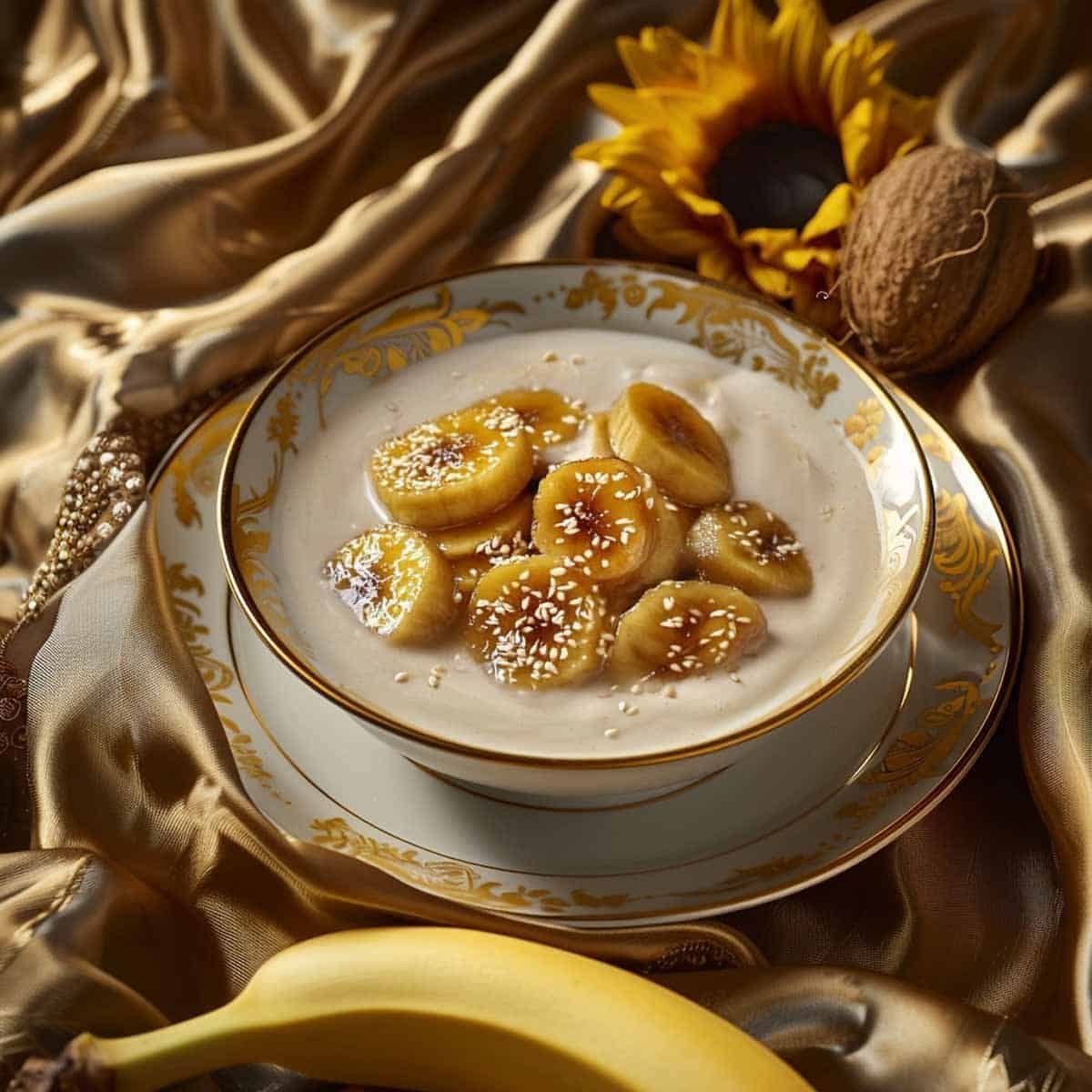
Bananas in coconut milk — Kluay Buat Chee — is a traditional Thai dessert made by simmering ripe bananas in sweetened, lightly salted coconut milk until they are just soft. It takes fifteen minutes. It has been made the same way for hundreds of years. Warm or room temperature, it is one of the quietest desserts Thailand has.
NOTE FROM SUSIE

Sawasdee Kha, and Hello.
My grandmother made this after dinner. Not every night. Only when the bananas had reached exactly the right moment, firm still, but freckled, just past plain eating. She had an eye for it. The rest of us would look at a banana with spots beginning and think nothing. She would look at it and see this dish.
She used a clay pot. The coconut milk would go in first, then the palm sugar, then the pinch of salt that she said was the whole secret. I asked her once how much salt. She held up two fingers. I still do not know exactly what that meant. I use what feels right.
The name means nun bananas. Kluay Buat Chee. Because Buddhist nuns wear white, and the coconut milk turns the banana pale and soft and still. I did not know that as a child. I just knew it was warm and it was sweet and after a bowl of it everything slowed down.

What’s In This Page
“She looked at a spotted banana and saw this dish. I just saw a banana past its moment.”
— Her Hands His EyesWHAT IS KLUAY BUAT CHEE?
กล้วยบวชชี. Kluay Buat Chee. The name translates, word by word, as banana, ordained, nun.
The story most Thai people know: Buddhist nuns wear white robes. When a banana is lowered into warm coconut milk, it loses its yellow and turns pale and quiet. Someone looked at that and named it. That is the whole explanation.
Bananas in coconut milk is one of the oldest desserts in Central Thai cooking. No eggs. No flour. No technique that requires anything more than a pot and attention. Ripe bananas, full-fat coconut milk, palm sugar, and salt. The salt is not optional. It is the thing that keeps the coconut milk from tasting flat.
In Thailand this dish belongs to the temple, to the grandmother’s kitchen, to the roadside vendor who has kept the same pot going since morning. According to Thailand’s Department of Cultural Promotion, Kluay Buat Chee is among the traditional Thai desserts, khanom Thai, that have been passed through generations largely unchanged. The recipe does not improve with elaboration. It already arrived finished.
The banana goes in firm. It comes out giving. That is the whole point.
WHAT YOU’LL NEED
The banana matters more than anything else here. In Thailand, Kluay Nam Wa is the variety used, a short, starchy finger banana that holds its shape in the heat rather than dissolving. In the United States, the closest substitute is a just-ripe Burro banana or a plantain at the yellow stage with a few black spots beginning. A standard Cavendish banana, the one in every American grocery store, works, but choose ones that are ripe with freckles just beginning to form. Too green and they will taste starchy. Too yellow-black and they will collapse in the coconut milk before the dish is done.
Full-fat coconut milk is non-negotiable. The thin kind the beverage carton sold as a dairy alternative will not give you the richness this dish needs. Use the can. Shake it first or stir it well before measuring. The fat and the water should be incorporated together, not separate layers.
Palm sugar is the traditional sweetener. It dissolves slowly and adds a caramel undertone that white sugar cannot replicate. Shave it from the block with a knife or buy it already soft in a tub. If you cannot find it, light brown sugar works. Use the same amount and taste.
Salt. Just salt. A quarter teaspoon for the whole pot. It sounds like nothing. It does everything. The coconut milk without it tastes sweet and hollow. With it, every flavor in the dish sharpens.
Pandan leaf, if you can find it. One or two leaves tied in a knot and simmered in the coconut milk. It adds a faint floral note, green, almost grassy that is very Thai and very right. If you cannot find it, do not substitute. Leave it out and the dish is still complete.
VISUAL WALK THROUGH
Step 1 — Prepare the Bananas
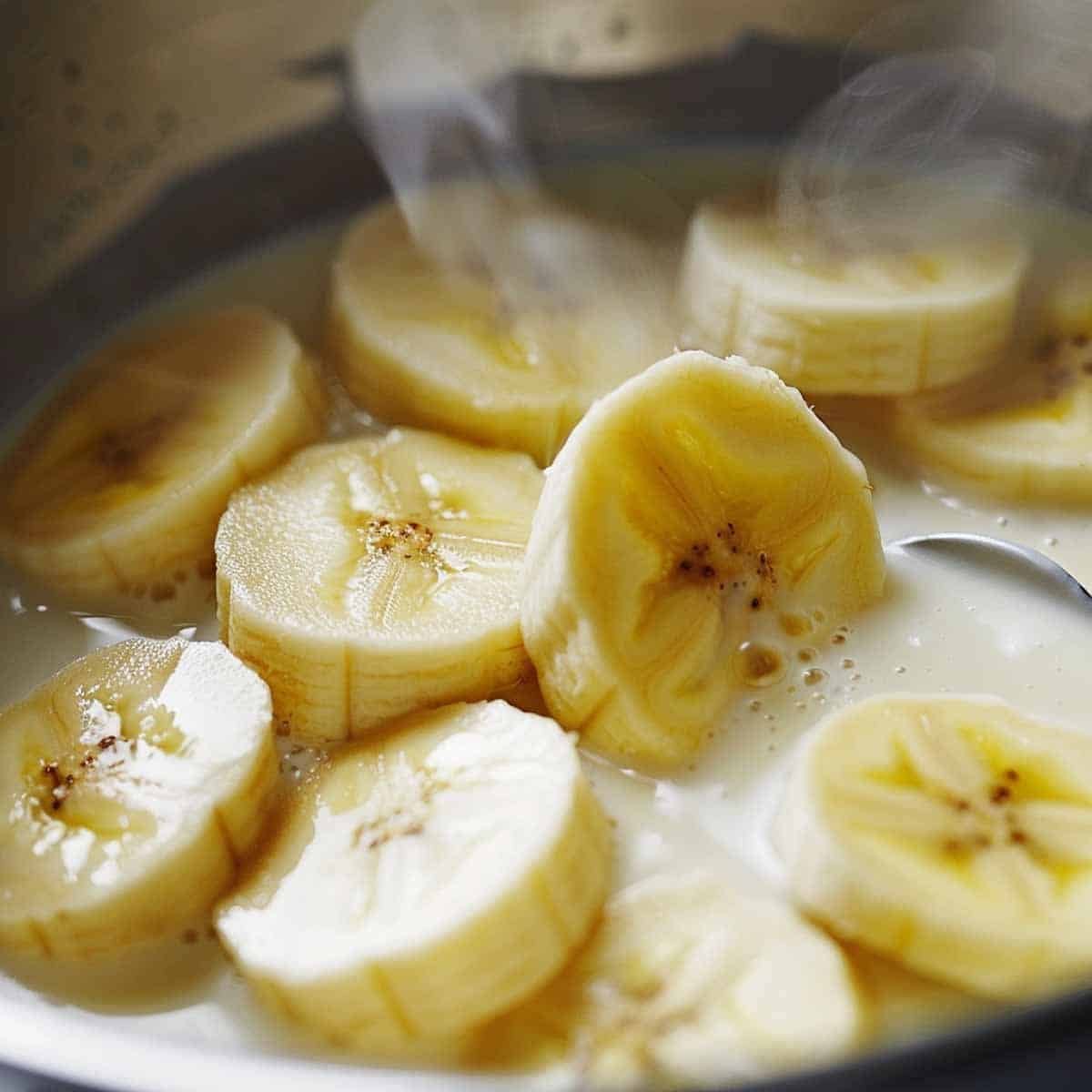
Peel the bananas and cut each one into three pieces on a diagonal. The diagonal cut is not decorative. A flat cut leaves a larger surface area exposed to the heat and the banana softens unevenly. The diagonal gives each piece a narrow point and a wider body and they cook at the same rate. Set them aside on a plate. Do not cut them more than ten minutes before they go into the pot.
Step 2 — Warm the Coconut Milk
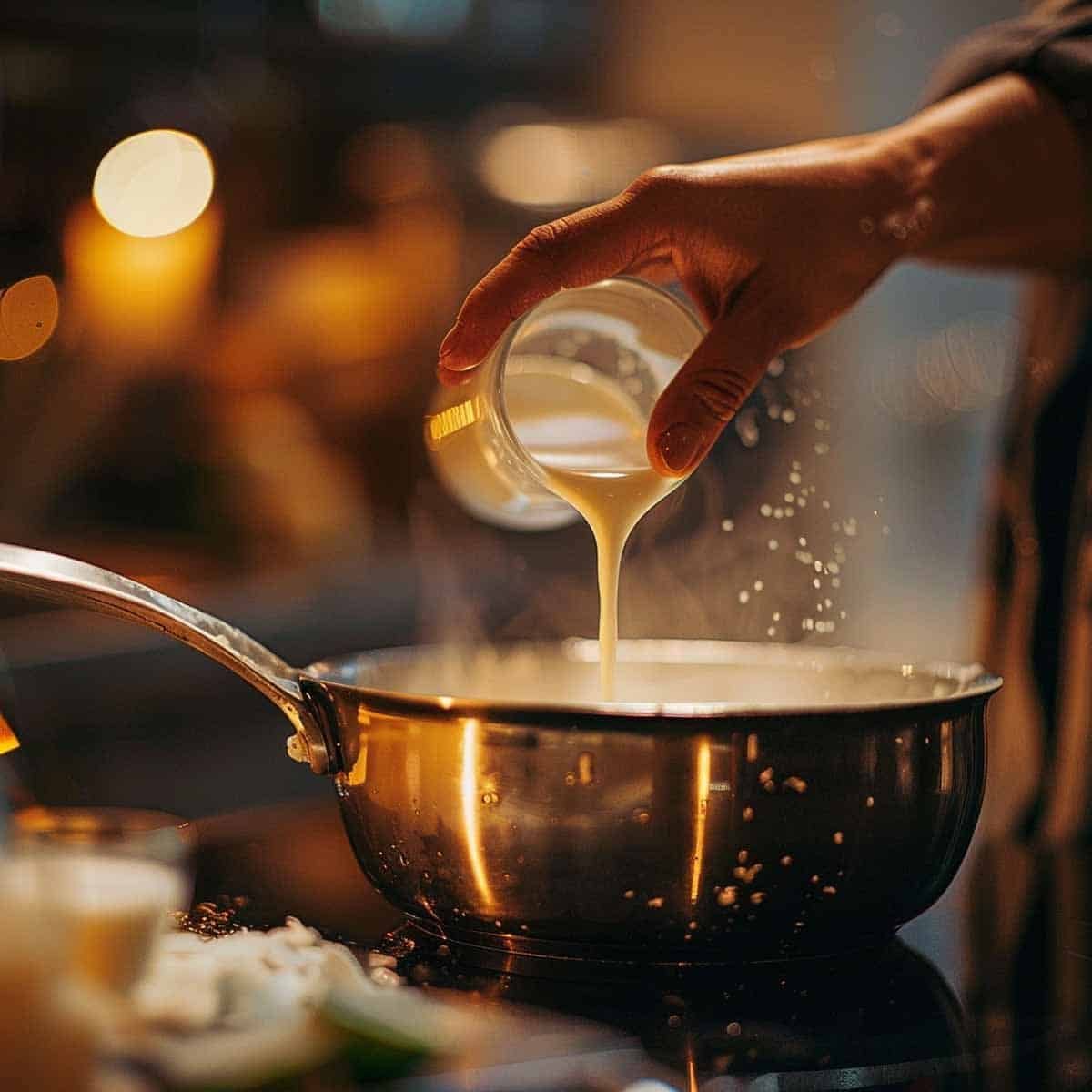
Pour the coconut milk into a medium saucepan. Add the pandan leaves if using, tied in a loose knot. Set the heat to medium-low. Warm the coconut milk slowly until it begins to move at the edges, small bubbles forming, not a rolling boil. This takes about three minutes. Do not rush it. Coconut milk scorches at the bottom of the pot if the heat is too high and the flavor turns.
Step 3 — Dissolve the Palm Sugar and Salt
★ This is What Makes the Difference
Add the palm sugar to the warm coconut milk. Stir gently until it dissolves, two minutes. Then add the salt. Stir once more. Taste the coconut milk now, before the banana goes in. It should taste sweet, round, and faintly savory at the back. If it tastes only sweet, the salt needs another small pinch. Getting this right before the banana enters the pot means the banana cooks into a seasoned liquid rather than absorbing blandness and needing correction later.
Step 4 — Add the Bananas
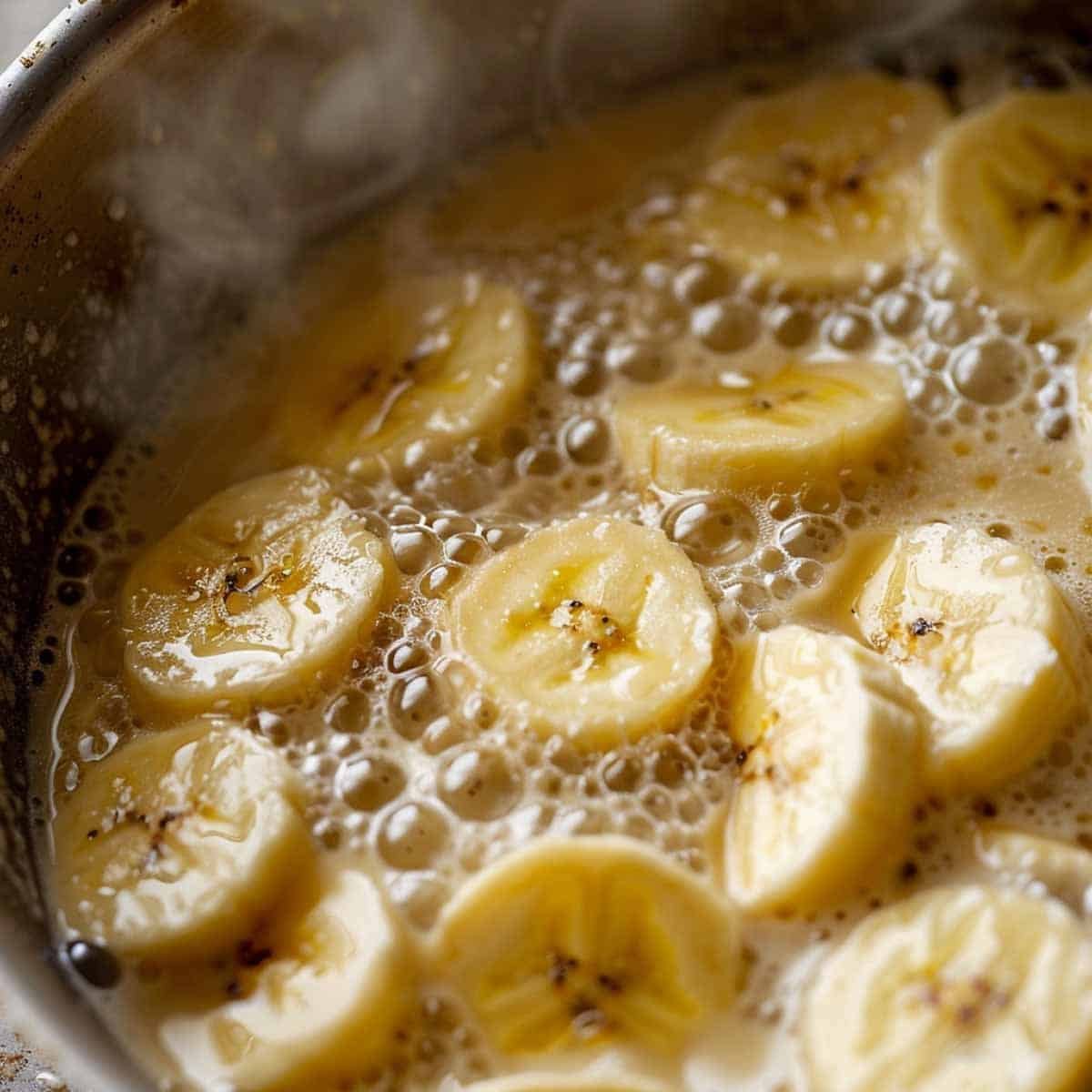
Lower the banana pieces into the coconut milk gently. Do not stir. Let them settle. Adjust the heat so the liquid stays at a bare simmer, just moving, not bubbling. Cook for eight to ten minutes. The bananas are done when they have turned from opaque yellow to a pale, almost translucent cream color and yield to gentle pressure. They should give but not fall apart.
Step 5 — Serve Warm
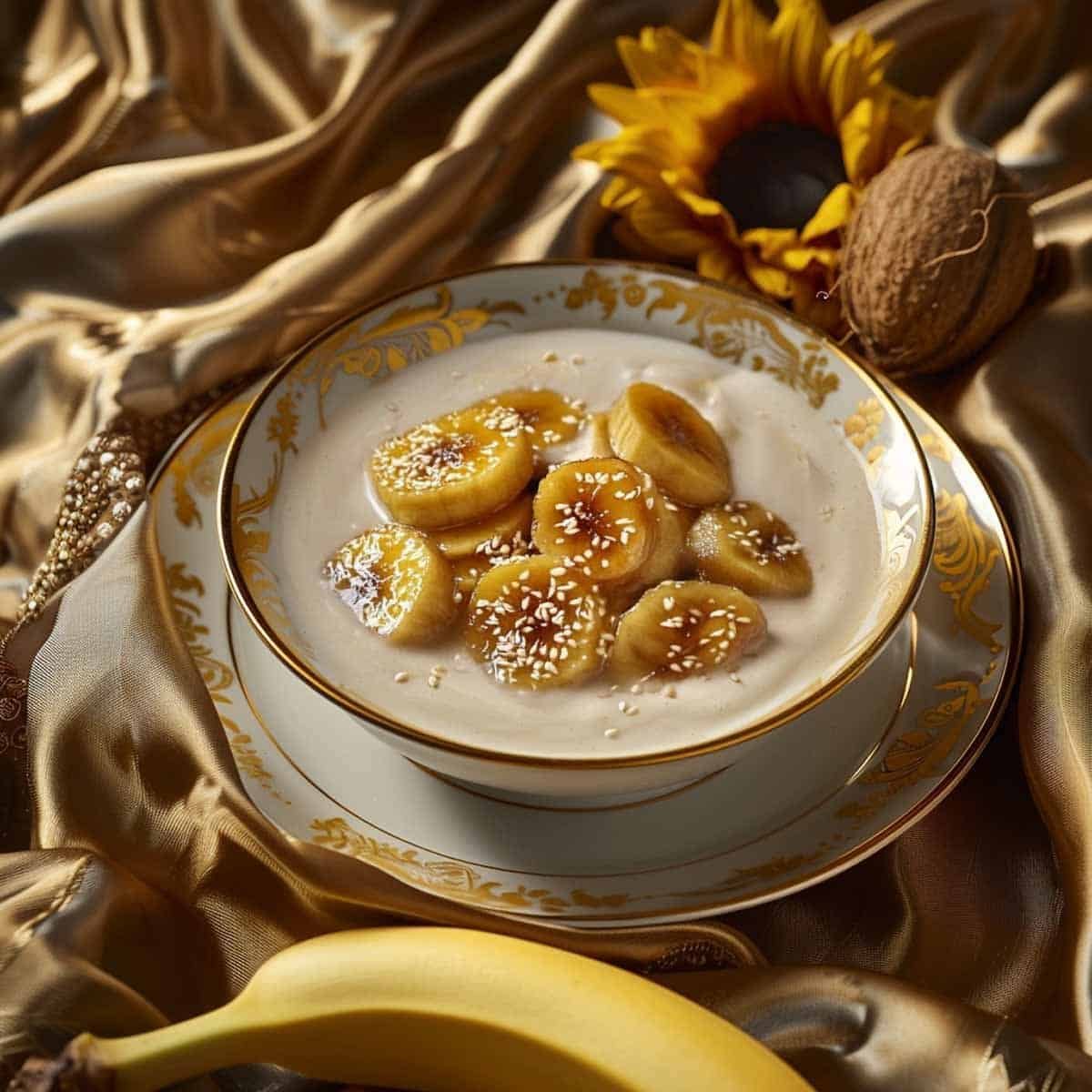
Remove the pandan leaves. Ladle the bananas and coconut milk into bowls. Serve warm, not hot. The dish can also be served at room temperature, some people prefer it that way, after the coconut milk has had time to thicken slightly as it cools and coat the banana more completely.
Kluay Buat Chee กล้วยบวชชี Banana in Coconut Milk
Equipment
- medium saucepan
- wooden spoon
- Serving bowls
Ingredients
- 4 ripe bananas sliced into pieces
- 2 cups coconut milk
- 1/4 cup palm sugar or brown sugar
- 1/4 teaspoon salt
- 1-2 pandan leaves optional
Instructions
- Preparing the Coconut Milk:Pour the coconut milk into a medium saucepan and add the pandan leaves if using, tied in a loose knot. Warm over medium-low heat until small bubbles form at the edges, not a boil, just movement. Add the palm sugar and stir gently until it dissolves, about two minutes. Then add the salt. Stir and taste. The coconut milk should be sweet, round, and faintly savory at the back. If it tastes only sweet, add another small pinch of salt.
- Cooking the Bananas: Add the sliced bananas to the saucepan. Reduce the heat and let it simmer for about 10 minutes or until the bananas are soft and the mixture slightly thickens.
- Serving: Remove the pandan leaves. Ladle into bowls and serve warm.
Notes
Nutrition
LET’S GET THIS RIGHT
Why did my bananas turn to mush?
They were too ripe when they went in, or the heat was too high. Bananas in coconut milk need a bare simmer, just enough movement to cook them through without breaking them down. An overripe banana cannot survive even gentle heat. Start with bananas that have spots forming but still feel firm when you press them.
Why does my coconut milk taste flat?
The salt is missing or too low. This is the most common mistake. Add a pinch more, stir, and taste again. The salt does not make the dish salty. It lifts every other flavor, the coconut fat, the palm sugar, the banana, and brings them into focus. Without it the dish tastes one-dimensional.
Can I use light coconut milk instead of full-fat?
You can, but the dish will be thinner and less rich. The fat in full-fat coconut milk is what gives bananas in coconut milk its body. Light coconut milk produces something closer to a banana broth. If that is what you have, use it,but know the result will be different. Add a small spoonful of coconut cream if you have it to compensate.
Why did my coconut milk separate or look curdled?
The heat was too high. Coconut milk separates when it boils hard. Keep the heat at medium-low throughout. If it has already separated, take the pan off the heat, let it cool for two minutes, and stir gently. It usually comes back together. If not, the flavor is still intact, it just will not look as smooth.
Do I have to use pandan leaf?
No. The dish is complete without it. Pandan adds a floral note that is traditional and very good, but the four core ingredients,banana, coconut milk, palm sugar, salt, are the dish. If you can find pandan, use it. If you cannot, do not let it stop you from making this today.
FLAVOR PROFILE
There is no drama in this dish. That is the point.
The coconut milk arrives first, warm, round, faintly sweet, with that particular richness that only fat can carry. Then the banana. Soft. A little starchy at the center, giving at the edge, soaking through with the sweetened milk it has been sitting in. The palm sugar is present but not loud. It moves through the coconut milk like something that was always there.
Then the salt. You will not taste it as salt. You will taste it as the moment when everything sharpens and becomes itself. That is what salt does in a sweet dish. It does not fight the sweetness. It holds it up.
If you have used pandan leaf, there is a green, almost floral note threading through the back of each spoonful. Not perfume. More like the smell of a yard after rain.
The texture is what stays with you. The banana is not mushy. It is not firm. It is exactly in between, the kind of yielding that takes practice to achieve and patience to wait for. The coconut milk by the time it reaches the bowl has slightly thickened, coating each piece.
You eat it slowly. There is no other way.
SUSIE’S KITCHEN NOTES
Never let the coconut milk boil. I know I have said this already. I am saying it again because it is the only technical rule this recipe has and it is the one most people break. A hard boil does two things: it separates the coconut fat from the liquid and it overcooks the banana too fast. Medium-low heat, a lid slightly ajar, and patience. That is the whole method.
The diagonal cut matters. My grandmother cut hers on a steep diagonal, almost forty-five degrees, and the pieces were about an inch and a half long. That size and shape mean the banana cooks evenly and each piece fits comfortably on a spoon. Cutting bananas in rounds feels natural but produces uneven pieces. The outside edge softens before the thick center is ready. The diagonal solves this without any extra effort.
Taste the coconut milk before the banana goes in. This is the moment when you can fix everything. The sweetness, the salt, the temperature, all of it is adjustable before the banana enters the pot. Once the banana is in, you are committed to a gentle simmer, and you do not want to be stirring and adjusting while the fruit is cooking. Season the liquid first. Then add the fruit and leave it alone.
If you have never cooked with pandan leaf, buy a bundle the next time you are near an Asian grocery store and freeze what you do not use. It keeps for months in the freezer. A knotted leaf dropped into warm coconut milk is one of the simplest things you can do and one of the most transformative. It will change how you think about coconut milk as an ingredient.
PAIRING SUGGESTIONS
Bananas in coconut milk is a dessert that needs nothing alongside it, but it finds good company. Serve it after a meal built around bold, savory flavors, my Thai Green Curry or a plate of Pad Thai, and the gentleness of the coconut milk registers as a kind of relief. A small scoop of coconut ice cream on the side is not traditional, but it is very good, the cold against the warm bowl creating something neither dish manages alone. For a Thai dessert spread, this pairs well with mango sticky rice, the coconut milk is a thread running through both dishes, and together they feel like a complete thought. If you want something to drink alongside, unsweetened Thai iced tea cuts through the richness cleanly. Keep it simple. This dish has already done everything it needs to do.
FAQ
What type of banana is best for bananas in coconut milk?
In Thailand, Kluay Nam Wa, a short, starchy finger banana, is the traditional choice for bananas in coconut milk. In the United States, a ripe Burro banana is the closest match. A Cavendish banana works if it is ripe with spots just forming but still firm. Avoid overripe bananas. They will dissolve in the coconut milk before the dish is finished.
What does Kluay Buat Chee mean?
Kluay Buat Chee translates as banana, ordained, nun. The name comes from the way the banana turns pale and still in the coconut milk, the way a Buddhist nun’s white robes look. It is one of the older names in Thai dessert cooking and it has not changed.
Can I make bananas in coconut milk ahead of time?
Yes. Make it up to a day ahead and store it in the refrigerator in a sealed container. The coconut milk will thicken as it chills and the banana will soften slightly further. Reheat gently on the stovetop over low heat, stirring slowly. Some people serve it at room temperature or even cold. Both are correct.
Why is salt used in a sweet dessert like bananas in coconut milk?
Salt in Thai sweet dishes does not make them taste salty. It lifts the other flavors, the coconut fat, the palm sugar, the banana, and brings them into focus. Without it the dish tastes flat and one-dimensional. A quarter teaspoon for a full pot is all it takes. My grandmother said it was the whole secret. She was right.
Is bananas in coconut milk served hot or cold?
Traditionally it is served warm, not hot, warm. The coconut milk should be comfortable to eat immediately. Some people prefer it at room temperature, after the coconut milk has had time to thicken slightly and coat the banana more fully. Both are traditional. Cold, straight from the refrigerator, is also something people do. All three are correct. Choose what you want.
What can I substitute for palm sugar in this recipe?
Light brown sugar is the closest substitute. Use the same amount and taste before adding the banana. Brown sugar can run slightly sweeter than palm sugar depending on the brand. White sugar works in a pinch but lacks the caramel undertone that palm sugar brings. The dish will still be good. It will taste a little simpler.
Is bananas in coconut milk vegan and gluten-free?
Yes to both. The traditional recipe contains only banana, coconut milk, palm sugar, salt, and optional pandan leaf. No eggs, no dairy, no flour, no fish sauce. It is one of the few classic Thai desserts that is naturally suited to most dietary restrictions without any modification at all.