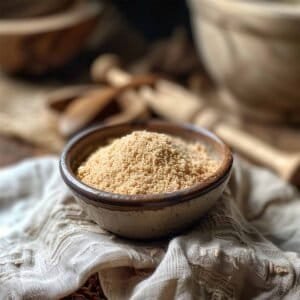
Khao Khua ข้าวคั่ว Thai Roasted Rice Powder
At my grandmother's house, when you smelled the rice toasting in the dry pan, you knew something good was coming. Her mortar was always ready and she made this fresh whenever the meal called for it, which was often. A dry pan, a few minutes of stirring, the mortar, and the kitchen smelled like something worth stopping for. I still make this the same way she did and I love every minute of it. Two ingredients, ten minutes, and something that makes every dish it touches better than it would have been without it. Make a batch tonight. Your larb will thank you.
Equipment
- Dry heavy skillet or wok
- spice grinder or mortar and pestle
- airtight glass jar for storage
Ingredients
- 0.5 cup raw glutinous sticky rice, unsoaked, completely dry
Instructions
- Start the dry toast: Place the raw dry sticky rice in a heavy skillet or wok over medium to medium low heat. Do not add any oil, this is a completely dry toast. Spread the rice in an even layer across the bottom of the pan.
- Toast until deep golden, be patient: Stir the rice constantly and patiently, do not walk away from this pan. After about 3 to 4 minutes the rice will begin to turn opaque and smell faintly nutty. Keep going. After 8 to 10 minutes the grains should be a deep, even golden brown, the color of pale caramel, and your kitchen should smell extraordinarily good. Like toasted popcorn crossed with something warm and nutty and deeply satisfying. Remove from heat immediately and transfer to a plate to cool.
- Cool completely then grind: Once completely cool, transfer to a spice grinder or mortar and pestle. Grind to a coarse, sandy powder with visible texture. Pulse in short bursts if using a spice grinder rather than running it continuously. Taste a pinch, it should be nutty, slightly smoky, and deeply fragrant.
- Store and use: Transfer to a clean airtight glass jar and label it with the date. Store at room temperature away from direct heat or sunlight. Use within 4 weeks for the best flavor, though in most kitchens a jar of khao khua never lasts that long.
Notes
Start with a cold pan. Putting the rice into an already-hot pan scorches the outside of the grain before the inside has had time to develop the nutty, toasted quality that is the whole point of making Khao Khua. Cold pan, rice goes in, heat comes up to medium. This gives every grain equal time with the heat and produces an evenly toasted powder with no burned spots and no raw centers.
Stir the whole time. This is not a step you can walk away from or even look away from for very long. The rice goes from raw to golden to burned in a matter of minutes at medium heat, and the window between done and overdone is narrow. Stay at the stove, keep the rice moving, and use your nose as much as your eyes. When it smells toasted and nutty and the color is an even golden brown, it is done. Take it off the heat immediately.
Let it cool before grinding. Two minutes is enough. Hot rice ground in the mortar steams slightly and produces a clumped, slightly dense powder rather than the coarse, distinct grind that Khao Khua should be. Cool it, then grind it. The two minutes is worth it.
Grind to coarse, not fine. This is the instruction most home cooks get wrong the first time, taking the rice all the way to a fine powder because it looks more finished that way. It is not more finished. It has lost the texture that makes it useful. Stop when it feels like coarse sand between your fingers. That texture is what Khao Khua does in a dish that fine rice flour cannot replicate.
Nutrition
Serving: 1gCalories: 18kcalCarbohydrates: 4gProtein: 0.3g
Tried this recipe?Let us know how it was!