What Is Roasted Rice Powder?
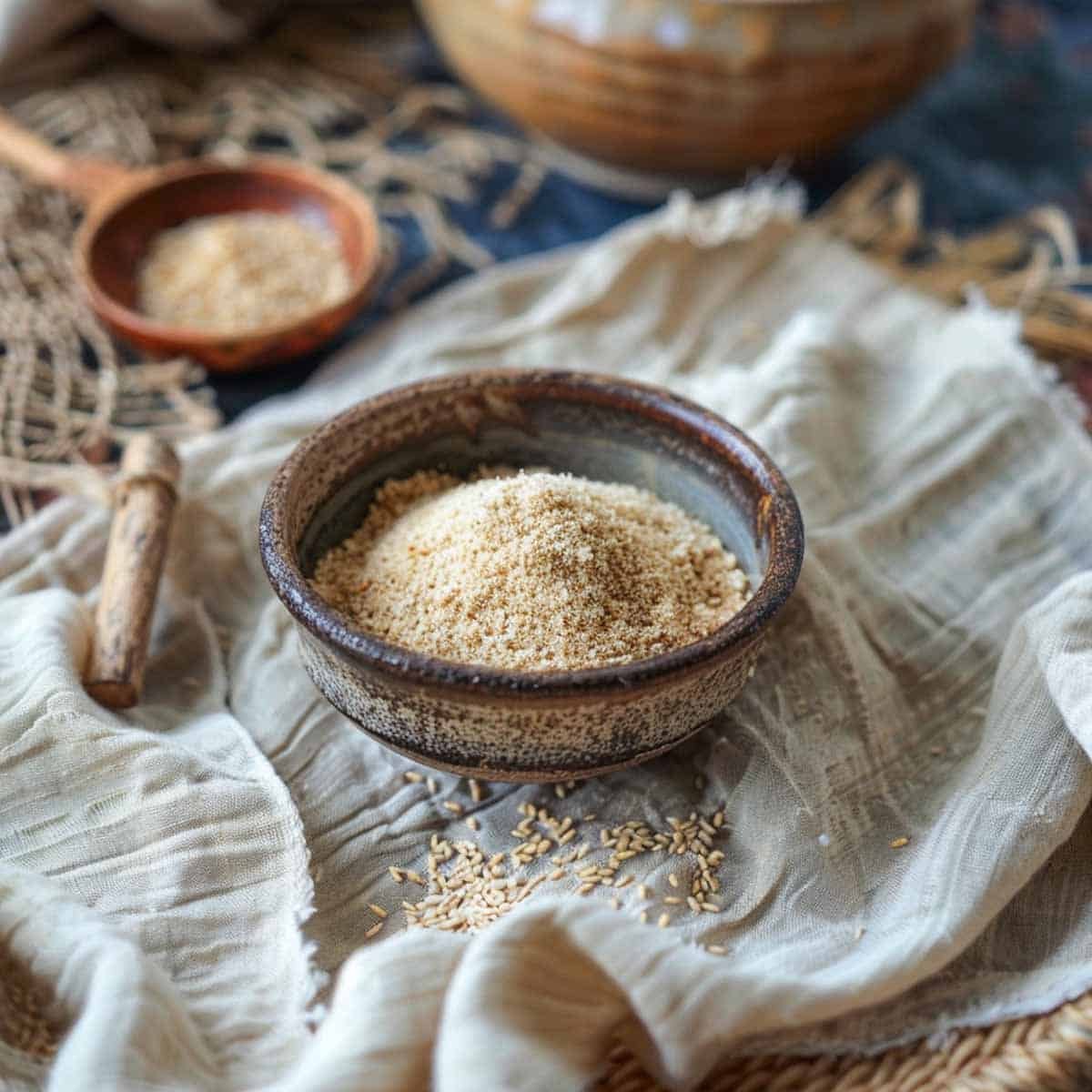
Roasted rice powder, Khao Khua (ข้าวคั่ว), is raw glutinous sticky rice dry-toasted in a pan until golden and nutty, then ground in a mortar to a coarse powder. It is used in larb, yum salads, and other Isan dishes to add a nutty, slightly smoky texture and to absorb the dressing so the dish holds together. Two ingredients. No shortcuts. The smell alone is worth making it for.
Note From Susie

Sawasdee Kha, and Hello.
When I think of my grandmother’s house, I think of the smell of rice toasting in the dry pan. That smell meant something good was coming and you wanted to be nearby when it arrived.
Her mortar never went away. It sat where it always sat, heavy and patient, always ready. She made roasted rice powder fresh whenever the meal called for it, and it always called for it. A dry pan, a few minutes of stirring, then the mortar, and the kitchen smelled like something worth stopping for.
That smell is one of my favorites. Nutty and warm and slightly smoky, specific to this one thing and nothing else. When it came through my grandmother’s house everyone paid a little more attention.
I still make this the same way she did, and I love making it. Some things are simply worth keeping exactly as they are.

What’s In This Page
“The smell of rice toasting in the dry pan meant something good was coming.”
— Her Hands His EyesWHAT IS ROASTED RICE POWDER?
Roasted rice powder, ข้าวคั่ว, Khao Khua, is one of the most essential and most often overlooked ingredients in Isan Thai cooking. It is made from raw glutinous sticky rice toasted in a dry pan over medium to medium-low heat until golden and nutty, then ground in a mortar to a coarse powder. That is the entire process. Two ingredients, raw rice and heat, and ten minutes of attention produce something that transforms the dishes it goes into in a way that nothing else replicates.
Roasted rice powder is used primarily in larb and other Isan salads, where it serves three purposes simultaneously. It adds a nutty, slightly smoky texture and flavor that is specific to Khao Khua and cannot be produced by any substitute. It absorbs the lime juice and fish sauce dressing, holding the salad together so the dressed meat tastes cohesive rather than swimming in liquid. And it provides a slight grittiness that gives each bite a textural dimension that the meat and herbs alone do not have.
Khao Khua is made fresh before each use. According to the Oxford Companion to Food, toasted rice powder is a defining ingredient of Isan and Lao cooking, one of the elements that most clearly distinguishes the cuisine of northeastern Thailand from the central and southern Thai kitchen.
My grandmother made it fresh. Her mortar was always ready. The smell was the announcement.
WHAT YOU’LL NEED
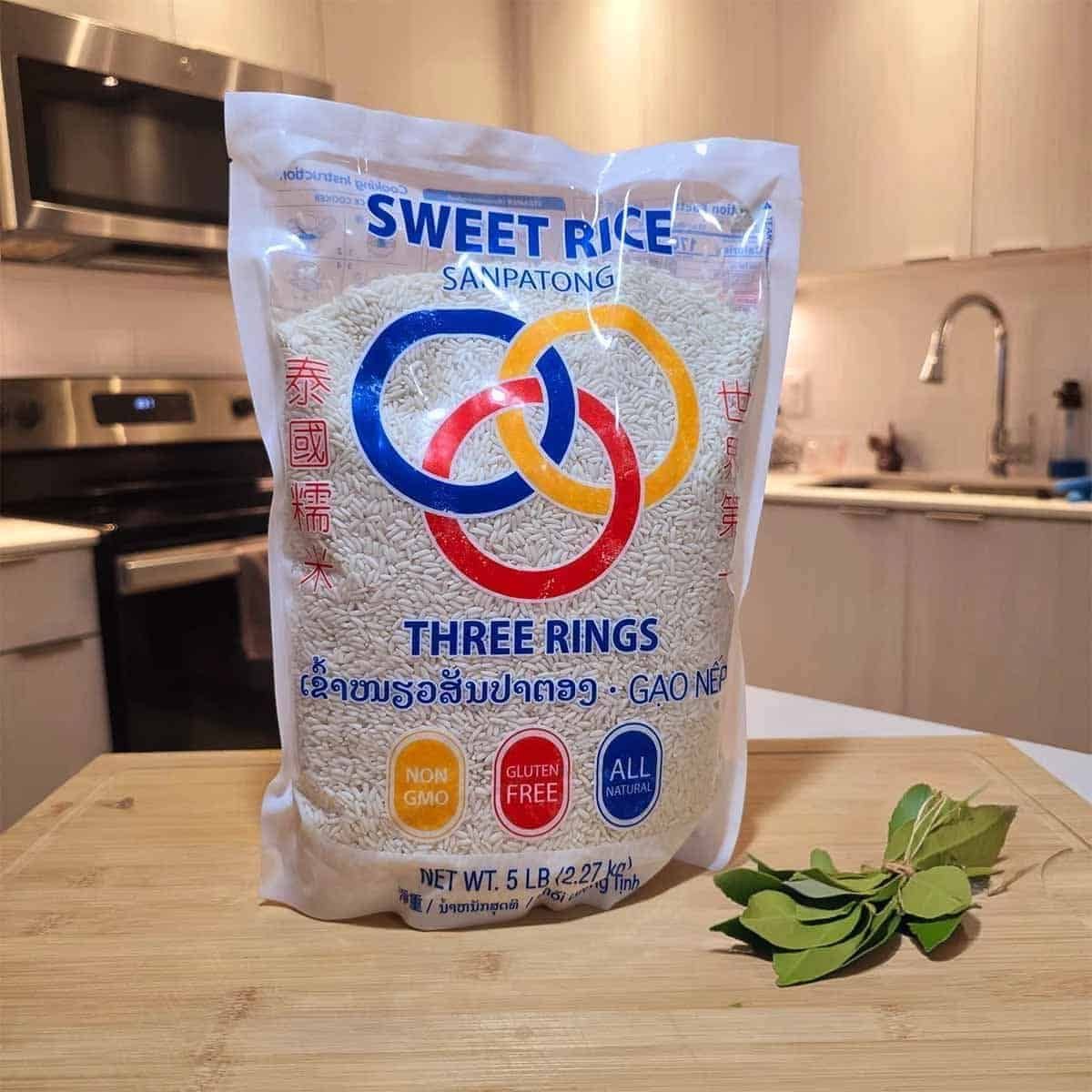
Raw glutinous sticky rice, half a cup, unsoaked and completely dry. That is the entire ingredient list. Half a cup of raw sticky rice produces enough roasted rice powder for one batch of larb or several dishes that call for a smaller amount.
Sticky rice is the correct rice for this recipe as written. It has the right starch content and produces the slightly nuttier result that is traditional in Isan recipes. Jasmine rice can also be used and both are correct.
A dry heavy skillet or wok. No oil, no butter, nothing in the pan except the rice. The dry heat is what toasts the rice and develops the nutty, slightly smoky flavor that is the whole point.
A spice grinder or mortar and pestle for grinding. The mortar gives you control over the coarseness. A spice grinder works if used in very short pulses with constant checking.
An airtight glass jar for storage. That is everything.
VISUAL WALK THROUGH
Step 1. Start the dry toast.
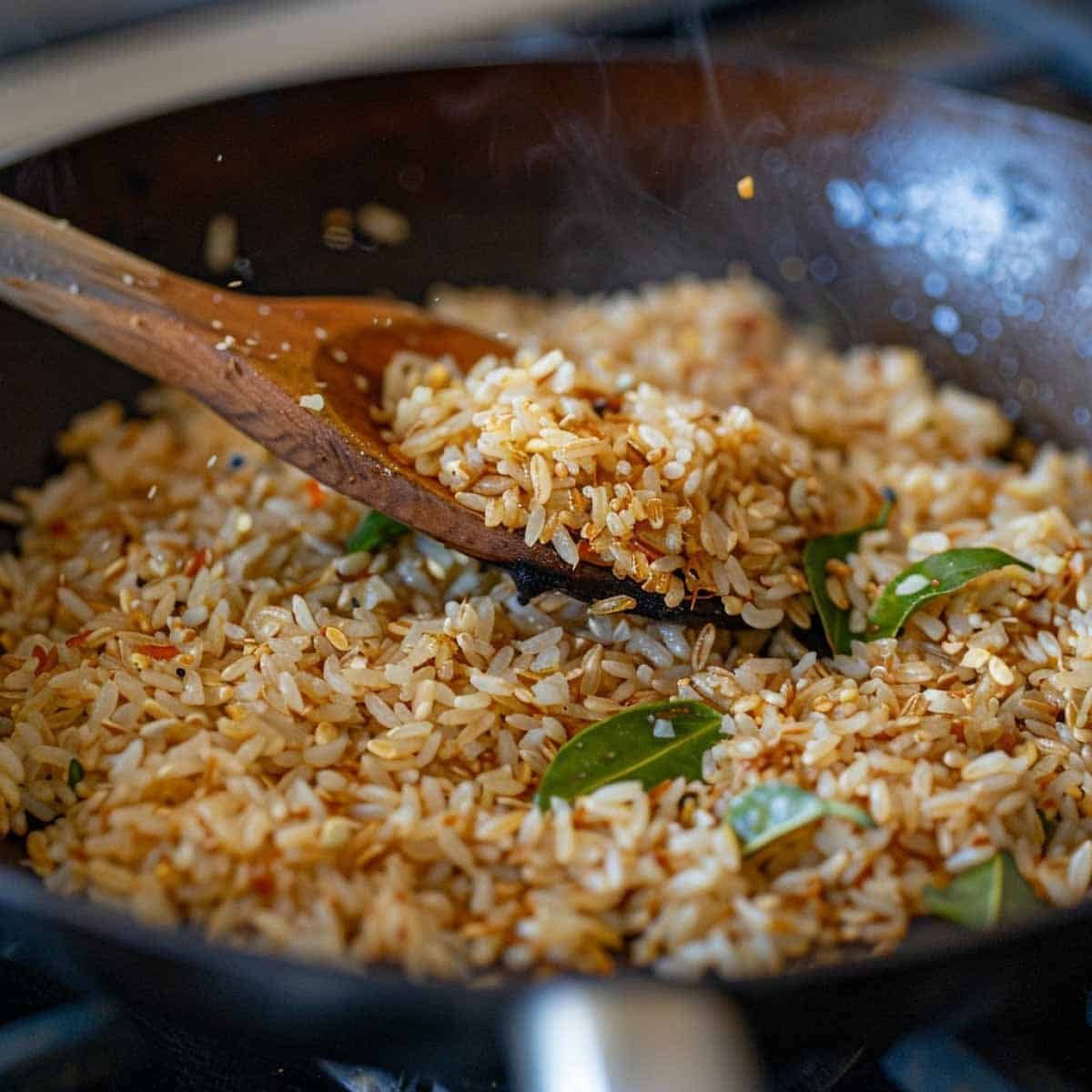
Place the raw dry sticky rice in a heavy skillet or wok over medium to medium-low heat. Do not add any oil. This is a completely dry toast. Spread the rice in an even layer across the bottom of the pan.
Step 2. Toast until deep golden. Be patient.
Stir the rice constantly and patiently. Do not walk away from this pan. After about three to four minutes the rice will begin to turn opaque and smell faintly nutty. Keep going. After eight to ten minutes the grains should be a deep, even golden brown, the color of pale caramel, and your kitchen should smell extraordinarily good. Remove from heat immediately and transfer to a plate to cool. Left in the hot pan it will continue cooking and can burn.
★ Step 3. Cool completely then grind. This is What Makes the Difference.
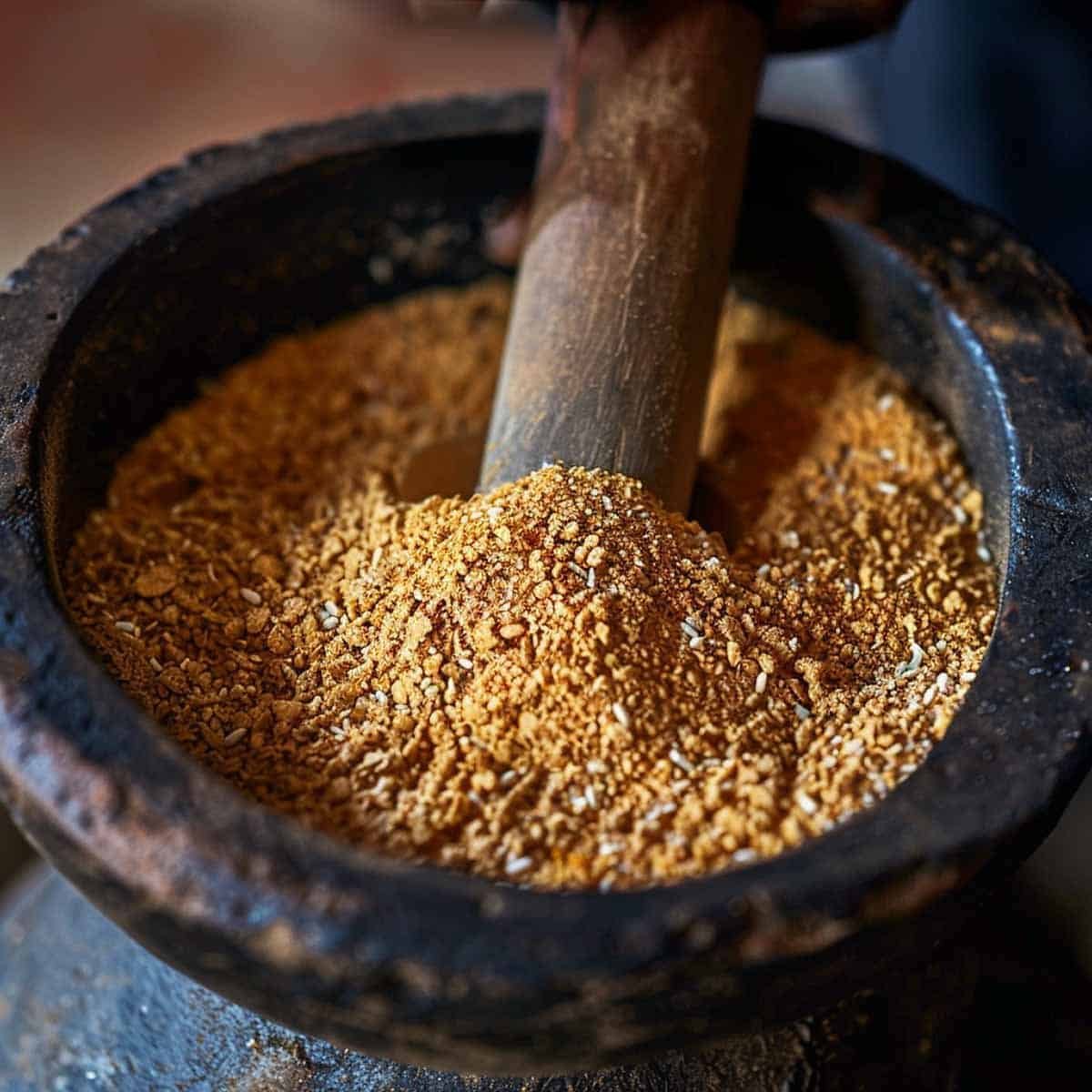
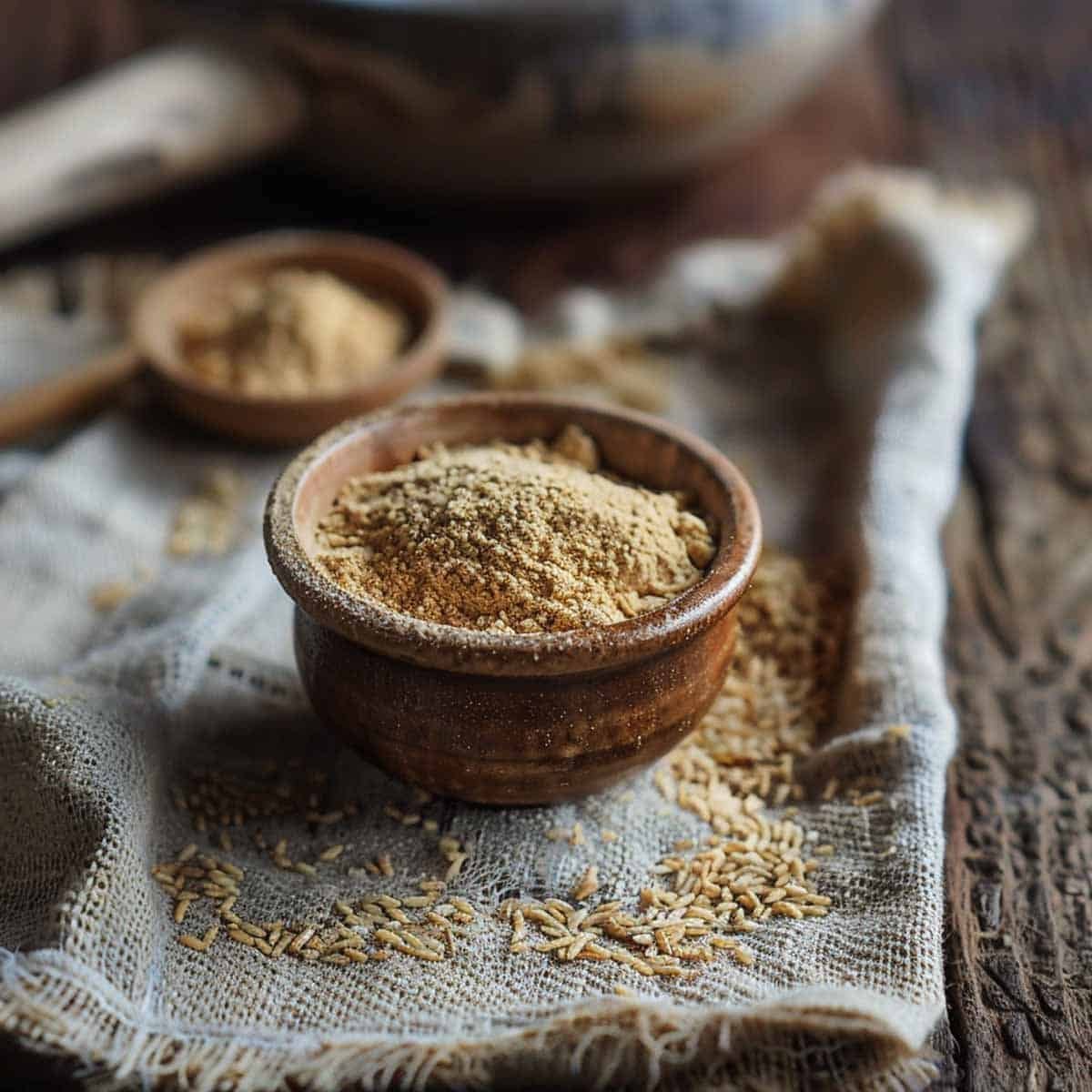
Once completely cool, transfer to a spice grinder or mortar and pestle. Grind to a coarse, sandy powder with visible texture.
Step 4. Store and use.
Transfer to a clean airtight glass jar and label it with the date. Store at room temperature away from direct heat or sunlight. Use within four weeks for the best flavor.
Khao Khua ข้าวคั่ว Thai Roasted Rice Powder
Equipment
- Dry heavy skillet or wok
- spice grinder or mortar and pestle
- airtight glass jar for storage
Ingredients
- 0.5 cup raw glutinous sticky rice, unsoaked, completely dry
Instructions
- Start the dry toast: Place the raw dry sticky rice in a heavy skillet or wok over medium to medium low heat. Do not add any oil, this is a completely dry toast. Spread the rice in an even layer across the bottom of the pan.
- Toast until deep golden, be patient: Stir the rice constantly and patiently, do not walk away from this pan. After about 3 to 4 minutes the rice will begin to turn opaque and smell faintly nutty. Keep going. After 8 to 10 minutes the grains should be a deep, even golden brown, the color of pale caramel, and your kitchen should smell extraordinarily good. Like toasted popcorn crossed with something warm and nutty and deeply satisfying. Remove from heat immediately and transfer to a plate to cool.
- Cool completely then grind: Once completely cool, transfer to a spice grinder or mortar and pestle. Grind to a coarse, sandy powder with visible texture. Pulse in short bursts if using a spice grinder rather than running it continuously. Taste a pinch, it should be nutty, slightly smoky, and deeply fragrant.
- Store and use: Transfer to a clean airtight glass jar and label it with the date. Store at room temperature away from direct heat or sunlight. Use within 4 weeks for the best flavor, though in most kitchens a jar of khao khua never lasts that long.
Notes
Nutrition
LET’S GET THIS RIGHT
Why does my roasted rice powder smell burned instead of nutty?
The heat was too high or the stirring was not constant enough. Medium heat and constant stirring are the two non-negotiable requirements of making Khao Khua. High heat scorches the outside of the grain before the inside has had time to develop properly. Inconsistent stirring allows the grains resting against the hot pan surface to burn while the others stay pale. Start over with a clean pan, medium heat, and constant attention. It takes ten minutes and is worth making correctly.
Why is my roasted rice powder too fine and dusty?
The grinding went on too long. Fine dust is the result of going past the coarse powder stage. Check the texture every thirty seconds during grinding. When it feels like coarse sand, stop immediately. If you have already ground it too fine, use it this time and stop earlier next time. The texture matters as much as the flavor in Khao Khua.
Can I use a blender or spice grinder instead of a mortar?
You can, but you will need to work in very short pulses and check constantly. A blender or spice grinder moves much faster than a mortar and will take the rice to fine dust in seconds if left running. If you must use one, pulse for two to three seconds at a time, stop, check the texture, and repeat. The mortar is the correct tool because it gives you complete control over how coarse or fine the powder becomes.
How long does roasted rice powder keep?
Roasted rice powder keeps in an airtight jar at room temperature for up to four weeks, though it is best used within the first hour of making, when its fragrance and texture are at their peak. After a week the nutty fragrance begins to fade noticeably. My grandmother made it fresh every time. That is still the right approach when time allows.
Can I make roasted rice powder with jasmine rice instead of sticky rice?
Yes. Jasmine rice is also correct and produces a slightly different but equally good result. Both jasmine rice and sticky rice are used in Khao Khua across different Isan recipes. This recipe uses sticky rice as written. If you have jasmine rice on hand, use it and taste the difference. Both are worth knowing.
FLAVOR PROFILE
The smell arrives first and it arrives fast. Raw rice in a dry pan over medium heat, the first two minutes quiet, then something shifts. The grain turns from white to ivory to gold and the kitchen fills with something nutty and warm and slightly smoky that is specific to this one preparation and nothing else. That smell is the whole announcement. My grandmother’s house smelled this way before larb arrived at the table. I still stop when I smell it now.
The powder itself is dry and coarse between the fingers, golden, faintly gritty. A pinch tasted alone is nutty and toasted, with a faint smokiness that the dry heat produces in a way that oil-fried or steamed rice cannot replicate. It is subtle on its own. In a dish it becomes essential.
In larb, folded through the dressed warm meat, it absorbs the lime juice and fish sauce and binds everything together. The nuttiness is present in every bite without announcing itself. The slight grittiness gives each mouthful a textural dimension that is specific to Isan cooking and that nothing else produces. Remove it and the larb is looser, flatter, less itself. Include it and the dish is complete.
Two ingredients. A dry pan. Ten minutes. The smell of my grandmother’s kitchen and the taste of something that has been made the same way for a very long time.
SUSIE’S KITCHEN NOTES
My grandmother used a heavy granite mortar that had been in her kitchen for years before I was born. The weight of the pestle did the work without her having to force it. A heavy mortar is the right tool for grinding toasted rice because the weight of the pestle produces the coarse, distinct grind that Khao Khua requires. A light mortar requires more force and tends to bounce, making even grinding difficult. If you make Thai food regularly, a heavy granite mortar is one of the best investments you can make in your kitchen. It lasts indefinitely and improves every dish that requires grinding or pounding.
Make more than you need for one dish and store the extra in a small jar. Two tablespoons of raw rice takes the same amount of attention as four tablespoons. The extra batch keeps for a week and means the next larb or yum salad you make is ready to go without the ten-minute preparation. The fresh batch is always better, but a three-day-old batch is still very good and significantly better than nothing.
The color of properly toasted rice is worth learning to recognize. It should be an even golden brown, the color of light caramel, with no pale patches and no dark spots. Pale patches mean the rice is undertoasted and will not have developed its full nutty flavor. Dark spots mean some grains have scorched and will add bitterness to the powder. Even golden brown throughout, achieved by constant stirring over medium heat, is the target.
At my grandmother’s house the smell of the rice in the dry pan meant the meal was getting serious. It was the sound and the smell of preparation reaching its final stage, the kitchen saying that the dish was almost ready. I still feel that when I make this. The rice in the pan, the smell arriving, the mortar waiting. Some things carry everything they mean in their smell alone.
PAIRING SUGGESTIONS
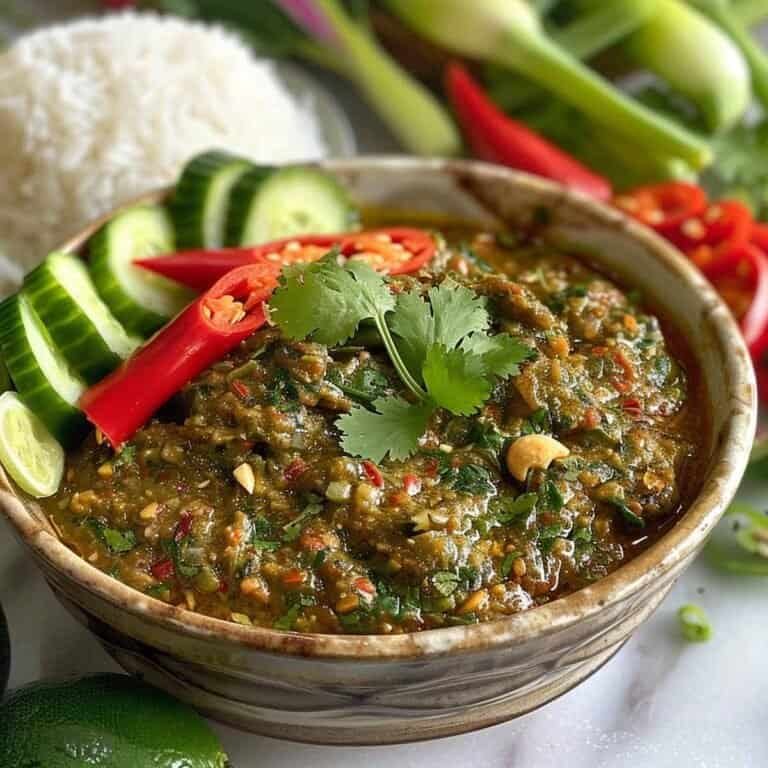
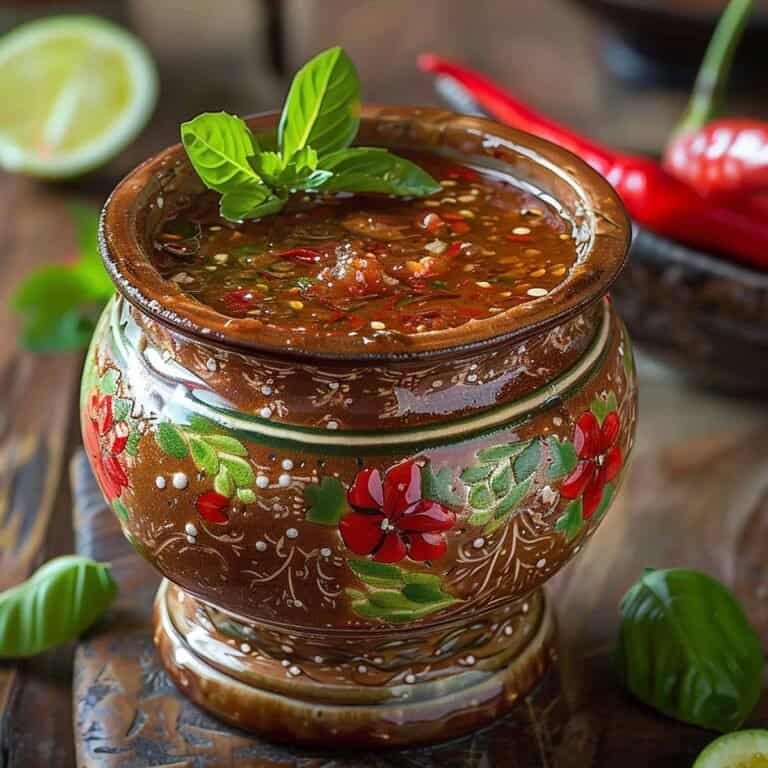
Roasted rice powder belongs behind the dishes that need it most. The chicken larb is the dish that calls for it first, the warm dressed meat that becomes something complete only when the roasted rice powder goes through it just before the herbs. The Thai beef salad is the Nam Tok that uses it the same way, the sliced grilled beef held together and given texture by the same coarse golden powder. The Yum Woon Sen is the glass noodle salad where a tablespoon folded through adds a nuttiness the dressing alone cannot provide. The Nam Phrik Num is the charred green chili dipping sauce that belongs at the same Isan spread, all of them together making the table smell exactly like my grandmother’s kitchen. When you smell the rice toasting in the dry pan, you know something good is coming. Make it fresh. That is the only way to know.
FAQ
What is roasted rice powder (Khao Khua)?
Roasted rice powder, Khao Khua (ข้าวคั่ว), is raw glutinous sticky rice dry-toasted in a pan over medium to medium-low heat until golden and nutty, then ground in a mortar to a coarse powder. It is used in larb, yum salads, and other Isan Thai dishes to add a nutty, slightly smoky texture and to absorb the dressing so the salad holds together. Two ingredients, ten minutes, and something that transforms the dishes it goes into.
How do you make roasted rice powder step by step?
Place half a cup of raw dry sticky rice in a heavy skillet or wok over medium to medium-low heat. No oil. Spread in an even layer. Stir constantly for eight to ten minutes until the rice is a deep, even golden brown and smells nutty and toasted. Remove from heat immediately and transfer to a plate to cool completely. Once cool, transfer to a spice grinder or mortar and pestle. Grind in short pulses to a coarse, sandy powder. Check texture every thirty seconds and stop when it feels like coarse sand. Transfer to an airtight glass jar and store at room temperature for up to four weeks.
What dishes use roasted rice powder?
Roasted rice powder is used primarily in larb, the Thai minced meat salad, where it absorbs the lime and fish sauce dressing and adds nutty texture. It is also used in yum salads, Nam Tok beef salad, and some Isan relishes and dipping sauces. In larb it is tossed through the warm dressed meat just before the fresh herbs go in. It is an ingredient in the dish, not a garnish on top of it.
Can I substitute roasted rice powder with something else?
There is no direct substitute that produces the same nutty, slightly smoky flavor and coarse texture. The best substitute is simply making it from scratch, which takes ten minutes and only requires raw rice and a dry pan. If you are making larb or a yum salad, making Khao Khua fresh is always the right choice.
How long does roasted rice powder keep?
Roasted rice powder keeps in an airtight jar at room temperature for up to four weeks. It is best used within the first hour of making, when its fragrance and texture are at their peak. After a week the nutty fragrance begins to fade noticeably and a fresh batch is worth making. My grandmother made it fresh every time she needed it.
Why is roasted rice powder coarse and not fine?
The coarse texture is what makes roasted rice powder useful in larb and yum salads. The coarse grind absorbs the dressing while providing a distinct grittiness in each bite that the meat and herbs alone do not have. Fine rice powder loses this textural quality and behaves more like a thickener than an ingredient with presence. Grind to coarse sand texture and stop.
What rice is used for roasted rice powder?
This recipe uses raw glutinous sticky rice, unsoaked and completely dry. Sticky rice is the traditional choice in many Isan recipes and produces a slightly nuttier result. Jasmine rice is also correct and more widely available. Whatever rice you use, it must be raw and uncooked before going into the dry pan. Pre-cooked or parboiled rice will not toast correctly and will not produce the right flavor or texture.