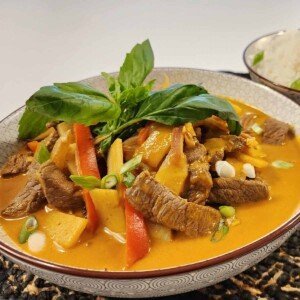
Thai Beef Red Curry
My mother made this. Her sisters made this. My grandmother's kitchen held this smell the way it held everything else, completely, as if the food and the walls had an agreement. I was very young. I remember the color more than the taste: slightly orange and creamy, bright vegetables at the edges. I picked some of them out. That is what small children do. By the time I was old enough to eat the whole bowl I understood what the smell had always been telling me. This recipe is theirs.
Ingredients
- 1 lb beef sirloin thinly sliced
- 2-3 tbsp red curry paste
- 2 cans 14 oz coconut milk
- 1 red bell pepper sliced
- 1 small onion (optional) sliced
- 3 cloves garlic (optional) minced
- 1 cup bamboo shoots sliced
- 2 tbsp fish sauce
- 1 tbsp palm sugar or brown sugar
- Fresh Thai basil leaves for garnish
- Fresh cilantro leaves for garnish
- Cooked jasmine rice for serving
Instructions
Heat the Pan and Cook the Curry Paste:
- Heat a large pan or wok over medium heat. Add the red curry paste and stir-fry for one minute until fragrant. Pour in the coconut milk gradually, stirring constantly. Continue cooking over medium heat, stirring, until the oil separates and rises to the surface.
Add Coconut Milk and Bring to a Simmer:
- Gradually pour in the coconut milk, stirring constantly to combine with the curry paste until smooth. Bring the mixture to a gentle simmer over medium heat.Add beef. Simmer for 45 minutes, add the beef to the simmering curry, stir to submerge, simmer gently for forty-five minutes until tender.
Simmer with Vegetables:
- Add the sliced bell peppers ,onions and bamboo shoots to the pan. Simmer the curry, stirring occasionally, until the vegetables are tender yet still vibrant, about 5 - 10 minutes.
Season the Curry:
- Stir in the fish sauce and palm sugar, adjusting the amounts to balance the flavors according to your taste preferences. Simmer the curry for another 5 minutes to allow the flavors to meld together.
Garnish and Serve:
- Garnish the Thai Beef Red Curry with fresh Thai basil leaves and cilantro.
Notes
Pour the coconut milk in gradually after the paste has been fried for one minute, and keep stirring over medium heat until the oil separates from the milk and pools at the surface. That separation is the signal the paste is properly cooked. Do not add the beef until you see it.
Fry the curry paste until the oil separates. Three to five minutes of stirring the paste in the coconut cream over medium heat, until small pools of orange-red oil appear at the edges of the mixture, is what develops the full flavor of the paste. A paste fried for thirty seconds and then immediately drowned in coconut milk will taste raw and flat underneath the richness. Give it the time. Watch for the oil. When you see it separating, the paste is ready.
The Thai basil goes in last and off the heat. It wilts in seconds and its fragrance goes into the sauce. Basil that is cooked loses its brightness and turns dark and slightly bitter. Off the heat, into the finished curry, folded in and served immediately. That is correct. That is what the basil is for.
The curry reheats beautifully. The second day the beef is softer, the sauce is deeper, the whole thing has settled into itself in a way that the first day had not quite reached. Make more than you need. The second bowl is better than the first.
Nutrition
Serving: 1cup curry with riceCalories: 450kcalCarbohydrates: 10gProtein: 30gFat: 32gSaturated Fat: 25gPolyunsaturated Fat: 5gCholesterol: 75mgSodium: 700mgFiber: 2gSugar: 5g
Tried this recipe?Let us know how it was!