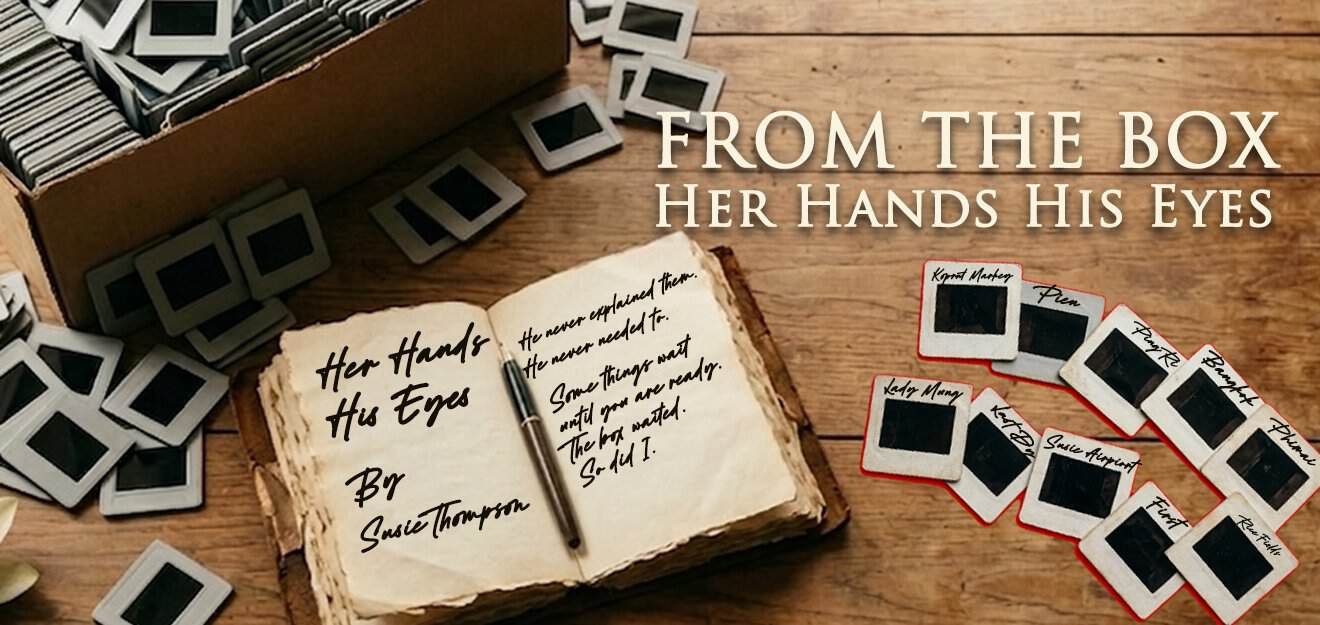
Her Hands His Eyes is a journal written in real time about writing my book. Every week I open the box a little further. A memory. A photograph. A recipe. This is Entry 12. Start from the beginning with Entry 1. You are reading this as I write it. When the book is ready you will be the first to know. Open The Box.
I was writing recipes today.
That is the work right now. Sitting with the food. Putting it into language. Trying to find words for things that were never given words in my grandmother’s kitchen because they did not need them. You just watched. You just did.
Today I was working on the Thai beef jerky.
Neua Sawan. The same recipe my grandmother made for the train rides. She would make it in the kitchen at the farm in Kamphaeng Phet and wrap it carefully and pack it for the journey back to Korat. It was travel food. Provisions. Something to carry you from one place to another.
I have been making it in my Florida kitchen trying to get it right. Trying to find the flavor that lived in her hands. The particular combination of things that meant the farm and the morning and the smell of beef drying in the air and her hands moving without measuring anything.
And then I typed two words.
Thai food.
I have typed those words a thousand times. On this website. In emails. In the title of this book. They are ordinary words. Professional words. Words I use to tell Americans what kind of cook I am.
But today they stopped me.
What She Called It
I know this sounds like a silly thought.
But I sat with my hands on the keyboard and I thought about my grandmother in that kitchen and I thought about what she called what she was making.
She did not call it Thai food.
It was not Thai food.
It was just food. It was just how we ate. It was just Tuesday. It was just what you made before a journey so the people you loved would have something to carry them.
She was not making Thai beef jerky. She was making Neua Sawan. She was making provisions. She was doing what her hands knew how to do the way they always knew how to do it. Without a frame. Without a label. Without anyone needing to tell her what cuisine she was practicing.
I sat at my Florida desk and I thought about losing your cultural identity one word at a time without ever knowing it was happening.
That is what America does. It gives you a frame. And the frame is not wrong exactly. The frame is just a frame. It tells other people what they are looking at. It organizes the thing into something recognizable.
But the frame also changes what you think you are looking at.
Thai food.
Those two words put a frame around everything my grandmother knew. Everything my mother carried. Everything that lived in their hands before it had a name.
“She did not call it Thai food. It was not Thai food. It was just food. It was just how we ate. It was just Tuesday.”
Living In Two Worlds
This is one of those living between two worlds thoughts.
In Thailand it would just be food. Nobody would call it Thai food. Nobody would need to. It would just be what you eat. What your grandmother makes. What your mother knows. What your hands learn without being taught.
In America it becomes Thai food. It gets a label. It gets a cuisine category. It gets a section of the menu. It gets a website and a book and a woman in Florida sitting at her desk typing two ordinary words that are not ordinary at all.
I do not resent that. I want to say that clearly. The frame is also what allowed me to build a life around this food. To share it. To reach people who had never tasted it. To put my grandmother’s kitchen into language that someone in Ohio or Oregon or Edinburgh could follow.
The frame gave me this website. It gave me this book.
But losing your cultural identity is not always dramatic. It is not always obvious. Sometimes it is just two words you have typed a thousand times that one Tuesday morning stop you cold and make you ask a question you did not know you had been carrying.
What did she call it.
She called it food.
She called it Tuesday.
She called it what you make before a journey.
“America put a frame around it. And the frame, I realized today, changed what I thought I was looking at.”
What I Did Not Know I Was Carrying
I have been making this recipe all week.
Standing at my Florida stove making the beef jerky my grandmother made for train rides in Kamphaeng Phet. Trying to get it right. Trying to find the flavor that lived in her hands.
My grandmother did not know she was teaching me Thai food.
She was making provisions for a journey.
She was making something that would carry her family back to Korat and without either of us knowing it something that would carry me the rest of my life.
Through every American kitchen I ever stood in.
Through every recipe I have tried to put into words.
Through this book.
I did not expect a Tuesday morning in Kamphaeng Phet to come back to me so completely. The smell of the beef drying in the air. Her hands moving without measuring anything. The smallness of me beside her. All of it arriving because of two ordinary words on a screen.
Some losses you know you are carrying. This one I did not know was there until it moved.
This is the recipe she handed me in pieces that morning. I have been putting it together ever since.
Not just the beef jerky.
All of it.
The farm. The train rides. The kitchen at Kamphaeng Phet. The hands that knew without measuring. The food that was just food before America gave it a name.
“Some losses you know you are carrying. This one I did not know was there until it moved.”
What I Know Now
Losing your cultural identity is not always a dramatic thing.
Sometimes it is just two words.
Thai food.
Two words you have used so many times they feel like yours. Two words that one morning stop you cold and remind you that before they were yours they were nobody’s.
They were just food.
They were just Tuesday.
They were just what you made before a journey so the people you loved would have something to carry them.
She did not call it anything.
She just made it.
I am writing it all down.
For Remi, Samantha, Jackson.
So they know what it was before it had a name.
So they know about the farm and the train rides and the hands that knew without measuring.
So they know that some losses you carry for decades before you know they are there.
And so they know that Tuesday in Kamphaeng Phet was not just a Tuesday.
It was everything.
What Comes Next
This is Entry 12 of Her Hands His Eyes, a memoir written in real time as I open the box.
Next week another memory. Another photograph. Another recipe. Written in real time as it happens.