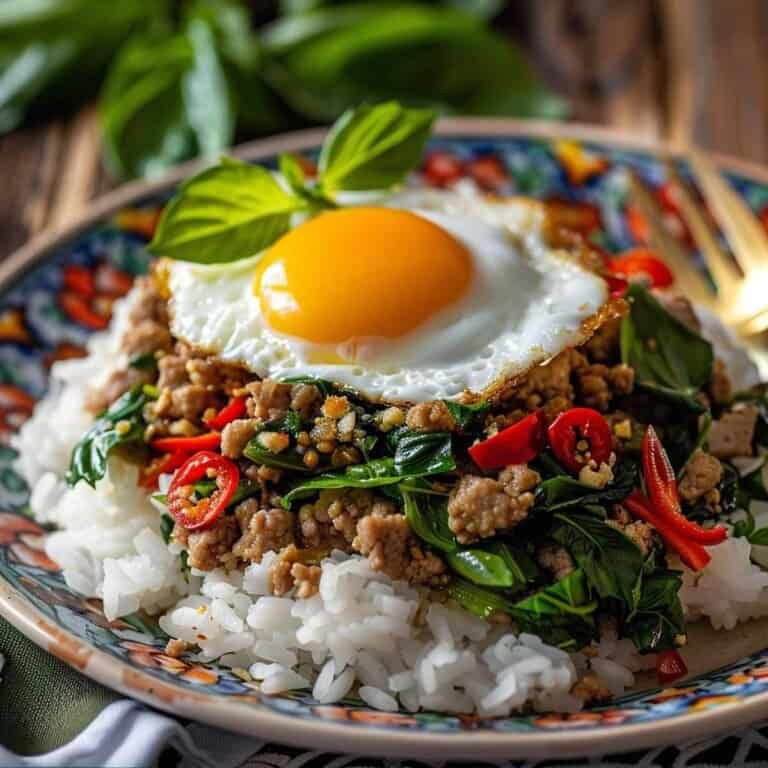

What Is Panang Curry?
A panang curry recipe builds a thick, rich coconut milk curry around a paste of dried chilies, lemongrass, galangal, and kaffir lime, then finishes with whole kaffir lime leaves and just enough fish sauce to pull everything together. It is quieter than red curry. Slower. The kind of dish someone made in a kitchen, not at a cart.
Note From Susie

Sawasdee Kha, and Hello.
I was six years old. I stood beside my grandmother in the kitchen at the farm in Kamphaeng Phet and I watched her make Panang curry. I did not help. I was too small to help. I just stood there beside her and listened.
My mother called it the bong bong. The mortar. The rhythmic sound of the paste being worked, bong bong, bong bong, steady and unhurried, the way my grandmother did everything. The smell that came up from it was like nothing else. Lemongrass and galangal and dried chilies releasing all at once into the air of that small kitchen.
I did not know that I was saying goodbye. I was six. You do not know those things at six. You just stand beside someone you love and listen to the sound they make and think that it will always be there.
It was not always there.
I have been making Panang curry for forty years in Florida trying to get back to that kitchen. This recipe is as close as I have come.

What’s In This Page
“This panang curry recipe is built from what I watched that morning.”
— Her Hands His EyesWhat Is Panang Curry?
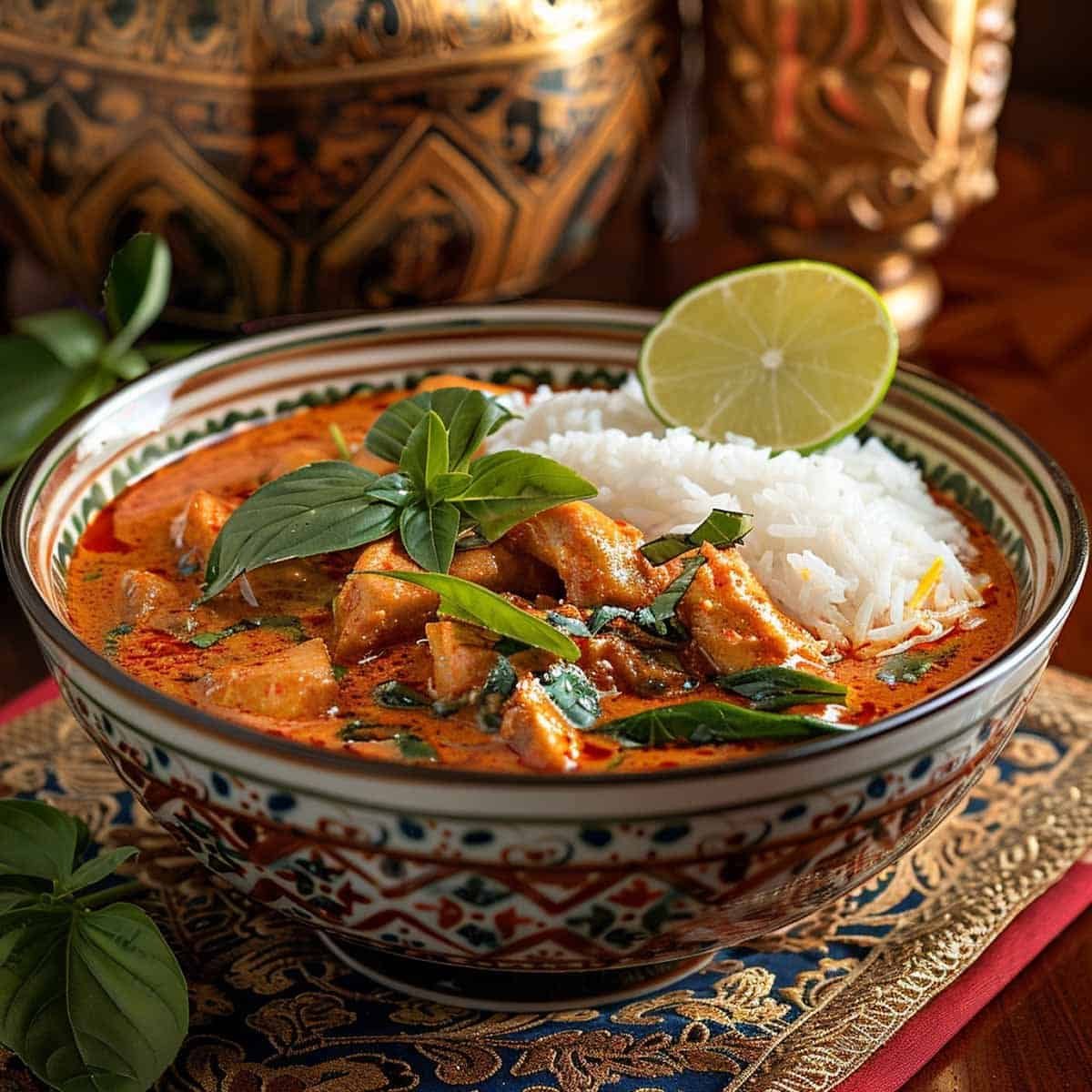
Panang curry, แกงพะแนง, Gaeng Panang, pronounced gaaeng pah-naeng, is a central Thai curry built on a thick paste of dried red chilies, lemongrass, galangal, kaffir lime peel, and roasted cumin and coriander. Unlike the thinner broths of red or green curry, a panang curry recipe produces something closer to a sauce, rich, cling-to-the-meat thick, with whole kaffir lime leaves pressed into the surface and a finish of coconut cream that never fully disappears into the dish.
According to food historian David Thompson in his essential work Thai Food, Panang takes its name from the island of Penang in Malaysia, suggesting a southern or cross-border origin, though it has been claimed and refined by central Thai cooking for generations. It is not street food. It is home food. Restaurant food. The kind made with time.
What makes Panang distinct from red curry is the paste. It contains roasted cumin and coriander and kaffir lime peel that red curry paste does not, and less chili by volume. The result is a curry that is quieter in heat, deeper in spice character, and richer in texture than red curry. The coconut cream is used more generously and some is always reserved for the top of the finished bowl, spooned on at the last moment rather than stirred through.
The paste hits the coconut cream and the kitchen changes. That is how you know.
According to the Oxford Companion to Food, coconut cream curries built on pounded spice pastes are among the most technically refined preparations in Southeast Asian cooking, requiring proper paste development and the correct cracking of coconut milk before any liquid is added.
What You’ll Need
Panang curry paste, two tablespoons. You have two options. Make it from scratch, the mortar, the dried chilies, the lemongrass, the galangal, the kaffir lime peel, the roasted cumin and coriander. Or use a good quality store-bought paste. Mae Ploy and Maesri are both reliable. The finished curry will be slightly flatter in complexity than scratch paste but still worth making.
Chicken breast, one pound, thinly sliced. Beef sirloin works too. Cut to roughly the same size so it cooks evenly.
Coconut milk, one can, thirteen and a half ounces, full fat. Do not shake the can. The cream from the top fries the paste. Do not substitute reduced-fat.
Fish sauce, two tablespoons. Palm sugar, one tablespoon, to balance.
Red bell pepper, one, sliced. Green bell pepper, one, sliced. Snap peas, one cup. Kaffir lime leaves, four to five, torn. Fresh are best, frozen are acceptable. Dried are not a real substitute.
Thai basil leaves, a quarter cup. Vegetable oil, one tablespoon.
Visual Walk Through
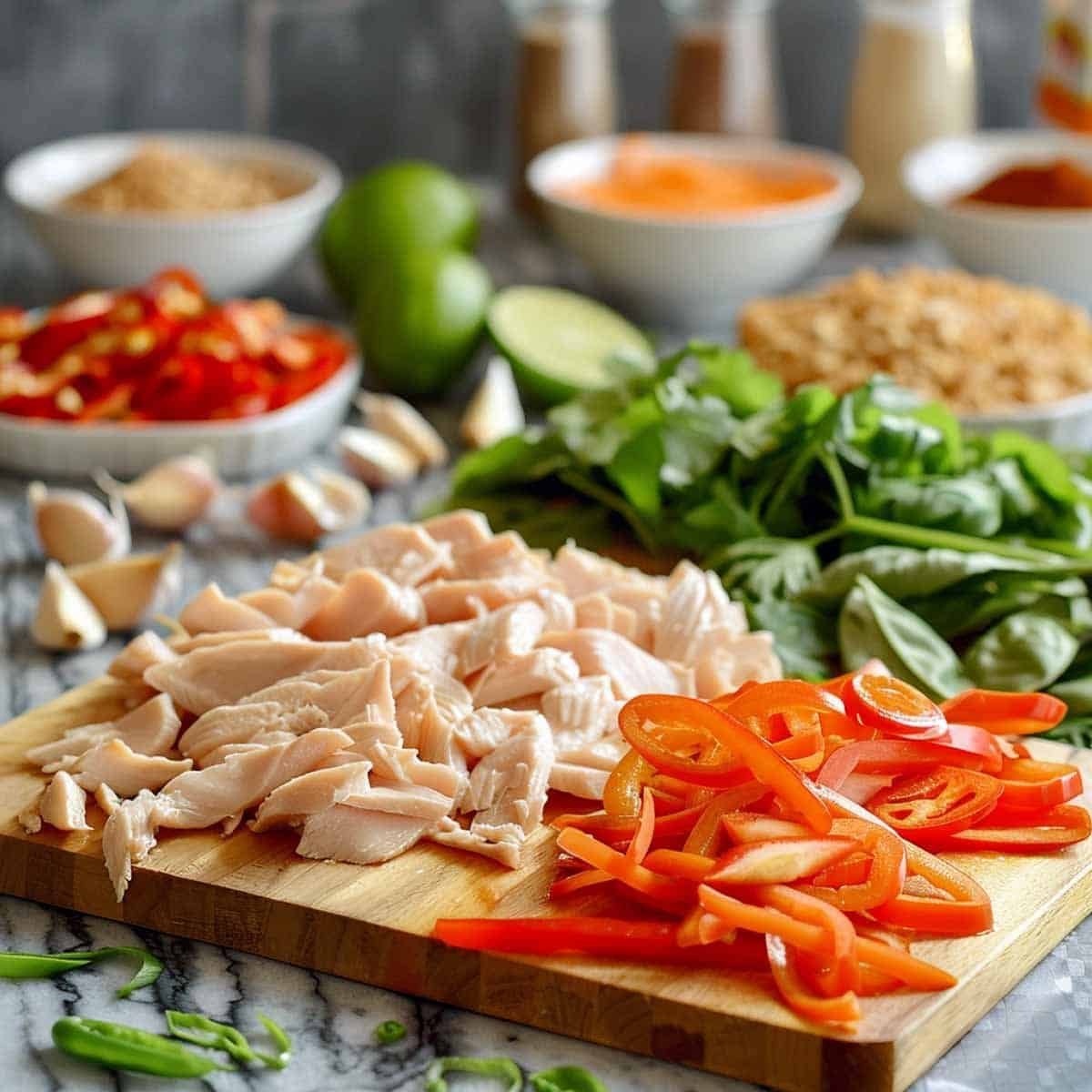
Step 1. Prepare the ingredients.
Thinly slice the chicken breast and the red and green bell peppers. Tear the kaffir lime leaves and prepare the snap peas, Thai basil leaves, and other ingredients for use.
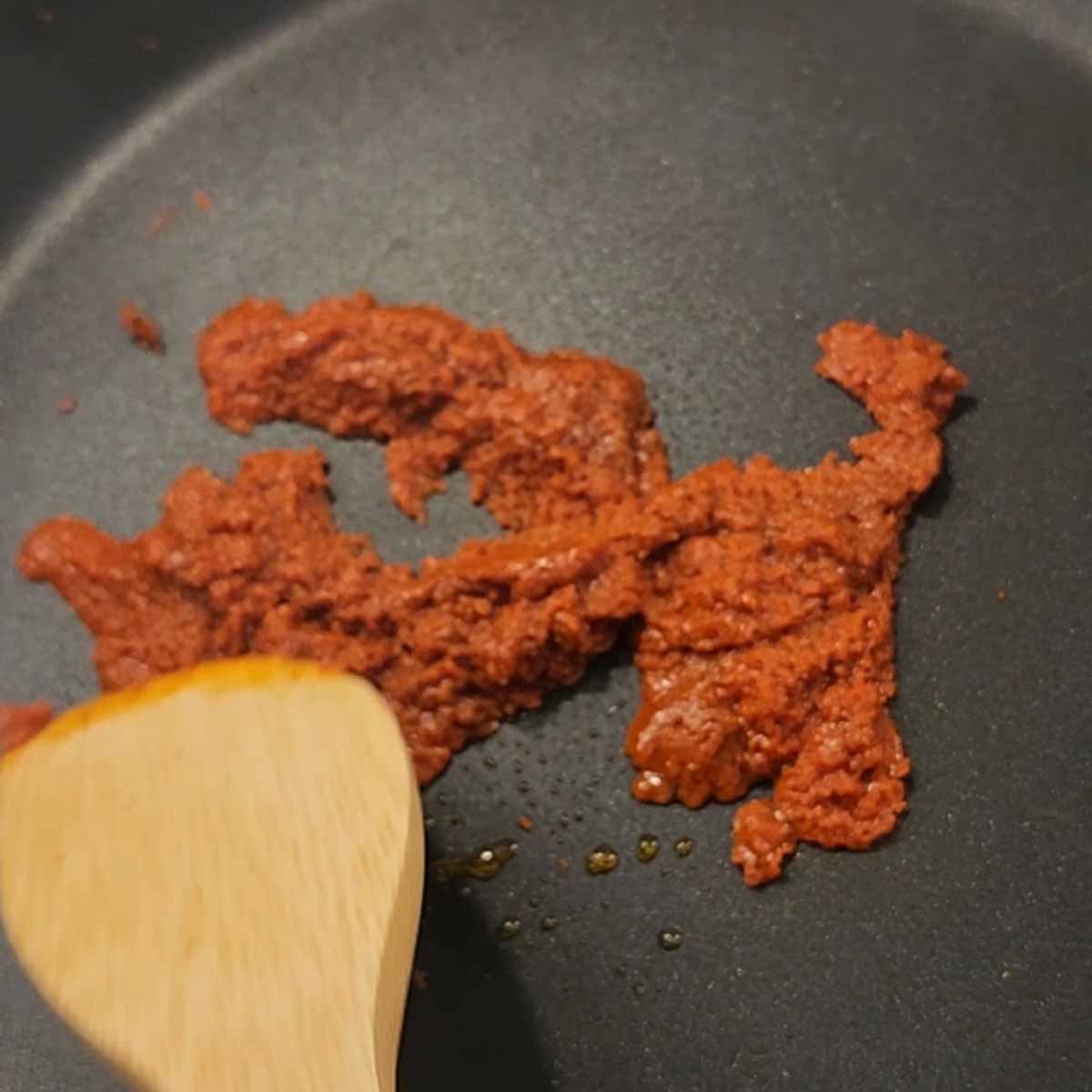
★ Step 2. Cook the curry paste. This is What Makes the Difference.
Heat the vegetable oil in a pan or wok. Add the Panang curry paste and stir constantly for two to three minutes until the paste is fragrant and slightly darker. The paste should darken and smell cooked rather than raw.
Step 3. Add coconut milk, chicken, and vegetables.
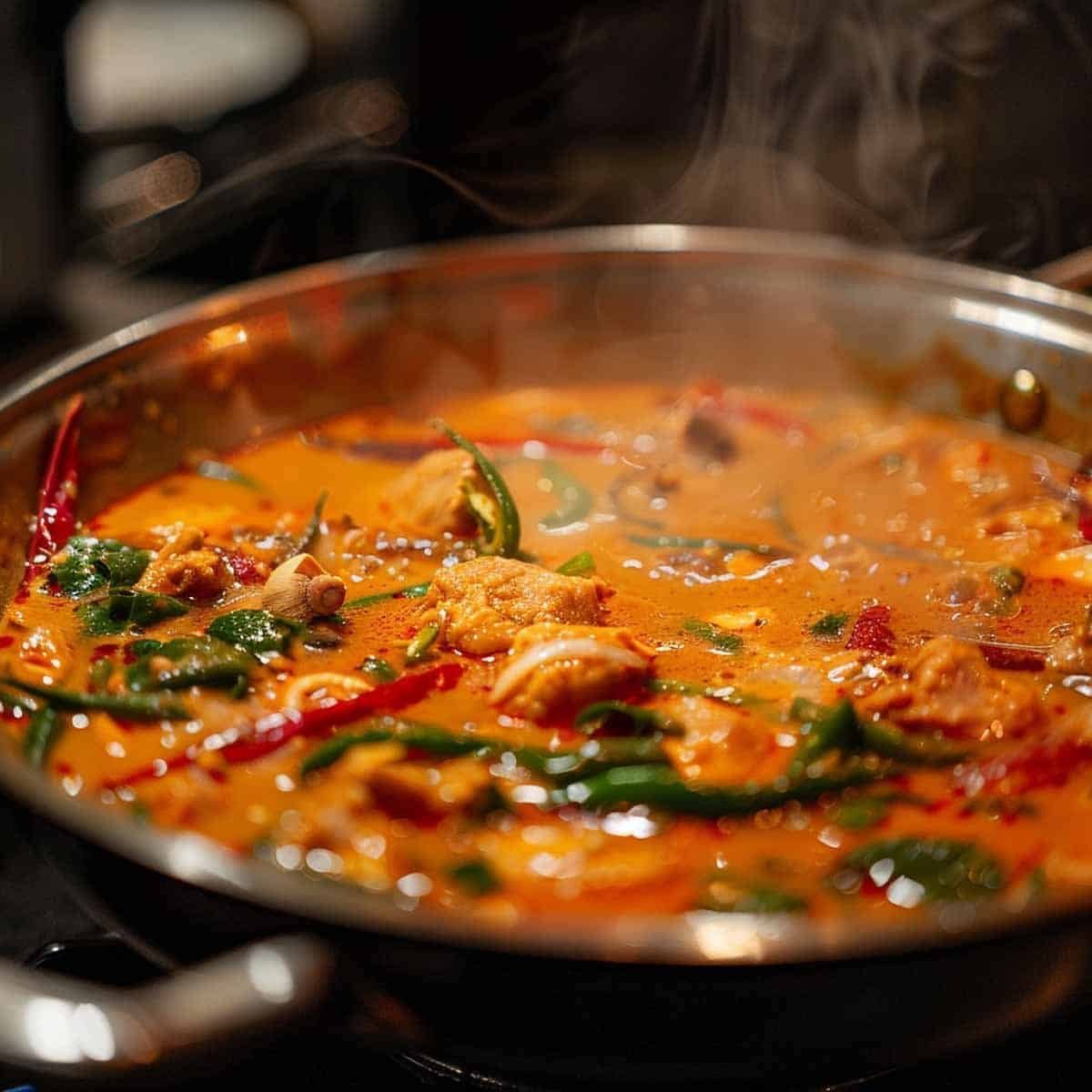
Pour in half of the coconut milk and stir well to combine with the curry paste. Bring the mixture to a gentle simmer. Add the thinly sliced chicken, add the rest of the coconut milk, submerging each piece in the sauce. Simmer for about ten minutes until the chicken is cooked through. Then add the sliced bell peppers, snap peas, and torn kaffir lime leaves.
Step 4. Final touches and serve.
Adjust the fish sauce and palm sugar to taste. Add the Thai basil leaves and stir everything through. Let the curry simmer for two to three more minutes. Taste once more before removing from heat.
Ladle into bowls and serve with jasmine rice.
Panang Curry
Ingredients
- 1 lb chicken breast thinly sliced
- 2 tbsp Panang curry paste
- 1 can 13.5 oz coconut milk
- 2 tbsp fish sauce
- 1 tbsp palm sugar
- 1 red bell pepper sliced
- 1 green bell pepper sliced
- 1 cup snap peas
- 4-5 kaffir lime leaves torn
- 1/4 cup Thai basil leaves
- 1 tbsp vegetable oil
Instructions
- Prepare the ingredientsThinly slice the chicken breast and the red and green bell peppers. Tear the kaffir lime leaves, prepare the snap peas, Thai basil leaves, and other ingredients for use.
- Cook the curry paste. Add the vegetable oil and Panang curry paste, to the pan or wok, stirring constantly for 2-3 minutes until the paste is fragrant and slightly darker.
- Add Coconut Milk and SimmerPour in half of the coconut milk and, stir well to combine with the curry paste. Bring the mixture to a gentle simmer.
- Add Chicken and vegetables. Add the thinly sliced chicken to the pan, add the rest of the coconut milk, submerging each piece in the sauce. Simmer for about 10 minutes until the chicken is cooked through. Then, add the sliced bell peppers, snap peas, and torn kaffir lime leaves. Cook the vegetables for 5 minutes to keep their bright colors and slight crunch.
- Final Touches: Adjust the fish sauce and palm sugar to taste. Finally, add the Thai basil leaves and stir everything.
- Serve.Ladle into bowls and serve with jasmine rice.
Notes
Nutrition
Let’s Get This Right
Why does my panang curry taste thin instead of thick and rich?
The paste was not fried long enough. Frying the paste until it is fragrant and slightly darker is what gives Panang its body and depth. If you add the protein and coconut milk before the paste is properly cooked, the curry stays loose and the flavors stay raw. Two to three minutes of constant stirring at minimum. When the paste is fragrant and darker, it is ready.
Can I use store-bought curry paste for this panang curry recipe?
Yes, and it will produce a decent result. The flavors will be flatter than a paste made from scratch, but a good quality store-bought Panang paste, Mae Ploy and Maesri are both reliable, is a workable shortcut. Fry it the same way you would a homemade paste. Do not skip that step.
Why is my panang curry bitter?
The dried chilies were not soaked long enough, or they were not drained properly before pounding. Under-soaked chilies bring bitterness into the paste that does not cook out. Soak them until fully soft, at least twenty minutes in warm water, and squeeze out the excess liquid before they go into the mortar.
What is the difference between panang curry and red curry?
Panang is thicker, richer, and quieter in heat than red curry. The paste contains roasted cumin and coriander and kaffir lime peel, which red curry paste does not, and less chili by volume. It uses more coconut cream and less liquid overall. The result is a sauce that clings to the meat rather than a broth that surrounds it. They are related but they are not the same dish.
Can I make panang curry ahead of time?
Yes. It is better the next day. The paste continues to integrate with the coconut cream overnight and the flavors deepen considerably. Reheat gently over medium-low. Do not boil. Add a splash of coconut cream if it has thickened too much. Press fresh kaffir lime leaves in just before serving. My grandmother made it the night before. I understood why the first time I tried it.
Flavor Profile
The mortar goes quiet and the smell arrives first. Lemongrass and galangal and roasted cumin, earthy and sharp and slightly sweet all at once, the way a kitchen smells when someone who knows what they are doing is in it. Then the paste hits the coconut milk and the whole register shifts. The raw edge cooks out and something deeper comes through, warm, dark, faintly spiced, the kind of smell that stays in a room.
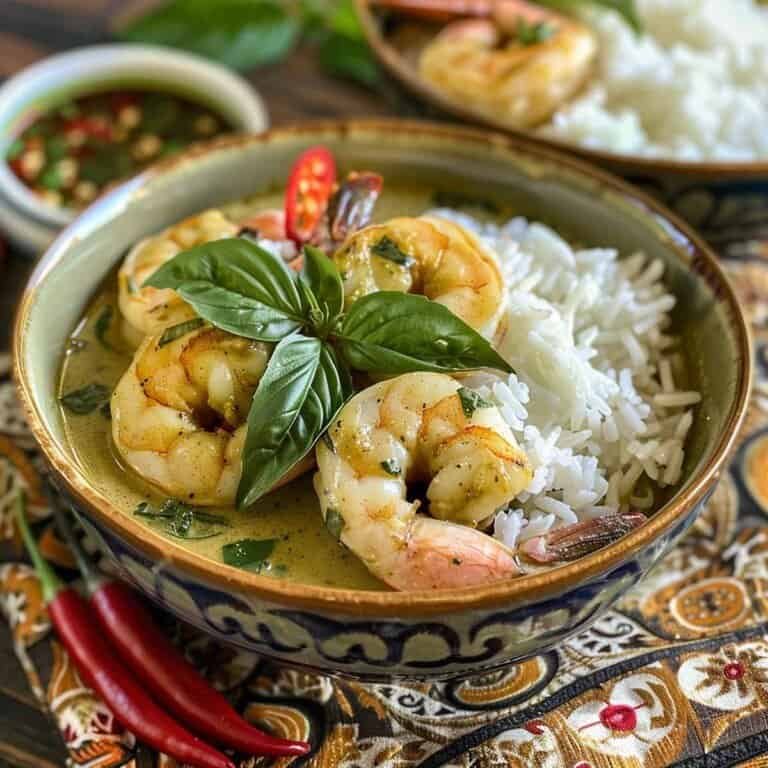
The finished curry is thick and deep red-orange, not the bright red of a fresh chili dish. It clings to a spoon. The coconut cream on top sits separately, pale and still. Kaffir lime leaves on the surface, glossy and dark green.
The first taste is rich and slow. The chili heat arrives late, building behind the coconut and the lime, and then the cumin comes through at the end, earthy and low. Nothing sharp. Nothing loud. This is not that kind of curry. It is the kind that asks you to slow down.
I was six years old in that kitchen. My grandmother was at the mortar. The smell of lemongrass and galangal and dried chilies came up and filled the room. I stood beside her and listened. I did not know I was saying goodbye. Some things you only understand later. This is one of them.
Susie’s Kitchen Notes
The mortar matters more than the recipe. A granite mortar heavy enough to stay still on the counter, not ceramic, not marble, not the decorative one from the gift shop. The weight is the tool. My mother’s mortar in Korat was black granite and she never washed it with soap. Cold water only, then dried in the sun. The accumulated oils from years of paste made it better, not worse. I have been looking for one like it in Florida for twenty years.
Kaffir lime leaves are the non-negotiable ingredient. Dried kaffir lime leaves are not a substitute. Frozen are acceptable. Fresh are what you want. If your Asian grocery carries them, and most do, buy more than you need and freeze the rest in a sealed bag. They keep for months and thaw in seconds. There is no workaround for their specific perfume. The dish without them is a different dish.
The balance between fish sauce and palm sugar is where the dish lives. Not enough fish sauce and it tastes flat. Too much and it tips salty. Not enough sugar and the heat and acid have nothing to land against. Too much and it reads sweet. Start with less of each than you think you need, taste after the simmer, and adjust at the end. Taste it against rice, not on its own. The balance shifts when it sits beside starch.
Do not use light coconut milk here. The full-fat version is not optional. The whole texture of the dish depends on the cream content. I have tried the reduced-fat versions. They produce a different, lesser thing. This is one of the dishes where the ingredient is the dish.
Pairing Suggestions
Panang curry belongs beside jasmine rice, the sauce is thick enough to need something that absorbs rather than floats. Sticky rice works too, pressed into the sauce at the edge of the bowl the way it is eaten in the north. For a full Thai table, a clear soup alongside balances the richness. Tom Kha Gai is the natural partner, lighter and aromatic where Panang is dense and slow. Green Papaya Salad (Som Tum) brings the acid and the crunch that coconut cream needs beside it, sour and sharp against something slow and rich. Thai Spring Rolls (Por Pia Tod) at the start of the meal give the table something crisp and light before the curry arrives, contrast in texture before contrast in flavor. My grandmother never put one thing on the table. Neither should you.
FAQ
What makes a panang curry recipe different from red curry?
Panang is thicker, richer, and lower in heat than red curry. The paste contains roasted cumin, coriander, and kaffir lime peel, ingredients red curry paste does not use, and less chili overall. It uses more coconut cream and less liquid. The result clings to the meat rather than surrounding it. They share the same family but they are not the same dish.
Can I use store-bought paste for a panang curry recipe?
Yes. Mae Ploy and Maesri both make reliable Panang pastes. The flavors will be flatter than homemade but the dish will still be worth making. Fry the store-bought paste in coconut milk the same way you would a paste made from scratch. Do not skip that step. It makes the difference between a cooked curry and a raw one.
What protein works best in a panang curry recipe?
Chicken breast or thighs are the most reliable. Thinly sliced beef sirloin or flank works well too. Tofu can be used but it needs to be pressed very dry and fried separately before adding, otherwise it falls apart in the sauce and absorbs too much liquid. Whatever protein you use, cut it to a consistent size so it cooks evenly in the sauce.
How do I make my panang curry recipe thicker?
Fry the paste longer in the coconut milk before adding the protein. This is the step that builds body. Use full-fat coconut milk and coconut cream, not reduced-fat versions. Let the finished curry simmer uncovered until it reaches the consistency you want. It will continue to thicken as it reduces. Do not add cornstarch or flour.
Can I make this panang curry recipe ahead of time?
Yes, and it is better the next day. The paste continues to integrate with the coconut cream overnight and the flavors deepen. Reheat gently over medium-low heat, add a splash of coconut cream if it has thickened too much, and press fresh kaffir lime leaves in just before serving. My grandmother made it the night before. I understood why the first time I tried it.
What are kaffir lime leaves and can I substitute them?
Kaffir lime leaves are the double-lobed leaves of the kaffir lime tree, intensely fragrant with a citrus perfume that nothing else replicates. Fresh are best, frozen are acceptable. Dried are not a real substitute, the perfume is gone. If you cannot find them, the dish will still be good, but it will not be Panang. Most Asian grocery stores carry them fresh or frozen.
Is a panang curry recipe spicy?
Less than most Thai curries. Panang uses fewer chilies by volume than red or green curry, and the coconut cream tempers what heat is there. It builds slowly, you feel it at the back of the throat after a few bites, not upfront. If you want it milder, reduce the dried chilies in the paste. If you want more heat, add a small amount of fresh bird chili at the end.