
What Is Mango Sticky Rice?
Mango sticky rice, Khao Niaow Ma Muang (ข้าวเหนียวมะม่วง), is glutinous rice soaked and steamed until soft, then folded with sweetened coconut milk while still warm, served alongside ripe fresh mango and drizzled with a savory-sweet coconut cream sauce. The rice absorbs the coconut milk completely. The mango is bright and juicy alongside it. It is a treat for any time of day.
Note From Susie

Sawasdee Kha, and Hello.
I have loved this since I can remember. Not grown into it, not discovered it later. Loved it from the very beginning, the way you love things that arrive in your life before you have words for why they are good.
My mother and her sisters made this at home and at my grandmother’s house. It was also at the markets, always. A treat that needed no occasion, no special day, no reason beyond wanting it. You could have it in the morning or after lunch or in the evening and it was always the right time. Sweet coconut rice and bright juicy mango and the coconut cream drizzled over the top. That was everything. That was enough.
What I remember most is the smell of the coconut milk going into the warm rice, the white of the rice taking on its sweetness, and the color of the mango alongside it. Bright yellow. The kind of yellow that tells you the mango is exactly ripe. A child remembers colors like that. I remember this one.
My mother knew how to make the rice properly, which means she knew patience. Sticky rice soaked, then steamed, then folded with the coconut milk while it was still warm so the milk absorbed completely rather than sitting on the surface. She did not rush any part of it. The result was worth the waiting every time.
It still is.

What’s In This Page
“I have loved this since I can remember.”
— Her Hands His EyesWhat Is Mango Sticky Rice?
Mango sticky rice, ข้าวเหนียวมะม่วง, Khao Niaow Ma Muang, is one of the most beloved desserts in Thai cuisine and one of the most recognized Thai dishes in the world. Glutinous rice, soaked for several hours and then steamed until tender, is folded while still warm with sweetened coconut milk seasoned with a small amount of salt. The warm rice absorbs the coconut milk completely, each grain swelling slightly and becoming richly sweet and slightly glossy. It is served alongside ripe fresh mango, sliced, with a drizzle of a slightly salted coconut cream sauce over the top and a sprinkle of toasted sesame seeds or split mung beans for texture.
What makes mango sticky rice recipe distinct from other rice desserts is the balance between the sweet coconut rice and the ripe mango’s natural acidity, and the savory note introduced by the small amount of salt in both the coconut milk and the coconut cream sauce. The salt is not a seasoning error. It is structural to the flavor of the dish, the thing that keeps the sweetness from becoming flat and that makes each component taste more itself alongside the others.
Mango sticky rice is a seasonal dish in Thailand, most closely associated with mango season from March through June, when the Nahm Dok Mai and Ok Rong varieties are at their peak. Outside Thailand, ripe Ataulfo mangoes, also called honey mangoes or Champagne mangoes, produce the closest result to what the dish tastes like at its best. According to the Oxford Companion to Food, glutinous rice is one of the oldest cultivated grains in Southeast Asia, central to the cuisines of Thailand, Laos, and Myanmar.
The coconut milk going into the warm rice. The bright yellow mango alongside. That is the whole picture.
What You’ll Need
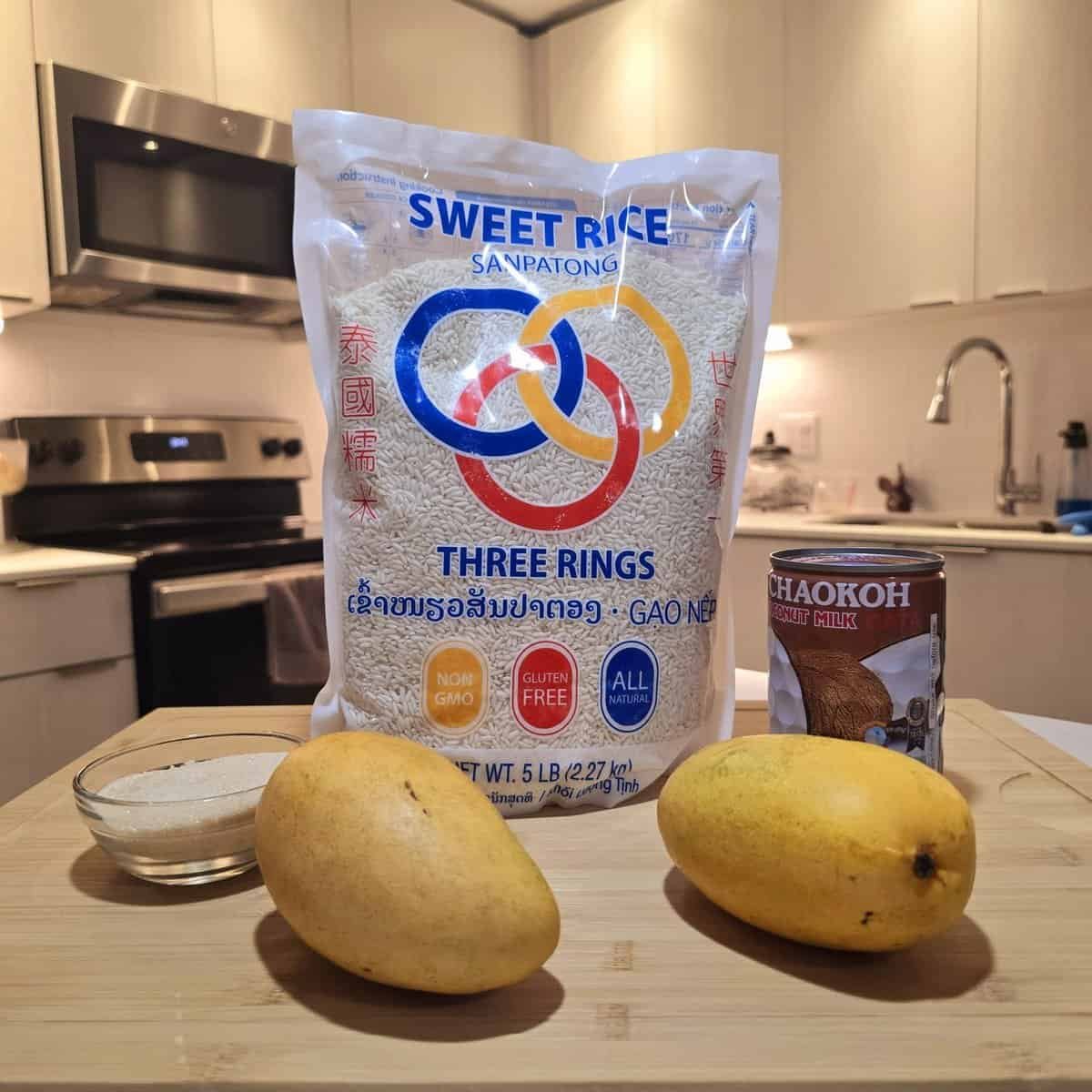
Glutinous rice is the rice for this dish. Not jasmine rice, not long grain rice, not short grain sushi rice. Glutinous rice, also called sticky rice or sweet rice, is a short-grain variety that contains almost no amylose and becomes soft, sticky, and slightly chewy when cooked. It is sold at Asian grocery stores in large bags, sometimes labeled as sweet rice. Two cups, soaked in cold water for at least four hours and ideally overnight. The soaking is mandatory. Unsoaked glutinous rice will not steam evenly and the center of each grain will remain hard.
Coconut milk, full fat, one and a half cans. The first portion, about one cup, goes warm and sweetened into the rice immediately after steaming. The second portion becomes the coconut cream sauce drizzled over the top when serving. Both are essential and both are prepared slightly different.
Sugar, three tablespoons, split between the two coconut milk preparations. Salt, half a teaspoon, also split between the two. The salt in the rice mixture keeps the sweetness from becoming cloying. The salt in the sauce creates the savory-sweet contrast that makes the sauce necessary rather than decorative.
Ripe mango, two to three, depending on size. Ataulfo mangoes when available. The mango should be completely ripe, yielding slightly when pressed and deeply fragrant at the stem end. An underripe mango alongside sweet coconut rice does not taste like Mango Sticky Rice. It tastes like a mistake. Buy the mango a day ahead and let it ripen at room temperature if needed.
Toasted sesame seeds or split yellow mung beans for topping. A pinch of salt for the sauce. That is the complete ingredient list.
VISUAL WALK THROUGH
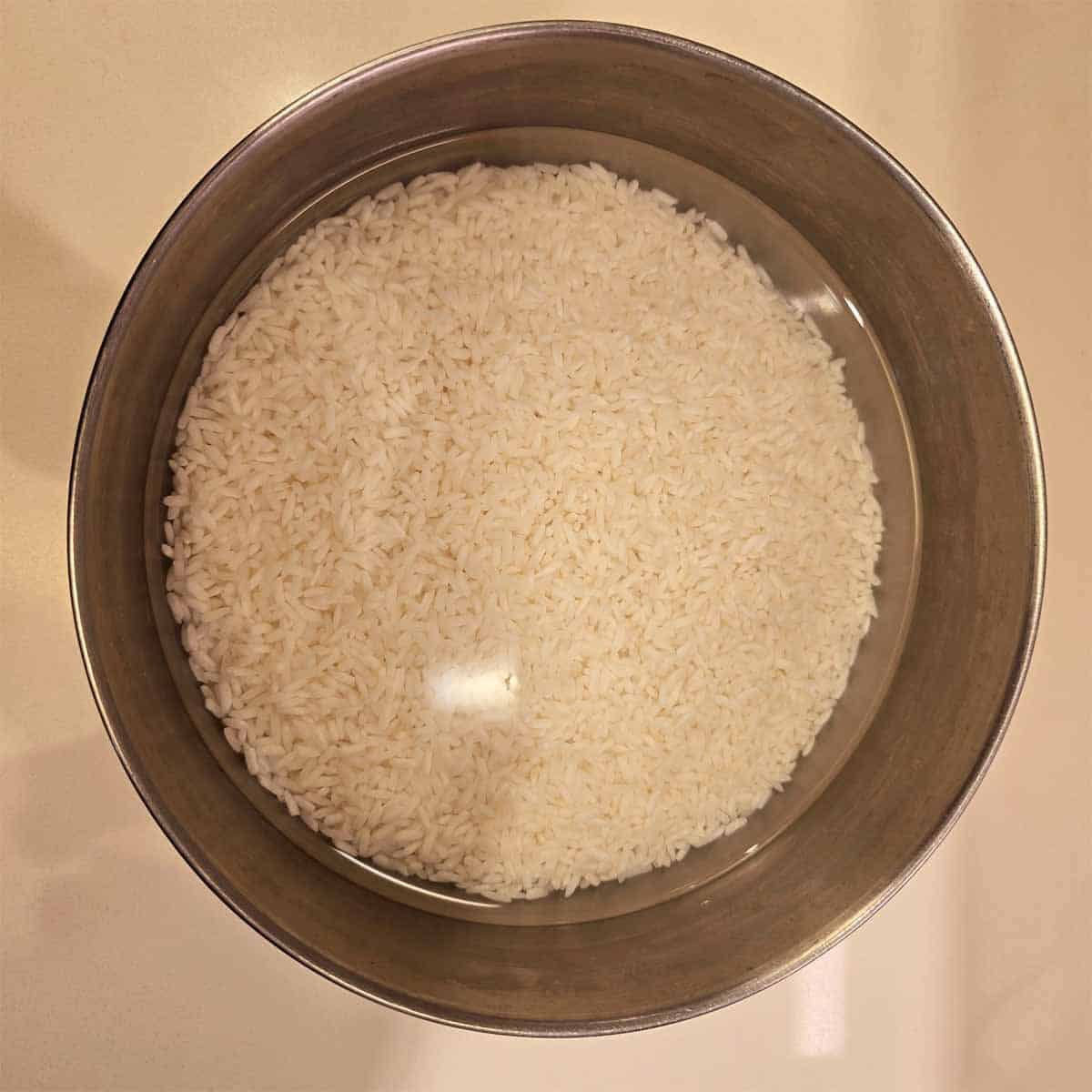
Step 1. Soak the glutinous rice for at least two hours. Overnight is better.
Place the glutinous rice in a large bowl and cover with cold water by at least two inches. The rice will absorb a significant amount of water and expand. Soak for a minimum of two hours. Overnight soaking produces rice that steams more evenly and has a more uniform, tender texture throughout. Drain completely before steaming. The soaked rice should feel soft on the outside but still have a firm center when pressed between the fingers. That firmness will steam out.
Step 2. Steam the soaked rice until tender and translucent.
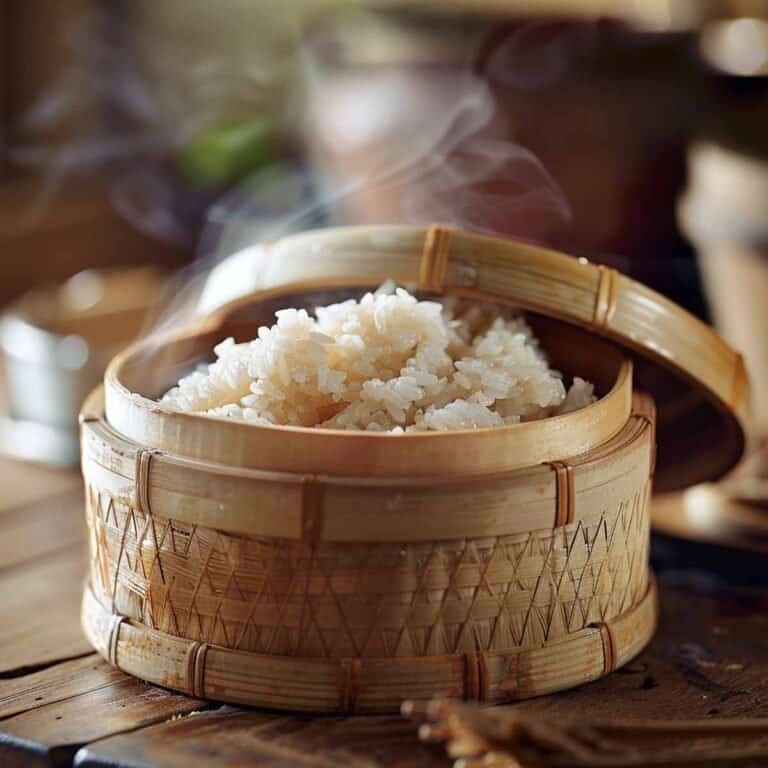
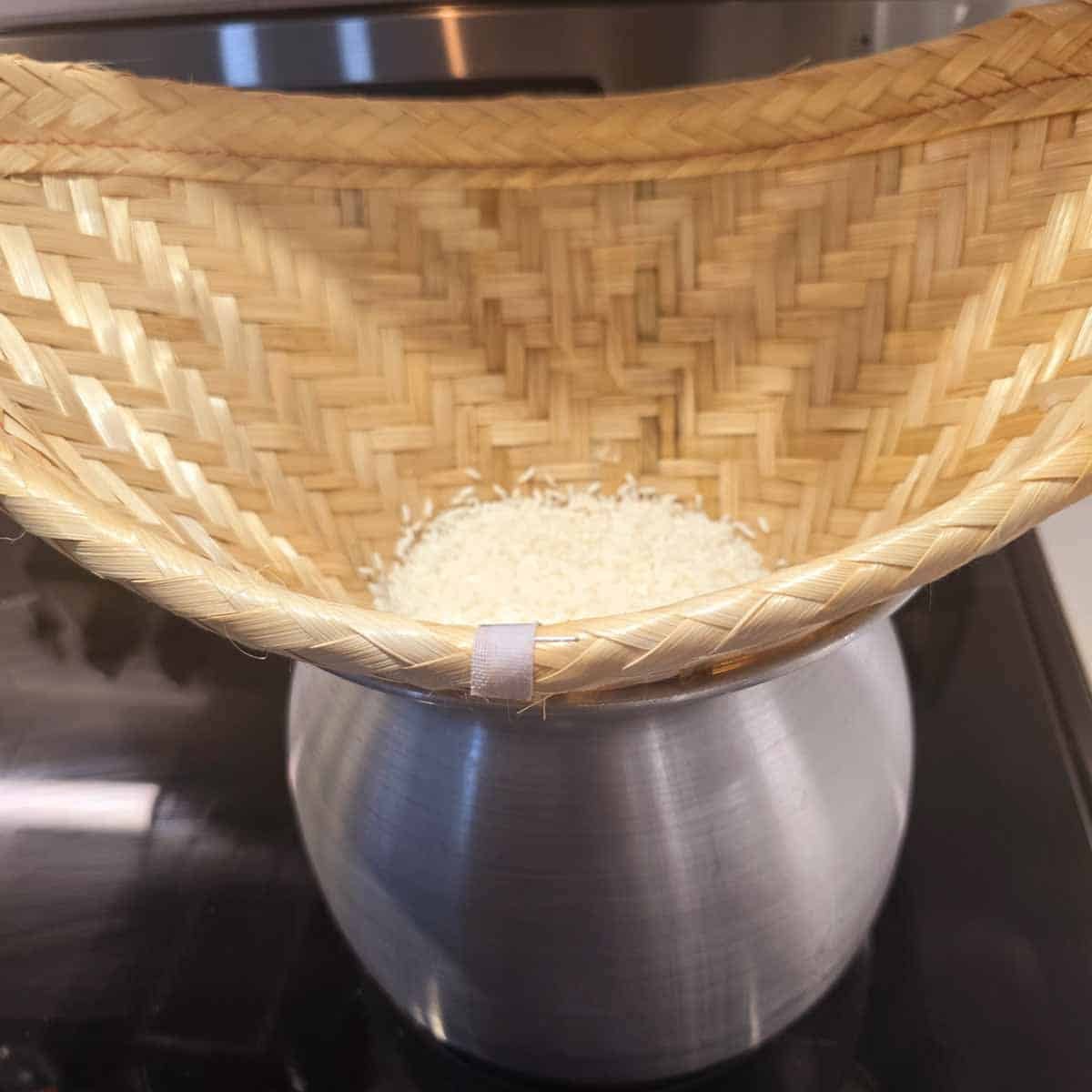
Drain the rice and steam it using a traditional bamboo steamer or a modern steamer. Line the steamer with cheesecloth or parchment paper, spread the rice evenly, and steam for about thirty minutes or until the rice is tender and translucent. Test by pressing a few grains between the fingers. They should be completely soft with no hard center.
★ Step 3. Prepare the coconut sauce and mix it with the rice. This is What Makes the Difference.
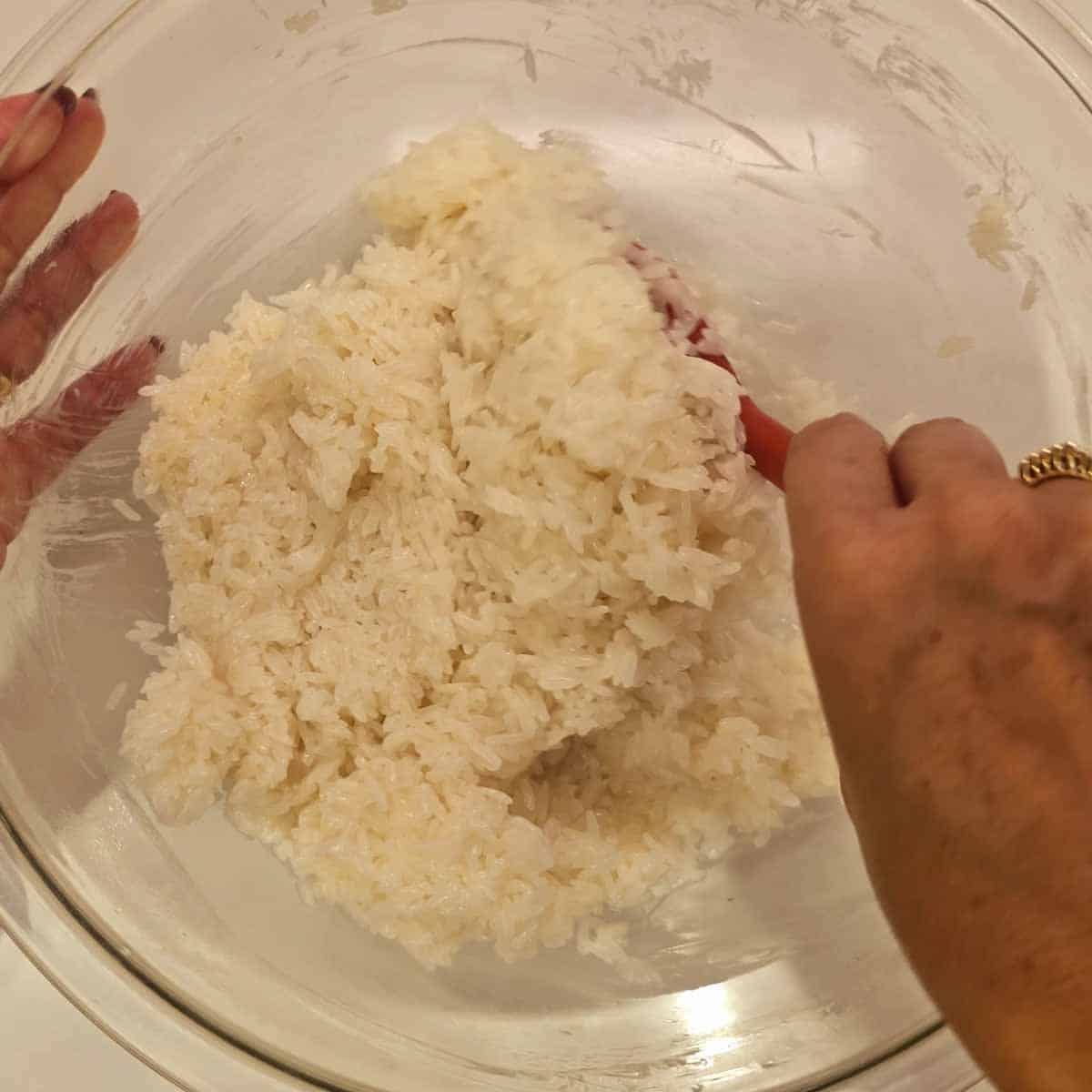
While the rice is cooking, prepare the coconut sauce. In a pot, combine one cup of coconut milk, sugar, and salt. Heat over medium heat, stirring until the sugar dissolves completely. If using tapioca starch, mix it with the remaining quarter cup of coconut milk and add it to the pot, stirring continuously until the sauce thickens slightly. Once the rice is cooked, transfer it to a mixing bowl. While still hot, mix the rice with about half of the coconut sauce. Let it sit for about thirty minutes to allow the rice to absorb the sauce and become flavorful. This is the step that cannot be rushed. Hot rice, warm coconut sauce, immediate folding, patient resting. That is the method.
Step 4. Make the coconut cream sauce.
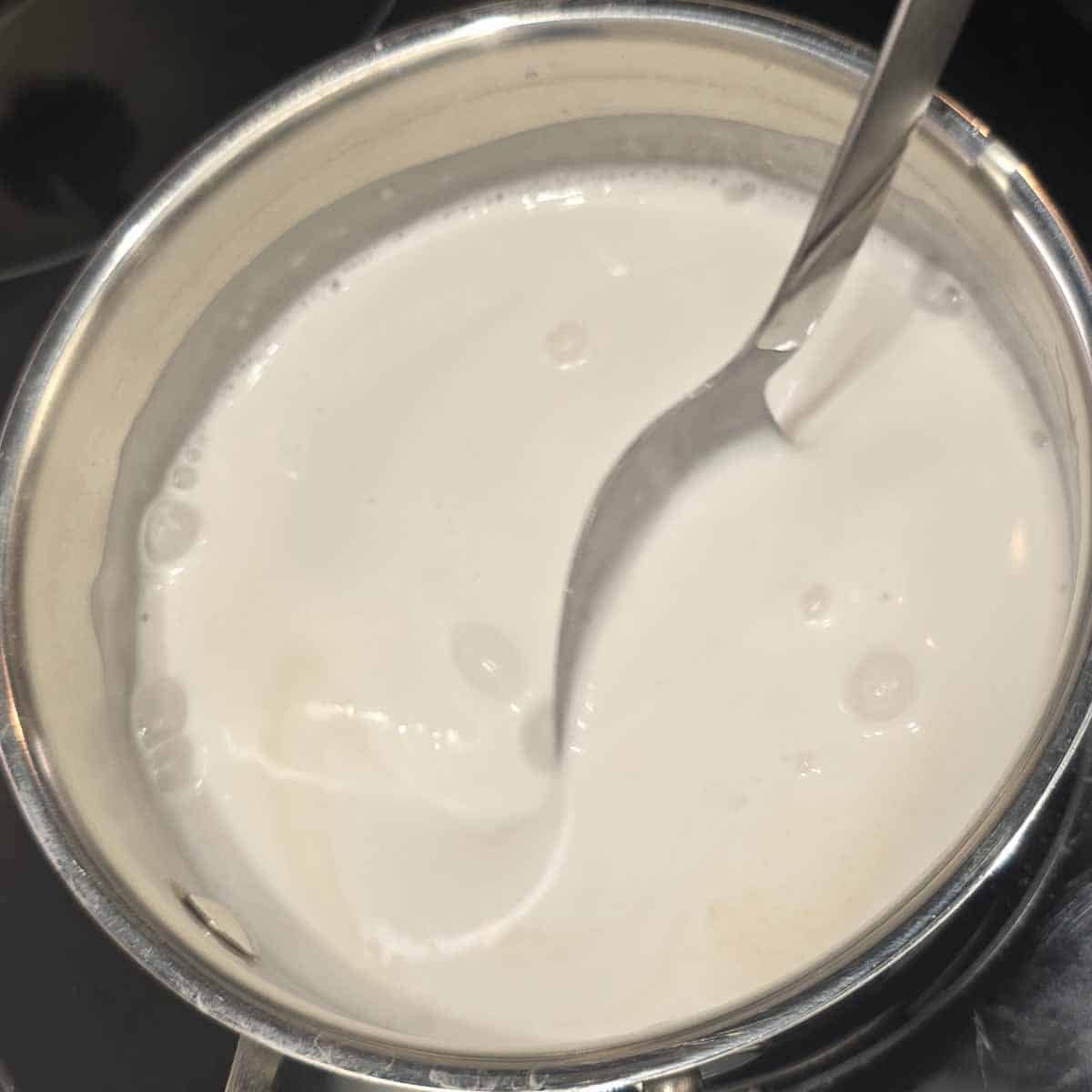
In a small saucepan, combine the remaining half can of coconut milk with one tablespoon of sugar and a quarter teaspoon of salt. Warm over low heat, stirring, until the sugar dissolves and the sauce thickens very slightly, about three to four minutes. Do not boil. The sauce should be pourable and slightly glossy. The salt in the sauce is not a mistake. It creates the savory contrast that makes the drizzle something the dish needs rather than something decorative.
Step 5. Plate and serve at room temperature.
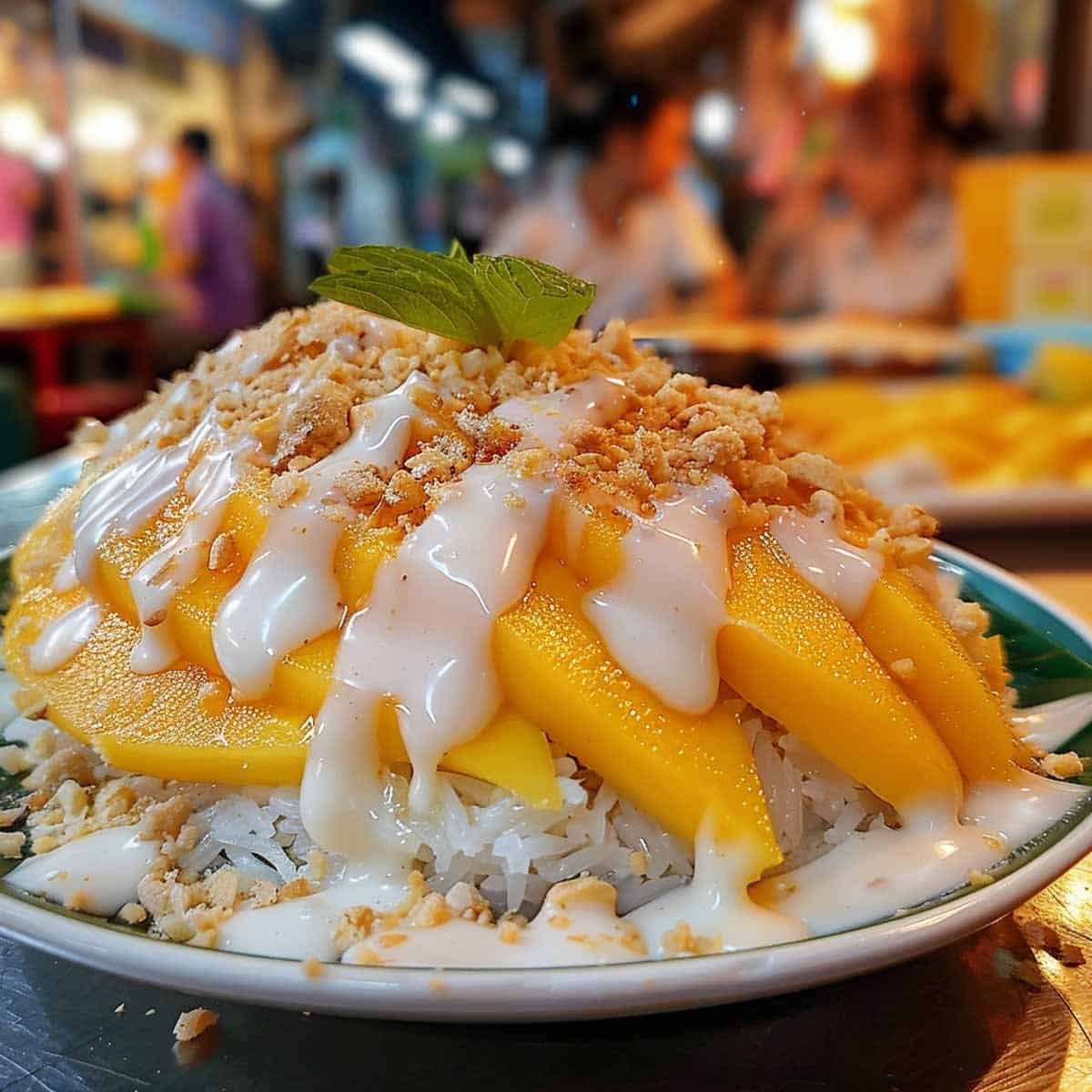
Mound the coconut sticky rice on one side of the plate. Slice the ripe mango and fan the pieces alongside. Drizzle the coconut cream sauce generously over the rice. Sprinkle with toasted sesame seeds or split mung beans. Serve at room temperature, not cold and not hot. The rice should be warm or at room temperature, the mango cool from the refrigerator or at room temperature depending on preference. Together they are the dish. Together they are enough.
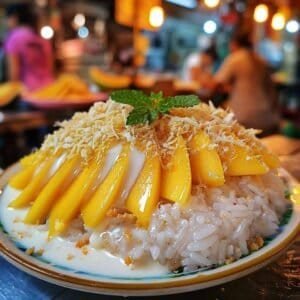
Thai Mango Sticky Rice ข้าวเหนียวมะม่วง
Ingredients
- 1 1/2 cups of glutinous sticky rice
- 1 1/4 cups of canned coconut milk
- 1/3 cup of sugar
- 1/2 teaspoon of salt
- 1 tablespoon of tapioca starch optional, for thickening
- 2 ripe mangos peeled and sliced
- 1 tablespoon of toasted sesame seeds or mung bean for garnish
Instructions
- Rinse and Soak the Rice:Rinse the sticky rice in cold water until the water runs clear. Soak the rice in water for at least 2 hours, or overnight for the best results.
- Steam the Rice:Drain the rice and steam it. You can use a traditional bamboo steamer or a modern steamer. Line the steamer with cheesecloth or parchment paper, spread the rice evenly, and steam for about 30 minutes or until the rice is tender and translucent.
- Prepare Coconut Sauce:While the rice is cooking, prepare the coconut sauce. In a pot, combine 1 cup of coconut milk, sugar, and salt. Heat the mixture over medium heat, stirring until the sugar dissolves completely. If using tapioca starch, mix it with the remaining 1/4 cup of coconut milk and add it to the pot, stirring continuously until the sauce thickens slightly.
- Mix Rice with Some Coconut Sauce: Once the rice is cooked, transfer it to a mixing bowl. While still hot, mix the rice with about half of the coconut sauce. Let it sit for about 30 minutes to allow the rice to absorb the sauce and become flavorful.
- Serve: To serve, place a portion of the sticky rice on a plate. Arrange the sliced mango around or on top of the rice. Drizzle the remaining coconut sauce over the rice and garnish with toasted sesame seeds or mung beans.
Notes
Nutrition
LET’S GET THIS RIGHT
Why is my sticky rice hard in the center after steaming?
The rice was not soaked long enough before steaming. Glutinous rice needs a minimum of four hours of soaking to hydrate sufficiently for even steaming. Rice soaked for less time will have a hard, uncooked center even after full steaming time. If the rice is still firm after twenty-five minutes of steaming, continue in five-minute increments. But the real solution is to soak longer next time.
Why did my coconut milk not absorb into the sticky rice?
The rice or the coconut milk was not warm enough when they were combined. The absorption happens because warm rice draws in warm liquid. If the rice has cooled before the coconut milk goes in, or if the coconut milk is cold from the can, the absorption will be incomplete and the rice will sit in a pool of unabsorbed liquid. Fold the warm sweetened coconut milk into the hot rice immediately after it comes off the steamer.
What mango is best for mango sticky rice?
Ataulfo mangoes, also called honey mangoes or Champagne mangoes, are the closest widely available equivalent to the Thai varieties used in Thailand. They are small, golden yellow, and have a creamy, fiberless flesh with a complex sweetness and low acidity. They are available at most grocery stores from late winter through summer. Regular Tommy Atkins mangoes work but have more fiber and less sweetness. Whatever variety you use, it must be fully ripe.
Can I make mango sticky rice ahead of time?
The coconut sticky rice is best eaten the day it is made, within a few hours of absorbing the coconut milk. It will harden as it sits, particularly if refrigerated. If you must prepare ahead, keep the rice at room temperature and reheat gently in the microwave with a splash of coconut milk before serving. The mango should be sliced fresh just before serving. The coconut cream sauce keeps refrigerated for two days and can be made ahead.
Can I use regular rice instead of glutinous rice for mango sticky rice?
No. Regular jasmine rice or long grain rice will not produce the correct texture. The sticky, chewy quality of mango sticky rice comes from the high amylopectin content of glutinous rice, which is absent from regular rice varieties. The dish cannot be made correctly with any other rice. Glutinous rice is widely available at Asian grocery stores and is inexpensive. It is worth finding.
FLAVOR PROFILE
The smell arrives first. Coconut milk warming with sugar, the sweetness rising before the rice is ever plated. Then the rice itself, warm and slightly fragrant from the steaming, the glutinous grain carrying the coconut milk into the room in a way that rice cooked in water never does.
On the plate the colors are clear and specific. The white of the coconut rice, slightly glossy from the coconut milk absorbed through it. The bright yellow of the ripe mango, vivid and particular, the color that a child remembers before she remembers the taste.
The first bite is sweet and rich from the coconut rice, the grain soft and slightly chewy in a way that plain rice is not. Then the mango, cool and juicy and slightly acidic against the richness of the coconut, the contrast between them arriving in the same bite if the rice and the fruit are eaten together. Then the drizzle of coconut cream sauce, its slight saltiness cutting through both and making each flavor more itself.
It is a gentle dessert. Not loud, not complex, not trying to do more than what it does. Sweet coconut rice and bright juicy mango. That was always enough. That will always be enough.
SUSIE’S KITCHEN NOTES
The cloth lining the steamer basket matters more than it might seem. Glutinous rice steamed directly on a metal steamer rack will stick and tear when you try to remove it. A piece of cheesecloth, a clean cotton cloth, or a banana leaf creates a non-stick surface and allows the steam to pass through the rice evenly. The cloth should be damp before the rice goes in, not dry. A damp cloth allows the steam to move through it more evenly and prevents the outside layer of rice from drying out during steaming.
The rice absorbs the coconut milk in stages during the fifteen-minute rest. The first five minutes the rice will still look wet and the coconut milk will be visible as a liquid around the grains. By ten minutes the liquid will have mostly disappeared into the rice. By fifteen minutes the rice should be uniformly sweet and slightly glossy. Do not lift the lid during the resting period, the steam trapped inside continues to help the absorption.
My mother made this with Nahm Dok Mai mangoes in Thailand, long and golden and almost entirely without fiber. In the United States, Ataulfo mangoes are the closest available equivalent and they are genuinely very good alongside the coconut rice. The mango should be peeled and sliced away from the flat seed, cut into clean pieces or fanned on the plate. A ripe Ataulfo mango almost peels itself, the skin coming away cleanly from the flesh without resistance.
My mother and her sisters made this for a treat and it was received as a treat, which is the right relationship to have with it. It is not an everyday dessert in the sense of being trivial. It is the dessert you make when you want something that is simply, completely good. It has been simply, completely good since the first time I had it. Some things do not need to change.
PAIRING SUGGESTIONS
Mango sticky rice is a dessert that closes a meal or stands alone as the treat it has always been. After a meal built around the Tom Yum Goong, the sweet coconut rice arrives as the gentlest possible ending to something that was sour and sharp and hot. Alongside the Thai pumpkin custard both of them sweet and coconut-forward, together they make a full Thai dessert table without either one competing. The Thai iced tea is the drink alongside, cold and sweet and always right next to something this fragrant and this good. For the sticky rice method that underlies this dessert and connects it to the savory dishes on this site, the sticky rice technique explains the soaking and steaming that Khao Niaow Ma Muang and Moo Ping and every other sticky rice preparation share. My mother and her sisters made this whenever they wanted it. My grandmother’s house had it. The market always had it. Some treats do not need an occasion. This is one of them.
FAQ
What is mango sticky rice (Khao Niaow Ma Muang)?
Mango sticky rice, Khao Niaow Ma Muang (ข้าวเหนียวมะม่วง), is a Thai dessert made from glutinous rice soaked and steamed until tender, then folded with sweetened coconut milk while still warm so the rice absorbs it completely. It is served alongside ripe fresh mango with a drizzle of slightly salted coconut cream sauce and toasted sesame seeds. It is one of Thailand’s most beloved desserts, found at markets year-round and particularly associated with mango season.
How do you make mango sticky rice step by step?
Soak glutinous rice in cold water for at least four hours, ideally overnight. Drain and steam in a cloth-lined steamer basket for twenty to twenty-five minutes until tender and translucent. While still hot, fold in warm sweetened coconut milk mixed with sugar and salt. Cover and rest for fifteen minutes until fully absorbed. Make the coconut cream sauce by warming coconut milk with sugar and salt until slightly thickened. Plate the coconut rice alongside sliced ripe mango, drizzle the sauce over the rice, and top with toasted sesame seeds.
What rice is used in mango sticky rice?
Glutinous rice, also called sticky rice or sweet rice, is the only correct rice for mango sticky rice recipe. It is a short-grain variety with high amylopectin content that becomes soft, sticky, and slightly chewy when soaked and steamed. Regular jasmine rice, long grain rice, and sushi rice cannot produce the correct texture. Glutinous rice is sold at Asian grocery stores in large bags, sometimes labeled sweet rice or waxy rice. It requires soaking before steaming.
Why is there salt in mango sticky rice?
The salt in mango sticky rice is structural, not a seasoning error. A small amount of salt in both the coconut rice mixture and the coconut cream sauce keeps the sweetness from becoming flat and one-dimensional. It creates the savory-sweet contrast that makes the dish taste more complete and makes each component taste more itself alongside the others. Without salt the sweetness is present but lacks focus. With it, the dish comes into full flavor.
What mango is best for mango sticky rice?
Ataulfo mangoes, also called honey mangoes or Champagne mangoes, are the best widely available choice for mango sticky rice. They are small, golden yellow, fiberless, and have a complex sweetness that works beautifully alongside coconut rice. In Thailand, Nahm Dok Mai and Ok Rong varieties are traditional. The most important quality in any mango used for this dish is full ripeness. The mango must be completely ripe, fragrant at the stem end, and yielding when pressed.
How long do you soak glutinous rice for mango sticky rice?
A minimum of four hours in cold water. Overnight soaking produces the best result, with rice that steams more evenly and has a more uniform tender texture throughout. Glutinous rice that has not been soaked long enough will have a hard center even after full steaming time. The soaking requires no effort, only planning ahead. Put the rice in water the night before and the most important preparation step is done before the day begins.
Is mango sticky rice served hot or cold?
Mango sticky rice is served at room temperature or slightly warm, never hot and never cold. The rice should be warm or at room temperature when served, the mango cool or at room temperature depending on preference. Cold mango sticky rice from the refrigerator will have hardened rice that has lost its soft, yielding texture. If refrigerated, bring to room temperature before serving and reheat the rice gently with a splash of coconut milk if needed.