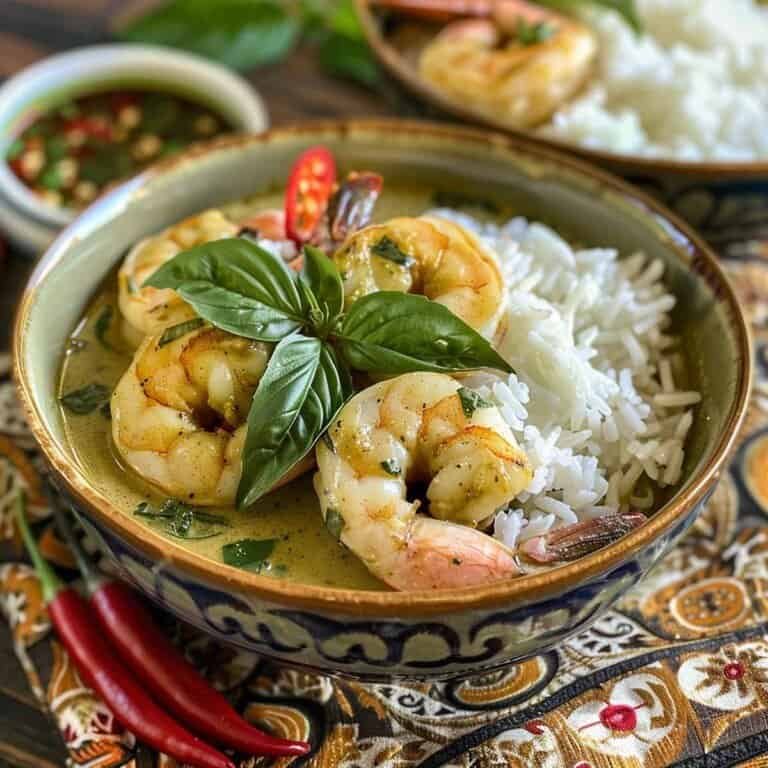

What Is Yellow Curry?
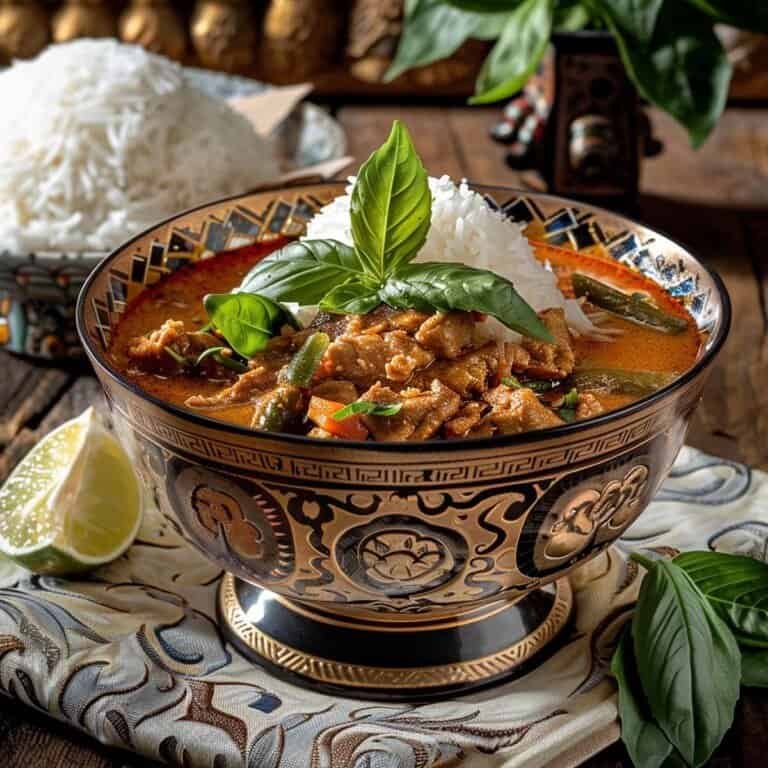
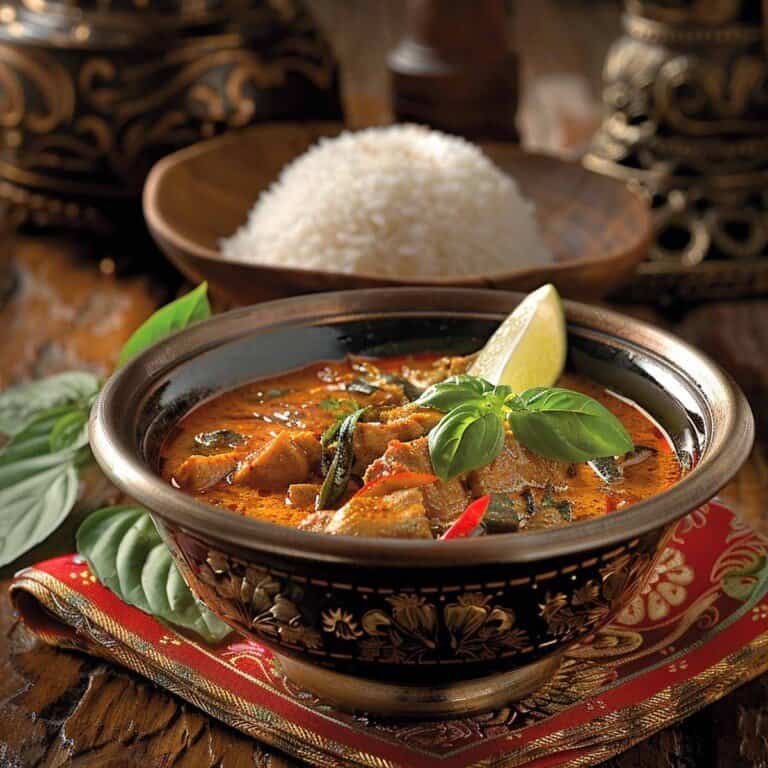
Gaeng Garee (แกงกะหรี่), Thai yellow curry, is a coconut milk curry made with yellow curry paste, turmeric, curry powder, chicken, potatoes, carrots, and onions simmered until rich, fragrant, and golden. Unlike Thai red curry or green curry, yellow curry is milder and warmer in flavor, reflecting Indian and Muslim culinary influences brought to Thailand through historic spice trade routes. It is traditionally served with jasmine rice.
NOTE FROM SUSIE

Sawasdee Kha, and Hello.
I can still remember the smell that filled our kitchen when my mother made this curry. The bright yellow color of the sauce. The creamy taste that always left us wanting more.
Yellow curry was not the loudest thing she made. It was not the hottest or the most complex. It was the one that felt like an arm around your shoulders. The one you wanted when you were tired or cold or just wanted something that did not ask anything of you in return.
Gaeng Garee is Thai food wearing its history openly. The turmeric and the curry powder and the potatoes tell you that this dish arrived in Thailand from somewhere else, from India, from the spice trade routes of the south, and became so fully Thai over the generations that it now belongs completely to this kitchen, to this table, to the smell of my mother cooking on a Sunday afternoon.
The potatoes soaking up the golden sauce. The chicken giving itself over to it. The perfectly balanced blend of spices. It was the curry that made our kitchen smell like something good was coming. It still is.

What’s In This Page
“The smell arrived before the bowl.”
— Her Hands His EyesWHAT IS YELLOW CURRY?
Gaeng Garee, แกงกะหรี่, is Thai yellow curry, the warmest and mildest of the three main Thai curries. Where red curry is built primarily on dried chilies and green curry on fresh herbs, yellow curry leans into dried spices, particularly turmeric, cumin, and coriander, which tells you immediately that this dish arrived in Thailand from somewhere else. That somewhere else is India and Persia, via the Muslim spice trade routes of the south. Yellow curry is Thai food wearing its history openly and beautifully.
What makes Gaeng Garee distinct is the combination of yellow curry paste with additional ground turmeric and curry powder, the presence of potatoes absorbing the golden sauce as they simmer, and a coconut milk base that is rich and full without the sharpness of green curry or the depth of red. The result is a curry that is warm and fragrant and gently spiced, the kind that fills a kitchen with something specific and golden before the first bowl ever arrives at the table.
According to the Oxford Companion to Food, turmeric-based curry preparations reflect centuries of spice trade between South Asia and Southeast Asia, with Thailand’s yellow curry representing one of the most deeply absorbed and transformed of these influences into a distinct national preparation.
The smell arrived before the bowl. That is how you knew it was coming.
WHAT YOU’LL NEED
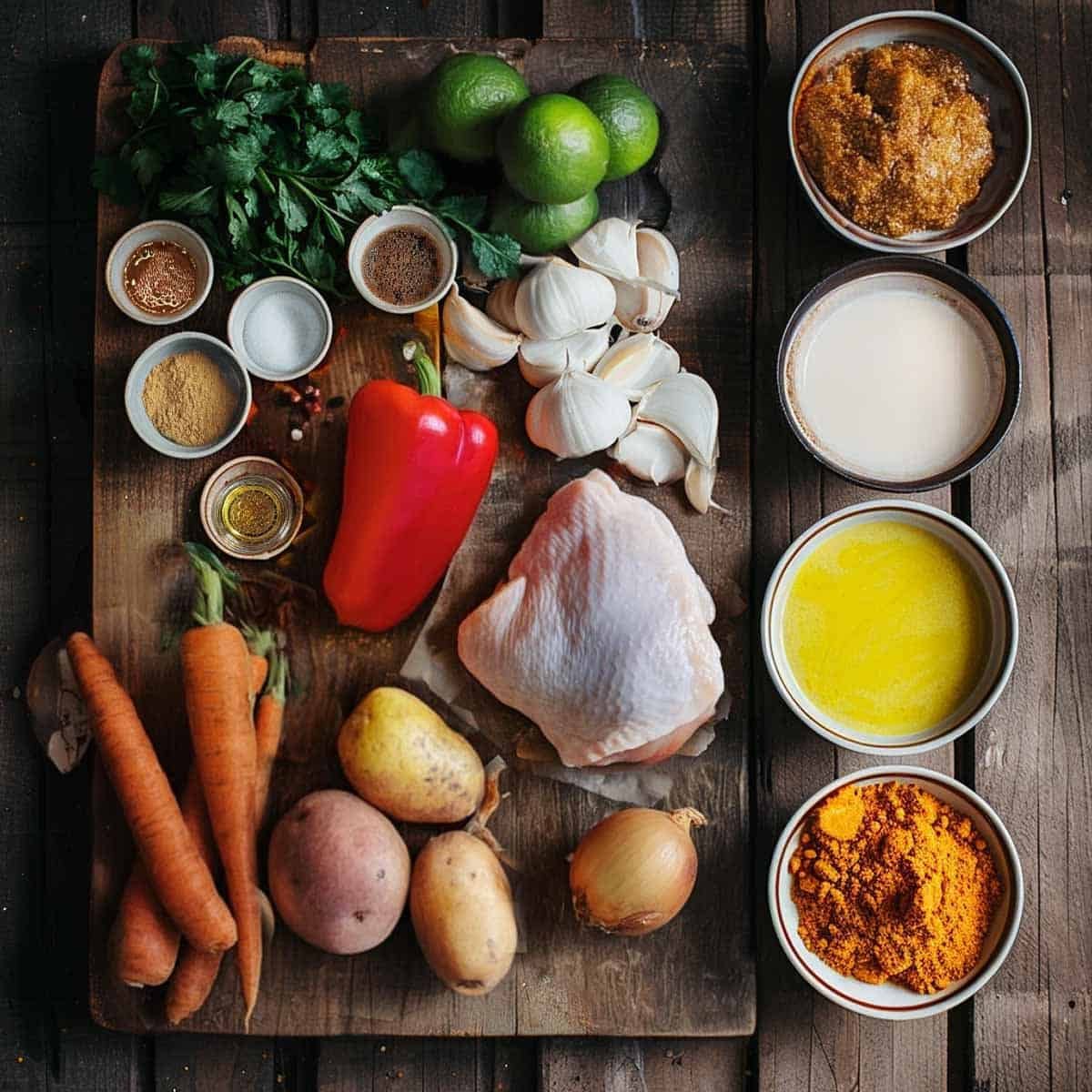
Boneless chicken thighs, one and a half pounds, cut into bite-sized pieces. Thighs hold up in the heat without drying out. Beef, tofu, or mixed vegetables work too.
Yellow curry paste, three tablespoons, store-bought or homemade. Taste it before it goes into the pan.
Coconut cream, one cup, the thick layer from the top of an unshaken can. This is what you bloom the paste in. Full-fat coconut milk, one and a half cups, added after.
Potatoes, two medium, peeled and cut into one-inch chunks. These are one of the signature ingredients that make Gaeng Garee distinct from other Thai curries. They absorb the golden sauce as they simmer and become extraordinarily good. Onion, one medium white, cut into wedges. Carrot, one medium, sliced into coins.
Fish sauce, two tablespoons. Palm sugar, one tablespoon. Ground turmeric, one teaspoon. Curry powder, one teaspoon. These go in with the paste and deepen the color and the warm spice profile.
Vegetable oil, three tablespoons. Kaffir lime leaves, four, torn. Lemongrass, one stalk, bruised and cut into two-inch pieces. Fresh red chilies, four, sliced diagonally for garnish. Cilantro sprigs for garnish. Two cups steamed jasmine rice for serving.
VISUAL WALK THROUGH
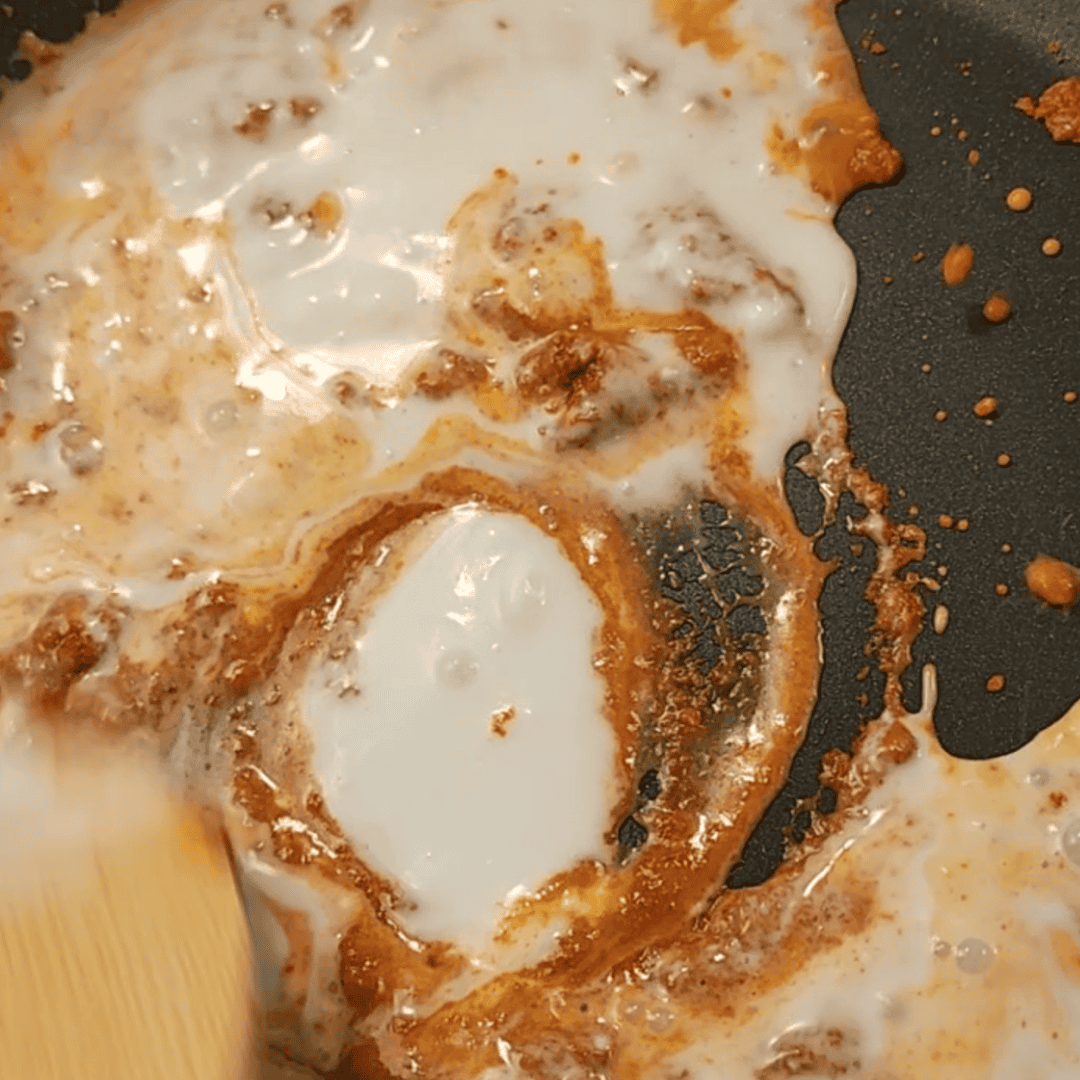
★ Step 1. Bloom the curry paste in coconut cream. This is What Makes the Difference.
Add the yellow curry paste and stir constantly for two to three minutes until the paste is fragrant and slightly darker. Add the ground turmeric and curry powder and stir for another thirty seconds. Then pour in the coconut cream gradually, stirring as you go, until fully combined with the paste. Cook for another minute until the oil visibly separates around the edges of the paste. This is the foundation of everything that follows. Do not rush it.
Step 2. Add and coat the chicken.
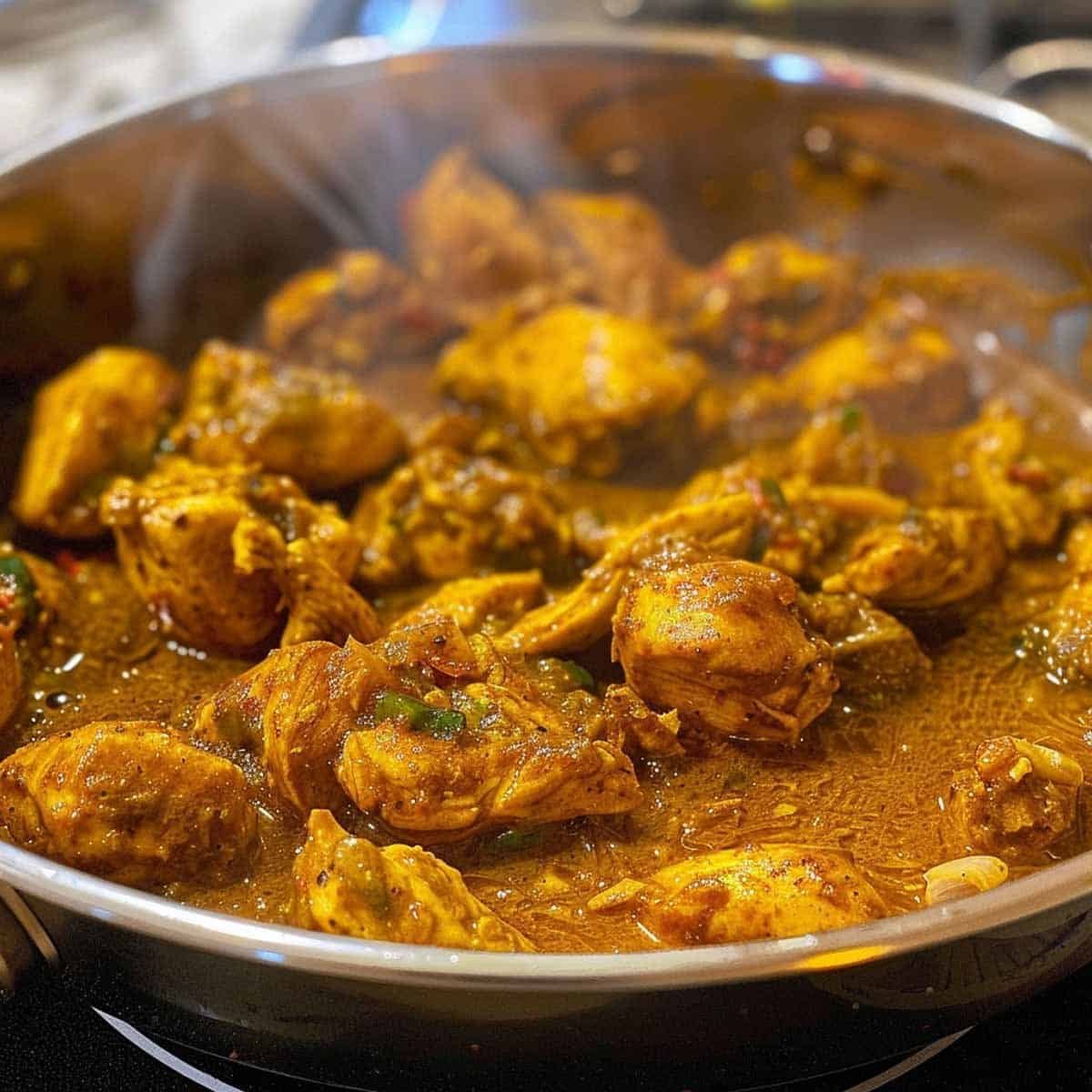
Add the chicken pieces to the bloomed paste and toss well to coat every piece thoroughly. Stir-fry for two to three minutes until the chicken is sealed on the outside and deeply golden from the turmeric paste.
Step 3. Add the coconut milk and aromatics.
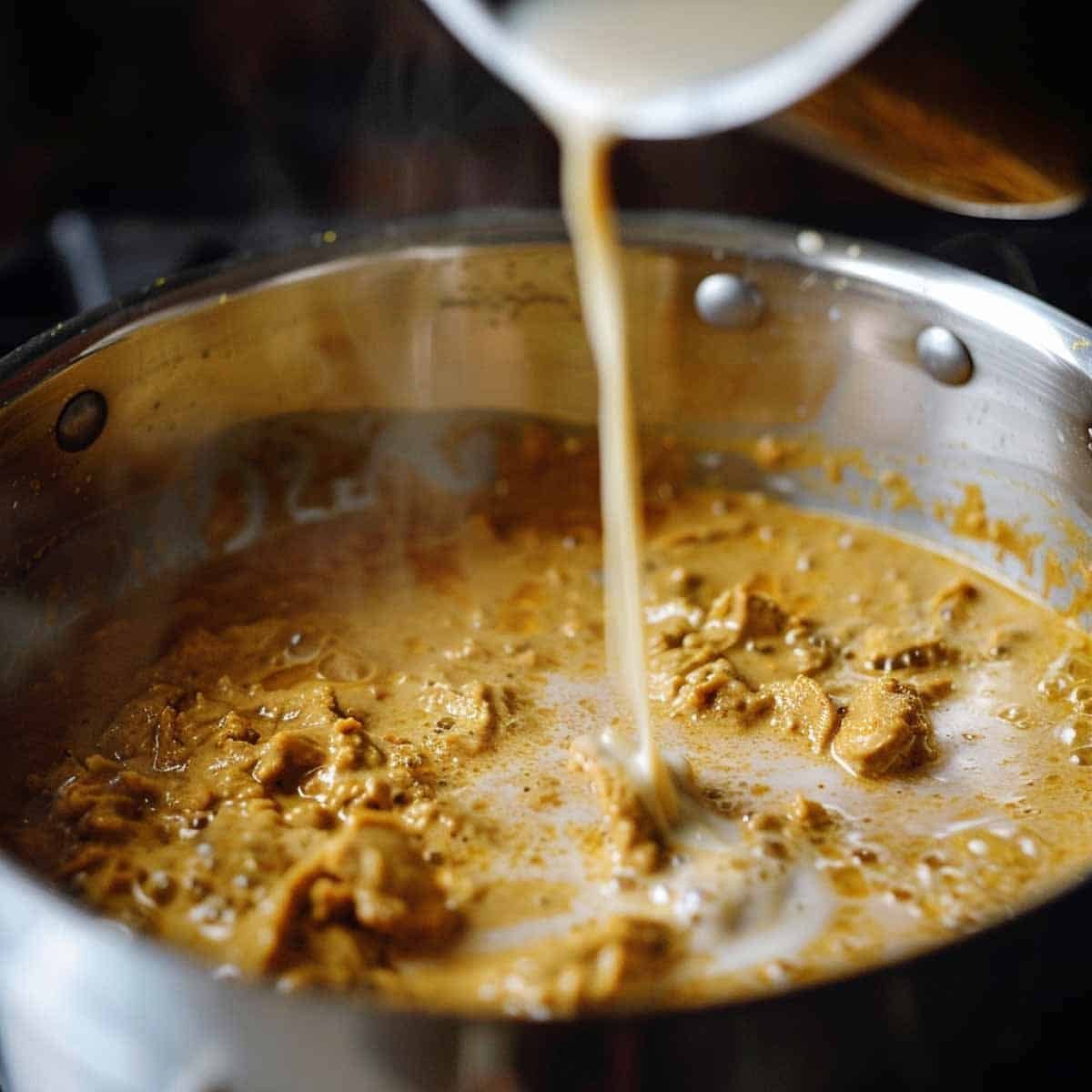
Pour in the remaining coconut milk gradually, stirring as you go. Add the lemongrass and torn kaffir lime leaves. Bring to a gentle simmer over medium heat, stirring occasionally. Do not let it boil hard. A gentle simmer keeps the coconut milk from separating and gives the curry a silky, beautiful texture.
Step 4. Add the vegetables and simmer.
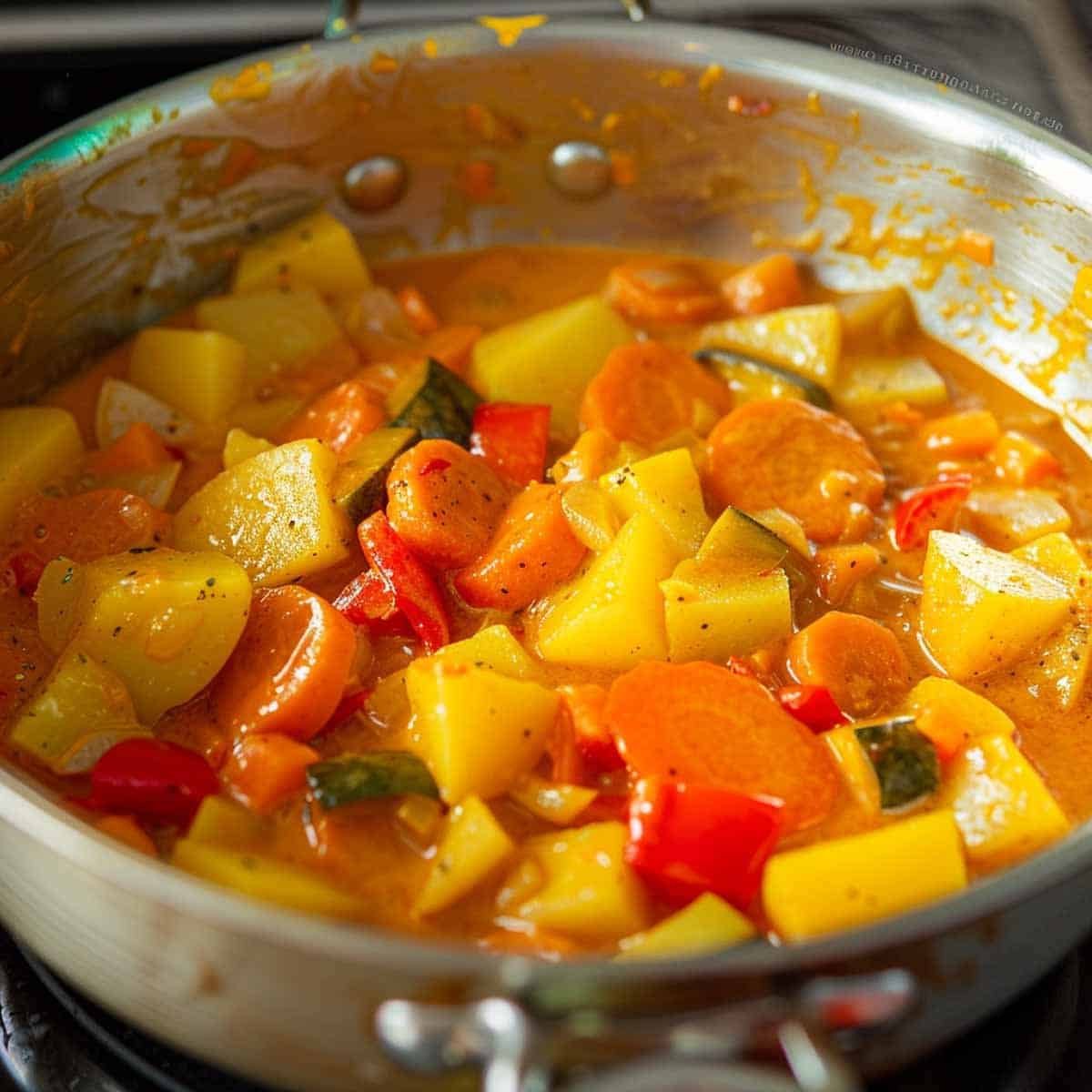
Add the potato chunks, onion wedges, and carrot coins. Stir to submerge everything in the golden sauce. Simmer gently for twenty to twenty-five minutes, stirring occasionally, until the potatoes are completely tender and have begun to soak up the curry sauce and the chicken is cooked through. The sauce will thicken slightly as the potatoes release their starch.
Step 5. Season and taste.
Season with fish sauce and palm sugar. Taste carefully. Yellow curry should be warm, fragrant, mildly spiced, and gently sweet. Add more fish sauce for saltiness, more sugar if the spice feels sharp, or a little more curry paste if you want more depth. Keep adjusting until it tastes right.
Step 6. Serve.
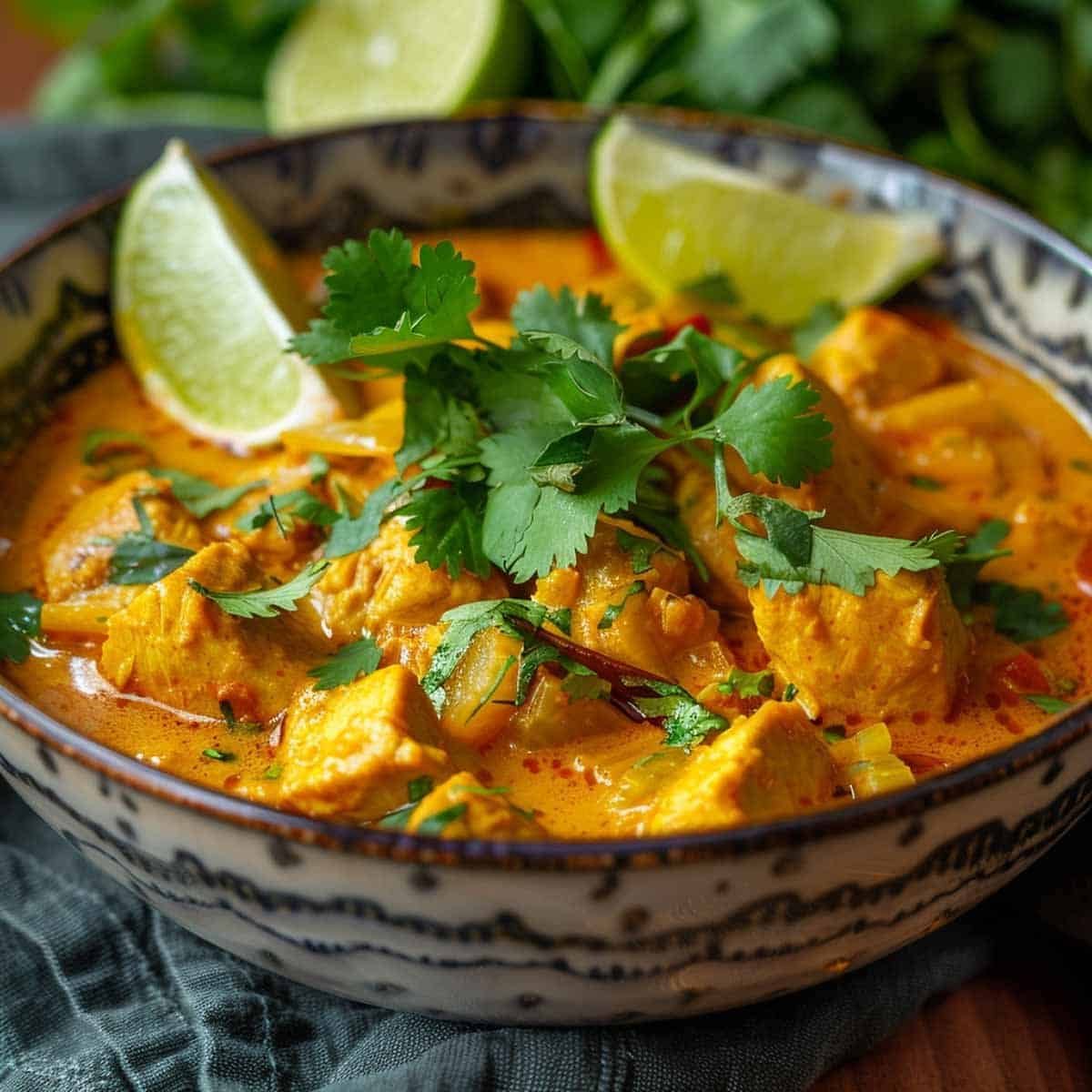
Ladle generously into serving bowls over steamed jasmine rice. Garnish with sliced fresh red chilies and fresh cilantro sprigs. Serve immediately with extra rice on the side because there will be sauce worth soaking up and nobody wants to run out of rice.
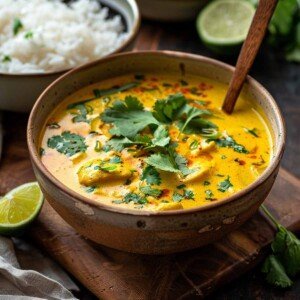
Gaeng Garee แกงกะหรี่ Thai Yellow Curry
Equipment
- Wok or large heavy pot
- Wooden spoon or spatula,
- Ladle
- Serving bowls
Ingredients
- 1.5 pounds lbs boneless chicken thighs cut into bite-sized pieces (or beef, tofu, or mixed vegetables)
- 3 tablespoons yellow curry paste store-bought or homemade
- 1 cup coconut cream
- 1.5 cups full-fat coconut milk
- 2 medium potatoes peeled and cut into 1-inch chunks
- 1 medium white onion cut into wedges
- 1 medium carrot sliced into coins
- 2 tablespoons fish sauce
- 1 tablespoon palm sugar or brown sugar
- 1 teaspoon ground turmeric
- 1 teaspoon curry powder
- 3 tablespoons vegetable oil
- 4 kaffir lime leaves torn
- 1 stalk lemongrass bruised and cut into 2-inch pieces
- 4 fresh red chilies sliced diagonally, to garnish
- 4 fresh cilantro sprigs to garnish
- 2 cups steamed jasmine rice to serve
Instructions
- Bloom the curry paste: Add the yellow curry paste and stir constantly for two to three minutes until the paste is fragrant and slightly darker. Add the ground turmeric and curry powder and stir for another thirty seconds. Then pour in the coconut cream gradually, stirring as you go, until fully combined with the paste. Cook for another minute until the oil visibly separates around the edges of the paste.
- Add and coat the chicken: Add the chicken pieces to the bloomed paste and toss well to coat every piece thoroughly. Stir-fry for 2 to 3 minutes.
- Add coconut milk and aromatics: Pour in the remaining coconut milk gradually, stirring as you go. Add the lemongrass and torn kaffir lime leaves. Bring to a gentle simmer over medium heat, stirring occasionally.
- Add vegetables and simmer: Add the potato chunks, onion wedges, and carrot coins. Stir to submerge everything in the golden sauce. Simmer gently for 20 to 25 minutes, stirring occasionally, until the potatoes are completely tender.
- Season and taste: Taste. Adjust fish sauce for salt, palm sugar if the spice feels sharp.
- Serve: Ladle generously into serving bowls over steamed jasmine rice. Garnish with sliced fresh red chilies and fresh cilantro sprigs.
Notes
Nutrition
LET’S GET THIS RIGHT
Why does my yellow curry taste flat?
The paste was not bloomed properly. Frying the paste in coconut cream before adding the coconut milk is the step that builds the entire flavor foundation. If the paste goes straight into liquid, the curry tastes raw and thin regardless of how long it simmers afterward. Three to four minutes in the hot fat. Do not skip it.
Why are my potatoes falling apart?
They were cut too small or simmered too long. One-inch chunks hold their shape through twenty to twenty-five minutes of gentle simmering. Smaller pieces dissolve into the sauce. Keep the simmer gentle, not a boil, and check the potatoes at the twenty-minute mark.
How spicy is yellow curry?
Yellow curry is the mildest of the three main Thai curries. The heat is gentle and building, from the yellow curry paste rather than from fresh or dried chilies directly. For less heat, use two tablespoons of paste instead of three. For more, add sliced fresh chilies to the pan with the aromatics.
Can I make yellow curry vegetarian?
Yes. Replace the chicken with firm tofu fried golden first, add extra potatoes or sweet potato or chickpeas, and swap the fish sauce for soy sauce. Yellow curry is one of the most naturally suited Thai curries to a vegetarian version. It is substantial, satisfying, and completely delicious without the meat.
Why is my yellow curry sauce thin and watery?
The coconut milk brand was thin, or the curry did not simmer long enough for the potatoes to release their starch and thicken the sauce. Let it simmer uncovered for an extra five minutes. The potatoes will continue thickening the sauce as it reduces. Full-fat coconut milk only. Light coconut milk produces a thinner result.
FLAVOR PROFILE
The smell arrives before the bowl. Turmeric and coconut cream warming together, then the curry paste darkening in the fat, then the whole kitchen taking on something golden and warm and specific. That smell is what Gaeng Garee announces itself with before anything else.
The broth in the bowl is golden and slightly thick, the potatoes having given their starch to the sauce over the long simmer. The chicken is tender and fully saturated with the spiced coconut broth. The carrots are soft. The onions have melted into the sauce.
The first taste is warm and round. Not the sharp brightness of green curry, not the deep heat of red. Something quieter. The turmeric is there as warmth and color rather than as a dominant flavor. The curry powder sits underneath the coconut milk, earthy and slightly exotic, the spice trade in every bite. The fish sauce and palm sugar are in balance, savory and just barely sweet, the edge of each softened by the other.
The potatoes land last, soft and fully golden, the sauce inside them now. They are the reason to make a large batch.
SUSIE’S KITCHEN NOTES
Do not shake the coconut milk can. The thick cream that sits on top of an unshaken can is what you bloom the paste in. Shake the can and you lose that separation. Open it cold and spoon the cream off the top before anything else happens.
The extra ground turmeric and curry powder added to the paste while it blooms deepen the color and round out the warm spice profile. Yellow curry paste already contains turmeric but adding a little extra makes a noticeable difference to the finished color and flavor. This is a home cook’s approach and it is correct.
The wok or pot matters. A wide, high-sided pan with good heat retention lets the paste bloom properly and gives the sauce room to reduce. A small pot traps steam and the curry ends up waterlogged. Use the biggest pan you have.
Yellow curry is one of the rare dishes that is better the second day. The potatoes have fully absorbed the sauce overnight and the spices have mellowed and settled into each other. If you are cooking for guests, make it the day before. Reheat gently over low heat with a splash of coconut milk if the sauce has thickened too much. Taste again before serving.
PAIRING SUGGESTIONS
Yellow curry wants jasmine rice underneath it. The rice absorbs the golden sauce and the potatoes and the two together make the complete meal. The Thai cucumber salad gives you something cool and tangy to set against the warm richness of the curry, the acid cutting through the coconut milk cleanly between bites. The Som Tum brings its cold, sour crunch alongside, the contrast between green papaya salad and golden coconut curry one of the most satisfying combinations on a Thai table. The Tom Kha Gai is the coconut soup companion that shares the same warmth and fragrance as yellow curry, two different expressions of coconut and lemongrass at the same meal. The Thai fried spring rolls are the crisp starter that belongs before a bowl of Gaeng Garee, something light and crunchy before something warm and rich. And for the drink alongside something this golden and gently spiced, the Thai iced tea is cold and sweet and always the right answer. The smell arrived before the bowl. It still does.
FAQ
Can I make yellow curry vegetarian?
Yes. Substitute the chicken with firm tofu pressed dry and fried golden before adding, or with chickpeas for a different texture. Use vegetable broth and replace fish sauce with soy sauce. Yellow curry is one of the most naturally suited Thai curries to a vegetarian version. It is substantial, satisfying, and completely delicious.
How can I adjust the spice level of yellow curry?
To make the curry milder, use two tablespoons of yellow curry paste instead of three and omit any additional fresh chilies. For more heat, add more curry paste or include sliced fresh chilies with the aromatics. Yellow curry is the mildest of the three main Thai curries, and the coconut milk and palm sugar both soften whatever heat the paste carries.
What can I serve with yellow curry?
Steamed jasmine rice is the correct accompaniment, the rice absorbing the golden sauce and the potatoes making the complete meal. Thai cucumber salad alongside provides cool acidity that cuts through the richness. Som Tum brings cold, sour crunch as the contrast. Thai iced tea is the drink that belongs with it.
Can I freeze yellow curry?
Yes. Allow it to cool completely before transferring to a freezer-safe container. It can be frozen for up to three months. Thaw in the refrigerator overnight before reheating. When reheating, warm gently over low to medium heat and add a splash of coconut milk if the sauce has thickened too much. Taste again for seasoning before serving.
What is the difference between yellow curry and red or green curry?
Yellow curry is the mildest and warmest of the three. It uses dried spices, particularly turmeric, cumin, and coriander, reflecting Indian culinary influence via the spice trade. Red curry is built on dried red chilies and is warmer and deeper in heat. Green curry is built on fresh green chilies and herbs and is the sharpest and most herb-forward. Yellow curry includes potatoes, which neither red nor green curry typically uses, and has a gentler, rounder flavor profile than both.
Why are potatoes in Thai yellow curry?
Potatoes in Gaeng Garee reflect the Indian culinary influence that shaped yellow curry as it traveled into Thai cooking via the spice trade routes of the south. They absorb the golden coconut sauce as they simmer, thicken the broth slightly with their starch, and become some of the best bites in the bowl. Cut them into even one-inch chunks so they cook evenly without falling apart.