What Is Pad Krapow Gai?
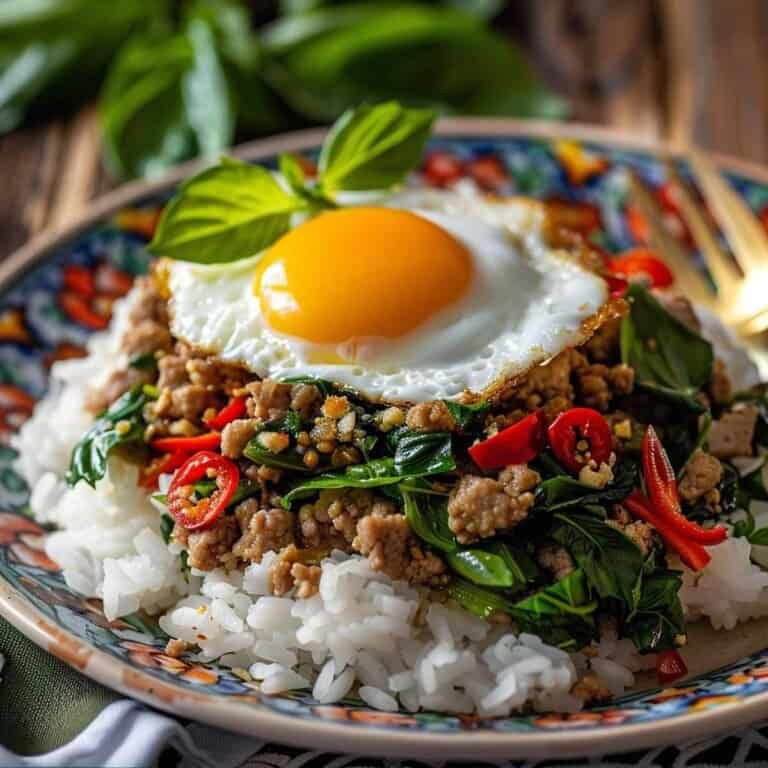
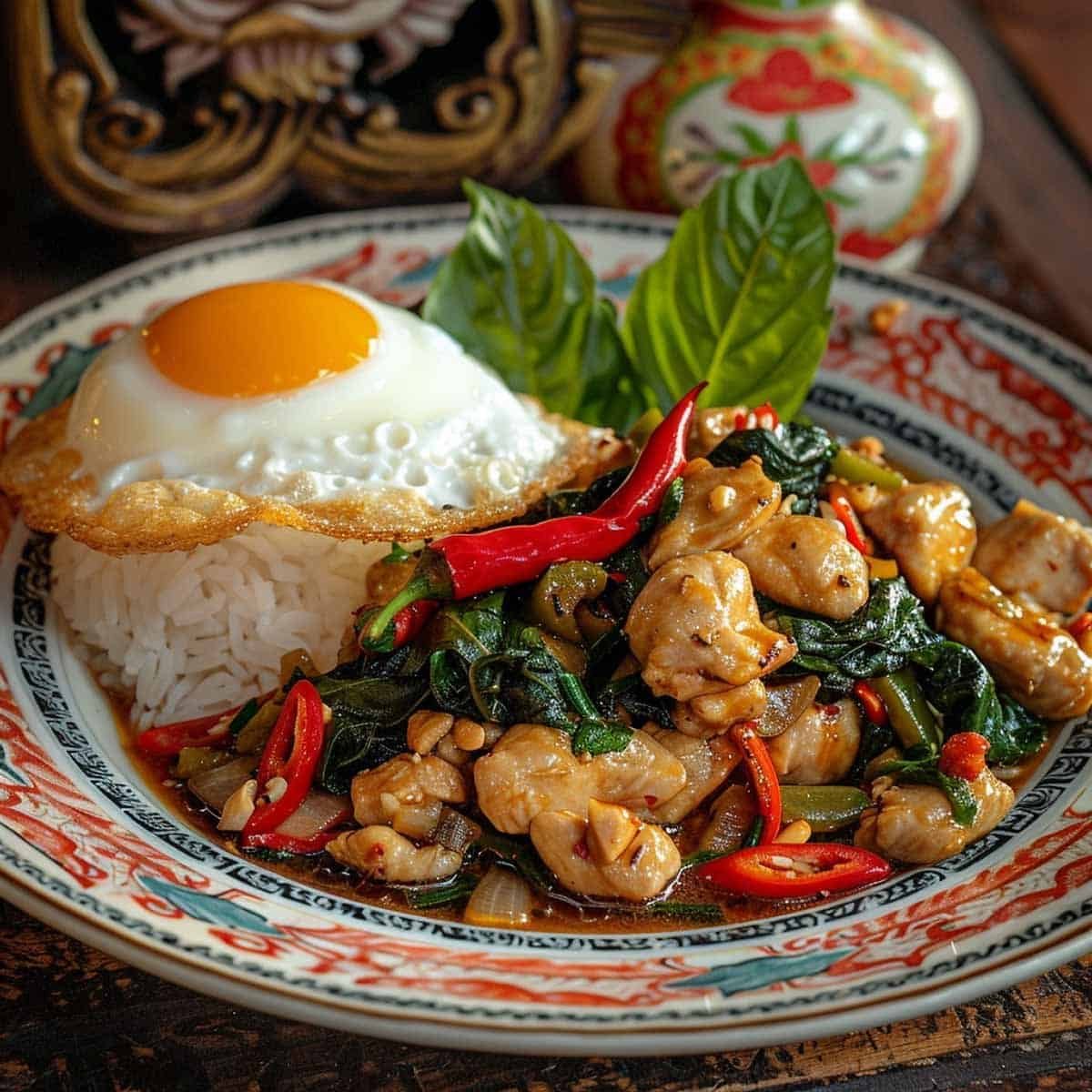
Pad Krapow Gai (ผัดกระเพราไก่), known in English as Thai Basil Chicken, is Thailand’s most popular stir-fry. Ground chicken is cooked over high heat with garlic, chilies, fish sauce, oyster sauce, and holy basil, then served over jasmine rice with a crispy fried egg. Fast, spicy, savory, and deeply satisfying, it is the dish millions of Thai people order every day.
Note from Susie

Sawasdee Kha, and Hello.
My mother made this on Tuesdays. I don’t know why Tuesdays. She never said. The wok would go on and within thirty seconds the whole house smelled like holy basil hitting hot oil. That smell. There is nothing else like it. It gets into everything, your hair, your clothes, the curtains. You don’t mind.
She served it with a fried egg. Always. The egg went on last, in a separate pan, in more oil than you think is reasonable. The edges would lace up and go crispy, and the yolk would stay soft. She would slide it on top of the rice without a word and set the plate in front of you.
I have been making this dish since I was twelve years old. My hands know it. My nose knows when the heat is right before I even look at the pan.
When I finally opened my father’s box, there was a photograph of a market in Korat. A vendor with a wok. Smoke everywhere. He had caught the exact moment the food hit the oil.
He knew that smell too.

What’s In This Page
“The wok goes on. Thirty seconds. The whole house knows.”
— Her Hands His EyesWHAT IS PAD KRAPOW GAI?
ผัดกระเพราไก่, Pad Krapao Gai. The name means stir-fried holy basil with chicken, and it is the most ordered dish in Thailand, not Pad Thai, not green curry, this one. Ordered at lunch counters and street stalls and school canteens every single day by millions of people who have eaten it a thousand times and would eat it a thousand more.
Ground or coarsely chopped chicken goes into a very hot wok with garlic, chilies, oyster sauce, and fish sauce. Holy basil goes in last. The whole thing takes under ten minutes. It arrived in Thai food culture through the central region and spread everywhere because it is fast, it costs almost nothing to make, and it tastes like someone cooked it specifically for you.
The fried egg is not a suggestion. It is part of the dish. According to the Oxford Companion to Food, stir-fried dishes built on aromatic herbs and fermented sauces are among the most deeply embedded preparations in central Thai street food culture, with holy basil occupying a singular place among the herbs used.
You will understand the moment the yolk breaks into the rice.
WHAT YOU’LL NEED
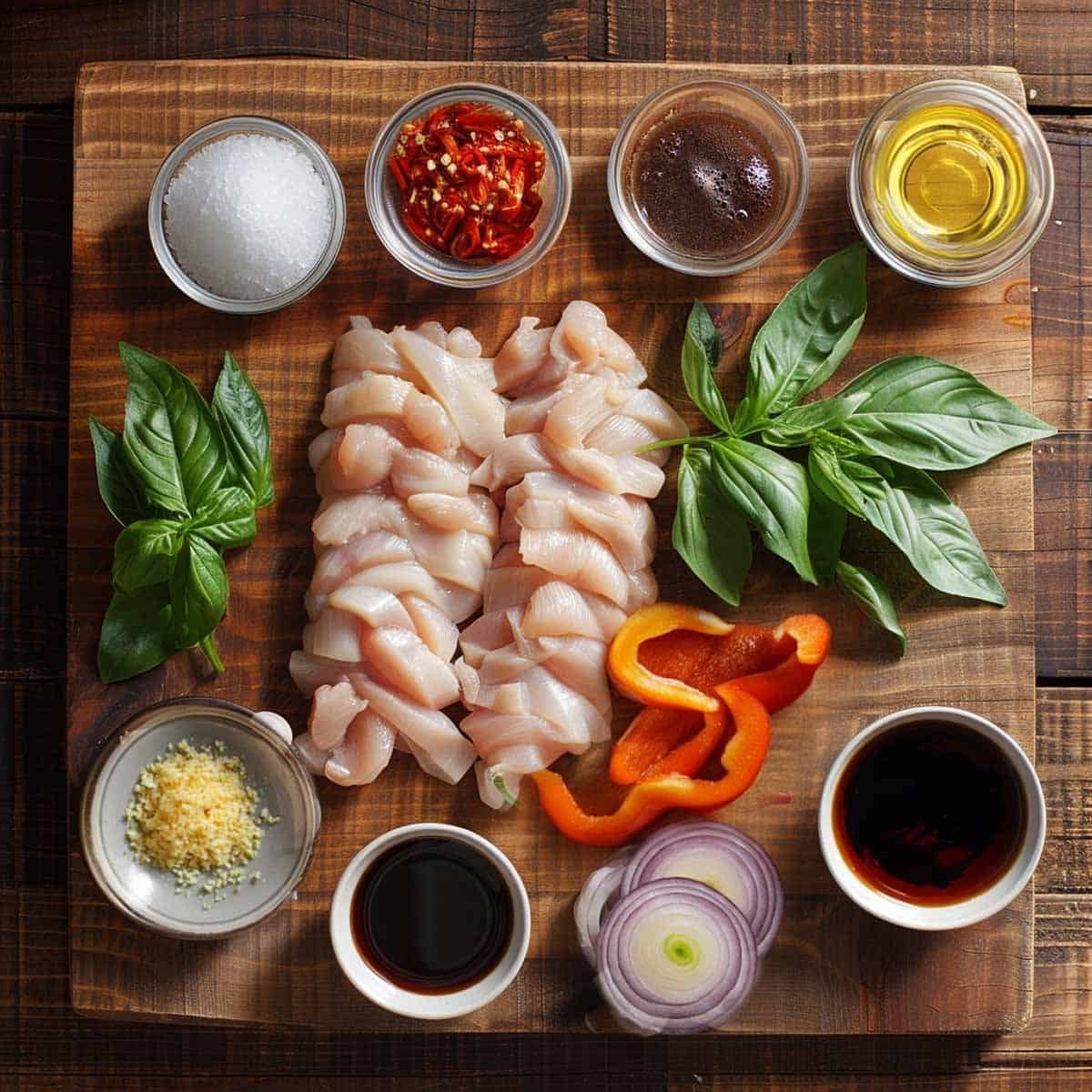
Chicken, one pound, ground or hand-chopped. Ground chicken from the store works but if you have a food processor, pulse boneless thighs yourself. Thighs have more fat than breast meat and fat is flavor. The texture will be coarser and more interesting.
Vegetable oil, two tablespoons.
Garlic, five cloves, minced. Thai chilies, three to five, chopped, adjusted to your preferred spice level. Both go in together at the start and need about twenty seconds of direct heat to bloom properly. That twenty seconds builds the foundation everything else sits on.
Oyster sauce, one tablespoon. Fish sauce, one teaspoon. Sugar, one teaspoon. Oyster sauce and fish sauce are both needed. Oyster sauce brings a sweet, almost caramel, savory body. Fish sauce brings salt and depth. They are not interchangeable.
Thai basil, one cup of leaves, stems removed. Holy basil is the correct herb for this dish. Find it fresh at Asian grocery stores. If you can not find it, Thai sweet basil gets you closer than anything else.
Four cups cooked jasmine rice and four fried eggs for serving.
Visual Walk Through
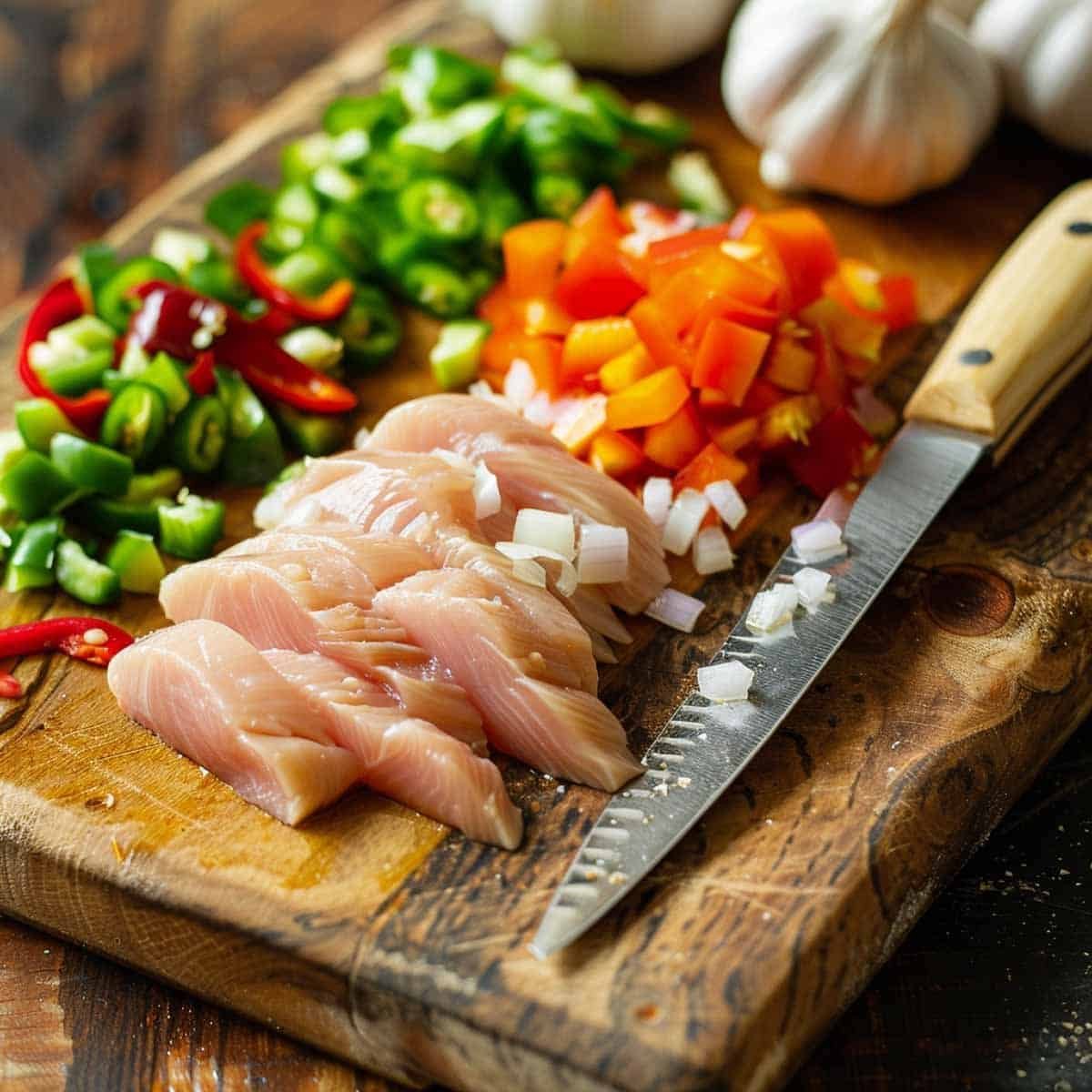
Step 1. Prepare ingredients.
Mince five cloves of garlic and chop three to five Thai chilies, adjusting to your preferred spice level. Prepare one cup of Thai basil leaves by removing the stems. Have everything ready before the heat goes on.
Step 2. Heat the oil and add aromatics.
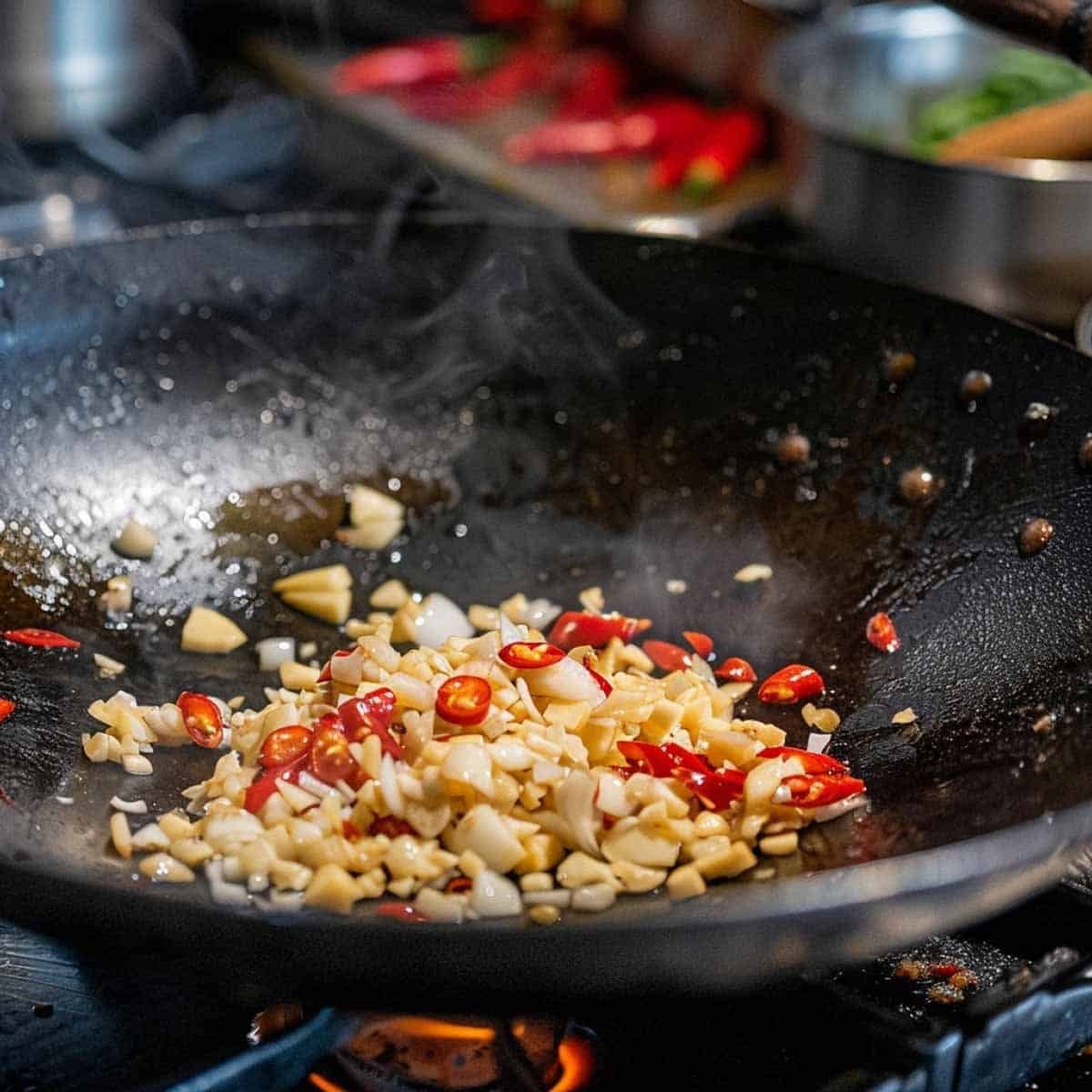
In a large skillet or wok, heat two tablespoons of vegetable oil over medium-high heat until the oil is hot. Add the minced garlic and chopped chilies. Stir-fry for about one to two minutes until the garlic becomes fragrant and the chilies soften slightly. The moment the garlic turns golden at the edges, move immediately to the next step.
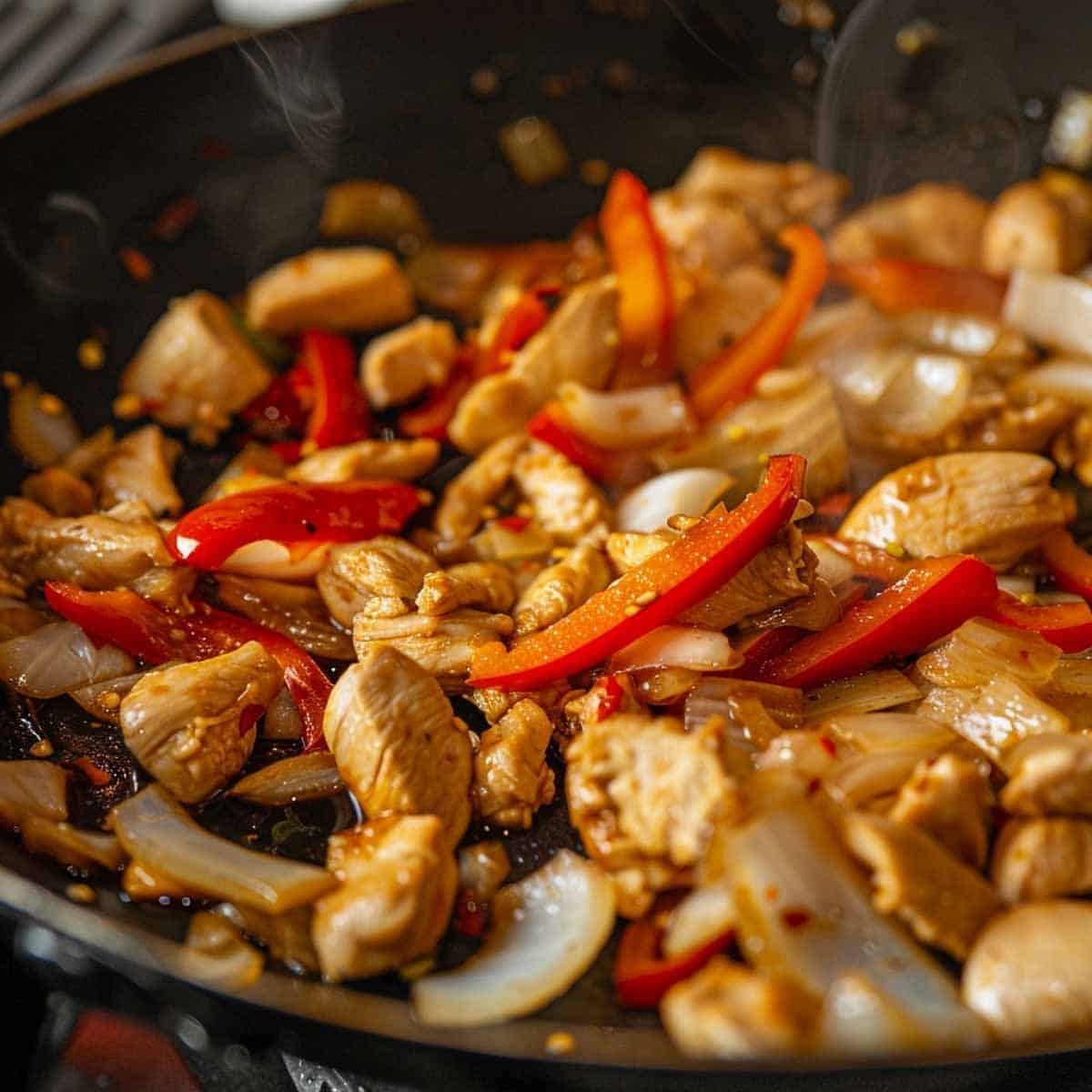
★ Step 3. Cook the chicken. This is What Makes the Difference.
Add the chicken to the hot skillet. Stir-fry until the chicken begins to brown, about three to four minutes. Let it sear against the hot metal first without immediately moving it. That contact, the browning that happens in those first thirty seconds, is where the flavor lives. Then break it apart and continue cooking.
Step 4. Season and simmer.
Add the oyster sauce, fish sauce, and sugar. Toss to coat every piece of chicken. Taste and adjust. More fish sauce if it needs salt. More sugar if the chilies are very sharp. The sauce should cling to the chicken rather than pool at the bottom.
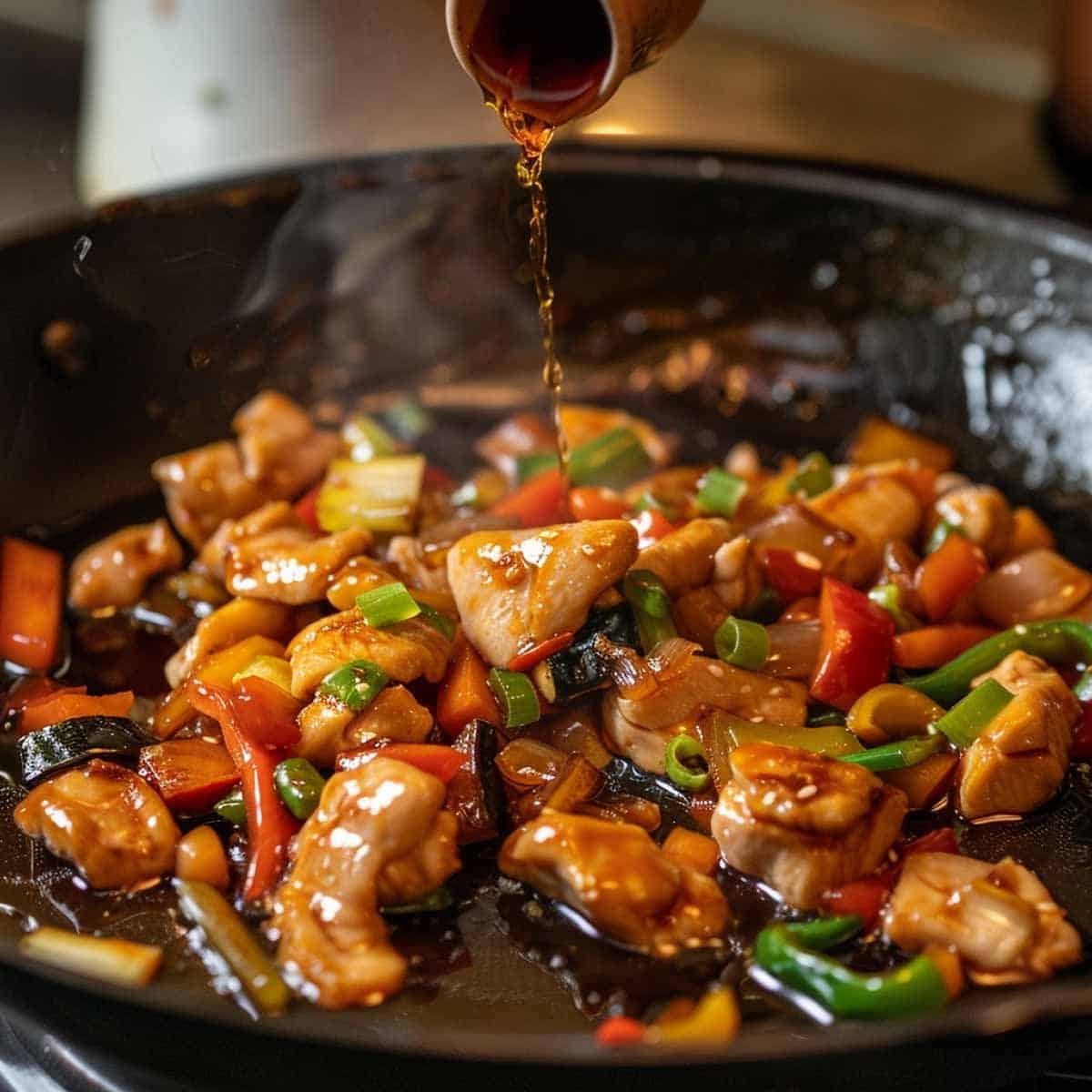
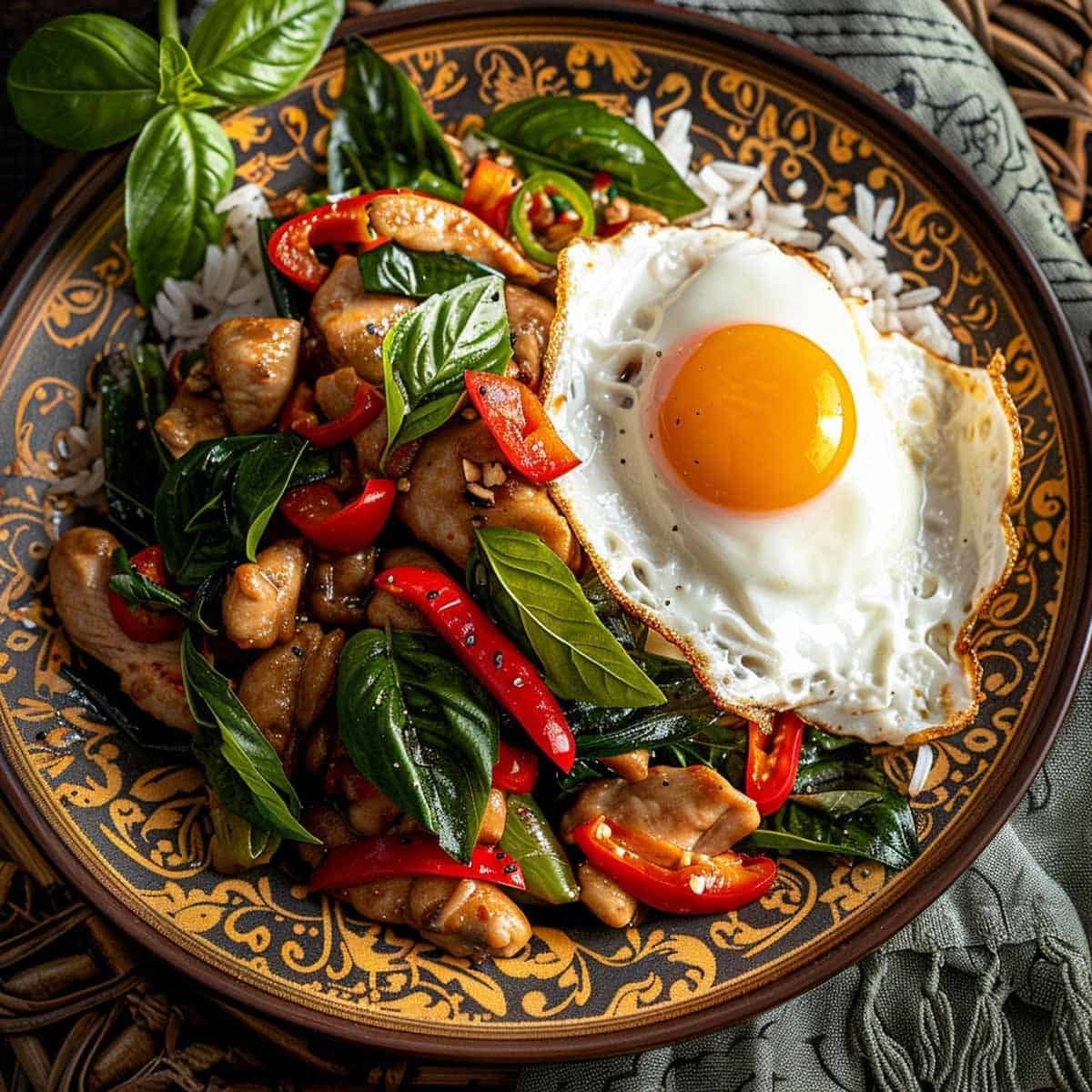
Step 5. Add Thai basil and serve with fried egg.
Turn off the heat and immediately stir in the one cup of Thai basil leaves. Mix until the basil leaves are wilted and well incorporated with the chicken. Serve the Pad Krapao Gai over a bed of cooked jasmine rice.
For an authentic touch, top each serving with a fried egg with a runny yolk. Fry the egg in a separate pan with more oil than feels right, edges lacy and crispy, yolk staying soft.
Thai Basil Chicken Recipe
Equipment
- Wok or large carbon steel skillet
- Wok spatula or flat-edged wooden spoon
- Small mixing bowl
- Sharp knife and cutting board for mincing the garlic and chilies and chopping the chicken if not using preground
- Meat cleaver or food processor if hand chopping chicken thighs into a coarse mince rather than using store-bought ground chicken
- Small separate pan or second burner for frying the kai dao (fried egg) simultaneously so it is ready the moment the stir-fry comes off the wok
- Ladle or large spoon for basting the egg with hot oil to blister the whites while keeping the yolk soft
- Serving plate wide and flat so the rice, stir-fry, and egg can each claim their own space on the plate
Ingredients
- 1 lb chicken
- 2 tablespoons vegetable oil
- 5 cloves garlic minced
- 3-5 Thai chilies chopped (adjust to taste)
- 1 tablespoon oyster sauce
- 1 teaspoon fish sauce
- 1 teaspoon sugar
- 1 cup holy basil leaves (kra pao) Thai basil (closest substitute).
- 4 cups cooked jasmine rice
- 4 fried eggs
Instructions
Step 1: Prepare Ingredients
- Mince 5 cloves of garlic and chop 3-5 Thai chilies, adjusting to your preferred spice level. Prepare 1 cup of Thai basil leaves by removing the stems.
Step 2: Heat the Oil
- In a large skillet or wok, heat 2 tablespoons of vegetable oil over high heat. Ensure the oil is hot enough.
Step 3: Add Aromatics
- Add the minced garlic and chopped chilies to the skillet. Stir-fry for twenty to thirty seconds until the garlic becomes fragrant and the chilies soften slightly.
Step 4: Cook the Chicken
- Add the chicken to the hot skillet. Stir fry the chicken until it begins to brown, about 3-4 minutes.
Step 5: Add sauce
- Add the oyster sauce, fish sauce, and sugar. Toss to coat every piece of chicken. Taste and adjust.
Step 6: Add Basil
- Turn off the heat and immediately stir in the 1 cup of Thai basil leaves. Mix until the basil leaves are wilted and well incorporated with the chicken and vegetables.
- Serve: the Pad Krapow Gai over a bed of cooked jasmine rice. For an authentic touch, top each serving with a fried egg with a runny yolk.
Notes
Nutrition
LET’S GET THIS RIGHT
Is the wok hot enough before anything goes in?
This is the question that decides everything else. If you add the garlic and oil to a cold pan, you are not making Thai basil chicken. You are making something else. The pan needs to be hot before the oil goes in. The oil needs to be shimmering before the garlic goes in. All of this happens first.
Why does my Thai basil chicken taste flat?
One of two things. The heat was too low, which means nothing caramelized and the flavors stayed separate instead of coming together. Or you used sweet basil instead of holy basil. Both matter. Sweet basil is mild. Holy basil is assertive. The dish is built around that assertiveness.
When should I add the basil?
Last. Always last. With the heat off or turned down to almost nothing. Holy basil wilts in seconds and loses its fragrance in less than a minute over full heat. It goes in after everything else is done. You toss it once. You plate immediately.
Do I really need the fried egg?
You do not need it the way you need air. But when the yolk breaks into the rice and the sauce mixes in, that moment changes the dish. Every rice shop in Thailand serves it this way. There is a reason.
Can I use chicken breast instead of thighs?
You can. Breast meat is leaner and cooks faster. It can go a little dry over very high heat. Thighs have more fat and stay more forgiving. If you use breast, watch it carefully and pull it off the heat the moment it is cooked through.
FLAVOR PROFILE
You hear it before you taste it. The sizzle when the chicken hits the wok. Then the garlic. Then something shifts, the basil hits the heat and the whole room changes.
The first bite is savory and direct. The fish sauce and oyster sauce have caramelized against hot metal and turned into something richer than either one is on its own. The chilies build slowly. They do not announce themselves immediately. They arrive about halfway through the bowl and stay.
Then the basil. Peppery. Slightly clove-like. A little sharp at the edges. It does not taste like any other herb you have cooked with. It tastes like this dish and nothing else.
The egg yolk breaks. Everything softens. The rice absorbs it all.
You eat faster than you meant to. The bowl is empty. You consider making another one.
SUSIE’S KITCHEN NOTES
The single most important thing I can tell you about making Thai basil chicken at home is that most home stoves do not get hot enough. This is not a failure of the stove or of you. It is just physics. Restaurant woks sit over burners that produce enormous heat. Your home burner produces less. The solution is to cook in smaller batches than you think you need to. Half the recipe at a time. The pan stays hotter. The chicken sears instead of steaming. The flavor is completely different.
I use a carbon steel wok that I have had for fifteen years. It is seasoned from years of cooking and nothing sticks to it. If you are using a non-stick pan, go ahead, it will work. Just know that you will get less caramelization on the chicken because the non-stick surface does not conduct heat the same way. A cast iron skillet is actually a very good alternative for home cooking because it holds high heat beautifully once it gets there.
The sauce ratio in this recipe is where I land after making this dish more times than I can count. Every cook adjusts. My mother used more fish sauce than oyster sauce. The version at my favorite stall in Korat used more oyster sauce. Mine sits in the middle. Taste it before it goes on the rice and move it where you need it to go.
PAIRING SUGGESTIONS
Thai basil chicken wants jasmine rice and nothing else underneath it, steamed, slightly sticky, and still warm when the chicken goes on top. The fried egg on top is not a pairing suggestion. It is part of the dish. For a complete Thai table, the Tom Kha Gai brings coconut and galangal into the meal and makes the whole table feel like a proper Thai dinner. The stir fried morning glory is the fast green vegetable companion that shares the same wok and the same heat, garlicky and bright alongside the savory, spiced chicken. The Som Tum is the cold, sour, crunchy contrast that the chilies of Pad Krapao Gai call for alongside, sour and bright against warm and rich. For those who want the same dish in a different form, the Thai basil pork is the pork version of this recipe, same technique, same sauce, same holy basil, different protein. And for the drink alongside something this hot and savory and satisfying, the Thai iced tea is cold and sweet and always the right answer. My mother made this on Tuesdays. She never said why. She did not need to.
FAQ
What is the difference between Thai basil chicken and regular basil chicken?
Thai basil chicken uses holy basil, bai krapao, which has a peppery, clove-like intensity that Italian or sweet basil do not have. The dish is built around that specific fragrance. Regular basil chicken, in a Western context, is a milder, softer thing. This one has edges. It is supposed to.
What is the best substitute for holy basil in Thai basil chicken?
Thai sweet basil is the closest substitute. It is milder and lacks the peppery clove note that makes the dish what it is, but it is the same family and the dish will still make sense. Italian basil is further away. Use more of it if that is all you have. The dish will be gentler than it is supposed to be. That is okay. Just know what you are making.
Is Thai basil chicken the same as pad krapao?
Yes. Pad Krapao Gai is the Thai name, pad means stir-fried, krapao means holy basil, gai means chicken. Thai basil chicken is what most English-language menus and recipes call it. They are the same dish. In Thailand nobody calls it Thai basil chicken. They just order it by name and it arrives in two minutes.
Do you need a wok to make Thai basil chicken?
A wok helps but it is not the only option. The goal is high heat and enough surface area so the chicken sears rather than steams. A large cast iron skillet does this very well at home. A non-stick pan works but gives you less caramelization. Whatever pan you use, make sure it is very hot before anything goes in.
Why is the fried egg served on top of Thai basil chicken?
Because when the yolk breaks into the rice and the sauce, everything changes. The egg is a Thai-style fried egg, cooked in more oil than you expect, edges lacy and crispy, yolk still soft. It is not a garnish. It is part of the dish. Every rice shop in Thailand serves Pad Krapao this way. There is a reason it has been done this way for a very long time.
How spicy is Thai basil chicken?
In Thailand it is very spicy. The stalls use a lot of bird’s eye chilies and they do not apologize for it. At home you control this completely. Two chilies gives you warmth. Five gives you heat that builds. Ten is closer to what you get at a stall in Korat. Start where you are comfortable and move up the next time.