What Is Massaman Curry?
A Massaman curry recipe builds a slow, rich coconut milk curry around beef, potatoes, and peanuts, warm with cardamom and cinnamon, deeper than most Thai curries, quieter in heat. It is the curry that fills a house before anyone sits down. The smell arrives first. Everything else follows.
Note From Susie

Sawasdee Kha, and Hello.
It was Christmas 1986. Chris and I had just started dating and he came to dinner. He was from a small town in Southern Maryland. He had not been exposed to Thai cooking. Not once.
He walked into the house, inhaled, and smiled.
My mother had made Massaman curry. The smell of it had filled every room by the time he arrived, coconut milk and warm spice and something slow and deep that had been on the stove for hours. He did not hesitate at the door. He did not ask what it was. He just smiled and came inside.
He ate everything. He complimented my mother. Then he ate everything again.
My mother sat at the table with us. At some point she looked at me and smiled. Not at him. At me. I knew what that meant. She did not need to say a word.
Chris has never reached for something safer in forty years. It started that night. It started with her Massaman curry.
This is her recipe. I have not changed a single thing.

What’s In This Page
“The smell reaches the door before you do.”
— Her Hands His EyesWhat Is Massaman Curry?
Massaman curry, แกงมัสมั่น, Gaeng Massaman, pronounced gaaeng mah-sah-mahn, is a slow-cooked Thai curry with roots in the Muslim communities of southern Thailand, built on Persian and Indian spice influence brought along ancient trade routes. A Massaman curry recipe is unlike any other Thai curry. It does not rely on lemongrass or galangal for its base character. Instead it draws warmth from cardamom, cinnamon, cloves, and star anise, building a sauce that is deep and slightly sweet, rich with coconut milk, and patient in a way that most Thai cooking is not.
Beef and potatoes go in early and stay until they are tender all the way through. Peanuts and onion go in later. According to food historian David Thompson in Thai Food, Massaman is one of the oldest curries in the Thai repertoire, shaped by centuries of cross-cultural exchange. It is not street food. It is Sunday food. It is the curry that fills a house before anyone sits down.
What makes a Massaman curry recipe distinct from red or green curry is the spice character. No fresh chilies doing the sharp work. No lemongrass cutting through the broth. Instead cardamom and cinnamon and star anise working slowly, building warmth rather than heat, producing a sauce that arrives quietly and stays. The Oxford Companion to Food describes Massaman as one of the clearest examples of South Asian culinary influence on Thai cooking, the spice route made into a dish.
The smell reaches the door before you do. That is how you know it is ready.
WHAT YOU’LL NEED
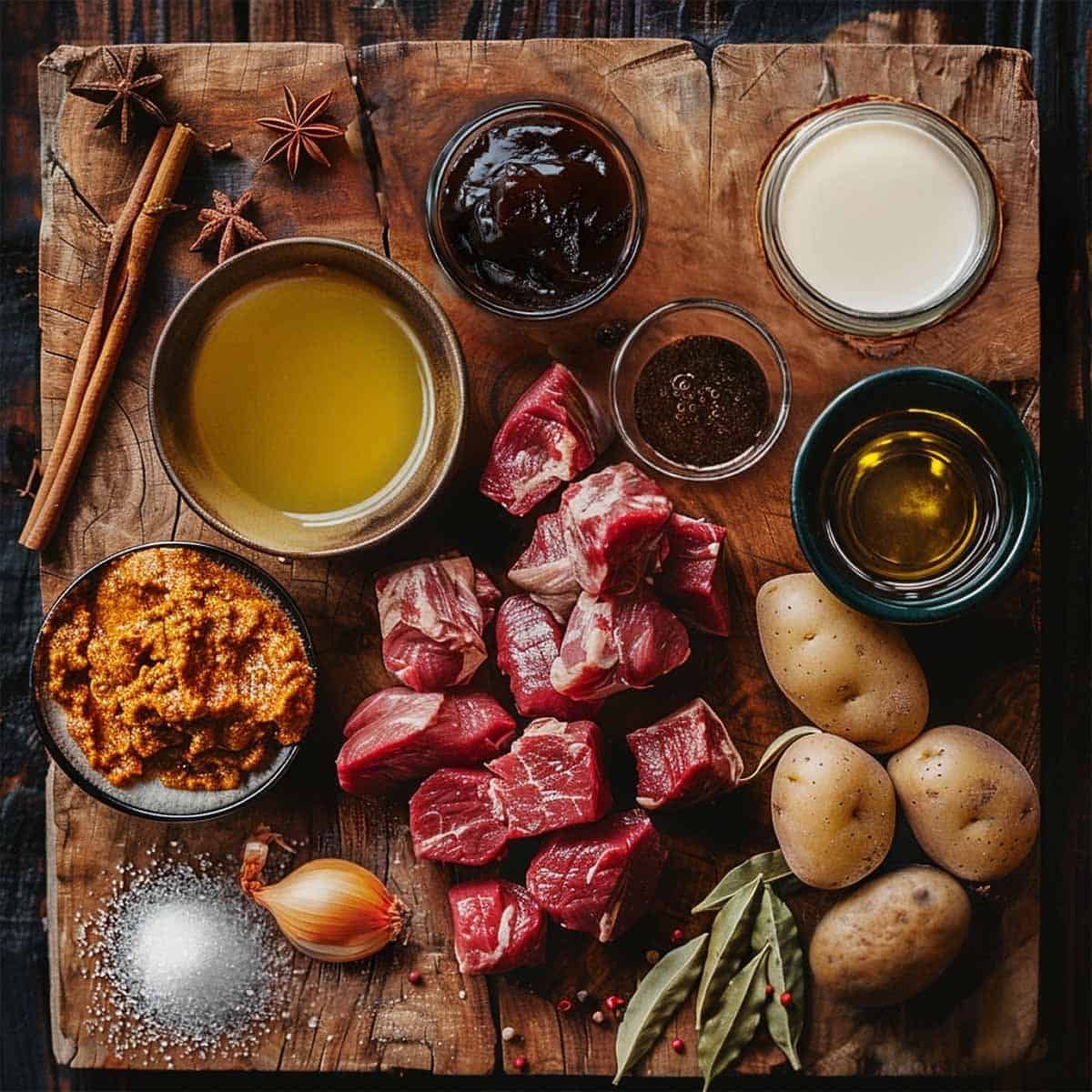
Start with the paste. Two options, both valid. Make it from scratch or use a good quality store-bought Massaman paste. Mae Ploy and Maesri both make reliable versions. Four tablespoons for a batch serving four. Store-bought paste will give you a slightly flatter result than homemade but properly made it is still worth every minute.
Beef chuck, one pound, cut into one-inch cubes. Not sirloin, not fillet. Chuck has the fat running through it that keeps the meat tender through a long simmer. Cut it consistently so everything cooks evenly.
Coconut milk, one can, fourteen ounces, full fat. Do not use light. The fat is what gives Massaman its particular richness.
Beef broth, one cup. Potatoes, two medium, peeled and cut into one-inch cubes. Waxy potatoes, Yukon Gold, hold their shape. Floury potatoes dissolve. One large onion, sliced. Roasted peanuts, half a cup.
Fish sauce, two tablespoons, for salt and depth. Tamarind paste, two tablespoons, for the sour note that balances the sweetness. Palm sugar or brown sugar, two tablespoons, for balance.
The whole spices: one cinnamon stick, three cardamom pods, one star anise, one bay leaf. These go into the hot oil before the paste and bloom in thirty seconds. That bloom is where the warmth that stops people at the door comes from.
Visual Walk Through
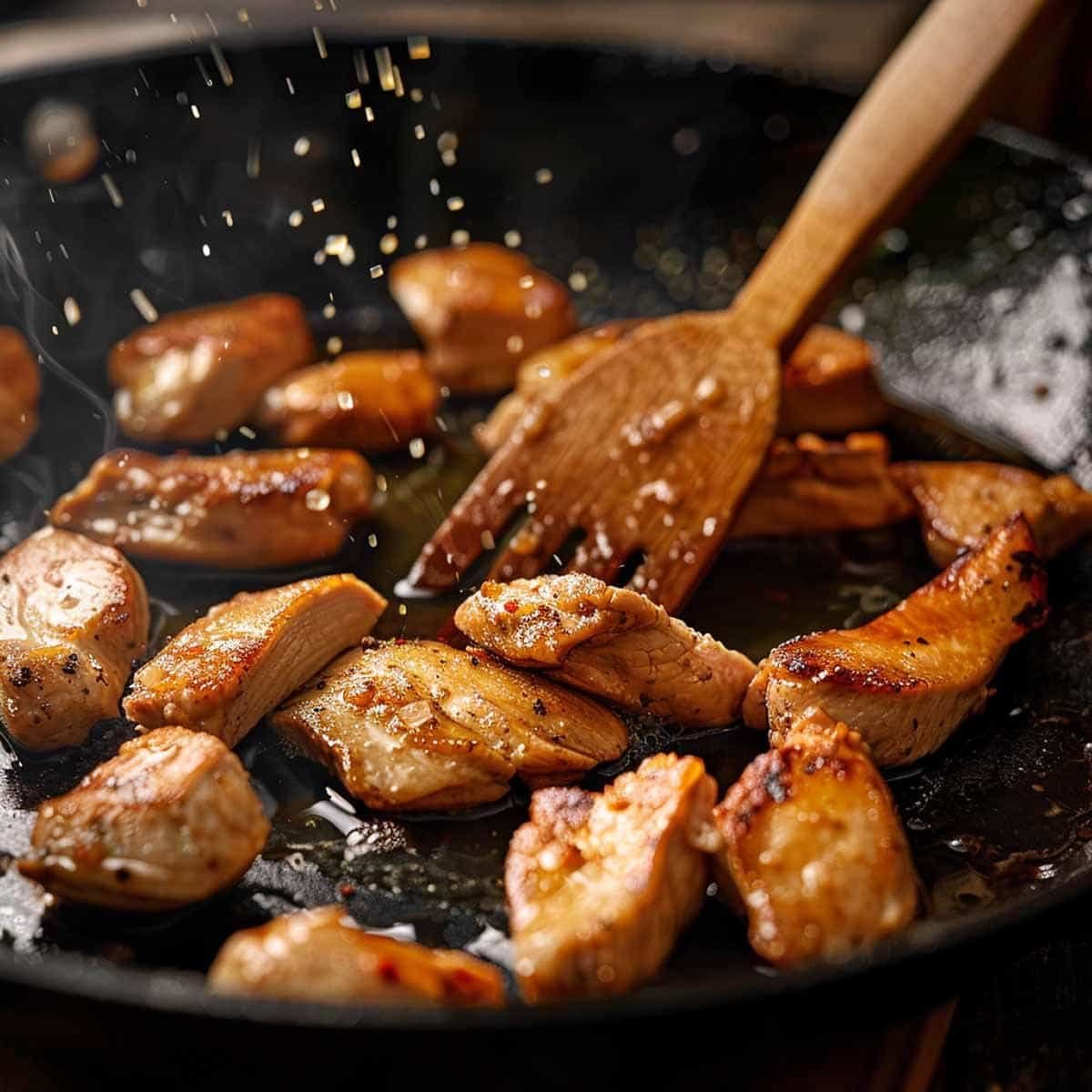
Step 1. Brown the beef.
Heat the vegetable oil in a large pot over medium-high heat. Add the beef cubes and brown them on all sides. Remove the beef and set aside. This builds color and depth on the outside of the meat before the slow simmer begins.
★ Step 2. Cook the Spices and Curry paste. This is What Makes the Difference.
Heat a heavy pot or Dutch oven over medium heat. Add a small amount of neutral oil. When it shimmers, add the whole spice, cardamom pods lightly crushed, a cinnamon stick, two or three star anise, four or five cloves. Stir for thirty seconds.
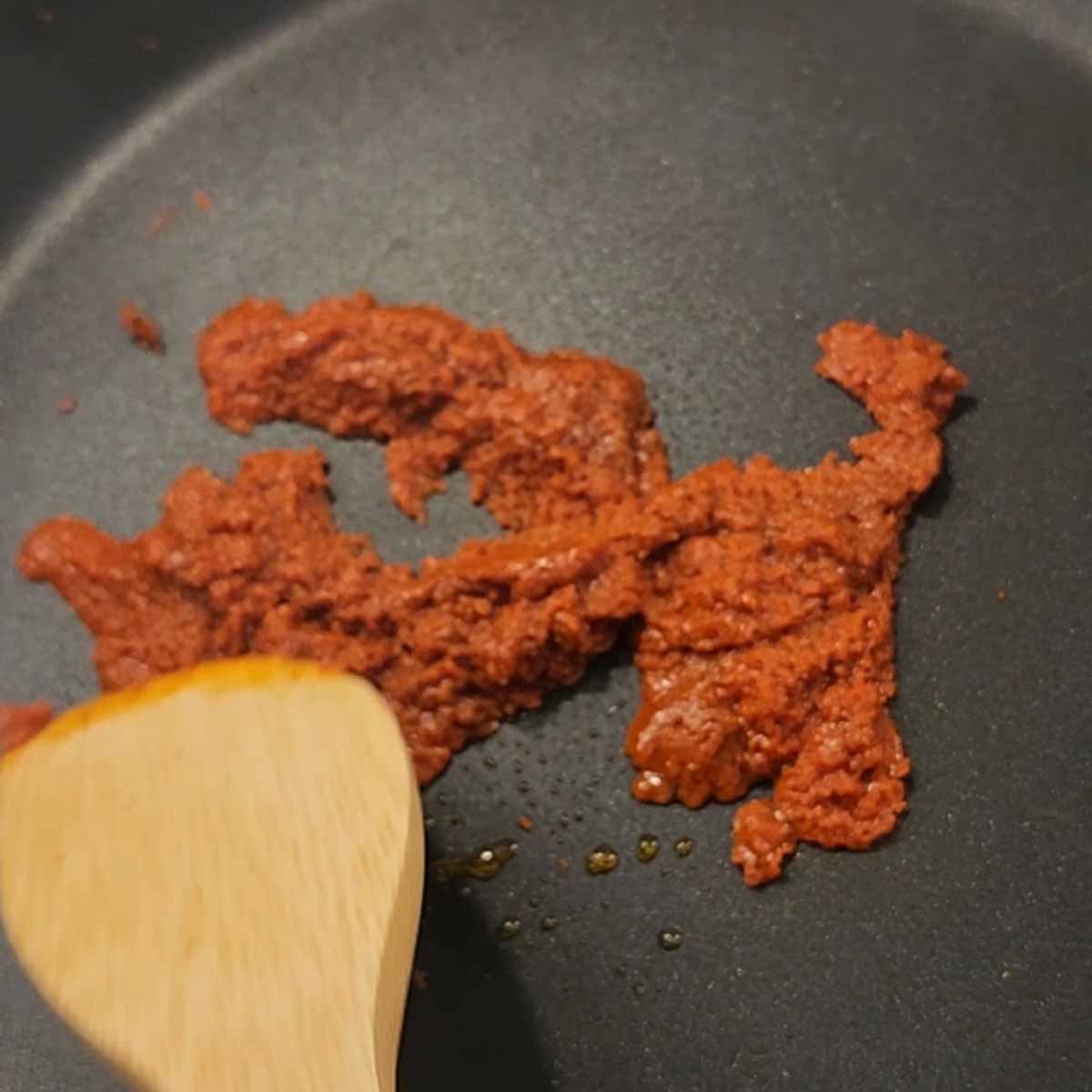
In the same pot, reduce the heat to medium and add the Massaman curry paste. Stir-fry for about one minute until it becomes aromatic. The paste darkens slightly and the raw edge cooks out.
Step 3. Simmer the curry.
Slowly stir in half of the coconut milk, scraping up any bits stuck to the pot.
Add the beef back into the pot along with the beef broth, onions and bay leaf. Add remaing coconut milk.
Add Potatoes after 45 minutes.
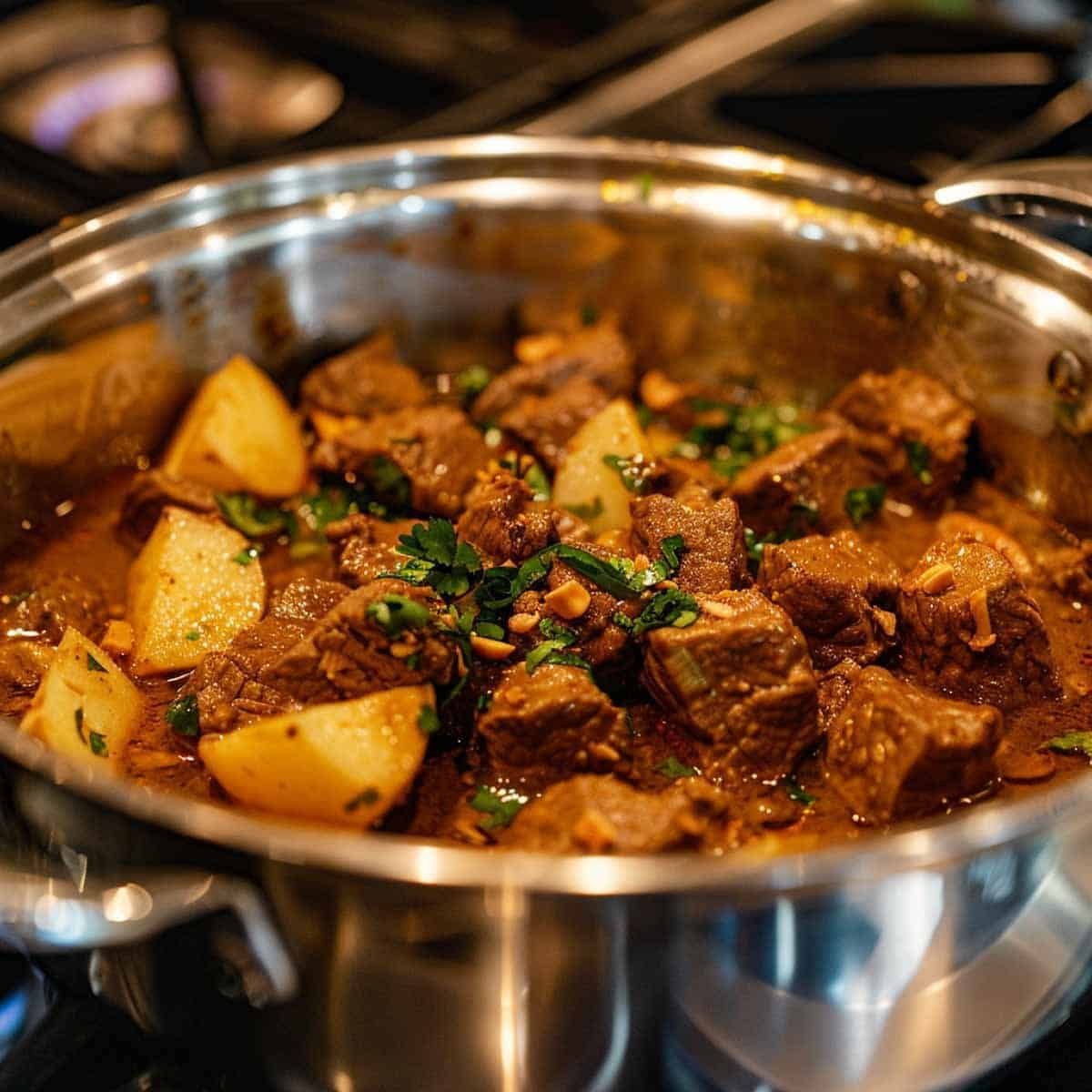
Bring the mixture to a boil, then reduce the heat to low and simmer covered for 1.5 to 2 hours, or until the beef is tender.
Step 4. Adjust seasoning and serve.
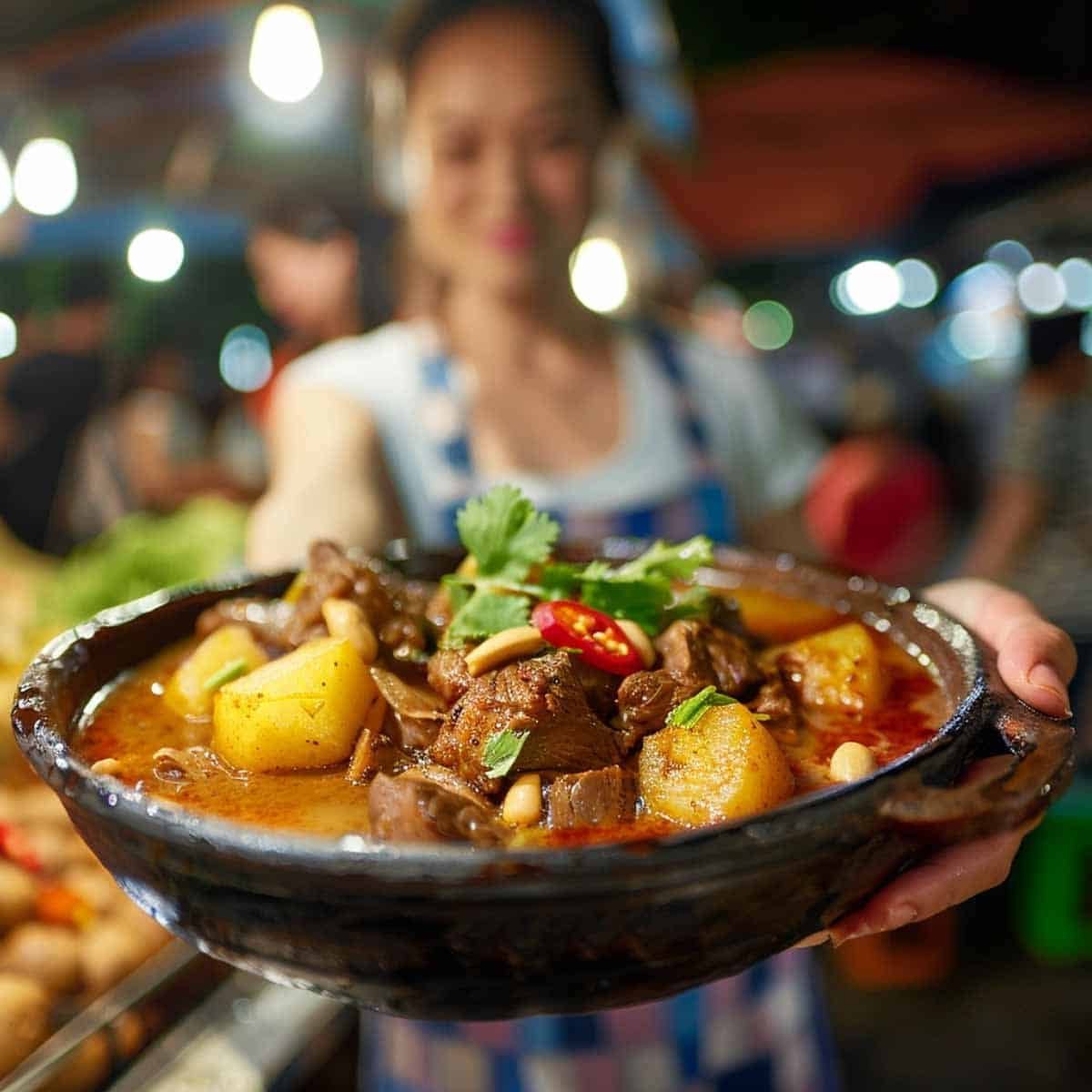
Taste and adjust with more fish sauce or more palm sugar. Garnish with fresh cilantro and lime wedges on the side.

Thai Beef Massaman Curry
Ingredients
- 1 lb Beef chuck cut into 1-inch cubes
- 2 tablespoons Vegetable oil
- 4 tablespoons Massaman curry paste available at Asian grocery stores
- 1 can (14 oz) coconut milk
- 1 cup Beef broth
- 2 Medium potatoes peeled and cut into 1-inch cubes
- 1 Large onion sliced
- 1/2 cup Roasted peanuts
- 2 tablespoons Fish sauce
- 2 tablespoons Tamarind paste
- 2 tablespoons Palm sugar or brown sugar
- 1 Cinnamon stick
- 3 Cardamom pods
- 1-2 Star anise
- 4-5 Cloves
- 1 Bay leaf
- 1/2 cup Cilantro
- 1 Lime cut into wedges
Instructions
Brown the Beef:
- Heat the vegetable oil in a large pot over medium-high heat. Add the beef cubes and brown them on all sides. Remove the beef and set aside.
Cook the Spices and Curry Paste:
- Add a small amount of oil, add cardamom pods, cinnamon sticks, star anise, cloves. Stir for thirty seconds.In the same pot, reduce the heat to medium and add the Massaman curry paste. Stir-fry for about 1 minute until it becomes aromatic.
Simmer the Curry:
- Slowly stir in half of the coconut milk, scraping up any bits stuck to the pot.Add the beef back into the pot along with the beef broth, onions, fish sauce, tamarind paste, palm sugar, and bay leaf.Add remaining coconut milk, stir to combne.
- Bring the mixture to a boil, then reduce the heat to low and simmer, covered. Simmer covered for 1.5 to 2 hours, adding the potatoes after 45 minutes.Add peanuts during the last thirty minutes of simmering.
Adjust Seasonings:
- Taste the curry and adjust the seasoning with more fish sauce or sugar if needed. The curry should have a balanced flavor of salty, sweet, and tangy.
Serve:
- Garnish with fresh cilantro and lime wedges on the side.
Notes
Nutrition
LET’S GET THIS RIGHT
Why is my Massaman curry recipe thin and lacking depth?
The paste was not fried long enough. One minute in the pot before the liquid goes in, the paste needs to cook, not just heat through. Raw paste gives you a thin, sharp sauce. Cooked paste gives you depth. Also check the whole spices. If you skipped the blooming step, the warmth that defines Massaman is missing from the foundation.
Why is my beef tough in this Massaman curry recipe?
The wrong cut or not enough time. Massaman needs a cut with fat running through it, chuck or brisket, and it needs at least one and a half to two hours at a gentle simmer. High heat toughens the beef. Low and slow is the only method that works here. If the beef is still resistant, give it another fifteen minutes before you serve.
Why are my potatoes falling apart?
They went in too early or the heat was too high. Potatoes need to simmer gently for the cooking time, not boil aggressively. Use waxy potatoes, Yukon Gold or any small waxy variety. Floury potatoes dissolve in a long braise. Waxy ones hold their shape.
Can I make this Massaman curry recipe with chicken instead of beef?
Yes. Chicken thighs work well, bone-in for more flavor. Reduce the simmer time accordingly. The rest of the method stays the same. Chicken Massaman is lighter and faster. Beef Massaman is the original. Both are worth making.
Should I use store-bought or homemade paste for this Massaman curry recipe?
Both work. Mae Ploy and Maesri make reliable store-bought Massaman pastes. Four tablespoons for a batch serving four. Fry the paste properly regardless of which you use. That step is not optional.
FLAVOR PROFILE
The smell arrives before anything else, warm and deep and slightly sweet, cardamom and cinnamon and coconut milk that has been simmering for an hour. It fills the whole house. It reaches the door. That is Massaman announcing itself.
The finished sauce is amber colored, glossy, thick enough to coat the back of a spoon without running. The beef pulls apart at the edge of a fork. The potatoes have absorbed the sauce at their surface and stayed firm through the center. The peanuts sit just below crunch, softened but present.
The first spoonful is rich and slow. The warmth of the whole spices comes through without heat, the coconut milk rounds everything, the fish sauce and palm sugar balance underneath without announcing themselves. Nothing sharp. Nothing loud. This is the quietest curry in the Thai repertoire. It is also the one that stops people at the door.
He walked in and smiled. He did not ask what it was. The smell had already told him something good was happening. That is Massaman. That has always been Massaman.
SUSIE’S KITCHEN NOTES
A heavy pot matters here. A Dutch oven or heavy-bottomed pot holds the heat evenly through a long simmer without scorching the bottom. A thin pot will create hot spots during the braise that cook the beef unevenly. If you cook Massaman regularly, the right pot is worth having.
The balance of fish sauce and palm sugar is where the dish lives. Massaman sits at the intersection of savory, sweet, and warmly spiced, and the fish sauce and sugar are what hold that intersection in place. Too much fish sauce and it tips salty. Too much sugar and it reads sweet. Taste it before serving against a spoonful of rice. The balance shifts when it sits beside starch and that is the true test.
Make it ahead if you can. My mother always made Massaman the day before and let it sit overnight. The whole spices continue to work in the sauce as it rests, the cardamom deepens, the cinnamon settles, the sauce thickens slightly and becomes something more than it was the day it was made. Reheat gently over low heat and add a splash of water or coconut milk if it has thickened too much. The second day is when you understand what the first day was building toward.
Do not stir aggressively once everything is in. Massaman is a patient dish and it needs to be treated accordingly. Stir gently, check occasionally, adjust the heat if it begins to bubble too vigorously. The simmer should be barely visible, just a few lazy bubbles breaking the surface. That is the right pace for this curry.
Pairing Suggestions
Massaman curry belongs over jasmine rice, the sauce needs something to absorb into and jasmine rice is the right vehicle. For a full table, the Thai fried spring rolls at the start give something crisp and light before the richness of the curry arrives. The Som Tum alongside brings the acid and the crunch that cuts through coconut milk the way nothing else does. The Panang curry shows what happens when the same coconut milk tradition goes somewhere thicker and faster, and the two curries together on the same table cover the full range of Thai coconut curry cooking. And for the drink alongside the richest, most slowly built curry on this site, the Thai iced tea is cold and sweet and always the right answer. Massaman is the centerpiece. Everything else moves around it. My mother knew that. She never put anything on the table that competed with it.
FAQ
What makes a Massaman curry recipe different from other Thai curries?
Massaman draws its warmth from whole spices, cardamom, cinnamon, star anise, cloves, rather than lemongrass and galangal. It has roots in the Muslim communities of southern Thailand and reflects centuries of Persian and Indian spice influence. It is slower, richer, and quieter in heat than red or green curry. It is also the only Thai curry that smells like it is already done before you have finished cooking it.
What beef is best for a Massaman curry recipe?
Chuck or brisket, cuts with fat running through them that benefit from a long slow braise. Cut the pieces into one-inch cubes. Lean cuts like sirloin or fillet dry out before the sauce has time to develop. The fat is what keeps the beef tender through the long simmer.
Can I make this Massaman curry recipe ahead of time?
Yes, and it is better the next day. The whole spices continue to work in the sauce overnight and the flavor deepens considerably. My mother always made it the day before. Reheat gently over low heat and add a splash of coconut milk if it has thickened too much. Make it Saturday. Eat it Sunday.
What potatoes work best in a Massaman curry recipe?
Waxy potatoes, Yukon Gold or any small waxy variety. They hold their shape through a long simmer. Floury potatoes dissolve before the beef is done and you end up with a starchy sauce and no potato. Cut them to the same size as the beef cubes so everything finishes at the same time.
Is Massaman curry spicy?
No, not in the way Thai curries usually are. Massaman is the mildest curry in the Thai repertoire. The warmth comes from whole spices rather than fresh or dried chilies. There is a gentle background heat but nothing that builds or bites. It is the curry you make for someone who has never had Thai food before. It was the first Thai dish Chris ever ate.
Can I use store-bought paste for a Massaman curry recipe?
Yes. Mae Ploy and Maesri both make reliable Massaman pastes. Four tablespoons for a batch serving four. Fry the paste in the pot the same way you would a homemade paste, do not skip that step. Store-bought paste will give you a slightly flatter result than homemade but a properly made Massaman with good store-bought paste is still worth every minute it takes.
What does Massaman curry taste like?
Rich, slow, and warmly spiced. Coconut milk rounded by cardamom and cinnamon, fish sauce and palm sugar balanced underneath, peanuts adding texture. It does not announce itself the way green or red curry does. It builds quietly and stays. The smell is the thing people remember first. It fills a house before anyone sits down.
NEWSLETTER SIGN-UP
Similar Posts
Thai Coconut Chicken Soup: Tom Kha Gai the Way It’s Made in Korat
What Is Thai Coconut Chicken Soup? Thai coconut chicken soup, Tom Kha Gai (ต้มข่าไก่), is a silky, fragrant broth of coconut milk, galangal, lemongrass, and…
Thai Cashew Chicken: The Family Kitchen
What Is Thai Cashew Chicken? Thai cashew chicken, Gai Pad Med Mamuang (ไก่ผัดเม็ดมะม่วงหิมพานต์), is a stir-fry of chicken, toasted cashews, dried chilies, and vegetables in…
Som Tum Recipe (Thai Green Papaya Salad): The Dish That Came Back
What Is Som Tum? Som tum is a Thai green papaya salad built in a mortar, shredded unripe papaya pounded with bird chilies, garlic, fish…
Thai Rice Soup: My Mother’s Khao Tom
What Is Khao Tom? Thai rice soup, Khao Tom (ข้าวต้ม), is uncooked jasmine rice simmered in a fragrant chicken broth seasoned with fish sauce, soy…
Tom Yum Goong: Two Kitchens One Broth
What Is Tom Yum Goong? Tom Yum Goong (ต้มยำกุ้ง) is a traditional Thai hot and sour shrimp soup made with lemongrass, galangal, kaffir lime leaves,…
Thai Cucumber Salad (Som Tum Tang) Recipe
What Is Som Tum Tang? Thai cucumber salad, Som Tum Tang (ส้มตำแตง), is fresh cucumber dressed in a light, bright dressing of lime juice, fish…