What Is Thai Cashew Chicken?
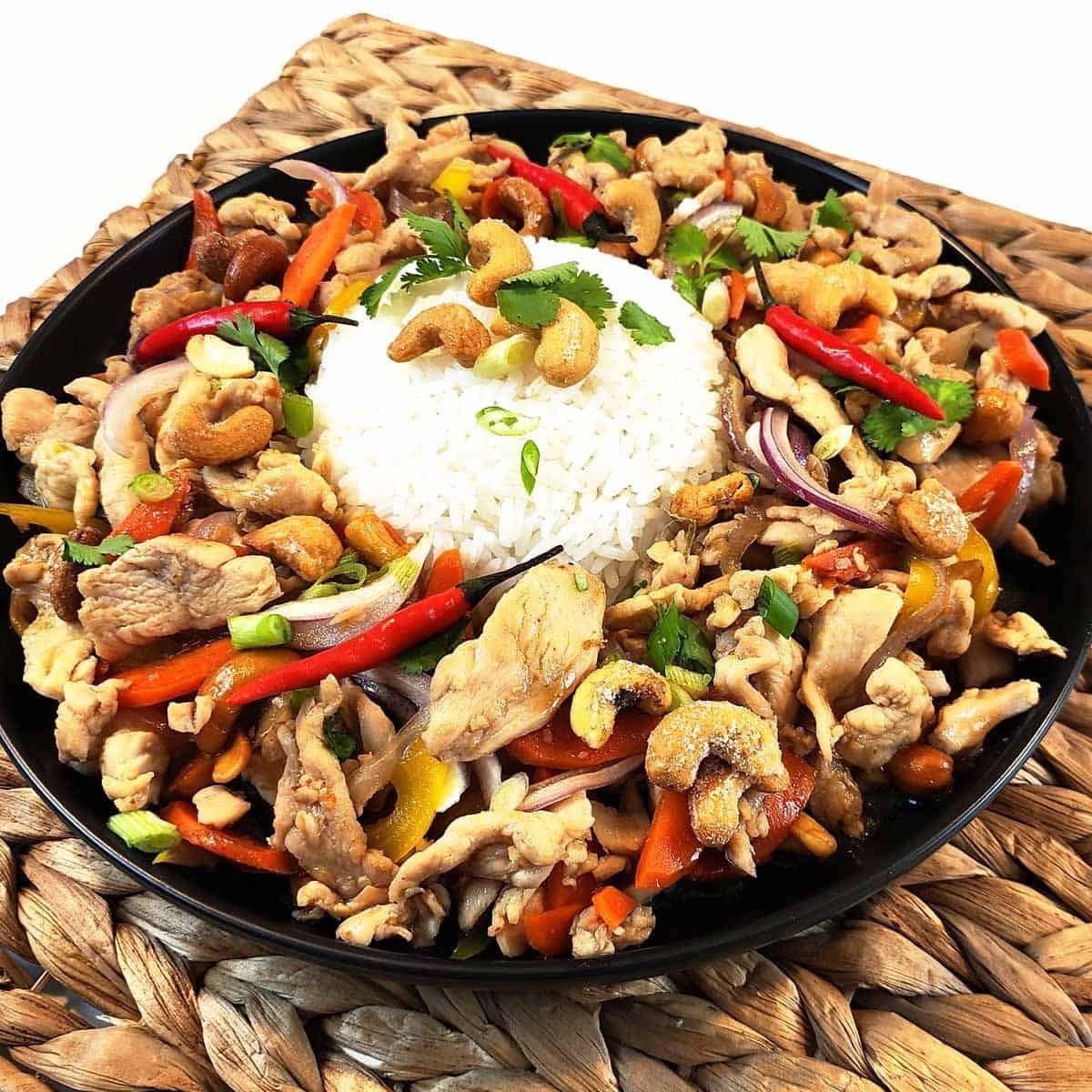
Thai cashew chicken, Gai Pad Med Mamuang (ไก่ผัดเม็ดมะม่วงหิมพานต์), is a stir-fry of chicken, toasted cashews, dried chilies, and vegetables in a savory-sweet sauce built from oyster sauce, fish sauce, soy sauce, and a touch of sugar. It is made fast in a very hot wok. The cashews go in last, so they stay crisp.
Note From Susie

Sawasdee Kha, and Hello.
My mother was obsessed with peanuts. This is simply true. She kept them in the kitchen always, roasted, salted, in a bowl on the counter where anyone could reach. She put them in things. She ate them alongside things. She loved what a nut brought to a dish: the crunch, the richness, the way it made something feel complete.
Cashew chicken was where that love found its best expression. She started making it for me when I was a toddler, just beginning to understand food, just beginning to notice that some things smelled a certain way and looked a certain way and made you want to sit down. This dish was bright to me. That is the word I come back to. The colors in the wok, the gloss of the sauce, the gold of the cashews, all of it vivid in a way that stayed.
She made it in our family kitchen. It became a regular dinner, the kind of dish that appeared without announcement and was simply expected after a while. As I grew up it was always there. The smell of it, sweet and savory and warm from the wok, was the smell of an ordinary evening becoming something worth remembering.
My mother loved peanuts. She gave me cashew chicken. I understand now that they were the same thing.

What’s In This Page
“She gave me cashew chicken. I understand now.”
— Her Hands His EyesWhat Is Thai Cashew Chicken?
Thai cashew chicken, ไก่ผัดเม็ดมะม่วงหิมพานต์, Gai Pad Med Mamuang Himaphan, is one of the most widely made stir-fry dishes in Thai home cooking and on Thai restaurant menus around the world. The name translates as stir-fried chicken with cashew nuts, and that translation is accurate as far as it goes. What it does not capture is the sauce, a carefully balanced blend of oyster sauce, fish sauce, soy sauce, and a touch of sugar that coats the chicken and vegetables in something glossy and savory-sweet, with the dried chilies underneath it adding a slow, building heat.
Thai cashew chicken is distinct from Chinese cashew chicken, which typically uses a lighter, more cornstarch-thickened sauce and does not include dried whole chilies. The Thai version is bolder, more complex, with fish sauce and oyster sauce doing the heavy work, and the dried chilies providing both flavor and the understanding that heat is present. According to the Oxford Companion to Food, stir-fry cooking traditions came to Thailand through centuries of Chinese culinary influence, and dishes like Thai cashew chicken sit at the intersection of those two traditions.
The cashews go in last. This is not a small detail. It is the rule that keeps them crisp, and a soft cashew in this dish is a cashew that was added too soon.
What You’ll Need
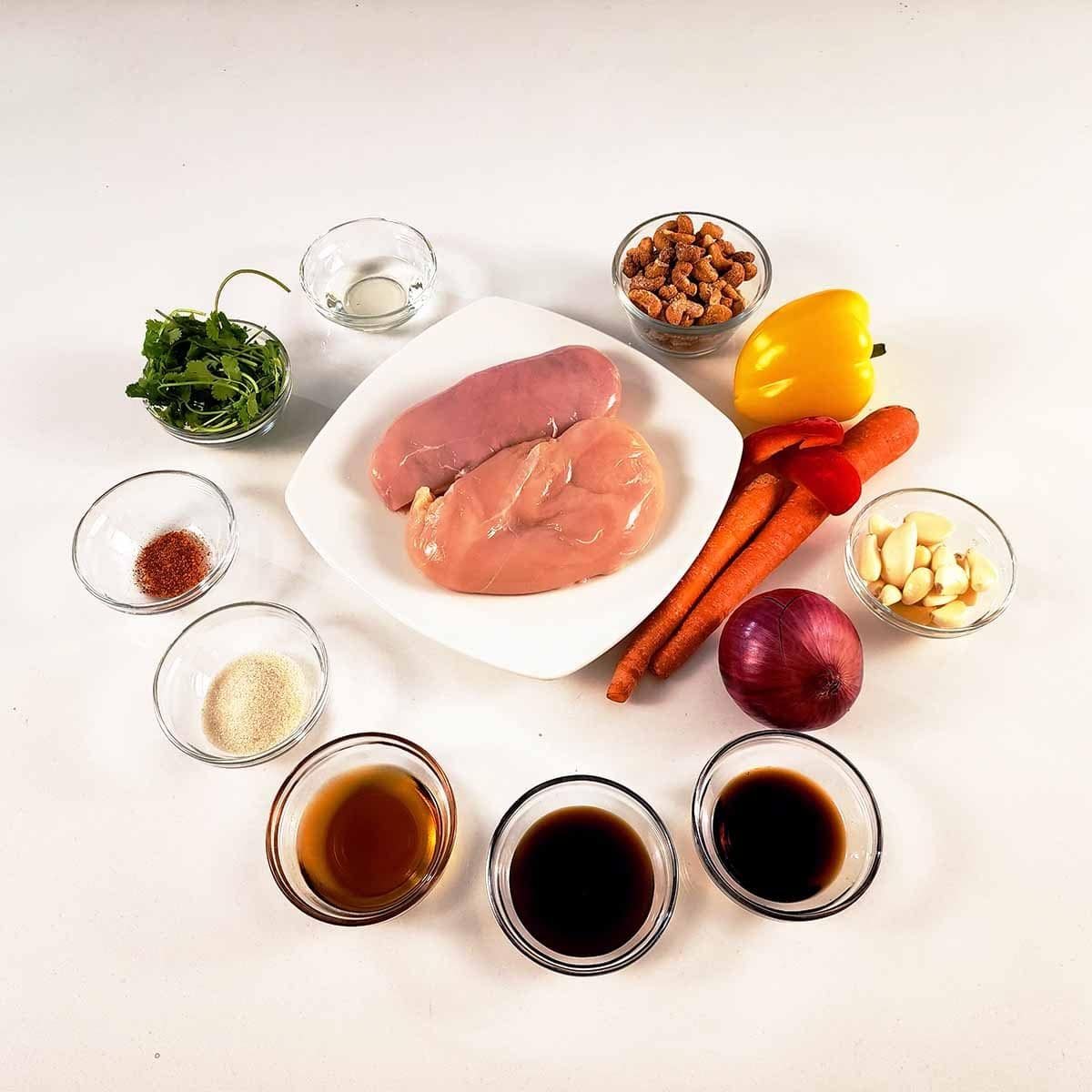
Chicken breast, boneless and skinless, sliced thin. The recipe calls for breast meat sliced thin so it cooks through quickly in the hot wok without drying out. Cut it slightly smaller for even cooking, roughly three-quarter inch pieces. Pull it from the heat the moment the pink is gone.
Roasted cashew nuts, one cup. These go into the dish at the very end, after the heat is off, tossed once to coat lightly in the sauce. They should arrive at the table with the same crunch they had when you opened the bag. A soft cashew is not what this dish is.
Red and yellow bell peppers, one of each, sliced. The bell pepper is not optional. Its sweetness and color are structural to what Thai cashew chicken looks and tastes like. That brightness my mother gave me as a child, that was the bell pepper. Red or yellow. Not green.
One onion, sliced. Three cloves of garlic, minced fine. Not left in large pieces. Large garlic in a very hot wok will burn before the chicken is cooked. Mince it small.
The sauce is built before the wok gets hot: soy sauce, oyster sauce, fish sauce, sugar, and chili flakes, stirred together in a small bowl until the sugar dissolves. Everything in a stir-fry moves fast, and a pre-mixed sauce means you are pouring rather than measuring under pressure.
Two tablespoons of vegetable oil, fresh cilantro leaves for garnish, and steamed jasmine rice alongside.
VISUAL WALK THROUGH
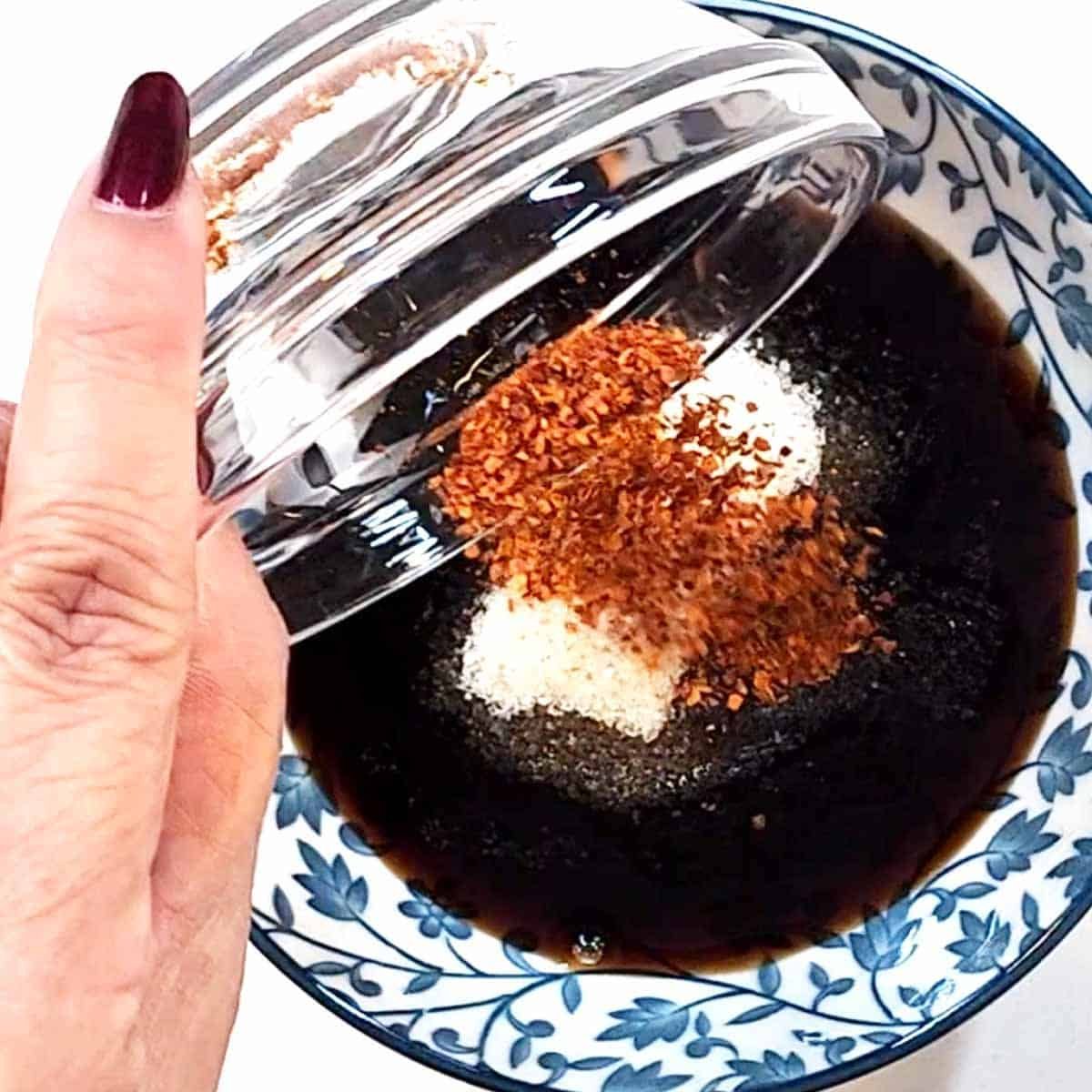
Step 1. Prepare the sauce first.
In a small bowl, combine soy sauce, oyster sauce, fish sauce, sugar, and chili flakes. Stir until well blended and the sugar has dissolved. Set aside. This happens before the wok gets hot because once the stir-frying begins there is no time to measure or combine anything. The sauce goes in as one pour.
Step 2. Stir-fry the garlic, then add the chicken.
Heat vegetable oil in a large wok or pan over medium-high heat. Add the minced garlic and stir until fragrant, about thirty seconds. Add the sliced chicken and stir-fry until cooked through and lightly browned. High heat. Do not stir immediately after the chicken goes in. Let it sit for thirty seconds to develop color rather than steaming. Two to three minutes total.

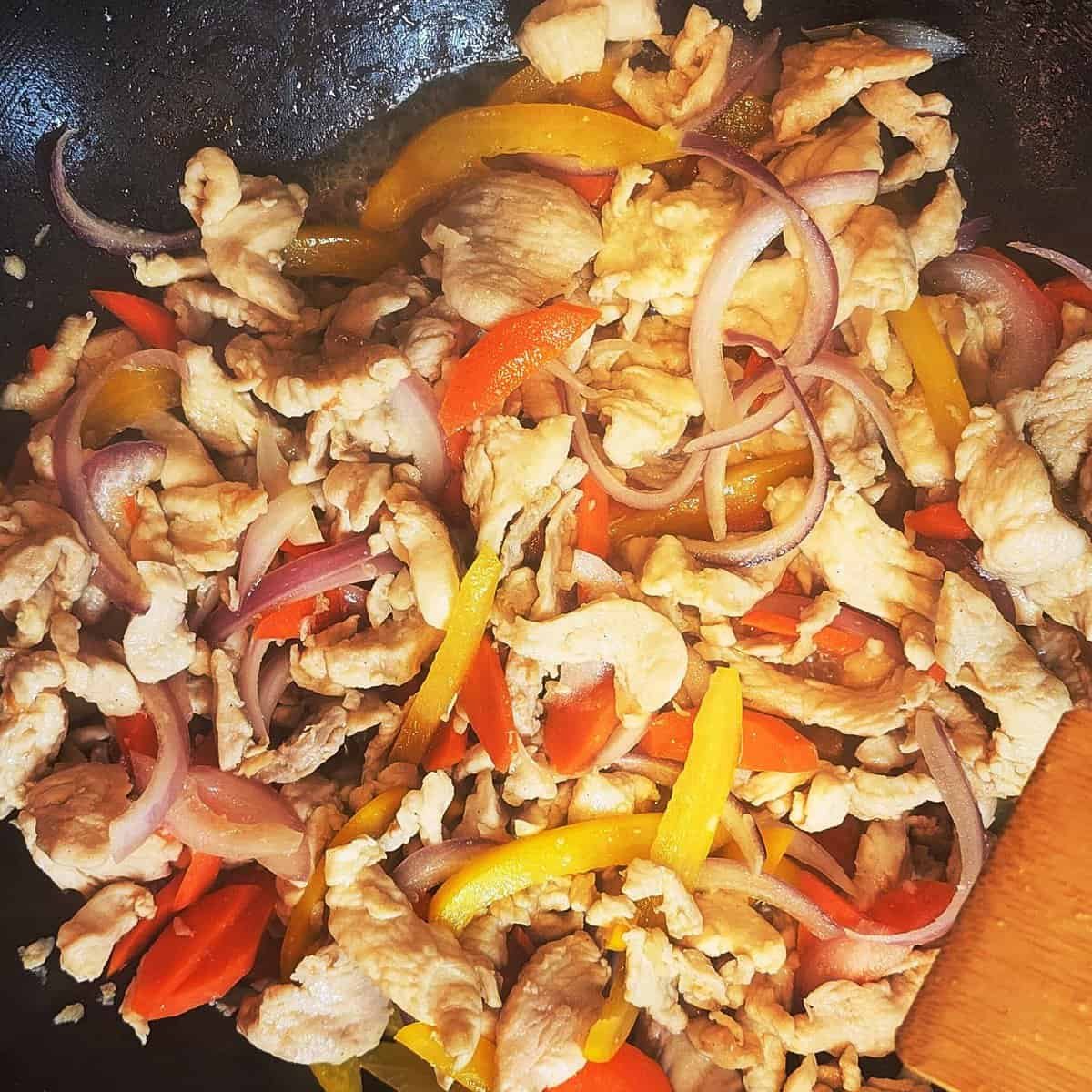
★ Step 3. Add the vegetables, then pour in the sauce. This is What Makes the Difference.
Add the sliced bell peppers and onion to the pan. Continue to stir-fry until the vegetables are tender yet still crisp. Pour the prepared sauce over the chicken and vegetables. Stir well to combine, ensuring everything is coated evenly. The wok should be hot enough that the sauce reduces and coats rather than pools. If it pools and sits, the heat is too low.
Step 4. Finish with cashews and cilantro.
After removing the dish from the heat, add the cashews and fold them through gently. Garnish generously with fresh cilantro leaves. Serve piping hot over steamed jasmine rice. The cashews should arrive at the table with their crunch intact. That crunch is everything.
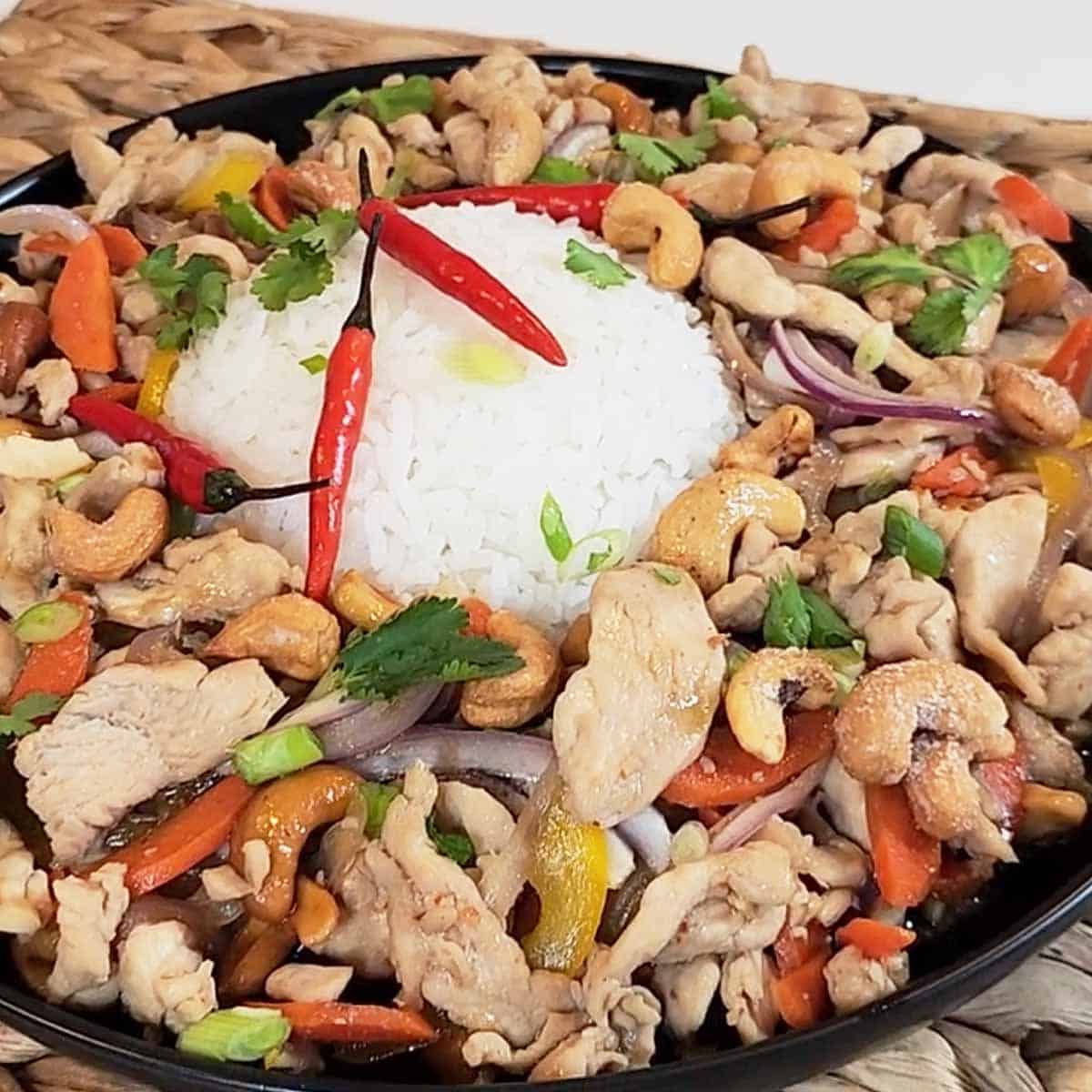

Thai Chicken Cashew (Gai Pad Med Mamuang)
Ingredients
- 1 lb boneless skinless chicken breast, sliced thinly
- 1 cup roasted cashew nuts
- 1 red bell pepper sliced
- 1 yellow bell pepper sliced
- 1 onion sliced
- 3 cloves garlic minced
- 2 tbsp vegetable oil
- 2 tbsp soy sauce
- 1 tbsp oyster sauce
- 1 tbsp fish sauce
- 1 tbsp sugar
- 1 tsp chili flakes adjust to taste
- Fresh cilantro leaves for garnish
Instructions
- Prepare the Sauce: In a small bowl, combine soy sauce, oyster sauce, fish sauce, sugar, and chili flakes, stirring until well blended. Set aside
- Stir-fry Chicken: Heat vegetable oil in a large pan or wok over medium high heat. Add minced garlic and stir until fragrant. Add sliced chicken and stir fry until cooked through and lightly browned.
- Add Vegetables:Add sliced bell peppers and onion to the pan. Continue to stir-fry until vegetables are tender yet crisp.
- Add Sauce:Pour the prepared sauce over the chicken and vegetables. Stir well to combine, ensuring everything is coated evenly with the sauce.
- Finish and Serve:After removing the dish from the heat, add cashews, generously garnish it with fresh cilantro leaves. Serve piping hot over a bed of steamed jasmine rice.
Video
Notes
Nutrition
Let’s Get This Right
Why are my cashews soft instead of crisp in Thai cashew chicken?
They were added too early, or left in the wok too long after the sauce went in. Cashews absorb moisture quickly at heat. They need to be toasted first in a dry pan, set aside completely, and returned to the dish only after the heat is off or nearly off. If they are soft when they arrive at the table, they went in too soon.
Why does my Thai cashew chicken taste flat?
The wok was not hot enough, or the sauce needed more balance. A stir-fry made in a pan that is too cool will steam rather than fry. The sauce: if it tastes flat, it needs more oyster sauce or a touch more sugar. If it tastes one-dimensional, it needs more fish sauce for depth. Always taste the sauce before it goes in and adjust from there.
Can I use chicken breast instead of thighs for Thai cashew chicken?
The recipe calls for chicken breast sliced thin, which works well when cut to the right size and not overcooked. Pull it from the heat the moment the pink is gone. Breast meat will tighten quickly at high heat and become dry if overcooked. Do not let it sit in the wok while you add other ingredients. Remove it, finish the vegetables and sauce, and return it at the end.
What makes Thai cashew chicken different from Chinese cashew chicken?
Thai cashew chicken uses fish sauce and oyster sauce in the sauce base, which gives it a deeper, more complex savory quality than the lighter cornstarch-thickened sauce of Chinese versions. The chili flakes or dried whole chilies are a Thai element. The overall flavor profile is bolder and more complex, with the fish sauce doing work that a Chinese version would not ask it to do.
Can I make Thai cashew chicken without oyster sauce?
Oyster sauce is central to the sauce’s body and sweetness. Without it, the dish will taste thin and predominantly salty from the fish sauce alone. If you cannot use oyster sauce, hoisin sauce is the closest substitute, similar sweetness and body, though slightly different in flavor. Use the same amount. Do not simply omit it without replacing it with something that serves the same function.
Flavor Profile
The smell is sweet before it is anything else. The sauce hits the hot wok and something changes, the oyster sauce caramelizes at the edges, the sugar rounds out, and the whole kitchen fills with something warm and savory and slightly sweet in a way that a child remembers before they have words for any of it.
The colors arrive next. Red bell pepper against the pale gold of the cashews. The dark gloss of the sauce coating everything. It is a bright dish. That brightness is not accidental. It is the bell pepper holding its color through the high heat, the cashews staying gold, the sauce catching the light.
On the plate, the first bite is the sauce and the chicken together, savory and sweet, with the fish sauce underneath providing depth that the oyster sauce alone could not. The heat from the chili flakes arrives second, building slowly. And then the cashew, crisp and nutty and rich, cutting through the sauce with its texture, making the bite complete.
It is a fast dish that tastes like it took longer. My mother knew how it was supposed to taste before she had a name for it. She just knew. The dish was bright to me. It still is.
Susie’s Kitchen Notes
My mother used a wok that had been seasoned over years of use, black, responsive, holding heat in a way that a new pan does not. A well-seasoned wok requires less oil and distributes heat more evenly than any other pan for this kind of cooking. If you are using a stainless steel pan or a nonstick skillet, increase the oil slightly and accept that the high-heat char you get from a proper wok will be approximated rather than achieved. The dish will still be good. It will not be quite the same.
The sugar in the sauce is not optional and is not decorative. It is doing two things: balancing the saltiness of the oyster sauce and fish sauce, and helping the sauce glaze and cling to the chicken and vegetables as it reduces. Without it, the sauce will taste sharp and flat. White sugar works. Palm sugar, if you have it, is rounder and less sharp. Either is correct. The amount is small but it matters.
The garlic should be minced fine, not left in large pieces. Large pieces of garlic in a very hot wok will burn before the chicken is cooked. Burned garlic turns bitter and pulls the dish in the wrong direction. Mince it small, add it briefly, and move it constantly for thirty seconds before the chicken goes in.
My mother made this dish for a toddler who was just beginning to understand food. She made it bright on purpose. The bell pepper, the gold of the cashews, the gloss of the sauce. She was showing me something. I did not know it then. I do now.
Pairing suggestions
Thai cashew chicken belongs over jasmine rice, the grains separate and clean against the glossy sauce. At a fuller table, the Tom Kha Gai brings coconut warmth that sits gently next to the savory-sweet stir-fry without competing. The Pad See Ew is a natural companion, wide noodles and soy sauce alongside the bright, sauced chicken creating contrast without conflict. For a lighter dish on the same table, the Thai cucumber salad cuts through the richness of the cashew chicken with its tartness and crunch. And for the drink alongside a warm, bright, savory stir-fry, the Thai iced tea is cold and sweet and always the right answer. My mother made Thai cashew chicken for a family. It was always a dish that fed more than one person. That is still how it is best eaten.
FAQ
What is Thai cashew chicken (Gai Pad Med Mamuang)?
Thai cashew chicken, Gai Pad Med Mamuang (ไก่ผัดเม็ดมะม่วงหิมพานต์), is a Thai stir-fry of chicken, roasted cashews, dried chilies or chili flakes, bell pepper, and onion in a savory-sweet sauce made from oyster sauce, fish sauce, soy sauce, and sugar. It is cooked fast in a very hot wok and served over jasmine rice. The cashews are added at the very end to keep them crisp.
How do you make Thai cashew chicken step by step?
Mix the sauce from soy sauce, oyster sauce, fish sauce, sugar, and chili flakes in a bowl before cooking. Heat vegetable oil in a wok over medium-high heat. Add minced garlic and stir until fragrant. Add sliced chicken and stir-fry until cooked through and lightly browned. Add bell peppers and onion and continue to stir-fry until tender yet crisp. Add the roasted cashews and pour the sauce over everything. Stir well to combine until everything is evenly coated. Remove from heat, garnish with fresh cilantro, and serve immediately over steamed jasmine rice.
What sauce is used in Thai cashew chicken?
The sauce in Thai cashew chicken is built from oyster sauce, fish sauce, soy sauce, sugar, and chili flakes. The oyster sauce provides the body and savory sweetness. The fish sauce adds salt and depth. The soy sauce rounds the edges. The sugar balances the salt and helps the sauce glaze and cling to the chicken and vegetables as it reduces. The sauce should always be mixed before cooking begins.
Is Thai cashew chicken spicy?
Thai cashew chicken has a moderate, building heat from the chili flakes in the sauce. The heat is present but not dominant. It sits behind the savory-sweet sauce flavor and builds slowly through the meal. The amount of chili flakes determines the heat level. Start with less and adjust to taste in subsequent batches.
How do you keep cashews crispy in Thai cashew chicken?
Add the roasted cashews at the very end, after the sauce is combined with the chicken and vegetables. Toss them through just enough to coat them lightly in the sauce. Cashews absorb moisture quickly at heat. Adding them early or leaving them in the hot wok will soften them within minutes. The add-last method is what keeps them crisp from pan to plate.
What is the difference between Thai cashew chicken and Chinese cashew chicken?
Thai cashew chicken uses fish sauce and oyster sauce in the sauce base, giving it a deeper, more complex savory quality. Chili flakes are a distinctly Thai element. Chinese versions typically use a lighter sauce, often thickened with cornstarch, without fish sauce. The Thai version is bolder and more complex, with the fish sauce contributing a depth that Chinese cashew chicken does not have.
Can I make Thai cashew chicken ahead of time?
The dish can be made ahead but the cashews will soften as it sits. If cooking for a group, prepare everything in advance, mix the sauce, cut the chicken and vegetables, and stir-fry just before serving. The actual cooking takes less than fifteen minutes. If you must store leftovers, keep the cashews separate and add them when reheating. Reheat in a hot wok or pan, not a microwave, to restore some of the original texture.