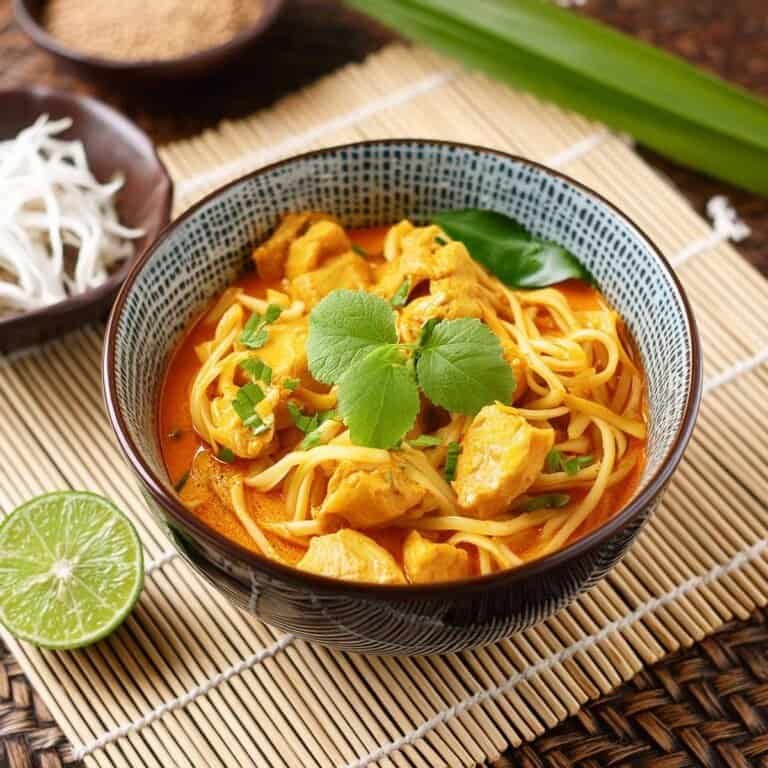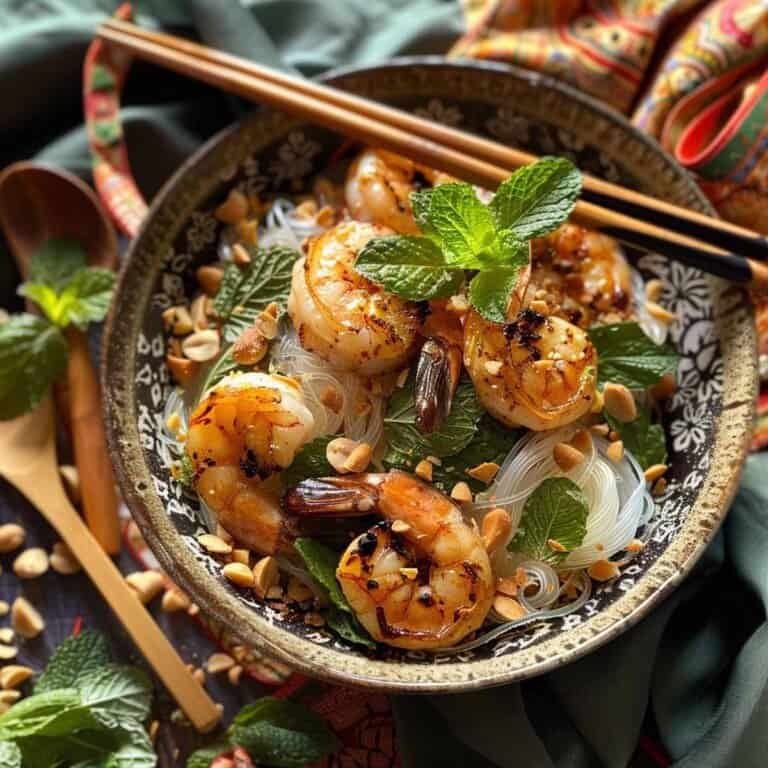
What Is Tom Yum Fried Rice?
Tom Yum fried rice is leftover jasmine rice stir-fried in a hot wok with Tom Yum paste, eggs, shrimp or chicken, tomatoes, mushrooms, fish sauce, and lime juice. It carries all the hot and sour depth of Tom Yum soup in a fast, satisfying fried rice. It is what happens when the paste in the fridge meets the rice on the counter and you realize what they can become.
Note From Susie

Sawasdee Kha, and Hello.
This one I did not grow up with. I want to say that clearly, because most of what is on this site comes from my mother’s hands and her sisters’ hands and my grandmother’s kitchen and the markets where I was taken as a child. This dish comes from my own kitchen, a few years ago, on an ordinary evening.
I had leftover rice. I had Tom Yum paste in the fridge, the store-bought kind, a jar I kept because I use it for soup and for marinades and for adding heat and depth to things that need it. And I looked at both of them and understood what I was looking at.
Twenty minutes later I had dinner.
That is the whole story of this dish. It is not a memory from childhood. It is not my mother’s recipe. It is what I figured out as an adult, that a paste built on lemongrass and galangal and lime and dried chili can do more than make soup. That it can go into a hot wok with cold rice and eggs and shrimp and become something fast and satisfying and completely itself.
I make it regularly now. It has become the thing I reach for when the rice is already made and the evening does not have much time in it. My mother taught me to cook. This is one of the things I taught myself.

What’s In This Page
“This is one thing I taught myself.”
— Her Hands His EyesWhat Is Tom Yum Fried Rice?
Tom Yum fried rice, ข้าวผัดต้มยำ, Khao Pad Tom Yum, is a Thai fried rice built on the flavor of Tom Yum paste rather than the more familiar oyster sauce and soy sauce base of standard Thai fried rice. The paste, made from lemongrass, galangal, kaffir lime leaves, dried chilies, shallots, and shrimp paste, goes into a very hot wok first, where it fries briefly in oil before the cold rice, eggs, and other ingredients are added. The result is a fried rice that carries the distinctive hot and sour quality of Tom Yum soup in a fast, satisfying form.
Tom Yum fried rice is a dish of invention rather than tradition. It does not appear in the oldest Thai cookbooks the way that Tom Yum soup or Pad Thai do. It belongs to the category of Thai cooking that happens when someone with a good pantry and a hot wok figures out what belongs together. Store-bought Tom Yum paste is what makes it practical for home cooks, the paste does the work of building the lemongrass and galangal and kaffir lime flavor that would otherwise require a full set of fresh aromatics and a mortar.
The lime juice goes in at the end, off the heat, the same rule as Tom Yum soup. Heat flattens the sourness. The lime must be fresh. And the rice must be cold and dry, day-old rice that has been refrigerated overnight, the grains separate and ready to take the heat of the wok without clumping.
According to the Oxford Companion to Food, fried rice dishes built on aromatic pastes are among the most versatile preparations in Southeast Asian home cooking, developing wherever pantry staples meet a hot wok and a cook who understands what they can become.
Two things in the fridge. Twenty minutes. Dinner.
What You’ll Need

Cold cooked jasmine rice, two cups, preferably left over from the day before. This is not negotiable. Freshly cooked rice is too wet and too soft for a proper stir-fry. It will clump in the wok and steam rather than fry. Day-old rice refrigerated overnight is what works: the grains are dry, separate, and ready to absorb the paste and the heat of the wok without turning to paste themselves.
Vegetable oil, one tablespoon. Small onion, diced. Garlic, three cloves, minced. Thai bird chilies, one to two, sliced, optional. Lemongrass, one stalk, finely chopped. Kaffir lime leaves, three, thinly sliced. Together these fresh aromatics build the Tom Yum base in the wok.
Shrimp, one cup, peeled and deveined. They cook in two to three minutes in the hot wok.
Cherry tomatoes, one cup, halved. Fish sauce, two tablespoons. Soy sauce, one tablespoon. Sugar, one teaspoon. Ground white pepper, half a teaspoon. Eggs, two, lightly beaten.
Green onions, two, sliced, for the finish. Fresh cilantro for garnish. Lime wedges for serving.
VISUAL WALK THROUGH
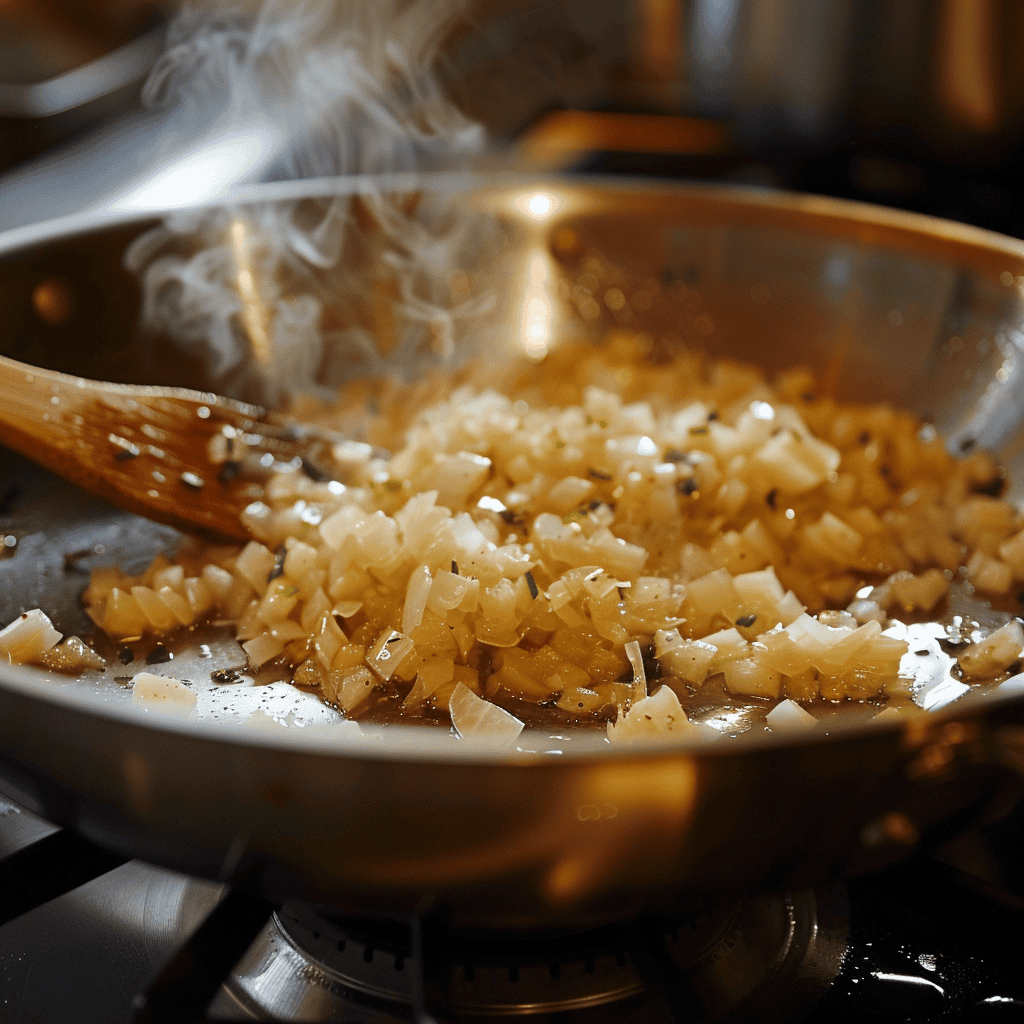
Step 1. Prepare the ingredients.
Heat vegetable oil in a large pan or wok over medium-high heat. Add the diced onion and minced garlic and sauté until translucent and aromatic, about two minutes. Add the bird’s eye chilies, lemongrass, and kaffir lime leaves, stirring frequently for another minute.
Step 2. Cook the shrimp.
Increase the heat to high and add the shrimp to the pan. Stir-fry until they turn pink and opaque, about three to four minutes. Remove the shrimp from the pan.


★ Step 3. Add the cold rice and incorporate the eggs. This is What Makes the Difference.
Add the cold jasmine rice to the pan. Break up any clumps. Stir in the fish sauce, soy sauce, sugar, and ground white pepper. Stir-fry for about three minutes until everything is well combined and heated through. Push the rice mixture to one side of the pan.
Pour the beaten eggs into the empty side and scramble until fully cooked. Once cooked, mix the eggs into the rice. Add the cooked shrimp and tomatoes.
Step 4. Finish with green onions and serve with lime wedges.
Add the sliced green onions and toss everything together. Remove from heat and garnish with fresh cilantro. Serve with lime wedges on the side.


Thai Tom Yum Fried Rice
Ingredients
- 2 cups cooked jasmine rice preferably cold
- 1 tablespoon vegetable oil
- 1 small onion diced
- 3 cloves garlic minced
- 1-2 Thai bird's eye chilies (optional) sliced (adjust to taste)
- 1 stalk lemongrass finely chopped
- 3 kaffir lime leaves thinly sliced
- 1 cup shrimp peeled and deveined
- 1 cup cherry tomatoes halved
- 2 tablespoons fish sauce
- 1 tablespoon soy sauce
- 1 teaspoon sugar
- 1/2 teaspoon ground white pepper
- 2 eggs lightly beaten
- 2 green onions sliced
- Fresh cilantro for garnish
- Lime wedges for serving
Instructions
- Prepare the Ingredients: Heat vegetable oil in a large pan or wok over medium-high heat. Add diced onion and minced garlic, and sauté until they become translucent and aromatic for about 2 minutes. Add the bird's eye chilies, lemongrass, and kaffir lime leaves, stirring frequently for another minute.
- Cook the Shrimp: Increase the heat to high and add the shrimp to the pan. Stir-fry until they turn pink and opaque, about 2-3 minutes. Remove the shrimp from the pan.
- Add the Rice: Add the cold jasmine rice to the pan. Break up any clumps. Stir in the fish sauce, soy sauce, sugar, and ground white pepper. Stir-fry for about 3 minutes until everything is well combined and heated through.
- Incorporate the Eggs: Push the rice mixture to one side of the pan. Pour the beaten eggs into the empty side and scramble until fully cooked. Once cooked, mix the eggs into the rice. Add the cooked shrimp and tomatoes.
- Finish and Serve: Add the sliced green onions and toss everything together. Remove from heat and garnish with fresh cilantro. Serve with lime wedges on the side.
Video
Notes
Nutrition
LET’S GET THIS RIGHT
Why is my Tom Yum fried rice clumping and wet?
The rice was not cold and dry enough before it went into the wok. Freshly cooked rice or rice refrigerated for only a short time still contains too much moisture. Use rice that has been refrigerated overnight. Break up any clumps with your hands before the rice goes into the wok. If the rice is still clumping despite being cold, the wok heat is too low. Turn it up.
How much Tom Yum paste should I use?
This recipe uses fresh aromatics: lemongrass, kaffir lime leaves, garlic, and bird chilies building the Tom Yum flavor directly in the wok. If substituting store-bought Tom Yum paste, one and a half tablespoons per serving is the starting point. Different brands vary in intensity. Taste before it goes in and add more if you want more heat and depth.
Can I make Tom Yum fried rice vegetarian?
Yes. Omit the shrimp and use tofu, pressed and cubed, as a protein substitute. Add extra mushrooms for substance. Use soy sauce in place of fish sauce for seasoning. The flavor will still carry the lemongrass and kaffir lime character clearly.
Why does my Tom Yum fried rice not taste sour enough?
The lime juice was added while the wok was still hot, or not enough was used. Heat applied to fresh lime juice after it goes into the dish flattens its brightness. Serve with lime wedges at the table and squeeze fresh over each bowl just before eating. Use a full lime per serving. If the sourness is faint, the lime went in too early or too little was used.
Can I use freshly cooked rice for Tom Yum fried rice?
Not directly from the pot. If you must use freshly cooked rice, spread it on a baking sheet in a thin layer and let it dry at room temperature for at least two hours, or refrigerate it uncovered for thirty minutes. The goal is dry, separate grains. Any moisture in the rice will produce a wet, clumping result regardless of how hot the wok is.
FLAVOR PROFILE
The aromatics hit the hot oil and the kitchen changes immediately. Lemongrass and kaffir lime and garlic, the smell of Tom Yum compressed into a wok, releasing in under a minute. It is a fast smell and a specific one. You know what is coming before the rice goes in.
Then the rice goes in and the sound changes. A rapid, sustained sizzle as the cold grains hit the hot surface, the moisture evaporating immediately, the rice beginning to fry rather than steam. The egg coats the grains and the color shifts, golden from the aromatics, flecked with the red of the bird chilies.
On the plate the first taste is the lemongrass and kaffir lime, present and complex. Then the shrimp, tender and sweet against the spiced rice. Then the cherry tomato softening slightly. And then, at the table, the lime squeezed over, sharp and bright and arriving cleanly, the sourness that makes the whole dish taste like itself.
It is the flavor of Tom Yum in a form you can eat with a fork. Fast, satisfying, completely itself. What happens when you look at what is already in the kitchen and understand what it can become.
My mother taught me to cook. This is one of the things I taught myself. Some evenings that is the right kind of knowledge.
SUSIE’S KITCHEN NOTES
The wok needs to be genuinely hot before anything goes in. A wok that is insufficiently hot will cause the rice to steam rather than fry. The moisture in the rice cannot evaporate fast enough and the grains clump and stick rather than separating and charring slightly at the edges. Heat the wok over high heat before the oil goes in. The oil should shimmer the moment it hits the surface. If it does not, wait.
The lemongrass should be finely chopped before it goes into the wok. Lemongrass that is roughly sliced or left in large pieces will not soften fully in the brief cooking time and will leave fibrous pieces through the finished rice. Slice the lower white stalk as thin as you can manage, then chop across it. The same applies to the kaffir lime leaves. Strip out the central stem and slice the leaves into very thin ribbons before they go into the oil.
The cherry tomatoes should be halved and the excess liquid squeezed out before they go into the wok. Tomato seeds and excess liquid add moisture to the fried rice that the high heat cannot evaporate fast enough. The rice will soften around the tomato rather than staying separate. Halve them, squeeze gently, then add. A drier tomato adds sweetness and acidity without the water that creates problems.
I make this dish most often on the nights when the week has been long and the rice from two days ago is in the container in the refrigerator. Those are the nights when knowing what two things can become together is the most useful thing a cook can know. My mother knew this about everything. I am still learning it.
PAIRING SUGGESTIONS
Tom Yum fried rice is a complete meal on its own, the rice, the protein, the vegetables, the paste all in one wok. It does not require dishes alongside it the way a curry over rice does. What it pairs well with is a cold drink and an uncomplicated evening. For a fuller table, a Thai omelet alongside is the simplest addition, eggs and fish sauce beside the spiced rice, two fast dishes that together make a meal without either one requiring the other. A bowl of Tom Yum Goong alongside the fried rice is the full expression of the same flavor in two forms, the soup that inspired the paste, and the fried rice that the paste became. For those who want to understand the paste that makes this dish possible, the Nam Prik Pao is the homemade version of the same instinct: a paste built to make other things more. This dish came from my own kitchen, from a quiet evening and two things already in the fridge. It does not need much company. It is already complete.
FAQ
What is Tom Yum fried rice?
Tom Yum fried rice, Khao Pad Tom Yum (ข้าวผัดต้มยำ), is a Thai fried rice made with Tom Yum aromatics as the primary flavoring. Cold leftover jasmine rice is stir-fried in a hot wok with lemongrass, kaffir lime leaves, garlic, bird chilies, eggs, shrimp, cherry tomatoes, fish sauce, and fresh lime juice. It carries the hot, sour, and aromatic quality of Tom Yum soup in a fast fried rice form. It is one of the most practical and satisfying things to make with leftover rice.
How do you make Tom Yum fried rice step by step?
Heat vegetable oil in a wok over medium-high heat. Sauté diced onion and minced garlic for two minutes. Add bird chilies, lemongrass, and kaffir lime leaves and stir one minute. Increase heat to high, add shrimp and cook until pink. Add halved cherry tomatoes and cook briefly. Add cold jasmine rice and mix thoroughly with fish sauce, soy sauce, sugar, and white pepper. Push rice to one side, scramble beaten eggs on the other, then mix eggs into rice. Add green onions and toss together. Remove from heat, garnish with cilantro, and serve with lime wedges at the table.
Why do you need cold rice for Tom Yum fried rice?
Cold, day-old rice has dry, separate grains that fry properly in a hot wok. Freshly cooked rice contains too much moisture. The grains are soft and wet and will clump together in the wok rather than frying separately. The moisture steams the rice rather than allowing it to char slightly at the edges. Refrigerating the rice overnight removes that moisture. Cold and dry rice is the correct starting point for any fried rice.
Can I use store-bought Tom Yum paste instead of fresh aromatics?
Yes. If substituting store-bought Tom Yum paste for the fresh aromatics, use one and a half to two tablespoons, fry it in the oil for thirty seconds until fragrant, then proceed with the recipe from the shrimp step. Maesri and Lobo are reliable brands. The paste is already seasoned so taste before adding extra fish sauce. The fresh version produces a brighter, more aromatic result. The store-bought version is faster and still produces an excellent dish.
Can I make Tom Yum fried rice vegetarian?
Yes. Omit the shrimp and use tofu, pressed and cubed, as a protein substitute. Add extra mushrooms for substance. Use soy sauce in place of fish sauce for seasoning. Omit the fish sauce entirely or substitute tamari. The lemongrass, kaffir lime, and garlic aromatics carry the Tom Yum character without the seafood components.
How do you serve Tom Yum fried rice?
Tom Yum fried rice is served immediately after leaving the wok, plated hot with fresh cilantro on top, cucumber slices and lime wedges on the side. The lime is squeezed at the table, not in the wok, so its sourness stays bright and sharp rather than flattening from the heat. It is a complete meal on its own and does not require dishes alongside, though a Thai omelet or a bowl of Tom Yum soup makes a natural companion.
What is the difference between Tom Yum fried rice and regular Thai fried rice?
Regular Thai fried rice is built on oyster sauce and soy sauce, producing a savory, slightly sweet flavor. Tom Yum fried rice uses lemongrass, kaffir lime leaves, garlic, and bird chilies as the flavoring base, producing a hot and sour aromatic quality that tastes like Tom Yum soup in fried rice form. The technique is the same. The flavor is completely different. Tom Yum fried rice is brighter, more acidic, and more aromatic than standard Thai fried rice.