What Is Larb?
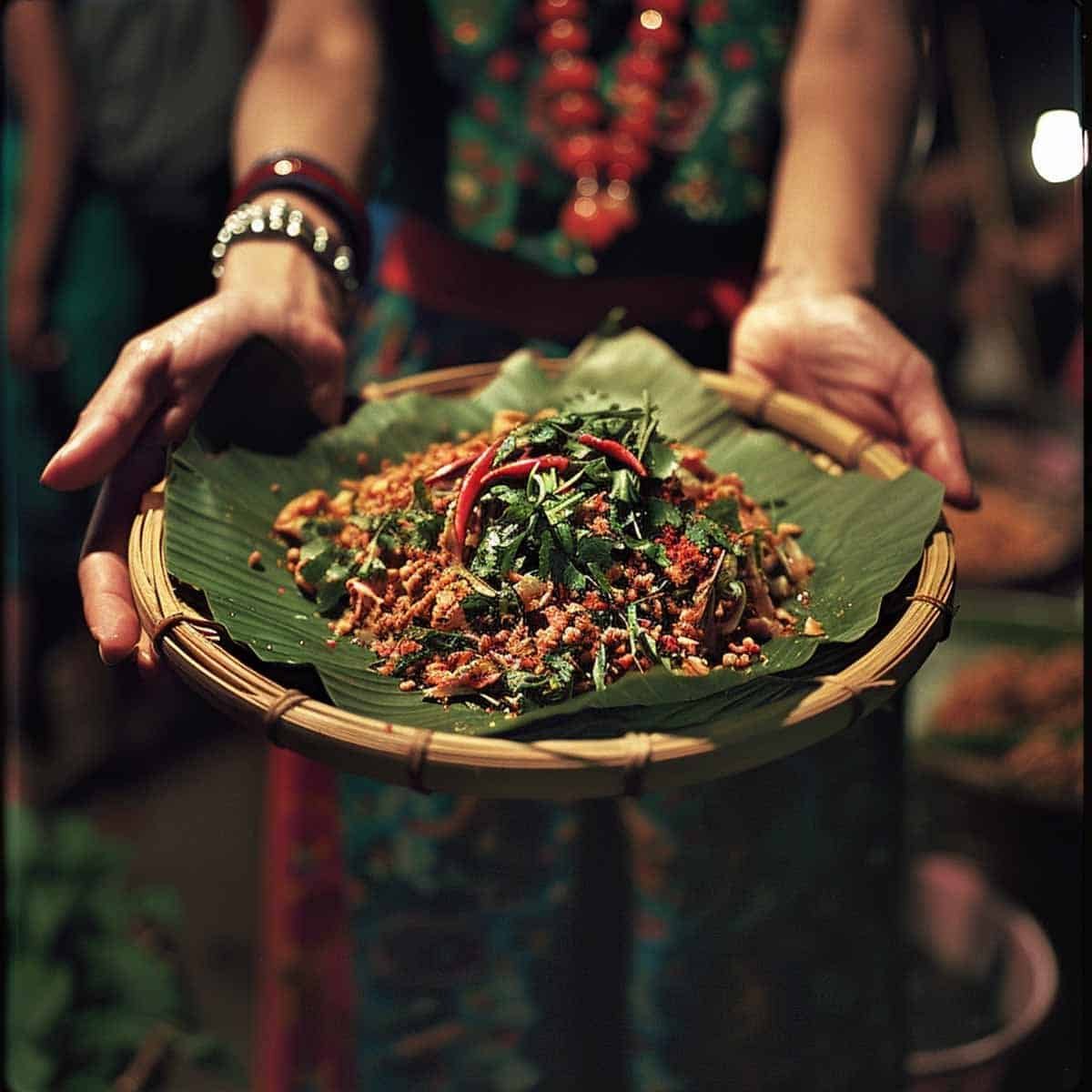
Larb (ลาบ) is a Thai minced meat salad from the Isan region, built on cooked minced meat tossed warm with lime juice, fish sauce, toasted rice powder, dried chili flakes, shallots, and fresh mint. It is sour, savory, herby, and textured. The toasted rice powder is what makes it larb. The lime is what makes it sing. Eaten with sticky rice and lots of raw vegetables alongside.
Note From Susie

Sawasdee Kha, and Hello.
This is still one of my favorite dishes. That is the first thing I want to say.
My mother and her sisters made larb at our house and at my grandmother’s. It was part of our regular meals, not a celebration dish, not something that appeared only on special occasions. It was simply there, part of the table, part of what we ate together. As a small child I picked up what was easy to eat and enjoy, the pieces that made immediate sense. The lime was the first thing I loved. I have always loved things that are sour, and the lime in larb was sharp and bright and present from the very first bite.
Then I came to love the toasted rice powder, that nutty, slightly smoky quality it adds, the texture it brings to the meat, the way it absorbs the lime and fish sauce and becomes part of the dressing rather than a garnish on top. And the saltiness of the fish sauce underneath everything, holding the lime and the herbs together.
We ate it with sticky rice and lots of raw vegetables alongside. Cabbage leaves, long beans, cucumber. A small child picks through what is easy and enjoyable. The lime-dressed meat and the herbs were what made sense to me from the beginning. The vegetables came later, used the way they are supposed to be used, as something to scoop the larb with, something cool and crunchy against the warm, sour, herby meat.
Simple. Flavorful. Always part of the table. Still one of my favorites.

What’s In This Page
“Simple. Flavorful. Always part of the table. Still one of my favorites.”
— Her Hands His EyesWHAT IS LARB?
Larb, ลาบ, is a Thai minced meat salad from the Isan region of northeastern Thailand, considered one of the national dishes of Isan cooking and deeply connected to Lao culinary tradition. The dish is built on minced or finely chopped meat, cooked briefly and then tossed while still warm with a dressing of fresh lime juice, fish sauce, and dried chili flakes, finished with toasted rice powder, shallots, fresh mint, and cilantro. It is served at room temperature or slightly warm, never cold, always with sticky rice and raw vegetables alongside for scooping and eating together.
What makes larb distinct from every other Thai salad is the toasted rice powder, khao khua. Raw jasmine rice is dry-toasted in a pan until golden and nutty, then ground in a mortar to a coarse powder. It is added to the dressed meat and absorbs the lime juice and fish sauce, adding a nutty, slightly smoky texture that is specific to larb and impossible to replicate with any substitute. Without it the dish tastes of the right ingredients in the wrong order. With it the dish becomes unified, the powder holding the dressing and the meat together in a way nothing else does.
Larb can be made with chicken, pork, beef, or duck. Each protein produces a slightly different dish within the same structure. The most common versions are larb gai, chicken larb, and larb moo, pork larb. The technique, the dressing, and the toasted rice powder are the same across all versions. The protein is the variable.
According to the Oxford Companion to Food, larb and its Lao equivalent laab are among the most ancient dishes of the Isan and Lao culinary traditions, eaten at celebrations, at everyday meals, and at every level of Thai society.
The lime is what makes it sing. The toasted rice is what makes it larb.
What You’ll Need
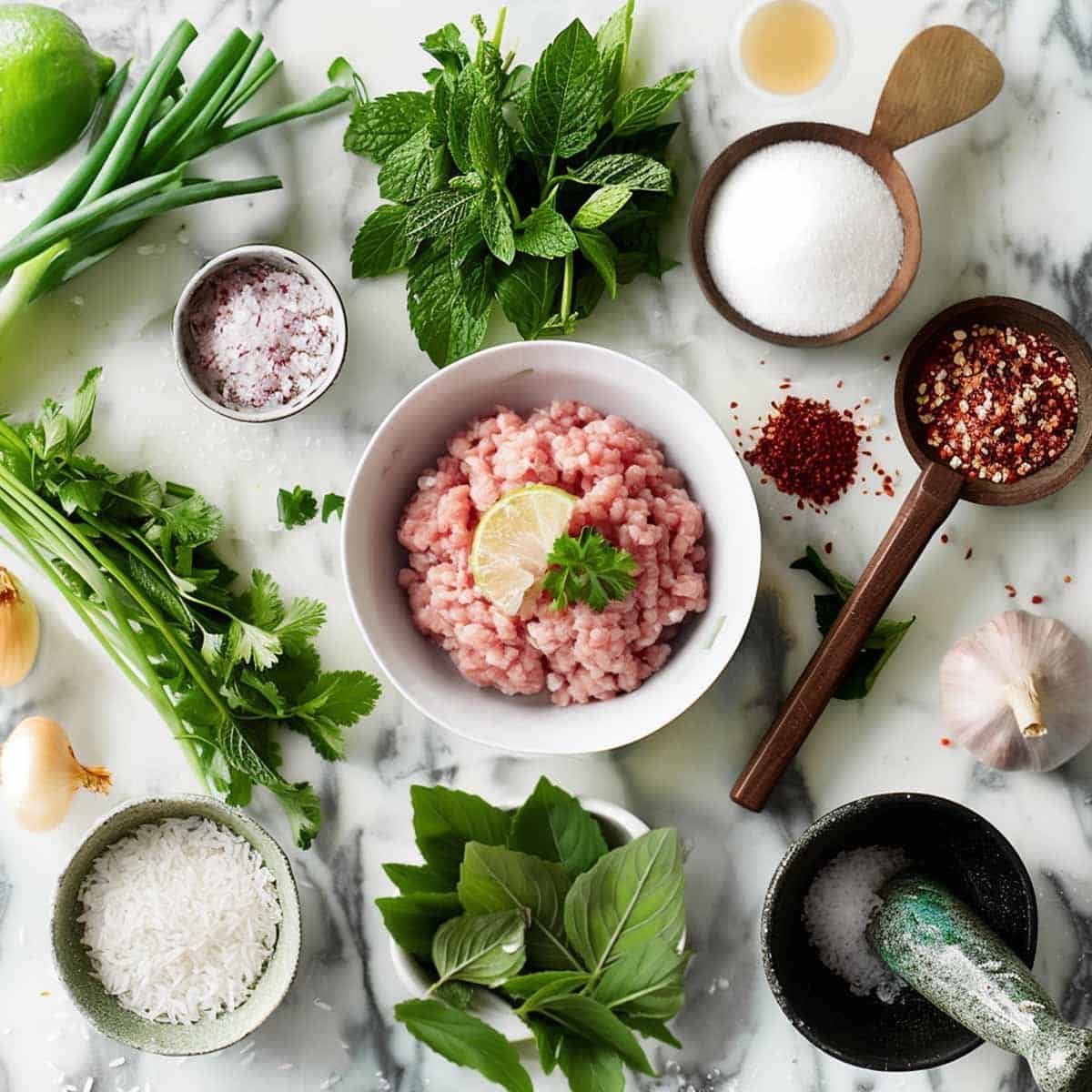
Minced meat, one pound. Ground pork or ground chicken are the most common choices. Ground pork with its natural fat content stays tender through the brief cooking and produces a richer, more satisfying larb. Ground chicken produces something lighter. Both are correct. Whatever you use, it should be cooked just through and no more. Overcooked meat in larb becomes dry and the lime and fish sauce cannot correct it.
Raw jasmine rice, two tablespoons, for the toasted rice powder. This is made first, before anything else begins. Into a dry pan over medium heat, stirring constantly, for eight to ten minutes until the rice is golden and nutty-smelling. Then into the mortar and ground to a coarse powder. Not fine dust. Coarse powder with texture. Set aside. This is the step most home cooks skip because it seems small. It is not small. It is the whole character of the dish.
Fresh lime juice, three tablespoons at minimum. Squeezed just before it goes in, never bottled, never in advance. The lime goes in off the heat, into the warm dressed meat. Its brightness is what makes larb taste alive.
Fish sauce, one and a half tablespoons. Dried chili flakes, one to two teaspoons depending on heat preference. Sugar, a pinch, optional, to balance. Shallots, three, sliced thin. Fresh mint, a full generous handful, leaves only. Cilantro, a handful. Green onion, two stalks, sliced.
For serving alongside: sticky rice, raw vegetables, cabbage leaves torn into pieces, long beans cut into lengths, cucumber sliced. These are not garnish. They are how larb is eaten, the vegetables used to scoop the meat and bring each bite to the mouth. As a small child I picked up what was easy. The raw vegetables are what make the eating complete.
VISUAL WALK THROUGH
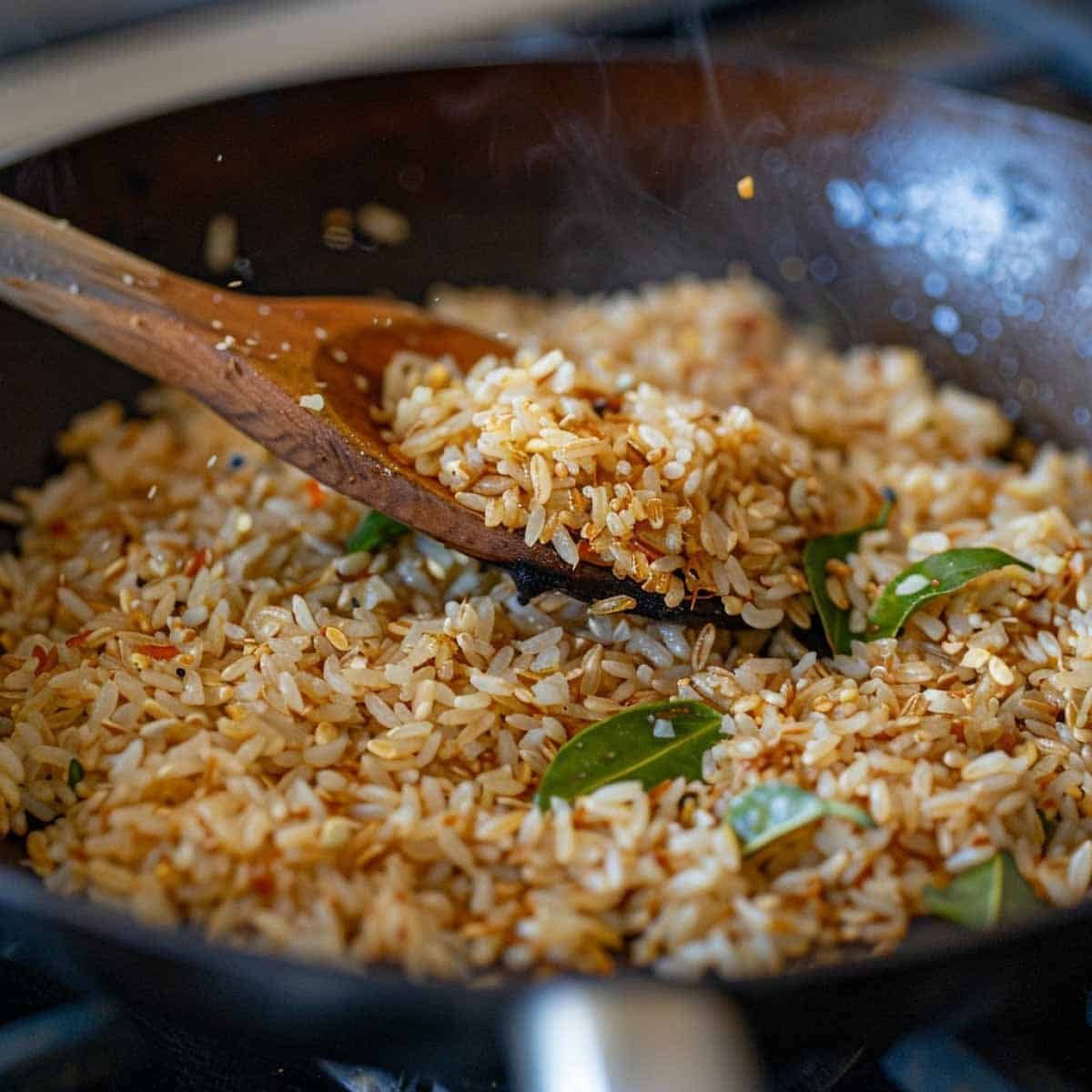
Step 1. Toast the rice first. Before anything else.
Raw jasmine rice into a dry pan over medium heat. Stir constantly. It goes from white to ivory to golden over eight to ten minutes, the smell shifting from raw grain to something nutty and slightly smoky. The moment it is the color of pale caramel and smells toasted, take it off the heat. It continues to color slightly from residual heat. Transfer immediately to the mortar. Let it cool for two minutes. Grind to a coarse powder. Set aside.
Step 2. Cook the meat briefly. Just through and no more.
A wide pan or wok, a small amount of oil or dry, medium-high heat. Add the ground meat and break it apart immediately. Cook until just done, the pink gone and the meat still looking moist and slightly loose. Three to four minutes. The moment it is cooked through, take it off the heat. The meat will dress warm. If it has overcooked and become dry before the dressing goes on, the larb will not be right. Cook it just through.
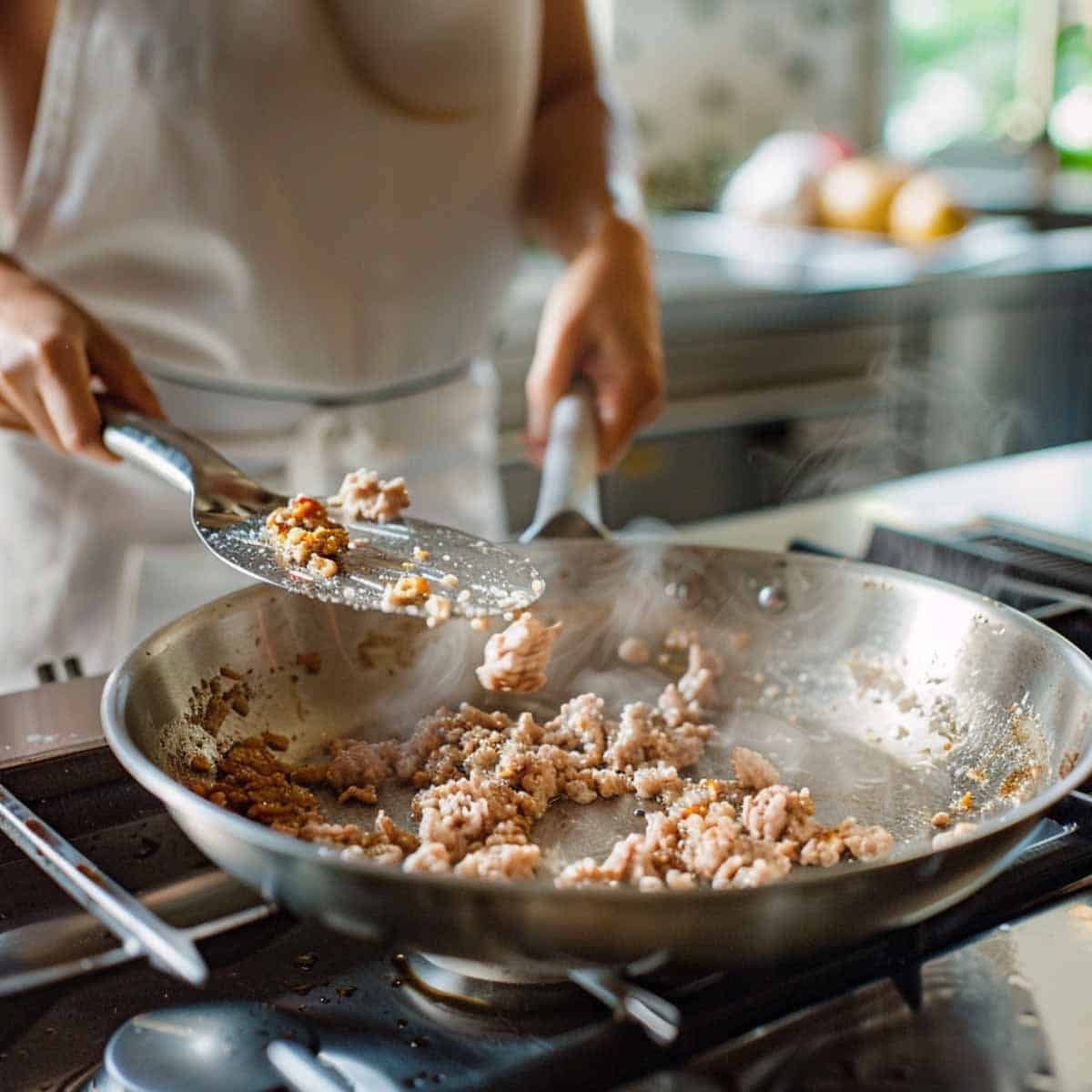
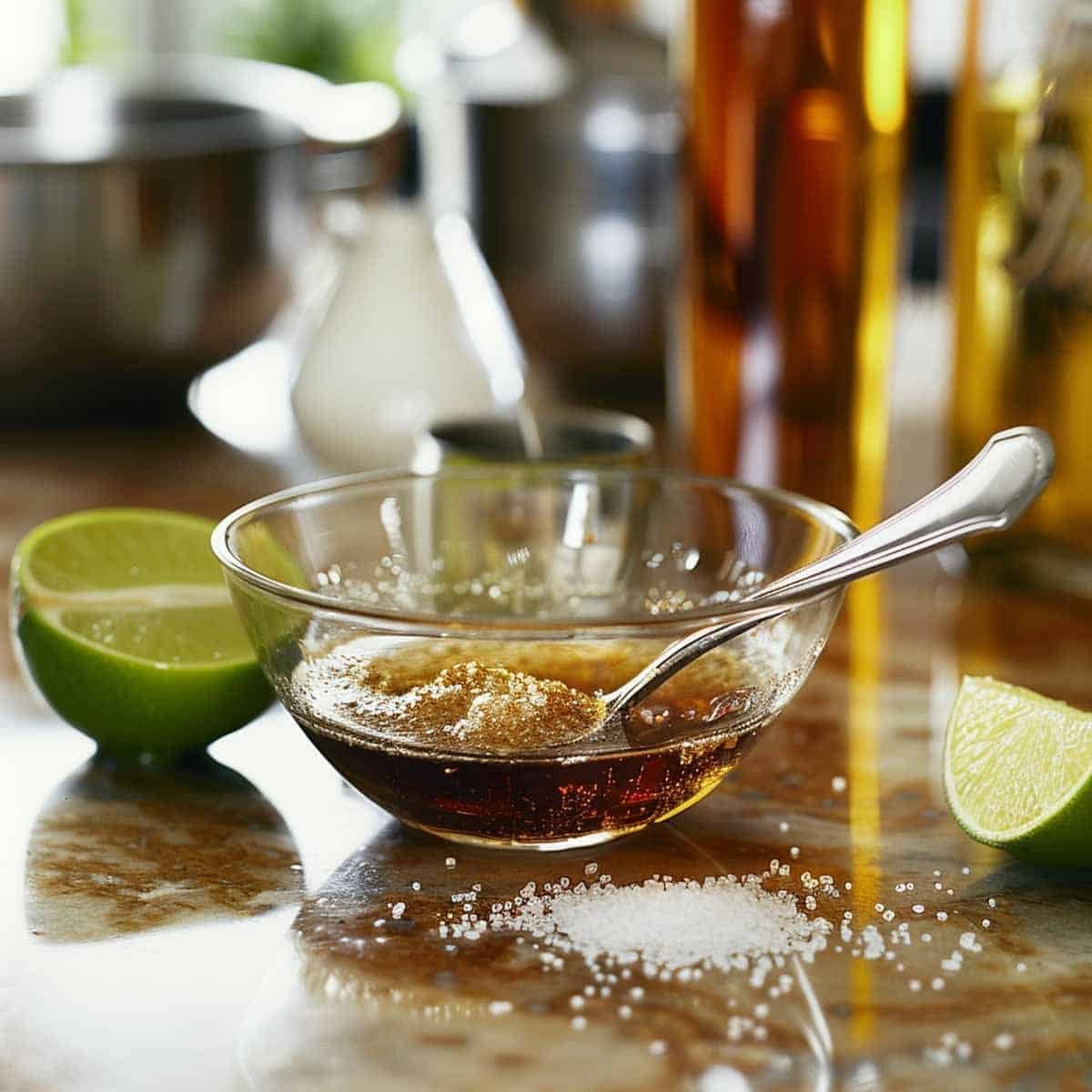
★ Step 3. Dress the warm meat immediately while still off the heat. This is What Makes the Difference.
The meat goes from the pan into a bowl while still warm. The fish sauce goes on first. Then the dried chili flakes. Then the sliced shallots. Toss. Then the lime juice, squeezed fresh directly over the meat. Toss again. The warmth of the meat opens it to the dressing, drawing the lime and fish sauce in rather than letting them sit on the surface. Cold meat dressed with lime and fish sauce produces a salad that sits under its dressing. Warm meat dressed the same way produces larb.
Step 4. Add the toasted rice powder and the herbs.
The toasted rice powder goes in now, a generous tablespoon, tossed through. Then the fresh mint, the cilantro, and the green onion. Fold gently, not aggressively. The herbs should stay whole and fresh rather than bruised. Taste. The larb should be immediately and clearly sour from the lime, salty from the fish sauce, nutty and textured from the rice powder, and herb-forward. If the sourness does not arrive clearly on the first taste, squeeze in more lime. More lime is almost always the right answer with larb.
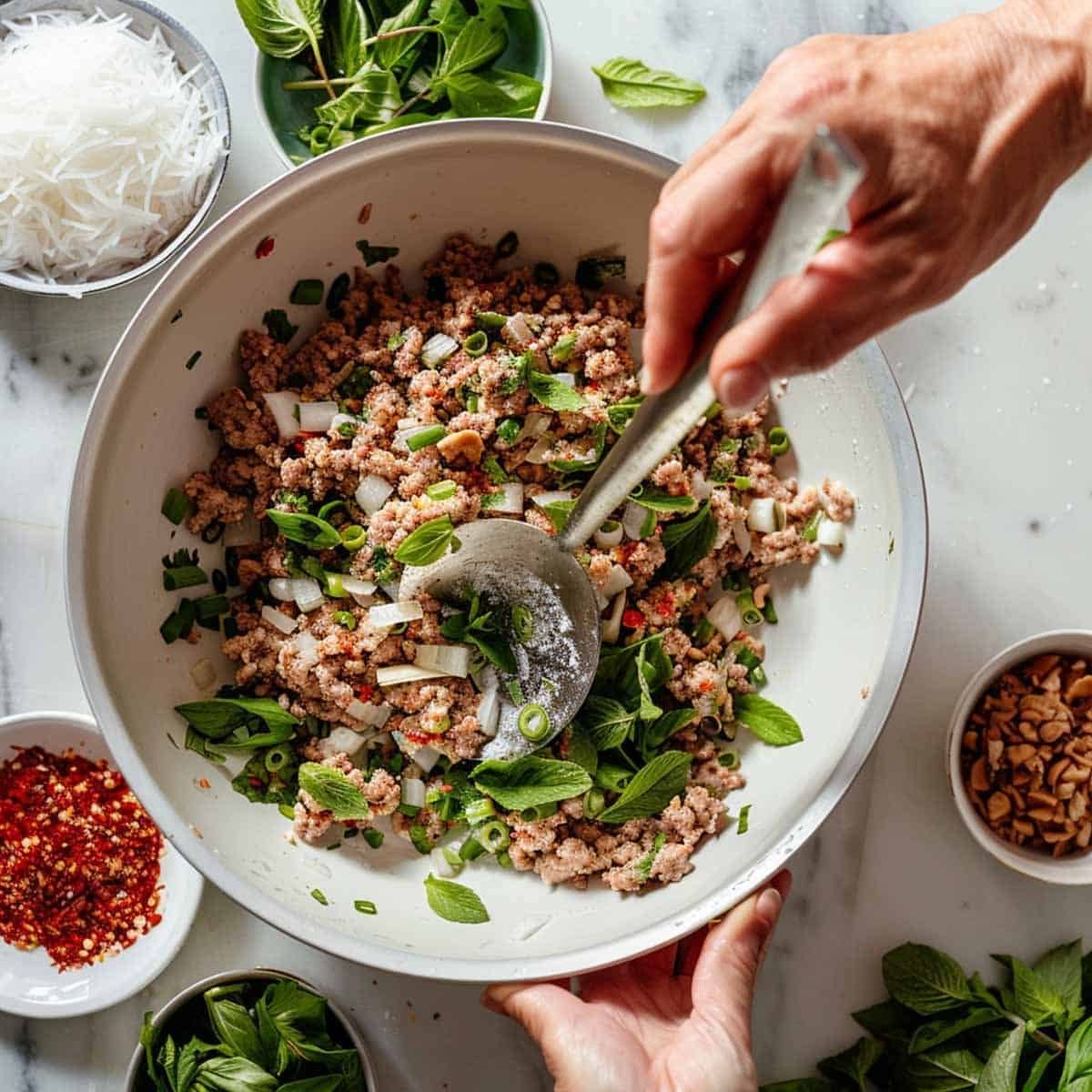
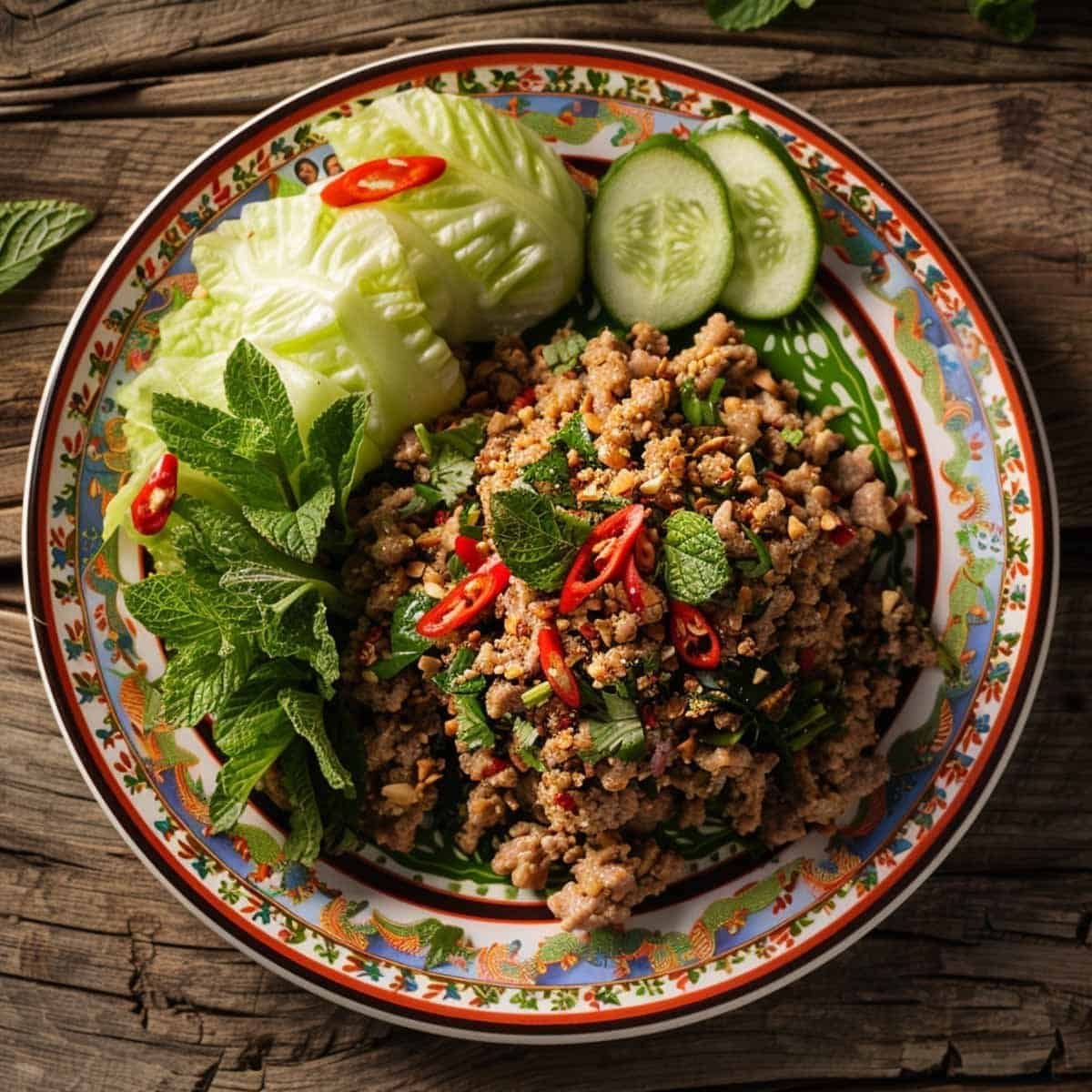
Step 5. Plate and serve immediately at room temperature with sticky rice and raw vegetables.
Larb goes to the table immediately. The herbs wilt and the rice powder softens as it sits. Pile it in a bowl with a few extra mint leaves on top. Sticky rice alongside. Raw vegetables arranged on the plate or in a separate bowl, cabbage leaves, long beans, cucumber, for scooping and eating together with the larb. That is the complete meal. That is how it was always eaten at our table and at my grandmother’s. The lime, the toasted rice, the fresh mint, the cool crunch of the vegetables, the sticky rice in the fingers. Everything together.

Larb ลาบ Thai Spicy Minced Meat Salad
Equipment
- Dry heavy skillet or wok
- spice grinder or mortar and pestle
- Wok or large heavy skillet
- Large mixing bowl
- Sharp knife and cutting board
- Citrus juicer
- Small bowl
- Airtight glass jar for storing any leftover khao khua powder.
- Serving plate wide and shallow. Larb is plated flat and spread out so all the herbs, shallots, and meat are visible. It is a beautiful dish and deserves to be shown properly
- Small plates for accompaniments for the raw cabbage wedges, long beans, and fresh herbs served alongside for scooping
Ingredients
- 1 pound ground pork chicken, or beef (or a combination)
- 3 shallots very thinly sliced
- 3 stalks lemongrass tough outer layers removed, very finely sliced (tender inner part only)
- 4 green onions thinly sliced
- 3 tablespoons fresh lime juice
- 2 tablespoons fish sauce
- 1 teaspoon sugar
- 2 tablespoons khao khua toasted rice powder see recipe
- 1 tablespoon dried chili flakes prik bon
- 1 handful fresh mint leaves
- 1 handful fresh cilantro roughly chopped
- 3 fresh Thai bird’s eye chilies sliced (optional for extra heat)
- 1 splash of water or broth 2 to 3 tbsp
- 4 cabbage wedges to serve
- 4 long beans or green beans raw, to serve
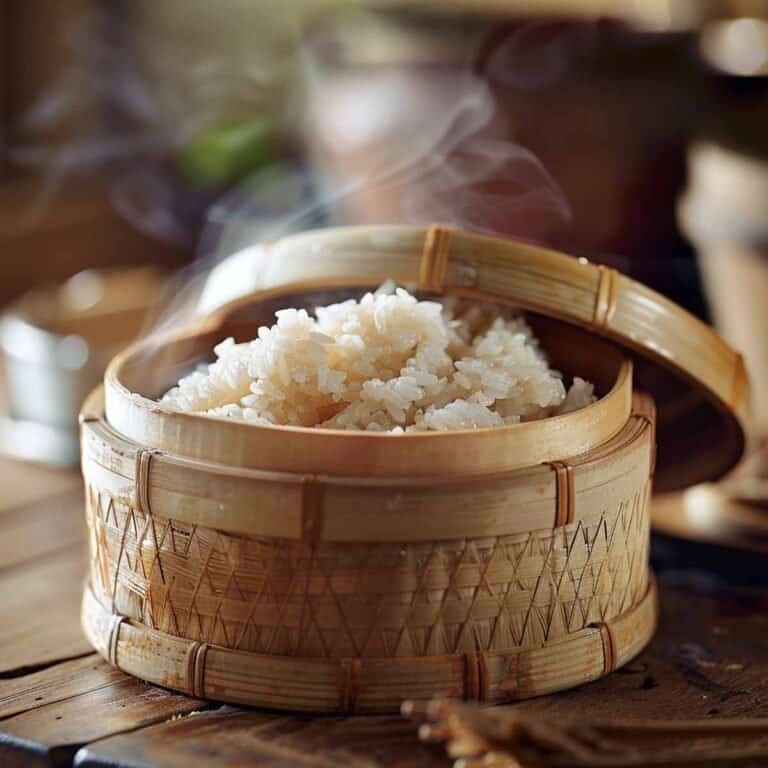
- 2 cups steamed sticky rice or jasmine rice to serve
- 2 fresh limes cut into wedges, to serve
Instructions
- Make the khao khua first: Before anything else, make your khao khua if you have not already. Toast half a cup of raw sticky rice in a dry skillet over medium-low heat, stirring constantly for 8 to 10 minutes until deep golden and nutty. Cool completely then grind to a coarse powder in a spice grinder or mortar. Set aside. This step can be done days ahead and stored in a jar, and once you have it ready, the rest of the recipe moves very quickly.
- Mix the dressing: In a small bowl mix together lime juice, fish sauce, and sugar. Stir until the sugar dissolves. Taste it, it should be bright, sour, salty, and just barely sweet. This is the dressing that brings the whole dish to life so make sure you love it before it goes anywhere near the meat.
- Cook the meat: Heat a wok or large skillet over medium-high heat with just a thin film of oil. Add the minced meat and break it apart as it cooks. Add a small splash of water or broth,2 to 3 tablespoons and keep the meat moving. Cook until just done and still moist, not grey and dry. Remove from heat and let cool for just one minute.
- Dress the warm meat: While the meat is still warm, not hot, not cold, just warm transfer it to a large mixing bowl. Pour the dressing over immediately and toss well. Add the khao khua and dried chili flakes and toss again. The warm meat will absorb the dressing beautifully, this is why the timing matters.
- Add the shallots and herbs: Add the shallots, lemongrass, green onions, and fresh chilies if using. Toss everything together gently but thoroughly. Now add the mint and cilantro. Toss once more. Taste and adjust,more lime for brightness, more fish sauce for salt, more chili flakes for heat. Keep adjusting until every element is exactly right.
- Plate and serve immediately: Transfer to a wide, shallow serving plate and spread it out so all the herbs, meat, and shallots are visible and beautiful. Arrange raw cabbage wedges and long beans alongside for scooping. Serve immediately with sticky rice or jasmine rice and fresh lime wedges. In Thailand larb is eaten with the hands, a ball of sticky rice pressed between the fingers, used to scoop up the meat and herbs. That is the way.
Notes
Nutrition
LET’S GET THIS RIGHT
Why does my larb taste flat despite using the right ingredients?
The toasted rice powder was omitted, or the lime was not enough. The toasted rice powder is the ingredient that unifies larb, holding the dressing and the meat together and adding the nutty depth that makes the dish feel complete. Without it the larb tastes like dressed minced meat. With it the dish becomes itself. And the lime must be generous and fresh and squeezed just before it goes on. Bottled lime juice produces a flat, slightly bitter acidity that is not the same thing.
Why is my larb dry and tough?
The meat was overcooked before the dressing went on. Larb meat should be just cooked through, still slightly moist-looking, before it comes off the heat. Fully dry, crumbly meat cannot be corrected by the dressing. The lime and fish sauce will sit on the surface rather than being absorbed. Cook the meat just through, three to four minutes for ground pork or chicken, and dress it immediately while still warm.
Can I make larb ahead of time?
Larb is best eaten within thirty minutes of being dressed. The herbs wilt, the rice powder softens, and the lime brightness fades as the dish sits. If you must prepare ahead, make the toasted rice powder in advance and keep it in a jar, and cook the meat ahead, but dress the larb just before serving. Add the herbs at the very last moment. The lime juice should always go in just before the dish goes to the table.
What protein works best for larb?
Ground pork is the richest and most satisfying. Its natural fat content keeps it moist through the brief cooking and makes a larb that feels complete and substantial. Ground chicken produces a lighter result and is the most widely recognized version outside Thailand. Ground beef is less common but works well. Duck larb, finely minced, is considered a delicacy in Northern Thailand. Whatever protein is used, the technique, the toasted rice powder, and the lime are the constants.
What vegetables are served with larb?
Raw cabbage leaves torn into pieces, long beans cut into lengths, and cucumber slices are the most traditional accompaniments. They are placed on the table or alongside the larb and used to scoop each bite of the warm meat, providing coolness and crunch against the warm, sour, herby salad. Sticky rice is always present. Together the larb, the sticky rice, and the raw vegetables make the complete meal. None of the three components is optional.
FLAVOR PROFILE
The toasted rice powder is the smell that tells you larb is coming. Nutty and slightly smoky from the pan, specific and warm, different from any other preparation in the Thai kitchen. It is made first and the smell of it fills the space before the meat ever goes on.
The lime arrives first on the tongue. Sharp and bright and present, the sourness that a small child understood before she understood anything else about this dish. The lime is the backbone and it arrives clearly and immediately from the first bite. Then the fish sauce underneath, the salt that holds the lime and the herbs together without announcing itself. Then the dried chili heat, building slowly from behind. Then the toasted rice powder, nutty and slightly textured, absorbing the dressing and adding a dimension that nothing else in the bowl provides.
The fresh mint is the top note, cool and slightly sharp, cutting through the richness of the meat and the saltiness of the fish sauce and the warmth of the chili. The cilantro adds its green depth. The shallots are raw and slightly sharp. All of it together is bright and herby and sour and warm and textured in a way that no single component achieves alone.
The sticky rice alongside absorbs everything. The raw vegetable scoops the meat and provides the crunch that the soft, warm larb needs alongside it. Simple. Flavorful. The lime always first. Still one of my favorites.
SUSIE’S KITCHEN NOTES
The mortar is the right tool for grinding the toasted rice. A blender or spice grinder takes it too fine, to a dust that loses the texture that is the point of the rice powder in larb. The mortar gives you control, grinding in short pulses, stopping to check the texture. When it feels like coarse sand between the fingers, stop. That is the correct texture. Coarse enough to feel in the bite, fine enough to absorb the dressing completely.
Fresh mint in larb should be added at the very last moment, after everything else has been tossed together. Mint bruises and darkens quickly once it is cut and tossed with an acidic dressing. Adding it last and folding gently rather than tossing aggressively keeps it bright green and fresh-tasting rather than wilted and dark by the time the bowl reaches the table.
My mother and her sisters made larb with whatever ground meat was freshest and best on the day. There was no fixed protein. The technique was always the same. The toasted rice powder was always made. The lime was always squeezed fresh. The herbs were always added last. The sticky rice was always alongside. Those constants are what made every version of larb they made taste like larb, regardless of what was in the bowl on a given day.
The raw vegetables served alongside larb are meant to be used throughout the meal, not eaten separately at the end. Each bite of larb is scooped or eaten with a piece of cabbage or a section of long bean or a slice of cucumber. The cool crunch of the raw vegetable and the warm, sour, herby meat together in the same bite is the experience the dish is designed to produce. A small child picks through and finds what is easy. An adult understands that the whole combination is the point.
PAIRING SUGGESTIONS
Larb belongs at the center of a shared table, the bowl everyone reaches into, served with the sticky rice and the raw vegetables that make it complete. The dishes that belong alongside it are the ones that cover a different register of the Thai meal. The Tom Yum Goong shares the lime and the sourness of larb in soup form, both of them sour-forward dishes that together make a table built on brightness and freshness. The Thai chicken satay is the grilled protein dish alongside the dressed meat salad, the smoke and caramelization of the satay against the bright, herby larb, the two of them together covering far more of the table than either one alone. For the sticky rice that is always present whenever larb is on the table. The Yum Woon Sen is the glass noodle salad that shares larb’s lime and fish sauce dressing logic, both of them built on the same sour, herby foundation in different forms. And for those who want to go deeper into the chicken version of this dish specifically, the full Chicken Larb recipe . My mother and her sisters made larb as part of our meals. It was simply always there. That is still the right place for it.
FAQ
What is larb?
Larb (ลาบ) is a Thai minced meat salad from the Isan region of northeastern Thailand. Cooked minced meat, most commonly chicken or pork, is tossed warm with lime juice, fish sauce, dried chili flakes, shallots, fresh mint, cilantro, and toasted rice powder. It is served at room temperature with sticky rice and raw vegetables for scooping alongside. The toasted rice powder is the ingredient that makes it larb. The lime juice is what makes it come alive.
How do you make larb step by step?
Toast raw jasmine rice in a dry pan until golden, then grind in a mortar to a coarse powder and set aside. Cook ground pork or chicken until just done, three to four minutes. Transfer immediately to a bowl while still warm. Add fish sauce, dried chili flakes, and sliced shallots and toss. Squeeze fresh lime juice over the warm meat and toss again. Add the toasted rice powder and fold through. Add fresh mint, cilantro, and green onion and fold gently. Taste and adjust lime. Serve immediately with sticky rice and raw vegetables alongside.
What is toasted rice powder and why is it in larb?
Toasted rice powder, khao khua, is raw jasmine rice dry-toasted in a pan until golden and nutty, then ground in a mortar to a coarse powder. In larb it adds a nutty, slightly smoky texture and absorbs the lime and fish sauce dressing, holding the salad together and giving it a depth that nothing else replicates. It is not optional. Without it the dish tastes of the right ingredients in the wrong relationship. With it the dish becomes unified and complete.
What is the difference between larb and other Thai salads?
Larb is built on minced or finely chopped meat dressed warm with lime juice, fish sauce, and toasted rice powder. Yum Woon Sen is built on glass noodles with shrimp and pork in the same lime and fish sauce dressing. Som Tum is built on shredded green papaya pounded in a mortar. All three use lime juice and fish sauce as the dressing base but produce completely different textures and eating experiences. Larb is the most herb-forward and the most textured from the rice powder.
Is larb spicy?
Larb has a building heat from dried chili flakes that is present but not the dominant flavor. The sourness from the lime arrives first, the heat from the chili builds behind it. The heat level is adjustable, use less dried chili for a milder larb, more for something genuinely hot. In Isan tradition larb is made with significant heat. For those learning the dish or serving it to children, start with half a teaspoon of dried chili flakes and taste before adding more.
What do you eat with larb?
Larb is always eaten with sticky rice and raw vegetables alongside. The sticky rice is pressed into small balls in the fingers and eaten with each bite of larb. The raw vegetables, cabbage leaves, long beans, and cucumber, are used to scoop each bite of the meat, providing coolness and crunch. The three components together make the complete meal. None of them is optional. A small child picks through for the easy pieces. An adult understands that the whole combination is the point.
What meat is used in larb?
Ground chicken and ground pork are the most common. Chicken larb, Larb Gai, is the most widely recognized version. Pork larb, Larb Moo, is richer and more substantial. Beef larb and duck larb also exist, with duck larb considered a delicacy in Northern Thailand. The technique, the toasted rice powder, and the lime and fish sauce dressing are the same across all versions. The protein is the variable. For the chicken version specifically, the full recipe is at /chicken-larb-recipe/.