What Is Tom Yum Goong?
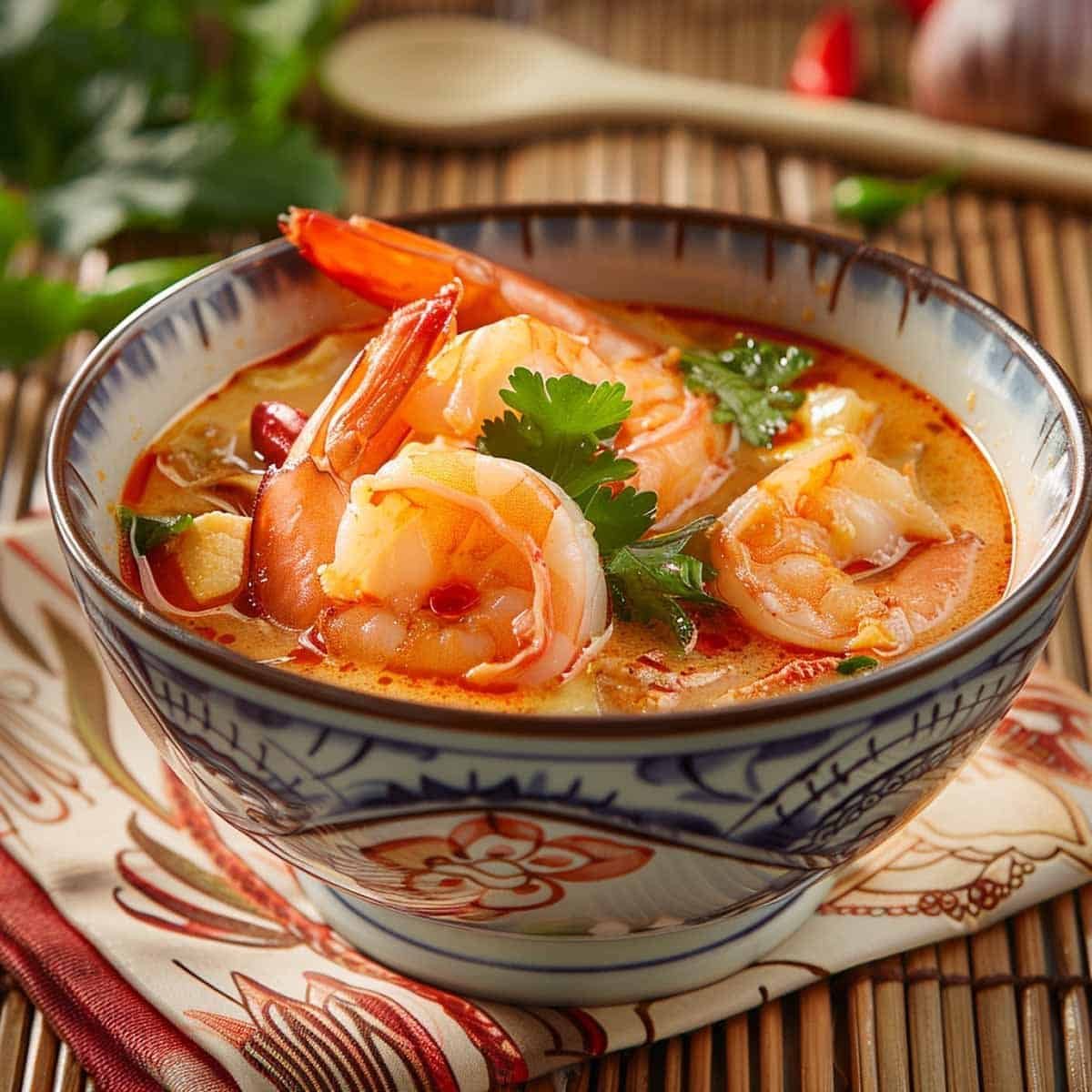
Tom Yum Goong (ต้มยำกุ้ง) is a traditional Thai hot and sour shrimp soup made with lemongrass, galangal, kaffir lime leaves, fresh chilies, fish sauce, and lime juice. This authentic Tom Yum Goong recipe creates a clear, aromatic broth that balances sour, spicy, salty, and citrus flavors, making it one of Thailand’s most famous dishes.
Note From Susie

Sawasdee Kha, and Hello.
I was young when I first had this. Young enough that the full soup was too much, the chilies, the shrimp, the complexity of everything happening at once in the bowl. So, I sipped the broth. That was what I could do. And the broth was enough, because even then the sourness was there.
I have always liked things that were sour. The lime in the Tom Yum Goong found me before anything else did. Sharp and bright and clean against the heat of the chilies, it was the thing I went back to the bowl for, even when I was setting the shrimp aside.
My mother made this in Thailand, and she made it in the United States. Two kitchens, different stoves, different distances from the market where the lemongrass was bought. The soup was the same. The broth smelled the same, lemongrass and galangal and kaffir lime leaves, a smell that is specific and not like anything else in any cuisine I have ever encountered. You know it the moment it hits the air.
As I got older I came to understand the whole bowl. The shrimp, the mushrooms, the way the chilies built slowly under the sourness. It became part of family meals, a bowl at the center of the table, steam rising, everyone reaching.
I still go for the broth first. Some things do not change.

What’s In This Page
“Two kitchens. One broth.”
— Her Hands His EyesWhat Is Tom Yum Goong?
Tom Yum Goong, ต้มยำกุ้ง, is Thailand’s most recognized soup and one of the most distinctive dishes in Southeast Asian cooking. Tom means boiled. Yum means mixed or tossed, the same word used for Thai salads built on lime and fish sauce. Goong means shrimp. Together: a hot and sour shrimp soup, built on a clear broth of lemongrass, galangal, kaffir lime leaves, fresh Thai chilies, fish sauce, and lime juice, with shrimp added at the last moment and cooked gently in the hot broth.
What makes Tom Yum Goong immediately recognizable, even before you taste it, is the smell. Lemongrass and galangal and kaffir lime leaves together produce an aroma that is specific to this soup and to Thai cooking in a way that is not replicated anywhere else. The sourness of the lime juice is the backbone. The heat of the chilies is the building pressure underneath. The fish sauce is the salt that holds it all together without announcing itself.
There are two main versions: Tom Yum Nam Sai, the clear broth version, and Tom Yum Nam Khon, made creamy with evaporated milk or coconut milk. This is the clear broth version, the one my mother made. The one where the broth does all the work and nothing obscures what it is.
Tom Yum is considered a national dish of Thailand, recognized internationally as one of the defining flavors of Thai cuisine, and listed among the world’s most popular soups for decades.
The broth is the whole point. It always has been.
What You’ll Need
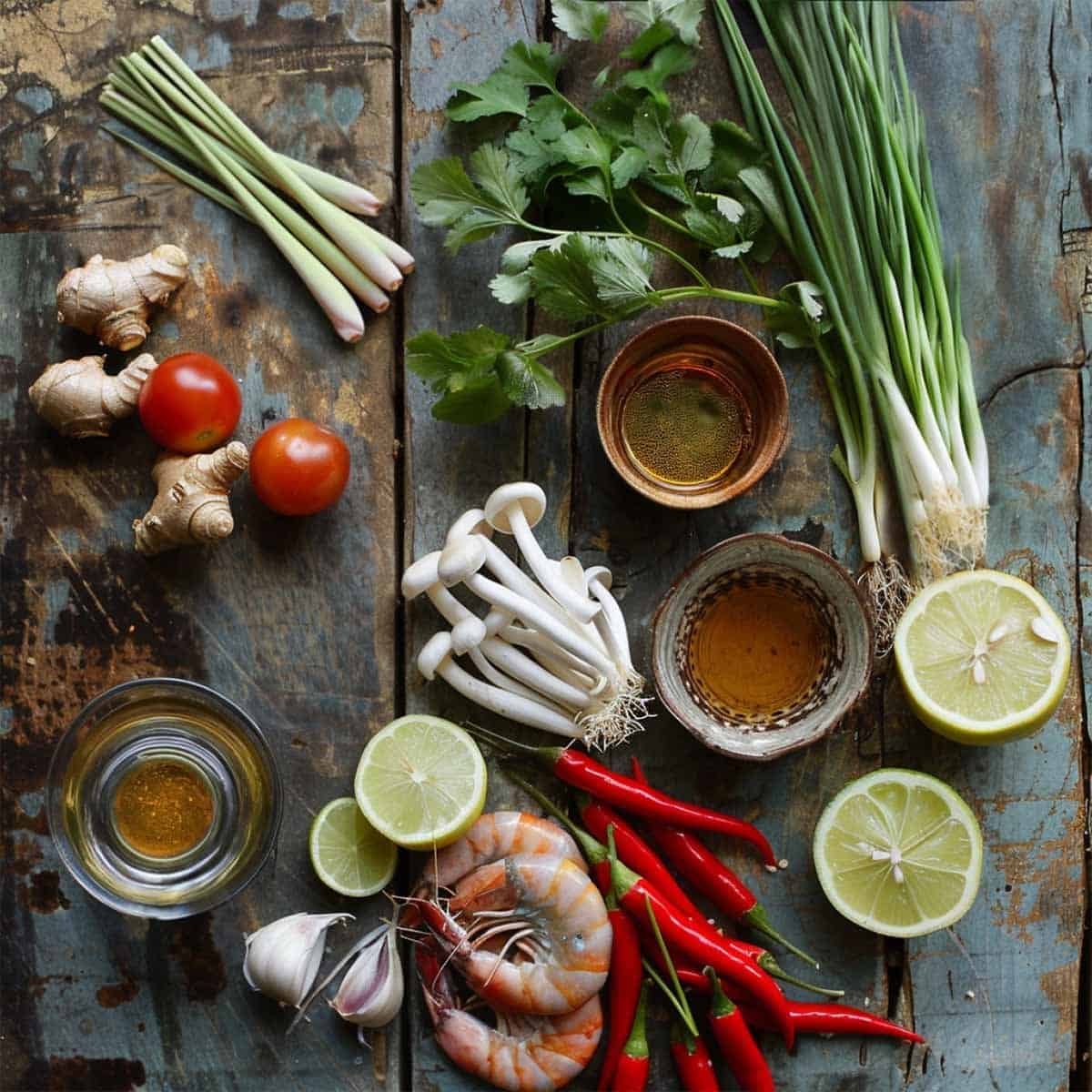
Shrimp, one pound, shell-on. The shells go into the broth first to build depth, then the shrimp themselves are added at the very end. Peel and devein the shrimp, set the flesh aside, and keep the shells for the broth.
Lemongrass, three stalks, cut into one-inch pieces and smashed. Bruising releases the oils. The lemongrass is not eaten. It goes into the broth to do its work.
Kaffir lime leaves, six whole leaves. Torn in half before going into the broth to release their citrus oils. Fresh or frozen, both correct.
Galangal, three slices, about a quarter inch thick. Not ginger. Galangal has a woodier, more resinous sharpness that is part of what makes Tom Yum Goong smell the way it does.
Thai bird chilies, five, smashed. The number determines the heat. Adjust to taste.
Fish sauce, three tablespoons. Lime juice, a quarter cup, squeezed fresh and added only after the heat is off.
Chicken broth or water, four cups, for the base. Mushrooms, one cup sliced. Cherry tomatoes, one cup halved.
Nam Prik Pao, one tablespoon, optional but strongly recommended. It is what gives the broth its depth, its amber color, and its smoky quality. Store-bought works when there is no time to make it from scratch.
Fresh cilantro and green onions for garnish.
VISUAL WALK THROUGH
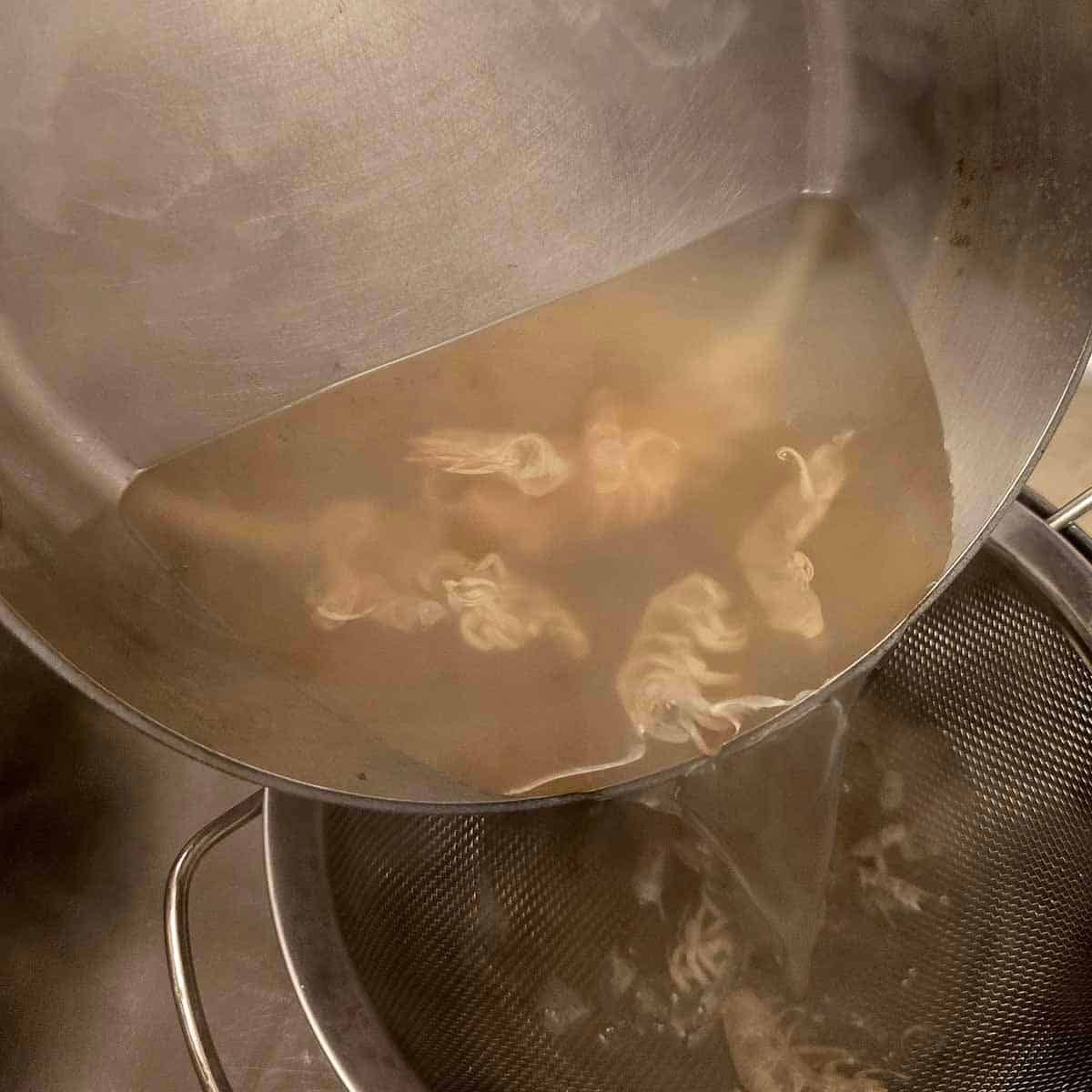
Step 1. Prepare the shrimp. Build the broth from the shells.
Peel and devein the shrimp, keeping the tails intact. Reserve the shells. In a large pot, add the shrimp shells and four cups of chicken broth or water. Bring to a boil, then simmer for about ten minutes to extract flavor from the shells. Strain the broth and discard the shells. This step builds the foundation. The shells give the broth a depth and slight sweetness that the broth alone cannot produce.
Step 2. Infuse the broth with the aromatics.
Return the clear broth to the pot. Add the smashed lemongrass, kaffir lime leaves, galangal, and Thai bird’s eye chilies. Bring the mixture to a boil, then simmer for five minutes to infuse the flavors. The broth is building its foundation. The aromatics stay in the bowl when served. They are not eaten.


★ Step 3. Add the Nam Prik Pao and fish sauce. This is What Makes the Difference.
If using, stir in the Nam Prik Pao chili paste now. The broth will darken immediately, shifting to a deeper amber. Then the fish sauce. Stir well to combine. Taste. The broth should be savory and complex before the shrimp and vegetables go in.
Step 4. Add the mushrooms, tomatoes, and shrimp.
Add the mushrooms and cherry tomatoes to the pot. Simmer for about three minutes. Add the shrimp and cook for three to five minutes, or until the shrimp are pink and cooked through. Watch them carefully.
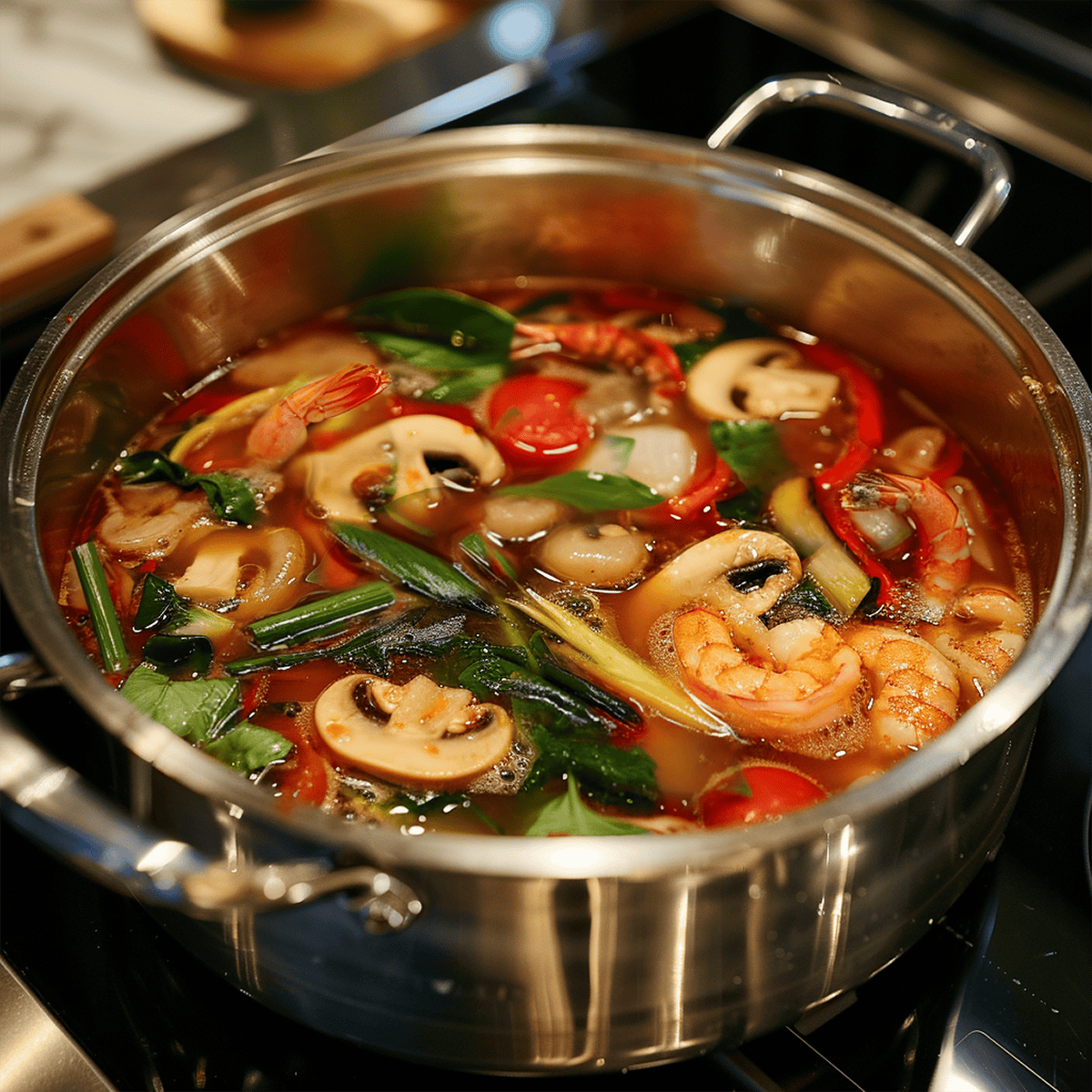
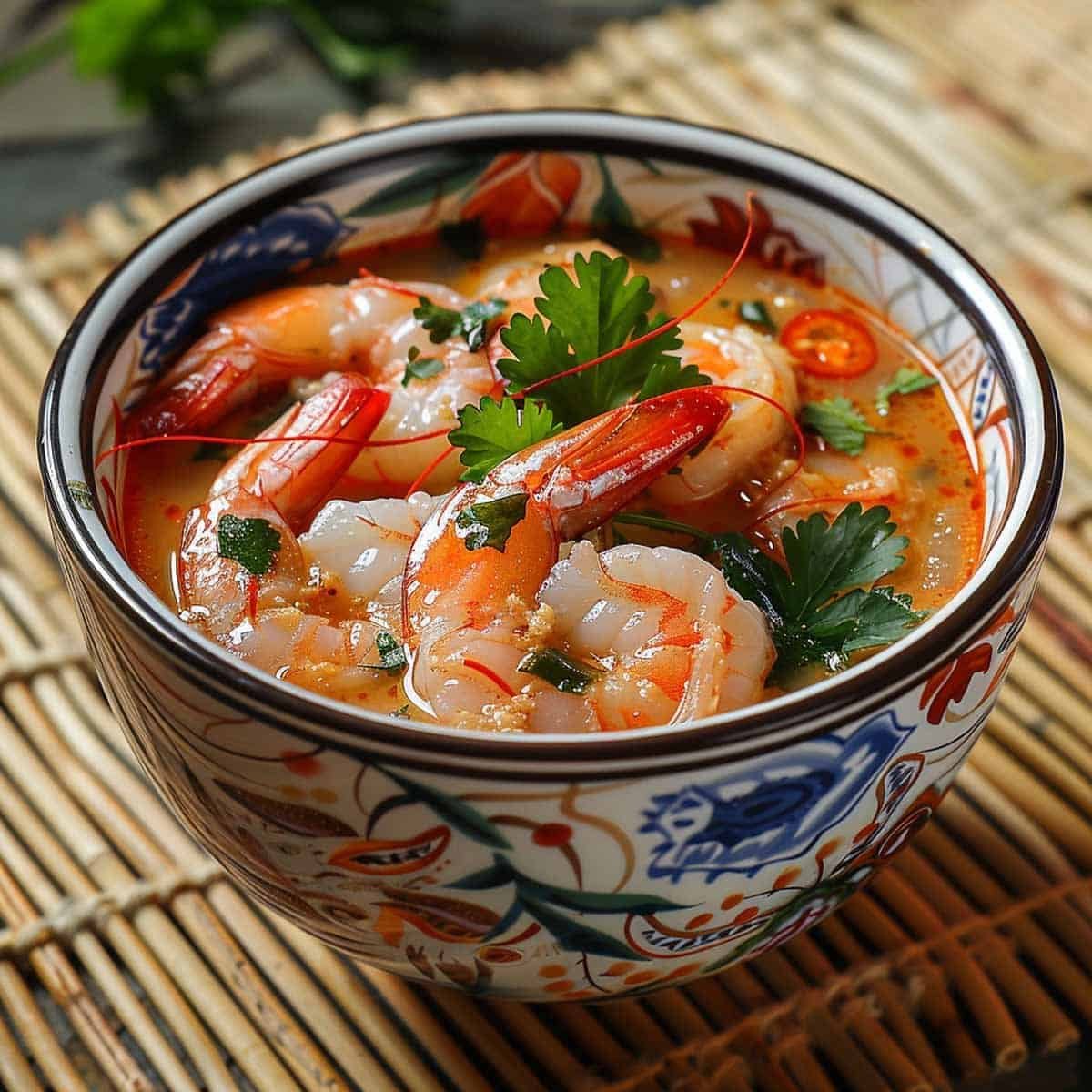
Step 5. Remove from heat. Add lime juice. Garnish and serve.
Remove the pot from the heat. Stir in lime juice. Adjust the seasoning to taste. Garnish with chopped cilantro and green onions.
Tom Yum Goong (Hot and Sour Shrimp Soup)
Ingredients
- 1 pound Shrimp shell on
- 3 stalks Lemongrass cut into 1-inch pieces and smashed
- 6 leaves Kaffir Lime Leaves
- 3 slices Galangal about ¼ inch thick
- 1-2 tbsp Fish Sauce
- 1/4 cup Lime Juice
- 5 Thai bird's eye chili (adjust to taste)
- 1 cup Mushrooms sliced (straw or button mushrooms)
- 1 cup Cherry Tomatoes halved
- 4 cups Chicken Broth or Water
- 1/4 cup Cilantro roughly chopped for garnish
- 2 Green Onions chopped for garnish
- 1 tbsp chili paste
Instructions
- Prepare the Shrimp: Peel and devein the shrimp, keeping the tails intact. Reserve the shells.
- Make the Broth: In a large pot, add the shrimp shells and 4 cups of chicken broth or water. Bring to a boil, then simmer for about 10 minutes to extract flavor from the shells. Strain the broth and discard the shells.
- Infuse the Broth:Return the clear broth to the pot. Add the smashed lemongrass, kaffir lime leaves, galangal, and Thai bird's eye chilies to the broth. Bring the mixture to a boil and then simmer for 5 minutes to infuse the flavors.
- Add the Mushrooms and Tomatoes: Add the mushrooms and cherry tomatoes to the pot. Simmer for about 3 minutes.
- Cook the Shrimp: Add the shrimp to the pot and cook for about 3-5 minutes, or until the shrimp are pink and cooked through.
- Season the Soup: Remove the pot from the heat. Stir in lime juice. Adjust the seasoning to taste.
- Garnish and Serve:Garnish with chopped cilantro and green onions. Serve hot.
Notes
Nutrition
LET’S GET THIS RIGHT
Why does my Tom Yum Goong taste flat and not sour enough?
The lime juice went in too early, or not enough was used, or it was bottled rather than fresh. Lime juice added while the soup is still on the heat loses its brightness. Take the pot off the heat completely before the lime juice goes in. Use fresh lime only. Squeeze it just before it goes into the pot. Taste after adding and adjust. The sourness should be immediate and clear.
Why are my shrimp rubbery in Tom Yum Goong?
They cooked too long. Shrimp in a hot broth need three to five minutes at most. They continue to cook from the residual heat of the broth after the pot is taken off the flame, and they continue to cook further from the heat of the bowl after ladling. Take the pot off the heat the moment the shrimp are just pink through. They will finish in the bowl. Rubbery shrimp cannot be corrected after the fact.
Can I make Tom Yum Goong without Nam Prik Pao?
You can, but the soup will taste significantly thinner and less complex. Nam Prik Pao provides the smoky depth and amber color that makes Tom Yum Goong taste the way it does in Thailand rather than like an approximation of it. If you do not have it, the soup will still be good, but it will not be quite the real thing. Store-bought works when there is no time.
What is the difference between Tom Yum Nam Sai and Tom Yum Nam Khon?
Tom Yum Nam Sai is the clear broth version made here. The broth is transparent, amber-colored, and built entirely on the aromatics, fish sauce, lime, and Nam Prik Pao. Tom Yum Nam Khon is made creamy with the addition of evaporated milk or coconut milk, which softens the sourness and adds richness. Both are correct. The clear version is the more traditional and the more commonly made at home.
Can I use frozen shrimp for Tom Yum Goong?
Yes. Thaw them completely and pat dry before they go into the broth. Shrimp that go into the soup with excess water will dilute the broth slightly. Shell-on shrimp are preferable. If you are using pre-peeled frozen shrimp, add a small amount of extra fish sauce to compensate for the depth the shells would have provided.
FLAVOR PROFILE
The smell reaches you before the bowl does. Lemongrass and galangal and kaffir lime leaves, a specific, layered fragrance that does not exist anywhere else. Sharp at the top from the kaffir lime. Warm and woody underneath from the galangal. The lemongrass running through all of it like a bright thread.
Then the bowl arrives and the steam carries it directly. The broth is amber, the Nam Prik Pao giving it color and depth, the chilies floating at the surface, the lemongrass pieces visible and fragrant.
The first sip is sour. That is the order, always. The lime arrives first and it is sharp and clean and exactly what the sourness should be: bright rather than harsh, present rather than aggressive. Then the heat begins to build from the chilies, not immediately, a few seconds behind the sourness, climbing slowly. Then the fish sauce underneath everything, the salt that holds the whole bowl together without being identifiable as salt.
The shrimp are tender. The mushrooms yield gently. The cherry tomatoes add a soft sweetness that rounds the sharpness at the edges. The aromatics in the bowl, the lemongrass, the galangal, are moved aside, their work done.
I sipped the broth first when I was young because the sourness found me. I still sip it first. Some things do not change, and some things do not need to.
SUSIE’S KITCHEN NOTES
My mother used shell-on shrimp every time. The shells went into the broth with the aromatics and simmered for the full ten minutes. They gave the broth a depth and a slight sweetness that peeled shrimp alone cannot produce. If you are buying shrimp for this recipe, buy them shell-on. Peel them yourself. Put the shells in the broth. This is fifteen seconds of extra work and it makes a measurable difference in what the broth becomes.
The galangal and lemongrass should be bruised before they go into the pot. A firm press with the flat of a knife breaks the cell walls and releases the oils more completely than cutting alone. A piece of lemongrass that has been bruised will contribute more to the broth than one that has only been cut. The same is true of the chilies. Bruise everything. It takes five seconds and it matters.
Kaffir lime leaves that have been frozen work almost as well as fresh. Buy a bag when you find them and keep them in the freezer. They defrost in seconds and can go directly into the broth from frozen. Dried kaffir lime leaves are available but significantly weaker. If dried is all you have, double the quantity and understand that the fragrance will be flatter.
The soup should be served immediately after the lime juice goes in. Tom Yum Goong is not a soup that benefits from sitting. The lime juice brightness fades, the shrimp continue to cook in the hot broth, and the whole balance shifts away from what it should be. Have the bowls warm and ready. Ladle the moment the lime is in. Eat it while the steam is rising.
The table was different. The soup was not.
PAIRING SUGGESTIONS
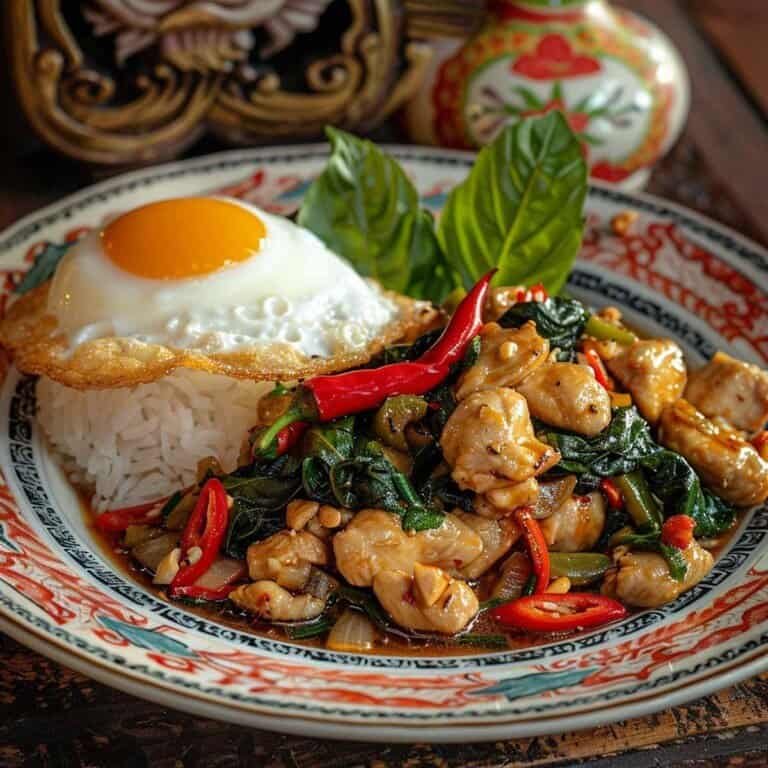
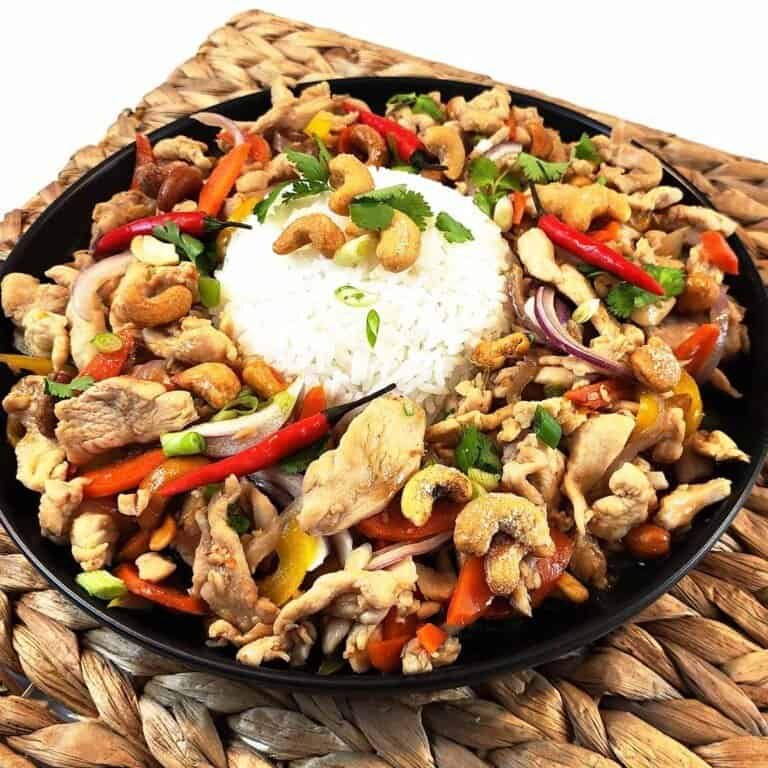
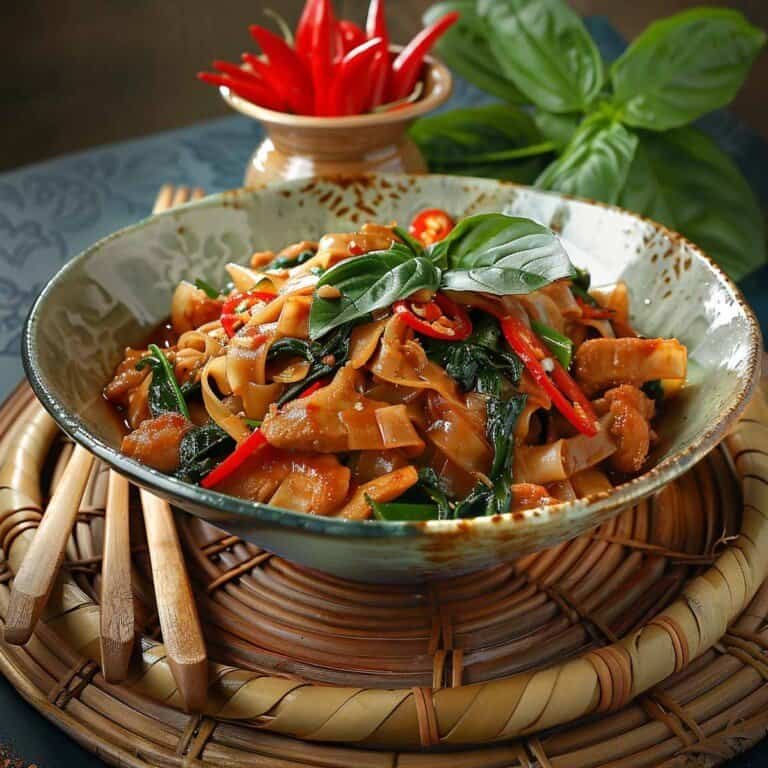
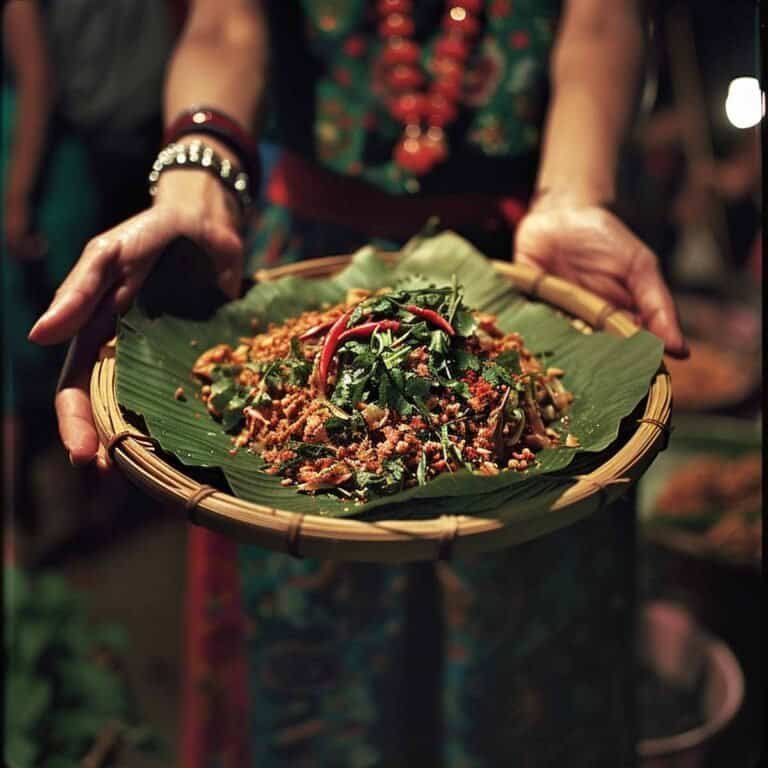
Tom Yum Goong belongs at the center of a Thai family table, a bowl that everyone reaches into, served alongside rice and other dishes rather than as a solo course. Steamed jasmine rice is the natural companion, the clean grains absorbing the sour broth when spooned together. The Thai ginger chicken brings a savory warmth that sits alongside the sourness without competing, two different registers, both built on aromatics, both made for sharing. The chicken larb is the brighter, sharper dish alongside a bowl of Tom Yum Goong, lime against lime, herb against herb, the two together making a meal that covers the full range of Thai flavor. For those who want a second soup at the table, the Tom Kha Gai is its natural counterpart: coconut and lemongrass, creamy where Tom Yum is clear, rich where Tom Yum is sharp. The sticky rice belongs at any Thai table where soup is being served. And for the drink alongside a sour, fragrant, deeply satisfying soup, the Thai iced tea is cold and sweet and always the right answer. My mother put this soup on the table in Thailand and in Maryland. It was always part of something larger. It was never meant to be eaten alone.
FAQ
What is Tom Yum Goong?
Tom Yum Goong, ต้มยำกุ้ง, is Thailand’s most iconic hot and sour shrimp soup. It is built on a clear broth of lemongrass, galangal, kaffir lime leaves, fresh Thai chilies, fish sauce, lime juice, and Nam Prik Pao roasted chili paste, with shrimp and mushrooms added at the end. The broth is sour first, hot second, and deeply fragrant from the aromatics. It is considered a national dish of Thailand and one of the most recognized soups in the world.
How do you make Tom Yum Goong step by step?
Simmer shrimp shells in chicken broth for ten minutes, then strain. Return broth to pot, add lemongrass, kaffir lime leaves, galangal, and Thai chilies and simmer five minutes. Stir in Nam Prik Pao and fish sauce. Add mushrooms and cherry tomatoes and simmer three minutes. Add shrimp and cook three to five minutes until pink and cooked through. Remove from heat. Stir in lime juice, adjust seasoning, garnish with cilantro and green onions, and serve immediately.
What is the difference between Tom Yum Goong and Tom Kha Gai?
Tom Yum Goong is a clear hot and sour shrimp soup, bright, sharp, sour-forward, built on lime juice and aromatics with no dairy or coconut milk. Tom Kha Gai is a coconut milk chicken soup, creamy and rich, with the same lemongrass and galangal aromatics but a completely different base. Tom Yum is the sharper, more acidic soup. Tom Kha is the richer, more mellow one. Both use lemongrass, galangal, and kaffir lime leaves as the aromatic foundation.
Why is lime juice added at the end of Tom Yum Goong?
Lime juice added to a hot soup while still on the heat loses its brightness. The sharp, clean sourness that defines Tom Yum Goong flattens and becomes merely acidic rather than vivid. Adding the lime juice off the heat, just before serving, preserves the sharpness and keeps the soup tasting alive. This is the single most important technique in making Tom Yum Goong correctly. The soup should be taken completely off the heat before the lime goes in.
What does Tom Yum Goong taste like?
Tom Yum Goong tastes sour first. The lime juice arrives immediately and clearly on the palate. Then the heat from the Thai bird chilies builds slowly behind it. Then the savory depth of the fish sauce and Nam Prik Pao underneath everything. The aromatics, lemongrass, galangal, kaffir lime, are present in the fragrance more than the direct flavor. It is a soup that is bright, hot, sour, and deeply fragrant, with tender shrimp and mushrooms in a clear amber broth.
Can I make Tom Yum Goong without galangal?
Ginger is the most common substitute, but the soup will taste different. Ginger has a warmer, more immediately spicy quality without the woody, resinous sharpness of galangal. The soup will still be good, but it will not have the specific fragrance that makes Tom Yum Goong immediately recognizable. Frozen galangal is available at most Asian grocery stores and is a better option than ginger if you can find it.
Is Tom Yum Goong healthy?
Tom Yum Goong is a low-calorie, low-fat soup built on a clear broth, lean shrimp, and fresh aromatics. It contains no dairy, no coconut milk, and no starch thickener. The fish sauce contributes sodium, which is the primary nutritional consideration. The lemongrass, galangal, kaffir lime leaves, and fresh chilies are all whole ingredients. It is widely considered one of the more nutritionally clean soups in Thai cuisine.