What Is Nam Phrik Num?
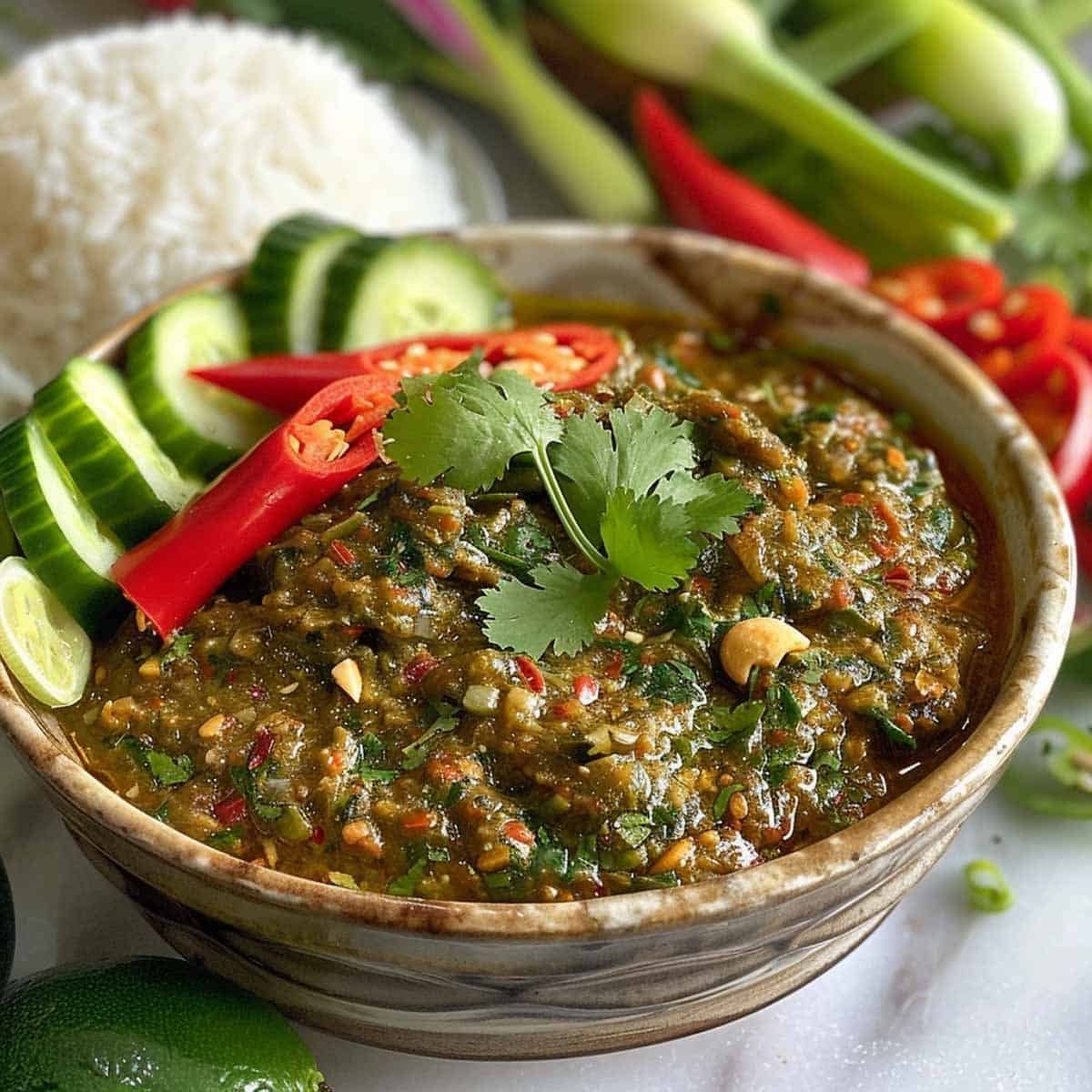
Nam Phrik Num, น้ำพริกหนุ่ม, is a Northern Thai roasted green chili dipping sauce made from charred green chilies, shallots, and garlic pounded together in a mortar with fish sauce and lime juice. The vegetables are charred first, over a flame or charcoal, until blackened and soft. The charring is where the flavor lives. It is served with sticky rice, raw and blanched vegetables, and grilled meats.
Note From Susie

Sawasdee Kha, and Hello.
I was too young to eat this when my mother and aunties made it, and that is completely fine, some things are worth waiting for.
What I remember is the smell. My mother and her sisters would make Nam Phrik Num at my grandmother’s house, charring the green chilies and shallots and garlic over the charcoal grill until the skins blistered and blackened and the smoke rose up and carried that deep, slightly sweet, smoky aroma across the whole yard. Even as a small child who was not yet ready for the sauce itself, I noticed that smell. I knew something good was happening. I just was not ready to join in yet.
Growing up changes that. The heat, the smokiness, the depth of a charred green chili, these are flavors that arrive when you are ready for them, and when they arrived for me, I understood immediately what my mother had always known. This sauce does not announce itself. It sits quietly at the center of the table and makes everything around it better. Dipped into with sticky rice, eaten alongside grilled pork, served with fresh vegetables, it complements whatever it is served with, completely and without effort.
I love this sauce now. I love what it does to a table and to a meal. Make it, put it in the center, and watch the same thing happen at your table that happened at my grandmother’s. Everything becomes a little more itself.

What’s In This Page
“As an adult I finally tasted it and understood completely.”
— Her Hands His EyesWhat Is Nam Phrik Num?
Nam Phrik Num, น้ำพริกหนุ่ม, is a Northern Thai roasted green chili dipping sauce and one of the most important condiments in Northern Thai cooking. The name translates as young chili sauce, num meaning young or fresh, referring to the green chilies used before they ripen to red. The vegetables, long green chilies, shallots, and garlic, are charred directly over a flame or charcoal grill until their skins blacken and blister and the flesh inside becomes soft and smoky. They are then pounded together in a mortar with fish sauce and lime juice until a rough, chunky paste forms.
What makes Nam Phrik Num distinct from other Thai chili pastes and dipping sauces is the charring. This is not a raw sauce and it is not a fried sauce. It is a charred sauce, the vegetables taken to the point of blackening before any pounding begins. The char produces a deep, slightly sweet smokiness that is the defining flavor of the sauce, and that smokiness is what allows it to complement rather than compete with whatever it is served alongside.
Nam Phrik Num is a centerpiece of Northern Thai cuisine, served with sticky rice, raw and blanched vegetables, and grilled meats. It is considered one of the dishes most specific to the North, distinct from the chili pastes of central and southern Thailand in its use of fresh green chilies and its charring technique. According to the Oxford Companion to Food, Northern Thai cuisine reflects centuries of influence from neighboring Myanmar and Yunnan, with fermented and roasted condiments central to the regional table.
The smoky smell of the vegetables charring. That is where the flavor lives.
What You’ll Need
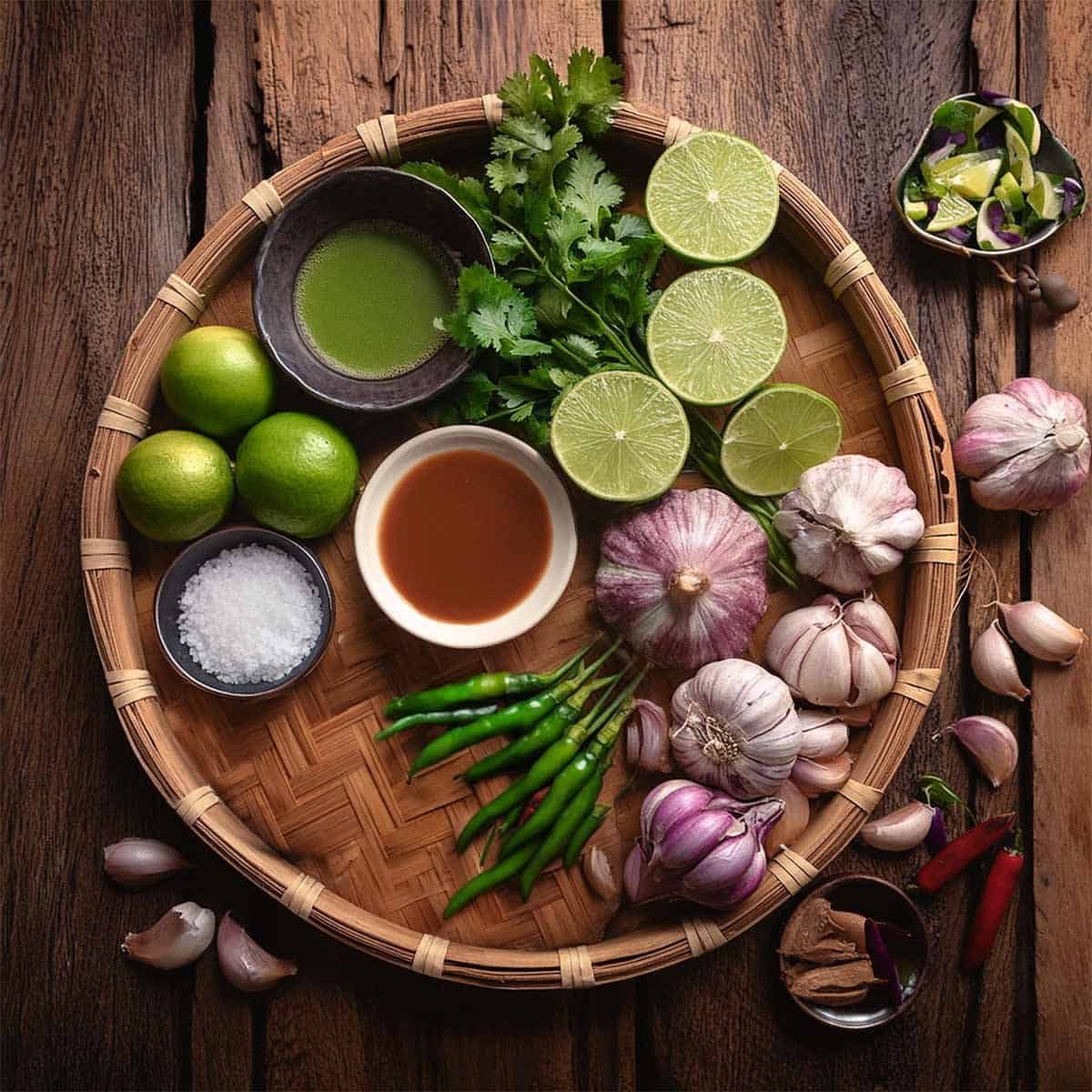
Green chilies, ten, preferably Thai green chilies. Long mild green chilies are the correct variety, providing body, green color, and slight sweetness. Leave the skins on for the charring stage. If more heat is wanted, add two to three Thai bird chilies alongside.
Garlic, one head, unpeeled. The whole head goes over the flame or charcoal, the outside charring while the cloves inside soften and sweeten. Remove the charred skin before pounding.
Shallots, five, left whole with their skins on for the charring stage. The skins protect the flesh while the outside blackens. Remove the charred skins before pounding.
Fish sauce, one tablespoon, added after pounding. Lime juice, one tablespoon, for brightness. Fresh cilantro, a quarter cup, chopped, stirred in after seasoning. Salt to taste.
A charcoal grill, gas burner, or oven broiler for charring. A mortar and pestle. The sauce should be rough and chunky, not smooth. The mortar gives you control over the texture in a way a food processor cannot.
VISUAL WALK THROUGH
Step 1. Roast the vegetables.
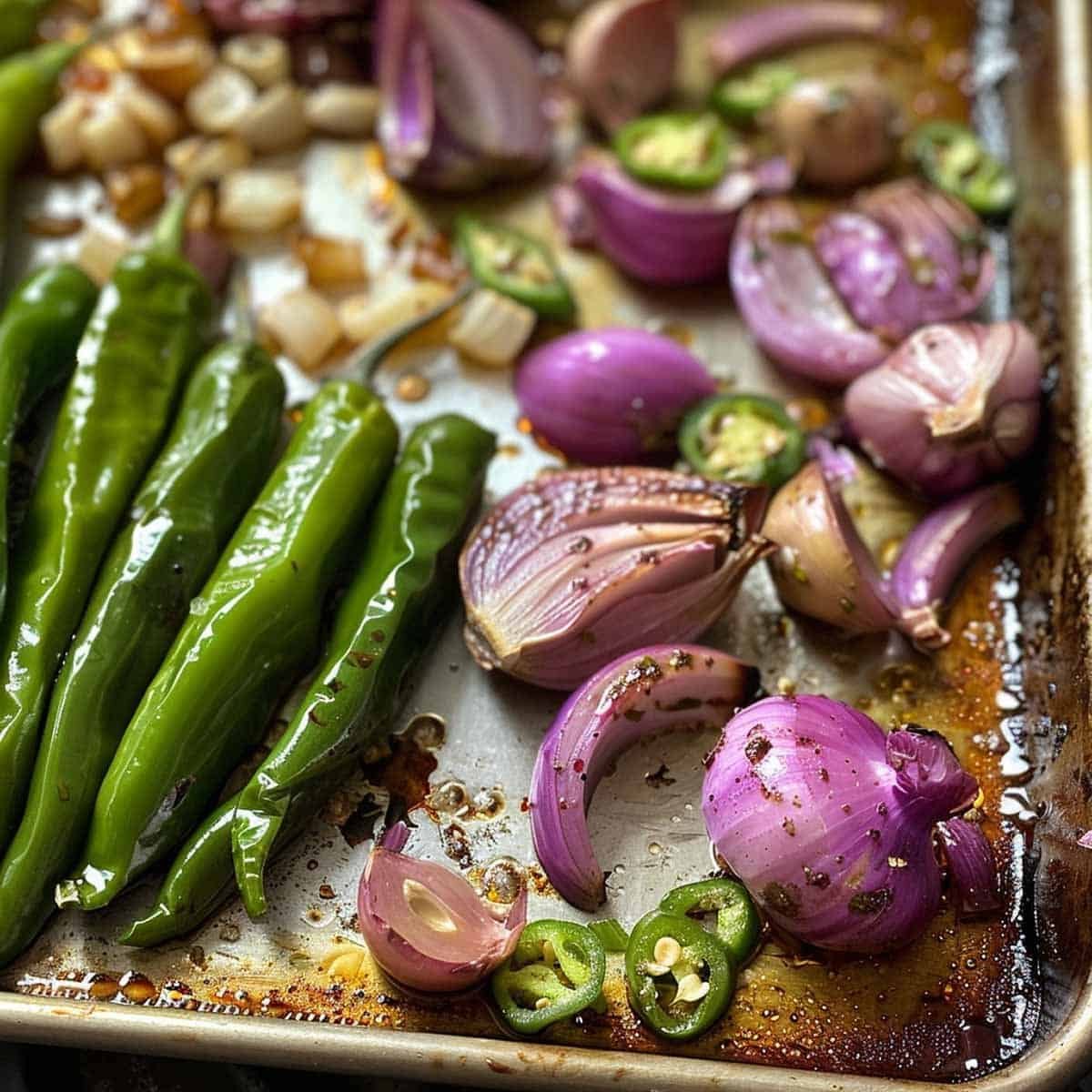
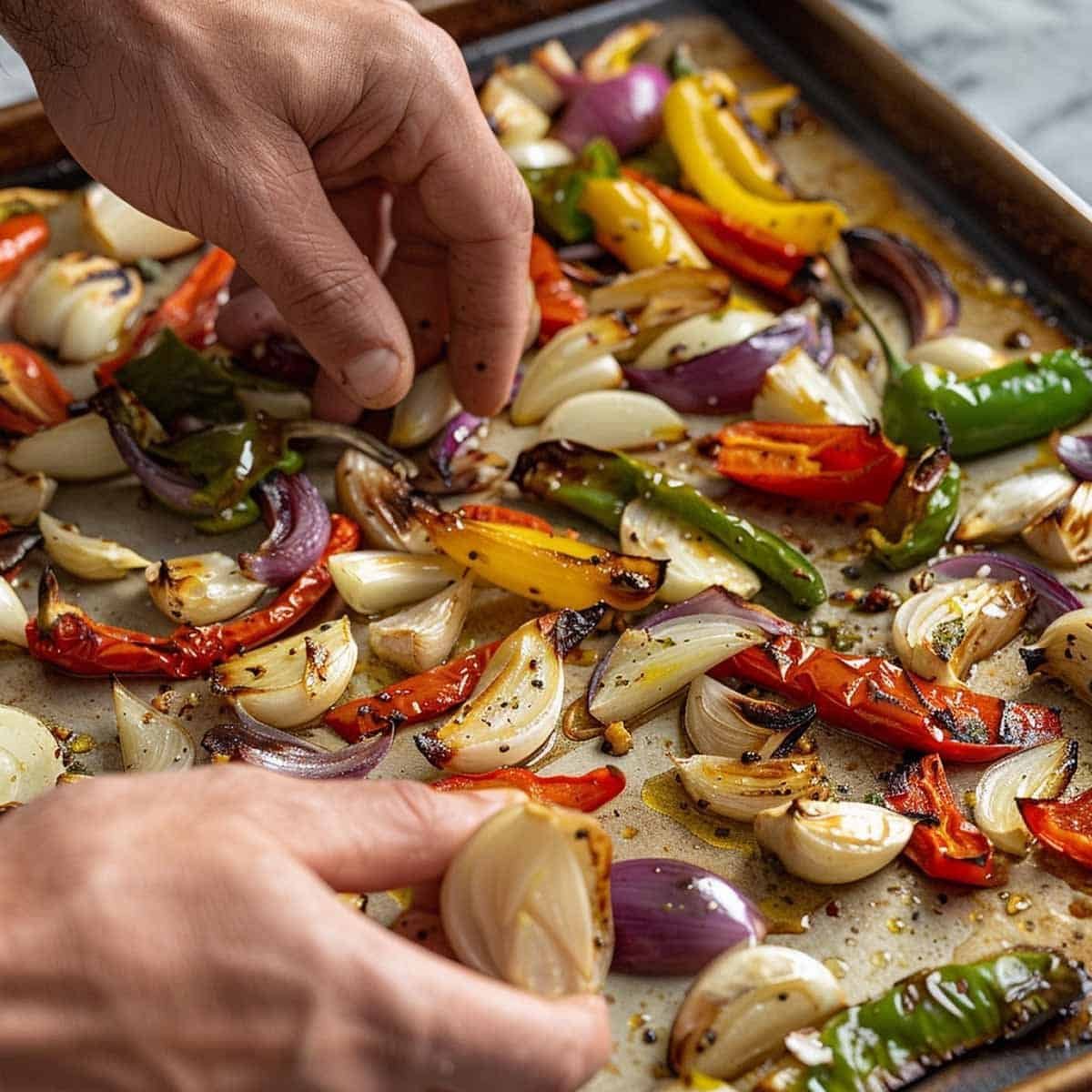
Preheat your oven to 400 degrees Fahrenheit. Place the green chilies, garlic cloves, and shallots on a baking sheet lined with parchment paper. Leave the skins on the garlic cloves to protect them from burning. Roast the vegetables for twenty to twenty-five minutes or until the chilies have charred skins and the shallots and garlic are soft and caramelized.
Step 2. Peel the charred skins and let the vegetables cool slightly.
Once the vegetables are roasted, allow them to cool to room temperature. Peel the garlic and shallots and carefully remove the skins from the chilies. Do not rinse the vegetables under water. The char that clings to the flesh after peeling is part of the flavor. Rinsing washes away the whole point of the charring step.
★ Step 3. Mash the ingredients in a mortar until a coarse paste forms. This is What Makes the Difference.
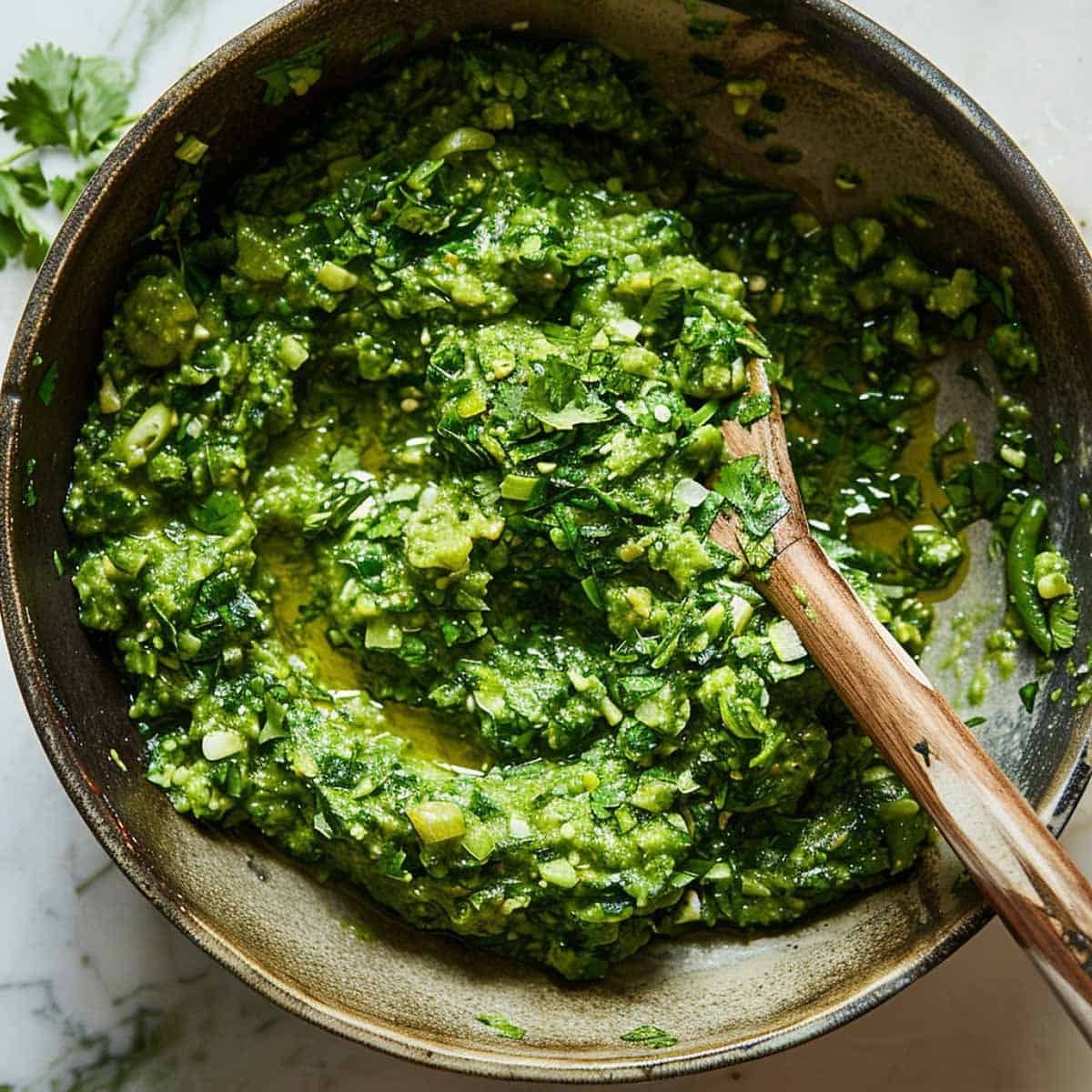
Use a mortar and pestle or food processor to mix the ingredients until they form a coarse paste. Work the garlic first until rough, then the shallots, then the green chilies. Add each ingredient only when the previous one has been worked in. The texture should be rough and chunky, with visible pieces of chili and garlic distributed through the paste. A food processor will take it too far in thirty seconds. The mortar gives you control. Stop pounding when the texture still has character.
Step 4. Season the dip.
Transfer the mashed mixture to a bowl. Gently stir in the fish sauce, freshly squeezed lime juice, and finely chopped cilantro. Season with salt according to your taste preferences. Taste the sauce. The smokiness should arrive first, then the salt from the fish sauce, then the brightness of the lime. Adjust each element until the balance is right. My mother and her sisters never measured any of it. They tasted and adjusted until it was right.
Step 5. Serve with sticky rice and fresh vegetables.
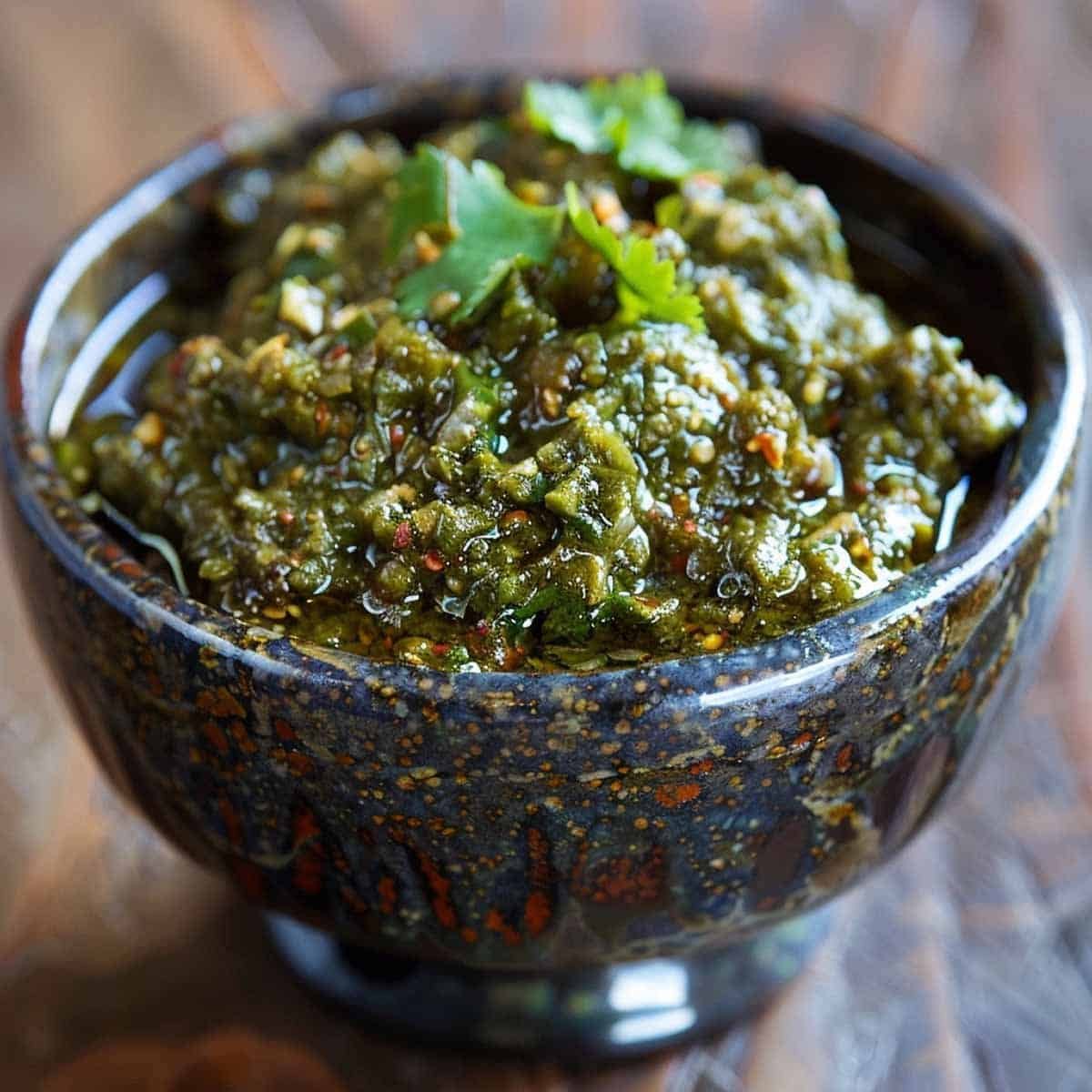
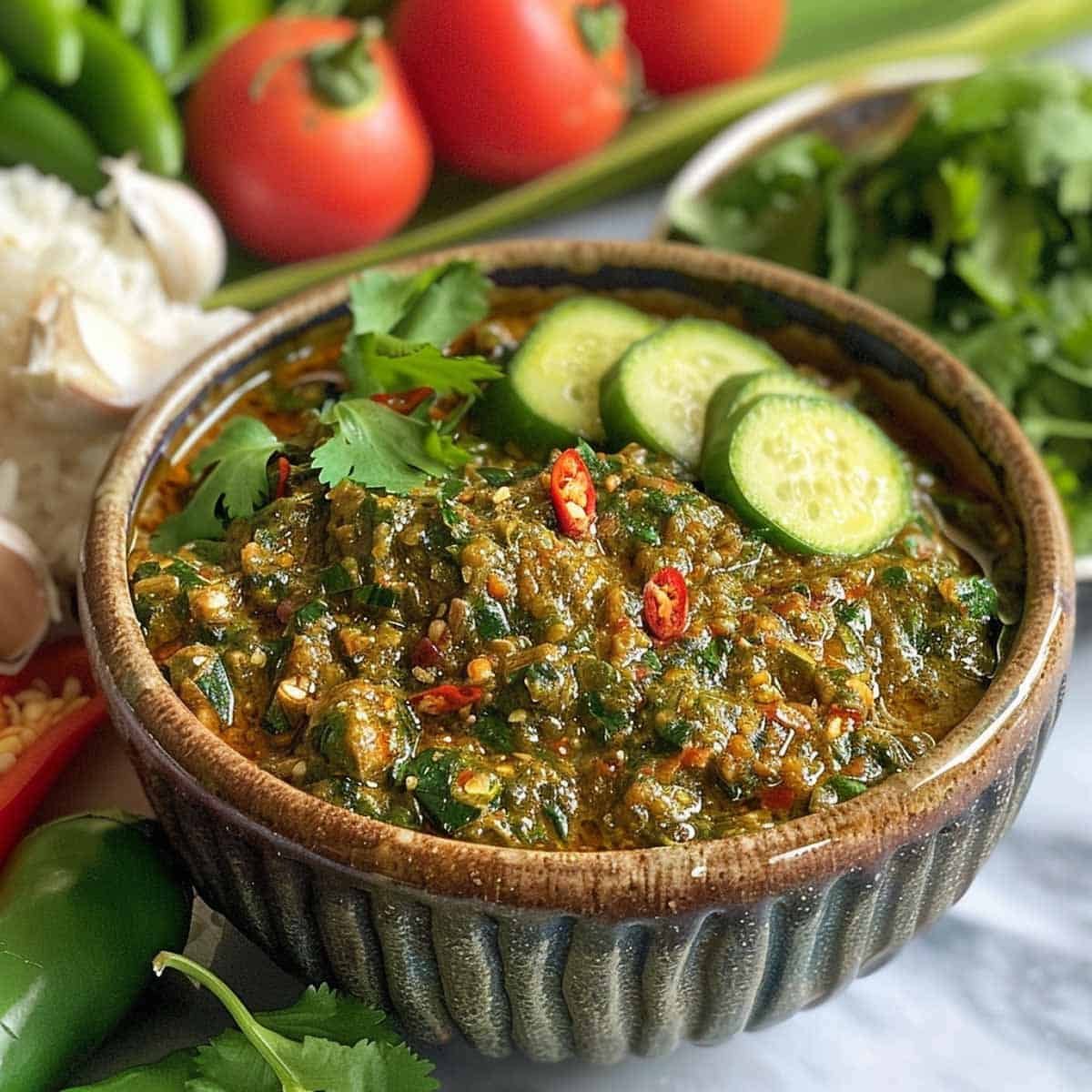
Serve at room temperature in a small bowl at the center of the table. The sauce is not the meal. It is what makes the meal more complete.
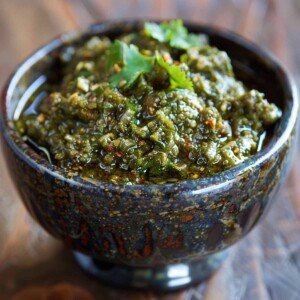
Thai Roasted Chili Dip (Nam Phrik Num)
Ingredients
- 10 green chilies preferably Thai green chilies
- 1 head of garlic
- 5 shallots
- 1 tablespoon fish sauce
- 1 tablespoon lime juice
- 1/4 cup fresh cilantro chopped
- Salt to taste
Instructions
- Roast the VegetablesTo prepare the roasted green chilies, garlic, and shallots, preheat your oven to 400°F (200°C). Place the green chilies, garlic cloves, and shallots on a baking sheet lined with parchment paper. Leave the skins on the garlic cloves to protect them from burning. Roast the vegetables for 20-25 minutes or until the chilies have charred skins, and the shallots and garlic are soft and caramelized.
- Peel and PrepOnce the vegetables are roasted, it is essential to allow them to cool down to room temperature. Next, peel the garlic and shallots, and carefully remove the skins from the chilies.Do not rinse the vegetables. The char that clings to the flesh is part of the flavor.
- Mash the IngredientsFollowing the roasting of the chilies, garlic, and shallots, use the mortar and pestle or food processor to mix the ingredients until they form a coarse paste.
- Season the DipTransfer the mashed mixture to a bowl, gently stir in the fish sauce, freshly squeezed lime juice, and finely chopped cilantro. Then, carefully season the mixture with salt according to your taste preferences.
- ServeServe at room temperature with sticky rice, fresh vegetables, and grilled meats alongside.
Notes
Nutrition
LET’S GET THIS RIGHT
Why does my Nam Phrik Num taste flat and not smoky?
The vegetables were not charred enough. This is the most common mistake, pulling the chilies and shallots off the heat when they look done rather than when they are genuinely charred. The skins should be blackened and blistered all over, not just in patches. The flesh inside should be completely soft. More charring time produces more smokiness. If the sauce tastes like cooked green chili without depth, it needs more time over the heat.
Can I make Nam Phrik Num without a grill or open flame?
An oven broiler on its highest setting works, or roast at 400 degrees Fahrenheit as in the recipe, placing the vegetables on a foil-lined baking sheet and turning them occasionally until charred on all sides. A dry cast iron pan over very high heat also produces charring, though the smoke quality is different from charcoal or gas flame. The result will be good in all cases.
How spicy is Nam Phrik Num?
Nam Phrik Num made with long mild green chilies has a moderate, building heat, present but not aggressive. The heat level depends on the variety of green chili used. Adding Thai bird chilies to the charring stage increases the heat significantly. Nam Phrik Num is traditionally a moderately spiced sauce, not the hottest thing on the Northern Thai table, but not mild either.
What do you serve with Nam Phrik Num?
Sticky rice is the primary accompaniment, scooped with small balls of sticky rice pressed in the fingers. Raw and blanched vegetables are set out for dipping: cucumber, cabbage leaves, long beans, baby eggplant, carrots. Grilled meats alongside, particularly Moo Ping. The sauce works alongside almost any grilled or roasted meat and most vegetables.
How long does Nam Phrik Num keep?
Nam Phrik Num keeps in an airtight container in the refrigerator for up to five days. The smokiness deepens slightly over the first day as the flavors settle. Bring to room temperature before serving. A squeeze of fresh lime before serving from the refrigerator restores any brightness that has faded overnight.
FLAVOR PROFILE
The smell during the charring is the first thing, deep and smoky and slightly sweet, the green chilies and shallots blistering in the oven or over the coals. It is the smell that filled my grandmother’s yard. The smell that a small child noticed before she understood what it was.
In the mortar, the charred vegetables release a different smell, earthier, more complex, the smokiness mixing with the sharp green chili and the pungent shallot as the pounding works them together. The paste darkens slightly as it is worked.
On the tongue, the smokiness arrives first, present and specific, not like any other chili sauce. Then the heat from the green chilies, building slowly. Then the salt from the fish sauce, and the brightness of the lime cutting through behind it. The fresh cilantro is at the edges, green and clean, lifting the whole thing at the finish.
It is a sauce that does not shout. It complements. Dipped into with sticky rice, the smokiness of the sauce and the slight sweetness of the rice work together in a way that neither achieves alone. Alongside grilled pork, the charred vegetables in the sauce find the charred surface of the meat and the two things recognize each other.
I was too young for this. Then I grew up and understood exactly what it was. That is the right way for some things to arrive.
SUSIE’S KITCHEN NOTES
The long green chilies used for Nam Phrik Num should be mild to moderately hot, the sauce is about smokiness and depth, not about being the hottest thing on the table. In Thailand, prik num, young green chilies, are long, pale green, and moderately spiced. In Western grocery stores, Anaheim peppers or mild Italian frying peppers are reasonable substitutes. If you want more heat, add two to three Thai bird chilies to the charring stage alongside the long green ones.
Charring over charcoal produces the deepest, most complex smokiness. The charcoal smoke penetrates the vegetable flesh during charring in a way that an oven cannot fully replicate. If you are making Moo Ping at the same time, char the Nam Phrik Num vegetables over the same coals before the pork skewers go on. The vegetables can be charred, peeled, and in the mortar while the pork is on the grill.
The sauce improves overnight. Make it the day before a meal and it will be more settled, more complex, and more itself than the version eaten immediately after pounding. The fresh lime squeeze before serving is the only thing that needs to happen day-of.
My mother and her sisters made this without measuring. They charred until the vegetables looked right. They pounded until the texture was right. They seasoned until it tasted right. The recipe gives you proportions to start from, but the charring, the pounding, and the seasoning are all things you finish by eye and by taste. Trust what the mortar is telling you and trust what your tongue is telling you. Both know.
PAIRING SUGGESTIONS
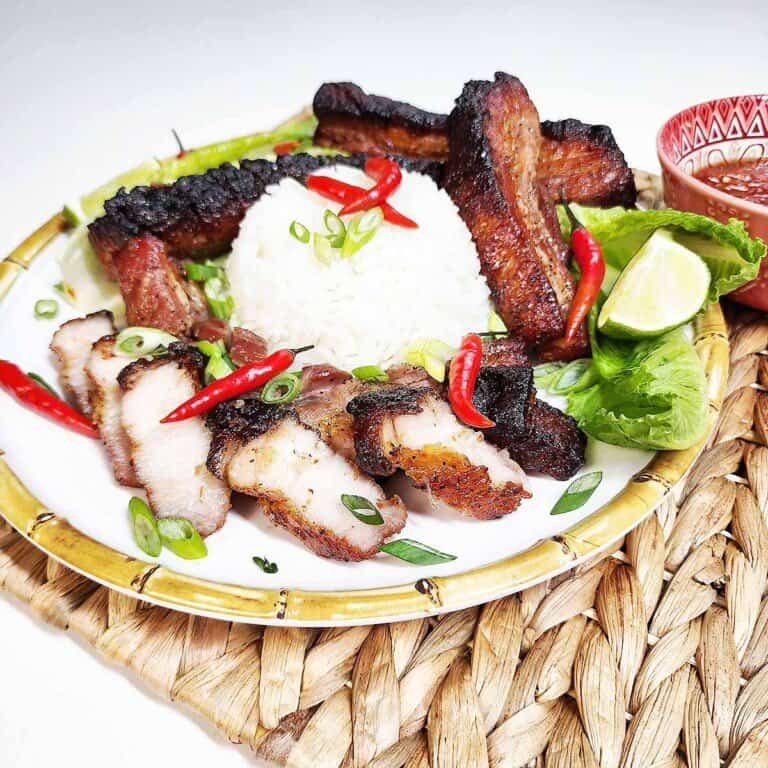
Nam Phrik Num is a condiment at its heart, it does not stand alone but makes everything around it more complete. The dish it belongs with most naturally is Moo Ping, the charred green chili sauce alongside the charred caramelized pork, both of them built on fire and smoke, both of them at their best when eaten together with sticky rice. The Thai fish sauce chicken wings are another natural companion, the savory crispy wings dipped into the smoky green sauce, the contrast between them making both better. For a full Northern Thai spread where Nam Phrik Num is the condiment at the center of the table, the stir fried morning glory brings its bright green vegetable dish alongside, and the Khao Man Gai offers the gentle poached chicken and rice that needs exactly this kind of smoky, complex sauce to find its full flavor. My mother and her sisters made this at my grandmother’s house and put it on the table alongside everything else. It made everything more. That is still what it does.
FAQ
What is Nam Phrik Num (Thai chili dipping sauce)?
Nam Phrik Num, น้ำพริกหนุ่ม, is a Northern Thai roasted green chili dipping sauce made from charred long green chilies, shallots, and garlic pounded or mashed together with fish sauce, lime juice, and cilantro. The vegetables are charred in an oven or over a flame until blackened and soft before pounding. The charring produces the deep smoky flavor that defines the sauce. It is served with sticky rice, raw and blanched vegetables, and grilled meats.
How do you make Nam Phrik Num step by step?
Preheat oven to 400 degrees Fahrenheit. Place green chilies, garlic cloves with skins on, and shallots on a parchment-lined baking sheet. Roast twenty to twenty-five minutes until chilies have charred skins and shallots and garlic are soft and caramelized. Cool to room temperature. Peel garlic and shallots and remove skins from chilies without rinsing. Use a mortar or food processor to mash the ingredients into a coarse paste. Transfer to a bowl and stir in fish sauce, lime juice, and chopped cilantro. Season with salt to taste. Serve with fresh vegetables and sticky rice.
What is the difference between Nam Phrik Num and Nam Prik Pao?
Nam Phrik Num is a Northern Thai fresh green chili dipping sauce. The vegetables are charred and pounded raw, producing a rough, chunky sauce with a bright green chili flavor and deep smokiness. Nam Prik Pao is a central Thai roasted chili paste made from dried red chilies, cooked in oil until dark and glossy, with a sweeter and more complex flavor. Nam Phrik Num is fresher, greener, and chunkier. Nam Prik Pao is darker, oilier, and more complex. Both are built on charring but they are completely different sauces.
What vegetables do you serve with Nam Phrik Num?
Fresh crisp vegetables are the traditional accompaniment for Nam Phrik Num: cucumber slices, carrots, cabbage leaves, long beans, and baby eggplant. Some vegetables are eaten raw, some briefly blanched. Sticky rice is always present, used to scoop the sauce. The sauce also works as a condiment alongside grilled meats, adding smoky depth to each bite.
Can I make Nam Phrik Num without shrimp paste?
Yes. This recipe does not include shrimp paste, using fish sauce and lime juice for seasoning instead. For a vegetarian version, replace the fish sauce with soy sauce. The smoky, green chili character of the sauce remains the same. The charring is the defining step regardless of what seasonings are used.
Is Nam Phrik Num the same as green chili sauce?
Nam Phrik Num is a specific Northern Thai preparation. The charring technique and the mortar-pounded chunky texture distinguish it from other green chili sauces. A generic green chili sauce may use raw or cooked chilies blended smooth. Nam Phrik Num requires charred chilies mashed rough. The charring is non-negotiable. It is what produces the deep smokiness that defines the sauce. Without the charring, it is a different sauce with a similar color.
How long does Nam Phrik Num keep?
Nam Phrik Num keeps in an airtight container in the refrigerator for up to five days. The flavor deepens and settles over the first day. The version eaten the day after making is often better than the version eaten immediately. Bring to room temperature before serving. A squeeze of fresh lime juice before serving restores any brightness that has faded during refrigeration.