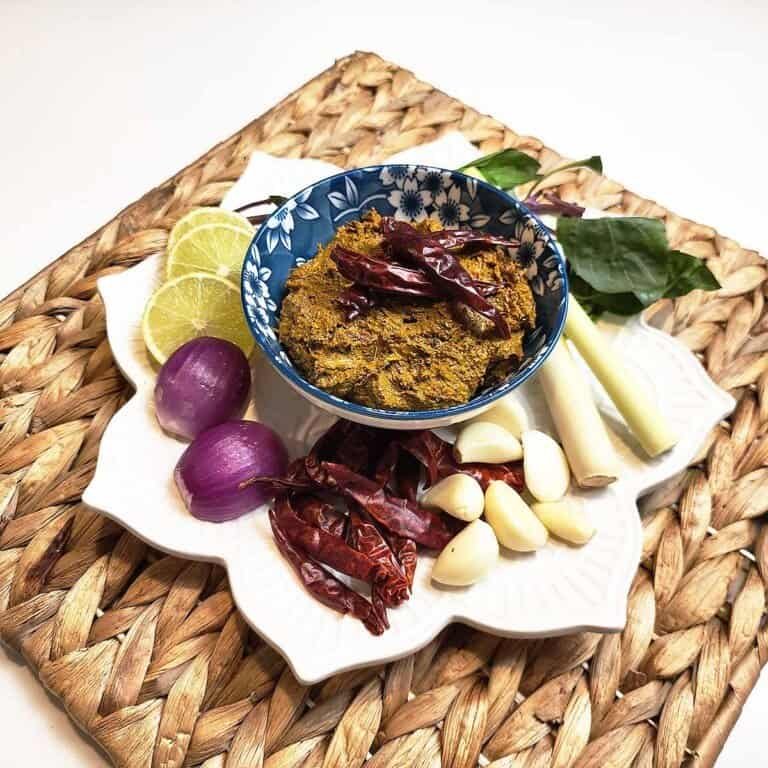
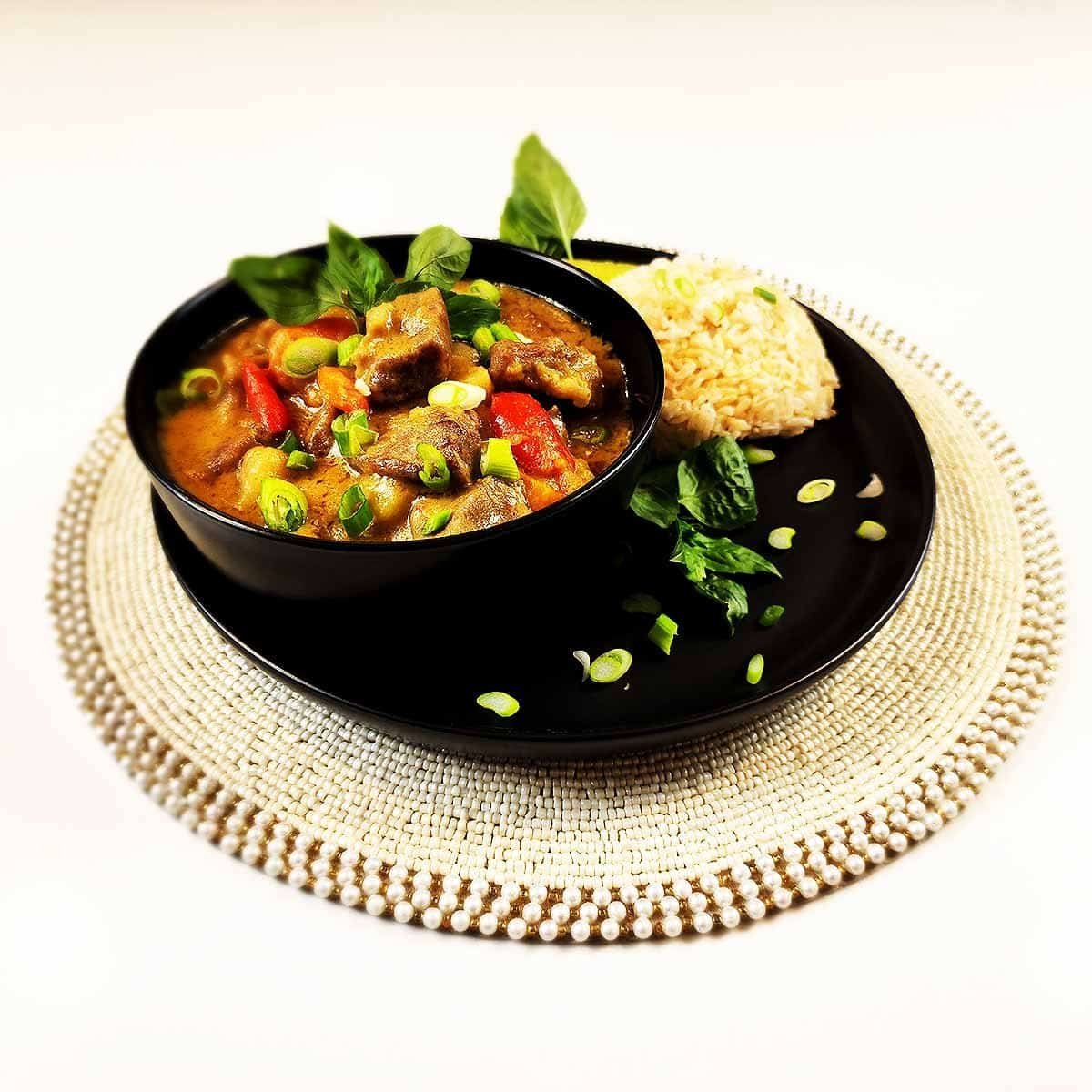
What Is Thai Pork Yellow Curry?
Thai pork yellow curry, Gaeng Garee Moo (แกงกะหรี่หมู), is tender pork simmered in a rich golden coconut milk curry built on yellow curry paste, warm spices, fish sauce, and palm sugar, with soft potatoes and kaffir lime leaves. It is the most comforting of the Thai curries. Rich, warm, slightly sweet, and completely satisfying. The house smells wonderful the entire time it is cooking.
Note From Susie

Sawasdee Kha, and Hello.
Some dishes are exciting. This one is comforting.
Yellow curry with pork has been part of my life for as long as I can remember. My mother made it at home and it was always the dish that arrived when the day needed something warm and completely satisfying. Not complicated. Not trying to be anything other than what it is. Rich coconut milk, tender pork, soft potatoes, the warm spice of the yellow curry paste underneath everything.
I did not have to grow into this one. It made sense from the very beginning, the way comfort food always does. The kind of dish that asks nothing of you except to sit down and eat it.
I still reach for this one when I need what this dish gives. Warm, rich, complete. Make this on a day when you want the house to smell like something good is happening. It will not disappoint.

What’s In This Page
“I did not have to grow into this one. It made sense from the very beginning.”
— Her Hands His EyesWHAT IS THAI PORK YELLOW CURRY?
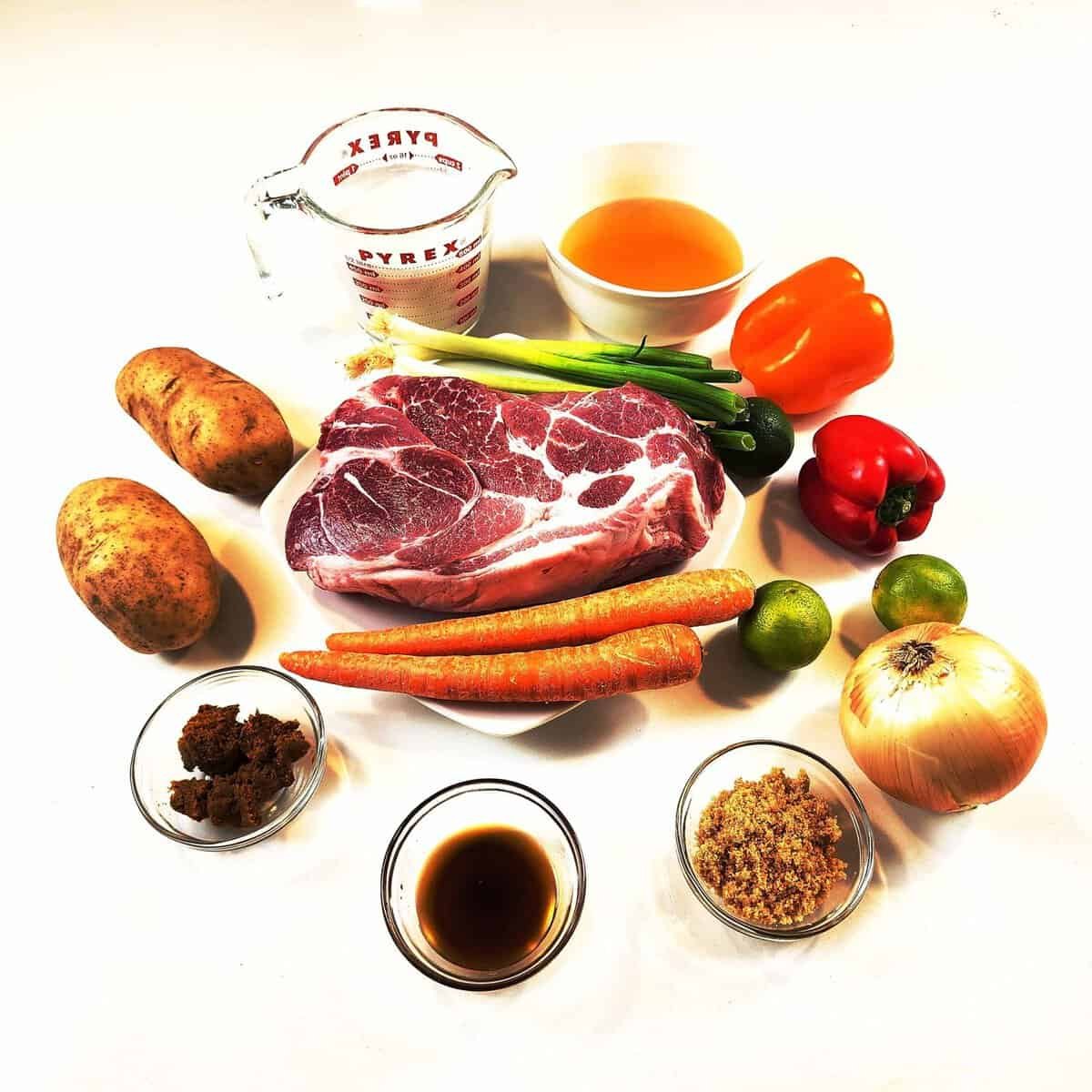
Pork shoulder, one pound, cut into bite-sized pieces. Shoulder contains enough fat and connective tissue to become completely tender over the long simmer without drying out.
Coconut milk, one can, fourteen ounces. Do not shake the can. Open it and spoon the thick cream from the top. That is what goes in first.
Yellow curry paste, two tablespoons, store-bought or homemade. The full homemade recipe is at /thai-yellow-curry-paste-recipe/.
Onion, one, sliced. Potatoes, two, peeled and cubed. Carrot, one, sliced. Red bell pepper, one, sliced.
Fish sauce, one tablespoon. Brown sugar, one tablespoon. Chicken broth, one cup.
Fresh cilantro for garnish. Lime wedges for serving.
VISUAL WALK THROUGH
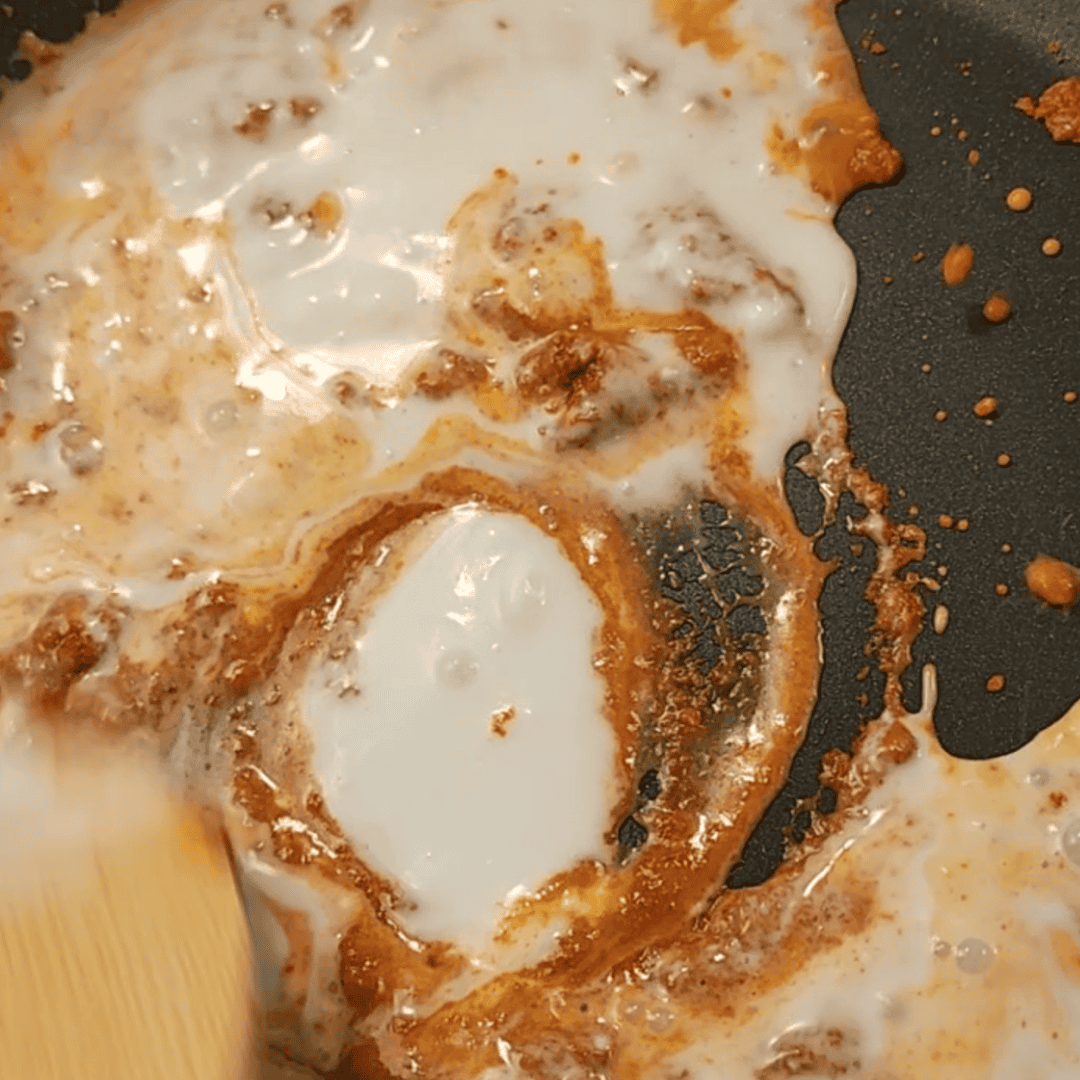
Step 1. Fry the yellow curry paste in coconut cream until fragrant.
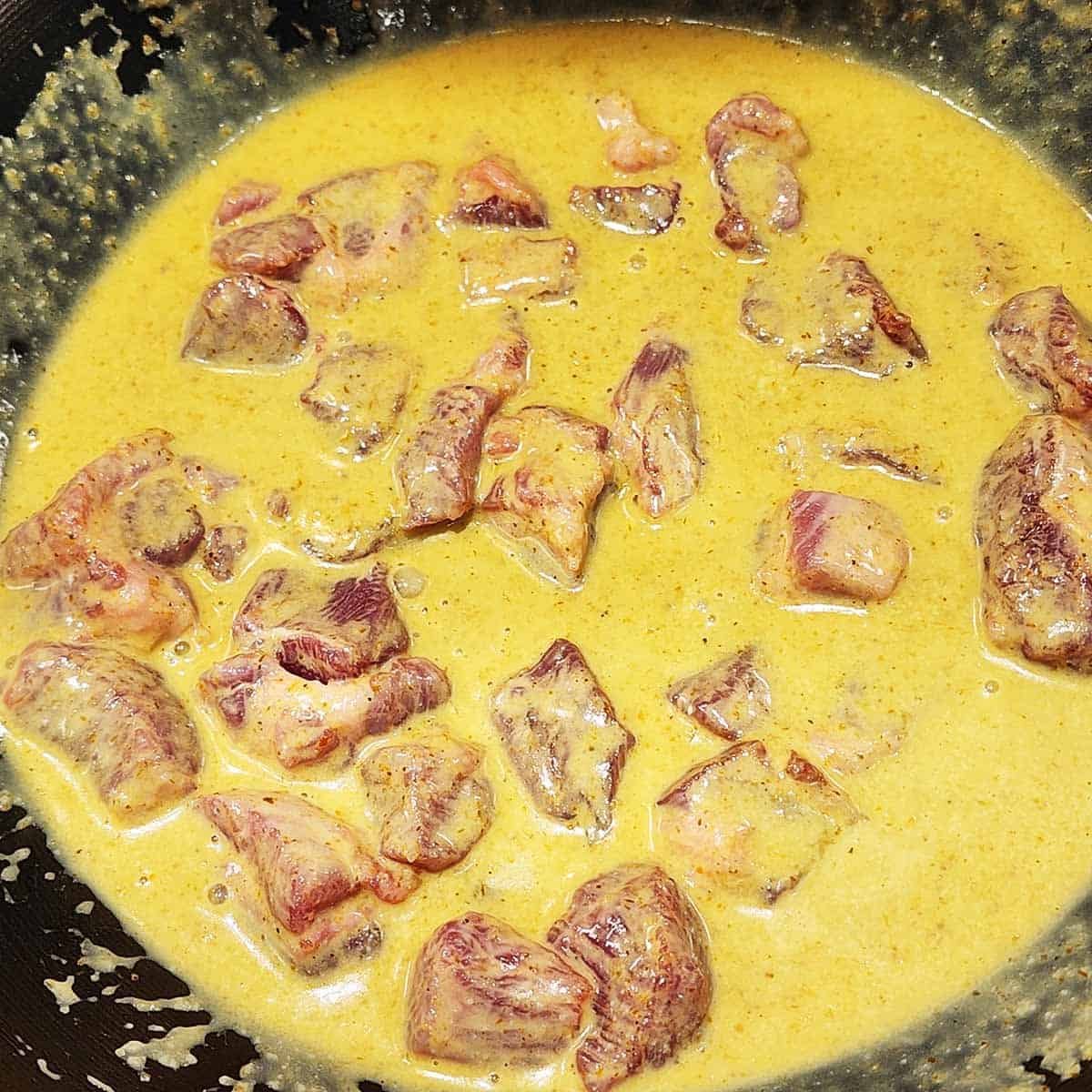
In a large pot over medium heat, add the thick coconut cream from the top of the can and the yellow curry paste. Stir until well combined and bring to a gentle simmer. Fry the paste in the coconut cream, stirring constantly, for three to five minutes until deeply fragrant and small pools of golden oil appear at the edges.
Step 2. Add pork, onion, potatoes, carrot, and bell pepper.
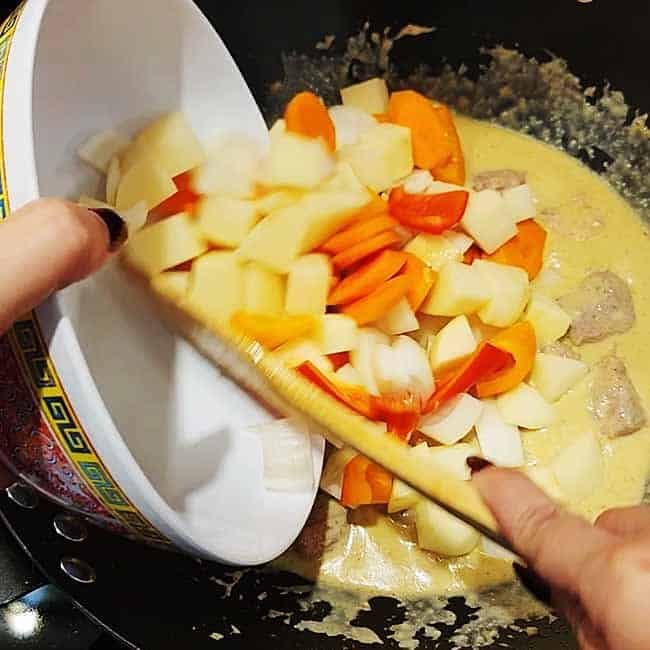
Add the pork, onion, potatoes, carrot, and bell pepper to the pot. Stir to coat the pork and vegetables with the curry sauce.
★ Step 3. Add broth, fish sauce, and sugar, then simmer. This is What Makes the Difference.
Pour in chicken broth, fish sauce, and brown sugar. Stir well. Reduce heat to low and simmer uncovered for thirty to forty minutes or until pork is tender and vegetables are cooked. Taste halfway through and adjust the fish sauce and sugar balance.
Step 4. Finish and serve.
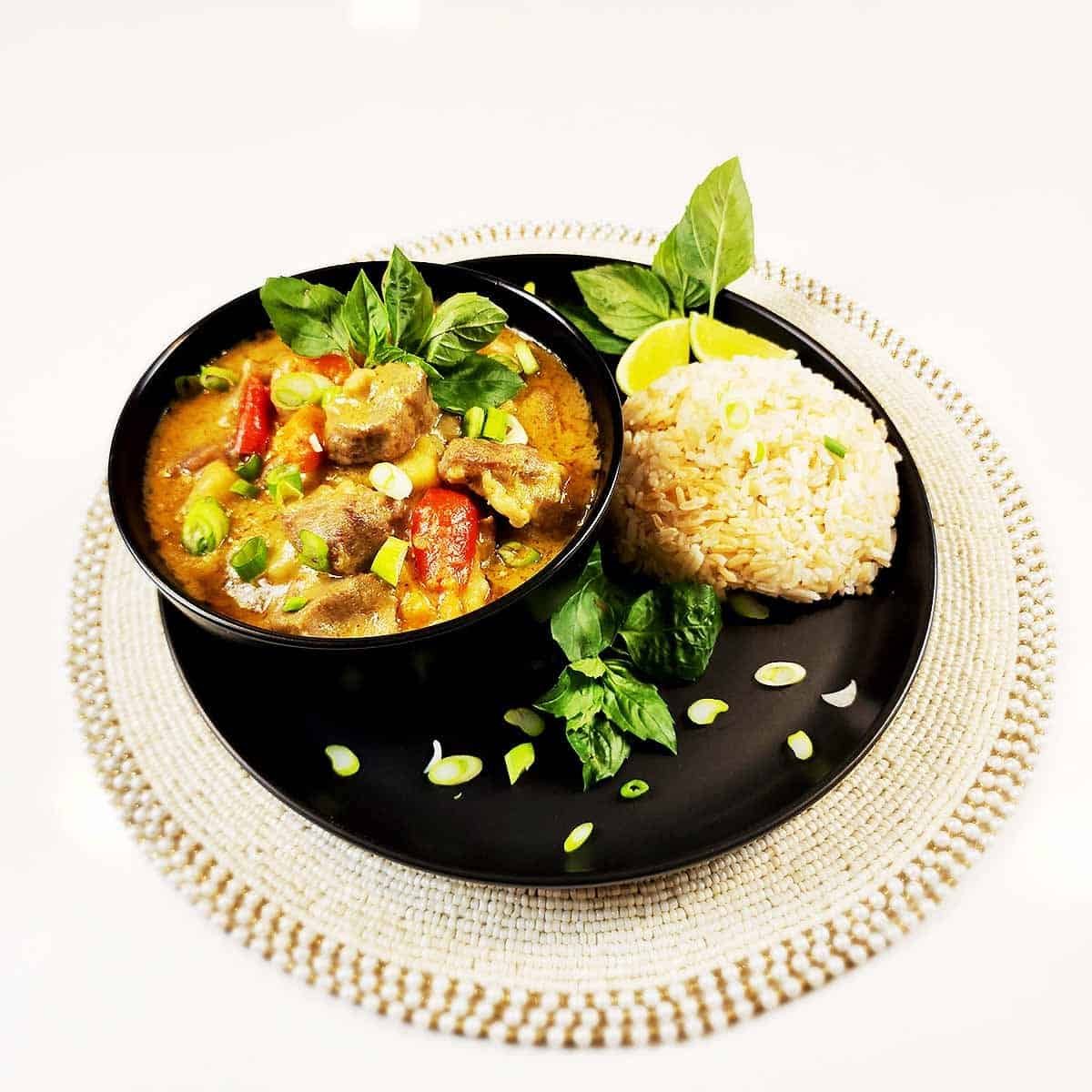
Adjust seasoning with more fish sauce or sugar if needed. Serve hot, garnished with fresh cilantro and lime wedges over steamed jasmine rice.
Thai Pork Yellow Curry
Ingredients
- 1 lb pork shoulder cut into bite-sized pieces
- 1 can 14 oz coconut milk
- 2 tbsp yellow curry paste
- 1 onion sliced
- 2 potatoes peeled and cubed
- 1 carrot sliced
- 1 red bell pepper sliced
- 1 tbsp fish sauce
- 1 tbsp brown sugar
- 1 cup chicken broth
- Fresh cilantro for garnish
- Lime wedges for serving
Instructions
- Prepare the Curry:Spoon cream from top of unshaken cans, fry paste in cream until oil separates, then add remaining coconut milk.
- Add Ingredients: Add pork, onion, potatoes, carrot, and bell pepper to the pot. Stir to coat the pork and vegetables with the curry sauce.
- Simmer: Pour in chicken broth, fish sauce, and brown sugar. Stir well. Reduce heat to low and simmer uncovered for 30-40 minutes or until pork is tender and vegetables are cooked.
- Finish and Serve: Adjust seasoning with more fish sauce or sugar if needed. Serve hot, garnished with fresh cilantro and lime wedges.
Video
Notes
Nutrition
LET’S GET THIS RIGHT
Why does my Thai pork yellow curry taste thin and flat?
The coconut milk cans were shaken before opening, or the curry paste was not fried long enough. Both produce the same result. Open the cans without shaking, spoon the cream off the top, fry the paste in it for three to five minutes until the oil visibly separates and the paste is fragrant. These two steps together are what give yellow curry its body and depth.
Why is my pork tough in Thai pork yellow curry?
The wrong cut was used, or the simmer time was too short. Pork loin or tenderloin will tighten at heat regardless of how long it simmers. Pork shoulder contains connective tissue that breaks down over the long simmer and produces the tender, yielding pork that yellow curry requires. Use shoulder and give it the full forty-five minutes to one hour.
Can I use chicken instead of pork in this yellow curry?
Yes. Chicken thigh is the best substitute, added the same way as the pork and simmered for twenty to thirty minutes rather than the full hour. Chicken absorbs the yellow curry flavor beautifully and produces a lighter but equally satisfying result. Breast meat will tighten if simmered too long. Thigh is the correct choice.
How spicy is Thai pork yellow curry?
Yellow curry is the mildest of the main Thai curries. The heat from the dried chilies in the paste is present but gentle, sitting behind the warmth of the spices rather than dominating. The coconut milk and palm sugar both moderate the heat further. For very mild heat, use one and a half tablespoons of paste. For more heat, use three tablespoons and taste before adding more.
Can I make Thai pork yellow curry ahead of time?
Yes, and it improves overnight. Make the curry the day before, cool to room temperature, and refrigerate. Reheat gently over low heat the next day. Add fresh Thai basil when reheating. The potatoes will have softened further overnight, which is not a problem, and the flavors will be deeper and more settled than the freshly made version.
FLAVOR PROFILE
The smell arrives within the first minute of the paste hitting the coconut cream. Warm and layered, the cumin and coriander and turmeric releasing into the fat, the kitchen filling with something that is immediately recognizable as yellow curry and nothing else. It is a comforting smell. The kind that makes people come to the kitchen before they are asked.
The curry in the pot is golden, deeply golden from the turmeric and the paste, slightly glossy from the coconut milk fat. The pork is submerged in it and the potatoes are visible, their cut edges beginning to soften and take on the color of the broth.
On the plate the curry is rich and slightly thick from the long simmer. The pork is tender and yields at the touch of a fork. The potatoes have absorbed the curry flavor all the way through and taste of coconut milk and warm spice in equal measure. The kaffir lime leaves are present in the background, their floral fragrance woven through the richness. The Thai basil is on top, dark and fragrant.
The first spoonful is savory and warm, the yellow curry paste present in its full complexity, the coconut milk rich around it, the palm sugar rounding everything. Then the pork, soft and deeply flavored. Then the potato, which has been waiting in that broth for close to an hour and tastes like it.
Some dishes are exciting. This one is comforting. That is exactly what it should be.
SUSIE’S KITCHEN NOTES
Yukon gold potatoes are the best choice for Thai pork yellow curry. They are waxy enough to hold their shape through the long simmer without falling apart, and their natural butteriness complements the coconut milk in a way that starchy russet potatoes do not. Cut them into consistent one-inch pieces. Inconsistent sizing means some pieces will be overcooked and falling apart while others are still slightly firm. Consistent pieces finish together.
The curry paste brand matters more in yellow curry than in red or green because the warm spice balance varies significantly between manufacturers. Maesri yellow curry paste tends toward coriander and turmeric. Mae Ploy has a more pronounced cardamom character. Try the paste before it goes into the coconut cream and taste the broth before the pork goes in. Yellow curry should taste warm and slightly sweet and complex, not sharp or bitter. If it tastes flat, add more paste. If it tastes of any single spice too strongly, balance with more coconut milk.
Yellow curry benefits from being made in a quantity larger than one meal requires. The second day the curry is noticeably better, the flavors deeper and more settled. Make enough for two meals and the second one costs almost no additional effort. The only thing that changes is the Thai basil, which should be added fresh when reheating rather than eaten wilted from the day before.
My mother made this whenever the day needed it. That is still the right reason to make it. Some days need something warm and rich and completely satisfying, and this is the dish that delivers that without asking very much in return. Put the rice on. Get the paste ready. Let the pot do its work. Come back in an hour to something that was worth waiting for.
PAIRING SUGGESTIONS
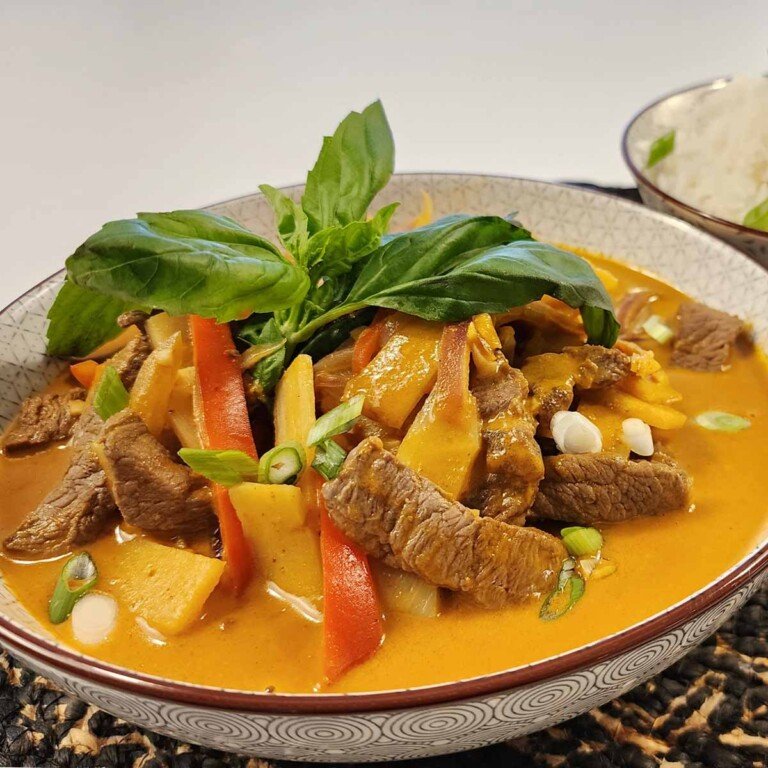
Thai pork yellow curry is a complete meal over jasmine rice, and it does not need much alongside it to be fully satisfying. What completes the table is contrast. The stir fried morning glory is the bright, fast green vegetable dish that provides freshness alongside the rich, slow curry, the two of them together making a Thai home meal that covers every register. The Thai omelet is the simpler companion, fast and egg-based, the lightness of it a natural counterpoint to the richness of the coconut curry. For those who want to understand the paste that makes this dish possible, the full Yellow curry paste recipe shows the process from the mortar forward, and the Thai beef red curry shows what the same coconut milk method produces with red paste and a different protein. And for the drink alongside a warm, rich, satisfying curry, the Thai iced tea is cold and sweet and always the right answer. My mother made this when the day needed something comforting. Put it on the table. Let everyone sit down. That is what it is for.
FAQ
What is Thai pork yellow curry (Gaeng Garee Moo)?
Thai pork yellow curry, Gaeng Garee Moo (แกงกะหรี่หมู), is tender pork shoulder simmered in a rich golden coconut milk curry built on yellow curry paste, fish sauce, palm sugar, and kaffir lime leaves, with potatoes that absorb the curry broth over the long simmer. It is the most comforting of the Thai curries, warm and slightly sweet with the complex spice profile of the yellow paste underneath the richness of the coconut milk. It is served over steamed jasmine rice.
How do you make Thai pork yellow curry step by step?
Open coconut milk cans without shaking and spoon the thick cream off the top. Fry yellow curry paste in the coconut cream until fragrant and the oil separates, three to five minutes. Add the remaining coconut milk and bring to a gentle simmer. Add pork pieces and simmer for fifteen minutes until just cooked through. Add potatoes, kaffir lime leaves, fish sauce, and palm sugar. Cover and simmer for thirty minutes more until the potatoes are completely soft. Remove from heat, fold in fresh Thai basil, serve over jasmine rice.
What is the difference between Thai yellow curry and Thai red curry?
Thai yellow curry contains warm whole spices, cardamom, cinnamon, cumin, and coriander, that are absent from red curry paste, giving it a warmer, more complex spice character and a milder heat. Red curry is built on dried red chilies and is sharper and more intensely flavored. Yellow curry is generally considered the mildest and most comforting of the main Thai curries. Both use coconut milk as the base and the same method of frying the paste in coconut cream before adding the remaining liquid.
What cut of pork is best for Thai yellow curry?
Pork shoulder is the correct cut for Thai pork yellow curry. It contains enough fat and connective tissue to become completely tender over the forty-five minute to one hour simmer without drying out. Pork loin or tenderloin will tighten and become dry during the long simmer and is not the right choice. Cut the shoulder into consistent one-inch pieces so every piece finishes cooking at the same time.
Can I make Thai pork yellow curry ahead of time?
Yes, and the curry improves significantly overnight. The flavors deepen and settle as the curry rests and the pork continues to absorb the coconut milk sauce. Make it the day before, cool to room temperature, and refrigerate. Reheat gently over low heat. Add fresh Thai basil when reheating rather than relying on the basil from the previous day, which will have wilted and darkened. The second day version is noticeably better than the freshly made one.
Is Thai pork yellow curry spicy?
Thai pork yellow curry is the mildest of the main Thai curries. The heat from the dried chilies in the yellow curry paste is gentle and sits behind the warmth of the spices rather than dominating. The coconut milk and palm sugar further moderate the heat. It is a warm curry rather than a spicy one, accessible to those who are sensitive to heat while still being fully flavorful and satisfying. For more heat, increase the amount of yellow curry paste.
What potatoes work best in Thai yellow curry?
Waxy potatoes that hold their shape during simmering work best in Thai pork yellow curry. Yukon gold potatoes are an excellent choice, their natural butteriness complementing the coconut milk. Red potatoes also work well. Avoid starchy russet potatoes, which will fall apart during the long simmer and make the curry cloudy and thick in an undesirable way. Cut whatever potato you use into consistent one-inch pieces so they finish cooking at the same time.